 Talmud Bavli
The learning on the whole site is dedicated : L'ilui Nishmat רינה בת לדיסיה
The learning on the whole site is dedicated : L'ilui Nishmat אליעזר בן רחל
The learning on the whole site is dedicated : L'ilui Nishmat Jamila bat Chlomo Abensour
Avodah Zarah 48a : Youtube
Daf TubeYoutube
2 video classes :
Avodah Zarah Page 48a
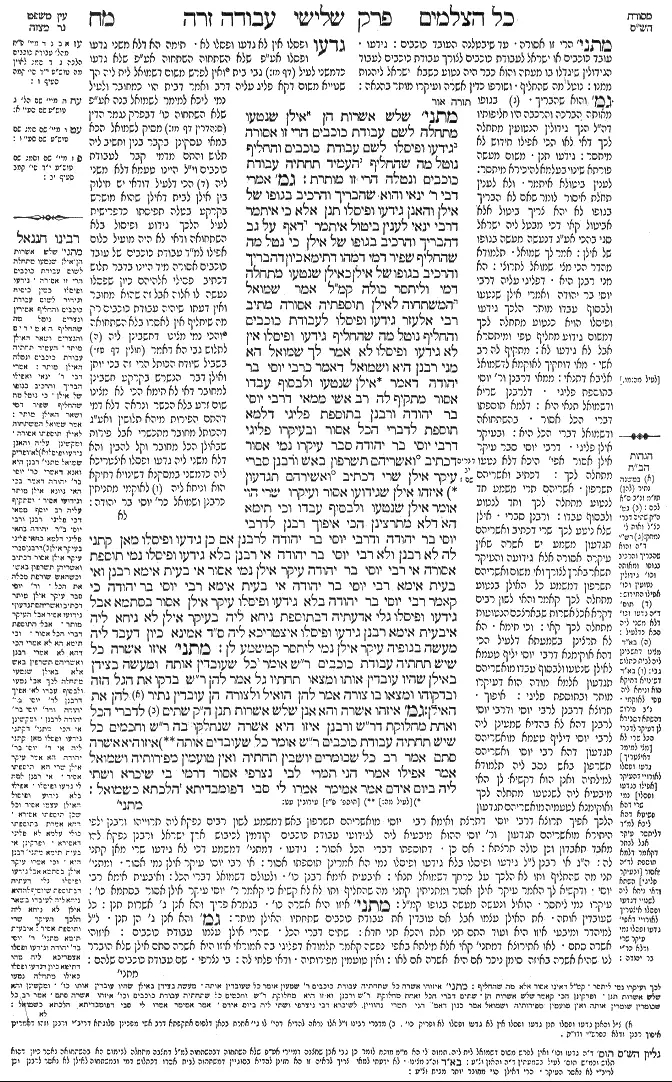
Avodah Zarah 48a - Guemara
מתני׳ שלש אשרות הן אילן שנטעו מתחלה לשם עבודת כוכבים הרי זו אסורה גידעו ופיסלו לשם עבודת כוכבים והחליף נוטל מה שהחליף העמיד תחתיה עבודת כוכבים ונטלה הרי זו מותרת:
גמ׳ אמרי דבי ר' ינאי והוא שהבריך והרכיב בגופו של אילן והאנן גידעו ופיסלו תנן אלא כי איתמר דרבי ינאי לענין ביטול איתמר דאף על גב דהבריך והרכיב בגופו של אילן כי נטל מה שהחליף שפיר דמי דמהו דתימא כיון דהבריך והרכיב בגופו של אילן כאילן שנטעו מתחלה דמי וליתסר כולה קמ"ל אמר שמואל המשתחוה לאילן תוספתיה אסורה מתיב רבי אלעזר גידעו ופיסלו לעבודת כוכבים והחליף נוטל מה שהחליף גידעו ופיסלו אין לא גידעו ופיסלו לא אמר לך שמואל הא מני רבנן היא ושמואל דאמר כרבי יוסי בר יהודה דאמר אילן שנטעו ולבסוף עבדו אסור מתקיף לה רב אשי ממאי דרבי יוסי בר יהודה ורבנן בתוספת פליגי דלמא תוספת לדברי הכל אסור ובעיקרו פליגי דרבי יוסי בר יהודה סבר עיקרו נמי אסור דכתיב (דברים יב, ג) ואשריהם תשרפון באש ורבנן סברי עיקר אילן שרי דכתיב (דברים ז, ה) ואשירהם תגדעון איזהו אילן שגידועו אסור ועיקרו שרי הוי אומר אילן שנטעו ולבסוף עבדו וכי תימא הא דלא מתרצינן הכי איפוך רבנן לדרבי יוסי בר יהודה ודרבי יוסי בר יהודה לרבנן אם כן גידעו ופיסלו מאן קתני לה לא רבנן ולא רבי יוסי בר יהודה אי רבנן בלא גידעו ופיסלו נמי תוספת אסורה אי רבי יוסי בר יהודה עיקר אילן נמי אסור אי בעית אימא רבנן ואי בעית אימא רבי יוסי בר יהודה אי בעית אימא רבי יוסי בר יהודה כי קאמר רבי יוסי בר יהודה בלא גידעו ופיסלו עיקר אילן אסור בסתמא אבל גידעו ופיסלו גלי אדעתיה דבתוספת ניחא ליה בעיקר אילן לא ניחא ליה איבעית אימא רבנן גידעו ופיסלו איצטריכא ליה ס"ד אמינא כיון דעבד ליה מעשה בגופיה עיקר אילן נמי ליתסר קמשמע לן:
מתני׳ איזו אשרה כל שיש תחתיה עבודת כוכבים ר"ש אומר כל שעובדין אותה ומעשה בצידן באילן שהיו עובדין אותו ומצאו תחתיו גל אמר להן ר"ש בדקו את הגל הזה ובדקוהו ומצאו בו צורה אמר להן הואיל ולצורה הן עובדין נתיר להן את האילן:
גמ׳ איזהו אשרה והא אנן שלש אשרות תנן ה"ק שתים לדברי הכל ואחת מחלוקת דר"ש ורבנן איזו היא אשרה שנחלקו בה ר"ש וחכמים כל שיש תחתיה עבודת כוכבים ר"ש אומר כל שעובדים אותה איזו היא אשרה סתם אמר רב כל שכומרים יושבין תחתיה ואין טועמין מפירותיה ושמואל אמר אפילו אמרי הני תמרי לבי נצרפי אסור דרמי בי שיכרא ושתי ליה ביום אידם אמר אמימר אמרו לי סבי דפומבדיתא הלכתא כשמואל:
Comments from Rashi on Masechet Avodah Zarah Page 48a
מתני' הרי זו אסורה . עד שיבטלנה העובד כוכבים: גידעו . עובד כוכבים או ישראל לעבודת כוכבים לצורך עבודת כוכבים לעבוד הגידולין שיגדלו בו מעתה והוא כבר היה נטוע כשבא ישראל ליהנות ממנו: נוטל מה שהחליף . ושורפו כדין אשרה ועיקרו מותר בהנאה: גמ' והוא שהבריך . בגופו מאותה הברכה והרכבה היו חליפותיו דה"ל הנך גידולין הנטועין מתחלה לכך דאי לאו הכי אפילו חידוש לא מיתסר: גידעו תנן . משום מעשה פורתא שינוי בעלמא להיכירא מיתסר: לענין ביטולא איתמר . ולא לענין תחלת איסור לומר שאם לא הבריך בגופו לא יהא צריך ביטול אלא אביטול קאי דכי מבטל ליה ישראל סגי בהכי אע"ג דנעשה מעשה בגופו של אילן: אמר לך שמואל . תלמודא מהדר הכי מצי שמואל לתרוצי: הא מני רבנן היא . דפליגי עליה דרבי יוסי בר יהודה ואמרי אילן שנטעו ולבסוף עבדו מותר הלכך גידעו ופיסלו הויא כנטוע מתחלה לכך דמשום גידוע מחליף טפי ומיתסרא אבל לא גידעו לא: מתקיף לה רב אשי . מאי דוחקיך לאוקמא לדשמואל אליבא דתנאי: ממאי דרבנן ור' יוסי בתוספת פליגי . דלרבנן שריא ודשמואל תנאי היא: דלמא תוספתו דברי הכל אסור . בהשתחואה ודשמואל דברי הכל היא: ובעיקר אילן פליגי דרבי יוסי סבר . עיקר אילן אסור אפי' היכא דלא נטעו מתחלה לכך: דכתיב ואשריהם תשרפון . אשריהם תרי משמע חד לנטוע מתחלה לכך וחד לנטוע ולבסוף עבדו: ורבנן סברי . אילן שלא ניטע לכך שרי דכתיב ואשריהם תגדעון משמע יש אשרה שאין עיקרה אסורה אלא גידועה והעיקר תשאר בארץ לצורך. ואי משום ואשריהם תשרפון דמשמע כל האילן בנטוע מתחלה לכך קאמר והאי לשון רבים דקרא אכל אשרות שבארצכם הנטועות מתחלה לכך קאי: וכי תימא . הא לא תרצינן בשמעתא דלעיל הכי דהא אוקימנא דרבי יוסי יליף טעמא לאילן שנטעו ולבסוף עבדו מואשריהם תגדעון אלמא מודה הוא דעיקרו מותר ובתוספת פליגי: איפוך . תרוצא דרבנן לרבי יוסי ודרבי יוסי לרבנן דהא לא בהדיא שמעינן ליה לרבי יוסי דיליף טעמא מואשריהם תגדעון דהא רבי יוסי ואשריהם תשרפון באש נסב ליה תלמודא למילתיה ואנן הוא דקשיא לן האי מיבעיא ליה לשנטעו מתחלה לכך ואוקימנא לטעמיה מואשריהם תגדעון הלכך אפיך תרוצא דרבי יוסי דתרצת ואימא רבי יוסי מואשריהם תשרפון באש דמשמע לשון רבים נפקא ליה תרוייהו ורבנן ילפי היתירא מואשריהם תגדעון ור' יוסי ההוא מיבעיא ליה לגידועי עבודת כוכבים קודמין לכיבוש ארץ ישראל ורבנן נפקא להו מאבד תאבדון וכן כולה תרצתא: אם כן . דתוספתו דברי הכל אסור: גידעו . דמתני' דמשמע דכי לא גידעו שרי מאן קתני לה: ה"ג אי רבנן ל"ל גידעו ופיסלו בלא גידעו ופיסלו נמי הא אמרינן תוספתו אסור אי רבי יוסי עיקר אילן נמי אסור . ומתני' תני מה שהחליף ותו לא הלכך על כרחך דשמואל תנאי: איבעית אימא רבנן כו' . ולעולם דשמואל דברי הכל: ואיבעית אימא רבי יוסי . ודקשיא לך האמר עיקר אילן אסור ומתניתין קתני מה שהחליף ותו לא לא קשיא כי קאמר ר' יוסי עיקר אילן אסור בסתמא כו': עיקרו נמי ליתסר . הואיל ונעשה מעשה בגופו קמ"ל: מתני' איזו היא אשרה כו' . בגמרא פריך והא אנן ג' אשרות תנן: כל שעובדין אותה . את האילן עצמו אבל אם עובדין את עבודת כוכבים שתחתיו האילן מותר: גמ' והא אנן ג' הן תנן . ל"ל למיהדר ומיבעי איזו היא ועוד התם תני תלת והכא תני חדא: שתים דברי הכל . שהרי אילן עצמו עבודת כוכבים: איזוהי אשרה סתם . לאו אתירוצא דמתני' קאי אלא מילתא באפי נפשה קאמר תלמודא דפליגי בה אמוראי איזו היא אשרה סתם אילן שלא הוברר לנו שהיא אשרה באיזה סימן ניכר אם היא אשרה אם לאו: ואין טועמין מפירותיה . ודאי פלחי לה: בי נצרפי . שם עבודת כוכבים שלהם:
Comments from Tosafot - Avodah Zarah 48a
גדעו ופסלו לעבודת כוכבים . פ"ה לעבוד בגידולין שיגדלו מעתה ושאינו עושה עבודת כוכבים רק החידוש ויפה כוון שאם נתכוין העובד כוכבים לעקרו לעשותו לעבודת כוכבים ודאי הכל אסור אע"פ שאילן מחובר כיון שעשה מעשה בגוף האילן דומיא דעפר דחפר בה בורות שיחין ומערות שנאסר גם שאר הקרקע לפי שעשה בה מעשה: ה"ג העמיד תחתיו עבודת כוכבים ובטלה הרי זו מותרת . ואע"ג דכי לא בטלה נמי לא הוי משמשין דהא אליבא דרבנן קא מוקמינא לה בגמ' דאמרינן אילן שנטעו ולבסוף עבדו מותר והכא מסתמא לא נטע מתחלה לכך מדלא מפרש עלה שנטעו מתחלה לכך מ"מ כל זמן שלא בטלה איסורא דרבנן איכא שבשעה שעבודת כוכבים נראית תחתיה נראה כאילו נטועה מתחילה לכך: גדעו ופסלו אין לא גדעו ופסלו לא . תימה הא דלא משני גדעו ופסלו אע"פ שלא השתחוה השתחוה אע"פ שלא גדעו כדמשני לעיל (עבודה זרה דף מז:) גבי בית ואין לפרש משום דשמואל לית ליה הך שנוייא משום דקא פליג עליה דרב ואמר דבית הוי כמחובר ולעיל נמי ליכא למימר לשמואל בנה אע"פ שלא השתחוה כו' דבפרק נגמר הדין (סנהדרין דף מז:) מסיק לשמואל הכא במאי עסקינן בקבר בנין וחשיב ליה תלוש והתם מדמי קבר לעבודת כוכבים וי"ל היינו טעמא דלא משני ליה הכי דלעיל דודאי יש חילוק בין אילן לבית דאילן שהוא מושרש בקרקע בטלה תפיסתו כדפרישית לעיל הלכך גידוע ופיסול בלא השתחואה ודאי לא היה מועיל כלום אפילו למ"ד עבודת כוכבים של עובד כוכבים אסורה מיד היינו בדבר תלוש דכתיב פסילי אלהיהם כיון שפסלו נעשה לו אלוה אבל זה שהוא מחובר ואין דעתו שיהיה עבודת כוכבים רק מה שיחליף אין לאסרו בלא השתחואה והכי נמי מצינו דחשבינן ליה לתלוש גבי הא דאמר (חולין דף טז.) בשביל שיודח הכותל הרי זה בכי יותן ואילן דבר הנשרש בקרקע חשבינן למחובר דאי לא תימא הכי לא מצינו שום זרע בלא הכשר ונראה דלא דמי דהתם הפירות מיהא תלושין ואע"ג דהכותל מחובר מתכשרי אבל פירות שבאילן הכל מחובר וקל להבין והא דלא משני ליה גדעו ופסלו איצטריכא ליה כדמשני במסקנא דשינויא דחיקא הוא וניחא ליה לאוקמי מתניתין כרבנן ושמואל כר' יוסי בר יהודה:
Avodah Zarah 48a - Mishnah translated into english
MISHNA: There are three types of trees that were used as part of idolatrous rites [ashera]: A tree that one initially planted for the sake of idol worship is forbidden, and one may not derive benefit from any part of the tree. If one lopped off part of the trunk of a tree or trimmed its branches for the sake of idol worship, i.e., to worship that which would regrow there, and the tree’s trunk or limbs regrew, one removes that which has regrown and burns it. The remainder of the tree is then permitted. If one erected an object of idol worship beneath a tree and subsequently removed it, it is permitted to derive benefit from the tree.
GEMARA: The mishna teaches that if one lopped off or trimmed a tree’s branches for the sake of idol worship and it regrew, the tree is permitted upon the removal of the new growth. The Sages of the school of Rabbi Yannai say: And this is the halakha only when one sank the shoot of a vine into the ground or grafted onto the trunk of the tree itself.
The Gemara asks: But didn’t we learn that if he lopped off part of the trunk or trimmed the tree’s branches, the growth is forbidden? In order to render a tree forbidden, according to the Sages of the school of Rabbi Yannai, the act dedicated to idol worship must be sinking or grafting, which are tantamount to replanting the entire tree. The mishna indicates that even cutting off part of a tree renders the new growth forbidden.
The Gemara answers: Rather, when the statement of the Sages of the school of Rabbi Yannai was stated, it was stated with regard to the revocation of the idolatrous status. What they meant to say was that even if one sank the shoot of a vine into the ground or grafted onto the tree itself, effecting a more significant change, nevertheless, when one removes that which has regrown, the tree is permitted. As, lest you say that since one sank the shoot of a vine into the ground or grafted onto the tree itself, it is similar to a tree that one initially planted for idol worship and the entire tree should be forbidden, the Sages of the school of Rabbi Yannai counter this and teach us that even in this case the tree is permitted when that which has regrown is removed.
Shmuel says: In the case of one who bows to a tree, its additional subsequent growth is forbidden. Rabbi Elazar raises an objection from the mishna: If one lopped or trimmed the tree for the sake of idol worship and the tree’s trunk or limbs regrew, one removes that which has regrown and burns it. This indicates that if one lopped or trimmed it the additional growth is forbidden, but if one did not lop or trim it, even if one bowed to the tree, the growth is not forbidden.
The Gemara answers that Shmuel could say to you: In accordance with whose opinion is this mishna? It is in accordance with the opinion of the Rabbis, who maintain that a tree that was planted and only subsequently worshipped is permitted, as it was not initially planted for idol worship. And Shmuel says his statement in accordance with the opinion of Rabbi Yosei bar Yehuda, who says that a tree that one planted and subsequently worshipped is forbidden. Accordingly, bowing to a tree renders its subsequent growth forbidden.
Rav Ashi objects to this answer: From where is it derived that Rabbi Yosei bar Yehuda and the Rabbis disagree with regard to additional growth? Perhaps all agree that additional growth after the tree was worshipped is forbidden, and they disagree only with regard to its trunk.
The Gemara explains what the nature of this dispute would be: As Rabbi Yosei bar Yehuda maintains that its trunk is also forbidden, as it is written: “And you shall break down their altars, and dash in pieces their pillars, and burn their asherim with fire” (Deuteronomy 12:3). Burning with fire destroys the whole tree, which indicates that the entire tree is forbidden, including its trunk. And the Rabbis maintain that the trunk of the tree is permitted, as it is written: “You shall break down their altars, and dash in pieces their pillars, and hew down their asherim, and burn their graven images with fire” (Deuteronomy 7:5). Which is the tree whose hewn part is forbidden, but its trunk is permitted? You must say it is a tree that one planted and subsequently worshipped.
And if you would say that we did not explain their opinions in this manner previously (45b), as the source given there for the opinion of Rabbi Yosei bar Yehuda is the same verse given here as the source for the opinion of the Rabbis, simply reverse the explanation given there to match the one given here. The verse cited there as the source for the opinion of the Rabbis, namely, “and burn their asherim with fire,” should instead be considered the source for the opinion of Rabbi Yosei bar Yehuda, who deems even the trunk of a subsequently worshipped tree forbidden. And the verse cited there as the source for the opinion of Rabbi Yosei bar Yehuda, namely, “and hew down their asherim,” should instead be considered the source for the opinion of the Rabbis that only subsequent growth is forbidden.
The Gemara rejects Rav Ashi’s suggestion: It cannot be that all agree that additional growth is forbidden when a tree is planted and subsequently worshipped, because if so, who teaches the mishna that says that the tree is forbidden when one lopped it or trimmed it? It is neither the Rabbis nor Rabbi Yosei bar Yehuda. If one were to say that the Rabbis teach it, this cannot be, as they maintain that even in a case where one did not lop it or trim it, but simply bowed to it, the additional growth is forbidden. If one were to say that Rabbi Yosei bar Yehuda teaches the mishna, this cannot be, as he maintains that even the trunk of the tree is forbidden after it has been worshipped, and not just the subsequent growth.
The Gemara responds, defending Rav Ashi’s suggestion: If you wish, say that the Rabbis teach the mishna, and if you wish, say that Rabbi Yosei bar Yehuda teaches it. The Gemara explains each possibility: If you wish, say that Rabbi Yosei bar Yehuda teaches it, as when Rabbi Yosei bar Yehuda says that even in a case where one did not lop it or trim it, the trunk of the tree is nevertheless forbidden, it is only in a case where one worshipped the tree without specification, i.e., not any specific part of the tree. But if one lopped it or trimmed it for the sake of idol worship, he has revealed his intention, namely, that he believes that the additional growth is suitable for his idol worship, but that the trunk of the tree is not suitable for his idol worship. Therefore, in such a case only the additional growth is forbidden.
The Gemara explains the other possibility. If you wish, say that the Rabbis teach it. Although they maintain that even without lopping or trimming the tree the additional growth is forbidden if it is worshipped, nevertheless it was necessary for the mishna to mention the case where one lopped it or trimmed it specifically. Otherwise, it might enter your mind to say that since one performed an action on the tree itself, the trunk of the tree should also be forbidden. Therefore, the mishna teaches us that only the additional growth is forbidden and not the trunk.
MISHNA: Which tree is deemed forbidden as an ashera? Any tree that has an object of idol worship beneath it. Rabbi Shimon says: Any tree that people worship. And there was an incident in Tzaidan involving a tree that people would worship, and Jews found beneath it a heap of stones. Rabbi Shimon said to them: Examine this heap of stones. And they examined it and found in it an idolatrous image. Rabbi Shimon said to them: Since it is the image that they worship, we can permit use of the tree to those who wish to derive benefit from it.
GEMARA: The mishna teaches: Which tree is an ashera? The Gemara asks: But didn’t we learn in the previous mishna that there are three types of ashera trees? The Gemara answers: This is what the mishna is saying: Of the three trees mentioned in the previous mishna, there are two where the trees themselves are worshipped, and everyone agrees that they are forbidden. And there is one that is subject to a dispute between Rabbi Shimon and the Rabbis. Which is the ashera with regard to which Rabbi Shimon and the Rabbis disagree? It is any tree that has an object of idol worship beneath it, as Rabbi Shimon says that any tree that people worship is forbidden, but that a tree under which an idol was placed is not forbidden.
The Gemara presents a question: Which tree is assumed to be an ashera, even without specific knowledge that it was worshipped? Rav says: Any tree that gentile priests sit beneath and do not taste of its fruits, as they apparently consider the fruits consecrated to the idol. And Shmuel says: Even if they so much as say: These dates are for the house of Natzrefei, a house of idol worship, the tree is forbidden. This is because the idol worshippers would throw the dates into beer and drink it on their festival day. Ameimar says: The elders of Pumbedita said to me that the halakha is in accordance with the opinion of Shmuel.
Traduction : The William Davidson digital edition of the Koren Noé Talmud, with commentary by Rabbi Adin Even-Israel Steinsaltz.