 Talmud Bavli
The learning on the whole site is dedicated : L'ilui Nishmat אליעזר בן רחל
The learning on the whole site is dedicated : L'ilui Nishmat Nissim ben Barukh Malka
The learning on the whole site is dedicated : L'ilui Nishmat Ledicia bat David Banoun
Avodah Zarah 19a : Youtube
Daf TubeYoutube
2 video classes :
Avodah Zarah Page 19a
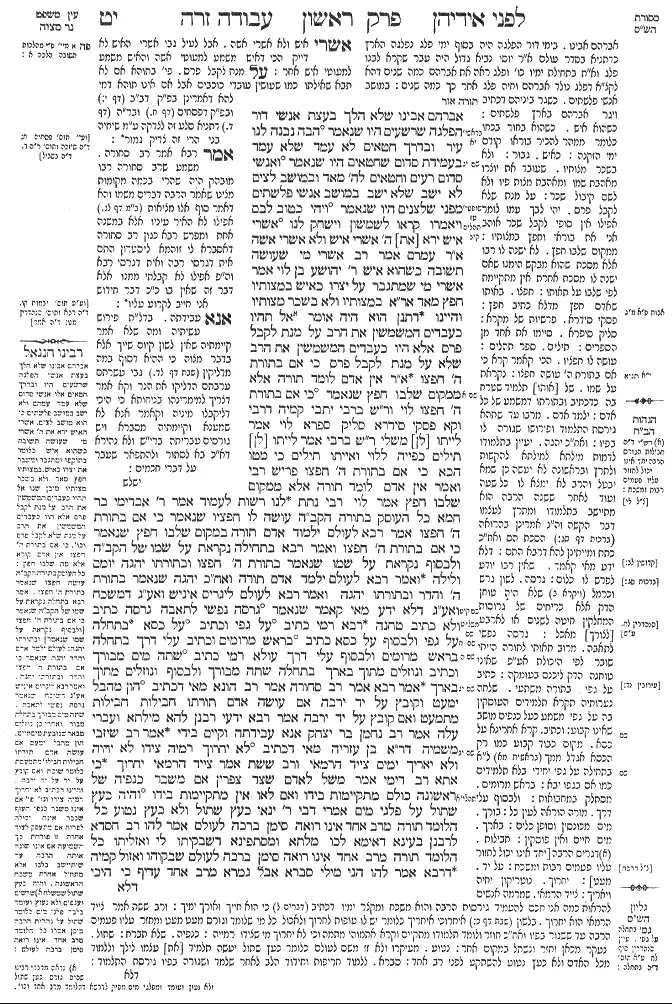
Avodah Zarah 19a - Guemara
אברהם אבינו שלא הלך בעצת אנשי דור הפלגה שרשעים היו שנאמר (בראשית יא, ד) הבה נבנה לנו עיר ובדרך חטאים לא עמד שלא עמד בעמידת סדום שחטאים היו שנאמר (בראשית יג, יג) ואנשי סדום רעים וחטאים לה' מאד ובמושב לצים לא ישב שלא ישב במושב אנשי פלשתים מפני שלצנים היו שנאמר (שופטים טז, כה) ויהי כטוב לבם ויאמרו קראו לשמשון וישחק לנו (תהלים קיב, א) אשרי איש ירא את ה' אשרי איש ולא אשרי אשה א"ר עמרם אמר רב אשרי מי שעושה תשובה כשהוא איש ר' יהושע בן לוי אמר אשרי מי שמתגבר על יצרו כאיש במצותיו חפץ מאד אר"א במצותיו ולא בשכר מצותיו והיינו דתנן הוא היה אומר אל תהיו כעבדים המשמשין את הרב על מנת לקבל פרס אלא היו כעבדים המשמשין את הרב שלא על מנת לקבל פרס כי אם בתורת ה' חפצו א"ר אין אדם לומד תורה אלא ממקום שלבו חפץ שנאמר (תהלים א, ב) כי אם בתורת ה' חפצו לוי ור"ש ברבי יתבי קמיה דרבי וקא פסקי סידרא סליק ספרא לוי אמר לייתו [לן] משלי ר"ש ברבי אמר לייתו [לן] תילים כפייה ללוי ואייתו תילים כי מטו הכא כי אם בתורת ה' חפצו פריש רבי ואמר אין אדם לומד תורה אלא ממקום שלבו חפץ אמר לוי רבי נתת לנו רשות לעמוד אמר ר' אבדימי בר חמא כל העוסק בתורה הקב"ה עושה לו חפציו שנאמר כי אם בתורת ה' חפצו אמר רבא לעולם ילמוד אדם תורה במקום שלבו חפץ שנאמר כי אם בתורת ה' חפצו ואמר רבא בתחילה נקראת על שמו של הקב"ה ולבסוף נקראת על שמו שנאמר בתורת ה' חפצו ובתורתו יהגה יומם ולילה ואמר רבא לעולם ילמד אדם תורה ואח"כ יהגה שנאמר בתורת ה' והדר ובתורתו יהגה ואמר רבא לעולם ליגריס איניש ואע"ג דמשכח ואע"ג דלא ידע מאי קאמר שנאמר (תהלים קיט, כ) גרסה נפשי לתאבה גרסה כתיב ולא כתיב טחנה רבא רמי כתיב (משלי ט, ג) על גפי וכתיב (משלי ט, יד) על כסא בתחלה על גפי ולבסוף על כסא כתיב (משלי ח, ב) בראש מרומים וכתיב עלי דרך בתחלה בראש מרומים ולבסוף עלי דרך עולא רמי כתיב (משלי ה, טו) שתה מים מבורך וכתיב ונוזלים מתוך בארך בתחלה שתה מבורך ולבסוף ונוזלים מתוך בארך אמר רבא אמר רב סחורה אמר רב הונא מאי דכתיב (משלי יג, יא) הון מהבל ימעט וקובץ על יד ירבה אם עושה אדם תורתו חבילות חבילות מתמעט ואם קובץ על יד ירבה אמר רבא ידעי רבנן להא מילתא ועברי עלה אמר רב נחמן בר יצחק אנא עבידתה וקיים בידי אמר רב שיזבי משמיה דר"א בן עזריה מאי דכתיב (משלי יב, כז) לא יחרוך רמיה צידו לא יחיה ולא יאריך ימים צייד הרמאי ורב ששת אמר צייד הרמאי יחרוך כי אתא רב דימי אמר משל לאדם שצד צפרין אם משבר כנפיה של ראשונה כולם מתקיימות בידו ואם לאו אין מתקיימות בידו (תהלים א, ג) והיה כעץ שתול על פלגי מים אמרי דבי ר' ינאי כעץ שתול ולא כעץ נטוע כל הלומד תורה מרב אחד אינו רואה סימן ברכה לעולם אמר להו רב חסדא לרבנן בעינא דאימא לכו מלתא ומסתפינא דשבקיתו לי ואזליתו כל הלומד תורה מרב אחד אינו רואה סימן ברכה לעולם שבקוהו ואזול קמיה דרבא אמר להו הני מילי סברא אבל גמרא מרב אחד עדיף כי היכי
Comments from Rashi on Masechet Avodah Zarah Page 19a
אברהם אבינו . בימי דור הפלגה היה בסוף ימי פלג נפלגה הארץ כדתניא בסדר עולם א"ר יוסי נביא גדול היה עבר שקרא לבנו פלג וא"ת בתחילת ימיו כו' ופלג ראה את אברהם כמה שנים דהא לקצ"א דפלג נולד אברהם וחיה פלג אחר כך כמה שנים: במושב אנשי פלשתים . כשגר ביניהם דכתיב ויגר אברהם בארץ פלשתים: כשהוא איש . כשהוא בחור בכחו. כלומר ממהר להכיר בוראו קודם ימי הזקנה: כאיש . גבור: ולא בשכר מצותיו . שעובד את יוצרו מאהבת שמו ומאהבת מצות פיו ולא לשם קיבול שכר: על מנת שלא לקבל פרס . יהי לבך עמו לומר אפילו אין סופי לקבל שכר אוהב אני את בוראי וחפץ במצותיו: ממקום שלבו חפץ . לא ישנה לו רבו אלא מסכת שהוא מבקש הימנו שאם ישנה לו מסכת אחרת אין מתקיימת לפי שלבו על תאותו: חפצו . באותו שאדם חפץ מדלא כתיב חפץ: פסקי סידרא . פרשיות של מקרא: סליק סיפרא . סיימו את אחד מן הספרים: תילים . ספר תהלים: עושה לו חפציו . הכי קאמר קרא כי אם בתורת ה' עושה חפצו: נקראת על שמו . של [אותו] תלמיד שטרח בה כדכתיב ובתורתו דמשמע של כל אדם: ילמד אדם . מרבו עד שתהא גירסת התלמוד ופירושו שגורה לו בפיו: ואח"כ יהגה . יעיין בתלמודו לדמות מילתא למילתא להקשות ולתרץ ובראשונה לא יעשה כן שמא יבטל והרב לא ימצא לו כל שעה ועוד לאחר ששנה הרבה הוא מתיישב בתלמודו ומתרץ לעצמו דבר הקשה וה"נ אמרינן בהרואה (ברכות דף סג:) הסכת הס ואח"כ כתת ומייתינן להא דרבא התם: דלא ידע מאי קאמר . שאין רבו יודע לפרש לו כלום: גרסה . לשון גרש וכרמל (ויקרא ב) שלא היה טוחן הדק אלא כריחים של גרוסות המחלקין חיטה לשנים או לארבע [לצורך] מאכל: גרסה נפשי לתאבה . מרוב תאותי לתורה הייתי שובר לפי היכולת אע"פ שאיני טוחנה הדק ליכנס בעומקה: כתיב על גפי . בתורה משתעי. שלחה נערותיה תקרא תלמידים העוסקין בה. על גפי משמע כעל כנפים מושב שאינו קבוע: וכתיב . קרא אחרינא על כסא מקום כבוד קבוע כמו רק הכסא אגדל ממך (בראשית מא). ל"א בתחילה על גפי יחידי בלא תלמידים כמו אם בגפו יבא: בראש מרומים . מסתלק במחבואות: ולבסוף עלי דרך . מורה הוראה לעין כל: בורך . מים מכונסין וסופן כלים: בארך . מים חיים ואין פוסקין: חבילות . דגריס הרבה [יחד אינו יכול לחזור עליו פעמים רבות ומשכח: על יד . מעט]: יחרוך . נוטריקון יחיה ויאריך: צייד הרמאי . שמרמה אנשים להראות כמה אני חכם להעמיד גירסות הרבה והוא משכח ומקצר ימיו דכתיב (דברים ל) כי הוא חייך ואורך ימיך: ורב ששת אמר צייד הרמאי הוא יחרוך . בלשון (שבת דף כ:) איחרוכי איחריך. כלומר יש לו עופות לחרוך ולאכול. כל מי שלומד וגורס מעט מעט ומחזר עליו פעמים הרבה עד ששגור בפיו ואח"כ חוזר ולומד תלמודו מתקיים וקרא אתמוהי מתמה וכי לא יחרוך מי שצידו רמייה: כנפיה . שלא תברח: שתול . נעקר מכאן וחזר ונשתל במקום אחר: נטוע . מעיקרו ולא זז משם לעולם. כלומר כעץ שתול יעשה תלמיד [את] עצמו לילך וללמוד מכל האדם ולא כעץ נטוע להשתקע לפני רב אחד: סברא . ללמוד חריפות וחידוד הלב לאחר שלמד ושגורה בפיו גירסת התלמוד:
Comments from Tosafot - Avodah Zarah 19a
אשרי איש ולא אשרי אשה . אבל לעיל גבי אשרי האיש לא דייק הכי דאיש משמע למעוטי אשה והאיש משמע למעוטי איש אחר: על מנת לקבל פרס . פי' בתוהא אם לא תבא שאילתו כמו שעושין עובדי כוכבים אבל אם אינו תוהא דמי להא דאמרינן בפ"ק דב"ב (דף י:) ובפ"ק דפסחים (דף ח.) ובר"ה (דף ד.) דתניא סלע זה לצדקה ע"מ שיחיה בני הרי זה צדיק גמור: אמר רבא אמר רב סחורה . משמע שרב סחורה רבו מובהק היה שהרי בכמה מקומות מצינו שאמר הרבה דברים משמו והא דאמר סוף אלו מציאות (ב"מ דף לג.) אפילו לא האיר עיניו אלא במשנה אחת ומפרש רבא כגון רב סחורה דאסברא לי זוהמא ליסטרון התם אית דגרסי רבה ואית דגרסי רבא וה"פ אפילו לא קבלתי ממנו אלא דבר זה שאין בו כ"כ דבר חידוש אני חייב לקרוע עליו: אנא עבידתה . בדל"ת פירוש עשיתיה ומה שלא אמר קיימתיה שאין לשון קיום שייך אלא בדבר מצוה כי ההיא דסוף במה מדליקין (שבת דף לד.) גבי עשרתם ערבתם הדליקו את הנר וקא אמר דצריך למימרינהו בניחותא כי היכי דליקבלו מיניה וקאמר אנא לא שמענא וקיימתיה מסברא ויש גורסים עבריתה ברי"ש ולא נהירא דא"כ בא לסתור ולהתפאר שעבר על דברי חכמים:
Avodah Zarah 19a - Mishnah translated into english
is referring to our forefather Abraham, who did not walk in the counsel of the members of the generation of the dispersion, who were wicked, as it is stated that they said to each other: “Come, let us build us a city, and a tower, with its top in heaven” (Genesis 11:4), a project with a wicked aim. “Nor stood in the way of sinners” (Psalms 1:1); this too is referring to Abraham, who did not join in the stand of the residents of Sodom, who were sinners, as it is stated: “Now the men of Sodom were wicked and sinners against the Lord exceedingly” (Genesis 13:13).
“Nor sat in the seat of the scornful” (Psalms 1:1); this means that Abraham did not sit in the seat of the Philistines, because they were scorners who engaged in jest and buffoonery. As it is stated with regard to the Philistines in a later period: “And it came to pass, when their hearts were merry, that they said: Call for Samson, that he may make us sport” (Judges 16:25).
The Gemara cites an interpretation of a similar verse: “Happy is the man that fears the Lord, that delights greatly in His mitzvot” (Psalms 112:1). The Gemara asks: Is that to say happy is the man, but not happy is the woman? Why is it necessary for the verse to emphasize that it is speaking of a man? Rav Amram says that Rav says: The verse applies to both men and women and is teaching: Happy is one who repents when he is still a man, i.e., before he becomes elderly and his strength dwindles. Rabbi Yehoshua ben Levi says: Happy is one who triumphs over his evil inclination like a man, i.e., with strength and vigor.
The verse continues: “He delights greatly in His mitzvot.” Rabbi Elazar says: The person delights in His mitzvot themselves and not in the reward for performing His mitzvot. And this is the same as we learned in a mishna (Avot 1:3): Antigonus of Sokho would say: Do not be like the servants who serve the master on the condition of receiving a reward; rather, be like the servants who serve the master not on the condition that they receive a reward.
§ The Gemara returns to its interpretation of the verse that was discussed previously: “But his delight is in the Torah of the Lord” (Psalms 1:2). Rabbi Yehuda HaNasi says: A person can learn Torah only from a place in the Torah that his heart desires, as it is stated: But his delight is in the Torah of the Lord, i.e., his delight is in the part of the Torah that he wishes to study.
The Gemara relates: Levi and Rabbi Shimon, son of Rabbi Yehuda HaNasi, were sitting before Rabbi Yehuda HaNasi, and they were learning the Torah portion. When they finished the book that they were learning and were ready to begin a new subject, Levi said: Let them bring us the book of Proverbs; and Rabbi Shimon, son of Rabbi Yehuda HaNasi, said: Let them bring us the book of Psalms. He compelled Levi to acquiesce, and they brought a book of Psalms. When they arrived here, at the verse: “But his delight is in the Torah of the Lord,” Rabbi Yehuda HaNasi explained the verse and said: A person can learn Torah only from a place in the Torah that his heart desires. Levi said: My teacher, you have given us, i.e., me, permission to rise and leave, as I wish to study Proverbs, not Psalms.
The Gemara cites other interpretations of this verse. Rabbi Avdimi bar Ḥama says: With regard to anyone who engages in the study of Torah, the Holy One, Blessed be He, fulfills his desires, as it is stated: “But in the Torah of the Lord is his delight,” i.e., if one engages in the study of the Torah of the Lord, he will have his desires met by the Lord. Rava says, in accordance with the statement of Rabbi Yehuda HaNasi: A person should always learn Torah from a place in the Torah that his heart desires, as it is stated: “But his delight is in the Torah of the Lord.”
And Rava also says, with regard to this verse: Initially the Torah is called by the name of the Holy One, Blessed be He, but ultimately it is called by the name of the one who studies it. As it is first stated: “His delight is in the Torah of the Lord,” and in the continuation of the verse it states: “And in his Torah he meditates day and night.” This teaches that through study one acquires ownership, as it were, of the Torah.
And Rava says in reference to this verse: A person must always study Torah and gain a broad knowledge of it, and only then may he analyze and delve into it. As it is stated: “His delight is in the Torah of the Lord,” meaning that he studies the Torah on a basic level, and only afterward does the verse state: “And in his Torah he meditates,” i.e., he analyzes it.
And Rava says with regard to Torah study: A person should always study [ligeris] and review even though he may afterward forget, and even though he does not understand what it is saying. As it is stated with regard to the study of Torah: “My soul breaks [garesa] for the longing that it has for Your ordinances at all times” (Psalms 119:20). It is written: “Breaks,” and it is not written: Grinds, demonstrating that the soul is satisfied with breaking apart material, on a basic level, even if it does not have the opportunity to grind and analyze it in greater depth.
Rava raises a contradiction between two verses: It is written that the Torah calls to people: “Upon the highest places of the city” (Proverbs 9:3), and it is written far more specifically: “On a seat in the high places of the city” (Proverbs 9:14). He explains: Initially, one who studies Torah does not have a secure place to sit, and therefore he is located merely upon the highest places, but ultimately, as he advances in his learning, he is placed on a seat of honor.
The Gemara mentions a similar contradiction. It is written with regard to the Torah: “In the top of high places” (Proverbs 8:2), and it is written in the continuation of the verse that the Torah is “by the path.” This contradiction is resolved as follows: Initially, a person studies Torah in a private location, in the top of high places, but ultimately he will spread his knowledge, by the path, in the public realm.
Ulla raises a contradiction with regard to the following verse. It is written: “Drink waters out of your own cistern” (Proverbs 5:15), and it is written in the continuation of the verse: “And running waters out of your own well.” He explains: Initially one should “drink waters out of your own cistern,” i.e., like the cistern that draws water into one location, learning all existing knowledge; and ultimately one can produce “running waters out of your own well,” i.e., original thought and innovative insights in Torah.
The Gemara cites other statements relating to Torah study. Rava says that Rav Seḥora says that Rav Huna says: What is the meaning of that which is written: “Wealth gotten through vanity [mehevel] shall be diminished; but he that gathers little by little shall increase” (Proverbs 13:11)? If a person turns his Torah into many bundles [ḥavilot], by studying large amounts in a short period of time without reviewing, his Torah will diminish. But if he gathers his knowledge little by little, by studying slowly and reviewing, his knowledge shall increase.
Rava said: The Sages know this, but nevertheless they transgress it, i.e., they fail to heed this advice. Rav Naḥman bar Yitzḥak says: I did this, as I studied little by little and regularly reviewed what I had learned, and my learning has in fact endured.
Rav Sheizvi said in the name of Rabbi Elazar ben Azarya: What is the meaning of that which is written: “The slothful man [remiyya] will not roast [yaḥarokh] his prey” (Proverbs 12:27)? The deceitful [harammai] hunter, i.e., one who tricks people into believing that he has acquired vast stores of knowledge by studying new material without reviewing that which he has already learned, will not live [yiḥye] a long [ya’arikh] life. According to this interpretation, yaḥarokh is a combination of the words yiḥye and ya’arikh.
And Rav Sheshet says that the verse means the opposite: The cunning [harammai] hunter will roast his prey to prevent it from escaping, i.e., he reads the verse as a rhetorical question: Will not the hunter roast? When Rav Dimi came from Eretz Yisrael to Babylonia, he said: This is comparable to a person who is hunting birds; if he breaks the wings of the first bird so that it will be unable to fly off, and he proceeds in this manner, all of his prey will remain in his possession; but if not, they will not remain in his possession, as each bird will fly off when the next is captured. In a similar fashion, a clever student reviews that which he learns, to ensure that he retains his knowledge.
§ The Gemara returns to its interpretation of the first verses of Psalms. “And he shall be like a tree planted [shatul] by streams of water” (Psalms 1:3). The students of the school of Rabbi Yannai say: The verse states that a Torah scholar is comparable to a tree that has been uprooted from its original location and replanted [shatul] somewhere else. It does not say that he is comparable to a tree that is planted [natu’a] and remains in one place. This is teaching that anyone who learns Torah from one teacher alone never sees a sign of blessing, as it is necessary to acquire knowledge from many teachers.
Rav Ḥisda said to the Sages who were studying with him: I wish to say something to you, but I am afraid that then you will leave me and go. What did he wish to tell them? He wanted to say that anyone who learns Torah from one teacher alone never sees a sign of blessing. When the students heard this, they did in fact leave him and went to learn from Rava. Rav Ḥisda said to them: That matter applies only with regard to reasoning, i.e., in order to come up with sophisticated reasoning it is necessary to hear many different opinions. But with regard to the oral tradition itself, it is preferable to learn from one teacher so that
Traduction : The William Davidson digital edition of the Koren Noé Talmud, with commentary by Rabbi Adin Even-Israel Steinsaltz.