 Talmud Bavli
Gittin 80a : Youtube
Daf TubeYoutube
2 video classes :
Gittin Page 80a
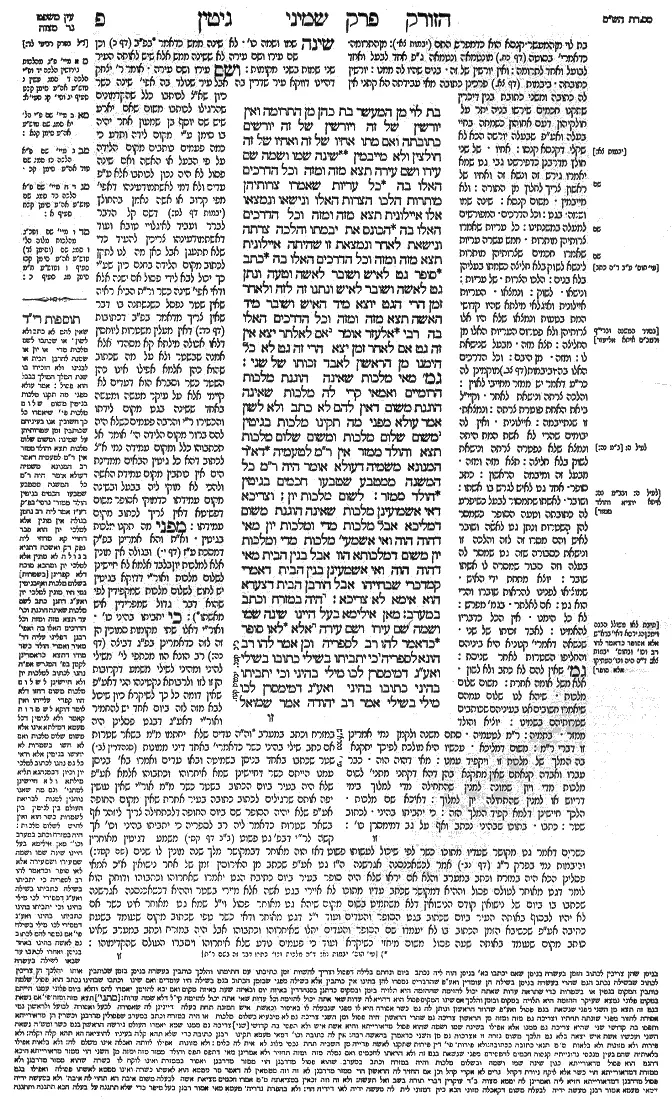
Gittin 80a - Guemara
בת לוי מן המעשר בת כהן מן התרומה ואין יורשין של זה ויורשין של זה יורשים כתובתה ואם מתו אחיו של זה ואחיו של זה חולצין ולא מייבמין שינה שמו ושמה שם עירו ושם עירה תצא מזה ומזה וכל הדרכים האלו בה כל עריות שאמרו צרותיהן מותרות הלכו הצרות האלו ונישאו ונמצאו אלו איילונית תצא מזה ומזה וכל הדרכים האלו בה הכונס את יבמתו והלכה צרתה ונישאת לאחר ונמצאת זו שהיתה איילונית תצא מזה ומזה וכל הדרכים האלו בה כתב סופר גט לאיש ושובר לאשה וטעה ונתן גט לאשה ושובר לאיש ונתנו זה לזה ולאחר זמן הרי הגט יוצא מיד האיש ושובר מיד האשה תצא מזה ומזה וכל הדרכים האלו בה רבי אלעזר אומר אם לאלתר יצא אין זה גט אם לאחר זמן יצא הרי זה גט לא כל הימנו מן הראשון לאבד זכותו של שני:
גמ׳ מאי מלכות שאינה הוגנת מלכות הרומיים ואמאי קרי לה מלכות שאינה הוגנת משום דאין להם לא כתב ולא לשון אמר עולא מפני מה תקינו מלכות בגיטין משום שלום מלכות ומשום שלום מלכות תצא והולד ממזר אין ר"מ לטעמיה דא"ר המנונא משמיה דעולא אומר היה ר"מ כל המשנה ממטבע שטבעו חכמים בגיטין הולד ממזר:
לשום מלכות יון:
וצריכא דאי אשמועינן מלכות שאינה הוגנת משום דמליכא אבל מלכות מדי ומלכות יון מאי דהוה הוה ואי אשמעינן מלכות מדי ומלכות יון משום דמלכותא הוו אבל בנין הבית מאי דהוה הוה ואי אשמעינן בנין הבית דאמרי קמדכרי שבחייהו אבל חורבן הבית דצערא הוא אימא לא צריכא:
היה במזרח וכתב במערב:
מאן אילימא בעל היינו שינה שמו ושמה שם עירו ושם עירה אלא לאו סופר כדאמר להו רב לספריה וכן אמר להו רב הונא לספריה כי יתביתו בשילי כתובו בשילי ואע"ג דמימסרן לכו מילי בהיני וכי יתביתו בהיני כתובו בהיני ואע"ג דמימסרן לכו מילי בשילי אמר רב יהודה אמר שמואל
Comments from Rashi on Masechet Gittin Page 80a
בת לוי מן המעשר . קנסא הוא כדמפרש התם (יבמות צא.): מן התרומה . כדאמרי' בסוטה (דף כח.) מונטמאה ונטמאה ג"פ אחד לבעל ואחד לבועל ואחד לתרומה: ואין יורשין של זה . בנים שהיו לה ממנו: יורשין כתובתה . ביבמות (דף צא.) פרכינן כתובה מאי עבידתה הא קתני אין לה כתובה ומשני כתובת בנין דיכרין שתקנו חכמים שירשו בניה יתר על חולקיהון דעם אחוהון כשמתה בחיי בעלה ואע"פ שבעלה יורשה הכא לא שקלי דקנסא קנסו: אחיו . של שני חולץ מדרבנן כדפירשנו גבי גט שמא יאמרו גירש זה ונשא זה ואחיו של ראשון צריך לחלוץ מן התורה: ולא מייבמין . משום קנסא: שינה שמו ושמה . בגט: וכל הדרכים . המפורשים למעלה במשנתינו: כל עריות שאמרו צרותיהן מותרות . חמש עשרה עריות שאמרו חכמים שצרותיהן מותרות לינשא לשוק בלא חליצה כשמתו בעליהן בלא בנים: הלכו הצרות . של עריות: ונישאו . לשוק: ונמצאו . העריות איילונית ואיגלאי מילתא שהיו קדושי המת בטעות ונמצאו שלא היו אלו צרותיהן ולא פטרום העריות האלו מן החליצה: תצא מזה . מבעל שנישאת לו: ומזה . מן היבם: וכל הדרכים האלו בה . וביבמות (דף צב.) מוקמינן לה כר"ע דאמר יש ממזר מחייבי לאוין: והלכה צרתה ונישאת לאחר . וקיי"ל ביאת האחת פוטרת צרתה: ונמצאת . זו שנתייבמה: איילונית . ואין לה יבומים שהרי לא אשת המת היתה ונמצא שלא נפטרה צרתה ונישאת לשוק בלא חליצה: תצא מזה ומזה . מבעל זה ומיבמה הראשון: כתב סופר . אחד גט לאיש לגרש בו אשתו: ושובר . לאשתו שתמסור לבעל כשיפרע לה כתובתה וטעה הסופר כשמסר להן השטרות ונתן גט לאשה ושובר לאיש והם מסרו זה לזה והלכה זו ונישאת כסבורה שזה גט שמסר לה בעלה וזה סבור שמסרה לו אשתו שובר: יוצא מתחת ידי האיש . שמוציאו לפנינו להראות שוברו והרי הוא גט: אם לאלתר . בגמ' מפרש: לא כל הימנו . אין הכל כדבריו להאמינו: לאבד זכותו של שני . שנשאה דאמרי' קנוניא היא ביניהם והחליפו השטרות לאחר שניסת: גמ' שאין להם לא כתב ולא לשון . אלא משל אומה אחרת: משום שלום מלכות . שיהא לנו שלום עמהם שיאמרו חשובים אנו בעיניהם שכותבים שטרותיהם בשמינו: יוציא והולד ממזר . בתמיה: ר"מ לטעמיה . סתם משנה ולקמן נמי אמרינן זו דברי ר"מ: משום דמליכא . עכשיו היא מולכת לפיכך יתקנא בה המלך של מלכות זו ויקפיד עמנו: מאי דהוה הוה . כבר עברו ואבדה קנאתם שאין מתקנא בהן דהא דקתני מתני' לשום מלכות מדי ויון שמונה למנין שהתחילה מדי למלוך בימי דריוש או למנין שהתחילה יון למלוך: דאיכא שם מלכות . הלכך חיישינן דלמא קפיד המלך הזה: כי יתביתו בהיני . לכתוב שטר: כתבו . בתוכו שבהיני נכתב ואף על גב דמימסרן כו':
Comments from Tosafot - Gittin 80a
שינה שמו ושמה כו' . לא שינה ממש כדאמר בפ"ב (דף כ) וכן שם עירו ושם עירה לא ששינה ממש אלא שיש לאותה העיר שני שמות בשני מקומות: ושם עירו ושם עירה . אומר ר' יצחק דהיינו דווקא עיר שדרין בה אבל עיר שנולד בה אפי' שינה כשר כיון שא"צ לכותבו כלל שהקדמונים שהרגילו לכותבו משום שאם יארע שיש שם יוסף בן שמעון אחר יהיה בו סימן ע"י מקום לידה ותדע כי כמה פעמים כותבים מקום הלידה על פי הבעל או האשה ואם שינה פסול לא היה נכון לכותבו אלא ע"פ עדים ולא דמי לאשתמודעינהו דאפי' מפי קרוב או אשה נאמן בהחולץ (יבמות דף לט:) דשם קל הדבר לברר ועביד לאיגלויי טובא ועוד דאשתמודעינהו צריכין להעיד כדי שלא תתעגן אבל כאן מה לנו לתקן לכתוב מקום הלידה בחנם כיון שע"י כך יכול לבא לידי פסול אם ישנה אלא ודאי אפי' שינה כשר ור"ת הביא ראיה שאין שטר נפסל כשנשתנה בו דבר שאין צריך מדאמר בפ"ב דכתובות (דף כד:) דאין מעלין משטרות ליוחסין דלאו אכולה מילתא קא מסהדי אלא אמנה שבשטר ולא על מה שכתוב שהוא כהן אלמא אפילו אינו כהן השטר כשר וסברא הוא דעדים לא קיימי אלא על עיקר מעשה ומעשה באחד ששינה בגט מקום לידתו והכשירו ר"י והרבה פעמים כשלא היה להם ברור מקום הלידה הי' אומר אל תכתבוהו כלל ומקום עמידה נמי א"צ לכתוב דהא כל גיטין הבאים ממדינת הים אין כותבין מקום עמידת האשה ולהכי לא מוקי ליה בבעל ובשינה מקום עמידתו כדמוקי אסופר משום דפשיטא דאין צריך לכתוב מקום עמידתו: מפני מה תקנו מלכות בגיטין . וא"ת והא אמרינן בפ"ק דמסכת ע"ז (דף י.) ובגולה אין מונין אלא למלכות יון בלבד אלמא לא חיישינן לשלום מלכות ואור"י דדוקא בגיטין יש לחוש לשלום מלכות שמקפידין לפי שהוא דבר גדול שמפרידין איש מאשתו: כי יתביתו בהיני כו' . ואור"י דאלו שתי מקומות סמוכין הן זה לזה כדאמרינן בפ"ג דביצה (דף כה:) רב הונא הוו מכתפי לי' משילי להיני ומהיני לשילי משמע דקרובות הן זו לזו ולרבותא נקטינהו הני דאע"פ שאין דומה כל כך לשיקרא כיון שיכול לבא מזה לזה ביום אחד יש להחמיר ואור"י דאע"ג דבגט פסלינן היה במזרח וכתב במערב. וה"ה עדים שלא יחתמו מ"מ בשאר שטרות אם כתב שילי בהיני כשר כדאמרי' באחד דיני ממונות (סנהדרין לב.) שטר שכתבו באחד בניסן בשמיטה ובאו עדים ואמרו בא' בניסן עמנו הייתם כשר דחיישינן שמא איחרוהו וכתבוהו אלמא אע"פ שלא היה בעיר ביום הכתוב בשטר כשר מ"מ אור"י שאין עושין יפה אותם שרגילים לכתוב כתובה בעיר אחרת שאין מקום החופה אע"פ שלא יהיה הסופר שם ביום החופה דלכתחילה צריך ליזהר אף בשאר שטרות כדאמר. ליה רב לספריה כי יתביתו בהיני וכו' אך קשה לר"י דבפ' גט פשוט (ב"ב דף קס.) משמע דגיטין מאוחרין כשרים דאמר גט מקושר שעדיו מתוכו כשר לפי שיכול לעשותו פשוט דאז הוה מאוחר דבמקושר מלך שנה מונין לו שנים (שם קסד:) וביבמות נמי בפרק ר"ג (דף נב.) אמר לכשאכנסנה אגרשנה ה"ז גט אע"פ שכתב מן האירוסין זמן של אחר. נישואין א"כ אמאי פסלינן הכא היה במזרח וכתב במערב והלא אם יראו שלא היה סופר בעיר ביום כתיבת הגט יאמרו שאחרוהו וכתבוהו ודוחק הוא לומר דגט מאוחר לעולם פסול וההיא דמקושר שכתב עדיו מתוכו לא איירי בגט אשה אלא מיירי בשטר וההיא דכשאכנסנה אגרשנה שכתבו בו ביום של נישואין קודם הנישואין דלא משתמיט בשום מקום שיהא גט מאוחר פסול וי"ל שמא גט מאוחר אינו כשר אם לא יהיו לבסוף באותה העיר ביום שכתוב בגט הסופר והעדים ועוד י"ל דגט מאוחר ודאי כשר טפי שכתוב מקום שעומד בשעת כתיבה אע"פ שכשיבא הזמן הכתוב בו לא יעמדו שם הסופר והעדים יתלו שאיחרוהו וכתבוהו אבל היה במזרח וכתב במערב שאינו כותב מקום שעומד באותה שעה פסול משום מיחזי כשיקרא ועוד כי פעמים נודע שלא איחרוהו ויסברו העולם שהקדימוהו:
Gittin 80a - Mishnah translated into english
If she was the daughter of a Levite, through these two marriages she becomes prohibited from partaking of the tithe that is given to Levites. If she was the daughter of a priest, she becomes prohibited from partaking of teruma, even after she returns to the house of her father the priest.
And the heirs of this husband and the heirs of that husband do not inherit the rights to collect payment of her marriage contract if she dies. And if the husbands die, the brother of this first husband and the brother of that second husband perform ḥalitza, since she was betrothed to the second one as well, and they do not consummate the levirate marriage.
The mishna proceeds to teach an additional halakha concerning a bill of divorce written not in accordance with its halakhot: If he changed his name, i.e., he wrote a different name in the bill of divorce, or he changed her name, or if he changed the name of his city or the name of her city, and she remarried on the basis of this bill of divorce, then she must leave both this first husband and that second husband. And all of those above-mentioned ways of penalizing a woman who remarried based on the bills of divorce detailed in the earlier clause of the mishna apply to her in this case as well.
The mishna teaches another halakha associated with the previous halakhot: With regard to all of those cases in which they said that a man who died without children and left behind a widow who is, to the man’s brother, one of those with whom relations are forbidden, e.g., she is his wife’s sister, not only is there no levirate bond for her, but the rival wives of the brother who died are also permitted to marry without either levirate marriage or ḥalitza.
The mishna discusses another case: These rival wives went and married another man without ḥalitza, and these widows with whom relationships were forbidden were found to be sexually underdeveloped women incapable of bearing children [ailonit]. Therefore, it became clear, retroactively, that the marriage to the dead brother was never valid, and accordingly, the rival wives were never exempt from the obligation of levirate marriage due to their being the rival wives of a forbidden relationship. Consequently, the rival wives were forbidden to marry anyone else without ḥalitza, and the rival wives must leave both this man whom they remarried, and that yavam, i.e., they cannot enter into levirate marriage with him. And all of those above-mentioned ways of penalizing a woman who remarried based on the bills of divorce detailed in the earlier clause of the mishna apply to her in this case as well.
Similarly, with regard to one who marries his yevama, and her rival wife went and got married to another man, and it was found that this yevama was a sexually underdeveloped woman, the rival wife must leave this man whom she remarried and that yavam, i.e., she cannot enter into levirate marriage with him. Because the yevama was a sexually underdeveloped woman, the obligation of levirate marriage never applied to her, and her levirate marriage did not exempt her rival wife. And all of those aforementioned ways of penalizing a woman who remarried based on the bills of divorce detailed in the earlier clause of the mishna apply to her in this case as well.
The mishna now discusses another case: A scribe wrote a bill of divorce for a man, so that the man could divorce his wife with it; and he wrote a receipt for the woman, for her to give to her husband upon receiving payment of her marriage contract, verifying that she received the payment. And the scribe erred and gave the bill of divorce to the woman and the receipt to the man, and not knowing what was written in the documents that were in their possession, they gave what they received from the scribe to each other. The woman gave her husband a bill of divorce and the husband gave his wife a receipt, and consequently, there was no divorce at all.
And after some time, the bill of divorce is in the possession of the man, and the receipt is in the possession of the woman, and they discover that the divorce never actually transpired. If the woman had remarried another man, she must leave this, the first husband, and that, the second husband. And all of those above-mentioned ways of penalizing a woman who remarried based on the bills of divorce detailed in the earlier clause of the mishna apply to her in this case as well.
Rabbi Elazar says: If the bill of divorce is immediately [le’altar] in the husband’s possession, this is not a valid bill of divorce, since he clearly never gave it to her. But if it is in his possession after some time, then this is a valid bill of divorce, since it is not in the power of the first husband to eliminate the right of the second husband. The assumption is that the husband did in fact give her the bill of divorce in the correct manner, but at some point, he took it back from her.
GEMARA: It was stated in the mishna that if one wrote the date on a bill of divorce according to a kingdom that is not legitimate, it is invalid. The Gemara asks: What is the meaning of the description: A kingdom that is not legitimate? The Gemara answers: This is referring to the Roman Empire, and he wrote the bill of divorce in a different country, such as Babylonia, where the Romans were not in power. And why is it called: A kingdom that is not legitimate? Because they have neither their own script, nor their own language, but rather, they took them from other nations.
Ulla said: For what reason did the Sages institute that the date should be written according to the years of the local kingdom, in bills of divorce? Due to the need to maintain peaceful relations with the kingdom, as the government is particular that important documents issued in its domain be written with the date of that government.
The Gemara asks: But due to an ordinance instituted by the Sages solely for the sake of maintaining peaceful relations with the kingdom, would they be so stringent that the woman would be forced to leave her husband, and they would declare the status of the offspring is a mamzer?
The Gemara answers: Yes. Rabbi Meir conforms to his line of reasoning. As Rav Hamnuna says in the name of Ulla: Rabbi Meir would say that anyone deviating from the formula coined by the Sages for bills of divorce, even if it is only a minor deviation, the bill of divorce is invalid, and if the woman remarried on the basis of this bill of divorce, then the offspring from that marriage is a mamzer.
It was stated in the mishna: If he wrote the date on a bill of divorce in the name of the Greek Empire, then the bill of divorce is invalid. The Gemara comments: And it is necessary to state this halakha and the other halakhot as well. As, if the mishna had taught us this halakha only with regard to a kingdom that is not legitimate, one could say that the bill of divorce is invalid because this kingdom is currently ruling, and the local government where he is writing the bill of divorce therefore objects to his writing the date of an another kingdom. But with regard to the kingdom of Media, and the Greek Empire, it is not necessary to invalidate the bill of divorce, since what was, was, and since these kingdoms are no longer in power, the local government is not particular if they are mentioned in a document.
And if the mishna had taught us this halakha with regard to the kingdom of Media and the Greek Empire, one could understand the concern, because they were kingdoms, and the current government objects to another kingdom being mentioned in a document. But if he wrote the date counting to the building of the Temple, then one could say what was, was, and the local government is not particular if this is mentioned in a document. Consequently, it was necessary for the mishna to teach us this halakha as well.
And if the mishna had taught us this halakha with regard to the building of the Temple, then one could say that the reason why this is problematic is because the governments will say: The Jews mention their own praise, instead of honoring the ruling government. But with regard to the destruction of the Temple, which is a cause of anguish for us, say that no, the government is not particular about this. Therefore it is necessary to mention all of these halakhot.
§ It was stated in the mishna, that if he was in the east and he wrote the location in the bill of divorce as in the west, then the bill of divorce is invalid. The Gemara asks: Who is the mishna discussing? If we say that the place of the husband was changed, then this is the same as what is stated later on in the mishna: He changed his name, or her name; the name of his city or the name of her city.
Rather, is it not referring to a scribe who changed the place in which the bill of divorce was written, and did not record the correct location where he was when he wrote the bill of divorce? As Rav said to his scribes, and similarly, Rav Huna said to his scribes: When you are situated in the place called Shili, write the location of the document as: In Shili, even though the matters were presented to you, i.e., the transaction recorded in the document took place, in the place called Hini. And when you are situated in the place called Hini, write: In Hini, even though the matters were presented to you in Shili. One must be careful to write the precise location where the document was written and not somewhere else, as that is considered an illegitimate deviation.
Rav Yehuda says that Shmuel says:
Traduction : The William Davidson digital edition of the Koren Noé Talmud, with commentary by Rabbi Adin Even-Israel Steinsaltz.