 Talmud Bavli
Gittin 37a : Youtube
Daf TubeYoutube
2 video classes :
Gittin Page 37a
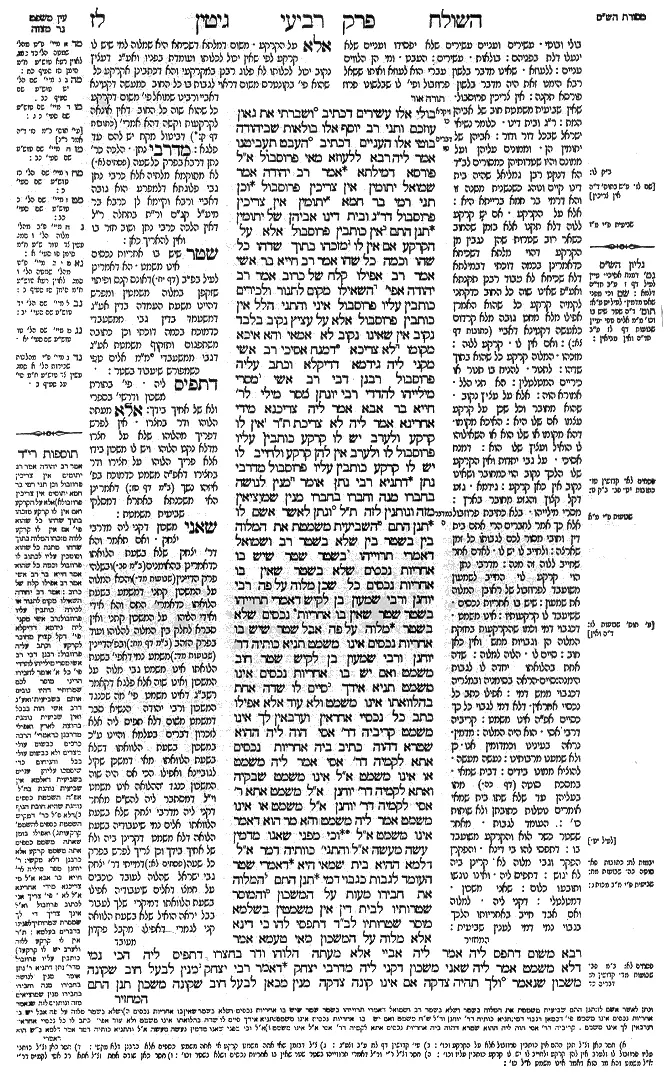
Gittin 37a - Guemara
בולי אלו עשירים דכתיב (ויקרא כו, יט) ושברתי את גאון עוזכם ותני רב יוסף אלו בולאות שביהודה בוטי אלו העניים דכתיב (דברים טו, ח) העבט תעביטנו אמר ליה רבא ללעוזא מאי פרוסבול א"ל פורסא דמילתא אמר רב יהודה אמר שמואל יתומין אין צריכין פרוסבול וכן תני רמי בר חמא יתומין אין צריכין פרוסבול דר"ג ובית דינו אביהן של יתומין תנן התם אין כותבין פרוסבול אלא על הקרקע אם אין לו מזכהו בתוך שדהו כל שהו וכמה כל שהו אמר רב חייא בר אשי אמר רב אפילו קלח של כרוב אמר רב יהודה אפי' השאילו מקום לתנור ולכירים כותבין עליו פרוסבול איני והתני הלל אין כותבין פרוסבול אלא על עציץ נקוב בלבד נקוב אין שאינו נקוב לא אמאי והא איכא מקומו לא צריכא דמנח אסיכי רב אשי מקני ליה גידמא דדיקלא וכתב עליה פרוסבול רבנן דבי רב אשי מסרי מילייהו להדדי רבי יונתן מסר מילי לר' חייא בר אבא אמר ליה צריכנא מידי אחרינא אמר ליה לא צריכת ת"ר אין לו קרקע ולערב יש לו קרקע כותבין עליו פרוסבול לו ולערב אין להן קרקע ולחייב לו יש לו קרקע כותבין עליו פרוסבול מדרבי נתן דתניא רבי נתן אומר מנין לנושה בחברו מנה וחברו בחברו מנין שמוציאין מזה ונותנין לזה ת"ל (במדבר ה, ז) ונתן לאשר אשם לו תנן התם השביעית משמטת את המלוה בין בשטר בין שלא בשטר רב ושמואל דאמרי תרוייהו בשטר שטר שיש בו אחריות נכסים שלא בשטר שאין בו אחריות נכסים כל שכן מלוה על פה רבי יוחנן ורבי שמעון בן לקיש דאמרי תרוייהו בשטר שטר שאין בו אחריות נכסים שלא בשטר מלוה על פה אבל שטר שיש בו אחריות נכסים אינו משמט תניא כותיה דר' יוחנן ורבי שמעון בן לקיש שטר חוב משמט ואם יש בו אחריות נכסים אינו משמט תניא אידך סיים לו שדה אחת בהלוואתו אינו משמט ולא עוד אלא אפילו כתב כל נכסיי אחראין וערבאין לך אינו משמט קריביה דר' אסי הוה ליה ההוא שטרא דהוה כתיב ביה אחריות נכסים אתא לקמיה דר' אסי אמר ליה משמט או אינו משמט א"ל אינו משמט שבקיה ואתא לקמיה דר' יוחנן א"ל משמט אתא ר' אסי לקמיה דר' יוחנן א"ל משמט או אינו משמט אמר ליה משמט והא מר הוא דאמר אינו משמט א"ל וכי מפני שאנו מדמין נעשה מעשה א"ל והתני' כוותיה דמר א"ל דלמא ההיא בית. שמאי היא דאמרי שטר העומד לגבות כגבוי דמי תנן התם המלוה את חבירו מעות על המשכון והמוסר שטרותיו לבית דין אין משמטין בשלמא מוסר שטרותיו לב"ד דתפסי להו בי דינא אלא מלוה על המשכון מאי טעמא אמר רבא משום דתפס ליה אמר ליה אביי אלא מעתה הלוהו ודר בחצרו דתפיס ליה הכי נמי דלא משמט אמר ליה שאני משכון דקני ליה מדרבי יצחק דאמר רבי יצחק מנין לבעל חוב שקונה משכון שנאמר (דברים כד, יג) ולך תהיה צדקה אם אינו קונה צדקה מנין מכאן לבעל חוב שקונה משכון תנן התם
Comments from Rashi on Masechet Gittin Page 37a
בולי ובוטי . עשירים ועניים עשירים שלא יפסידו ועניים שלא ינעלו דלת בפניהם: בולאות . עשירים: העבט . ומי הן הלווים עניים: ללעוזא . שאינו מדבר בלשון עברי הוא לעוזא ואותו ששאל רבא הימנו זאת היה מדבר בלשון פרוזבול ופי' לו שבלשונו פרוז פורסא תקנה: אין צריכין פרוסבול . שאין שביעית משמטת חוב של אביהן המת: ר"ג ובית דינו . כלומר נשיאי ישראל שבכל דור ודור: אביהן של יתומין הן . וממונים עליהן ועל ממונם והיו שטרותיהן כמסורים לב"ד הא דנקט רבן גמליאל שהיה בית דינו קיים ונוהג כשנשנית משנה זו והא דרמי בר חמא ברייתא היא: אלא על הקרקע . אם יש קרקע ללוה דלא תקנו אלא בזמן שהחוב כשאר רוב שטרות שהן נגבין מן הקרקע דהוי מלתא דשכיחא כדאמרינן בכמה דוכתי דבמילתא דלא שכיחא לא עבוד רבנן תקנתא ואע"פ שאינו שוה כל החוב כדקתני לקמיה קרקע כל שהוא האמרן אפילו מלא מחט גובה מלא קרדום כמעשה דקטינא דאביי (כתובות דף צא:): ואם אין לו . קרקע ללוה: מזכהו . המלוה קרקע כל שהוא בתוך שדהו: לתנור . להניח בו תנור או כיריים המטלטלין: הא תני הלל . אמורא הוה: אלא על עציץ נקוב . שהוא מחובר וכל שכן על קרקע עצמו אם שלו היא: האיכא מקומו . דהא מקומו או שלו הוא או השאילוהו לו הואיל ועציץ שלו הוא: דמנח אסיכי . על גבי יתדות ואין הקרקע שלו הלכך נקוב הוי כמחובר ושאינו נקוב אין כאן קרקע: גידמא . גזע דקל קצוץ והגזע מחובר בארץ: מסרי מילייהו . בלא כתיבת פרוזבול אלא כך אמר לחברים הרי אתם בית דין וחובי מסור לכם לגבותו כל זמן שארצה: ולחייב לו יש לו . לאדם אחר שחייב ללוה זה מנה: מדרבי נתן . הוי קרקע לוי החייב לשמעון משועבד לפרוזבול של ראובן המלוה את שמעון: שיש בו אחריות נכסים . ששיעבד לו קרקעותיו: אינו משמט . דכגבוי דמי וכמו שהקרקעות בחזקת המלוה הן וגבויות ממש ואין כאן חוב: סיים לו . הלוה למלוה: שדה אחת בהלואתו . יחדה לו לגבות הימנה: סיים . הראה בסימניה ובמצריה דכגבוי ממש דמי: אפילו כתב כל נכסיי אחראין . דלא דמי לגבוי כל כך כסיים אפ"ה אינו משמט: קריביה דרבי אסי . הוא היה המלוה: מדמין . נראה בעינינו וכמדומין אנו כן ולא שמענו מרבותינו: נעשה מעשה . להוציא ממונו בידים: דבית שמאי . במסכת סוטה (דף כה.) מתו בעליהן עד שלא שתו בית שמאי אומרים נוטלות כתובתן ולא שותות כו': העומד לגבות . מאחר ששטר כשר הוא והקרקע משועבד בו: דתפסי להו בי דינא . והפקרן הפקר וגבי מלוה לא קרינן ביה לא יגוש: דתפיס ליה . ואינו נוגשו ותובעו כלום: שאני משכון . דמטלטלי: דקני ליה . למלוה ואם אבד חייב באחריותו הלכך כגבוי נמי דמי לענין שביעית:
Comments from Tosafot - Gittin 37a
אלא על הקרקע . משום דמלתא דשכיחא היא שמלוה למי שיש לו קרקע לפי שאין יכול לכלותו ועומדת בפניו ואע"ג דעציץ נקוב יכול לכלותו לא פלוג רבנן במקרקעי והא דכתבינן אקרקע כל שהוא פי' בקונטרס משום דראוי לגבות בו כל החוב כמעשה דקטינא דאביי ורבינו שמואל פי' משום דקרקע כל שהוא שוה כל החוב דאין אונאה לקרקעות וקשה דהא אמרי' (כתובות דף ק: דביטול מקח יש להם עד פלגא: מדרבי נתן . הלכה כר' נתן דרבא בפרק כל שעה (פסחים לא.) לא מתוקמא מלתיה אלא כרבי נתן גבי פלוגתא דלמפרע הוא גובה דאביי ורבא וקיימא לן כרבא בר מיע"ל קג"ם ור"ת בתחלה ר"ל דאין הלכה כרבי נתן ושוב חזר בו ואין להאריך כאן: שטר שיש בו אחריות נכסים אינו משמט . הא דאמרינן לעיל בפ"ב (גיטין דף יח.) דאונס קנס ופיתוי שזקפן במלוה משמטין ומפרש דהיינו משעת העמדה בדין אע"ג דמשעמד בדין גבי ממשעבדי כדמוכח בכמה דוכתי וכן כתובה משתפגום ותזקוף משמטת אע"ג דגבי ממשעבדי מ"מ אלים טפי כשמפורש שיעבוד בשטר: דתפיס ליה . פי' בתורת משכון ודרשי' בספרי ולא של אחיך בידך: אלא מעתה הלוהו ודר בחצרו . אין לפרש דפריך מהלוהו שלא על חצרו מדלא נקט הלוהו ויש לו משכון בידו אלא פריך הלוהו על חצירו ודר בחצירו דאפ"ה משמט כדמוכח בפ' איזהו נשך (ב"מ דף סז:) דאמרינן האי משכנתא באתרא דמסלקי שביעית משמטת: שאני משכון דקני ליה מדרבי יצחק . ואם תאמר והא דר' יצחק שלא בשעת הלואתו כדאמרינן בהאומנים (ב"מ פב.) ובשלהי פרק הדיינין (שבועות מד.) והכא המלוה על המשכון קתני דמשמע בשעת הלואתו כדאמרי' התם והא אידי ואידי הלוהו על המשכון קתני ואין סברא לחלק בין המלוה להלוהו ועוד בפרק הזהב (ב"מ דף מח:) ובפ' הדיינין (שבועות מד:) משמע נמי דאפי' בשעת הלואתו אינו משמט גבי מלוה על המשכון ואינו שוה אלא פלגא דקאמר רשב"ג דאינו משמט פי' מה שכנגד המשכון ורבי יהודה הנשיא סבר דמשמט משום דלא תפיס ליה אלא לזכרון דברים בעלמא והיינו ע"כ במשכון בשעת הלוואתו דשלא בשעת הלוואתו מאי דמשכן שקיל לגוביינא ואפילו הכי אם היה שוה המשכון כנגד ההלואה אינו משמט וי"ל דמסתבר ליה להש"ס מאחר דקני ליה מדרבי יצחק שלא בשעת הלוואתו אלים נמי שיעבודיה בשעת הלואה דלא משמט דקרינן ביה ולא של אחיך בידך וכן צריך לפרש בפרק כל שעה (פסחים לא:) דמייתי דר' יצחק גבי ישראל שהלוה לעובד כוכבים על חמצו דאלים שיעבודיה אפילו בשעת הלוואתו דמיקרי שלך לעבור בבל יראה הואיל שלא בשעת הלוואה קני לגמרי דאפילו מקבל פקדון מעובדי כוכבים אם מקבל עליה אחריות מחייב עליה בבל יראה ועובד כוכבים שהלוה לישראל על חמצו אי הוה קני עובד כוכבים מישראל לא מחייב ישראל אפי' משכנו בשעת הלוואה משום דאלים שיעבודיה דלא חשיב מצוי ביד ישראל דדרשינן לא ימצא מי שמצוי בידו למעוטי ייחד לו בית אפי' קיבל עליו אחריות כדאמרינן בפ"ק דפסחים (דף ו.) ומיהו בפ"ק דקידושין (דף ח:). גבי קדשה במשכון אחרים דמקודשת ומייתי מדר' יצחק צריך לומר דדוקא במשכנו שלא בשעת הלוואתו מקודשת דבפרק האומנין (ב"מ פב.) משמע דלא מהני דר' יצחק להתחייב באונסין ולא חשיב אלא כשומר שכר אלמא לא חשיב כשלו לגמרי א"כ מאיזה טעם נחשב כשומר שכר אם לא משום דנהנה דקני ליה לקנות בו את האשה וקרקעות או בחליפין וא"כ . בשעת הלוואתו אינו יכול לקדש בו את האשה:
Gittin 37a - Mishnah translated into english
Bulei, these are the wealthy, as it is written: “And I will break the pride of your power” (Leviticus 26:19), and Rav Yosef taught with regard to this verse: These are the bula’ot, the wealthy people, of Judea. Butei, these are the poor, who are in need of a loan, as it is written: “You shall not shut your hand from your needy brother; but you shall open your hand to him, and you shall lend him [ha’avet ta’avitenu] sufficient for his need” (Deuteronomy 15:7–8). Therefore, the prosbol was instituted both for the sake of the wealthy, so that the loans they would give to the poor person would not be canceled, and for the sake of the poor, so that they would continue to find those willing to lend them money. Rava said to a foreigner who spoke Greek: What is the meaning of the word prosbol? He said to him: It means the institution [pursa] of a matter.
§ Rav Yehuda says that Shmuel says: Orphans do not require a prosbol in order to collect payment of debts owed to them. And similarly, Rami bar Ḥama taught in a baraita: Orphans do not require a prosbol, as Rabban Gamliel and his court, i.e., any rabbinic court, are considered the fathers of orphans, meaning that all matters that relate to orphans are already managed by the court, including their promissory notes.
§ We learned in a mishna there (Shevi’it 10:6): One may write a prosbol only on the basis of the debtor owning land. If the debtor has no land, then the creditor transfers any amount of his own field to him so that he can write a prosbol. The Gemara asks: And how much is sufficient to be classified as any amount? Rav Ḥiyya bar Ashi says that Rav says: Even the amount of land sufficient to grow a stalk of cabbage is sufficient. Rav Yehuda says: Even if he lent him a place sufficient for an oven and a stove, one may write a prosbol on this basis.
The Gemara challenges this statement: Is that so? But didn’t Hillel teach (Tosefta, Shevi’it 8:10): One writes a prosbol only on the basis of the debtor owning merely a perforated pot placed on the ground. This demonstrates that a perforated pot can serve as the basis for the writing of a prosbol, as it is considered to be part of the ground due to the perforation; however, a pot that is not perforated cannot serve as the basis for the writing of a prosbol.
The Gemara continues the question: Since Rav Yehuda stated that possession of the place occupied by the oven is also considered possession of the land underneath with regard to this issue, why can’t a non-perforated pot serve as the basis for a prosbol; but isn’t there the place where the pot is resting? The Gemara answers: No, one cannot compare the case of Rav Yehuda to this case, as it is necessary for Hillel to state his halakha in a case where the pot is resting on stakes and the borrower has no possession of any land at all. Hillel teaches that even so, if the pot is perforated it is considered to be land and may serve as the basis for the writing of a prosbol.
The Gemara recounts a related incident: When Rav Ashi would lend money and wish to write a prosbol he would transfer to the borrower a stump of a palm tree that was still attached to the ground, and he wrote a prosbol based on this. The Sages of the school of Rav Ashi would transfer their matters, i.e., their debts, to each other without writing a prosbol, by stating: You are hereby a court, and the debt is given over to you. Rabbi Yonatan transferred a matter by means of such a statement to Rabbi Ḥiyya bar Abba. Rabbi Yonatan said to him: Do I need anything else? He said to him: You do not need anything else, as this statement alone is sufficient.
The Gemara discusses the requirement for the debtor to have land. The Sages taught: If the debtor has no land but the guarantor has land then one writes a prosbol on the basis of the land of the guarantor. If both he and the guarantor have no land, but another person who is obligated to pay money to the debtor has land, then one writes a prosbol on the basis of this land. This halakha is derived from a statement of Rabbi Natan.
As it is taught in a baraita that Rabbi Natan says: From where is it derived that when one lends one hundred dinars to his friend, and that friend lends an identical sum to his own friend, that the court appropriates the money from this one, the second debtor, and gives it to that one, the first creditor, without going through the middleman, who is both the first debtor and the second creditor? The verse states with regard to returning stolen property: “And gives it to him in respect of whom he has been guilty” (Numbers 5:7). The fact that the verse explains that the money is given to one: “In respect of whom he has been guilty,” indicates that the money should be given directly to the one to whom the money is ultimately owed. In this case as well, the second debtor possesses land, and as he owes money to the first debtor, it is considered as if the second debtor owes money to the first creditor, enabling the first creditor to write a prosbol.
§ We learned in a mishna there (Shevi’it 10:1): The Sabbatical Year abrogates debt both for loans that were contracted with a promissory note and for loans that were contracted without a promissory note. The amora’im disagree with regard to the interpretation of the mishna: It is Rav and Shmuel who both say: Loans that were contracted with a promissory note, is referring to loans that were contracted with a promissory note that contains a property guarantee; loans that were contracted without a promissory note, is referring even to loans that were contracted with a promissory note that does not contain a property guarantee. All the more so, a loan by oral agreement is canceled by the Sabbatical Year.
By contrast, it is Rabbi Yoḥanan and Rabbi Shimon ben Lakish who both say: Loans that were contracted with a promissory note is referring to loans that were contracted with a promissory note that does not contain a property guarantee, whereas loans that were contracted without a promissory note is referring to a loan by oral agreement. However, the Sabbatical Year does not abrogate a loan contracted with a promissory note that contains a property guarantee, as it is as though the creditor had already taken possession of the debtor’s land.
It is taught in a baraita in accordance with the opinion of Rabbi Yoḥanan and Rabbi Shimon ben Lakish: The Sabbatical Year abrogates a promissory note, but if the promissory note contains a property guarantee the Sabbatical Year does not abrogate it. Similarly, it is taught in another baraita: If the debtor specified one field for the repayment of his loan, then it is not canceled. And not only that, but even if he wrote: All of my property is pledged and guaranteed to you, then the Sabbatical Year does not abrogate it, even if he does not specify a field for the repayment of the loan.
The Gemara relates: The relative of Rabbi Asi had a certain promissory note that had a property guarantee written in it. He came before Rabbi Asi and said to him: Does the Sabbatical Year abrogate this loan, or does it not abrogate it? He said to him: It does not abrogate it. He left Rabbi Asi and came before Rabbi Yoḥanan and asked him the same question. Rabbi Yoḥanan said to him: It does abrogate it.
Rabbi Asi came before Rabbi Yoḥanan and said to him: Does the Sabbatical Year abrogate this loan, or does it not abrogate it? He said to him: It does abrogate it. Rabbi Asi challenged him: But wasn’t it the Master himself who said that the Sabbatical Year does not abrogate a promissory note that contains a property guarantee? Rabbi Yoḥanan said to him: Because we think that this should be the halakha should we perform an action based on this? Rabbi Asi said to him: But isn’t it taught in a baraita in accordance with the opinion of the Master? He said to him: Perhaps that baraita is in accordance with the opinion of Beit Shammai, who say more generally: A promissory note that stands to be collected is considered as though it has been collected, and this is why the loan is not abrogated, as it is considered as though the loan had already been repaid. And the halakha is not in accordance with the opinion of Beit Shammai in that issue.
§ We learned in a mishna there (Shevi’it 10:2): With regard to one who lends money to another based on collateral, and one who transfers his promissory notes to a court, the debt owed to them is not canceled. The Gemara asks: Granted, the debt is not canceled when one transfers his promissory notes to a court, as the court seizes the promissory notes, and they are able to collect this debt. But what is the reason that the debt is not canceled for one who lends money based on collateral?
Rava said: Due to the fact that the creditor has seized an item that belongs to the debtor, it is considered as though the debt has already been collected. Abaye said to him: If that is so, then if a creditor loaned money to someone and lives in his courtyard as a collateral for the loan, since he seizes the courtyard, which belongs to the debtor, would you also say that the Sabbatical Year does not abrogate the debt? That would contradict the accepted halakha that in this case the debt is canceled.
Rava said to him: Collateral is different, as the creditor acquires it for himself, as learned from the statement of Rabbi Yitzḥak, as Rabbi Yitzḥak says: From where is it derived that a creditor acquires collateral given to him and is considered its owner so long as the item is in his possession? As it is stated in the verse with regard to the obligation of a creditor to return collateral at night: “And it shall be righteousness for you” (Deuteronomy 24:13). Rabbi Yitzḥak infers: If the creditor does not acquire the collateral, then from where is the righteousness involved in returning it? He would be simply returning an item to its rightful owner. From here it is learned that a creditor acquires the collateral. Therefore, when he returns the collateral to the debtor he is performing an act of charity.
§ We learned in a mishna there (Shevi’it 10:8):
Traduction : The William Davidson digital edition of the Koren Noé Talmud, with commentary by Rabbi Adin Even-Israel Steinsaltz.