 Talmud Bavli
The learning on the whole site is dedicated : L'ilui Nishmat אליעזר בן רחל
The learning on the whole site is dedicated : L'ilui Nishmat Nissim ben Barukh Malka
The learning on the whole site is dedicated : L'ilui Nishmat Margalit bat Ledicia
Gittin 20a : Youtube
Daf TubeYoutube
2 video classes :
Gittin Page 20a
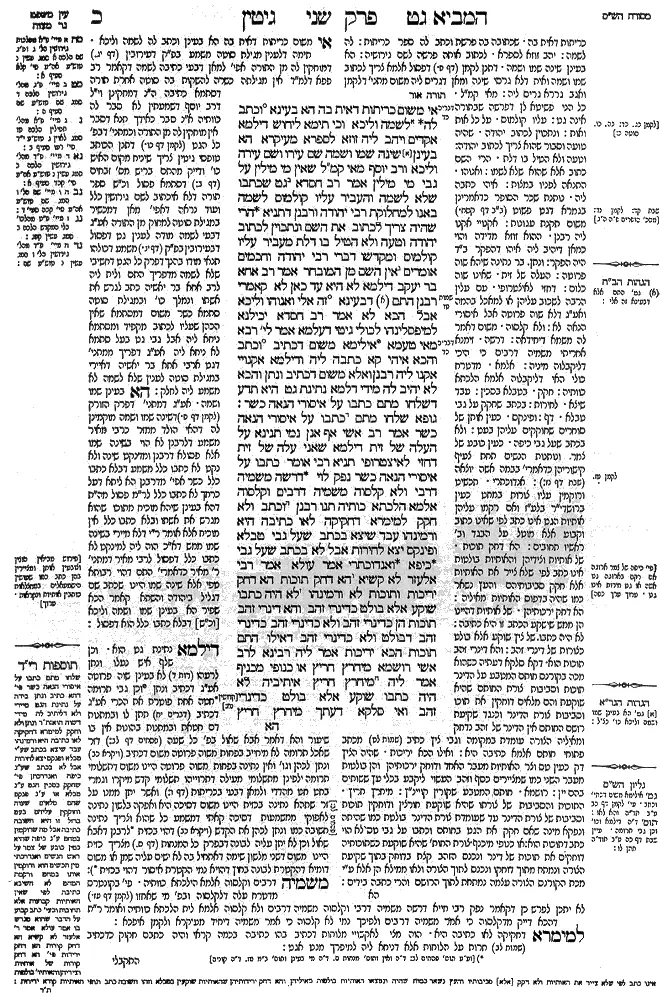
Gittin 20a - Guemara
אי משום כריתות דאית בה הא בעינא (דברים כד, א) וכתב לה לשמה וליכא וכי תימא ליחוש דילמא אקדים ויהב ליה זוזא לספרא מעיקרא הא בעינן שינה שמו ושמה שם עירו ושם עירה וליכא ורב יוסף מאי קמ"ל שאין מי מילין על גבי מי מילין אמר רב חסדא גט שכתבו שלא לשמה והעביר עליו קולמוס לשמה באנו למחלוקת רבי יהודה ורבנן דתניא הרי שהיה צריך לכתוב את השם ונתכוין לכתוב יהודה וטעה ולא הטיל בו דלת מעביר עליו קולמוס ומקדשו דברי רבי יהודה וחכמים אומרים אין השם מן המובחר אמר רב אחא בר יעקב דילמא לא היא עד כאן לא קאמרי רבנן התם דבעינא (שמות טו, ב) זה אלי ואנוהו וליכא אבל הכא לא אמר רב חסדא יכילנא למיפסלינהו לכולי גיטי דעלמא אמר לי' רבא מאי טעמא אילימא משום דכתיב (דברים כד, ג) וכתב והכא איהי קא כתבה ליה ודילמא אקנויי אקנו ליה רבנן ואלא משום דכתיב ונתן והכא לא יהיב לה מידי דלמא נתינת גט היא תדע דשלחו מתם כתבו על איסורי הנאה כשר:
גופא שלחו מתם כתבו על איסורי הנאה כשר אמר רב אשי אף אנן נמי תנינא על העלה של זית דילמא שאני עלה של זית דחזי לאיצטרופי תניא רבי אומר כתבו על איסורי הנאה כשר נפק לוי דרשה משמיה דרבי ולא קלסוה משמיה דרבים וקלסוה אלמא הלכתא כותיה תנו רבנן וכתב ולא חקק למימרא דחקיקה לאו כתיבה היא ורמינהו עבד שיצא בכתב שעל גבי טבלא ופינקס יצא לחירות אבל לא בכתב שעל גבי כיפא ואנדוכתרי אמר עולא אמר רבי אלעזר לא קשיא הא דחק תוכות הא דחק יריכות ותוכות לא ורמינהו לא היה כתבו שוקע אלא בולט כדינרי זהב והא דינרי זהב תוכות הן כדינרי זהב ולא כדינרי זהב כדינרי זהב דבולט ולא כדינרי זהב דאילו התם תוכות הכא יריכות אמר ליה רבינא לרב אשי רושמא מיחרץ חריץ או כנופי מכניף אמר ליה מיחרץ חריץ איתיביה לא היה כתבו שוקע אלא בולט כדינרי זהב ואי סלקא דעתך מיחרץ חריץ
Comments from Rashi on Masechet Gittin Page 20a
כריתות דאית בה . שכתובה בה פרשת וכתב לה ספר כריתות: לה לשמה: יהב זוזא לספרא . לכתוב אותה פרשה לשם גירושיה: הא בעינן שינה שמו ושמה . דתנן לקמן (גיטין דף פ.) דפסול אלמא צריך לכתוב שמו ושמה ואית דלא גרסי שינה ומאן דגריס ליה משום מתני' דלקמן ואגב גררא גריס ליה: מאי קמ"ל . כל הני פשיטא לן דפרשה שבתורה אינה גט: עליו קולמוס . על כל אות ואות: ונתכוין לכתוב יהודה . שהיה טועה וסבור שהוא צריך לכתוב יהודה: וטעה ולא הטיל בו דלת . הרי השם כתוב אלא שהוא שלא לשמו: ואנוהו . התנאה לפניו במצות: איהי כתבה ליה . נותנת שכר הסופר כדאמרינן בגמרא דגט פשוט (ב"ב דף קסח.) משום תקנת עגונות: אקנויי אקנו ליה רבנן . ההוא זוזא מדידה והוי כמאן דיהיב ליה איהו דהפקר ב"ד היה הפקר: ונתן . בר נתינה שיהא שוה פרוטה: העלה של זית . שאינו שוה כלום: דחזי לאיצטרופי . עם עלין הרבה לשכוב עליהן או למאכל בהמה ואע"ג דלא שוה פרוטה אבל איסורי הנאה לא: ולא קלסוה . משום דאמר לה משמא דיחידאה: דרשה . זימנא אחריתי משמיה דרבים כי היכי דליקבלוה מיניה: אלמא . מדטרח כולי האי דליקבלוה אלמא הלכתא כוותיה: חקק . בטבלא בסכין: עבד שיצא . לחירות: בכתב שחקק על גבי טבלא . דף: ופינקס . כעין אותן של סוחרים שחוקקים עליהן בעט: ולא בכתב שעל גבי כיפה . כעין כובע של צמר ונותנות הנשים תחת צעיף קישוריהן כדאמרי' בבמה אשה יוצאה (שבת דף נז:): אנדוכתרי . תכשיט ורוקמין עליו צורות במחט כעין ברושדי"ר בלע"ז ואם רקמו עליהן אותיות הגט אינו כתב לפי שאינו כתוב וקבוע אלא מוטל על הבגד וב' ראשיו תחובים: הא דחק תוכות . של אותיות וצידיהן והאותיות בולטות אינו כתב לפי שלא צייר את האותיות אלא חקק סביבותיהם והעץ נשאר כמו שהיה בדפוס האותיות מאיליה: הא דחק ירכותיהן . של אותיות דהיינו הן ממש שישקע הכתב זו היא כתיבה: לא היה כתבו . של ציץ שוקע אלא בולט כצורות של דינרי זהב: והא דינרי זהב תוכות הוא . דקא סלקא דעתיה כשהוא מכה בקורנס חותם המטבע על הדינר תוכות וסביבות צורת החותם שהיא שוקעת והם מלאים דוחקין את תוכו וסביבות צורת הדינר וכנגד שקיעת רושם החותם אין הדינר של זהב נדחק ומאיליה הצורה עומדת במקומה וגבי ציץ כתיב (שמות לט) מכתב פתוחי חותם אלמא כתיבה היא: ואילו הכא יריכות . שהיה הציץ דק כעין טס וצר האותיות מעבר האחד ודוחק ירכותיהן והן בולטות מעבר השני כמו שמציירים כסף וזהב העשוי ליקבע בכלי עץ ששותים בהם יין: רושמא . חותם המטבע שקורין קויינ"ץ: מיחרץ חריץ . התוכות והסביבות של צורתו שהיא שוקעת חורצין ודוחקין תוכות וסביבות של צורת הדינר עד שעומדת צורת הדינר בולטת כמו שהיתה ונפקא מינה שאם חקק את הגט בחותם וכתבו על גבי טס לא הוי כתב דתוכות הוא: או כנופי מיכנף . צורת החות' שהיא שוקעת כשתוכותיה דוחקים את תוכות של דינר ונכנס הזהב קצת בדוחק בתוך שקיעת הצורה ונמתח מתוך דוחקו ונכנס לתוך הצורה ולאו ממילא הן אלא ע"י מכת הקורנס הצורה עצמה נמתחת לתוך הרושם והרי כתבה בידים:
Comments from Tosafot - Gittin 20a
אי משום כריתות דאית בה הא בעינן וכתב לה לשמה וליכא . תימה דלענין מגילת סוטה משמע בפ"ק דעירובין (דף יג.) דמוחקין לה מן התורה אפי' למאן דבעי כתיבה לשמה דקאמר רב פפא דלמ"ד אין מגילתה כשרה להשקות בה סוטה אחרת תורה דסתמא כתיבה ה"נ דמחקינן וי"ל דרב יוסף דשמעתין לא סבר לה כוותיה א"נ סבר כאידך תנא דסבר אין מוחקין לה מן התורה וכמתני' דבפ' כל הגט (לקמן גיטין דף כו.) דתנן הכותב טופסי גיטין צריך שיניח מקום האיש כו' ודייק מהתם בריש מס' זבחים (דף ב:) דסתמא פסול וכ"ש ספר תורה דלא איכתוב לשם גירושין כלל ועוד נראה דאפי' מאן דמכשיר במגילת סוטה למחוק מן התורה אע"ג דבעי לשמה מודה לענין גט דפסול דבעירובין בפ"ק (דף יג.) משמע דכולהו תנאי מודו בהנך דפרק כל הגט דחשיבי שלא לשמה מדפריך התם ולית ליה לרב אחא בר יאשיה כתב לגרש את אשתו ונמלך כו' ובמגילת סוטה סתמא כשר משום דמסתמא שאין הכהן שעליו לכתוב מקפיד ומסתמא ניחא ליה אבל גבי גט בעל סתמא לא ניחא ליה אע"ג דפריך ממתני' דגט ארבי אחא בר יאשיה דאיירי במגילת סוטה לענין שלא לשמה לא משמע ליה לחלק: הא בעינן שמו ושמה . אע"ג דמתני' דפרק הזורק (לקמן גיטין דף פ.) דשינה שמו ושמה מוקמינן לה דהאי הולד ממזר כרבי מאיר משמע דלרבנן לא הוי בשינה שמו אלא פסולא דרבנן ומדנקט שינה ולא נקט לא כתבו כלל משמע דבלא כתבו כלל כשר אפי' מדרבנן הא ליתא דעל כרחך לא כתבו כלל לר"מ פסול מה"ת דהא בעינן שיהא מוכיח מתוכו שהוא מגרש את אשתו ובלא כתבו כלל אין מוכיח אלא אומר ר"י דלא מיירי בשינה שמו ממש דא"כ הוה ליה למינקט לא כתבו כלל דפסול לרבי מאיר דמתני' ר' מאיר כדאמרי' התם דהוי רבותא טפי אלא שינה שמו היינו שכתב שם דגליל ביהודה והשתא קאמר הכא שפיר הא בעינן שמו ושמה וליכא [וכ"ש] דבלא כתבו כלל הוא דפסול: דילמא נתינת גט הוא . וכן שלף איש נעלו ונתן לרעהו (רות ד) לא בעינן שוה פרוטה אע"ג דכתיב ונתן וכן גבי תרומה חטה אחת פוטרת את הכרי אע"ג דכתיב (דברים יח) תתן לו ובמתנות דם חטאת ובמתנות בהונות אין בו שיעור והא דאמר אבא שאול בפ' כל שעה (פסחים דף לב:) דזר שאכל תרומה לא מיחייב בפחות משוה פרוטה משום דכתיב (ויקרא כב) ונתן לכהן וגו' ואין נתינה בפחות משוה פרוטה היינו משום דתשלומי תרומה ילפינן מתשלומי מעילה דתרוייהו תשלומי קדש מיקרו וגמרי בחט חט מהדדי ולמאן דבעי בכריתות (דף ו:) ואשר יתן ממנו על זר שתהא נתינה בכזית היינו משום דסיכה היא ואפקה בלשון נתינה לאפוקי ממשמעות דסיכה קאתי דמשמע כל שהוא וצריך נתינה חשובה כמו ונתן לכהן את הקדש (ויקרא כב) דהוי בכזית לרבנן דאבא שאול וכן לא יתן עליה לבונה דבפרק כל המנחות (דף ס.) מצריך כזית היינו משום דשני מלשון שימה דאתחיל בה לא ישים עליה שמן או משום דומיא דהקטרת לבונה בחוץ דהויא נמי הקטרת איסור דהוי בכזית: משמיה דרבים וקלסוה אלמא הילכתא כוותיה . פי' בקונטרס מדטרח עלה דלקלסוה ובפ' מי שאחזו (לקמן גיטין דף עז.) לא יתכן לפרש כן דקאמר נפק רבי חייא דרשה משמיה דרבי וקלסוה משמיה דרבים ולא קלסוה אלמא לית הלכתא כוותיה ואומר ר"ת דהכא דייק מדקלסוה כי אמר משמיה דרבים ולפיכך נמי לא קלסוה כי אמר משמיה דיחיד מעיקרא ולקמן איפכא: למימרא דחקיקה לאו כתיבה היא . הוה מצי לאקשויי מלוחות דכתיב בהו כתיבה בכמה קראי והיה כתבם חקוק כדכתיב (שמות לב) חרות על הלוחות אלא דניחא ליה למיפרך מגט אגט:
Gittin 20a - Mishnah translated into english
If there is a concern that the Torah scroll can effect a divorce due to the verses concerning severance of marriage that there are in it, as it is written: “And he writes her a scroll of severance” (Deuteronomy 24:1), this is also not problematic, since it is required, as it states: “And he writes her.” This indicates that the bill of divorce must be written for her sake, i.e., it must be written for the express intent of being used to effect divorce between this specific man and this specific woman, and this is not so in the case of a Torah scroll.
And if you would say that there is reason to be concerned that perhaps he first gave a dinar to the scribe at the outset, when he wrote the Torah scroll, and told him to write the verses discussing divorce for his wife’s sake, isn’t there a need for other things to be written in a bill of divorce as well, as the mishna (80a) teaches: If the scribe changed his name or her name, the name of his city or the name of her city, then the bill of divorce is invalid. The validity of a bill of divorce depends upon these details being written, and they are not in the Torah scroll.
The Gemara asks: But if so, what is Rav Yosef teaching us with his statement? It seems obvious that there is no reason why a Torah scroll could be used as a bill of divorce. The Gemara says: He is teaching us that gall water is not permanent when applied on top of gall water. The novel idea is that there is no need to be concerned that the scribe wrote a bill of divorce in gall water on the outside of the Torah scroll.
§ Rav Ḥisda says: If a bill of divorce was written not for her sake, and the scribe passed over it with a reed pen, meaning that he wrote on top of what was already written, for her sake, then here we have arrived at the dispute between Rabbi Yehuda and the Rabbis.
As it is taught in a baraita: If a scribe writing a Torah scroll was at a point in the text that he needed to write the name of God, spelled yod, heh, vav, heh; and he erred and intended to write Yehuda, spelled yod, heh, vav, dalet, heh, but he made a mistake when writing Yehuda and did not place a dalet in the word, thereby unintentionally writing the name of God in the correct place, then he should pass over it with a reed pen. He writes over what was written and sanctifies it with the intention that he is writing the name of God. This is the statement of Rabbi Yehuda. And the Rabbis say: Even if he adds a second layer of ink, the name has not been written in the optimal manner. According to Rabbi Yehuda, one can supply the intention of writing the name of God for its own sake even when adding a second layer of writing over the first, while according to the Rabbis one cannot. The same dispute would presumably apply in the case of a bill of divorce.
Rav Aḥa bar Ya’akov said: Perhaps that is not so, and the Rabbis say only there, in the case of a Torah scroll, that one may not write the name of God in this manner, because it is required that one perform anything sacred, including the writing of a Torah scroll, in accordance with the verse: “This is my God, and I will glorify Him” (Exodus 15:2). This verse requires that mitzvot be performed in a way that is glorious and aesthetically pleasing, and rewriting in this manner is not considered beautiful. But here, with regard to a bill of divorce, there is no requirement that the bill of divorce be written beautifully, and therefore writing over the bill of divorce is acceptable according to the Rabbis as well.
§ Rav Ḥisda said: I am able to invalidate all the bills of divorce in the world. Most bills of divorce are written in a way that they could be declared invalid. If one were to be particular about certain details, then there would be no valid bills of divorce. Rava said to him: What is the reason that you could invalidate them? If we say: Most bills of divorce are invalid because it is written in the Torah: “And he writes her a scroll of severance” (Deuteronomy 24:1), and here, in the case of most bills of divorce, she writes it for him, as it is customary for a woman to pay a scribe to write the bill of divorce, but then perhaps it could be maintained that the Sages transferred the ownership of the bill of divorce to him, and it is considered as if he wrote it.
But rather, you might say that it is because it is written: “And gives” (Deuteronomy 24:1), which is usually understood to mean that the item given must have some monetary value, and here in the case of most bills of divorce he doesn’t give her anything of value. Perhaps the mere giving of the bill of divorce is the giving mentioned in the Torah, even if it does not have any monetary value. Know that it is not a requirement that the bill of divorce have monetary value, as the Sages sent this message from there, from Eretz Yisrael: If he wrote a bill of divorce on items from which benefit is forbidden, then although the bill of divorce is completely lacking monetary value, the bill of divorce is valid.
§ The Gemara discusses the matter itself: The Sages sent this message from there, from Eretz Yisrael: If he wrote a bill of divorce on items from which benefit is forbidden, the bill of divorce is valid. Rav Ashi said: We, too, learn in the mishna that a bill of divorce may be written on an olive leaf, which has virtually no monetary value. This teaches that the bill of divorce need not have any value on its own, and even forbidden items, which have no value at all, may be used as the base on which the bill of divorce is written. The Gemara rejects this: Perhaps an olive leaf is different, because it can combine with more leaves, and they will add up to have monetary value. However, an item from which one is prohibited from benefiting lacks value entirely, even in large quantities.
With regard to the same halakha, the Gemara quotes an additional source. It is taught in a baraita that Rabbi Yehuda HaNasi says: If the scribe wrote a bill of divorce on items from which benefit is forbidden, it is valid. Levi went out and expounded upon this halakha in the name of Rabbi Yehuda HaNasi, and they did not praise him. He then expounded this halakha in the name of the majority, as an unattributed halakha, and they praised him. Apparently, the halakha is in accordance with the opinion of Rabbi Yehuda HaNasi. Therefore, when he stated the halakha in the name of Rabbi Yehuda HaNasi, an individual, which may have led the listeners to think that it was a minority opinion and not the accepted halakha, they did not praise him.
§ The Sages taught that it is said in the Torah with regard to a bill of divorce: “And he writes her a scroll of severance,” in order to emphasize that one must write the document and not chisel it. The Gemara asks: Is this to say that chiseling is not writing? And the Gemara raises a contradiction based on what was taught in a baraita: If a slave is emancipated through a bill of manumission that was written by being chiseled on a slate [tavla] or on a tablet [pinekas], then he goes free. However, he does not go free through writing on a cap or on an embroidered adornment. If the master embroidered the bill of manumission onto a cloth and gave it to the slave, this is not considered to be like the writing of a document. In any case, the baraita teaches that a bill of manumission that is chiseled onto a slate is valid.
Ulla said that Rabbi Elazar said: It is not difficult. This case, where the document is not valid because engraving is not considered to be writing, occurs when the scribe chiseled the area surrounding the letters, i.e., he chiseled on the surface around the shape of the letters, leaving the letters raised on the tablet. This case, where the document is valid because chiseling is considered to be writing, occurs when he chiseled the parts of the letters, i.e., he chiseled the shape of the letters themselves onto the slate. Since he formed the letters directly, it is considered like writing.
The Gemara asks: And if he chiseled the area surrounding the letters, is this not considered to be writing at all? And the Gemara raises a contradiction based on what was taught: The writing of the High Priest’s frontplate was not embedded, i.e., it was not carved into the frontplate; rather, it protruded like the form on gold dinars. And isn’t the shape on gold dinars formed by chiseling the area surrounding the letters, by applying pressure around the shape, so that the image and writing protrudes, and yet this is considered to be writing?
The Gemara answers: It means that the frontplate was fashioned like the form of gold dinars but not entirely like the form of gold dinars. It was fashioned like the form of gold dinars in that the writing protrudes, but it was not fashioned like the form of gold dinars entirely, as there, in the case of gold dinars, they chiseled the area surrounding the letters. Here, when making the frontplate, the inscription was done by chiseling the parts of the letter, i.e., they would carve the letters from the back of the frontplate so that they protruded from the front. Since the letters were carved directly, it was considered to be writing.
With regard to this issue, Ravina said to Rav Ashi: Does the press that forms a metal coin carve out the background in the metal and the image of the coin is formed on its own, or does it compress the metal inward toward the empty space in the press and the letters are formed through this? He said to him: It carves out the background.
He raised an objection to his opinion based on what was taught earlier: The writing of the High Priest’s frontplate was not embedded, i.e., it was not carved into the frontplate; rather, it protruded like the form on gold dinars. And if it enters your mind to say that a press only carves out the background,
Traduction : The William Davidson digital edition of the Koren Noé Talmud, with commentary by Rabbi Adin Even-Israel Steinsaltz.