 Talmud Bavli
Gittin 62a : Youtube
Daf TubeYoutube
2 video classes :
Gittin Page 62a
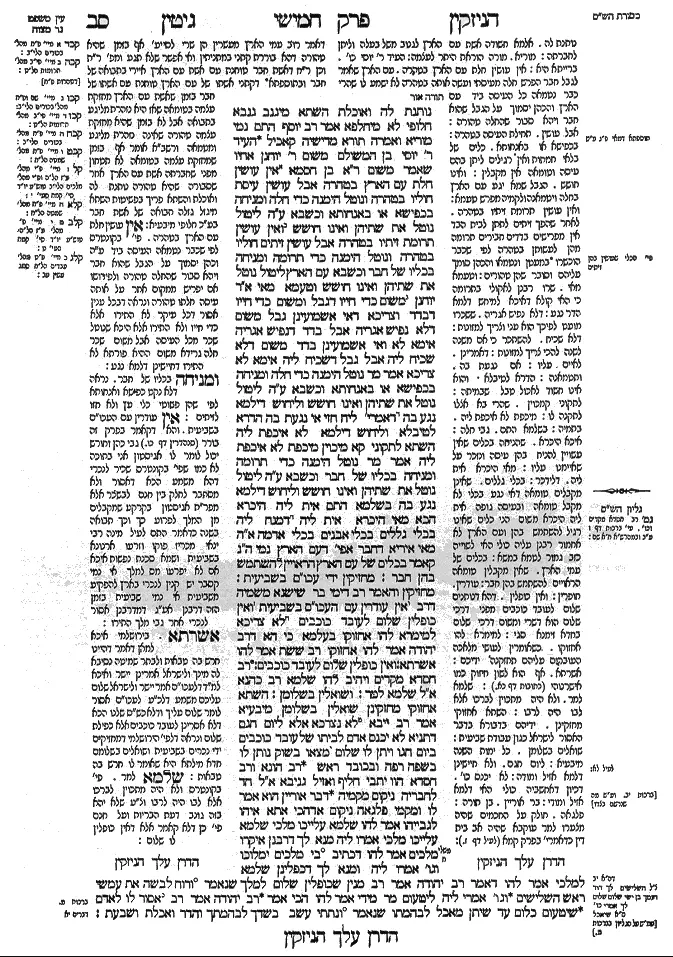
Gittin 62a - Guemara
נותנת לה ואוכלת השתא מיגנב גנבא חלופי לא מיחלפא אמר רב יוסף התם נמי מוריא ואמרה תורא מדישיה קאכיל העיד ר' יוסי בן המשולם משום ר' יוחנן אחיו שאמר משום ר"א בן חסמא אין עושין חלת עם הארץ בטהרה אבל עושין עיסת חוליו בטהרה ונוטל הימנה כדי חלה ומניחה בכפישא או באנחותא וכשבא ע"ה ליטול נוטל את שתיהן ואינו חושש ואין עושין תרומת זיתיו בטהרה אבל עושין זיתים חוליו בטהרה ונוטל הימנה כדי תרומה ומניחה בכליו של חבר וכשבא עם הארץ ליטול נוטל את שתיהן ואינו חושש וטעמא מאי א"ר יוחנן משום כדי חייו דגבל ומשום כדי חייו דבדד וצריכא דאי אשמועינן גבל משום דלא נפיש אגריה אבל בדד דנפיש אגריה אימא לא ואי אשמועינן בדד משום דלא שכיח ליה אבל גבל דשכיח ליה אימא לא צריכא אמר מר נוטל הימנה כדי חלה ומניחה בכפישא או באנחותא וכשבא ע"ה ליטול נוטל את שתיהן ואינו חושש וליחוש דילמא נגע בה דאמרי' ליה חזי אי נגעת בה הדרא לטיבלא וליחוש דילמא לא איכפת ליה השתא לתקוני קא מיכוין מיכפת לא איכפת ליה אמר מר נוטל הימנה כדי תרומה ומניחה בכליו של חבר וכשבא ע"ה ליטול נוטל את שתיהן ואינו חושש וליחוש דילמא נגע בה בשלמא התם אית ליה היכרא הכא מאי היכרא אית ליה דמנח ליה בכלי גללים בכלי אבנים בכלי אדמה א"ה מאי איריא דחבר אפי' דעם הארץ נמי ה"נ קאמר בכלים של עם הארץ הראויין להשתמש בהן חבר:
מחזיקין ידי עכו"ם בשביעית:
מחזיקין והאמר רב דימי בר שישנא משמיה דרב אין עודרין עם העכו"ם בשביעית ואין כופלין שלום לעובד כוכבים לא צריכא למימרא להו אחזוקו בעלמא כי הא דרב יהודה אמר להו אחזוקו רב ששת אמר להו אשרתא:
ואין כופלין שלום לעובד כוכבים:
רב חסדא מקדים ויהיב להו שלמא רב כהנא א"ל שלמא למר:
ושואלין בשלומן:
השתא אחזוקי מחזקינן שואלין בשלומן מיבעיא אמר רב ייבא לא נצרכא אלא ליום חגם דתניא לא יכנס אדם לביתו של עובד כוכבים ביום חגו ויתן לו שלום מצאו בשוק נותן לו בשפה רפה ובכובד ראש רב הונא ורב חסדא הוו יתבי חליף ואזיל גניבא א"ל חד לחבריה ניקום מקמיה דבר אוריין הוא אמר לו ומקמי פלגאה ניקום אדהכי אתא איהו לגבייהו אמר להו שלמא עלייכו מלכי שלמא עלייכו מלכי אמרו ליה מנא לך דרבנן איקרו מלכים אמר להו דכתיב (משלי ח, טו) בי מלכים ימלוכו וגו' אמרו ליה ומנא לך דכפלינן שלמא למלכי אמר להו דאמר רב יהודה אמר רב מנין שכופלין שלום למלך שנאמר (דברי הימים א יב, יט) ורוח לבשה את עמשי ראש השלישים וגו' אמרי ליה ליטעום מר מידי אמר להו הכי אמר רב יהודה אמר רב אסור לו לאדם שיטעום כלום עד שיתן מאכל לבהמתו שנאמר (דברים יא, טו) ונתתי עשב בשדך לבהמתך והדר ואכלת ושבעת:
הדרן עלך הניזקין:
Comments from Rashi on Masechet Gittin Page 62a
נותנת לה . אלמא חשודה אשת עם הארץ לגנוב משל בעלה וליתן לחברתה: מוריא . מורה הוראת היתר לעצמה: העיד ר' יוסי כו' . ברייתא היא: אין עושין חלת עם הארץ בטהרה . עם הארץ שאמר לגבל חבר הפרש חלה מעיסתי ועשה אותה בטהרה לא ישמע לו שהרי כבר נטמאה כל העיסה ביד עם הארץ והכהן יסמוך על הגבל שהוא חבר ויהא סבור שהחלה טהורה: אבל עושין . תחילת העיסה בטהרה: בכפישא או באנחותא . כלים של בלאי חמתות ואין רגילים ליתן בהם עיסה וטומאה אין מקבלין: ואינו חושש . הגבל שמא יגע עם הארץ בחלה ויטמאנה ולקמיה מפרש טעמא: ואין עושין תרומת זיתיו בטהרה . לאחר שהפך זיתים לתתן לבית הבד אין מפרישים בדדים חבירים תרומה מהן לעשותן בטהרה לפי שכבר הוכשרו במעטן ונטמאו והכהן סומך עליהם וסובר שהן טהורים: וטעמא מאי . שרו רבנן לאקולי בתרומה כי האי קולא דאיכא למיחש דלמא הדר נגע: דלא נפיש אגריה . ששכרו מועט לפיכך הוא עני וצריך למזונות: דלא שכיח . להשתכר כי אם משנה לשנה להכי צריך למזונות: דאמרינן . לאיים עליו: אם נגעת בה . ותטמאנה: הדרא לטיבלא . והוא אינו חשוד לאכול טבל שבמיתה: לתקוני קמכוין . שהרי בא אצלו לתקנה לו: מיכפת לא איכפת ליה . בתמיה: בשלמא התם . גבי חלה: איכא היכרא . שהניחה בכלים שאין עשויין להניח בהן עיסה ונזכר על שאיימנו עליו: מאי היכרא אית ליה . דלידכר: בכלי גללים . שאינן מקבלים טומאה דאי נגע בכלי לא מקבל טומאה ובעיסה גופה אית ליה היכרא משום הני כלים שאינו רגיל להשתמש בהן ועם הארץ לא אחמור רבנן עליה כולי האי לשוייה כזב גמור לטמא במשא: בכלים של עמי הארץ . שאין מקבלין טומאה הראויים להשתמש בהן חבר: עודרין . חופרין: ואין כופלין . דהא דנותנים שלום לעובד כוכבים מפני דרכי שלום הוא דשרי ומשום דרכי שלום בחדא זימנא סגי: למימרא להו אחזוקו . כשאומרין לעושי מלאכה העוברים עליהם תחזקנה ידיכם: אשרתא . אף הוא לשון חיזוק כמו אישרנוהי (כתובות דף כא.): שלמא למר . ולא היה מתכוין לברכו אלא לבו היה לרבו: השתא אחזוקי מחזקינן . ידיהם בדבורא בדבר האסור לישראל כגון עבודת שביעית: שואלים בשלומן . כל ימות השנה מיבעיא: ליום חגם . ולא חיישינן דלמא אזיל ומודה: לא יכנס כו' . דכיון דאחשביה כולי האי דלמא אזיל ומודי: בר אוריין . בן תורה: פלגאה . חולק על החכמים שהיה מצערו למר עוקבא שהיה אב בית דין כדאמרי' בפרק קמא (לעיל גיטין דף ז.):
Comments from Tosafot - Gittin 62a
אין עושין חלת עם הארץ בטהרה . פי' בקונטרס לפי שכבר נטמאה העיסה ביד ע"ה וכהן יסמוך על הגבל שהוא חבר ויהא סבור שהחלה טהורה ולפירושו אם יפריש ממקום אחר על אותה עיסה חלתו טהורה ונראה דבכל ענין אסור דכל עיקר לא התירו אלא כדי חייו ולא התירו אלא היכא שנוטל שכר מכל העיסה אבל משום שכר חלה גרידא משום ההיא פורתא לא התירו דחיישינן דלמא נגע: ומניחה בכליו של חבר . נראה דלא נקט כפישא ואנחותא לפי שהן פשוטי כלי עץ ולא חזו לזיתים: אין עודרין עם העכו"ם בשביעית . והא דקאמר בפרק זה בורר (סנהדרין דף כו.) גבי כהן וחורש יכול לומר לו אגיסטון אני בתוכה לא כמו שפי' בקונטרס שכיר לנכרי דהא משמע הכא דאסור ולא מסתבר לחלק בין חנם לבשכר אלא מפר"ת אגיסטון בקרקע שמקבלים מן המלך לפרוע כך וכך תבואה בשנה כדאמר התם לעיל מינה רבי ינאי מכריז פוקו וזרעו ארנונא בשביעית ושמא סכנת נפשות איכא אם לא יפרעו מס למלך אי נמי קסבר יש קנין לנכרי בארץ להפקיע משביעית אי נמי שביעית בזמן הזה דרבנן אע"ג דמדרבנן אסור לנכרי אחר גבי מלך התירו: אשרתא . בירושלמי איכא למאן דאמר דהיינו חרש בה טבאות ולבתר שמיטה נסיבא לה מינך ולישראל אמרינן יישר ואיכא למ"ד דלעכו"ם אמר יישר ולישראל שלום עליכם משמע דלכ"ע לעכו"ם אסור לומר שלום עליך ודלא כש"ס שלנו הכא דלא אסרינן לעובד כוכבים אלא כפילת שלום ונראה דלפי' הירושלמי דמחזיקים ידי נכרים בשביעית ושואלים בשלומם חדא מילתא היא שאומר לו חרש בה טבאות: שלמא למר . פי' בקונטרס ולא היה מתכוין לברכו אלא לבו היה לרבו וצ"ע שלא יהא בזה גונב דעת הבריות ועל חנם פי' כן דלא קאמר אלא דאין כופלין לו שלום: פרק שישי . האומר
Gittin 62a - Mishnah translated into english
may give her food and she may eat it, and there is concern that she will feed others her produce that was not tithed. Now, if there is concern that the wife of the am ha’aretz might steal from her husband and give the other woman food without his permission, should there not be concern that she might exchange her own food with that of the other woman? Can she be relied upon not to make the exchange? She certainly cannot be trusted, and there is concern about this possibility. Consequently, it is not only in the cases of a man’s mother-in-law and an innkeeper that there is concern that food may be exchanged.
Rav Yosef said: There too, the wife of the am ha’aretz rules for herself that she is permitted to do this, and she says: The ox may eat from its threshing. She thinks that while she is engaged in preparing food, it is permitted for her to take from the food and it is not considered stealing. Consequently, it cannot be learned from here that every am ha’aretz is suspected of exchanging his own food with that of another.
§ The Gemara cites a baraita (Tosefta, Demai 3:1) dealing with produce deposited with an am ha’aretz: Rabbi Yosei ben HaMeshullam testified in the name of Rabbi Yoḥanan, his brother, who said in the name of Rabbi Elazar ben Ḥasma: A dough kneader who is a ḥaver may not prepare a loaf to serve as ḥalla for an am ha’aretz while keeping the ḥalla dough in a state of ritual purity. But he may prepare all of his ordinary dough while keeping the dough in a state of purity, and then take the amount required for ḥalla from it, and place it in a basket [kefisha] or vessel [anḥuta], which do not contract ritual impurity. And when the am ha’aretz comes to take what was prepared for him, he can take both the dough and the ḥalla, and the one who prepared the dough does not need to be concerned that the am ha’aretz will impart impurity to the ḥalla.
And similarly, an olive presser who is a ḥaver may not prepare oil from the olives of an am ha’aretz that are teruma while keeping the oil in a state of ritual impurity. But he may prepare all of his ordinary olives while keeping the oil in a state of purity, and then take the amounted required for teruma from all of the oil, and place it in ritually pure vessels belonging to the ḥaver. And when the am ha’aretz comes to take what was prepared for him, he takes both the ordinary oil and the teruma, and the olive presser does not need to be concerned that the am ha’aretz will impart impurity to the teruma.
The Gemara asks: And what is the reason that such leniency was granted? Rabbi Yoḥanan said: For the sake of the kneader’s livelihood and for the sake of the olive presser’s livelihood.
The Gemara comments: And it is necessary for the baraita to state this halakha in both cases, as had the baraita taught it to us only in the case of a kneader, one might have said the following: The Sages were lenient with the kneader because his payment is not great, and therefore he is poor and in need of help, but with regard to an olive presser, whose payment is great, say that the Sages were not lenient with him. And had the baraita taught us the halakha only in the case of an olive presser, one might have said: The Sages were lenient with the olive presser because this type of work is not common. It is performed only during the olive harvest, and therefore there is great concern about his livelihood. But with regard to a kneader, whose work is common and performed year-round, say that the Sages were not lenient with him. Consequently, it is necessary to state the halakha in both cases.
The Gemara proceeds to clarify several points in the aforementioned baraita, in which the Master said: He may take the amount required for ḥalla from it, and place it in a basket or vessel, which do not contract ritual impurity. And when the am ha’aretz comes to take what was prepared for him, he can take both the dough and the ḥalla, and the one who prepared the dough does not need to be concerned that the am ha’aretz will impart impurity to the ḥalla. The Gemara questions this ruling: But let there be a concern lest the am ha’aretz touch the ḥalla and thereby impart impurity to it. The Gemara explains: This is not a concern, because we say to him: See that you do not touch the ḥalla, because if you touch it the dough will once again be considered like untithed produce.
The Gemara questions this explanation: But let there be a concern lest he does not care that the dough will once again be considered untithed. The Gemara explains: Now that it is evident that his intention was to do things in the right manner, and for this reason he employed a kneader who works in a state of ritual purity, can one say that he does not care whether or not his dough is properly prepared?
The Master said with regard to oil, further in that baraita: He may take the amounted required for teruma from all of the oil, and place it in ritually pure vessels belonging to the ḥaver. And when the am ha’aretz comes to take what was prepared for him, he takes both the ordinary oil and the teruma, and the olive presser does not need to be concerned that the am ha’aretz will impart impurity to the teruma. The Gemara questions this ruling: But let there be a concern lest the am ha’aretz touch the teruma oil and impart impurity to it. Granted, there, in the case of ḥalla, there is a conspicuous marker, as one places the ḥalla in a special vessel that is not usually used for dough. But here, what conspicuous marker is there? The Gemara answers: He places the teruma oil in dung vessels, in stone vessels, or in clay vessels, which do not contract ritual impurity.
The Gemara raises a difficulty: If so, why mention specifically the vessels of a ḥaver? The same would hold true even for the vessels of an am ha’aretz, as they do not contract ritual impurity either. The Gemara answers: That is also what the tanna is saying, i.e., the olive presser takes the amount required for teruma and places it in vessels belonging to the am ha’aretz that cannot contract ritual impurity and are therefore fit to be used by a ḥaver.
§ The mishna teaches that one may assist gentiles who work the land during the Sabbatical Year. The Gemara asks: May one really assist them? But didn’t Rav Dimi bar Shishna say in the name of Rav: One may not hoe with a gentile during the Sabbatical Year, and one may not double the greeting extended to a gentile, saying: Shalom, shalom? The Gemara answers: No, one may not actually help a gentile in his work, but it is necessary to state that one may merely say to them: Be strong, as in that incident where Rav Yehuda said to gentiles in such a situation: Be strong, and Rav Sheshet said to them: Well done. Statements of this kind are certainly permitted.
It was stated above in the name of Rav that one may not double the greeting of shalom extended to a gentile. The Gemara relates that Rav Ḥisda would greet gentiles first so that he would not have to respond to the greeting extended to him with a twofold shalom. Rav Kahana, by contrast, would wait for their greeting, and then say to them: Peace to my master, thereby freeing himself from having to say shalom twice.
The mishna teaches that one may extend greetings to gentiles on account of the ways of peace. The Gemara asks: Now that it is taught that one may assist them, is it necessary to say that one may extend greetings to them? Rav Yeiva said: This halakha is necessary only on their holidays, as it is taught in a baraita: A person may not enter the home of a gentile on his holiday and extend greetings to him, as it appears that he is blessing him in honor of his holiday. If he encounters him in the market, he may greet him in an undertone and in a solemn manner, so that he does not appear to be rejoicing with him.
§ With regard to the matter of doubling one’s greeting, the Gemara relates that Rav Huna and Rav Ḥisda were once sitting when the Sage Geneiva passed by alongside them. One of them said to the other: We should stand before him, in his honor, for he is a son of Torah. The other one said to him: But should we stand before an argumentative person? In the meantime, Geneiva approached them and said to them: Peace be upon you, kings, peace be upon you, kings. They said to him: From where do you know that the Sages are called kings? He said to them: As it is written with regard to the Torah in the book of Proverbs: “Through me kings rule” (Proverbs 8:15).
Rav Huna and Rav Ḥisda said to him further: And from where do you know that we must double the greeting of shalom extended to kings? He said to them: As Rav Yehuda says that Rav says: From where is it derived that one must double the greeting of shalom extended to a king? As it is stated: “And the spirit clothed Amasai, who was chief of the captains, and he said: We are yours, David, and on your side, you son of Yishai; peace, peace be to you” (I Chronicles 12:19), indicating that a king is greeted with a doubled shalom.
Rav Huna and Rav Ḥisda said to Geneiva: Does the Master wish to taste something? Geneiva said to them: So says Rav Yehuda that Rav says: It is prohibited for a person to taste anything until he gives food to his animal, as it is stated in the verse: “And I will give grass in the field for your animals” (Deuteronomy 11:15), and only afterward is it written in that verse: “And you shall eat and be satisfied.” I have yet to feed my animal, so I may not eat.
Traduction : The William Davidson digital edition of the Koren Noé Talmud, with commentary by Rabbi Adin Even-Israel Steinsaltz.