 Talmud Bavli
Gittin 29a : Youtube
Daf TubeYoutube
2 video classes :
Gittin Page 29a
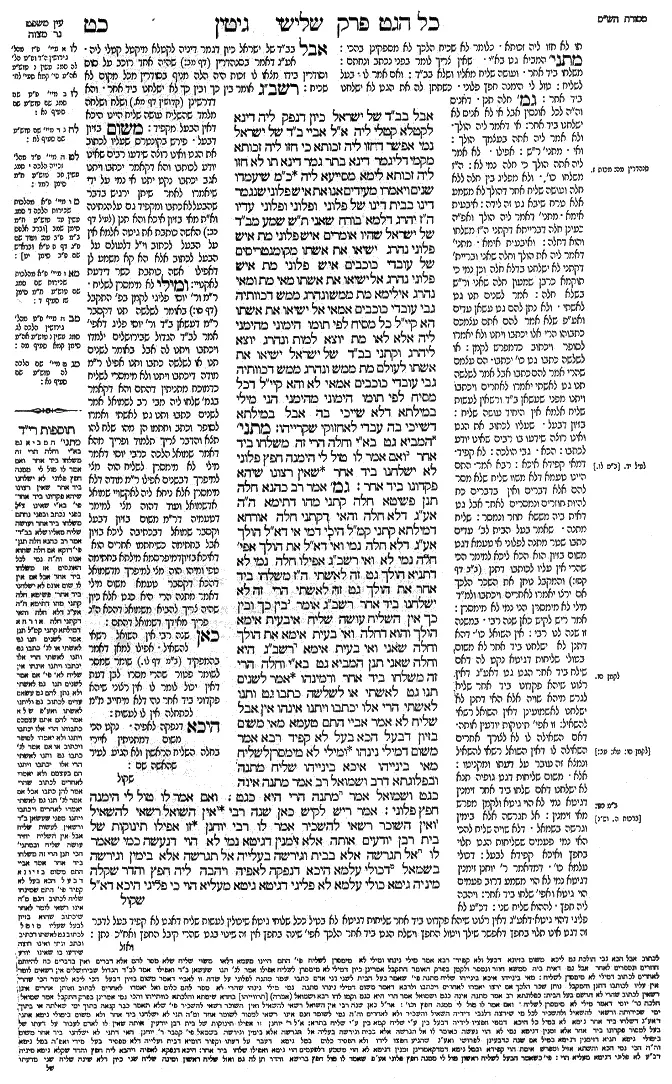
Gittin 29a - Guemara
אבל בב"ד של ישראל כיון דנפק ליה דינא לקטלא קטלי ליה א"ל אביי ב"ד של ישראל נמי אפשר דחזו ליה זכותא כי חזו ליה זכותא מקמי דליגמר דינא בתר גמר דינא תו לא חזו ליה זכותא לימא מסייעא ליה כ"מ שיעמדו שנים ויאמרו מעידים אנו את איש פלוני שנגמר דינו בבית דינו של פלוני ופלוני ופלוני עדיו ה"ז יהרג דלמא בורח שאני ת"ש שמע מב"ד של ישראל שהיו אומרים איש פלוני מת איש פלוני נהרג ישיאו את אשתו מקומנטריסים של עובדי כוכבים איש פלוני מת איש פלוני נהרג אל ישיאו את אשתו מאי מת ומאי נהרג אילימא מת ממש ונהרג ממש דכוותיה גבי עובדי כוכבים אמאי אל ישיאו את אשתו הא קיי"ל כל מסיח לפי תומו הימוני מהימני ליה אלא לאו מת יוצא למות ונהרג יוצא ליהרג וקתני בב"ד של ישראל ישיאו את אשתו לעולם מת ממש ונהרג ממש דכוותיה גבי עובדי כוכבים אמאי לא והא קיי"ל דכל מסיח לפי תומו הימוני מהימני הני מילי במילתא דלא שייכי בה אבל במילתא דשייכי בה עבדי לאחזוקי שקרייהו:
מתני׳ המביא גט בא"י וחלה הרי זה משלחו ביד אחר ואם אמר לו טול לי הימנה חפץ פלוני לא ישלחנו ביד אחר שאין רצונו שיהא פקדונו ביד אחר:
גמ׳ אמר רב כהנא חלה תנן פשיטא חלה קתני מהו דתימא ה"ה אע"ג דלא חלה והאי דקתני חלה אורחא דמילתא קתני קמ"ל היכי דמי אי דא"ל הולך אע"ג דלא חלה נמי ואי דא"ל את הולך אפי' חלה נמי לא ואי רשב"ג אפילו חלה נמי לא דתניא הולך גט זה לאשתי ה"ז משלחו ביד אחר את הולך גט זה לאשתי הרי זה לא ישלחנו ביד אחר רשב"ג אומר בין כך ובין כך אין השליח עושה שליח איבעית אימא הולך והוא דחלה ואי בעית אימא את הולך וחלה שאני ואי בעית אימא רשב"ג היא וחלה שאני תנן המביא גט בא"י וחלה הרי זה משלחו ביד אחר ורמינהו אמר לשנים תנו גט לאשתי או לשלשה כתבו גט ותנו לאשתי הרי אלו יכתבו ויתנו אינהו אין אבל שליח לא אמר אביי התם טעמא מאי משום בזיון דבעל הכא בעל לא קפיד רבא אמר משום דמילי נינהו ומילי לא מימסרן לשליח מאי בינייהו איכא בינייהו שליח מתנה ובפלוגתא דרב ושמואל רב אמר מתנה אינה כגט ושמואל אמר מתנה הרי היא כגט:
ואם אמר לו טול לי הימנה חפץ פלוני:
אמר ריש לקיש כאן שנה רבי אין השואל רשאי להשאיל ואין השוכר רשאי להשכיר אמר לו רבי יוחנן זו אפילו תינוקות של בית רבן יודעים אותה אלא זימנין דגיטא נמי לא הוי דנעשה כמי שאמר לו אל תגרשה אלא בבית וגירשה בעלייה אל תגרשה אלא בימין וגירשה בשמאל דכולי עלמא היכא דנפקה לאפיה ויהבה ליה חפץ והדר שקלה מיניה גיטא כולי עלמא לא פליגי דגיטא גיטא מעליא הוי כי פליגי היכא דא"ל
Comments from Rashi on Masechet Gittin Page 29a
תו לא חזו ליה זכותא . כלומר לא שכיח הלכך לא מספקינן בהכי: מתני' המביא גט בא"י . שאין צריך לומר בפני נכתב ונחתם: משלחו ביד אחר . ועושה שליח מאליו ושלא בב"ד: ואם אמר לו . בעל לשליח: טול לי הימנה חפץ פלוני . כשתתן לה את הגט לא ישלחנו ביד אחר: גמ' חלה תנן . דאניס וה"ה לכל אונסין אבל אי לא אניס לא ישלחנו ביד אחר: אי דאמר ליה הולך . ולא אמר ליה אתה בעצמך הולך: ואי . מתני' ר"ש: אפילו . לא אמר ליה אתה הולך כי חלה נמי לא: ה"ז משלחו כו' . ולא מפליג בין חלה ללא חלה ועושה שליח אחר דהולך לא משמע אלא טרח שיבא גט זה לידה: איבעית אימא . מתני' דאמר ליה הולך ואפ"ה בעינן חלה דברייתא דקתני ה"ז משלחו והוא דחלה: ואיבעית אימא . מתני' דאמר ליה את הולך וחלה שאני ובריית' דקתני לא ישלחנו בדלא חלה וכן נמי כי תוקמא כרבן שמעון חלה שאני ור"ש בשלא חלה: אמר לשנים תנו גט לאשתי . ולא נתן להם גט עשאן. עדים ואע"פ שלא אמר להם אתם עצמכם כתבוהו הרי אלו יכתבו ויתנו ולא יאמרו לסופר ויכתוב כדמפרש לקמן: או לשלשה כתבו גט כו' יכתבו . הם עצמם שהרי אמר להם כתבו אבל אמר לשלשה תנו גט לאשתי יאמרו לאחרים ויכתבו ויתנו מפני שעשאן ב"ד ורשאין לעשות שליח אלמא אין היחיד עושה שליח: בזיון דבעל . שעליו לכתוב את הגט ואינו רוצה שידעו בו רבים שאינו יודע לכתבו: הכא . גבי הולכה: לא קפיד . דמאי קפידא איכא: רבא אמר . התם היינו טעמא דלא משוו שליח שלא מסר להם אלא דברים ואין בדברים כח להיות חוזרים ונמסרים לאחר אבל גט דאית ביה מששא חוזר ונמסר: שליח מתנה . שאמר בעל הבית לב' עדים כתבו שטר מתנה לפלוני אי טעמא דגט משום בזיון הוא הכא ליכא למימר הכי שהרי אין עליו לכותבו דתנן (ב"ב דף קסז:) והמקבל נותן את השכר הלכך אם ירצו יאמרו לאחרים ויכתבו ולמ"ד מילי לא מימסרן הני נמי לא מימסרן: אמר ריש לקיש כאן שנה רבי . במשנה זו שנה לנו רבי: אין השואל כו' . דהא דתנן לא ישלחנו ביד אחר לא משום בטולי שליחות דגיטא נקט לה דאם שילח ביד אחר הגט גט דאע"ג דאין רצונו שיהא פקדונו ביד אחר שליח לגרש מיהא שויה אלא האי דתנן לא ישלחנו לאשמועינן דאין השואל רשאי להשאיל: זו אפי' תינוקות יודעין אותה . דאם השאילה לו לא לצורך אחרים השאילה לו דאין השואל רשאי להשאיל ונמצא זה עובר על דעתו ומקניטו: אלא . משום שליחות דגט גופיה תנא לא ישלחנו דאם שלחו ביד אחר זימנין דגיטא נמי לא הוי גיטא ולקמן מפרש מאי זימנין: אל תגרשה אלא בימין וגרשה בשמאל . דלא שויה שליח להכי האי נמי פעמים ששליחות הגט תלוי בחפץ ואיכא קפידא לבעל: דכולי עלמא כו' . דמדאמר ר' יוחנן זימנין דגיטא נמי לא הוי משמע דרוב פעמים הוי גיטא ואפי' שלחו ביד אחר: ויהבה ליה חפץ . לההוא שליח שני: דכ"ע לא פליגי דהוי גיטא . דאע"ג דאין רצונו שיהא פקדונו ביד אחר שליחות דגיטא לא בטיל ככל שלוחי גיטא שיכולין לעשות שליח דאגט לא קפיד בעל לדבר זה דגט אינו תלוי בחפץ דאפשר שילך ויטול החפץ וישלח הגט ביד אחר הלכך אפי' שינה בחפץ אין זה שינוי בגט שהרי קיבל החפץ ואח"כ נתן:
Comments from Tosafot - Gittin 29a
אבל בב"ד של ישראל כיון דגמר דיניה לקטלא מיקטל קטלי ליה . אע"ג דאמר בסנהדרין (דף מב:) שהיה אחד רוכב על סוס וסודרין בידו מצאו לו זכות היה הלה מניף בסודרין מכל מקום לא שכיח: רשב"ג אומר בין כך ובין כך לא ישלחנו ביד אחר . והא דדרשינן (קדושין דף מא.) ושלח ושלחה מלמד שהשליח עושה שליח היינו היכא דאין הבעל מקפיד: משום בזיון דבעל . פירש בקונטרס שעליו לכתוב את הגט ואינו רוצה שידעו רבים שאינו יודע לכותבו והא דקאמר יכתבו ויתנו אגב יכתבו נקט יתנו אי נמי על ידי שיאמרו לאחר שיתן ירגיש בדבר שהבעל לא כתבו ומקפיד גם על הנתינה וא"ת מאי בזיון איכא והא תנן (לעיל גיטין דף כב:) האשה כותבת את גיטה אלמא אין על הבעל לכתוב וי"ל דלעולם על הבעל לכתוב אלא הא קא משמע לן דאפילו אשה כותבת כשר דידעת לאקנויי: ומילי לא מימסרן לשליח . ר"מ ור' יוסי פליגי לקמן בפ' התקבל (גיטין דף סו:) באומר לשלשה תנו דקסבר ר"מ דעשאן ב"ד ור' יוסי פליג דאפי' אמר לב"ד הגדול שבירושלים ילמדו ויכתבו ויתנו לה אבל באומר לשנים תנו או לשלשה כתבו ותנו אפילו ר"מ מודה דיכתבו ויתנו ולא מימסרי לשליח כדמוכח מתניתין דהתם והא דקאמר בגמ' שלחו ליה מבי רב לשמואל אמר לשנים כתבו ותנו גט לאשתי ואמרו לסופר וכתב וחתמו הן מהו שלח להו תצא והדבר צריך תלמוד ופריך מהא דאמר שמואל הלכה כרבי יוסי דאמר מילי לא מימסרן לשליח הוה מצי למיפרך דבשנים אפילו ר"מ מודה דלא מימסרן אלא ניחא ליה לאקשויי שמואל אדשמואל ועוד דהוה מצי למימר דטעמיה דר"מ משום בזיון דבעל וקסבר שמואל דבכתיבה ליכא בזיון אבל בחתימה כשיחתמו אחרים הוא דאיכא בזיון דמיפרסמא מילתא בחתימה טפי ומיהו הוה מצי למיפרך מדשמואל דהכא דקסבר טעמא משום מילי דאמר מתנה הרי היא כגט אלא כיון שהיה צריך להביא משמואל דהכא ה"נ פריך מאידך דשמואל דהתם: כאן שנה רבי אין השואל רשאי להשאיל . אפילו למאן דאמר בהמפקיד (ב"מ דף לו.) שומר שמסר לשומר פטור שהרי מסרו לבן דעת דאין יכול לומר לו אין רצוני שיהא פקדוני ביד אחר נהי דלא מיחייב מ"מ לכתחלה אין לו לעשות: היכא דנפקה לאפיה . נקט הכי משום דמתניתין איירי בחלה השליח הראשון ולא הגיע לעיר שהאשה שם:
Gittin 29a - Mishnah translated into english
but in a Jewish court, once his verdict to be executed has emerged, they execute him.
Abaye said to him: In a Jewish court as well, it is possible that the court will see fit to acquit him afterward and he will be released. Rav Yosef said: When the court sees fit to acquit him, it is before the verdict; after the verdict the court will not further see fit to acquit him, as it is uncommon for the court to find a reason to acquit him after his verdict has been delivered.
The Gemara suggests: Let us say that a mishna (Makkot 7a) supports Rav Yosef’s opinion: Concerning one who fled from the court after his verdict was issued, the mishna states: Any place where two witnesses arise and say: We testify about so-and-so that his verdict was finalized in the court of so-and-so, and so-and-so and so-and-so were his witnesses, the halakha is that this person should be killed. It is evident from the mishna in tractate Makkot that there is no concern that the court might later have found a reason to release him. The Gemara answers: Perhaps one who flees is different, as the court will not reconsider his verdict once he has fled.
The Gemara suggests another proof: Come and hear: If one heard from a Jewish court that they were saying: The man so-and-so died, or: The man so-and-so was killed, then the court allows his wife to marry. If he heard from a gentile judicial registrar: The man so-and-so died, or: The man so-and-so was killed, then the court does not allow his wife to marry.
The Gemara clarifies: What does it mean when it says: Died, and what does it mean when it says: Was killed? If we say that it means that he actually died, and that he actually was killed, such that the case concerning the gentiles is stated in a similar manner, i.e., that he heard from the gentile registrar that the person was actually dead, why may the court not allow his wife to marry? Don’t we maintain that with regard to any gentile who speaks offhandedly, the Sages deemed him credible? Therefore, the gentile should be deemed credible when he says that someone died or was killed.
Rather, is it not necessary to explain that when it says: Died, it means that he is going out to die, and when it says: Was killed, it means that he is going out to be executed. And it teaches: If one heard in a Jewish court then the court allows his wife to marry, as it is assumed that he was already executed, in support of the statement of Rav Yosef.
The Gemara answers: Actually, it can be explained that he actually died, and was actually killed; and with regard to that which you said: Such that the case concerning the gentiles is stated in a similar manner, why may the court not allow his wife to marry? Don’t we maintain that with regard to any gentile who speaks offhandedly, the Sages deemed him credible? The answer is that this credibility applies only in a matter that is not relevant to the gentiles; but in a matter that is relevant to the gentiles, such as here, where they desire to publicize that they carried out their verdict, it is common for them to reinforce their false verdict.
MISHNA: With regard to an agent who brings a bill of divorce in Eretz Yisrael, where his only responsibility is to transmit the bill of divorce to the wife, and the agent became sick, this agent may send it in the possession of another agent. But if the husband said to the agent: When you transmit the bill of divorce to my wife, take for me such and such an item from her that I left with her as a deposit, then he may not send it in the possession of another agent. This is because it is assumed that it is not the desire of the husband that his deposit be in the possession of another person whom he did not appoint as his agent.
GEMARA: Rav Kahana said: We learned in the mishna that the agent became sick; otherwise, he may not appoint a second agent. The Gemara asks: This is obvious, as the mishna teaches explicitly that the agent became sick. The Gemara answers: Lest you say that the same is true, i.e., that he may transfer the bill of divorce to another agent, even though the agent did not become sick, and the reason that the mishna teaches specifically that he became sick is that the mishna teaches the matter in the manner in which it typically occurs, as an agent typically fulfills his agency, barring unavoidable circumstances, therefore, Rav Kahana teaches us that an agent may appoint another agent only when he becomes sick.
The Gemara clarifies: What are the circumstances of his appointment as an agent? If this is a case where the husband said to the agent: Deliver this bill of divorce to my wife, then even though the agent did not become sick, he may also appoint an agent in his place, as the husband did not state that he must be the one to deliver the bill of divorce. And if this is a case where he said to the agent: You, deliver this bill of divorce to my wife, then even if he became sick, he also may not appoint a second agent in his place, as the husband specified that he must be the one to deliver the bill of divorce. And if the mishna is in accordance with the opinion of Rabban Shimon ben Gamliel, then even if he became sick he also may not appoint a second agent, no matter what the husband said.
The Gemara explains: As it is taught in a baraita in the Tosefta (2:13): If the husband said to an agent: Deliver this bill of divorce to my wife, then this agent may send it in the possession of another agent. However, if the husband said: You, deliver this bill of divorce to my wife, then this agent may not send it in the possession of another agent. Rabban Shimon ben Gamliel says: Whether the husband said it like this or whether the husband said it like that, the agent may not designate another agent. Therefore, Rav Kahana’s statement is difficult.
The Gemara answers: If you wish, say that the mishna is referring to a case where the husband said to his agent: Deliver the bill of divorce, without specifying that he must be the one to do so, and Rav Kahana understood the baraita as follows: And this halakha, that he may send it in the possession of another agent, applies only when the agent became sick. And if you wish, say that the mishna is referring to a case where the husband said: You deliver, but one who became sick is different, and it is assumed that under those circumstances the husband would allow him to designate another agent. And if you wish, say that the mishna is even in accordance with the opinion of Rabban Shimon ben Gamliel, that an agent is ordinarily not permitted to designate another agent. But a case where the agent became sick is different, and the agent may designate another agent.
We learned in the mishna: With regard to an agent who brings a bill of divorce in Eretz Yisrael, and the agent became sick, this agent may send it in the possession of another agent. And the Gemara raises a contradiction from a mishna (66a): If the husband said to two people: Give a bill of divorce to my wife, or if he said to three people: Write a bill of divorce and give it to my wife, then these people should write it and give it. The Gemara infers from the mishna: They themselves, yes, they should do so, but one whom they appoint as an agent may not do so.
Abaye said: There, what is the reason that an agent may not be appointed? It is due to degradation of the husband, who does not want the matter to become known, and therefore they may not designate another agent. However, here, after he has already sent the bill of divorce, the husband is not particular that word not spread, and therefore the agent may designate another agent in his place.
Rava said: There is a different reason that in the case of the mishna (66a) the agent may not appoint another to write the bill of divorce; it is because of the fact that in the case there, the husband’s instructions are mere words, and verbal directives cannot be delegated to an agent, i.e., an agent cannot be deputized to give instructions on behalf of another. Therefore, they cannot take their oral instructions and transfer them to another. In the case of the mishna here, the agent is able to give the physical bill of divorce to another agent and thereby transfer his agency.
The Gemara asks: What is the difference between the explanations offered by Abaye and Rava? The Gemara answers: There is a practical difference between them in the case of an agent appointed to write a deed of a gift, and their disagreement is parallel to the dispute of Rav and Shmuel. Rav says: A deed of gift is not like a bill of divorce, as the gift giver does not care who writes the deed. Since it is not degrading to him if another agent writes the deed of gift instead of the agent that he appointed, the agent may appoint another agent. And Shmuel says: A deed of gift is like a bill of divorce, as the mere words instructing the agent to write the deed cannot be transferred to another agent.
§ The mishna teaches: But if the husband said to the agent: When you transmit the bill of divorce to my wife, take for me such and such an item from her, then the agent may not appoint a second agent, as it is not the desire of the husband that his deposit be in the possession of another. Reish Lakish says: Here, Rabbi Yehuda HaNasi taught that a borrower is not allowed to lend the item that he borrowed to someone else, and a renter is not allowed to rent out the item that he rented to someone else. In those cases, the same reasoning applies, i.e., that it is not the desire of the owner that his item be in the possession of another.
Rabbi Yoḥanan said to him: Even schoolchildren know this halakha, and this is not the novel idea expressed in the mishna. The novel idea expressed in the mishna is as follows: Not only is it not permitted for an agent to appoint another agent in this case, as it violates the desire of the husband, but sometimes it happens that the bill of divorce is also not valid if a second agent is appointed. This is because the first agent becomes as one that it was said to him: Divorce her only in the house, and he divorced her in the attic; or the husband said: Divorce her only with your right hand, and he divorced her with his left hand. Here as well, since the agent violated the instructions the divorce will not be valid.
The Gemara elaborates: Everyone agrees that when it happens that the wife went out to greet him and gave him the item that the husband requested, and then she took the bill of divorce from him, in this case everyone agrees that the bill of divorce is a proper bill of divorce. When they disagree is in a case when the husband said to the agent:
Traduction : The William Davidson digital edition of the Koren Noé Talmud, with commentary by Rabbi Adin Even-Israel Steinsaltz.