 Talmud Bavli
Gittin 7a : Youtube
Daf TubeYoutube
2 video classes :
Gittin Page 7a
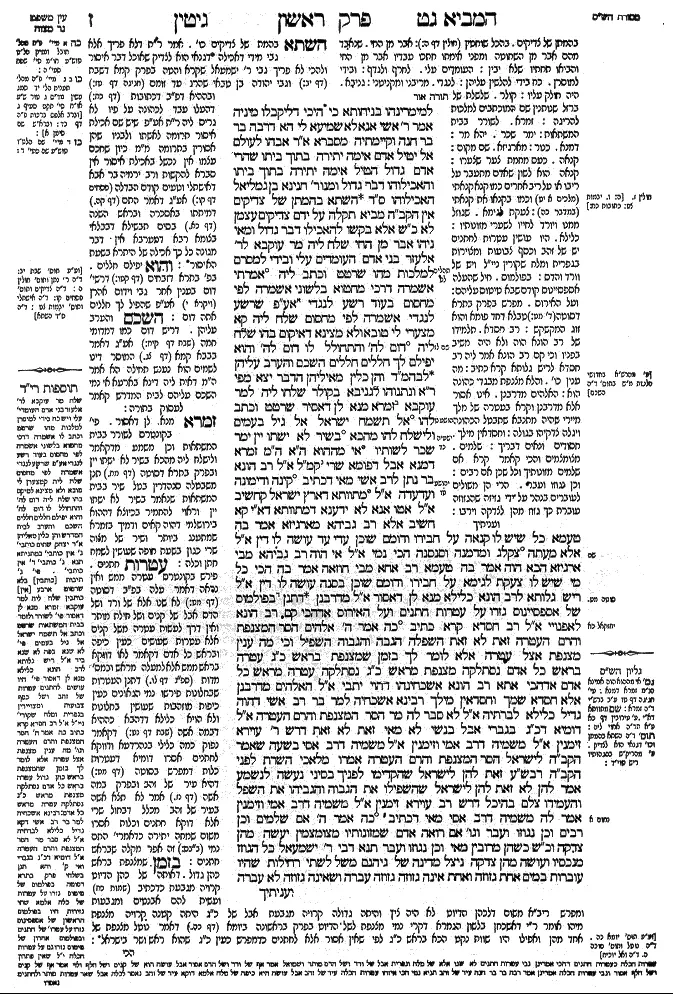
Gittin 7a - Guemara
למימרינהו בניחותא כי היכי דליקבלו מיניה אמר ר' אשי אנא לא שמיעא לי הא דרבה בר בר חנה וקיימתיה מסברא א"ר אבהו לעולם אל יטיל אדם אימה יתירה בתוך ביתו שהרי אדם גדול הטיל אימה יתירה בתוך ביתו והאכילוהו דבר גדול ומנו ר' חנינא בן גמליאל האכילוהו ס"ד השתא בהמתן של צדיקים אין הקב"ה מביא תקלה על ידם צדיקים עצמן לא כ"ש אלא בקשו להאכילו דבר גדול ומאי ניהו אבר מן החי שלח ליה מר עוקבא לר' אלעזר בני אדם העומדים עלי ובידי למסרם למלכות מהו שרטט וכתב ליה (תהלים לט, ב) אמרתי אשמרה דרכי מחטוא בלשוני אשמרה לפי מחסום בעוד רשע לנגדי אע"פ שרשע לנגדי אשמרה לפי מחסום שלח ליה קא מצערי לי טובא ולא מצינא דאיקום בהו שלח ליה (תהלים לז, ז) דום לה' והתחולל לו דום לה' והוא יפילם לך חללים חללים השכם והערב עליהן לבהמ"ד והן כלין מאיליהן הדבר יצא מפי ר"א ונתנוהו לגניבא בקולר שלחו ליה למר עוקבא זמרא מנא לן דאסיר שרטט וכתב להו (הושע ט, א) אל תשמח ישראל אל גיל בעמים ולישלח להו מהכא (ישעיהו כד, ט) בשיר לא ישתו יין ימר שכר לשותיו אי מההוא ה"א ה"מ זמרא דמנא אבל דפומא שרי קמ"ל א"ל רב הונא בר נתן לרב אשי מאי דכתיב (יהושע טו, כב) קינה ודימונה ועדעדה א"ל מתוותא דארץ ישראל קחשיב א"ל אטו אנא לא ידענא דמתוותא דא"י קא חשיב אלא רב גביהא מארגיזא אמר בה טעמא כל שיש לו קנאה על חבירו ודומם שוכן עדי עד עושה לו דין א"ל אלא מעתה (יהושע טו, לא) צקלג ומדמנה וסנסנה הכי נמ א"ל אי הוה רב גביהא מבי ארגיזא הכא הוה אמר בה טעמא רב אחא מבי חוזאה אמר בה הכי כל מי שיש לו צעקת לגימא על חבירו ודומם שוכן בסנה עושה לו דין א"ל ריש גלותא לרב הונא כלילא מנא לן דאסור א"ל מדרבנן דתנן בפולמוס של אספסיינוס גזרו על עטרות חתנים ועל האירוס אדהכי קם רב הונא לאפנויי א"ל רב חסדא קרא כתיב (יחזקאל כא, ג) כה אמר ה' אלהים הסר המצנפת והרם העטרה זאת לא זאת השפלה הגבה והגבוה השפיל וכי מה ענין מצנפת אצל עטרה אלא לומר לך בזמן שמצנפת בראש כ"ג עטרה בראש כל אדם נסתלקה מצנפת מראש כ"ג נסתלקה עטרה מראש כל אדם אדהכי אתא רב הונא אשכחינהו דהוי יתבי א"ל האלהים מדרבנן אלא חסדא שמך וחסדאין מילך רבינא אשכחיה למר בר רב אשי דהוה גדיל כלילא לברתיה א"ל לא סבר לה מר הסר המצנפת והרם העטרה א"ל דומיא דכ"ג בגברי אבל בנשי לא מאי זאת לא זאת דרש ר' עוירא זימנין א"ל משמיה דרב אמי וזימנין א"ל משמיה דרב אסי בשעה שאמר הקב"ה לישראל הסר המצנפת והרם העטרה אמרו מלאכי השרת לפני הקב"ה רבש"ע זאת להן לישראל שהקדימו לפניך בסיני נעשה לנשמע אמר להן לא זאת להן לישראל שהשפילו את הגבוה והגביהו את השפל והעמידו צלם בהיכל דרש רב עוירא זימנין א"ל משמיה דרב אמי וזימנין אמר לה משמיה דרב אסי מאי דכתיב (נחום א, יב) כה אמר ה' אם שלמים וכן רבים וכן נגוזו ועבר וגו' אם רואה אדם שמזונותיו מצומצמין יעשה מהן צדקה וכ"ש כשהן מרובין מאי וכן נגוזו ועבר תנא דבי ר' ישמעאל כל הגוזז מנכסיו ועושה מהן צדקה ניצל מדינה של גיהנם משל לשתי רחילות שהיו עוברות במים אחת גזוזה ואחת אינה גזוזה גזוזה עברה ושאינה גזוזה לא עברה
Comments from Rashi on Masechet Gittin Page 7a
בהמתן של צדיקים . בהכל שוחטין (חולין דף ה:): אבר מן החי . שנאבד מהם אבר מן השחוטה ומפני אימתו חתכו עבדיו אבר מן החי והביאו תחתיו שלא יבין: העומדים עלי . לחרף ולגדף: ובידי למוסרן . כח בידי להלשין עליהן: לנגדי . מריבני ומקניטני: גניבא . היה חולק עליו: קולר . שלשלת של ברזל שנותנין שם המוכתבים למלכות להריגה: זמרא . לשורר בבית המשתאות: ימר שכר . יהא מר: דמנא . כנור: מארגיזא . שם מקום: קנאה . כעס מחמת צער שצערו: קנאה . הוא לשון שאדם מתעבר על ריבו או על ריב אחרים כמו קנא קנאתי (מלכים א יט) וכמו בקנאו את קנאתי (במדבר כה): צעקת לגימא . שגוזל ממנו ויורד לחייו לשערי מזונותיו: כלילא . היו עושין עטרות לחתנים יש של זהב וכסף צבועות ומצוירות בגפרית ומלח שקורין ניי"ל ויש של וורד והדס: בפולמוס . חיל שהעלה אספסיינוס קודם שבא טיטוס עליהם: ועל האירוס . מפרש בפרק בתרא דסוטה (ד' מט:) טבלא דחד פומא והוא זוג המקשקש: רב חסדא . תלמידו של רב הונא הוה ולא היה משיב בפניו וכי קם רב הונא אמר ליה רב חסדא לריש גלותא קרא כתיב: מה ענין כו' . והלא מצנפת מבגדי כהונה הוא: האלהים מדרבנן . אינו אסור אלא מדרבנן וקרא בעטרה של מלך מיירי שהיה מתנבא שתבטל הכהונה ויגלה צדקיהו בגולה: וחסדאין מילך . חסודים ונאים דבריך: שלמים . מצומצמים והכי קאמר קרא אם שלמים מזונותיך וכל שכן אם רבים: וכן נגוזו ועבר . הרי הן משולים לעוברים בנהר על ידי גזיזה שהגזוזה עוברת כך גזוז מהן לצדקה וירבו:
Comments from Tosafot - Gittin 7a
השתא בהמתן של צדיקים כו' . אמר ר"ת דלא פריך אלא גבי מידי דאכילה דגנאי הוא לצדיק שאוכל דבר איסור ולהכי לא פריך גבי ר' ישמעאל שקרא והטה בפרק קמא דשבת (דף יב:) וגבי יהודה בן טבאי שהרג עד זומם (חגיגה דף טז:) ובההיא דפ"ב דכתובות (דף כח:) דהעלו עבד לכהונה על פיו לא גריס ליה ר"ת אע"פ שיש שם אכילת איסור תרומה לאשתו ולבניו שהן אסורין בתרומה מ"מ כיון שחכם עצמו אין נכשל באכילת איסור אין סברא להקשות ורב ירמיה בר אבא דאישתלי וטעים קודם הבדלה (פסחים דף קו:) אע"ג דאמר התם (דף קה.) דמיתתו באסכרה ובראש השנה (דף כא.) בסיס תבשילא דבבלאי בצומא רבא דמערבא אין דבר מגונה כל כך אכילה של היתרא בשעת האיסור.: והוא יפילם חללים . בפ' בתרא דזבחים (דף קטו:) דרשי' דום בענין אחר גבי וידום אהרן (ויקרא י) אע"פ שהפיל לך חללים אתה דום: השכם והערב עליהן . דריש דום כמו דמדומי חמה (שבת דף קיח:) אע"ג דאמר בבבא קמא (דף צג.) המוסר דינו לשמים הוא נענש תחילה הא אמר ה"מ דאית ליה דינא בארעא אי נמי השכם עליהם לבית המדרש קאמר לעסוק בתורה: זמרא מנא לן דאסור . פי' בקונטרס לשורר בבית המשתאות וכן משמע מדקאמר ולישלח ליה מהכא בשיר לא ישתו יין ובפרק בתרא דסוטה (דף מח.) תנן משבטלה סנהדרין בטל שיר בבית המשתאות שנאמר בשיר לא ישתו יין וראוי להחמיר בכיוצא דההוא בירושלמי דהוה קאים ודמיך בזמרא שמתענג ביותר ושיר של מצוה שרי כגון בשעת חופה שעושין לשמח חתן וכלה: עטרות חתנים . פירש בקונטרס עטרה ממש ואין נראה דאמר עלה בפ"ב דסוטה (דף מט:) לא שנו אלא של ורד ושל הדס אבל של קנים ושל חילת מותר ואין דרך לעשות עטרה משל קנים אלא עטרות שעושים כעין כיפה ובראש כל אדם דקאמר לאו דווקא בראש ממש אלא למעלה מראש ובמס' מדות (ספ"ג דף לו.) דתנן העטרות שבחלונות פירשו נמי הגאונים כעין כיפות מוזהבות שעושין בחלונות ולא הויא כלילא דדהבא כההיא דבמה אשה (שבת דף נט:) דקאמר נפוק כמה כלילי בנהרדעא ודווקא לחתנים אסרו דומיא דעטרות כלות דמפרש בסוטה (דף מט:) דהיא עיר של זהב ובפרק במה אשה (דף נז.) אמר לא תצא אשה בעיר של זהב מכלל דבחול שרי אלא דוקא חתנים וכלות אסרו משום שמחה יתירה כדאמרי' התם נמי (ב"בס:) זה אפר מקלה שבראש חתנים: בזמן שמצנפת בראש כהן גדול . דאותה של כהן הדיוט קרויה מגבעת כדכתיב (שמות כח) ועשית להם אבנטים ומגבעות ומפרש ריב"א משום דלכהן הדיוט לא היה ציץ והיתה גדולה קרויה מגבעת אבל של כ"ג היתה קטנה קרויה מצנפת מיהו אומר ר"י דאשכחן בלשון הגמרא דקרי נמי מצנפת לשל הדיוט בפרק בראשונה ביומא (דף כה.) דאמר נוטל מצנפת של אחד מהן ואפילו היו שוות נקט הכא בראש כ"ג לפי שאין אסור אלא לחתנים כדמפרש כעין כ"ג שהוא ראש ושר בישראל:
Gittin 7a - Mishnah translated into english
say them with calmness so that they will accept instruction from him. Rav Ashi said: I did not hear this statement of Rabba bar bar Ḥana, and yet I fulfilled it through my own reasoning.
Rabbi Abbahu says: A person should never impose excessive fear upon the members of his household, as a great man imposed excessive fear upon his household and they fed him something that carried a great prohibition.
The Gemara asks: And who was this individual? The Gemara answers: Rabbi Ḥanina ben Gamliel. The Gemara asks: Would it enter your mind to say that they actually fed him forbidden food? Now consider that the Holy One, Blessed be He, does not cause an error to be performed through the animals of the righteous. With regard to the righteous themselves is it not all the more so? How can you say that Rabbi Ḥanina ben Gamliel ate forbidden food?
Rather, it means that they sought to feed him something that carried a great prohibition. And what was this? A limb from a living animal. One day the animal they brought him was missing a limb, and as the members of his household were very fearful they severed a limb from a living animal to make his meal appear whole, and he almost ate it.
§ After mentioning letters sent from Eretz Yisrael to Babylonia and the issue of scoring parchment, the Gemara relates: Mar Ukva, the Exilarch in Babylonia, sent a letter to Rabbi Elazar, who was in Eretz Yisrael, in which the following was written: With regard to people who stand over and torment me, and I have the power to deliver them into the hands of the government, what is the halakha? May I hand them over to the authorities or not?
Rabbi Elazar scored parchment and wrote to him the following verse: “I said: I will take heed to my ways, that I do not sin with my tongue; I will keep a curb upon my mouth, while the wicked is before me” (Psalms 39:2). Rabbi Elazar quoted this verse to allude to the following response: Even though “the wicked is before me,” “I will keep a curb upon my mouth.”
Mar Ukva sent word to him again: They are tormenting me a great deal and I cannot stand them. Rabbi Elazar sent to him in response: “Resign yourself to the Lord, and wait patiently [hitḥolel] for Him; do not fret yourself because of he who prospers in his way, because of the man who brings wicked devices to pass” (Psalms 37:7). This verse indicates: “Resign yourself to the Lord,” i.e., do not do anything, and He will strike them down as many corpses [ḥalalim]. Rise before and stay later than them in your visits to the study hall, and they will disappear on their own. The Gemara relates: The matter emerged from the mouth of Rabbi Elazar, and Geneiva, Mar Ukva’s tormentor, was placed in a neck iron [kolar], as one sentenced by the government.
The Gemara further relates: They sent the following question to Mar Ukva: From where do we derive that song is forbidden in the present, following the destruction of the Temple? He scored parchment and wrote to them: “Rejoice not, O Israel, to exultation, like the peoples” (Hosea 9:1).
The Gemara asks: And let him send them a response from here: “They do not drink wine with a song; strong drink is bitter to them who drink it” (Isaiah 24:9), indicating that song is no longer allowed. The Gemara answers: If he had answered by citing that verse, I would say that this matter applies only to instrumental music, in accordance with the previous verse: “The mirth of tabrets ceases, the noise of them who rejoice ends, the joy of the harp ceases” (Isaiah 24:8); however, vocal song is permitted. Therefore, Mar Ukva teaches us that all types of song are forbidden.
In connection to the incident in which Mar Ukva was instructed not to take revenge against his tormentors, the Gemara relates similar discussions. Rav Huna bar Natan said to Rav Ashi: What is the meaning of that which is written: “Kina, and Dimonah, and Adadah” (Joshua 15:22)? He said to him: The verse is listing the cities of Eretz Yisrael.
Rav Huna said to him: Is that to say that you think I don’t know that the verse is listing the cities of Eretz Yisrael? This is certainly the straightforward meaning of the verse. Rather, Rav Geviha from Argiza said an explanation of this verse, suggesting that it is an allusion to the following idea: Anyone who harbors jealousy [kina] toward another, and yet remains silent [domem], He who dwells for all eternity [adei ad] performs judgment on his behalf.
Rav Ashi said to him: If that is so, you should also expound the verse: “Ziklag, and Madmannah, and Sansannah” (Joshua 15:31), in a similar manner. Rav Huna said to him: If Rav Geviha from Bei Argiza was here, he would say an explanation for it. The Gemara relates: Rav Aḥa from Bei Ḥoza’a said this about that verse: Anyone who has a complaint against another over a sip [tza’akat legima], i.e., he has a claim that someone did not give him food, and remains silent [domem], the One who dwells in the burning bush [seneh] performs judgment on his behalf.
The Exilarch said to Rav Huna: From where do we derive that it is prohibited to place a garland on a groom’s head? Rav Huna said to him: It is prohibited by rabbinic law, as we learned in a mishna (Sota 49a): In the war [pulmus] of Vespasian they decreed upon the garlands of bridegrooms, meaning that bridegrooms may no longer wear garlands, and they decreed upon the drum [irus], meaning they also banned the playing of drums.
In the meantime Rav Huna stood to relieve himself, and after he left, Rav Ḥisda, who had not spoken up to that point out of reverence for his teacher, Rav Huna, said to the Exilarch: A verse is written with regard to this matter: “Thus says the Lord God: The mitre shall be removed, and the garland taken off; this shall no more be the same; that which is low shall be exalted, and that which is high abased” (Ezekiel 21:31).
But in what way is a mitre connected to a garland? These two are not placed on the head of the same type of person. Rather, this verse serves to say to you: When the mitre is found on the head of the High Priest, i.e., when the Temple is standing, then a garland may be found on the head of every man at his wedding. However, once the mitre is removed from the head of the High Priest, the garland is removed from the head of every man.
In the meantime, Rav Huna came back and he found them sitting and discussing this matter. He said to Rav Ḥisda in the form of an oath: By God! This prohibition applies by rabbinic law. However, your name is Ḥisda and your words find favor [ḥisda’in], as you have discovered a fine source for this halakha.
The Gemara relates: Ravina found Mar bar Rav Ashi braiding a garland for his daughter upon her marriage. He said to him: Doesn’t the Master hold in accordance with the aforementioned halakha derived from the verse: “The mitre shall be removed and the garland taken off”? He said to him: This prohibition was stated in reference to one who is similar to a High Priest, and is only applicable with regard to men. However, with regard to women, the Sages did not issue this decree.
With regard to the above verse, the Gemara asks: What is the meaning of the expression: “This shall no more be the same”? Rabbi Avira interpreted this verse homiletically. Sometimes he would say it in the name of Rav Ami, and sometimes he would say it in the name of Rav Asi: When the Holy One, Blessed be He, said to the Jewish people at the time of the destruction of the Temple: “Remove the mitre and take off the garland,” the ministering angels said before the Holy One, Blessed be He: Master of the Universe, is this the appropriate treatment for the Jewish people, who, at the giving of the Torah at Sinai, preceded the statement of: “We will do” to the statement: “We will hear” (Exodus 24:7)?
God said to them: Is this not appropriate for the Jewish people, who lowered the exalted and who exalted the lowly, i.e., they did not serve God, and instead worshiped idols when they established an idol in the Sanctuary? This response is alluded to in the verse: “This shall no more be the same.”
The Gemara cites another statement by the same Sages. Rav Avira interpreted a verse homiletically. Sometimes he would say it in the name of Rav Ami, and sometimes he would say it in the name of Rav Asi: What is the meaning of that which is written: “Thus says the Lord: Though they be in full strength [shelemim], and likewise many, even so shall they be cut down, and he shall pass away; and though I have afflicted you, I will afflict you no more” (Nahum 1:12). This means: If a person sees that his sustenance is limited he should use it for charity, and all the more so when it is plentiful. In other words, if his livelihood has finished [nishlam] he should perform charity, and he should certainly act in this manner if his means are plentiful.
The Gemara asks: What is the meaning of the phrase: “Even so shall they be cut down [nagozzu], and he shall pass away”? A Sage from the school of Rabbi Yishmael taught: Anyone who shears off [gozez] some of his property and performs charity with it will be saved from the judgment of Gehenna. The Gemara offers a parable that compares this case to two sheep that were passing through the water. One of them was shorn and the other one was unshorn. The shorn sheep crossed to the other side, but the unshorn sheep did not cross, as its wool absorbed the water and it drowned. Similarly, one who shears off his property and gives it as charity will not descend to Gehenna.
Traduction : The William Davidson digital edition of the Koren Noé Talmud, with commentary by Rabbi Adin Even-Israel Steinsaltz.