 Talmud Bavli
The learning on the whole site is dedicated : L'ilui Nishmat Jacques Isaac Ben Amram Loubaton
The learning on the whole site is dedicated : L'ilui Nishmat Chemouel Eliezer ben Batcheva
The learning on the whole site is dedicated : L'ilui Nishmat Nissim ben Barukh Malka
Gittin 17a : Youtube
Daf TubeYoutube
2 video classes :
Gittin Page 17a
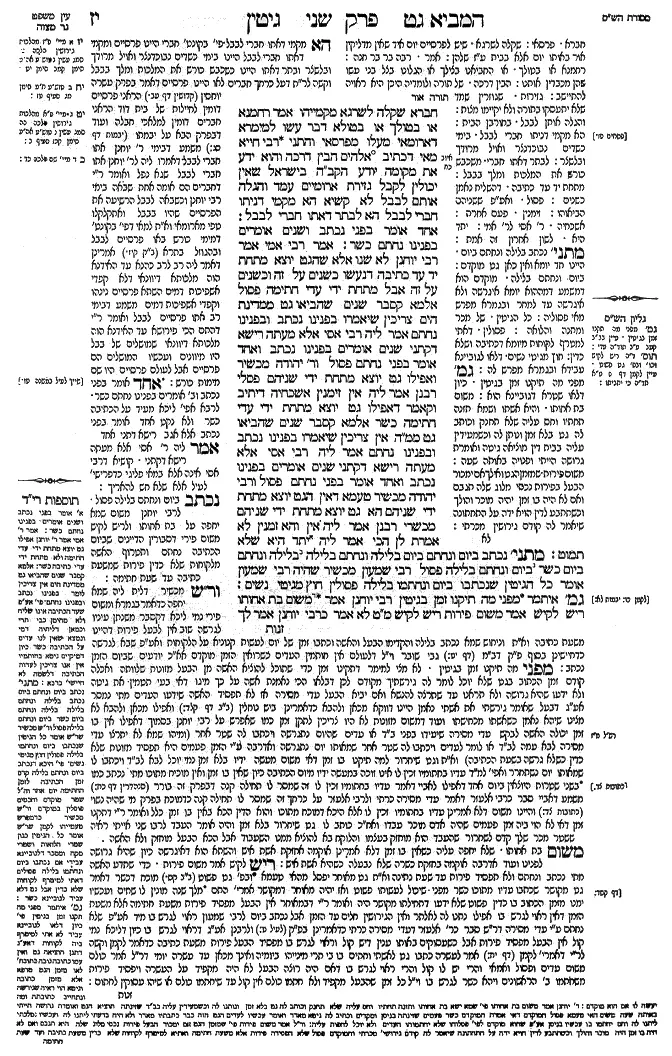
Gittin 17a - Guemara
חברא שקלה לשרגא מקמייהו אמר רחמנא או בטולך או בטולא דבר עשו למימרא דארומאי מעלו מפרסאי והתני רבי חייא מאי דכתיב (איוב כח, כג) אלהים הבין דרכה והוא ידע את מקומה יודע הקב"ה בישראל שאין יכולין לקבל גזירת ארומיים עמד והגלה אותם לבבל לא קשיא הא מקמי דניתו חברי לבבל הא לבתר דאתו חברי לבבל:
אחד אומר בפני נכתב ושנים אומרים בפנינו נחתם כשר:
אמר רבי אמי אמר רבי יוחנן לא שנו אלא שהגט יוצא מתחת יד עד כתיבה דנעשו כשנים על זה וכשנים על זה אבל מתחת ידי עדי חתימה פסול אלמא קסבר שנים שהביאו גט ממדינת הים צריכין שיאמרו בפנינו נכתב ובפנינו נחתם אמר ליה רבי אסי אלא מעתה רישא דקתני שנים אומרים בפנינו נכתב ואחד אומר בפני נחתם פסול ור' יהודה מכשיר ואפילו גט יוצא מתחת ידי שניהם פסלי רבנן אמר ליה אין זימנין אשכחיה דיתיב וקאמר דאפילו גט יוצא מתחת ידי עדי חתימה כשר אלמא קסבר שנים שהביאו גט ממ"ה אין צריכין שיאמרו בפנינו נכתב ובפנינו נחתם אמר ליה רבי אסי אלא מעתה רישא דקתני שנים אומרים בפנינו נכתב ואחד אומר בפני נחתם פסול ורבי יהודה מכשיר טעמא דאין הגט יוצא מתחת ידי שניהם הא גט יוצא מתחת ידי שניהם מכשרי רבנן אמר ליה אין והא זמנין לא אמרת לן הכי אמר ליה יתד היא שלא תמוט:
מתני׳ נכתב ביום ונחתם ביום בלילה ונחתם בלילה בלילה ונחתם ביום כשר ביום ונחתם בלילה פסול רבי שמעון מכשיר שהיה רבי שמעון אומר כל הגיטין שנכתבו ביום ונחתמו בלילה פסולין חוץ מגיטי נשים:
גמ׳ איתמר מפני מה תיקנו זמן בגיטין רבי יוחנן אמר משום בת אחותו ריש לקיש אמר משום פירות ריש לקיש מ"ט לא אמר כרבי יוחנן אמר לך
Comments from Rashi on Masechet Gittin Page 17a
חברא . פרסאי: שקלה לשרגא . שיש לפרסיים יום איד שאין מדליקין אור באותו יום אלא בבית ע"ז שלהן: אמר . רבה בר בר חנה: רחמנא או בטולך . או החביאנו בצילך או הגלונו בצל בני עשו שהן מכבדין אותנו: הבין דרכה . של תורה ולומדיה היכן היא ראויה להתיישב: גזירות . שגוזרין שמד שלא יתעסקו בתורה ולא יקיימו מצות: והגלה אותן לבבל . בחורבן הבית: הא מקמי דניתו חברי לבבל . בימי כשדים נבוכדנצר ואויל מרודך ובלשצר: לבתר דאתו חברי . משכבש כורש את המלכות ומלך בבבל: מתחת יד עד כתיבה . דהשליח נאמן כשנים: פסול . ואע"פ ששניהם הביאוהו: זימנין . פעם אחרת: אשכחיה . ר' אסי לר' אמי: יתד היא . לשון אחרון זה אמת: מתני' נכתב בלילה ונחתם ביום . היינו חד יומא ואין כאן גט מוקדם: ביום ונחתם בלילה . מוקדם הוא דמשמע דמההוא יומא איגרשה ולא איגרשה עד למחר ובגמרא מפרש מאי פסוליה: כל הגיטין . של מכר ומתנה והלואה: פסולין . דאתי למטרף לקוחות מיומא דכתיבה ושלא כדין: חוץ מגיטי נשים . דלאו לגוביינא עבידא ובגמרא מפרש לה: גמ' מפני מה תיקנו זמן בגיטין . כיון דלאו שטרא דגוביינא הוא: משום בת אחותו . והיא אשתו ושמא תזנה תחתיו וחס עליה שלא תחנק וכותב לה גט בלא זמן ונותן לה וכשמעידין עליה בבית דין מוציאה גיטה ואומרת גרושה הייתי ופנויה באותה שעה: משום פירות . שמזמן הגט ואילך אם ימכור הבעל בפירות נכסי מלוג שלה תגבם ואם לא היה בו זמן יהיה מוכר והולך וכשתתבע לדין הויא ידה על התחתונה שיאמר לה קודם גירושין מכרתי:
Comments from Tosafot - Gittin 17a
הא מקמי דאתו חברי לבבל . פי' בקונט' חברי היינו פרסיים ומקמי דאתו חברי לבבל היינו בימי כשדים נבוכדנצר ואויל מרודך ובלשצר ובתר דאתו היינו כשכבש כורש את המלכות ומלך בבבל וקשה לר"ת דעל כרחך חברים לאו היינו פרסיים דאמר בפרק עשרה יוחסין (קדושין דף עב.) הראני פרסיים דומין לחיילות של בית דוד הראני חברים דומין למלאכי חבלה ועוד דבפרק הבא על יבמתו (יבמות דף סג:) משמע דבימי ר' יוחנן אתו חברי לבבל דאמרו ליה לר' יוחנן אתו חברי לבבל שגא נפל ואומר ר"י דחברים הם אומה אחת שבאה בימי רבי יוחנן וכשבאה לבבל הרשיעה את הפרסיים שהיו בבבל ואתקלקלו טפי מארומאי וא"ת למאי דפי' בקונט' דמימי כורש באו פרסיים לבבל ובהגוזל בתרא (ב"ק קיז.) אמרינן דאמר ליה רב לרב כהנא עד האידנא הוה מלכותא דיוונאי דלא קפדי אשפיכות דמים השתא פרסיים נינהו וקפדי אשפיכות דמים משמע דבימי רב אתו פרסיים לבבל ואומר ר"י דהתם הכי פירושא עד האידנא הוה מלכותא דיוונאי שמושלים של בבל היו מיוונים ועכשיו המושלים הם פרסיים אבל לעולם פרסיים היו שם מימות כורש: אחד אומר בפני נכתב וב' אומרים בפנינו נחתם כשר . לרבא אפי' ליכא מעיד על הכתיבה כשר ולא נקט אחד אומר בפני נכתב אלא אגב רישא דתני אחד: אמר ליה ר' אסי אלא מעתה רישא דקתני . קושיא דרבי אסי אינה אלא במאי פליגי כדפרישי' לעיל אלא שלא חש להאריך: נכתב ביום ונחתם בלילה פסול . לרבי יוחנן משום שמא יחפה על בת אחותו ולריש לקיש משום פירי דסבורין הדיינים שביום הכתיבה נחתם ותטרוף האשה מלקוחות שלא כדין פירות שמשעת כתיבה עד שעת חתימה: ור"ש מכשיר . דלית ליה שמא יחפה כדאמר בגמרא ומשום פירי נמי ליכא דקסבר משנתן עיניו לגרשה שוב אין לבעל פירות דהיינו משעת כתיבה וא"ת וניחוש שמא נכתב בלילה והקדימו הבעל והאשה וכתבו זמן של יום לעשות קנוניא על הלקוחות ואע"פ שבא לגרשה כדחיישינן בסוף פ"ק דב"מ (דף יט:) גבי שובר וי"ל דלעולם אין חותמין העדים כשרואין הזמן מוקדם אא"כ יודעים שביום הזמן נכתב: מפני מה תיקנו זמן בגיטין . לא מצי למימר דתקינו זמן כדי שתוכל להוציא האשה מן הבעל מזונות שלוותה ואכלה קודם זמן הכתוב בגט שלא יוכל לומר לה גירשתיך מקודם לכן דבלאו הכי נאמנת אשה על כך מיגו דאי בעי תטמין את גיטה ולא ידעו שהיא גרושה ולא תראנו עד שתרצה להנשא ואם יביא הבעל עדי מסירה אז לא תפסיד האשה שידעו העדים מתי נמסר אע"ג דבעל שאומר גירשתי את אשתי נאמן היינו דווקא מכאן ולהבא כדאמרינן ביש נוחלין (ב"ב דף קלד:) ואפילו מכאן ולהבא לא מצינו שיהא נאמן כשאשתו מכחישתו ועוד דמשום מזונות לא היו צריכין לתקן זמן כמו שאפרש על רבי יוחנן בסמוך דאפילו אין בו זמן יכולה האשה לבקש עדי מסירה שיעידו בפני ב"ד או עדים שהיום נתגרשה ויכתבו לה שטר אחר (ומיהו שמא לא יתרצו עדי מסירה לבא עמה לב"ד או לומר לעדים ויכתבו לה שטר אחר שמאותו יום נתגרשה ואדרבה ע"י הזמן פעמים היא תפסיד מזונות שלא כדין כשלא גרשה בשעת הכתיבה) וא"ת וגט שיחרור למה תיקנו בו זמן דאי משום מעשה ידיו בלא זמן נמי יוכל לבא לב"ד ויכתבו לו שמאותו יום נשתחרר ואפי' למ"ד עדיו בחתומיו זכין לו אינו זוכה במעשה ידיו מיום הכתיבה כיון שאין בו זמן ואין מוכיח מתוכו מתי נכתב כמו . בשני שטרות היוצאין ביום אחד דאפילו לאביי דאמר עדיו בחתומיו זכין לו זה שמסר לו תחילה קנה דבפרק זה בורר (סנהדרין דף כח:) משמע דאביי סבר כרבי אלעזר דאמר עדי מסירה כרתי ולרבי אלעזר על כרחך זה שמסר לו תחילה קנה כדמוכח בפרק מי שהיה נשוי (כתובות צד:) והיינו משום דלא אמרינן עדיו בחתומיו זכין לו אלא היכא דמוכח מתוכו והוא הדין הכא באין בו זמן כלל ואומר ר"י דתקנו זמן דאי לא הוי ביה זמן פעמים שהיה אדם מוכר עבדו ואח"כ כותב לו גט שיחרור בלא זמן והיה אומר העבד לרבו שני אייתי ראיה ששטר מכר שלך קדם לשחרור שהעבד הוא מוחזק בעצמו והלוקח בא להוציא ממנו השעבוד אבל הכא הבעל מוחזק ולא האשה: משום בת אחותו . שלא יחפה עליה כשאין בו זמן דלא אמרינן אוקמה אחזקת אשת איש והשתא הוא דאיגרשה כיון שהיא גרושה לפנינו ועוד אדרבה אוקמה בחזקת כשרה שלא נבעלה כשהיא אשת איש: ריש לקיש אמר משום פירות . כדי שתדע האשה מתי נכתב ונחתם ולא תפסיד פירות עד שעת נתינה וא"ת גט מאוחר יפסל מהאי טעמא ובפ' גט פשוט (ב"ב קס.) מוכח דכשר דאמר גט מקושר שכתבו עדיו מתוכו כשר מפני שיכול לעשותו פשוט ואז יהיה מאוחר דמקושר אמרי' התם. מלך שנה מונין לו שתים ועכשיו ימנו מזמן הכתוב בו כדין פשוט שלא ידעו דתחילתו מקושר היה ואומר ר"י דבמאוחר אין הבעל מפסיד פירות משעת חתימה אלא משעת הזמן דאין ראוי לגרש בו אפילו נתנו לה לאלתר ואין הגירושין חלים עד הזמן אבל נכתב ביום לרבי שמעון ראוי לגרש בו מיד אע"פ שלא נחתם ע"י עדי מסירה דר"ש סבר כר' אלעזר דעדי מסירה כרתי כדאמרינן בפ"ק (לעיל גיטין ט:) ולרבנן אע"ג דראוי לגרש בו כיון דליכא נמי קול אין הבעל מפסיד פירות אבל כשעסוקים באותו ענין דיש קול וראוי לגרש בו מפסיד הבעל פירות משעת כתיבה כדאמר לקמן וקשה לר"י דאמרי' לקמן (גיטין דף יח:) אמר לעשרה כתבו גט לאשתי וחתים בו בי תרי מינייהו ביומיה ואינך מכאן עד עשרה יומי דר"ל אמר כולם משום עדים ופסול ואמאי והרי יש לו קול והרי ראוי לגרש בו דאם היה רוצה הבעל לא היה מקפיד על העשרה ויפסיד פירות משחתמו ב' הראשונים ויהא כשר לגרש בו וי"ל כל זמן שהבעל מקפיד ולא חתמו כולם אין קול עד שיחתמו כולם או שיהו עסוקין לחתום:
Gittin 17a - Mishnah translated into english
Persian priest [ḥabbara] and took the lamp [sheragga] from before them. It was a Persian holiday on which the Persians prohibited the public from maintaining light outside their temple. Rabba, who was from Eretz Yisrael, said: Merciful One! Let us live either in Your shadow or in the shadow of the descendants of Esau, the Romans.
The Gemara asks: Is this to say that the Romans are preferable to the Persians? But didn’t Rabbi Ḥiyya teach: What is the meaning of that which is written: “God understands its way and He knows its place” (Job 28:23)? This means that the Holy One, Blessed be He, knows with regard to the Jewish people that they are unable to accept and live under Roman decrees, and therefore He arose and exiled them to Babylonia. This indicates that living under Babylonian rule is preferable to living under Roman rule.
The Gemara explains: This is not difficult, as this interpretation of Rabbi Ḥiyya refers to the period before the Persians reached Babylonia, when life there was very comfortable. That statement of Rabba was issued after the Persians reached Babylonia, when the situation changed and living there became more difficult.
§ The mishna taught that if one person says: It was written in my presence, and two say: It was signed in our presence, it is valid. Rabbi Ami says that Rabbi Yoḥanan says: They taught that the document is valid only when the bill of divorce is produced by the witness to the writing, i.e., the one who observed the writing is the agent of the bill of divorce, as they become as two witnesses for this act, the writing, and two for that act, the signing. The agent for the bill of divorce is considered like two witnesses when he testifies with regard to the writing. However, if the bill of divorce was produced by the signatory witnesses it is invalid. This is because only one witness, who is not an agent for the bill of divorce, testifies with regard to its writing.
The Gemara comments: Apparently, Rabbi Yoḥanan holds that two people who brought a bill of divorce from a country overseas are required to say: It was written in our presence and it was signed in our presence, and if they do not state this declaration the bill of divorce is invalid. Rabbi Asi said to Rabbi Ami: If that is so, how do you explain the first clause of the mishna, which teaches: If two people say: It was written in our presence, and one says: It was signed in my presence, then it is invalid, and Rabbi Yehuda deems it valid? But do the Rabbis invalidate the document even when the bill of divorce is produced by both of them? Rabbi Ami said to him: Yes.
The Gemara relates: Another time Rabbi Asi found Rabbi Ami sitting and saying that even if the bill of divorce is produced by the signatory witnesses it is valid. The Gemara notes: Apparently, Rabbi Yoḥanan, in whose name Rabbi Ami stated this halakha, holds that in the case of two people who brought a bill of divorce from a country overseas, they are not required to say: It was written in our presence and it was signed in our presence.
Rabbi Asi said to him: However, if that is so, how do you explain the first clause of the mishna, which teaches: If two people say: It was written in our presence, and one says: It was signed in my presence, it is invalid, and Rabbi Yehuda deems it valid? The Gemara elaborates: The reason it is invalid is that the bill of divorce is not produced by both of them, from which it may be inferred that if the bill of divorce is produced by both of them the Sages would deem it valid.
Rabbi Ami said to him: Yes. Rabbi Asi replied: But the other time you did not say this to us. You issued a ruling that indicated the opposite conclusion, and when I asked if that was the correct inference you affirmed that my reasoning was correct. Rabbi Ami said to him: What I am now telling you is a spike that will not move; you can rely on this ruling, and I retract my previous statement.
MISHNA: If a bill of divorce was written during the day and signed on the same day; or if it was written at night and signed on that same night; or if it was written at night and signed on the following day, then it is valid. The new calendar day begins at night, so that in all of these cases the writing and the signing were performed on the same date. However, if it was written during the day and signed on that same night, it is invalid, as the writing and the signing were not on the same calendar day. Rabbi Shimon deems the bill of divorce valid.
The mishna explains the ruling of Rabbi Shimon: As Rabbi Shimon would say: All documents that were written during the day and signed at night are invalid because the date recorded in the document is a day prior to the day the document takes effect, except for women’s bills of divorce. Since a bill of divorce is not used to collect money, it is of no concern if the date that appears on it is before the time when it was signed.
GEMARA: It was stated that the amora’im disagreed with regard to the following question: For what reason did the Sages institute the writing of a date on bills of divorce? Why must the date be written if this document is not intended to be used to collect money? Rabbi Yoḥanan says: Due to the daughter of his sister. The Sages were concerned that a man may claim that his divorce occurred earlier than it actually did. For example, if one was married to his niece, and she committed adultery, he may nevertheless desire to protect her judicial sanction and claim that they were already divorced at the time of her infidelity. In order to prevent this from happening, the Sages instituted an ordinance that bills of divorce must be dated.
Reish Lakish says: The ordinance was instituted due to the produce of her usufruct property. A husband owns the produce of the fields belonging to his wife up to the moment the divorce takes effect. The Sages instituted an ordinance that bills of divorce must be dated because she needs to be able to establish the time of the divorce in case the husband sold or consumed the produce of fields that belong to her after the divorce. If there is no date on the bill of divorce, he will be able to claim that the produce was sold or consumed before the divorce took place.
The Gemara asks: What is the reason that Reish Lakish did not say in accordance with the opinion of Rabbi Yoḥanan? The Gemara answers: Reish Lakish could have said to you:
Traduction : The William Davidson digital edition of the Koren Noé Talmud, with commentary by Rabbi Adin Even-Israel Steinsaltz.