 Talmud Bavli
Gittin 36a : Youtube
Daf TubeYoutube
2 video classes :
Gittin Page 36a
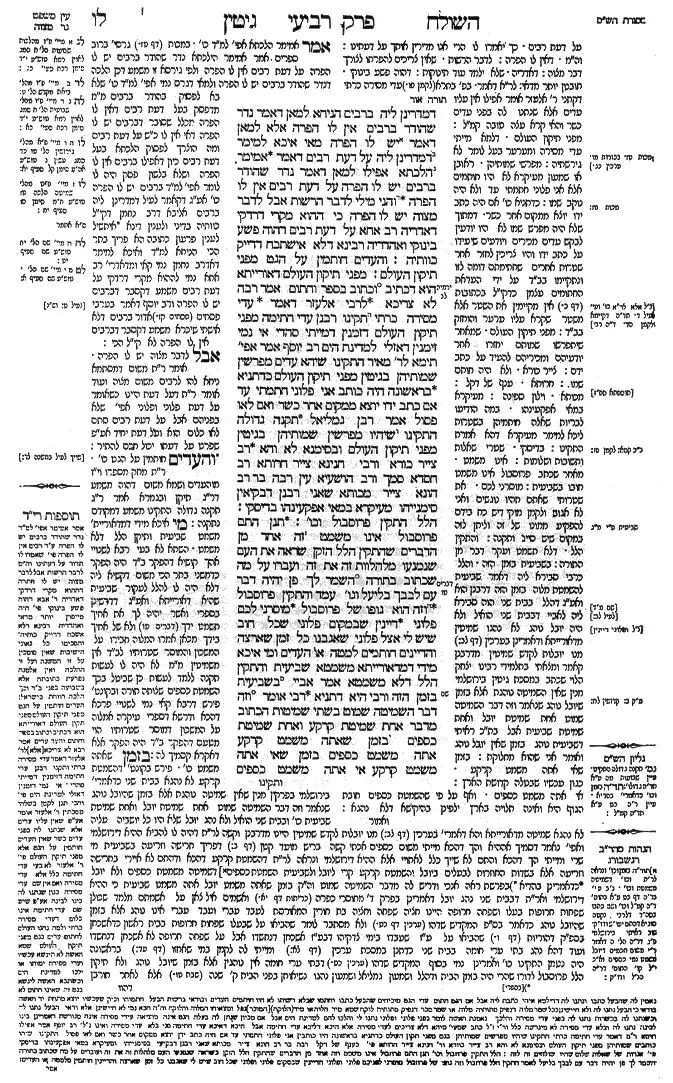
Gittin 36a - Guemara
דמדרינן ליה ברבים הניחא למאן דאמר נדר שהודר ברבים אין לו הפרה אלא למאן דאמר יש לו הפרה מאי איכא למימר דמדרינן ליה על דעת רבים דאמר אמימר הלכתא אפילו למאן דאמר נדר שהודר ברבים יש לו הפרה על דעת רבים אין לו הפרה והני מילי לדבר הרשות אבל לדבר מצוה יש לו הפרה כי ההוא מקרי דרדקי דאדריה רב אחא על דעת רבים דהוה פשע בינוקי ואהדריה רבינא דלא אישתכח דדייק כוותיה:
והעדים חותמין על הגט מפני תיקון העולם:
מפני תיקון העולם דאורייתא הוא דכתיב (ירמיהו לב, מד) וכתוב בספר וחתום אמר רבה לא צריכא לרבי אלעזר דאמר עדי מסירה כרתי תקינו רבנן עדי חתימה מפני תיקון העולם דזמנין דמייתי סהדי אי נמי זימנין דאזלי למדינת הים רב יוסף אמר אפי' תימא לר' מאיר התקינו שיהא עדים מפרשין שמותיהן בגיטין מפני תיקון העולם כדתניא בראשונה היה כותב אני פלוני חתמתי עד אם כתב ידו יוצא ממקום אחר כשר ואם לאו פסול אמר רבן גמליאל תקנה גדולה התקינו שיהיו מפרשין שמותיהן בגיטין מפני תיקון העולם ובסימנא לא והא רב צייר כורא ורבי חנינא צייר חרותא רב חסדא סמך ורב הושעיא עין רבה בר רב הונא צייר מכותא שאני רבנן דבקיאין סימנייהו מעיקרא במאי אפקעינהו בדיסקי:
הלל התקין פרוסבול וכו':
תנן התם פרוסבול אינו משמט זה אחד מן הדברים שהתקין הלל הזקן שראה את העם שנמנעו מלהלוות זה את זה ועברו על מה שכתוב בתורה (דברים טו, ט) השמר לך פן יהיה דבר עם לבבך בליעל וגו' עמד והתקין פרוסבול וזה הוא גופו של פרוסבול מוסרני לכם פלוני דיינין שבמקום פלוני שכל חוב שיש לי אצל פלוני שאגבנו כל זמן שארצה והדיינים חותמים למטה או העדים ומי איכא מידי דמדאורייתא משמטא שביעית והתקין הלל דלא משמטא אמר אביי בשביעית בזמן הזה ורבי היא דתניא רבי אומר (דברים טו, ב) וזה דבר השמיטה שמוט בשתי שמיטות הכתוב מדבר אחת שמיטת קרקע ואחת שמיטת כספים בזמן שאתה משמט קרקע אתה משמט כספים בזמן שאי אתה משמט קרקע אי אתה משמט כספים
Comments from Rashi on Masechet Gittin Page 36a
על דעת רבים . כך יאמרו לו הרי אנו מדירין אותך על דעתינו: וה"מ . דאין לו הפרה: לדבר הרשות . שאין צריכים להפרתו לצורך דבר מצוה: דאדריה . שלא ילמד עוד תינוקות: דהוה פשע בינוקי . חובטן יותר מדאי: לר"א דאמר . בפ' בתרא (לקמן גיטין פו.) עדי מסירה כרתי דקתני ר' אלעזר אומר אפילו אין עליו עדים אלא שנתנו לה בפני עדים כשר והאי קרא עצה טובה קמ"ל: מפני תיקון העולם . דלמא מייתי עדי מסירה ומערער בעל לומר לא גירשתיה: מפרשי שמותיהן . ראובן או שמעון מעיקרא לא היו חותמים אלא אני פלוני חתמתי עד ולא היה נוקב שמו: כדתניא כו' אם היה כתב ידו יוצא ממקום אחר כשר . דמתוך שלא היה מפרש שמו לא היו יודעין לבקש עדים מכירים ויודעים שיעידו על כתב ידו והיו צריכין לחזר אחר שטרות אחרים שחתימתם דומה לזו ונתקיימו בב"ד על ידי העדאת החתומים עצמן כדקי"ל בכתובות (דף כ.) אין מקיימין את השטר אלא משטר שקרא עליו ערער והוחזק בב"ד: מפני תיקון העולם . שמאחר שיתפרשו שמותם יחזרו אחר יודעיהם ומכיריהם להעיד על כתב ידם: צייר כורא . ולא היה חותם שמו: חרותא . ענף של דקל: מכותא . וילון ספינה: מעיקרא במאי אפקעינהו . במה הודיעו לבריות שאלה חותמיהן בשטרות ליכא למימר מעיקרא דהא אמרת התקינו: בדיסקי . שטרי שאלות ותשובות ושלומות: אינו משמט . מאחר שכתב פרוסבול אינו משמט חובו בשביעית: מוסרני לכם . את שטרותי שאתם תהיו נוגשים ואני לא אגוש ולקמן מוקי דיש כח בידם להפקיע ממונו של זה וליתן לזה במקום שיש סייג ותקנה: והתקין הלל . דלא תשמט ועקר דבר מן התורה: בשביעית בזמן הזה . והלל כרבי סבירא ליה דאמר שביעית להשמטת מלוה בזמן הזה דרבנן הוא ואע"ג דהלל בבית שני הוה סבירא ליה לאביי דבבית שני הואיל ולא היה יובל נוהג לא נהגו שמיטין מדאורייתא ודאמרינן בערכין (דף לב:) מנו יובלות לקדש שמיטין מדרבנן קאמר ומצאתי בתלמידי רבינו יצחק הלוי שכתב במסכת גיטין בירושלמי מנין שאין השמיטה נוהגת אלא בזמן שיובל נוהג שנאמר וזה דבר השמיטה שמוט אחת שמיטת יובל ואחת שמיטת שביעית אבל בת"כ ראיתי דשביעית נוהג בזמן שאין יובל נוהג ואומר אני שהוא מחלוקת: בזמן שאי אתה משמט קרקע . כגון עכשיו שבטלה קדושת הארץ: אי אתה משמט כספים . ואף על פי שהשמטת כספים חובת הגוף היא ואינה תלויה בארץ ילפינן בהיקישא דלא נהגא:
Comments from Tosafot - Gittin 36a
אמר אמימר הלכתא אפי' למ"ד כו' . במכות (דף טז.) גרסי' ברוב ספרים אמר אמימר הילכתא נדר שהודר ברבים יש לו הפרה על דעת רבים אין לו הפרה ולפי גירסא זו משמע דכן הלכה דנדר שהודר ברבים יש לו הפרה ולמאי דגרס נמי אפי' למ"ד כו' שלא בא לפסוק בהודר ברבים מ"מ מדפסק בעל דעת רבים דאין לו הפרה מכלל שסובר דברבים יש לו הפרה דאי אין לו כ"ש על דעת רבים ומה הוצרך לפסוק הלכתא בעל דעת רבים כיון דאפילו ברבים אין לו הפרה ושלא בלשון פסק היה לו לומר אפי' למ"ד ברבים יש לו הפרה כו' אע"ג דקאמר לעיל דמדרינן ליה ברבים אליבא דרב נחמן דקי"ל כוותיה בדיני ולענין דינא. איתשיל לענין פרעון כתובה הא פריך בתר הכי הניחא למ"ד ואיכא למימר דאדרב נחמן נמי קאי ומדאדרי' רב אחא נמי לההוא מקרי דרדקי על דעת רבים משמע דקסבר דברבים יש לו הפרה ורב יוסף דאמר בערבי פסחים (פסחים קז.) אדור ברבים דלא אישתי שיכרא משמע דקסבר דברבים אין לו הפרה לא קי"ל הכי: אבל לדבר מצוה יש לו הפרה . אומר ר"ת משום דמסתמא ניחא להו לרבים משום מצוה ועוד אומר ר"ת דעל דעת היינו כשאומר על דעת פלוני ופלוני אפי' שלא בפניהם אבל על דעת רבים סתם לאו כלום הוא ועל דעת יחיד אע"פ שפרט על דעתו יכול חכם להתיר: והעדים חותמין על הגט כו' . ר"ת מחק מספרו וי"ו מוהעדים ושמא משום דהוה משמע דר"ג תיקן ובגמרא אמר ר"ג תקנה גדולה התקינו משמע דמקודם נתקנה: מי איכא מידי דמדאוריית' משמט שביעית ותיקן הלל דלא משמט . השתא לא בעי רבא לשנויי אהך קושיא דהפקר ב"ד היה הפקר כדמשני בתר הכי משום דקשיא ליה דלא היה לו להלל לעקור שביעית שהיא דאורייתא ואע"ג דדרשינן בספרי ואשר יהיה לך את אחיך תשמט ידך (דברים טו) ולא של אחיך בידך מכאן אמרו המלוה חבירו על המשכון והמוסר שטרותיו לב"ד אין משמיטין מ"מ לא היה לו לעשות תקנה ללמד לעשות כן שביטל בכך. השמטת כספים שצותה תורה ובקונט' פירש דרבא קאי נמי לשנויי פרכא דהכא ודרשא דספרי עיקרה אמלוה על המשכון דמוסר שטרותיו הוי מטעם דהפקר ב"ד היה הפקר אלא דאקרא קסמיך לה: בזמן שאתה משמט כו' . פירש בקונט' דהשמטת קרקע לא נהגא בבית שני כדאמרי' בירושלמי בפרקין מנין שאין שמיטה נוהגת אלא בזמן שהיובל נוהג שנאמר וזה דבר השמיטה שמוט אחת שמיטת יובל ואחת שמיטת שביעית כו' ובבית שני הואיל ולא נהג יובל שלא היו כל יושביה עליה לא נהגא שמיטה מדאורייתא והא דאמרי' בערכין (דף לב:) מנו יובלות לקדש שמיטין היינו מדרבנן וקשה לר"ת דהיה לו להביא ההיא דירושלמי ואפי' נאמר דסמיך אההיא והך דהכא מייתי משום כספים אכתי קשה בריש מועד קטן (דף ב:) דפריך חרישה וזריעה בשביעית מי שרי ומייתי הך דהכא והתם לא שייך כלל לאתויי אלא ההיא דירושלמי ונראה לר"ת דהשמטת קרקע דהכא ודהתם לא איירי בחרישה וזריעה אלא בשדות החוזרות לבעלים ביובל והשמטת קרקע קרי ליובל ולשביעית השמטת כספים דשמיטה משמטת כספים ולא יובל כדאמרינן בהדיא בפרשת ראה אנכי ודריש לה מדבר השמיטה שמוט וה"ק בזמן שאתה משמט יובל אתה משמט שביעית כי ההיא דירושלמי ואר"ת דבבית שני נהג יובל דאמרינן בפרק ד' מחוסרי כפרה (כריתות דף יא.) ואשמים איל צאן על אשמתם מלמד שכולן שפחות חרופות בעלו ושפחה חרופה היינו חציה שפחה וחציה בת חורין המאורסת לעבד עברי ועבד עברי אינו נוהג אלא בזמן שהיובל נוהג כדאמר בס"פ המקדיש שדהו (ערכין דף כט.) ולא מסתבר לומר שהביאו על שבעלו שפחות חרופות בבית ראשון כדאשכחן בספ"ק דהוריות (דף ו.) שהביאו על ע"ז שעבדו בימי צדקיהו דבע"ז אשכחן דנחשדו אבל על שפחה חרופה לא אשכחן דנחשדו ועוד דהא נהג בתי ערי חומה בבית שני כדתנן במסכת ערכין (דף לא:) ומייתי לה לקמן במי שאחזו (גיטין דף עד:) בראשונה היה נטמן התקינו כו' ואמרינן נמי בסוף המקדיש שדהו (ערכין כט.) דבתי ערי חומה אין נוהגין אלא בזמן שיובל נוהג ולא תיקון הלל פרוסבול לדורו שהרי היה בזמן הבית ודהלל ושמעון גמליאל ושמעון נהגו נשיאותן בפני הבית ק' שנה (שבת טו.) אלא לאחר חורבן דהוו ידעי דחרוב ביתא כדאמרינן בנזיר בפ' ב"ש (דף לב:) והא דבעי בסמוך לדריה תקין לאו לדריה ממש אלא לדור הסמוך אחר חורבן אי נמי ההיא בעיא אליבא דרבא דמשני הפקר ב"ד היה הפקר והא דאמר בסוף ערכין (דף לב:) מנו יובלות לקדש שמיטין דמשמע דיובל לא נהג היינו למאי דס"ד התם מעיקרא דלא חזרו עשרת השבטים שגלו ולא היו בגלות בבל אלא ב' שבטים וכשעלו בבית שני לא היו כל יושביה עליה אבל במסקנא דאמרי' דירמיהו החזירן ויאשיהו מלך עליהן נמצאו דהיו שם מי"ב שבטים ואע"ג שלא עלו כולם חשיב כל יושביה ומיהו קשה דזיל קרי בי רב הוא דבעזרא מני לכל י"ב שבטים:
Gittin 36a - Mishnah translated into english
The Gemara answers that we administer the vow to the priest in public. The Gemara asks: This works out well according to the one who says that a vow that was taken in public has no possibility of nullification by a halakhic authority, but according to the one who says it has the possibility of nullification, what can be said?
The Gemara answers that we administer the vow to the priest based on the consent of the public, making it a type of vow that cannot be dissolved without their consent. As Ameimar said, the halakha is as follows: Even according to the one who says that a vow that was taken in public has the possibility of nullification, if it was taken based on the consent of the public, it has no possibility of nullification.
The Gemara comments: And this matter applies only to when the nullification of a vow is in order to enable one to perform an optional matter, but to enable one to perform a matter of a mitzva, it has the possibility of nullification. This is like the incident involving a certain teacher of children, upon whom Rav Aḥa administered a vow based on the consent of the public to cease teaching, as he was negligent with regard to the children by hitting them too much. And Ravina had his vow nullified and reinstated him, as they did not find another teacher who was as meticulous as he was.
§ The mishna taught: And the witnesses sign the bill of divorce for the betterment of the world. The Gemara asks: Is the reason that the witnesses sign the bill of divorce for the betterment of the world? It is by Torah law that they must sign, as it is written: “And subscribe the deeds, and sign them, and call witnesses” (Jeremiah 32:44).
Rabba said: No, it is necessary according to the opinion of Rabbi Elazar, who says: Witnesses of the transmission of the bill of divorce effect the divorce, and not the witnesses who sign the bill of divorce, and by Torah law it does not need to be signed. Nevertheless, the Sages instituted signatory witnesses for the betterment of the world, as sometimes it occurs that the witnesses who witnessed the transmission of the bill of divorce die, or sometimes it occurs that they go overseas, and the validity of the bill of divorce may be contested. Since they are not present, there are no witnesses who can ratify the bill of divorce. Once the Sages instituted that the witnesses’ signatures appear on the bill of divorce, then the bill of divorce can be ratified by authenticating their signatures.
Rav Yosef said: You can even say that it is according to the opinion of Rabbi Meir, that signatory witnesses on the bill of divorce effect the divorce, and the mishna should be understood as follows: They instituted that the witnesses must specify their full names on bills of divorce and not merely sign the document, for the betterment of the world.
As it is taught in a baraita (Tosefta 9:13): At first, the witness would write only: I, so-and-so, signed as a witness, but they did not state their full names. Therefore, the only way to identify the witness was to see if an identical signature could be found on a different document that had been ratified in court. Therefore, if another copy of a witness’s signature is produced from elsewhere, i.e., another court document, it is valid, but if not, then the bill of divorce is invalid even though it is possible that he was a valid witness, and as a result of this women were left unable to remarry.
Rabban Gamliel said: They instituted a great ordinance that the witnesses must specify their full names on bills of divorce, stating that they are so-and-so, son of so-and-so, and other identifying features, for the betterment of the world. This made it possible to easily clarify who the witnesses were and to ratify the bill of divorce by finding acquaintances of the witnesses who recognized their signatures.
The Gemara asks: But is it not sufficient to sign with a pictorial mark? But Rav drew a fish instead of a signature, and Rabbi Ḥanina drew a palm branch [ḥaruta]; Rav Ḥisda drew the letter samekh, and Rav Hoshaya drew the letter ayin; and Rabba bar Rav Huna drew a sail [makota]. None of these Sages would sign their actual names. The Gemara answers: The Sages are different, as everyone is well versed in their pictorial marks.
The Gemara asks: Initially, with what did they publicize these marks, as they could not use them in place of signatures before people were well versed in them? The Gemara answers: They initially used their marks in letters, where there is no legal requirement to sign their names. Once it became known that they would use these marks as their signatures, they were able to use them as signatures even on legal documents.
§ The mishna taught that Hillel the Elder instituted a document that prevents the Sabbatical Year from abrogating an outstanding debt [prosbol]. We learned in a mishna there (Shevi’it 10:3): If one writes a prosbol, the Sabbatical Year does not abrogate debt. This is one of the matters that Hillel the Elder instituted because he saw that the people of the nation were refraining from lending to one another around the time of the Sabbatical Year, as they were concerned that the debtor would not repay the loan, and they violated that which is written in the Torah: “Beware that there be not a base thought in your heart, saying: The seventh year, the year of release, is at hand; and your eye be evil against your needy brother, and you give him nothing” (Deuteronomy 15:9). He arose and instituted the prosbol so that it would also be possible to collect those debts in order to ensure that people would continue to give loans.
And this is the essence of the text of the prosbol: I transfer to you, so-and-so the judges, who are in such and such a place, so that I will collect any debt that I am owed by so-and-so whenever I wish, as the court now has the right to collect the debts. And the judges or the witnesses sign below, and this is sufficient. The creditor will then be able to collect the debt on behalf of the court, and the court can give it to him.
The Gemara asks about the prosbol itself: But is there anything like this, where by Torah law the Sabbatical Year cancels the debt but Hillel instituted that it does not cancel the debt? Abaye said: The baraita is referring to the Sabbatical Year in the present, and it is in accordance with the opinion of Rabbi Yehuda HaNasi.
As it is taught in a baraita that Rabbi Yehuda HaNasi says: The verse states in the context of the cancellation of debts: “And this is the manner of the abrogation: He shall abrogate” (Deuteronomy 15:2). The verse speaks of two types of abrogation: One is the release of land and one is the abrogation of monetary debts. Since the two are equated, one can learn the following: At a time when you release land, when the Jubilee Year is practiced, you abrogate monetary debts; at a time when you do not release land, such as the present time, when the Jubilee Year is no longer practiced, you also do not abrogate monetary debts.
Traduction : The William Davidson digital edition of the Koren Noé Talmud, with commentary by Rabbi Adin Even-Israel Steinsaltz.