 Talmud Bavli
Gittin 68a : Youtube
Daf TubeYoutube
2 video classes :
Gittin Page 68a
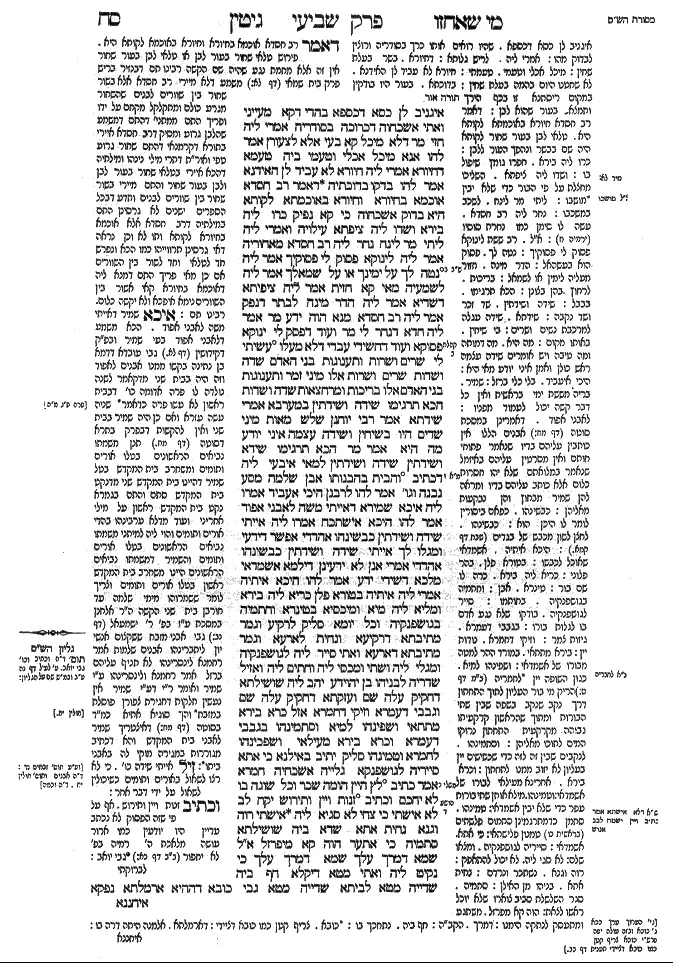
Gittin 68a - Guemara
איגניב לן כסא דכספא בהדי דקא מעייני ואתי אשכחוה דכרוכה בסודריה אמרי ליה חזי מר דלא מיכל קא בעי אלא לצעורן אמר להו אנא מיכל אכלי וטעמי ביה טעמא דחיורא אמרי ליה חיורא לא עביד לן האידנא אמר להו בדקו בדוכתיה דאמר רב חסדא אוכמא בחיורא וחיורא באוכמתא לקותא היא בדוק אשכחוה כי קא נפיק כרו ליה בירא ושדו ליה ציפתא עילויה ואמרי ליה ליתי מר לינח נחר ליה רב חסדא מאחוריה אמר ליה לינוקא פסוק לי פסוקיך אמר ליה (שמואל ב ב, כא) נטה לך על ימינך או על שמאלך אמר ליה לשמעיה מאי קא חזית אמר ליה ציפיתא דשדיא אמר ליה הדר מינה לבתר דנפק אמר ליה רב חסדא מנא הוה ידע מר אמר ליה חדא דנחר לי מר ועוד דפסק לי ינוקא פסוקא ועוד דחשידי עבדי דלא מעלו (קהלת ב, ח) עשיתי לי שרים ושרות ותענוגות בני האדם שדה ושדות שרים ושרות אלו מיני זמר ותענוגות בני האדם אלו בריכות ומרחצאות שדה ושדות הכא תרגימו שידה ושידתין במערבא אמרי שידתא אמר רבי יוחנן שלש מאות מיני שדים היו בשיחין ושידה עצמה איני יודע מה היא אמר מר הכא תרגימו שידא ושידתין שידה ושידתין למאי איבעי ליה דכתיב (מלכים א ו, ז) והבית בהבנותו אבן שלמה מסע נבנה וגו' אמר להו לרבנן היכי אעביד אמרו ליה איכא שמירא דאייתי משה לאבני אפוד אמר להו היכא אישתכח אמרו ליה אייתי שידה ושידתין כבשינהו אהדדי אפשר דידעי ומגלו לך אייתי שידה ושידתין כבשינהו אהדדי אמרי אנן לא ידעינן דילמא אשמדאי מלכא דשידי ידע אמר להו היכא איתיה אמרי ליה איתיה בטורא פלן כריא ליה בירא ומליא ליה מיא ומיכסיא בטינרא וחתמיה בגושפנקיה וכל יומא סליק לרקיע וגמר מתיבתא דרקיעא ונחית לארעא וגמר מתיבתא דארעא ואתי סייר ליה לגושפנקיה ומגלי ליה ושתי ומכסי ליה וחתים ליה ואזיל שדריה לבניהו בן יהוידע יהב ליה שושילתא דחקיק עלה שם ועזקתא דחקיק עלה שם וגבבי דעמרא וזיקי דחמרא אזל כרא בירא מתתאי ושפינהו למיא וסתמינהו בגבבי דעמרא וכרא בירא מעילאי ושפכינהו לחמרא וטמינהו סליק יתיב באילנא כי אתא סייריה לגושפנקא גלייה אשכחיה חמרא אמר כתיב (משלי כ, א) לץ היין הומה שכר וכל שוגה בו לא יחכם וכתיב (הושע ד, יא) זנות ויין ותירוש יקח לב לא אישתי כי צחי לא סגיא ליה אישתי רוה וגנא נחית אתא שדא ביה שושילתא סתמיה כי אתער הוה קא מיפרזל א"ל שמא דמרך עלך שמא דמרך עלך כי נקיט ליה ואתי מטא דיקלא חף ביה שדייה מטא לביתא שדייה מטא גבי כובא דההיא ארמלתא נפקא
Comments from Rashi on Masechet Gittin Page 68a
איגניב לן כסא דכספא . שהיו רואים אותו כרך בסודריה ורוצין לבדוק מהו: אמרי ליה . לריש גלותא: דחיורא . בשר בעלת שחין: מיכל אכלי וטעמי . טעמתי: חיורא לא עביד לן האידנא . לא שחטנו היום בהמה בעלת שחין: בדוכתא . בעור היו בודקין במקום ריסתנא זו בכף הירך ותמצאנו בעור שהוא לבן: דאמר רב חסדא חיורא באוכמתא לקותא היא . טלאי לבן בעור שחור לקותא היה שם בבשר ונהפך העור ללבן: כרו ליה בירא . חפרו גומץ שיפול בו: ושדו ליה ציפתא . השליכו מחצלת על פי הבור כדי שלא יבין מושבו: ליתי מר לינח . לשכב במשכבו: נחר ליה רב חסדא . עשה לו סימן כמו נחרת סוסיו (ירמיהו ח): א"ל . רב ששת לינוקא פסוק לי פסוקיך: נטה לך . פסוק הוא בעשהאל: הדר מינה . חזור מעליה לימין או לשמאל: בריכות . לרחוץ בהן בצונן: הכא תרגימו . בבבל: שידה ושידתין . שד זכר ושד נקבה: שידתא . שידה עגלה למרכבת נשים ושרים: בי שיחין . באותו מקום: מה היא . מה דמותה ומה טיבה ויש אומרים שידה עצמה ראש כולן ואמן איני יודע מאי היא: היכי איעביד . בלי כלי ברזל: שמיר . בריה מששת ימי בראשית ואין כל דבר קשה יכול לעמוד מפניו: לאבני אפוד . דאמרינן במסכת סוטה (דף מח:) אבנים הללו אין כותבין עליהם בדיו שנאמר פתוחי חותם ואין מסרטין עליהם באיזמל שנאמר במלואתם שלא יהו חסרות כלום אלא כותב עליהם בדיו ומראה להן שמיר מבחוץ והן נבקעות מאליהן: כבשינהו . כפאם ביסורין לומר לו היכן הוא: כבשינהו . לחצן לשון מכבש של בגדים (שבת דף קמא.): היכא איתיה . אשמדאי שאוכל לכבשו: בטורא פלן . בהר פלוני: כריא ליה בירא . כרה לו שם בור: טינרא . אבן: וחתמיה בגושפנקיה . בחותמו: סייר לגושפנקיה . בודקו שלא נגע אדם בו לגלות בורו: בגבבי דעמרא . גיזות צמר: וזיקי דחמרא . נודות יין: בירא מתתאי . במורד ההר למטה מבורו של אשמדאי: ושפינהו למיא . כגון השופה יין לחמריה (ב"מ דף ס:) הריק מי בור העליון לתוך התחתון דרך נקב שנקב בשפה שבין שתי הבורות ומתוך שהראשון קרקעיתו גבוהה מקרקעית התחתון נרוקו המים לתוכו מאליהן: וסתמינהו . לנקבים שבין זה לזה כדי שכשישים יין בעליון לא יזוב ממנו לתחתון: וכרא בירא . אחרינא מעילאי לבורו של אשמדאי: וטמינהו . מילא אותן שתי בורות עפר כדי שלא יבין אשמדאי: טמינהו . סתמן כדמתרגמינן סתמום פלשתים (בראשית כו) טמנון פלישתאי: כי אתא . אשמדאי: סייריה לגושפנקיה . ומצאו שלם: לא סגי ליה . לא יכול להתאפק: רוה וגנא . נשתכר ונרדם: נחית אתא . בניהו מן האילן: סתמיה . סגר השלשלת סביב צוארו שלא יוכל ראשו לצאת: הוה קא מפרזל . משתגע ומתעסק לנתקה הימנו: דמרך . הקב"ה: חף ביה . נתחכך בו: כובא . צריף קטן כמו כובא דציידי: דארמלתא . אלמנה היתה דרה בו:
Comments from Tosafot - Gittin 68a
דאמר רב חסדא אוכמא בחיורא וחיורא באוכמא לקותא היא . פירוש טלאי שחור בעור לבן או טלאי לבן בעור שחור אין זה אלא מחמת נגע שהיה שם הקשה רבינו תם דבנזיר בריש פרק בית שמאי (דף לא:) משמע דלא מיירי רב חסדא אלא בשור שחור בין שוורים לבנים שהשחור מגרע כולם ומתקלקל מקחם על ידו ופריך התם ממתני' דהתם דמשמע שהלבן גרוע ומסיק דרב חסדא איירי בתורא דקרמנאי דהתם שחור גרוע טפי ואור"ת דתרי מילי נינהו ומילתיה דהכא איירי בטלאי שחור בעור לבן ולבן בעור שחור והתם מיירי בשור שחור בין שוורים לבנים ותדע דבכל הספרים ישנים לא גרסינן התם במילתיה דרב חסדא אלא אוכמא בחיורא לקותא ותו לא וכן נראה דאי גרסינן תרווייהו כמו הכא ונפרש חד לטלאי וחד לשור בין השוורים אם כן מאי פריך התם דמנא ליה דאוכמא בחיורא קאי אשור בין השוורים נימא איפכא ולא יקשה כלום. רבינו תם: איכא שמיר דאייתי משה לאבני אפוד . הכא משמע דלאבני אפוד בעי שמיר ובפ"ק דקידושין (דף לא.) גבי עובדא דדמא בן נתינה בקשו ממנו אבנים לאפוד וזה היה בבית שני מדקאמר לשנה נולדה לו פרה אדומה כו' דבבית ראשון לא עשו פרה כדאמר שניה עשה עזרא ואם כן היה שמיר בבית שני ואין להקשות דבפרק בתרא דסוטה (דף מח.) תנן משמתו נביאים הראשונים בטלו אורים ותומים ומשחרב בית המקדש בטל שמיר דהיינו בית המקדש שני מדנקט בית המקדש סתם והתם בגמרא נקט בית המקדש ראשון על מילי אחריני ועוד מדלא ערבינהו בהדי אורים ותומים והוי ליה למיתני משמתו נביאים הראשונים בטלו אורים ותומים והשמיר דמשמתו נביאים הראשונים היינו משחרב בית המקדש ראשון בטלו אורים ותומים וצריך לומר ששמרוהו מימי שלמה עד חורבן בית שני הקשה ה"ר אלחנן במסכת ע"ז בפ' ר' ישמעאל (דף נב:) גבי אבני מזבח ששקצום אנשי יון ליתברינהו אבנים שלמות אמר רחמנא לינסרינהו לא תניף עליהם ברזל אמר רחמנא ולינסרינהו ע"י שמיר ואומר ר"י דע"י שמיר אין נעשין חלקות דחגירת צפורן פוסלת במזבח והך סוגיא אתיא כמ"ד בסוטה (דף מח:) דאיצטריך שמיר לאבני בית המקדש והא דכתיב מגוררות במגירה מוקי לה באבני ביתו: זיל אייתי שידה כו' . כי לא רצו לשאול באורים ותומים כשיכולין לשאול על ידי דבר אחר: וכתיב זנות ויין ותירוש . אף על פי שזה הפסוק לא נכתב עדיין היו יודעין כמו ארור עושה מלאכת ה' רמיה בפ' לא יחפור (ב"ב דף כא:) גבי יואב:
Gittin 68a - Mishnah translated into english
A silver cup was stolen from us, and they searched everyone for it. When they were checking they found the piece of meat wrapped in his scarf.
The Exilarch’s servants said to the Exilarch: See Master, i.e., the Exilarch, Rav Sheshet does not desire to eat, rather he wishes only to afflict us. Even after everything that was done for him he did not eat from the Exilarch’s meal. Rav Sheshet said to them: I ate and I tasted the taste of white leprous spots in the meat and therefore I did not eat it. They said to the Exilarch: We did not prepare an animal with white spots today. Rav Sheshet said to them: Check the skin in the place of the portion that I was given. He issued this instruction in accordance with the statement of Rav Ḥisda, as Rav Ḥisda said: Black spots within white skin and white spots within black skin are an affliction and a sign of disease. They checked and found that the animal was afflicted in this manner, and the Exilarch’s servants became even angrier with him.
When Rav Sheshet was exiting the house of the Exilarch the servants dug a pit and placed a reed mat [tzifta] on top of it so that the pit would not be noticed. And they said to Rav Sheshet: The Master, i.e., Rav Sheshet, should come and rest for a short time, and they intended for him to fall and be hurt. Rav Ḥisda, who was also present, snorted [neḥar] to him from behind in order to signal to him. Rav Sheshet said to a child who was there: Recite your verse for me that you studied today. The child said to him: “Turn to your right or to your left” (II Samuel 2:21). Rav Sheshet, who was blind, said to his servant: What do you see? His servant said to him: I see a mat that has been placed on the ground. Rav Sheshet said to him: Turn away from it and we will go around it.
After Rav Sheshet left the Exilarch’s house, Rav Ḥisda said to him: From where did the Master, i.e., Rav Sheshet, know that the servants had dug a pit in that place? Rav Sheshet said to him: There were several matters that raised my suspicions. One, that the Master, i.e., Rav Ḥisda, snorted to me to signal that I should beware. And additionally, when the child recited the verse for me it alluded to this matter. And additionally, servants are suspect of not acting according to a high standard, and I suspected that they would attempt to cause me harm.
§ After mentioning the spirit named kordeyakos on the previous daf the Gemara relates other matters connected to spirits and demons. It is written: “I got myself sharim and sharot, and human pleasures, shidda and shiddot” (Ecclesiastes 2:8). The Gemara explains: “Sharim and sharot”: These are types of musical instruments. “And human pleasures”: These are pools and bathhouses. “Shidda and shiddot”: Here, in Babylonia, they interpreted these words in the following manner: Male demons [shidda] and female demons [shiddetin]. In the West, Eretz Yisrael, they said that these words are referring to carriages [shiddeta].
Rabbi Yoḥanan says: There were three hundred types of demons in a place named Shiḥin, but I do not know what the form or nature of a demon itself is.
The Master said: Here they interpreted it: Male demons and female demons. The Gemara asks: Why was it necessary for Solomon, the author of Ecclesiastes, to have male demons and female demons? The Gemara answers: As it is written with regard to the building of the Temple: “For the house, when it was being built, was built of stone made ready at the quarry; and there was neither hammer nor axe nor any tool of iron heard in the house, while it was being built” (I Kings 6:7). Solomon said to the sages: How shall I make it so that the stone will be precisely cut without using iron? They said to him: There is a creature called a shamir that can cut the stones, which Moses brought and used to cut the stones of the ephod.
Solomon said to them: Where is it found? They said to him: Bring a male demon and a female demon and torment them together. It is possible that they know where, and due to the suffering they will reveal the place to you. Solomon brought a male demon and a female demon and tormented them together, and they said: We do not know where to find the shamir. Perhaps Ashmedai, king of the demons, knows.
Solomon said to them: Where is Ashmedai? They said to him: He is on such-and-such a mountain. He has dug a pit for himself there, and filled it with water, and covered it with a rock, and sealed it with his seal. And every day he ascends to Heaven and studies in the heavenly study hall and he descends to the earth and studies in the earthly study hall. And he comes and checks his seal to ensure that nobody has entered his pit, and then he uncovers it and drinks from the water in the pit. And then he covers it and seals it again and goes.
Solomon sent for Benayahu, son of Jehoiada, a member of the royal entourage, and gave him a chain onto which a sacred name of God was carved, and a ring onto which a sacred name of God was carved, and fleeces of wool and wineskins of wine. What did Benayahu do? He went and dug a pit lower down the mountain, below the pit dug by Ashmedai, drained the water, and plugged it with the fleeces of wool so that Ashmedai’s pit was emptied. And he dug a pit higher up the mountain, above Ashmedai’s pit. And he poured the wine into it so that the wine filled Ashmedai’s pit, and he plugged the lower and upper pits that he dug. He climbed up and sat in a tree.
When Ashmedai came he checked his seal, opened the pit, and found it to be filled with wine. He said that it is written: “Wine is a mocker, strong drink is riotous; and whosoever wallows in it is not wise” (Proverbs 20:1), and it is written: “Harlotry, wine, and new wine take away the heart” (Hosea 4:11). He concluded: I will not drink this wine. Eventually, when he became thirsty, he was unable to resist the wine and he drank, became intoxicated, and fell asleep.
Benayahu descended from the tree, came, and threw the chain around Ashmedai, and enclosed him within it. When Ashmedai awoke he struggled to remove the chain. Benayahu said to him: The name of your Master is upon you, the name of your Master is upon you, do not tear the chain. God’s name is written on this chain, and it is forbidden to destroy it.
When Benayahu took Ashmedai and came to Jerusalem he reached a palm tree and Ashmedai rubbed against it and knocked it down. He reached a house and knocked it down. He reached a small shack [kuva] belonging to a certain widow. This widow emerged,
Traduction : The William Davidson digital edition of the Koren Noé Talmud, with commentary by Rabbi Adin Even-Israel Steinsaltz.