 Talmud Bavli
Gittin 75a : Youtube
Daf TubeYoutube
2 video classes :
Gittin Page 75a
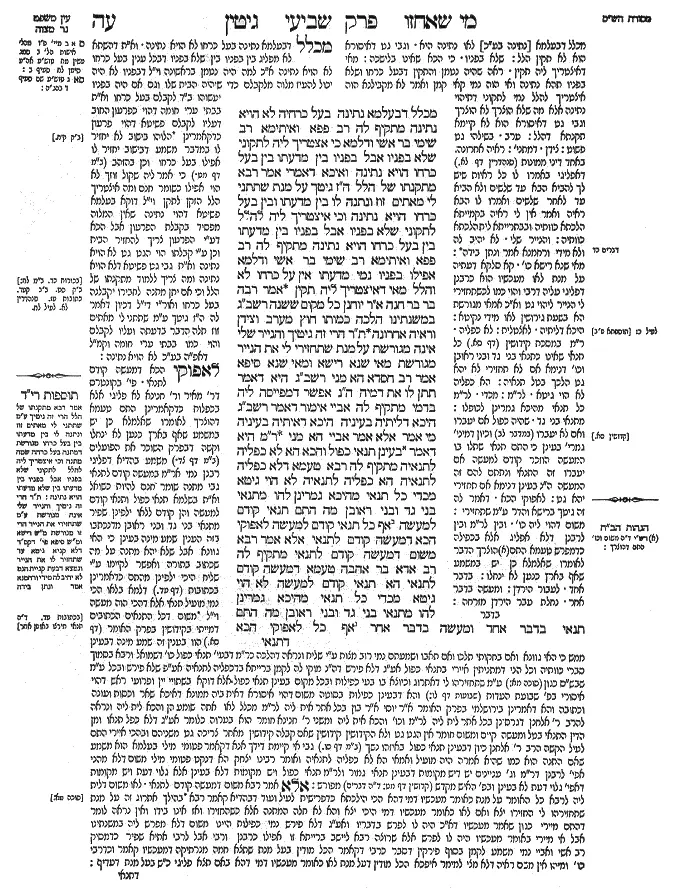
Gittin 75a - Guemara
מכלל דבעלמא נתינה בעל כרחיה לא הויא נתינה מתקיף לה רב פפא ואיתימא רב שימי בר אשי ודלמא כי אצטריך ליה לתקוני שלא בפניו אבל בפניו בין מדעתו בין בעל כרחו הויא נתינה ואיכא דאמרי אמר רבא מתקנתו של הלל ה"ז גיטך על מנת שתתני לי מאתים זוז ונתנה לו בין מדעתו ובין בעל כרחו הויא נתינה וכי איצטריך ליה להלל לתקוני שלא בפניו אבל בפניו בין מדעתו בין בעל כרחו הויא נתינה מתקיף לה רב פפא ואיתימא רב שימי בר אשי ודלמא אפילו בפניו נמי מדעתו אין על כרחו לא והלל מאי דאיצטריך ליה תקין אמר רבה בר בר חנה א"ר יוחנן כל מקום ששנה רשב"ג במשנתינו הלכה כמותו חוץ מערב וצידן וראיה אחרונה ת"ר הרי זה גיטיך והנייר שלי אינה מגורשת על מנת שתחזירי לי את הנייר מגורשת מאי שנא רישא ומאי שנא סיפא אמר רב חסדא הא מני רשב"ג היא דאמר תתן לו את דמיה ה"נ אפשר דמפייסה ליה בדמי מתקיף לה אביי אימור דאמר רשב"ג היכא דליתיה בעיניה היכא דאיתיה בעיניה מי אמר אלא אמר אביי הא מני ר"מ היא דאמר בעינן תנאי כפול והכא הא לא כפליה לתנאיה מתקיף לה רבא טעמא דלא כפליה לתנאיה הא כפליה לתנאיה לא הוי גיטא מכדי כל תנאי מהיכא גמרינן להו מתנאי בני גד ובני ראובן מה התם תנאי קודם למעשה אף כל תנאי קודם למעשה לאפוקי הכא דמעשה קודם לתנאי אלא אמר רבא משום דמעשה קודם לתנאי מתקיף לה רב אדא בר אהבה טעמא דמעשה קודם לתנאי הא תנאי קודם למעשה לא הוי גיטא מכדי כל תנאי מהיכא גמרינן להו מתנאי בני גד ובני ראובן מה התם תנאי בדבר אחד ומעשה בדבר אחר אף כל לאפוקי הכא
Comments from Rashi on Masechet Gittin Page 75a
מכלל דבעלמא [נתינה בע"כ] לאו נתינה היא . וגבי גט דאיסורא הוא לא תקין הלל: שלא בפניו . כי הכא שאינו בלישכה: מאי דאיצטריך ליה תקין . ראה שהיה נטמן והתקין דבעל כרחו ושלא בפניו תהא נתינה ואי הוה נמי קאי קמן ואמר לא מקבילנא הוה איצטריך להלל נמי לתקוני דתיהוי נתינה אלא מה שלא הוצרך לא הוצרך וגבי גט דאיסורא הוא לא קיימא תקנתא דהלל: ערב . בשילהי גט פשוט: צידן . דמתני': ראיה אחרונה . באחד דיני ממונות (סנהדרין דף לא.) דאפליגי באמרו לו כל ראיות שיש לך להביא הבא עד שלשים ולא הביא עד לאחר שלשים ואמרו לו הבא ראיה ואמר אין לי ראיה בקמייתא הלכתא כוותיה ובבתרייתא לית הלכתא כוותיה: והנייר שלי . לא יהיב לה ולא מידי ורחמנא אמר ונתן בידה: מאי שנא רישא כו' . קא סלקא דעתיה על מנת לאו מעכשיו הוא כרבנן דפליגי עליה דרבי והוי כמו לכשתחזירי לי הנייר ליהוי גט וא"כ אמאי מגורשת הא בשעת גירושין לאו מידי נקיטא: היכא דליתיה . לאצטלית: לא כפליה . ר"מ במסכת קידושין (דף סא.) כל תנאי שאינו כתנאי בני גד ובני ראובן וכו' דנימא אם לא תחזירי לא יהא גט הלכך בטל תנאיה: הא כפליה לא הוי גיטא . לר"מ: מכדי . לר"מ כל תנאי מהיכא גמרינן לכופלו: מתנאי בני גד . שהיה כפול אם יעברו ואם לא יעברו (במדבר לב) וכיון דמיני' גמרי' בעינן כי התם תנאי שתלו בו המעשה הוזכר קודם למעשה אם יעברו זה התנאי ונתתם להם זה המעשה ה"נ בעינן דנימא אם תחזירי יהא גט: לאפוקי הכא . דאמר לה זה גיטך ברישא והדר ע"מ שתחזירי: משום דהוי ליה כו' . ובין לר"מ ובין לרבנן דלא אפליג אלא בכפילה כדמפרש טעמא התם הוצרך הדבר לאומרו שאלמלא כן יש במשמע שאף בארץ כנען לא ינחלו: בדבר אחד . לעבור הירדן: ומעשה בדבר אחר . נחלת עבר הירדן מזרחה:
Comments from Tosafot - Gittin 75a
מכלל דבעלמא נתינה בעל כרחו לא הויא נתינה . וא"ת דהשתא לא מפליג בין בפניו בין שלא בפניו דבכל ענין בעל כרחו לא הויא נתינה א"כ למה היה נטמן בראשונה וי"ל דבפניו לא היה יכול להעיז מלוה מלקבלם כדי שיהיה הבית שלו וגם אם היה בפניו יעשוהו ב"ד לקבלם בעל כרחו וא"ת בבתי ערי חומה דהוי כפרעון החוב דעליו לקבלם פשיטא דהוי פרעון כדקאמרינן. הלוהו בישוב לא יחזיר לו במדבר משמע דבישוב יחזיר לו אפילו בעל כרחו וכן בהזהב (ב"מ דף מט.) כי אמר ליה שקול זוזך לא הוי אפילו כשומר חנם ומה איצטריך הלל הזקן לתקן וי"ל דוקא בעלמא פשיטא דהוי נתינה שאין המלוה מפסיד בקבלת הפרעון אבל הכא דע"י הפרעון צריך להחזיר הבית וכן ע"י קבלתו הוי הגט גט לא הויא נתינה וא"ת גבי גט פשיטא דלא הויא נתינה ומה צריך ללמוד מתקנתו של הלל וכי אם יתן מתנה לחבירו יקבלנה בעל כרחו ואור"י די"ל דכיון דאמר לה ה"ז גיטך ע"מ שתתני לי מאתים זוז תלה הדבר בדעתה ועליו לקבלם והוי כמו בבתי ערי חומה וקמ"ל דאפ"ה בע"כ לא הויא נתינה: לאפוקי הכא דמעשה קודם לתנאי . פי' בקונטרס דר' מאיר ור' חנינא לא פליגי אלא בכפלות כדקאמרינן התם טעמא דהוצרך לאומרו שאלמלא כן יש במשמע שאף בארץ כנען לא ינחלו וקשה דבפרק השוכר את הפועלים (ב"מ דף צד.) משמע בהדיא דפליגי רבנן נמי אר"מ במעשה קודם לתנאי גבי מתנה שומר חנם להיות כשואל וא"ת בשלמא תנאי כפול ותנאי קודם למעשה והן קודם ללאו ילפינן שפיר מתנאי בני גד ובני ראובן מדנכתבו בזה הענין שמע מינה בעינן כי האי גוונא אבל שלא יהא מתנה על מה שכתוב בתורה ואפשר לקיימו ע"י שליח היכי ילפינן מהתם כדאמרינן בכתובות (דף עד.) דלמא בלאו הכי נמי מועיל תנאי אלא דהכי הוה מעשה וי"ל. משום דכל התנאים הכתובים דמייתי בקידושין בפרק האומר (דף סא.) הוו בענין זה שמע מינה דבעינן ממש כי האי גוונא ואם בחקותי תלכו ואם תאבו ושמעתם נמי רוב מצות ע"י שליח ונראה דהלכה כר"מ דבעי' תנאי כפול כו' דשמואל ורבא בסמוך סברי כוותיה וכל הני דמתניתין איירי בתנאי כפול אע"ג דלא פירש דה"נ מוקי לה לקמן ברייתא בדכפליה לתנאיה אע"פ שלא פירש ובכל ע"מ שבש"ס כגון (סוכה מא:) ע"מ שתחזירהו לי דאתרוג וכיוצא בו בעי כפילות ובכל מקום בעינן תנאי כפול אלא דוקא בשתויי יין ופרועי ראש דהוי איסורי בפ' שבועת העדות (שבועות דף לו:) והא דבעינן כפילות בסוטה משום דהוי איסורא דאית ביה ממונא דאיכא שאר וכסות ועונה וכתובה והא דאמרינן בירושלמי בפרק האומר א"ר יוסי א"ר בון בכל אתר אית ליה לר"מ מכלל לאו אתה שומע הן והכא לית ליה ונראה להרב ר' אלחנן דגרסינן בכל אתר לית ליה לר"מ וכו' והכא אית ליה ומשני ר' חנינא חומר הוא בערוה כלומר אע"ג דלא כפל תנאו ומן הדין התנאי בטל ומעשה קיים ומשום חומר אין הגט גט ולא הקידושין קידושין שאם קבלה קידושין מאחר צריכה גט משניהם ובהכי איירי התם לעיל הקשה הרב ר' אלחנן כיון דבעינן תנאי כפול באיזהו נשך (ב"מ דף סו.) גבי אי קיימת דידך אנא דקאמר פטומי מילי בעלמא הוא משמע שאם התנה הוא כמו שהיא אמרה היה מועיל ואמאי הא לא כפליה לתנאיה ואומר רבינו יצחק הא דנקט פטומי מילי משום דלא מהני אפי' לרבנן דר"מ וג' עניינים יש דיש מקומות דבעינן תנאי גמור ולר"מ תנאי כפול ויש מקומות דלא בעינן אלא גלוי דעת ויש מקומות דאפי' גלוי דעת לא בעינן ובפ' האיש מקדש (קדושין דף מט: ד"ה דברים) מפורש: אלא אמר רבא משום דמעשה קודם לתנאי . לאו משום דלית ליה לרבא כל האומר על מנת כאומר מעכשיו דמי דהא הכי הילכתא כדפרישית לעיל ועוד דבהדיא קאמר רבא. בהילך אתרוג זה על מנת שתחזירהו לי החזירו יצא ואם לאו כאומר מעכשיו דמי היכי יצא והא לא חלה המתנה אלא כשהחזירו ואז אינו בידו ואין נראה לומר דהתם מיירי כגון שאמר מעכשיו דא"כ היה לו לפרש בדבריו ואע"ג דלא פירש נמי כפילות היינו משום דלא מפרש ליה במשנתינו אבל אי מיירי באומר מעכשיו היה לו לפרש אלא שרוצה רבא ליישב ברייתא זו אפילו כרבנן ורבי אבל לרבי אתיא שפיר כדמסיק רב אשי ואביי נמי משמע לקמן בסוף פירקין דסבר כרבי דקאמר הכל מודין בעל מנת שתצא חמה מנרתיקה דמעכשיו קאמר וכדרבי כו' ומיהו אין משם ראיה דלא מצי למימר איפכא הכל מודין דעל מנת לאו כאומר מעכשיו דמי דהא באם תצא פליגי כ"ש בעל מנת דעדיף:
Gittin 75a - Mishnah translated into english
This proves by inference that generally, giving against the recipient’s will is not considered valid giving, as if it were, then Hillel would not have needed to institute this ordinance.
Rav Pappa objects to this, and some say it was Rav Shimi bar Ashi who raises this objection: And perhaps when it was necessary for Hillel to institute an ordinance allowing the seller to repay the money against the will of the purchaser it was specifically in a case where he gives the money not in the presence of the purchaser. But when he repays him in his presence, whether the recipient was willing or whether it was against his will, it is considered valid giving. Accordingly, one cannot apply Hillel’s ordinance to the case of conditional bills of divorce.
And there are those who say a different version of this discussion. Rava says: From the ordinance of Hillel it can be inferred that if one says to his wife: This is your bill of divorce on the condition that you will give me two hundred dinars, and she gave it to him, whether it was with his consent or whether it was against his will, it is valid giving. And the case where it was necessary for Hillel to institute his ordinance was when the giving of the money was not in his presence. But if the repayment was in his presence, whether it was with his consent or whether it was against his will, it is considered valid giving.
Rav Pappa objects to this, and some say it was Rav Shimi bar Ashi who raises this objection: And perhaps even in a case where she gives him the money in his presence, if she gives it with his consent, yes, it is valid. If she gives it against his will, no, it is not considered to be valid giving. And Hillel specifically instituted what was necessary, because in the case of a house in a walled city the purchaser would hide, and therefore that ordinance was necessary there.
§ Rabba bar bar Ḥana says that Rabbi Yoḥanan says: In every place where Rabban Shimon ben Gamliel taught a halakha in our body of Mishna, the halakha is in accordance with his opinion, even though it is cited as an individual opinion, except for three cases. With regard to the halakha of a guarantor (Bava Batra 173b), if the creditor stipulated that he can collect his debt from either the debtor or the guarantor, according to the Rabbis he can collect from the guarantor’s property even if the debtor has available property. Rabban Shimon ben Gamliel holds that the creditor can collect the debt only from the debtor. And likewise the halakha is not like Rabban Shimon ben Gamliel with regard to the case mentioned here concerning the incident that occurred in Tzaidan.
And similarly, the halakha is not in accordance with the opinion of Rabban Shimon ben Gamliel concerning the dispute with regard to evidence in the final disagreement (Sanhedrin 31a), where the Rabbis hold that if one claims that he has no evidence or witnesses, but subsequently brings evidence to court, the judges do not accept it. According to the opinion of Rabban Shimon ben Gamliel they can accept it.
§ The Sages taught in a baraita: If the husband said to his wife: Behold this is your bill of divorce, but the paper on which it is written is still mine, then she is not divorced, as he must give her the actual bill of divorce in order for the divorce to take effect. Since the paper still belongs to him, it is as if he had given her only the writing. But if he said to her: Behold this is your bill of divorce on the condition that you return the paper to me, then she is divorced. The bill of divorce belongs entirely to her, and the returning of the paper is only a stipulation that must be fulfilled later.
The Gemara asks: What is different in the first clause of the baraita and what is different in the latter clause? In neither case does she have ownership of the bill of divorce. Rav Ḥisda said: In accordance with whose opinion is this baraita? It is in accordance with the opinion of Rabban Shimon ben Gamliel, who says with regard to his coat that she can give him its value and does not need to give the item itself in order to fulfill the condition. Here also, since it is possible for her to appease him with money and she may give him the value of the paper, therefore it is considered as though she received the paper.
Abaye objects to this answer: Say that Rabban Shimon ben Gamliel says that it is acceptable to give the value instead of the item itself when the item is not extant, because it is lost. But in a case where it is extant, such as the paper in this case, did Rabban Shimon ben Gamliel actually say that giving the value of the item is sufficient?
Rather, Abaye said: In accordance with whose opinion is this baraita? It is in accordance with the opinion of Rabbi Meir, who says: We require any stipulated condition to be structured as a compound condition describing both outcomes, meaning that the condition must mention what will happen both if the condition is fulfilled and if it is not fulfilled. And here he did not compound his condition. The husband said only: This is your bill of divorce on the condition that you return the paper to me. He did not specify that it will not be a valid bill of divorce if she does not return it.
Rava objects to this explanation: According to Abaye the reason the bill of divorce is valid is that the husband did not compound his condition, but if the husband did compound his condition then it would not be a valid bill of divorce. Now, from where do we learn the halakhot of all conditions? They are derived from the condition of the children of Gad and the children of Reuben. Moses stipulated with them that if they fight the battles with the Jewish people in Eretz Yisrael, they will inherit the land of Gilead in the Transjordan, as they requested; but if they do not fight the battles with the Jewish people in Eretz Yisrael, they will not inherit that land (see Numbers, chapter 32).
Just as there, in the conditions that Moses made, the language of the condition precedes the consequent action, for he first stated the condition and afterward he described the result if they fulfill the condition: “And you shall give them the land of Gilead as an inheritance” (Numbers 32:29), so too, any condition is valid only when it is stated before the resultant action. And this serves to exclude the case mentioned here, where the resultant action of the giving of the bill of divorce precedes the condition. Consequently, according to Rabbi Meir this bill of divorce would not be valid, even if the husband had compounded the condition.
Rather, Rava said: The condition does not apply and the woman is divorced because the action of giving the bill of divorce precedes the condition.
Rav Adda bar Ahava objects to this explanation: The reason that the bill of divorce is valid is that the action precedes the condition, and the condition does not take effect. But if the condition were to precede the action then it would not be a valid bill of divorce. Now, from where do we learn all the halakhot of conditions? They are derived from the condition of the children of Gad and the children of Reuben. Just as there it is a condition with regard to one matter, i.e., that they should fight along with the rest of the Jewish people, and a resultant action with regard to another matter, i.e., that they would receive the land of Gilead, so too, every other condition must follow this pattern. This serves to exclude the case mentioned here,
Traduction : The William Davidson digital edition of the Koren Noé Talmud, with commentary by Rabbi Adin Even-Israel Steinsaltz.