 Talmud Bavli
Gittin 53a : Youtube
Daf TubeYoutube
2 video classes :
Gittin Page 53a
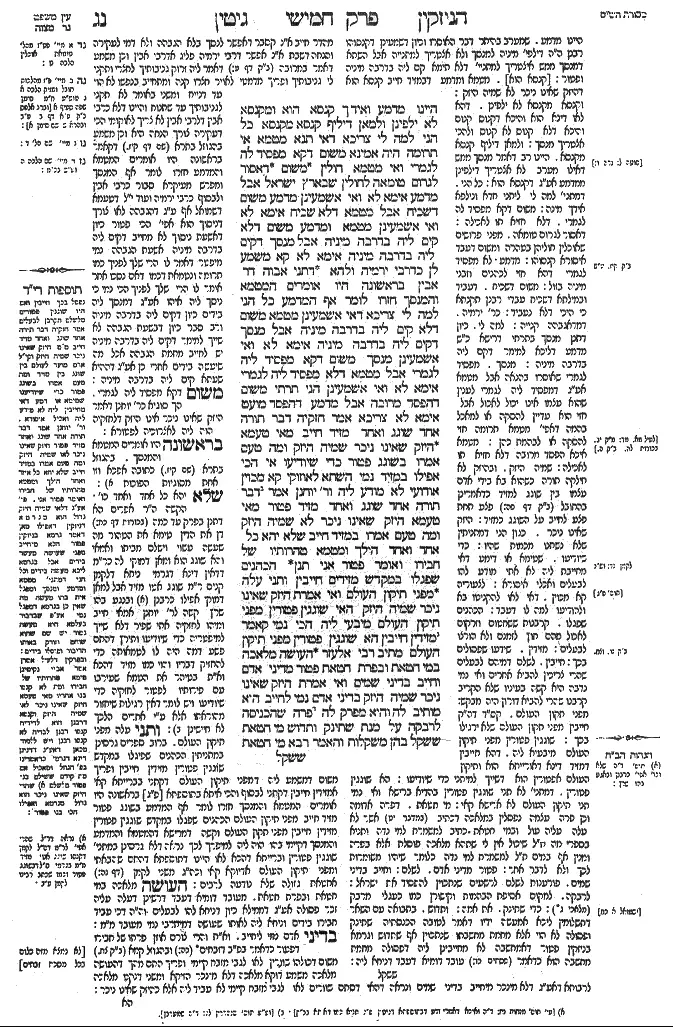
Gittin 53a - Guemara
היינו מדמע ואידך קנסא הוא ומקנסא לא ילפינן ולמאן דיליף קנסא מקנסא כל הני למה לי צריכא דאי תנא מטמא אי תרומה הוה אמינא משום דקא מפסיד לה לגמרי ואי מטמא חולין משום דאסור לגרום טומאה לחולין שבארץ ישראל אבל מדמע אימא לא ואי אשמעינן מדמע משום דשכיח אבל מטמא דלא שכיח אימא לא ואי אשמעינן מטמא ומדמע משום דלא קים ליה בדרבה מיניה אבל מנסך דקים ליה בדרבה מיניה אימא לא קא משמע לן כדרבי ירמיה ולהא דתני אבוה דר' אבין בראשונה היו אומרים המטמא והמנסך חזרו לומר אף המדמע כל הני למה לי צריכא דאי אשמעינן מטמא משום דלא קים ליה בדרבה מיניה אבל מנסך דקים ליה בדרבה מיניה אימא לא ואי אשמעינן מנסך משום דקא מפסיד ליה לגמרי אבל מטמא דלא מפסיד ליה לגמרי אימא לא ואי אשמעינן הני תרתי משום דהפסד מרובה אבל מדמע דהפסד מועט אימא לא צריכא אמר חזקיה דבר תורה אחד שוגג ואחד מזיד חייב מאי טעמא היזק שאינו ניכר שמיה היזק ומה טעם אמרו בשוגג פטור כדי שיודיעו אי הכי אפילו במזיד נמי השתא לאוזוקי קא מכוין אודועי לא מודע ליה ור' יוחנן אמר דבר תורה אחד שוגג ואחד מזיד פטור מאי טעמא היזק שאינו ניכר לא שמיה היזק ומה טעם אמרו במזיד חייב שלא יהא כל אחד ואחד הולך ומטמא טהרותיו של חבירו ואומר פטור אני תנן הכהנים שפגלו במקדש מזידים חייבין ותני עלה מפני תיקון העולם ואי אמרת היזק שאינו ניכר שמיה היזק האי שוגגין פטורין מפני תיקון העולם מיבעי ליה הכי נמי קאמר מזידין חייבין הא שוגגין פטורין מפני תיקון העולם מתיב רבי אלעזר העושה מלאכה במי חטאת ובפרת חטאת פטור מדיני אדם וחייב בדיני שמים ואי אמרת היזק שאינו ניכר שמיה היזק בדיני אדם נמי לחייב הוא מותיב לה והוא מפרק לה פרה שהכניסה לרבקה על מנת שתינק ותדוש מי חטאת ששקל בהן משקלות והאמר רבא מי חטאת
Comments from Rashi on Masechet Gittin Page 53a
היינו מדמע . שמערב בהיתר דבר האוסרו וכיון דשמעינן דקנסוהו רבנן ה"ה דילפי' מיניה למנסך ולא אצטריך למתנייה אבל השתא דמנסך ממש איצטריך למתניי' דלא תימא קם ליה בדרבה מיניה ופטור: [קנסא הוא] . מטמע ומדמע דבמזיד חייב קנסא הוא דהיזק שאינו ניכר לא שמיה היזק: וקנסא מקנסא לא ילפינן . דהא לאו דינא הוא והיכא דקנוס קנוס והיכא דלא קנוס לא קנוס ולהכי אצטריך מנסך: ולמאן דיליף קנסא מקנסא . היינו רב דאמר מנסך ממש דאילו מערב לא אצטריך דילפינן ממדמע אע"ג דקנסא הוא: כל הני . דמתני' למה לי ליתני חדא ונילפא אידך מינה: משום דקא מפסיד לה לגמרי . דלא חזיא תו לאכילה: דאסור לגרום טומאה . מפני פרושים שאוכלין חוליהן בטהרה ומשום דעבד איסורא קנסוהו: מדמע . לא מפסיד לגמרי דהא חזי לכהנים וזבני מיניה בזול: משום דשכיח . דעביד ובמילתא דשכיח עבדי רבנן תקנתא כי היכי דלא נעביד: כר' ירמיה . דמדאגבהה קנייה: למה לי . כיון דתנן מנסך בתרתי דרישא כ"ש מדמע דליכא למימר דקם ליה בדרבה מיניה: מנסך . מפסיד לגמרי שאוסרו בהנאה אבל מטמא אע"ג דמפסיד ליה לגמרי לענין שהוא עצמו אינו יכול לאכול אבל חזי הוא עדיין להסקה או למאכל בהמה דאפי' מטמא תרומה חזי להסקה או לבהמת כהן: מטמא איכא הפסד מרובה דלא חזיא תו לאכילה: שמיה היזק . ובהיזק לא חילקה תורה כשהוא בא בידי אדם עצמו בין שוגג למזיד כדאמרינן בהחובל (ב"ק דף פה:) פצע תחת פצע לחייב על השוגג כמזיד: היזק שאינו ניכר . כגון הני דמתניתין שלא נשתנו מכמות שהיו: כדי שיודיעו . שטימא או דימע דאי מחייבת ליה לא אתי מודע להו לבעלים ואכלי איסורא: לצעוריה קא מכוין . דאי לאו להקניטו בא ולהודיעו למה לו דעבד: הכהנים שפגלו . קרבנות ששחטום וזרקום לאכול מהם חוץ לזמנם ולא הורצו לבעלים: מזידין . שידעו שפסולים בכך: חייבין . לשלם דמיהן לבעלים שהרי צריכין להביא אחרים ואי נמי נדבה היא קשה בעיניו שלא הקריב קרבנו שהרי להביא דורון היה מבקש: מפני תקון העולם . קס"ד דה"ק חייבין מפני תקון העולם שלא ירגילו בכך: שוגגין פטורין מפני תיקון העולם מיבעיא ליה . דהא חייבין דמזיד דינא דאורייתא הוא ותיקון העולם אפטורין הוא דשייך למיתני כדי שיודיעו: הא שוגגין פטורין . דמתני' לא תני שוגגין פטורין בהדיא ברישא ואי נמי תני תיקון העולם לא ארישא קאי: מי חטאת . דפרה אדומה וכן פרה עצמה נפסלין במלאכה דכתיב (במדבר יט) אשר לא עלה עליה עול ובמי חטאת כתיב למשמרת למי נדה ותניא בספרי מה ת"ל שיכול אין לי שתהא מלאכה פוסלת אלא בפרה ומנין אף במים ת"ל למשמרת למי נדה כלומר שיהו משומרות לכך ולא לדבר אחר: פטור מדיני אדם . לשלם: וחייב בדיני שמים . פורענות לשלם לרשעים שנתכוין להפסיד את ישראל: לרבקה . למקום אסיפת הבהמות וקישורן כמו כעגלי מרבק (מלאכי ג): כדי שתינק . את אמה: ותדוש . בתבואה עם השאר דתשלומין ליכא אמעשה ידיו דאמר לטובה הכנסתיה שתינק ופסולה לא הוי אלא מחמת מחשבתו שנתכוין אף שתדוש וגרמא בניזקין פטור דאמחשבה לא מחייבינן ליה דפסולה מחמת מחשבה הוא כדאמר (פסחים כו:) עובד דומיא דעבד דניחא ליה:
Comments from Tosafot - Gittin 53a
משום דקא מפסיד ליה לגמרי . הך סוגיא כר' יוחנן דאמר היזק שאינו ניכר אינו היזק דלחזקיה הוה ליה לאצרוכיה לפטורא: בראשונה היו אומרים המטמא והמנסך . בהגוזל בתרא (שם קיז.) כתובה אפכא וזו אחת מסוגיות הפוכות: שלא יהא כל אחד ואחד כו' . הקשה ה"ר אפרים הא דתנן בפרק עד כמה (בכורות דף כח:) דן את הדין טימא את הטהור מה שעשה עשוי וישלם מביתו ואמאי והא שוגג הוא ומאן דמוקי לה כר"מ דדאין דינא דגרמי ניחא דלקמן קניס ר"מ שוגג אטו מזיד אבל למאן דמוקי אפילו כרבנן ובנגע בהו שרץ קשה לר' יוחנן אמאי חייב ומיהו לחזקיה אתי שפיר דלא שייך למיפטריה כדי שיודיעו ותירץ דהתם פשע דמה היה לו לטמאותה כדי להחזיק דבריו והוי כמו מזיד דהכא וא"ת בטיהר את הטמא שעירבו עם פירותיו לפטור לחזקיה כדי שיודיעו ויש לומר דאין רגילות שיחזור מהוראתו אלא ע"י אחרים הלכך לא חיישינן: ותני עלה מפני תיקון העולם . ברוב ספרים גרסינן במתניתין הכהנים שפיגלו במקדש שוגגין פטורין מזידין חייבין ופריך משום דמשמע ליה דמפני תיקון העולם דקתני בברייתא קאי אמזידין חייבין דקתני לבסוף והכי איתא בתוספתא [פ"ג] בראשונה היו אומרים המטמא והמנסך חזרו לומר אף המדמע בשוגג פטור מזיד חייב מפני תיקון העולם הכהנים שפגלו במקדש שוגגין פטורין מזידין חייבין מפני תקון העולם וקשה דמרישא דהמטמא והמדמע והמנסך דקיימי בהו הוה ליה למיפרך לכך נראה דלא גרסינן במתני' שוגגין פטורין וברייתא דהכא לאו היינו דתוספתא דהתם שהבאתי ומפני תיקון העולם אדיוקא קאי וכה"ג משני לקמן (גיטין דף נה:) אחטאת גזולה שלא נודעה לרבים: העושה מלאכה במי חטאת ובפרת חטאת . מעובד דומיא דעבד דרשינן דעלה עליה זכר פסולה אע"ג דממילא כיון דניחא להו לבעלים וה"ה דכי עביד חבירו בידים וניחא ליה לאותו שעושה דמיתרבי נמי מעובד מ"מ: בדיני אדם נמי ליחייב . וא"ת והרי צורם אוזן פרתו של חבירו דפטור כדאמר בפ"ב דזבחים (כה:) ובהגוזל קמא (ב"ק צח.) משום דכולהו שוורין לאו לגבי מזבח קיימי ופריך התם מהך דהעושה מלאכה משמע דוקא מלאכה דלא מינכר הזיקא ומשני דנקט מלאכה לרבותא דאע"ג דלא מינכר מיחייב בדיני שמים ונראה דהאי דסתם שוורים לאו לגבי מזבח קיימי לא עביד ליה אלא כהיזק שאינו ניכר:
Gittin 53a - Mishnah translated into english
is the same as mixing teruma with non-sacred produce, as both involve intermingling that which is forbidden with that which is permitted, so that the entire mixture becomes forbidden. There is no difference between these actions, so there would be no need to mention both of them in the mishna.
And the other Sage, Shmuel, holds that one who mixes teruma with another person’s non-sacred produce is liable for a fine. And we do not derive a fine in one case from a fine stated in another case, even if the two cases are similar. Consequently, liability for the fine must be mentioned separately for each case.
The Gemara asks: And according to the one who says that we do derive a fine in one case from a fine in another case, why do I need all these cases mentioned in the mishna, i.e., one who renders another person’s food ritually impure, one who mixes teruma with another’s non-sacred produce, and one who pours another person’s wine in a rite of idolatry?
The Gemara answers: All three rulings are necessary, as, had the mishna taught only the case of one who renders another’s food impure, there are two possibilities: If it is referring to one who renders another’s teruma non-sacred, then I would say that they imposed a penalty because he ruined it entirely, as it can no longer be consumed by anyone, neither a priest nor an ordinary Israelite. And if it is referring to one who renders another’s non-sacred food impure, then I would say the fine is imposed because it is prohibited to cause impurity to non-sacred food in Eretz Yisrael. But in the case of one who mixes teruma with another’s non-sacred produce, since he neither caused a substantial loss, as the mixture can still be sold to a priest, nor spread impurity in Eretz Yisrael, one might say that a fine is not imposed upon him.
And had the mishna taught us only the case of one who mixes teruma with another person’s non-sacred produce, I would say that a fine is imposed in that case, because mixing two different items together is a common occurrence. But concerning one who renders another person’s food impure, which is uncommon, one might say that a fine is not imposed, as the Sages did not impose penalties in uncommon cases.
And had the mishna taught us both the case of one who renders another person’s food impure and the case of one who mixes teruma with another person’s non-sacred produce, I would say that fines are imposed in both those cases, because there is no application of the principle that one who has committed two transgressions with a single act, each carrying its own punishment, receives the greater punishment of the two. Neither of these actions carries a punishment beyond paying the fine.
But concerning one who pours another person’s wine as a libation before an idol, where one does apply the principle that one who has committed two transgressions with a single act receives the greater punishment of the two for which he is liable, as he is liable to receive court imposed capital punishment for having transgressed the prohibition against idolatry, I would say that a fine is not imposed. Therefore, the mishna teaches us that he is in fact liable to pay the fine. And the reason for this is in accordance with the statement of Rabbi Yirmeya, that since he acquired the wine from the moment he lifted it, he became liable to pay the fine before he became liable to receive court imposed capital punishment, and therefore he is subject to both punishments.
The Gemara asks: And according to this version of the halakha that the father of Rabbi Avin taught (Tosefta 4:5): Initially the Sages would say that one who renders another person’s food impure and one who pours another’s wine as a libation before an idol are subject to a fine, and later they returned to say that even one who mixes teruma with another person’s non-sacred produce is liable to pay a fine, why do I need all these cases? In this version, the halakha of one who mixes was added later. After the halakhot concerning one who renders another person’s food impure and one who pours another’s wine were taught, why could the halakha of one who mixes not be derived from those halakhot?
The Gemara answers: All three rulings are necessary, as, had the baraita in the Tosefta taught us only the case of one who renders another person’s food impure, I would say that a fine is imposed, because there is no application of the principle that one who has committed two transgressions with a single act, each carrying its own punishment, receives the greater punishment of the two. But with regard to one who pours another’s wine as a rite in idolatry, where one does apply the principle that one who has committed two transgressions with a single act receives the greater punishment of the two for which he is liable, one might say that a fine is not imposed.
And had the baraita taught us only the case of one who pours another’s wine as a libation before an idol, I would say that they imposed a penalty because he ruined it entirely, as it is now prohibited for one to derive any benefit from it whatsoever. But for one who renders another person’s food impure, which does not ruin it entirely, as one may derive benefit from it, e.g., by using it as fuel while it is being burned or by feeding it to his animal, one might say that a fine is not imposed.
And had the baraita taught us only these two cases, I would say that here they imposed fines because in each case there is a substantial loss. But with regard to one who mixes teruma with another person’s non-sacred produce, where the loss he causes is minimal because the owner can still sell the mixture to priests at the price of teruma, one might say that a penalty is not imposed. Therefore, all three rulings are necessary.
§ The mishna teaches: If one unintentionally committed one of these offenses, either rendering another’s food impure, mixing teruma with another’s produce, or pouring another’s wine before an idol, he is exempt from paying for the damage. If he acted intentionally, he is liable to pay. Ḥizkiyya says: By Torah law, one who commits one of the offenses listed in the mishna, whether he did so unintentionally or intentionally, is liable to pay for the damage he caused, like any other person who causes damage. What is the reason for this? The reason is that even damage that is not evident is categorized as damage. One is liable for damage not only when the damage is evident, i.e., when he causes a change in the item’s physical state, but also when the damage is not evident, i.e., when he causes a reduction in the item’s value due to a change in its halakhic status, e.g., when he renders it impure.
And what is the reason that the Sages said that if he committed one of these acts unintentionally he is exempt? This is so that the one who caused the damage will inform the injured party about what happened. If a fine were imposed even in a case where the damage is caused unintentionally, there would be a concern that the guilty party might not report the damage so as to avoid the penalty. In such a situation the injured party will not know what happened, as the damage is not evident, and he will inadvertently use that which has become impure, mixed with teruma, or poured before an idol.
The Gemara asks: If it is so that there is a concern about this, then he should be exempt from liability even if he committed one of these offenses intentionally, so that he will inform the owner of the item. The Gemara answers: Now, since it was his intention to cause him damage, will he not inform him? If he does not tell him, the other person will never know that he suffered damage. Consequently, he will certainly inform him of what he did and that his property is now subject to a prohibition, and there is no concern that the injured party will inadvertently come to transgress the prohibition. This is Ḥizkiyya’s opinion.
And Rabbi Yoḥanan says: By Torah law, one who commits one of the offenses listed in the mishna, whether he did so unintentionally or intentionally, is exempt from liability for the damage he caused. What is the reason for this? The reason is that damage that is not evident is not categorized as damage. And what is the reason that the Sages said that if he committed one of these acts intentionally he is liable? This is so that each and every person who has a grievance with his neighbor and wishes to cause him harm should not go and render impure the other person’s pure foods, and say: I am exempt from liability.
The Gemara raises an objection to the opinion of Ḥizkiyya from what we learned in a mishna (54b): With regard to priests who disqualified an offering through improper intention in the Temple, by expressing, while sacrificing the offering, the intention of sprinkling the blood of the offering, burning its fats on the altar, or consuming it after its appointed time, if they did so intentionally, they are liable to pay the value of the offering to its owner, who must now bring another offering. And it is taught with regard to this mishna that the Sages instituted this obligation for the betterment of the world, so that priests should not act in this manner toward people to whom they wish to cause harm.
And if you say that damage that is not evident is nevertheless categorized as damage, it should have said that if they acted unintentionally they are exempt due to the betterment of the world. This is because according to Ḥizkiyya, if they acted intentionally they should be liable by Torah law for the damage they caused, and not by rabbinic ordinance instituted for the betterment of the world.
The Gemara answers: That is also what the tanna is saying, and the mishna should be understood as follows: If they acted intentionally, they are liable, but if they acted unintentionally, they are exempt. And the reason that they are exempt is for the betterment of the world.
Rabbi Elazar raised an objection based on what was taught: With regard to one who performs a task with the water of purification, i.e., water that is to be mixed with the ashes of the red heifer, which was used to purify people and objects that had contracted ritual impurity by contact with a corpse, or performed labor with the red heifer of purification, and by doing so he disqualifies it, he is exempt according to human laws but is liable according to the laws of Heaven. And if you say that damage that is not evident is nevertheless categorized as damage, then according to human laws he should also be liable.
The Gemara comments that he, Rabbi Elazar, raised the objection and subsequently he himself resolved it: That which they said, that he performed labor with the red heifer, means that he placed it in a pen [lirvaka] so that it would nurse from its mother and would incidentally thresh, meaning that his action is not defined as having the heifer perform labor. And that which they said, that he performed a task with the water of purification, means that he weighed weights with the water, which is not an actual task performed with the water.
The Gemara asks: But doesn’t Rava say: Water of purification
Traduction : The William Davidson digital edition of the Koren Noé Talmud, with commentary by Rabbi Adin Even-Israel Steinsaltz.