 Talmud Bavli
Gittin 67a : Youtube
Daf TubeYoutube
2 video classes :
Gittin Page 67a
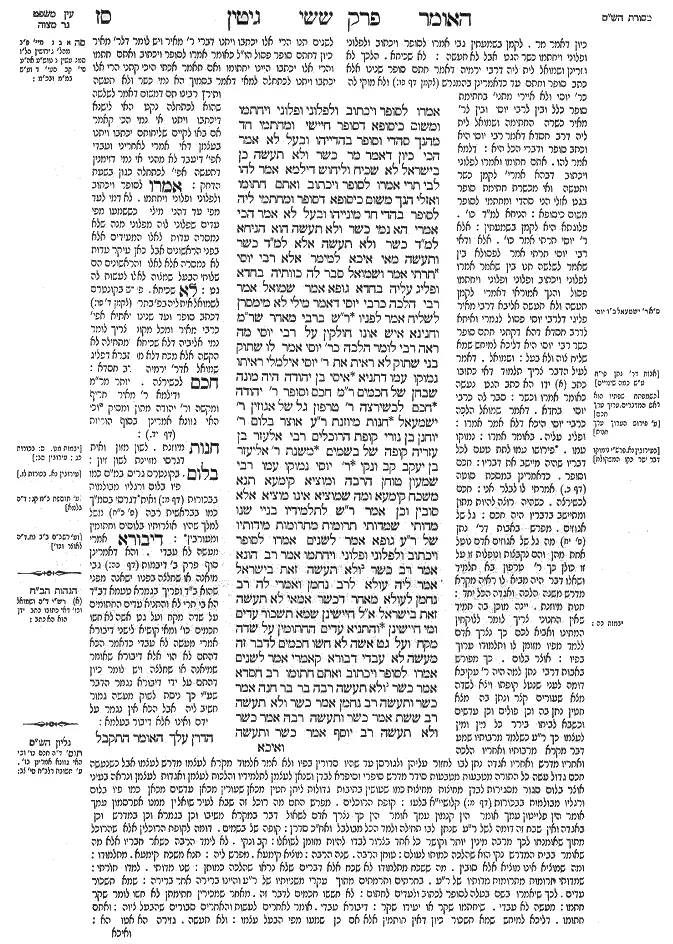
Gittin 67a - Guemara
אמרו לסופר ויכתוב ולפלוני ופלוני ויחתמו ומשום כיסופא דסופר חיישי ומחתמי חד מהנך סהדי וסופר בהדייהו ובעל לא אמר הכי כיון דאמר מר כשר ולא תעשה כן בישראל לא שכיח וליחוש דילמא אמר להו לבי תרי אמרו לסופר ויכתוב ואתם חתומו ואזלי הנך משום כיסופא דסופר ומחתמי ליה לסופר בהדי חד מינייהו ובעל לא אמר הכי אמרי הא נמי כשר ולא תעשה הוא הניחא למ"ד כשר ולא תעשה אלא למ"ד כשר ותעשה מאי איכא למימר אלא רבי יוסי תרתי אמר ושמואל סבר לה כוותיה בחדא ופליג עליה בחדא גופא אמר שמואל אמר רבי הלכה כרבי יוסי דאמר מילי לא מימסרן לשליח אמר לפניו ר"ש ברבי מאחר שר"מ וחנינא איש אונו חולקין על רבי יוסי מה ראה רבי לומר הלכה כר' יוסי אמר לו שתוק בני שתוק לא ראית את ר' יוסי אילמלי ראיתו נמוקו עמו דתניא איסי בן יהודה היה מונה שבחן של חכמים ר"מ חכם וסופר ר' יהודה חכם לכשירצה ר' טרפון גל של אגוזין ר' ישמעאל חנות מיוזנת ר"ע אוצר בלום ר' יוחנן בן נורי קופת הרוכלים רבי אלעזר בן עזריה קופה של בשמים משנת ר' אליעזר בן יעקב קב ונקי ר' יוסי נמוקו עמו רבי שמעון טוחן הרבה ומוציא קימעא תנא משכח קימעא ומה שמוציא אינו מוציא אלא סובין וכן אמר ר"ש לתלמידיו בניי שנו מדותי שמדותי תרומות מתרומות מידותיו של ר"ע גופא אמר לשנים אמרו לסופר ויכתוב ולפלוני ופלוני ויחתמו אמר רב הונא אמר רב כשר ולא תעשה זאת בישראל אמר ליה עולא לרב נחמן ואמרי לה רב נחמן לעולא מאחר דכשר אמאי לא תעשה זאת בישראל א"ל חיישינן שמא תשכור עדים ומי חיישינן והתניא עדים החתומין על שדה מקח ועל גט אשה לא חשו חכמים לדבר זה מעשה לא עבדי דבורא קאמרי אמר לשנים אמרו לסופר ויכתוב ואתם חתומו רב חסדא אמר כשר ולא תעשה רבה בר בר חנה אמר כשר ותעשה רב נחמן אמר כשר ולא תעשה רב ששת אמר כשר ותעשה רבה אמר כשר ולא תעשה רב יוסף אמר כשר ותעשה
Comments from Rashi on Masechet Gittin Page 67a
כיון דאמר מר . לקמן בשמעתין גבי אמרו לסופר ויכתוב ולפלוני ופלוני ויחתמו כשר הגט אבל לא תעשה: לא שכיחא . הלכך לא גזרינן ושמואל לית ליה דרבי ירמיה דאמר חתם סופר שנינו אלא כתב סופר וחתם עד כדאמרינן בהמגרש (לקמן גיטין דף פו.) ולא מוקי לה כר' יוסי ולא איירי מתני' בחתימת סופר כלל ובין לרבי יוסי ובין לר' מאיר כשרה החתימה ושמואל לית ליה דרב חסדא דאמר רבי יוסי היא וכתב סופר ודברי הכל היא: דלמא אמר להו . אתם חתומו ואמרו לפלוני ויכתוב דבהא אמרי' לקמן כשר ותעשה ואי מכשרת חתימת סופר בגט אזלי הני סהדי ומחתמי לסופר משום כיסופא: הניחא למ"ד כו' . פלוגתא היא לקמן בשמעתין: אלא ר' יוסי תרתי אמר כו' . אלא ודאי רבי יוסי תרתי אמר לפסולא בין שאמר לשלשה תנו בין שאמר אמרו לפלוני ויכתוב ופלוני ופלוני ויחתמו פסול והנך אמוראי דאמרי לקמן תעשה ולא תעשה אליבא דרבי מאיר פליגי דלרבי יוסי פסול לגמרי ואיתא לדרב חסדא דהא דקתני חתם סופר כשר רבי יוסי היא דליכא למיחש שמא שליח צוה ולא בעל: ושמואל . דאמר לעיל הדבר צריך תלמוד דאי כתובו כתב ידו הא כתב הגט נעשה כאומר אמרו וכשר: סבר לה כרבי יוסי בחדא . דאמר שמואל הלכה כרבי יוסי היכא דלא אמר אמרו: ופליג עליה . באומר אמרו: נמוקו עמו . פירושו עמו לתת טעם לכל דבריו שהיה מיישב את דבריו: חכם וסופר . כדאמרינן במסכת סוטה (דף כ.) אמרתי לו לבלר אני: חכם לכשירצה . כשהיה רוצה להיות מתון ומתיישב בדבריו היה חכם: גל של אגוזים . מפרש באבות דר' נתן (פ' יח) מה גל של אגוזים אדם נוטל אחת מהן והם נקבצות ונופלות זו על זו כולן כך ר' טרפון בא תלמיד ושאלו דבר היה מביא לו ראיה מקרא מדרש משנה הלכה ואגדה הכל יחד: חנות מיוזנת . יינה מוכן בה תמיד שאין החנוני צריך לומר ללוקחין המתינו ואביא לכם כך נצרך אדם ללמד מפיו מזומן לו ותלמודו ערוך בפיו: אוצר בלום . כך מפורש באבות דרבי נתן למה היה ר' עקיבא דומה לעני שנטל קופתו ויצא לשדה מצא שעורים קצר ונתן בה מצא חטין נתן בה וכן פולים וכן עדשים וכשבא לביתו בירר כל מין ומין לעצמו כך ר"ע כשלמד מרבותיו שמע דבר מקרא מרבותיו ואחריו הלכה ואחריו מדרש ואחריו אגדה נתן לבו לחזור עליהן ולגורסן עד שהיו סדורין בפיו ולא אמר אלמוד מקרא לעצמו מדרש לעצמו אבל כשנעשה חכם גדול עשה כל התורה מטבעות מטבעות סידר מדרש ספרי וסיפרא לבדן ושנאן לעצמן לתלמידיו והלכות לעצמן ואגדות לעצמן ונראה בעיני אוצר בלום סגור מסגירות לבדן מחיצות מחיצות כמו שעושין בתיבות גדולות ליתן חטין מכאן שעורין מכאן עדשים מכאן כמו פיו בלום ורגליו מבולמות בבכורות (דף מ:) קלושיי"א בלעז: קופת הרוכלים . מפרש התם מה רוכל זה שבא לעיר שואלין ממנו אפרסמון עמך אומר הין פלייטון עמך אומר הין קנמון עמך אומר הין כך נצרך אדם לשאול דבר במקרא משיבו וכן בגמרא וכן במדרש וכן באגדה ואין שבח זה דומה לשל ר"ע שנתן לבו תחילה ולמד הכל מבולבל ואח"כ סדרן: קופה של בשמים . דומה לקופת הרוכלין אלא שהרוכל מתוך שאומנתו לכך מרבה מינין יותר וקושר כל אחד בצרור לבדו להיות מזומן לשואלו: קב ונקי . לא לימד הרבה כשאר חבריו אלא מה שאומר בבית המדרש נקי הוא שהלכה כמותו לעולם: טוחן הרבה . שנה הרבה: מוציא קימעא . מפרש ליה: תנא משכח קימעא . מתלמודו: ומה שמוציא אינו מוציא אלא סובין . מה ששכח מתלמודו לא שכח אלא דברים שלא נראו שהלכה כמותן: שנו מדותי . למדו תורתי: שמדותי תרומות מתרומות מדותיו של ר"ע . בחרתים ותרמתים מתוך עקרי משניותיו של ר"ע והיינו ברירה אחר ברירה: שמא תשכור עדים . לכך שיאמרו בשם בעלה לסופר לכתוב ולעדים לחתום: לא חששו חכמים לדבר זה . מאחר שמכירין חתימתן לא חשו לומר שקר חתמו: מעשה לא עבדי . שיחתמו שקר או יעידו שקר: דיבורא עבדי . אומר לאחרים לעשות והאחרים סבורים שהבעל ציוה: ואתם חתומו . דליכא למיחש שמא תשכור כיון דאין חותמין אלא אם כן שמעו מפי הבעל עצמו: ולא תעשה . גזירה הא אטו הא:
Comments from Tosafot - Gittin 67a
אמרו לסופר ויכתוב ולפלוני ופלוני ויחתמו . לא דמי לעד מפי עד דהני מילי כששמעו מפי עדים שפלוני לוה מפלוני מנה שלא נמסרה עדות לאלו המעידים אלא בפני הראשונים אבל כאן עיקר עדות לא נמסרה אלא לאלו והראשונים הם שלוחי הבעל שמצוה לאלו לעשות לה גט: לא שכיחא . פירש בקונטרס לשמואל אית ליה בפ' בתרא (לקמן גיטין ד' פו:) דכתב סופר ועד שנינו ואתיא אפי' כרבי מאיר ומכל מקום צריך לומר נמי אליביה דלא שכיחא דמתחילה לא הקשה אלא מכח דלא מסתברא דפליג שמואל אדר' ירמיה ורב חסדא: חכם לכשירצה . יותר מר"מ ודילמא ר' מאיר חריף ומקשה ור' יהודה מתון ומסיק וכי האי גוונא אמרינן בסוף הוריות (דף יד.): חנות מיוזנת . לשון מזון ואית דגרסי מזוינת לשון זיון: בלום . בקונטרס גריס במ"ם כמו פיו בלום ורגליו מבולמות בבכורות (דף מ:) ואית דגרסי בסמ"ך כמו בבראשית רבה (פ' כ"ח) משל למלך שהיו אוצרותיו בלוסים וחתומין ומעורבין: דיבורא אמרי מעשה לא עבדי . והא דאמרינן סוף פרק ב' דיבמות (דף כה:) גבי מיאנה או שחלצה בפניו ישאנה מפני שהוא ב"ד ופריך בגמרא טעמא דב"ד הא בי תרי לא והתניא עדים החתומים על שדה מקח ועל גט אשה לא חשו חכמים כו' ומאי קושיא לישני דיבורא אמרי מעשה לא עבדי כדאמר הכא דהתם לא הוי אלא דיבורא שאומר שמיאנה או שחלצה ויש לומר כיון דהתם על ידי דיבורא נגמר הדבר שע"י כך ניסת לשוק מעשה גמור חשיב ליה אבל הכא אין נגמר על ידם ואינו אלא דיבור בעלמא:
Gittin 67a - Mishnah translated into english
Tell a scribe and he will write the document and tell so-and-so and so-and-so and they will sign it. And due to the shame of the scribe, who asks: Don’t you consider me a sufficiently upright person to sign the document as a witness, the agents are concerned to avoid that disgrace and have one of those witnesses and the scribe sign together with him, and the husband did not say to do so. The bill of divorce is invalid because it was signed contrary to the husband’s instructions, and the agents will mistakenly think it is valid.
The Gemara answers: Since the Master said, as cited later, that such a bill of divorce is valid, however, it shall not be done in Israel, as the husband himself should appoint the scribe and the witnesses, it is an uncommon case for the husband to appoint an agent to arrange the bill of divorce, and the Sages do not issue a decree for cases that are uncommon.
The Gemara asks: And let us be concerned lest the husband say to two people: Tell the scribe and he will write the document and you sign it, and these two, due to the shame of the scribe, go and have the scribe sign the document together with one of them, and the husband did not say to do so. The Sages say: In this case too, it is valid; however, it shall not be done. This too is uncommon, and there is neither concern nor a decree.
The Gemara responds: This works out well according to the one who said in this case as well: It is valid; however, it shall not be done. But according to the one who said: It is valid and it may be done, i.e., it is permitted ab initio, what is there to say?
Rather, this is the explanation. Rabbi Yosei stated two halakhot: The first is that verbal directives cannot be delegated to an agent. The second is that even when the husband said: Tell another to write the document, this agency cannot be transferred to another person. And Shmuel holds in accordance with the opinion of Rabbi Yosei in one case, i.e., that verbal directives cannot be delegated to an agent, and he disagrees with him in one case, as Shmuel holds that if the husband explicitly said: Tell another to write the document, this agency can be transferred.
§ With regard to the previously cited matter itself, Shmuel says that Rabbi Yehuda HaNasi says: The halakha is in accordance with the opinion of Rabbi Yosei, who says: Verbal directives cannot be delegated to an agent. Rabbi Shimon, son of Rabbi Yehuda HaNasi, said before his father: Since Rabbi Meir and Rabbi Ḥanina of Ono, who hold that verbal directives can be delegated to an agent, disagree with Rabbi Yosei, what led Rabbi Yehuda HaNasi to say that the halakha is in accordance with the opinion of Rabbi Yosei?
Rabbi Yehuda HaNasi said to his son: Be silent, my son; be silent. You did not see Rabbi Yosei, as, if you had seen him, you would know that his reasoning [nimmuko] accompanies his statements. Therefore, I deem his opinion most reliable.
This is as it is taught in a baraita that Isi ben Yehuda would recount the praise of the Sages by characterizing each of them: Rabbi Meir, a scholar and scribe; Rabbi Yehuda, a scholar when he chooses to be one; Rabbi Tarfon, a pile of nuts, as, just as when one removes a nut from a pile all the other nuts fall, so too, when a student would ask Rabbi Tarfon with regard to one matter, he would cite sources from all the disciplines of the Torah; Rabbi Yishmael, a well-stocked store; Rabbi Akiva, a full storehouse; Rabbi Yoḥanan ben Nuri, a peddler’s basket, in which there is a small amount of each product; Rabbi Elazar ben Azarya, a basket of fragrant spices, as everything he says is reasonable; the mishna of Rabbi Eliezer ben Ya’akov is measured [kav] and immaculate; Rabbi Yosei, his reasoning accompanies his statements; Rabbi Shimon grinds much and removes little.
It is taught in explanation: Rabbi Shimon would forget little of his studies, and what he removed from his memory, he removed only chaff. And likewise, Rabbi Shimon said to his students: My sons, accept my halakhic rulings, as my rulings are the finest rulings of the finest rulings of Rabbi Akiva.
§ With regard to the matter previously cited itself, a case where one who said to two people: Tell a scribe and he will write the document and tell so-and-so and so-and-so and they will sign it, Rav Huna says that Rav says: It is valid; however, it shall not be done in Israel ab initio. The husband himself must appoint the scribe and witnesses.
Ulla said to Rav Naḥman, and some say that Rav Naḥman said to Ulla: Since it is valid, why shall it not be done in Israel? He said to him: We are concerned lest the woman hire witnesses. Since this is permitted by means of an agent, and the witnesses themselves do not know what the husband said, a woman could hire witnesses to tell a scribe to write a bill of divorce on her behalf and hire witnesses to sign it without her husband’s knowledge.
The Gemara asks: But are we concerned about that possibility? But isn’t it taught in a baraita (Tosefta, Yevamot 4:7): With regard to witnesses who are signed on a field of sale and a woman’s bill of divorce, the Sages were not concerned with regard to this matter of forgery, that perhaps these documents were written without consent of the owner and the husband, respectively. The Gemara answers: Although they would not perform an action and forge a bill of divorce, they would utter a statement and tell another to forge a document. The other person acts unknowingly, unaware of the impropriety involved.
The Gemara cites another halakha: If one said to two people: Tell the scribe and he will write the document and you sign it, Rav Ḥisda says: This bill of divorce is valid; however, it shall not be done ab initio. Rabba bar bar Ḥana says: It is valid and it may be done ab initio.
Several other amora’im dispute this matter. Rav Naḥman says: It is valid; however, it shall not be done ab initio. Rav Sheshet says: It is valid and it may be done ab initio. Rabba says: It is valid; however, it shall not be done. Rav Yosef says: It is valid and it may be done.
Traduction : The William Davidson digital edition of the Koren Noé Talmud, with commentary by Rabbi Adin Even-Israel Steinsaltz.