 Talmud Bavli
The learning on the whole site is dedicated : L'ilui Nishmat Ledicia bat David Banoun
The learning on the whole site is dedicated : L'ilui Nishmat Jacques Isaac Ben Amram Loubaton
The learning on the whole site is dedicated : L'ilui Nishmat רינה בת לדיסיה
Yoma 84b : Youtube
Daf TubeYoutube
3 video classes :
Yoma Page 84b
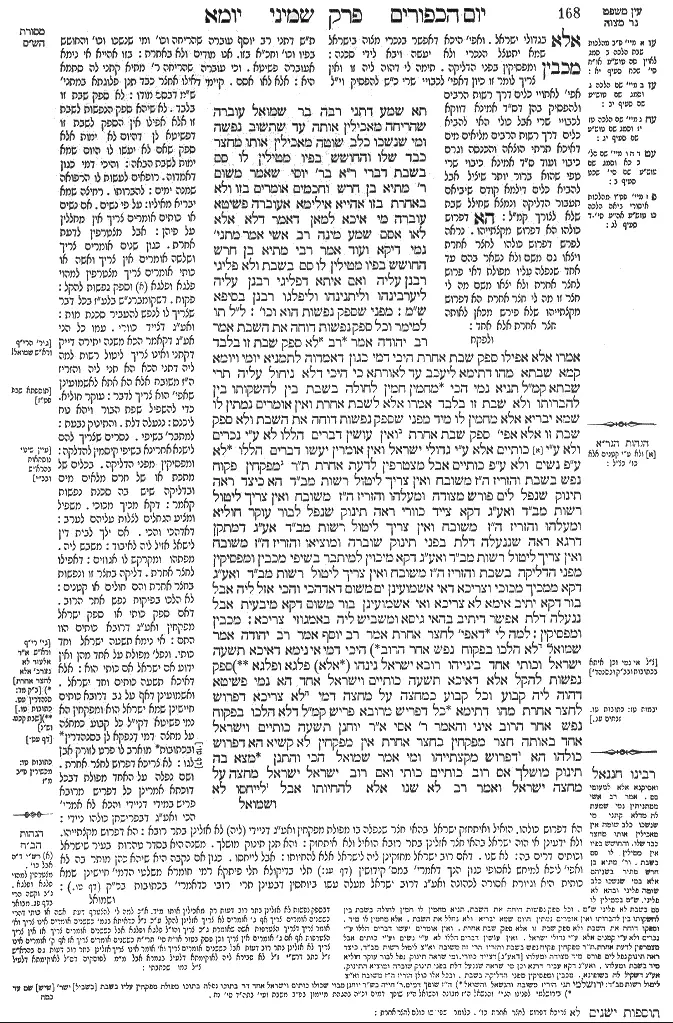
Yoma 84b - Guemara
תא שמע דתני רבה בר שמואל עוברה שהריחה מאכילין אותה עד שתשוב נפשה ומי שנשכו כלב שוטה מאכילין אותו מחצר כבד שלו והחושש בפיו מטילין לו סם בשבת דברי ר"א בר' יוסי שאמר משום ר' מתיא בן חרש וחכמים אומרים בזו ולא באחרת בזו אהייא אילימא אעוברה פשיטא עוברה מי איכא למאן דאמר דלא אלא לאו אסם שמע מינה רב אשי אמר מתני' נמי דיקא ועוד אמר רבי מתיא בן חרש החושש בפיו מטילין לו סם בשבת ולא פליגי רבנן עליה ואם איתא דפליגי רבנן עליה ליערבינהו וליתנינהו וליפלגו רבנן בסיפא ש"מ מפני שספק נפשות הוא וכו' ל"ל תו למימר וכל ספק נפשות דוחה את השבת אמר רב יהודה אמר רב לא ספק שבת זו בלבד אמרו אלא אפילו ספק שבת אחרת היכי דמי כגון דאמדוה לתמניא יומי ויומא קמא שבתא מהו דתימא ליעכב עד לאורתא כי היכי דלא ניחול עליה תרי שבתא קמ"ל תניא נמי הכי מחמין חמין לחולה בשבת בין להשקותו בין להברותו ולא שבת זו בלבד אמרו אלא לשבת אחרת ואין אומרים נמתין לו שמא יבריא אלא מחמין לו מיד מפני שספק נפשות דוחה את השבת ולא ספק שבת זו אלא אפי' ספק שבת אחרת ואין עושין דברים הללו לא ע"י נכרים ולא ע"י כותיים אלא ע"י גדולי ישראל ואין אומרין יעשו דברים הללו לא ע"פ נשים ולא ע"פ כותיים אבל מצטרפין לדעת אחרת ת"ר מפקחין פקוח נפש בשבת והזריז ה"ז משובח ואין צריך ליטול רשות מב"ד הא כיצד ראה תינוק שנפל לים פורש מצודה ומעלהו והזריז ה"ז משובח ואין צריך ליטול רשות מב"ד ואע"ג דקא צייד כוורי ראה תינוק שנפל לבור עוקר חוליא ומעלהו והזריז ה"ז משובח ואין צריך ליטול רשות מב"ד אע"ג דמתקן דרגא ראה שננעלה דלת בפני תינוק שוברה ומוציאו והזריז ה"ז משובח ואין צריך ליטול רשות מב"ד ואע"ג דקא מיכוין למיתבר בשיפי מכבין ומפסיקין מפני הדליקה בשבת והזריז ה"ז משובח ואין צריך ליטול רשות מב"ד ואע"ג דקא ממכיך מכוכי וצריכא דאי אשמועינן ים משום דאדהכי והכי אזל ליה אבל בור דקא יתיב אימא לא צריכא ואי אשמועינן בור משום דקא מיבעית אבל ננעלה דלת אפשר דיתיב בהאי גיסא ומשביש ליה באמגוזי צריכא מכבין ומפסיקין למה לי דאפי' לחצר אחרת אמר רב יוסף אמר רב יהודה אמר שמואל לא הלכו בפקוח נפש אחר הרוב היכי דמי אי נימא דאיכא תשעה ישראל וכותי אחד בינייהו רובא ישראל נינהו (אלא) פלגא ופלגא ספק נפשות להקל אלא דאיכא תשעה כותיים וישראל אחד הא נמי פשיטא דהוה ליה קבוע וכל קבוע כמחצה על מחצה דמי לא צריכא דפרוש לחצר אחרת מהו דתימא כל דפריש מרובא פריש קמ"ל דלא הלכו בפקוח נפש אחר הרוב איני והאמר ר' אסי א"ר יוחנן תשעה כותיים וישראל אחד באותה חצר מפקחין בחצר אחרת אין מפקחין לא קשיא הא דפרוש כולהו הא דפרוש מקצתייהו ומי אמר שמואל הכי והתנן מצא בה תינוק מושלך אם רוב כותיים כותי ואם רוב ישראל ישראל מחצה על מחצה ישראל ואמר רב לא שנו אלא להחיותו אבל לייחסו לא
Comments from Rashi on Masechet Yoma Page 84b
ת"ש דתני רב יוסף עוברה שהריחה וכו' ומי שנשכו וכו' והחושש בפיו וכו' וחכ"א בזו . אנו מודים ולא באחרת: בזו אהייא אי נימא אעוברה פשיטא . וכי עוברה שהריחה ר' מתיא קתני לה סתמא היא: אלא לאו אסם . קיימי דאילו אחצר כבד תנן פלוגתא במתני' ש"מ דבסם מודו: לא ספק שבת זו בלבד . לא שיהא ספק הנפשות לשבת זו אלא אפילו אין הספק לשבת זו דפשיטא לן דהיום לא ימות אלא ספק שאם לא יעשו לו היום שמא ימות לשבת הבאה: והיכי דמי כגון דאמדוה . רופאים לעשות לו הרפואה שמנה ימים: להברותו . רחיצה שמא יבריא מאיליו: על פי נשים . אם נשים או כותים אומרים צריך אין מחללין על פיהן: אבל מצטרפין לדעת אחרת . כגון שנים אומרים צריך ושלשה אומרים אין צריך ואשה או כותי אומרים צריך מצטרפין למהוי פלגא ופלגא וספק נפשות להקל: פקוח . דשקומברנ"ש בלע"ז בכל דבר שצריך לו לנפש להעביר סכנת מות: ואע"ג דצייד כוורי . עמו כל הני אע"ג דקאמר הכא משנה יתירה דייק דקתני ואינו צריך ליטול רשות למה ליה דתני הכא הא תני ליה והזריז ה"ז משובח אלא הא אתא לאשמועינן שאפי' הוא צריך לדבר: עוקר חוליא . כדי להשפיל שפת הבור ויהא נוח ליכנס: ננעלה דלת . והתינוק נבעת: למתבר' בשיפי . נסרים שצריך להם לישנא אחרינא בשיפי קיסמין להדלקה: ומפסיקין מפני הדליקה . בכלים של מתכת או של חרס מלאים מים ובדליקה שיש בה סכנת נפשות קאמר: דקא מכיך מכוכי . משפיל ומציע הגחלים לצלות עליהם לערב: דאדהכי והכי . אם ילך לבית דין לישאל אזיל ליה לאיבוד: משבש ליה . מפתהו ומקרקש לו אגוזים: דאפילו לחצר אחרת . דליקה בחצר זו ונפשות בחצר אחרת והם חולים או קטנים: לא הלכו בפיקוח נפש אחר הרוב . דאם ספק כותי או ספק ישראל מפקחין ואע"ג דרובא כותים הוו התם: אי נימא תשעה ישראל וחד כותי . ונפל' מפולת על אחד מהן ואין ידוע אם ישראל אם כותי הוא: אלא דאיכא תשעה כותים וחד ישראל . ואשמועינן דאף על גב דרובא כותים חיישינן שמא ישראל הוא ומפקחין הא נמי פשיטא דקי"ל כל קבוע כמחצה על מחצה דמי דנפקא לן בסנהדרין ובכתובות מוארב לו פרט לזורק אבן לגו: לא צריכא דפרוש לחצר אחרת . ושם נפלה על האחד מפולת דבכל דוכתא אמרינן כל דפריש מרובא פריש במידי דניידי והכא לא אמרי' הכי ואע"ג דבפרישתן כולהו ניידי: הא דפרוש כולהו . הואיל ואיתחזק ישראל בהאי חצר שנפלה בו מפולת מפקחין ואע"ג דניידי (ליה) לא אזלינן בתר רובא: הא דפרוש מקצתייהו . ולא ידעינן אי הוה ישראל בהאי חצר אזלינן בתר רובא הואיל ולא איתחזק: והא תנן תינוק מושלך . משנה היא בסדר טהרות בעיר שישראל וכותים דרים בה: לא שנו . דאם רוב ישראל מחזקינן ליה לישראל אלא להחיותו: אבל לייחסו . כגון אם נקבה היא שיהא כהן מותר בה לא ואפי' ליכא למיחש לאסופי כגון הנך דאמרי' במס' קידושין (דף עג:) תלי בדיקולא תלי פיתקא רמי חומרא משלטי הדמי' חיישינן שמא כותית היא וגיורת אסורה לכהונה ואע"ג דרוב ישראל מעלה עשו ביוחסין דבעינן תרי רובי כדאמרי' בכתובות בפ"ק (דף טו.):
Comments from Tosafot - Yoma 84b
אלא בגדולי ישראל . ואפי' היכא דאפשר בנכרי מצוה בישראל שמא יתעצל הנכרי ולא יעשה ויבא לידי סכנה: מכבין ומפסיקין בפני הדליקה . תימה לי דהוה ליה זו ואין צריך לומר זו כיון דאפי' לכבויי שרי כ"ש להפסיק וי"ל אפי' לאתויי כלים דרך רשות הרבים ולהפסיק בהן דס"ד אמינא דווקא לכבויי שרי אבל כולי האי להביא כלים דרך רשות הרבים מליאים מים דאיכא תרתי הוצאה והכנסה וגרם כיבוי ועוד ס"ד אמינא כיבוי שרי טפי שהוא ברור יותר שיציל אבל להביא כלים דילמא קודם שיביאם תעבור הדליקה ונמצא שחילל שבת שלא לצורך קמ"ל: הא דפרוש כולהו הא דפרוש מקצתייהו . נראה לפרש דפרוש כולהו לחצר אחרת ויצאו גם משם ולא נשאר בהם עד אחד שנפלה עליו מפולת דאי פרוש לחצר אחרת ולא יצאו משם מה לי חצר זו מה לי חצר אחרת הא דפרוש מקצתייהו שלא פירש מכאן לאותה חצר אחרת אלא אחד:
Yoma 84b - Mishnah translated into english
Come and hear a proof for the matter, as Rabba bar Shmuel taught in the following baraita: With regard to a pregnant woman who smells and craves food, one feeds her until she is satisfied, even on Yom Kippur; and in the case of one whom a mad dog bit, one feeds him from the lobe of its liver; and in the case of one who has pain in his mouth, one places medicine in his mouth on Shabbat; this is the statement of Rabbi Elazar, son of Rabbi Yosei, who said it in the name of Rabbi Matya ben Ḥarash. And the Rabbis say: In this case and no other. The Gemara clarifies: To which case is this one referring? If we say they said this about a pregnant woman, it is obvious; is there anyone who says one should not give a pregnant woman food? Rather, is it not referring to the halakha pertaining to medicine on Shabbat, which they agree is permitted? Learn from this that the Rabbis did not disagree about this.
Rav Ashi said: The wording of the mishna is also precise in accordance with this approach, as it was taught in the mishna: And furthermore, Rabbi Matya ben Ḥarash said: In the case of one who suffers pain in his mouth, one places medicine in his mouth on Shabbat, and the Rabbis do not disagree with him and say otherwise. And if it is so that the Rabbis disagree with him, then let the mishna combine the two halakhot and teach them together, and let the Rabbis disagree with both points in the latter clause. Since the mishna was not written this way, but instead the dispute of the Rabbis appears after Rabbi Matya’s statement about the mad dog, learn from here that the Rabbis did not disagree with him about the halakha with regard to medicine.
§ The mishna states that one with pain in his throat should be given medicine on Shabbat because it is a case of uncertainty concerning a life-threatening situation. The Gemara asks: Why do I need to say furthermore: And any case of uncertainty concerning a life-threatening situation overrides Shabbat? Rav Yehuda said that Rav said: They stated this not only in a case where there is uncertainty with regard to this Shabbat, but even if the uncertainty is with regard to a different future Shabbat.
What are the circumstances in which uncertainty would arise as to whether or not his life will be in danger in the future? They are a case where doctors assess that an ill person needs a certain treatment for eight days, and the first day of his illness is Shabbat. Lest you say: He should wait until evening and begin his treatment after Shabbat so they will not need to desecrate two Shabbatot for his sake, therefore it teaches us that one must immediately desecrate Shabbat for his sake. This is the halakha, despite the fact that an additional Shabbat will be desecrated as a result, because there is uncertainty about whether his life is in danger.
That was also taught in a baraita: One heats water for an ill person on Shabbat, whether to give him to drink or to wash him, since it might help him recover. And they did not say it is permitted to desecrate only the current Shabbat for him, but even a different, future Shabbat. And one must not say: Let us wait and perform this labor for him after Shabbat, perhaps he will get well in the meantime. Rather, one heats it for him immediately because any case of uncertainty concerning a life-threatening situation overrides Shabbat. And this is so not only with regard to uncertainty whether his life is in danger on the current Shabbat, but even in a case of uncertainty with regard to danger on a different Shabbat.
And these acts should not be performed by gentiles or Samaritans but should be done by the greatest of the Jewish people, i.e., their scholars, who know how to act properly. And one does not say: These actions may be performed based on the advice of women or Samaritans, since they are not considered experts able to declare a person ill enough to override Shabbat. However, the opinions of these people do combine with an additional opinion, meaning that if there is a dispute, their opinions may be considered when coming to a decision.
§ The Sages taught in a baraita: One engages in saving a life on Shabbat, and one who is vigilant to do so is praiseworthy. And one need not take permission from a court but hurries to act on his own. How so? If one sees a child who fell into the sea, he spreads a fisherman’s net and raises him from the water. And one who is vigilant and acts quickly is praiseworthy, and one need not seek permission from a court, although in doing so he catches fish in the net as well. Similarly, if one sees a child fall into a pit and the child cannot get out, he digs part of the ground out around the edge of the pit to create a makeshift step and raises him out. And one who is vigilant and acts quickly is praiseworthy, and one need not seek permission from a court, although in doing so he fashions a step.
Similarly, if one sees that a door is locked before a child and the child is scared and crying, he breaks the door and takes the child out. And one who is vigilant and acts quickly is praiseworthy, and one need not seek permission from a court, although he intends to break it into boards to be used later. Similarly, one may extinguish a fire by placing a barrier of metal or clay vessels filled with water in front of it on Shabbat when life is endangered. And one who is vigilant and acts quickly is praiseworthy, and one need not seek permission from a court, although he leaves the coals, which can be used for cooking after Shabbat.
The Gemara comments: And it is necessary to teach these examples, since each one suggests an original idea. As, had it taught us the halakha of the child who fell into the sea, we would have said: He must act quickly in that case because in the meantime, if he delays, the child will be swept away by the waves and disappear, and therefore the rescuer need not seek permission; but in the case of a child who fell into a pit, who remains there and is in no further danger, one might say the rescuer need not hurry but should request permission from the court first. Therefore, the baraita explains: No, it is necessary to tell us that case, too.
And if it had taught us the case of the pit, one might have thought it is because the child is scared at being trapped; but when a door is locked before a child, it is possible to sit on the other side of the door and amuse him with the sound of nuts until Shabbat is over. Therefore, it is necessary to teach that in this case, too, one does not delay but acts immediately because a life is possibly in danger.
It was taught in a baraita that one may extinguish a fire by placing a barrier in front of it on Shabbat. The Gemara asks: Why do I need this? What new point is taught by this additional case of a life-endangering situation? The Gemara answers: This halakha applies even if the fire is spreading toward another courtyard. Not only may this be done to save the lives of people in the courtyard on fire; it may also be done to prevent the fire from spreading to an adjacent courtyard.
§ Rav Yosef said that Rav Yehuda said that Shmuel said: With regard to saving a life, the Sages did not follow the majority as they do in other areas of halakha. The Gemara asks: What are the circumstances? When does one not follow the majority? If we say that one does not follow the majority in a case where there are nine Jews and one gentile among them and a building collapses on one of them, then in that case the majority of people are Jews and yet one desecrates Shabbat to save the trapped person. In such a case one is in fact following the majority. Alternatively, if the group is half Jews and half gentiles, the ruling is lenient with regard to a case of uncertainty concerning a life-threatening situation. But this, too, is not a case where one follows the minority, as there is an even chance that the victim is a Jew.
Rather, it is referring to a case where there are nine gentiles and one Jew. However, this too is obvious. One saves the trapped individual because the group is in a fixed location, and there is a principle that whenever a group is in a fixed location it is considered as though it were evenly divided. In this case, despite the fact that the group’s majority is gentile, it is considered as though it were composed half of Jews and half of gentiles.
The Gemara answers: No, it is necessary to teach that one does not follow the majority in a case where one individual did not remain with the group in their courtyard but separated and went to another courtyard, and a building collapses on him. Lest you say: One should follow the principle that whatever is separated from a group is considered to have left from the majority, and since there was a majority of gentiles there the individual who left the group was probably a gentile, and it is not necessary to clear the debris for a gentile on Shabbat, therefore it teaches us that with regard to uncertainty in a situation of saving a life, one does not follow the majority.
The Gemara asks: Is that so? But didn’t Rav Asi say that Rabbi Yoḥanan said: If there are nine gentiles and one Jew and a building collapses on one of them, if it is in that same courtyard one removes the debris, but in another courtyard one does not remove the debris? The Gemara answers: This is not difficult; there is no contradiction between the halakhot. This case, where one removes the debris, is when they all left for another courtyard and it is clear that the Jew was among them. Consequently, the principle of being in a fixed location still applies, and it is considered a case of uncertainty. That other situation is when only a minority of them left for the other courtyard, and it is unknown whether the Jew left with them.
The Gemara asks: Did Shmuel actually say this, that one does not follow the majority with regard to saving a life? Didn’t we learn in a mishna: If one finds an abandoned child in a city and his parents are unknown, if the majority of the city are gentiles the child is considered a gentile; and if the majority of the city are Jews the child is considered a Jew; if the city is composed of half gentiles and half Jews, the child is considered a Jew? And Rav said: They taught this, that he is a Jew, only with respect to sustaining him but not with respect to attributing a lineage to him. One does not say that he is definitely Jewish based on the majority. Therefore, with regard to the halakhot of marriage, his status remains uncertain. If the abandoned child is a girl, she is not permitted to marry a priest, who may marry only a woman of certain lineage.
Traduction : The William Davidson digital edition of the Koren Noé Talmud, with commentary by Rabbi Adin Even-Israel Steinsaltz.