 Talmud Bavli
The learning on the whole site is dedicated : L'ilui Nishmat Reuven ben Rivka SEBBAG
The learning on the whole site is dedicated : L'ilui Nishmat Amram ben Itshak Loubaton
The learning on the whole site is dedicated : L'ilui Nishmat רינה בת לדיסיה
Yoma 47b : Youtube
Daf TubeYoutube
3 video classes :
Yoma Page 47b
Yoma 47b - Guemara
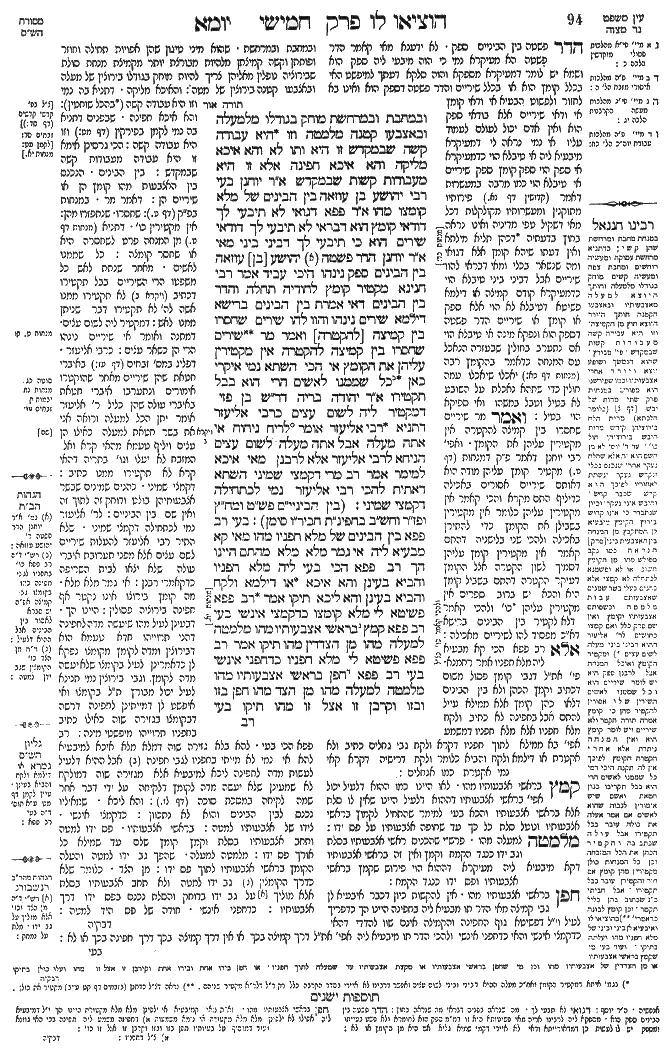
ובמחבת ובמרחשת מוחק בגודלו מלמעלה ובאצבעו קטנה מלמטה וזו היא עבודה קשה שבמקדש זו היא ותו לא והא איכא מליקה והא איכא חפינה אלא זו היא מעבודות קשות שבמקדש א"ר יוחנן בעי רבי יהושע בן עוזאה בין הבינים של מלא קומצו מהו א"ר פפא דגואי לא תיבעי לך דודאי קומץ הוא דבראי לא תיבעי לך דודאי שירים הוא כי תיבעי לך דביני ביני מאי א"ר יוחנן הדר פשטה יהושע [בן] עוזאה בין הבינים ספק נינהו היכי עביד אמר רבי חנינא מקטיר קומץ לחודיה תחלה והדר בין הבינים דאי אמרת בין הבינים ברישא דילמא שירים נינהו והוו להו שירים שחסרו בין קמיצה [להקטרה] ואמר מר שירים שחסרו בין קמיצה להקטרה אין מקטירין עליהן את הקומץ אי הכי השתא נמי איקרי כאן כל שממנו לאשים הרי הוא בבל תקטירו א"ר יהודה בריה דר"ש בן פזי דמקטיר ליה לשום עצים כרבי אליעזר דתניא רבי אליעזר אומר (ויקרא ב, יב) לריח ניחוח אי אתה מעלה אבל אתה מעלה לשום עצים הניחא לרבי אליעזר אלא לרבנן מאי איכא למימר אמר רב מרי דקמצי שמיני השתא דאתית להכי רבי אליעזר נמי לכתחילה דקמצי שמיני (בין הביניי"ם פש"ט ומח"ץ ופז"ר וחש"ב בחפינ"ת חביר"ו סימן) בעי רב פפא בין הבינים של מלא חפניו מהו מאי קא מבעיא ליה אי גמר מלא מלא מהתם היינו הך רב פפא הכי בעי ליה מלא חפניו והביא בעינן והא איכא או דילמא ולקח והביא בעינן והא ליכא תיקו אמר רב פפא פשיטא לי מלא קומצו כדקמצי אינשי בעי רב פפא קמץ בראשי אצבעותיו מהו מלמטה למעלה מהו מן הצדדין מהו תיקו אמר רב פפא פשיטא לי מלא חפניו כדחפני אינשי בעי רב פפא חפן בראשי אצבעותיו מהו מלמטה למעלה מהו מן הצד מהו חפן בזו ובזו וקרבן זו אצל זו מהו תיקו בעי
Comments from Rashi on Masechet Yoma Page 47b
ובמחבת ובמרחשת . שהוא מיני טיגון שהן אפויות תחילה וחוזר ופותתן וקשה קמיצתן מלהיות מבורצת יותר מקמיצת מנחת סולת שבירוציה נופלין מאליהן צריך להיות מוחק בגודלו בירוצין של מעלה ובאצבעו קטנה בירוצין של מטה: והאיכא מליקה . דתניא בה נמי וזו היא עבודה קשה (בהכל שוחטין): והא איכא חפינה . שבפנים דתניא בה נמי לקמן בפירקין (יומא דף מט:) וזו היא עבודה קשה: הכי גרסינן אימא זו היא עבודה מעבודות קשה שבמקדש: בין הבינים . הנכנס בין האצבעות מהו קומץ הן או שיריים הן: דאמר מר . במנחות בפ"ק (דף ט.): שחסרו . שנתפזרו מהן: אין מקטירין כו' . דתניא (מנחות דף ט.) מן המנחה פרט לשחסרה היא או שחסר קומצה: כל שממנו לאשים . מאחר שנתת לאש כל משפטו הרי השיריים בבל תקטירו דכתיב (ויקרא ב) לא תקטירו ממנו אשה לה' לא תקטירו דבר שניתן ממנו לאש: דמקטיר ליה לשום עצים . דמתנה ואומר אי שיריים נינהו הרי הן כשאר עצים: כרבי אליעזר . דפליג במס' זבחים (דף עז:) באיברי חטאת שהן שיריים מאחר שהוקטרו אימורים ונתערבו איברי חטאת באיברי עולה שהן כליל ר' אליעזר אומר יתן הכל למעלה ורואה אני את בשר חטאת למעלה כאילו הן עצים ויליף טעמא מהאי קרא ואל המזבח לא יעלו וגו' בתריה דהאי קרא לא תקטירו ממנו כתיב: לר' אליעזר נמי לכתחילה דקמצי שמיני . שלא התיר רבי אליעזר להעלות שיריים לשם עצים אלא מפני תערובת איברי עולה שלא יצאו לבית השריפה כדקאמרי רבנן: דקמצי שמיני . כהנים שמינים שבשר אצבעותיהן בולט ודוחק זה לתוך זה ואין שם בין הביניים: אי גמר מלא מלא . מה קומץ בירוצו אינו נקטר אף חפינה בירוציה פסולין: היינו הך . דבעינן לעיל מהו שיעשה מדה לחפינה דהני תרוייהו חדא טעמא הוא דבירוצין ומדה לקומץ מקומצו נפקא לן כדאמרינן לעיל בקומצו שלא יעשה מדה לקומץ וגבי בירוצין נמי תנינא לעיל יכול מבורץ ת"ל בקומצו ואי איפשט לן דמייתינן לחפינה דרשה דבקומצו בגזירה שוה כאילו כתיב בחפניו תרוייהו מיפשטי מינה: רב פפא הכי בעי . להא בלא גזירה שוה דמלא מלא איכא למיבעיא להא אי נמי לא מייתי בחפניו לגבי חפינה אבל ההיא דלעיל לעשות מדה לחפינה ליכא למיבעיא אלא מגזירה שוה דמולקח לא שמעינן שלא יעשה מדה לקומץ דלקיחה על ידי דבר אחר שמה לקיחה במסכת סוכה (דף לז.): והא ליכא . שמאיליו נכנס לבין הבינים והוא לא נתכוון: כדקמצי אינשי . צידו של אצבעותיו למטה: בראשי אצבעותיו . פס ידו למטה ותחב אצבעותיו בסלת וקמץ קומץ שלם עד שמילא כל אורך פס ידו: מלמטה למעלה . שהפך גב ידו למטה והעלה הקומץ בראשי אצבעותיו לתוך פס ידו: כדחפני אינשי . חודה של פס היד למטה: מן הצד . כלומר שלא כדרך הקומצין גב ידו למטה ולא תחב אצבעותיו בסלת אלא מוליך על גב ידו בדוחק והסלת נכנס בפס ידו דרך אצבעותיו:
Comments from Tosafot - Yoma 47b
וזו היא עבודה קשה שבמקדש . סבירא ליה כמאן דאמר בפרק אלו מנחות (דף עה:) שהיה קופל אחד לשנים ושנים לארבעה אבל לתנא דבי רבי ישמעאל דאמר פותחן עד שמחזירן לסולתן אינה עבודה קשה יותר משאר מנחות: הדר פשטה בין הביניים ספק . לא ידענא מאי קאמר הדר פשטה הא מעיקרא נמי כי הוה מיבעי ליה ספק הוא ושמא יש לומר דמעיקרא מספקא והוה סלקא דעתך למיפשט האי בכלל קומץ הוא או בכלל שיריים והדר פשטה דספק הוא ואינו בא לחזור ולפשוט הבעיא אי ודאי קומץ אי ודאי שיריים אלא בודאי ספק הוא ואין אדם יכול לעולם לעמוד עליו אי נמי נראה לי דמעיקרא מיבעיא ליה אי טיבלא הוי כדמעיקרא אי ספק הוי ספק קומץ ספק שיריים אי טיבלא הוי כמו מרבה במעשרות דאמר (קדושין דף נא.) פירותיו מתוקנין ומעשרותיו מקולקלות דכל מאי דשקיל טפי מדיניה ואינו נראה בחוץ בדעתיה דכהן תליא מילתא ואין דעתו שיהא קומץ אלא דגואי ומה שנשאר בכלי ומאי דבראי להוו שיריים אבל דביני ביני טיבלא הוי כדמעיקרא קודם קמיצה או דילמא פשיטא דטיבלא לא הוי אלא ספק או קומץ או שיריים הדר פשטה דספק הוא ונפקא מינה אי טיבלא הוי אם נתערב בחולין שבעזרה הנאכל עם המנחה כדאמר בהקומץ רבה (מנחות דף כא:) יאכלו שיאכלו עמה חולין כדי שתהא נאכלת על השובע לא בטיל וטבל במשהו ואי ספיקא הוי בטיל: ואמר מר שיריים שחסרו בין קמיצה להקטרה אין מקטירין עליהן את הקומץ . ואפי' רבי יוחנן דאמר פ"ק דמנחות (דף ט.) מקטיר קומץ עליהן מודה הוא דאותם שיריים אסורים באכילה כדיליף התם מקרא והכי קאמר אין מקטירין עליהן כלומר אין מקטירין בשבילן את הקומץ כדי להתירן באכילה ולהכי שני בלישניה דהתם קאמר אין מקטירין קומץ עליהן דסמיך לשון הקטרה אצל הקומץ דעיקר הקטרה דהתם בשביל קומץ היא והכא יש ברוב ספרים אין מקטירין עליהן כו' ולהכי קאמר דלא לקטיר בין הבינים ברישא דא"כ מפסיד להו לשיריים מאכילה: אלא רב פפא הכי קא מבעיא ליה מלא חפניו אמר רחמנא . פי' את"ל דגבי קומץ פסול משום דכתיב וקמץ הכהן ולא בין הבינים דלאו כהן קומץ אלא ממילא עייל להתם אבל בחפינה לא כתיב ולקח מלא חפניו אלא מלא חפניו דמשמע אפי' בא ממילא לתוך חפניו דקרא ולקח גבי גחלים כתיב ולא אקטרת או דילמא ולקח והביא כלומר ולקח דרישיה דקרא קאי נמי אקטרת כמו אגחלים: קמץ בראשי אצבעותיו מהו . לאו היינו כמו ההוא דלעיל יכול אפי' בראשי אצבעותיו דההוא דלעיל היינו שאין לו סלת אלא בראשי אצבעותיו והכא בעי למימר שהתחיל לקמוץ בראשי אצבעותיו ונוטל סלת כל כך עד שחופה אצבעותיו על פס ידו: מלמטה למעלה מהו . פרש"י שהכניס ראשי אצבעותיו בסלת וגב ידו כנגד הקמח וקמץ ואין זה בראשי אצבעותיו דקא מיבעיא ליה מעיקרא דההוא הוי פירוש שקמץ בראשי אצבעותיו ופס ידו כנגד הקמח: חפן בראשי אצבעותיו מהו . אין להקשות כיון דכבר איבעיא לן גבי קמיצה מאי הדר תו מבעיא ליה בחפינה היינו הך כדפריך לעיל וי"ל דפשיטא גוף החפינה והקמיצה אינם שוו להדדי דהאי כדקמצי אינשי והאי כדחפני אינשי ולהכי הדר תו מיבעיא ליה אפי' את"ל דרך קמיצה בכך או אין דרך קמיצה בכך דרך חפינה בכך או לא:
Yoma 47b - Mishnah translated into english
And in a case of a meal-offering prepared in a pan and with regard to a meal-offering prepared in a deep container, when the flour was fried before being scooped and was therefore hard, the priest smooths with his thumb any flour that was overflowing above his handful, and with his little finger he smooths the flour that was pushing out below. And this precise taking of a handful of a meal-offering is the most difficult sacrificial rite in the Temple. The Gemara asks: This one is the hardest rite, and no other? But there is pinching, which is also considered extremely difficult, and there is taking the handful of incense, another complex rite. Rather, this taking of a handful of a meal-offering is one of the most difficult rites in the Temple.
§ Rabbi Yoḥanan said that Rabbi Yehoshua ben Uza’a raised a dilemma: What is the halakha with regard to the flour that remains between the fingers of his handfuls? Is this flour considered to be part of his handful, or is it considered part of the remainder of the meal-offering? The Gemara elaborates: Rav Pappa said that with regard to the flour that is on the inside, toward the hand, do not raise the dilemma, as it is certainly part of the handful. Likewise, with regard to the flour that is on the outside, do not raise the dilemma, as it is certainly part of the remainder of the flour, like the rest of the meal-offering.
Rather, let the dilemma be raised with regard to the flour between the inside and the outside. What is the status of this flour? Rav Yoḥanan said: Yehoshua ben Uza’a then resolved his own dilemma: The flour that is between is doubtful, and should be treated as questionable in status.
The Gemara asks: How does one perform the Temple service in this doubtful case? Rabbi Ḥanina said: The priest first burns the handful by itself, and then he burns the flour that was between. For if you say that he should first burn the flour that was between, perhaps they are remainders, and they are therefore considered like remainders that became reduced between taking the handful and burning, as the priest has taken flour from the remainders of the meal-offering. And the Master said: With regard to remainders that became reduced between taking the handful and the burning, one may not burn the handful on their account.
The Gemara asks: If so, that there is uncertainty as to whether or not this flour is considered part of the remainder of the meal-offering, now too, if the priest burns the in-between flour after burning the handful, one should apply here the principle: Whatever is partly burned in the fire of the altar is subject to the prohibition do not burn. This principle states that if part of an item is burned on the altar, one who burns any other part of it, which is not designated for burning, has violated a prohibition. In this case, if the in-between flour is considered part of the remainder of the meal-offering, the priest who burns it transgresses that prohibition.
Rav Yehuda, son of Rabbi Shimon ben Pazi, said that the priest does not burn the flour as part of the meal-offering but burns it for the purpose of wood. In other words, he does not burn the flour as part of an offering but merely as fuel for the altar, which is permitted in accordance with the opinion of Rabbi Eliezer. As it was taught in a baraita that Rabbi Eliezer says: “But they shall not come up for a sweet savor on the altar” (Leviticus 2:12). This verse indicates that you may not bring up leaven and honey as a “sweet savor,” an offering. However, you may bring up leaven and honey and other materials for the purpose of wood.
The Gemara asks: It works out well according to the opinion of Rabbi Eliezer, but according to the opinion of the Rabbis, who reject Rabbi Eliezer’s halakha, what can be said? Rav Mari said: The solution is that fat priests take the handfuls of meal-offerings, as their fleshy fingers press against everything between them, and therefore no flour remains between the fingers. The Gemara states: Now that you have arrived at this conclusion, according to Rabbi Eliezer as well, it is appropriate that fat priests should take the handfuls ab initio, to avoid a situation of doubt.
§ Bein habeinayim, pashat, umaḥatz, ufizer, veḥishev, baḥafinat, ḥaveiro: This is a mnemonic for the ensuing questions of Rav Pappa. Rav Pappa raised a dilemma: What is the halakha with regard to the in-between incense of his handfuls? The Gemara asks: What is his dilemma? If he derives the verbal analogy between “full” and “full” from his handfuls there, the case of the meal-offering handful, this case is the same as that one, and therefore the incense between his fingers is invalid. If Rav Pappa does not accept this verbal analogy, what is the basis of his dilemma?
The Gemara explains that Rav Pappa raised the dilemma as follows: When the verse states: “And his hands full of sweet incense beaten small, and bring it within the veil” (Leviticus 16:12), does it mean that we merely require him to bring his handfuls, and that is fulfilled here, as in practice the High Priest brought full handfuls? Or perhaps we require that he must fulfill the following two commands in a similar manner: “And he shall take…and he shall bring” (Leviticus 16:12)? In other words, just as he must have the intention to take the incense, so too, he must intend to bring all of it. And that requirement is not fulfilled here, as he did not intend to bring the extra incense between his fingers. No answer was found for this question, and the Gemara concludes: Let it stand unresolved.
Rav Pappa said: It is obvious to me that the act of his handfuls of a meal-offering should be performed ab initio in the manner that people usually take a handful, with their fingertips pointed downward. However, Rav Pappa raised a dilemma: What is the halakha if he took a handful with his fingertips, i.e., if he first put his palm into the vessel and filled his palm with flour by extending his fingers and drawing them in? Does this invalidate the taking of the handful or not?
Furthermore, what is the halakha if he took the handful with the back of his hand placed downward in the vessel, and with his fingers collected the flour upward into his palm? Lastly, what is the halakha if he took the flour from the sides, by passing the back of his hand to and fro over the flour in the vessel with his fingers spread apart, so that the flour collects in his palm? As no answers were found for these dilemmas, the Gemara states: Let it stand unresolved.
Likewise, Rav Pappa said: It is obvious to me that when the Torah states: “His hands full” (Leviticus 16:12), it means in the manner that people usually fill their hands, by placing the backs of their hands into the vessel and bringing their hands together. However, Rav Pappa raised a dilemma: What is the halakha if the High Priest scooped a handful with his fingertips? Again, what is the halakha if he took a handful from downward to upward? What is the halakha if he took a handful from the side? And what is the halakha if he scooped a handful with this hand and with this hand and brought them together? These questions are not answered either, and the Gemara states: Let it stand unresolved.
§ Another dilemma was raised by
Traduction : The William Davidson digital edition of the Koren Noé Talmud, with commentary by Rabbi Adin Even-Israel Steinsaltz.