 Talmud Bavli
The learning on the whole site is dedicated : L'ilui Nishmat Reuven ben Rivka SEBBAG
The learning on the whole site is dedicated : L'ilui Nishmat אליעזר בן רחל
The learning on the whole site is dedicated : L'ilui Nishmat Yechayahou ben Moche
Yoma 46b : Youtube
Daf TubeYoutube
3 video classes :
Yoma Page 46b
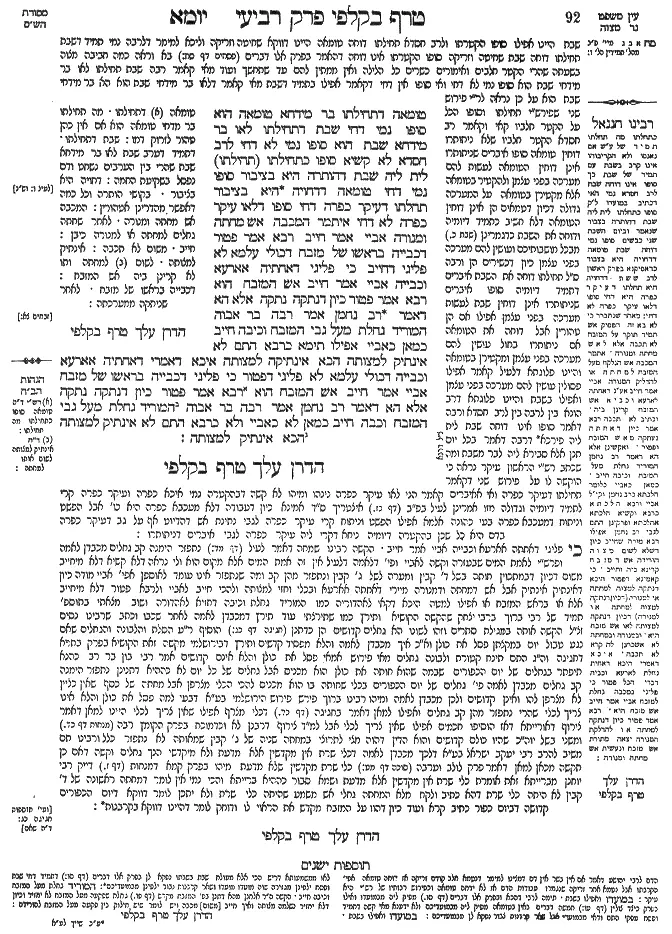
Yoma 46b - Guemara
טומאה דתחילתו בר מידחא טומאה הוא סופו נמי דחי שבת דתחילתו לאו בר מידחא שבת הוא סופו נמי לא דחי לרב חסדא לא קשיא סופו כתחילתו (תחילתו) לית ליה שבת דהותרה היא בציבור סופו נמי דחי טומאה דדחויה היא בציבור תחלתו דעיקר כפרה דחי סופו דלאו עיקר כפרה לא דחי איתמר המכבה אש מחתה ומנורה אביי אמר חייב רבא אמר פטור דכבייה בראשו של מזבח דכולי עלמא לא פליגי דחייב כי פליגי דאחתיה אארעא וכבייה אביי אמר חייב אש המזבח הוא רבא אמר פטור כיון דנתקה נתקה אלא הא דאמר רב נחמן אמר רבה בר אבוה המוריד גחלת מעל גבי המזבח וכיבה חייב כמאן כאביי אפילו תימא כרבא התם לא אינתיק למצותה הכא אינתיקה למצותה איכא דאמרי דאחתיה אארעא וכבייה דכולי עלמא לא פליגי דפטור כי פליגי דכבייה בראשו של מזבח אביי אמר חייב אש המזבח הוא רבא אמר פטור כיון דנתקה נתקה אלא הא דאמר רב נחמן אמר רבה בר אבוה המוריד גחלת מעל גבי המזבח וכבה חייב כמאן לא כאביי ולא כרבא התם לא אינתיק למצותה הכא אינתיק למצותה
הדרן עלך טרף בקלפי
Comments from Rashi on Masechet Yoma Page 46b
טומאה דתחילתו . מה תחילתו בר מדחי טומאה הוא אם אין כהן טהור לזרוק דמו: שבת דתחילתו . דתמיד דערב שבת לאו בר מידחא שבת שהרי בין הערבים נשחט ודם נפסל בשקיעת החמה: דחויה היא בציבור . בקושי הותרה וכל כמה דאפשר מהדרינן אטהורין: המכבה אש מחתה ומנורה . לאחר שחתה גחלים למחתה או למנורה כיבן: חייב . משום לא תכבה: אינתיק למצותה . לשום למחתה ותו לא קרינן ביה אש המזבח: דכבייה בראשו של מזבח . לאחר שניתקה ממערכתה:
Comments from Tosafot - Yoma 46b
כי פליגי דאחתה אארעא וכבייה אביי אמר חייב . הקשה רבינו שמחה דאמר לעיל (יומא דף מד:) נתפזר הימנה קב גחלים מכבדן לאמה ופרש"י לאמת המים שבעזרה וקשה לאביי ופי' דלאמה דלעיל אין זה אמת המים אלא מקום הוא ולי נראה דלא קשיא דלא מיחייב משום דכיון דבמתכוין חותה בשל ד' קבין ומערה לשל ג' קבין ונתפזר מהן קב ומה שנתפזר אינו עומד לאוספן אפי' אביי מודה כיון דאינתיק אינתיק אבל אש דמחתה ודמנורה מיירי דאחתה אארעא ובכלי וחזי למצותה ולהכי חייב לאביי ולרבא פטור דלא מיחייב אלא או בראש המזבח או אפילו למטה היכא דקאי לאהדוריה כמו המוריד גחלת וכיבה דחזיא לאהדורה ושוב מצאתי בתוספ' תמיד של רבי ברוך ברבי יצחק שהקשה הקושיא ותירץ כמו שתירצתי עוד תירץ דמכבדן לאמה לאחר שכבו וכתב שרבינו נסים זצ"ל הקשה אותה במגילת סתרים וזהו לשונו הא גחלים קדושים הן כדתנן (חגיגה דף כג:) הוסיף ר"ע הסלת והלבונה והגחלים שאם נגע טבול יום במקצתן פסל את כולן וא"כ איך מכבדן לאמה והלא מפסיד קדשים ותירץ דבירושלמי מקשה זאת הקושיא בפרק בתרא דחגיגה וה"ג התם תינח קטורת ולבונה גחלים מאי פירוש אמאי פסל את כולן והלא אינם קדושים אמר רבי בון בר רב כהנא תיפתר בגחלים של יום הכפורים שבמה שהוא חותה את כולן הוא מכניס אבל גחלים של כל יום לא כההיא דתנינן נתפזר הימנה קב גחלים מכבדן לאמה פי' גחלים של יום הכפורים בכלי שחותה בו הוא מכניס להכי הכלי מצרפן אבל מחתה של כסף שאין כליין לא מצרפן להו ואינן קדושים ולכן מכבדן לאמה ומיהו רבינו ברוך פירש פירוש הירושלמי בע"א דבעי למה פסל את כולן והלא אינו צריך לכלי שהרי נתפזר מהן קב גחלים ואפילו למאן דאמר בחגיגה (דף כד.) דכלי מצרף אפילו שאין צריך לכלי היינו למאן דאמר צירוף דאורייתא דאז הוסיפו חכמים אפילו שאין צריך לכלי אבל למ"ד צירוף דרבנן לא וכדמוכח בפרק הקומץ רבה (מנחות דף כד.) ומשני בשל יוה"כ שהיו כולם קדושים והוא הדין דהוה מצי לתרוצי במחתה שניה של ג' קבין שמאותה לא נתפזר כלל ורבינו תם משיב להרב רבי יעקב ישראל בע"א דלכך מכבדן לאמה דכלי שרת אין מקדשין אלא מדעת ולא מיקדשי הנך גחלים וקשה דאם כן תקשה מכאן למאן דאמר פרק לולב וערבה (סוכה דף מט:) כלי שרת מקדשין שלא מדעת מיהו בפרק קמא דמנחות (דף ז.) דייק רבי יוחנן מברייתא זאת אומרת כלי שרת אין מקדשין אלא מדעת ושמא סבור כההיא ברייתא והכי נמי אין לומר דמחתה ראשונה של ד' קבין לא היתה כלי שרת דהא כתיב ולקח מלא המחתה גחלי אש משמע שהיתה כלי שרת ולא יתכן לומר דווקא דיום הכפורים קדושה דביום כפור כתיב קרא ועוד כיון דהוו על המזבח מקדש את הראוי לו ודוחק לומר דהיינו דווקא בקרבנות:
Yoma 46b - Mishnah translated into english
Therefore, with regard to overriding the prohibition to bring an offering in a state of ritual impurity, since the beginning of the sacrifice of the daily offering is fit to override the prohibition of offering it in a state of ritual impurity, so too, its end also overrides the prohibition. However, in the case of Shabbat, the beginning of a daily offering of the weekday is not fit to override Shabbat, since by definition it must be brought on its appropriate day. Therefore, its end also does not override Shabbat in the event that limbs remain from Friday’s daily offering.
And it is also not difficult to the opinion of Rav Ḥisda, because he does not hold that its end is like its beginning. Rather, he has the following reasoning: The prohibitions of Shabbat are not merely overridden in the case of a communal offering, but they are actually permitted, such that there is no need to try to avoid performing the necessary labors when sacrificing it. Therefore, its end also overrides Shabbat.
However, in the case of the prohibition to bring an offering in a state of ritual impurity, which is merely overridden in the case of a communal offering, it is preferable to avoid doing so. Therefore, the beginning of its sacrifice, i.e., its slaughter and the sprinkling of its blood, and its burning, which is the essential stage that provides atonement, overrides the prohibition and should be done even in a state of ritual impurity. However, its end, i.e., the burning of the sacrificial parts, which is not the essential stage that provides atonement, does not override the prohibitions.
The Torah prohibits the fire on the altar to be extinguished: “A perpetual fire shall be kept burning on the altar, it shall not go out” (Leviticus 6:6). With regard to this prohibition, an amoraic dispute was stated: With regard to one who extinguishes the fire of the coals that are taken with the coal pan for the incense on Yom Kippur or the fire of the coals that are taken in order to light the candelabrum, Abaye said: He is liable. Rava said: He is not liable.
The Gemara elaborates on the dispute: In a case where one extinguished a coal while still standing upon the top of the altar, everyone agrees that he is liable. This is because the verse explicitly is referring to extinguishing a flame “upon the altar.” When they disagree, it is in a case where he brought the coals down to ground level and extinguished a coal there. Abaye said: He is liable, since it is still considered fire of the altar. Rava said: He is not liable, because once it has been removed from the altar it is considered removed and no longer part of the altar’s fire. Therefore, the prohibition does not apply to it.
The Gemara asks: But if so, with regard to this ruling that Rav Naḥman said that Rabba bar Avuh said: One who takes down a coal from upon the altar and extinguishes it is liable, in accordance with whose opinion is he ruling? Could he possibly be ruling in accordance with the opinion of Abaye? Certainly not. In disputes between Abaye and Rava, the halakha follows Rava.
The Gemara explains: You can even say his ruling is in accordance with the opinion of Rava by making the following distinction: There, in the ruling of Rav Naḥman, the coal was not removed to fulfill its mitzva. Therefore, it is still considered to be part of the fire of the altar and the prohibition still applies. Whereas, here, in the dispute between Abaye and Rava, this is a case of coal that was removed to fulfill its mitzva. Therefore, it is associated with its mitzva and no longer considered the fire of the altar.
There are those who say a different version of the dispute:
In a case where he brought the coals down to the ground and extinguished a coal there, everyone agrees that he is not liable. When they disagree it is in a case where one extinguished a coal while still standing upon the top of the altar. Abaye said: He is liable, since it is still considered fire of the altar. Rava said: He is not liable, because once it has been removed from the altar it is considered removed and no longer part of the altar’s fire. Therefore, the prohibition does not apply to it.
The Gemara asks: But if so, with regard to this ruling that Rav Naḥman said that Rabba bar Avuh said: He who takes down a coal from upon the altar and extinguishes it is liable, in accordance with whose opinion is his ruling? It would appear that it is neither in accordance with the opinion of Abaye, nor in accordance with the opinion of Rava. The Gemara explains: You can even say that his ruling is in accordance with the opinion of Rava by making the following distinction: There, in the ruling of Rav Naḥman, the coal was not removed to fulfill its mitzva; it is therefore still considered to be part of the fire of the altar and the prohibition applies. Whereas, here, in the dispute between Abaye and Rava, this is a case of coal that was removed to fulfill its mitzva, and it is therefore associated with its mitzva and no longer considered the fire of the altar.
Traduction : The William Davidson digital edition of the Koren Noé Talmud, with commentary by Rabbi Adin Even-Israel Steinsaltz.