 Talmud Bavli
The learning on the whole site is dedicated : L'ilui Nishmat Jamila bat Chlomo Abensour
The learning on the whole site is dedicated : L'ilui Nishmat Yaakov ben Myriam
The learning on the whole site is dedicated : L'ilui Nishmat Rav Chlomo Ben Jamilla
Avodah Zarah 64b : Youtube
Daf TubeYoutube
2 video classes :
Avodah Zarah Page 64b
Avodah Zarah 64b - Guemara
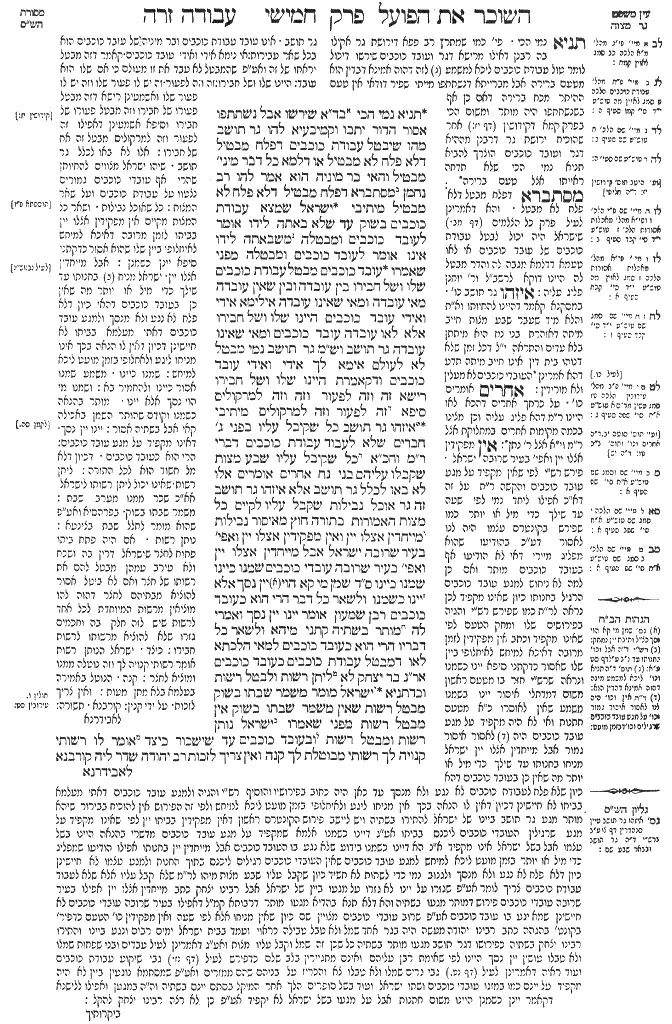
תניא נמי הכי בד"א שירשו אבל נשתתפו אסור הדור יתבו וקמיבעיא להו גר תושב מהו שיבטל עבודת כוכבים דפלח מבטיל דלא פלח לא מבטיל או דלמא כל דבר מיני' מבטיל והאי בר מיניה הוא אמר להו רב נחמן מסתברא דפלח מבטיל דלא פלח לא מבטיל מיתיבי ישראל שמצא עבודת כוכבים בשוק עד שלא באתה לידו אומר לעובד כוכבים ומבטלה משבאתה לידו אינו אומר לעובד כוכבים ומבטלה מפני שאמרו עובד כוכבים מבטל עבודת כוכבים שלו ושל חבירו בין עובדה ובין שאין עובדה מאי עובדה ומאי שאינו עובדה אילימא אידי ואידי עובד כוכבים היינו שלו ושל חבירו אלא לאו עובדה עובד כוכבים ומאי שאינו עובדה גר תושב וש"מ גר תושב נמי מבטל לא לעולם אימא לך אידי ואידי עובד כוכבים ודקאמרת היינו שלו ושל חבירו רישא זה וזה לפעור וזה וזה למרקוליס סיפא זה לפעור וזה למרקוליס מיתיבי איזהו גר תושב כל שקיבל עליו בפני ג' חברים שלא לעבוד עבודת כוכבים דברי ר"מ וחכ"א כל שקיבל עליו שבע מצות שקבלו עליהם בני נח אחרים אומרים אלו לא באו לכלל גר תושב אלא איזהו גר תושב זה גר אוכל נבילות שקבל עליו לקיים כל מצות האמורות בתורה חוץ מאיסור נבילות מייחדין אצלו יין ואין מפקידין אצלו יין ואפי' בעיר שרובה ישראל אבל מייחדין אצלו יין ואפי' בעיר שרובה עובדי כוכבים שמנו כיינו שמנו כיינו ס"ד שמן מי קא הוי יין נסך אלא יינו כשמנו ולשאר כל דבר הרי הוא כעובד כוכבים רבן שמעון אומר יינו יין נסך ואמרי לה מותר בשתיה קתני מיהא ולשאר כל דבריו הרי הוא כעובד כוכבים למאי הלכתא לאו דמבטל עבודת כוכבים כעובד כוכבים אר"נ בר יצחק לא ליתן רשות ולבטל רשות וכדתניא ישראל מומר משמר שבתו בשוק מבטל רשות שאין משמר שבתו בשוק אין מבטל רשות מפני שאמרו ישראל נותן רשות ומבטל רשות ובעובד כוכבים עד שישכור כיצד אומר לו רשותי קנויה לך רשותי מבוטלת לך קנה ואין צריך לזכות רב יהודה שדר ליה קורבנא
Comments from Rashi on Masechet Avodah Zarah Page 64b
גר תושב . אינו עובד עבודת כוכבים ובר מיניה של עובד כוכבים הוא בכל שאר עבירות: אי נימא אידי ואידי עובד כוכבים . קאמר דזה מבטל יראתו של זה ואע"פ שהמבטל לא עבד את זו מעולם כי אם שלו הוא עובד: היינו שלו ושל חבירו: זה וזה לפעור . זה יש לו פעור שלו וזה יש לו פעור שלו ואשמעינן רישא דזה מבטל פעורו של חבירו וזה מבטל פעורו של חבירו וסיפא אשמעינן דאפילו זה לפעור וזה למרקוליס מבטל זה את של חבירו: אלו לא באו לכלל גר תושב . שיהו ישראל מצווים להחיותן שהרי אף עובדי כוכבים גמורים נצטוו על עבודת כוכבים ועל שאר המצות: כל שאוכל נבילות . ושאר כל המצות מקיים אין מפקידין אצלו יין בביתו לזמן מרובה דאיכא למיחש לאיחלופי ביין שלו שהוא אסור כדקתני סיפא יינן כשמנן: אבל מייחדין אצלו יין . ישראל מניח בחנותו עד שילך כדי מיל או יותר מה שאין כן בעובד כוכבים דהאי כיון דלא פלח לא נגע ולא מנסך ולמגע עובד כוכבים דאתי מעלמא בביתו לא חיישינן דכיון דאין לו הנאה בכך אינו מניחו ליגע ולאחלופי בזמן מועט ליכא למיחש: שמנו כיינו . משמע שמנו אסור כיינו ולהחמיר בא: ושמנו מי הוי נסך אלא יינו . מותר בהנאה כשמנו וקודם שהותר השמן באכילה קאי אבל בשתיה אסור: יינו יין נסך . דאינו מקפיד על מגע עובד כוכבים: הרי הוא כעובד כוכבים . דכיון דלא מל חשוד הוא לכל התורה: ליתן רשות . שאינו יכול ליתן רשותו לישראל אא"כ שכר ממנו מערב שבת: משמר שבתו בשוק . בפרהסיא ואע"פ שהוא מומר לחלל שבת בצינעא: נותן רשות . אם היה פתח ביתו פתוח לחצר שישראל דרין בה ושכח ולא עירב עמהן מבטל להם את רשותו של חצר ואם לא ביטל אסור להוציא מבתיהם לחצר דהוה להו מוציאין מרשות המיוחדת לכל אחד לרשות שיש לזה חלק בה וחכמים גזרו שלא להוציא מרשותו לרשות חבירו: כיצד . ישראל הנותן רשות אומר רשותי קנויה לך וזה נוטלה ממנו ומוציא לחצר: קנה . הנוטל באמירה בעלמא בלא מתן מעות: ואין צריך לזכות . על ידי קנין: קורבנא . תשורה:
Comments from Tosafot - Avodah Zarah 64b
תניא נמי הכי . פי' כמו שמתרץ רב פפא דירושת גר אקילו בה רבנן דאילו מרישא דגר ועובד כוכבים שירשו דיכול לומר טול עבודת כוכבים ליכא למשמע לזה דהוה אמינא דבדין הוא מטעם ברירה אבל מברייתא דנשתתפו מייתי שפיר דודאי אין טעם ההיתר מכח ברירה דאם כן אף בשנשתתפו היה מותר ומשום הכי בפרק קמא דקידושין (דף יז:) אחר שהוכיח ירושת גר דרבנן מההיא דגר ועובד כוכבים הוצרך להביא תניא נמי הכי שלא תדחה ראייתו אצל טעם ברירה: מסתברא דפלח מבטל דלא פלח לא מבטל . והא דאמרינן לעיל פרק כל הצלמים (עבודה זרה דף מב.) שישראל היה יכול לבטל עבודת כוכבים של עובד כוכבים אי לאו טעמא דדלמא מגבה לה והדר מבטל לה היינו דוקא לרשב"ל ור' יוחנן פליג עליה: איזהו גר תושב כו' . במסקנא קאמר דהיינו להחיותו וא"ת והלא מיד שעבר שבע מצות חייב מיתה דאזהרת בני נח היא מיתתן בלא עדים והתראה י"ל דכל זמן שלא דנוהו בית דין אינו חייב מיתה תדע דהא אמרינן העובדי כוכבים לא מעלין ולא מורידין: אחרים אומרים כו' . על כרחך אחרים דהכא לאו היינו ר"מ דהא פליג עליה וכן מצינו בכמה מקומות אחרים במחלוקת אצל ר"מ וי"א אצל ר' נתן: אין מפקידין אצלו יין ואפי' בעיר שרובה ישראל . פירש רש"י לפי שאין מקפיד על מגע עובד כוכבים והקשה ר"ת על זה דא"כ אפילו ליחד נמי לפי שעה עד שילך כדי מיל או יותר כמו שפירש בקונטרס עצמו היה לנו לאסור דע"כ בהודיעו שהוא מפליג מיירי דאי לא הודיעו אף בעובד כוכבים מותר ואם כן למה לא ניחוש למגע עובד כוכבים הרגיל בחנותו כיון שאינו מקפיד לכן נראה לר"ת כמו שפירש רש"י והגיה בפירושים שלו ומחק הטעם לפי שאינו מקפיד וכתב אין מפקידין לזמן מרובה דאיכא למיחש לאיחלופי ביין שלו שאסור כדקתני סיפא יינו כשמנו ונראה שרש"י חזר בו מטעם ראשון משום דמדתלי איסור יינו בשמנו משמע שאין לאוסרו כ"א מטעם חתנות ואי לא היה מקפיד על מגע עובד כוכבים היה לאסור איסור גמור אבל מייחדין אצלו יין ישראל מניחו בחנותו עד שילך כדי מיל או יותר מה שאין כן בעובד כוכבים דהא כיון שלא פלח לעבודת כוכבים לא נגע ולא מנסך עד כאן היה כתוב בפירושיו והוסיף רש"י והגיה ולמגע עובד כוכבים דאתי מעלמא בביתו לא חיישינן דכיון דאין לו הנאה בכך אין מניחו ליגע ולאיחלופי בזמן מועט ליכא למיחש ולפי זה הפירוש אין להוכיח בבירור שיהא מותר מגע גר תושב ביינו של ישראל להתירו בשתיה ויש ליישב פירוש הקונטרס ראשון דאין מפקידין בביתו יין לפי שאינו מקפיד על מגע שרגילין העובדי כוכבים ליכנס בביתו אע"ג דיינו כשמנו אלמא שמקפיד על מגע עובד כוכבים מדשרי בהנאה היינו בשל עצמו אבל בשל ישראל אינו מקפיד א"נ הא דיינו כשמנו בידוע שלא נגע בו העובד כוכבים אבל מייחדין יין בחנותו אפילו הודיעו שמפליג כדי מיל או יותר בזמן מועט ליכא למיחש למגע עובד כוכבים שאין העובדי כוכבים רגילים ליכנס בתוך החנות ולמגע עצמו לא חיישינן כיון דלא פלח לא נגע ולא מנסך ולגנוב נמי כדי לשתות לא חשיד כיון שקבל עליו שבע מצות מיהו לר"מ שלא קבל עליו אלא שלא לעבוד עבודת כוכבים צריך לומר אע"פ שגזרו על יינו לא גזרו על מגעו ביין של ישראל אבל רבינו יצחק כתב מייחדין אצלו יין אפילו בעיר שרובה עובדי כוכבים פירוש דמותר מגעו בשתיה והא דלא תנא בהדיא מגעו מותר דרבותא קמ"ל דאפילו בעיר שרובה עובדי כוכבים לא חיישינן שמא יגע בו עובד כוכבים אע"פ שרוב עובדי כוכבים מצויין שם כיון שאין מניחו אלא לפי שעה ואין מפקידין כו' הטעם כדפיר' בקונט' בהגהה כתב רבינו יהודה מעשה היה בגר אחד שמל ולא טבל טבילה כראוי ועמד בבית ישראל ימים רבים ונגע ביינו והתירו רבינו יצחק בשתיה כפירושו דגר תושב מגעו מותר בשתיה כל שכן זה שמל וקבל עליו מצות ואע"ג דאמרינן לעיל עבדים ובני שפחות שמלו ולא טבלו עושין יין נסך היינו לפי שאימת רבן עליהם ואינם מתגיירין בלב שלם כדפירש לעיל (עבודה זרה דף נז.) גבי שיקוע עבודת כוכבים ועוד ראיה דאמרינן לעיל (עבודה זרה דף נט.) גבי גרים שמלו ולא טבלו צא והכריז על בניהם שהם ממזרים ואע"פ שמסתמא נוגעין ביין לא היה מקפיד על יינם כמו במזגו עובדי כוכבים ושתו ישראל ועוד בשל סופרים הלך אחר המיקל בסתם יינם בשתיה וה"ה במגען ואפילו ללישנא דקאמר יינן כשמנן היינו משום חתנות אבל על מגעו בשל ישראל לא יקפיד אע"פ כן לא רצה רבינו יצחק להקל:
Avodah Zarah 64b - Mishnah translated into english
This is also taught in a baraita: In what case is this statement, that a convert and a gentile are permitted to divide up common property that includes objects of idol worship, said? This is said with regard to property that they inherited; but if they were partners, it is prohibited.
§ The Gemara mentions another discussion among Rav Naḥman, Ulla, Avimi bar Pappi, and Rav Ḥiyya bar Ami. They were sitting again and a dilemma was raised before them: With regard to a gentile who resides in Eretz Yisrael and observes the seven Noahide mitzvot [ger toshav], including the prohibition against engaging in idol worship, what is the halakha with regard to the possibility that he can revoke the status of objects of idol worship? Is it the case that one who worships idols can revoke the status of one, but one who does not worship them cannot revoke the status of one? Or perhaps should it be reasoned that anyone who is of the same kind as idol worshippers, i.e., a gentile, can revoke its status, and a ger toshav is of the same kind as idol worshippers?
Rav Naḥman said to them: It stands to reason that one who worships idols can revoke the status of one, but one who does not worship them cannot revoke the status of one.
The Gemara raises an objection to this ruling from a baraita: In the case of a Jew who found an object of idol worship in the marketplace, as long as it has not yet come into his possession, he can tell a gentile, and the gentile can revoke its idolatrous status. Once it has come into his possession, he cannot tell a gentile and have the gentile revoke its status. This applies to any gentile, because the Sages said: A gentile can revoke the status of his own object of idol worship or that of another gentile, whether he worships it or whether he does not worship it.
What is meant by the phrase: Worships it, and what is meant by the phrase: Does not worship it? If we say both this and that are referring to a gentile, this is the same as the previous statement in the baraita, that a gentile can revoke the status of his own object of idol worship or that of another gentile, i.e., an object that he worships or one that another gentile worships. Rather, isn’t it to be understood that the phrase: Worships it, is referring to a gentile? And what is the meaning of the phrase: Does not worship it? It is referring to a ger toshav, who does not worship any idols. And learn from it that a ger toshav can also revoke the status of objects of idol worship.
The Gemara rejects this explanation. No, actually, I will say to you that this phrase and that phrase are both referring to a gentile, and with regard to that which you say, that this is the same as the statement concerning his object of idol worship or that of another gentile, it can be explained as follows: The first clause is referring to a case where both gentiles worship the same idol, e.g., this one and that one both worship Peor, or this one and that one both worship Mercury, and the baraita is teaching that one can revoke the status of an idol that belongs to the other. The latter clause, which distinguishes between one who worships it and one who does not worship it, is referring to a case where this one worships Peor and that one worships Mercury, indicating that an idolater can revoke the status of an idol that he does not worship at all, but only if he is himself an idolater, as opposed to a ger toshav.
The Gemara raises an objection from a baraita: Who is a ger toshav? It is anyone who has accepted upon himself before three ḥaverim, i.e., people devoted to the meticulous observance of mitzvot, especially halakhot of ritual purity, teruma, and tithes, not to worship idols. This is the statement of Rabbi Meir.
And the Rabbis say: Anyone who has accepted upon himself observance of the seven mitzvot that the descendants of Noah accepted upon themselves is a ger toshav.
Others say: These have not entered the category of ger toshav. Rather, who is a ger toshav? This is a convert who eats unslaughtered animal carcasses, which are not kosher, but who has accepted upon himself to observe all of the mitzvot that are stated in the Torah except for the prohibition against eating unslaughtered carcasses.
The baraita continues: Whatever the definition of a ger toshav, the following halakhot apply to him: One may leave him alone with wine briefly without Jewish supervision with no concern that he might use it for a libation, thereby rendering it forbidden to Jews, as he is not an idol worshipper. But one may not deposit wine with him for an extended period of time, lest he exchange it with the wine of a gentile, which is forbidden. And this applies even in a town that has a Jewish majority. But one may leave him alone with wine briefly without Jewish supervision even in a town with a majority of gentiles. His oil is treated like his wine in terms of its permissibility.
The Gemara interjects: His oil is like his wine? Can this enter your mind? Does the oil of a gentile become, i.e., assume the status of, wine used for a libation? Rather, the baraita should be emended as follows: His wine is like his oil. It is permitted to derive benefit from it, but not to consume it.
The baraita continues: And with regard to all other matters, a ger toshav is treated like a gentile. Rabban Shimon says: His wine is treated like wine used for a libation. And some say he says: Even drinking it is permitted.
The Gemara comments on the baraita: In any event, the baraita teaches: And with regard to all other matters, a ger toshav is treated like a gentile. With regard to what halakha is this stated? Is it not teaching that he can revoke the status of an object of idol worship as a gentile can? Rav Naḥman bar Yitzḥak says: No, it is stated with regard to giving away rights in a domain or renouncing rights in a domain in the context of the halakhot of joining houses in courtyards for Shabbat.
And this is as it is taught in a baraita: An apostate Jew who nevertheless observes his Shabbat in the marketplace, i.e., in public, can renounce his rights in a shared domain so the other Jews in the domain may carry in it on Shabbat, but an apostate who does not observe his Shabbat even in the marketplace cannot renounce his rights in a domain, because the Sages said that only a Jew can give away rights in his domain or renounce his rights in his domain, and this applies in the context of joining houses in courtyards on Shabbat.
But with regard to a gentile, this is not effective unless the Jew leases his domain in the courtyard. How so? A Jew may say to another Jew: My rights in this domain are hereby acquired by you, or: My rights in this domain are hereby renounced to you, and the other Jew thereby acquires those rights, and it is not necessary for him to take possession of it through a formal act of acquisition.
The Gemara relates: Rav Yehuda sent a gift
Traduction : The William Davidson digital edition of the Koren Noé Talmud, with commentary by Rabbi Adin Even-Israel Steinsaltz.