 Talmud Bavli
The learning on the whole site is dedicated : L'ilui Nishmat Margalit bat Ledicia
The learning on the whole site is dedicated : L'ilui Nishmat Rav Chlomo Ben Jamilla
The learning on the whole site is dedicated : L'ilui Nishmat Chemouel Eliezer ben Batcheva
Avodah Zarah 44b : Youtube
Daf TubeYoutube
2 video classes :
Avodah Zarah Page 44b
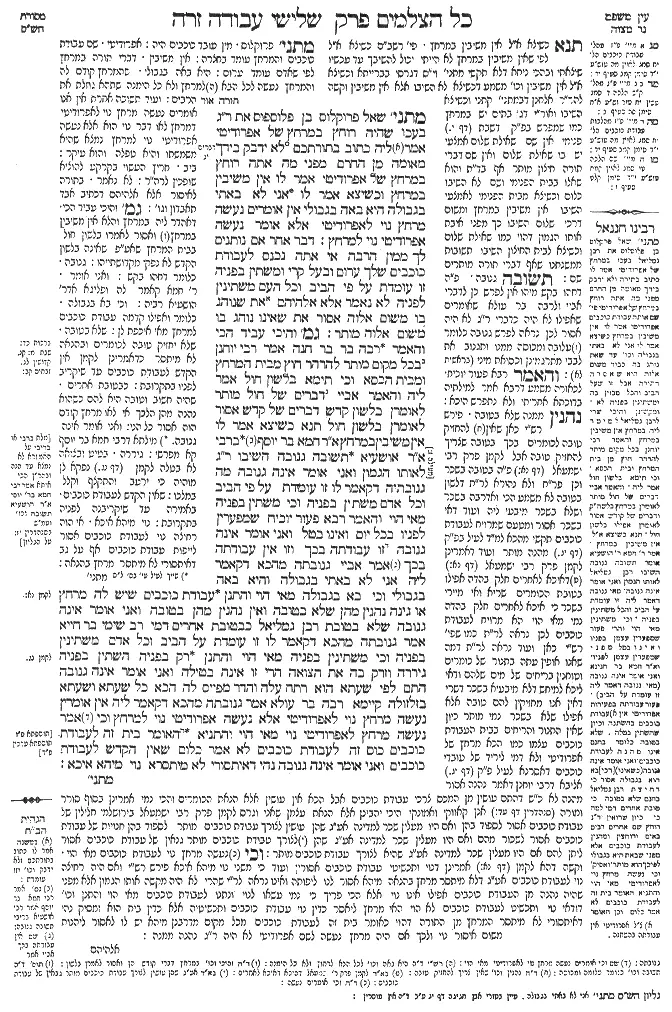
Avodah Zarah 44b - Guemara
מתני׳ שאל פרוקלוס בן פלוספוס את ר"ג בעכו שהיה רוחץ במרחץ של אפרודיטי אמר ליה כתוב בתורתכם (דברים יג, יח) לא ידבק בידך מאומה מן החרם מפני מה אתה רוחץ במרחץ של אפרודיטי אמר לו אין משיבין במרחץ וכשיצא אמר לו אני לא באתי בגבולה היא באה בגבולי אין אומרים נעשה מרחץ נוי לאפרודיטי אלא אומר נעשה אפרודיטי נוי למרחץ:
דבר אחר אם נותנים לך ממון הרבה אי אתה נכנס לעבודת כוכבים שלך ערום ובעל קרי ומשתין בפניה זו עומדת על פי הביב וכל העם משתינין לפניה לא נאמר אלא אלהיהם את שנוהג בו משום אלוה אסור את שאינו נוהג בו משום אלוה מותר:
גמ׳ והיכי עביד הכי והאמר רבה בר בר חנה אמר רבי יוחנן בכל מקום מותר להרהר חוץ מבית המרחץ ומבית הכסא וכי תימא בלשון חול אמר ליה והאמר אביי דברים של חול מותר לאומרן בלשון קדש דברים של קדש אסור לאומרן בלשון חול תנא כשיצא אמר לו אין משיבין במרחץ א"ר חמא בר יוסף ברבי א"ר אושעיא תשובה גנובה השיבו ר"ג לאותו הגמון ואני אומר אינה גנובה מה גנובתיה דקאמר לו זו עומדת על פי הביב וכל אדם משתין בפניה וכי משתין בפניה מאי הוי והאמר רבא פעור יוכיח שמפערין לפניו בכל יום ואינו בטל ואני אומר אינה גנובה זו עבודתה בכך וזו אין עבודתה בכך אמר אביי גנובתה מהכא דקאמר ליה אני לא באתי בגבולה והיא באה בגבולי וכי בא בגבולה מאי הוי והתנן עבודת כוכבים שיש לה מרחץ או גינה נהנין מהן שלא בטובה ואין נהנין מהן בטובה ואני אומר אינה גנובה שלא בטובת רבן גמליאל כבטובת אחרים דמי רב שימי בר חייא אמר גנובתה מהכא דקאמר לו זו עומדת על הביב וכל אדם משתינין בפניה וכי משתינין בפניה מאי הוי והתנן רק בפניה השתין בפניה גיררה וזרק בה את הצואה הרי זו אינה בטילה ואני אומר אינה גנובה התם לפי שעתא הוא רתח עלה והדר מפייס לה הכא כל שעתא ושעתא בזלזולה קיימא רבה בר עולא אמר גנובתה מהכא דקאמר ליה אין אומרין נעשה מרחץ נוי לאפרודיטי אלא נעשה אפרודיטי נוי למרחץ וכי אמר נעשה מרחץ לאפרודיטי נוי מאי הוי והתניא האומר בית זה לעבודת כוכבים כוס זה לעבודת כוכבים לא אמר כלום שאין הקדש לעבודת כוכבים ואני אומר אינה גנובה נהי דאיתסורי לא מיתסרא נוי מיהא איכא:
Comments from Rashi on Masechet Avodah Zarah Page 44b
מתני' פרוקלוס . מין עובד כוכבים היה: אפרודיטי . שם עבודת כוכבים והמרחץ עומד בחצרה: אין משיבין . דברי תורה במרחץ לפי שאדם עומד ערום: היא באה בגבולי . שהמרחץ קודם לה והמרחץ נעשה לכל הבא למרחץ ולא כל הימנה שתהא גוזלת את הרבים: ועוד תשובה אחרת אין אנו אומרים נעשה מרחץ נוי לאפרודיטי . דמרחץ לאו דבר נוי הוא אלא נעשה אפרודיטי נוי למרחץ נמצא שהיא משמשתו והיא טפלה והוא עיקר: ביב . חריץ העשוי בקרקע להוציא שופכין לרה"ר: לא נאמר . בתורה לאיסור אלא אלהיהם דכתיב אבד תאבדון וגו': גמ' והיכי עביד הכי . דאהדר ליה במרחץ והלא אין משיבין במרחץ ואסור לאמרו בלשון חול בבית המרחץ שאע"פ שאינה בלשון הקדש לא נפקי מקדושתייהו: גנובה . כלומר דחהו בקש: ואני אומר . ר' חמא קאמר לה ופליגא אדר' הושעיא רביה: וכי בא בגבולה . כלומר ואפילו קדמה עבודת כוכבים למרחץ מאי איכפת לן: שלא בטובה . שלא יחזיק טובה לכומרים ובהנאה לא מיתסר כדאמרינן לקמן אין הקדש לעבודת כוכבים עד שיקריב לפניו בתקרובת: כבטובת אחרים . שהיה חשוב וטובה היא להם כשהוא נהנה מהן הלכך אי לאו מרחץ קודם הוה אסור כל הני: גיררה . בטיט ובצואה לא בטלה. לקמן (עבודה זרה דף נג.) נפקא לן מוהיה כי ירעב והתקצף וקלל במלכו: ואני אומר אינה גנובה . מילתא דרבי חמא בר יוסף קא מפרשי: שאין הקדש לעבודת כוכבים . באמירה עד שיקריבנה לפניה בתקרובת: נוי מיהא איכא . אי הוה רחיצה נוי לעבודת כוכבים אסור לייפות עבודת כוכבים אף על גב דאיתסורי לא מיתסר מרחץ בהנאה:
Comments from Tosafot - Avodah Zarah 44b
תנא כשיצא א"ל אין משיבין במרחץ . פי' רשב"ם כשיצא א"ל לפי שאין משיבין במרחץ לא הייתי יכול להשיבך עד עכשיו שיצאתי ובהכי ניחא דלא תקשי מתני' וי"ס דגרסי בברייתא וכשיצא א"ל אין משיבין וכו' משמע דכשיצא לא השיבו אלא אין משיבין וקשה להר"ר אלחנן דבמתני' קתני וכשיצא השיבו ואור"י דג' בתים יש במרחץ כמו שמפרש בפ"ק דשבת (דף י.) פנימי אין שם שאילת שלום אמצעי יש בו שאילת שלום ואין שם דברי תורה חיצון מותר אף בד"ת והוא שאלו בבית הפנימי ושם לא השיבו כלום וכשיצא מבית הפנימי לאמצעי השיבו אין משיבין במרחץ ומשום דרכי שלום השיבו כך מפני איבת אותו הגמון דהוי כמו שאילת שלום וכשיצא לבית החיצון השיבו תשובות ממשנתנו שאף דברי תורה מותרים שם: תשובה גנובה . פ"ה דחהו בקש מיהו אין לפרש כן לדברי אביי ולרבה בר עולא שאומרים שאפילו לא היה כדברי ר"ג לא היה אסור לכן נראה לפרש גנובה כלומר עלובה ומכוסה ממנו ותגנוב את לבבי מתרגמינן וכסיאת מיני (בראשית לא): והאמר רבא פעור יוכיח . לכאורה משמע דרבא אמר למילתיה בדוכתא אחריתי ולא נתפרש היכא: נהנין ממנה שלא בטובה . פירש רש"י כאן שאין להחזיק טובה לכומרים בכך בטובה שצריך להחזיק טובה אבל לקמן פרק רבי ישמעאל (עבודה זרה דף נא:) פ"ה בטובה בשכר וכן פר"ח ולא נהירא לר"ת דלשון בטובה לא משמע הכי ואדרבה בשכר ושלא בשכר מיבעי ליה ועוד דאי בשכר אסור ומטעם שמרויח לעבודת כוכבים תקשי מהכא למ"ד לעיל בפ"ק (עבודה זרה דף יג.) מהנה מותר ועוד דאמרינן לקמן פרק רבי ישמעאל (עבודה זרה דף נא:) דאיכא לאחרים חלק בהדה אפילו בטובת הכומרים שריא ואי מיירי בשכר כי איכא לאחרים חלק בהדה נמי מאי הוי הא מרויח לעבודת כוכבים לכן נראה לר"ת כמו שפי' רש"י כאן ועוד נראה לר"ת דמה שאנו אופין עתה בתנור של כומרים וטוחנין בריחים של מים שלהם ודאי ליכא למיחש דלא מיבעיא בשכר דשרי דאין אנו מחזיקין להם טובה אלא אפילו שלא בשכר נמי מותר כיון שאין התנור והריחים בבית העבודת כוכבים עצמו כמו הכא מרחץ של אפרודיטי ולא דמי ליריד של עובדי כוכבים דאסרנא לעיל פ"ק (עבודה זרה דף יג.) אליבא דרבי יוחנן דאמר נהנה אסור מהנה לא כ"ש דהתם עושין מן המכס צרכי עבודת כוכבים אבל הכא אין עושין אלא הנאת הכומרים והכי נמי אמרינן בסוף סורר ומורה (סנהדרין דף עד:) אנן קאווקי ואמונקי היכי יהבינן אלא הנאת עצמן שאני וגרס לקמן פרק רבי ישמעאל בירושלמי חלילין של עבודת כוכבים אסור לספוד בהן ואם היו מעלין שכר למדינה אע"ג שהן עושין לצורך עבודת כוכבים מותר לספוד בהן חנויות של עבודת כוכבים אסור לשכור מהם ואם היו מעלין שכר למדינה אע"ג שהן לצורך עבודת כוכבים מותר גנאין של עבודת כוכבים אסור ליתן להם אם היו מעלין שכר למדינה אע"ג שהיא לצורך עבודת כוכבים מותר: וכי נעשה מרחץ נוי לעבודת כוכבים מאי הוי . וקשה דהא לקמן (עבודה זרה דף נא:) אמרינן דנוי ותכשיטי עבודת כוכבים אסורין ועוד כי משני נוי מיהא איכא פירש רש"י ואם היה רחיצה נוי לעבודת כוכבים אע"ג דלא מיתסר מרחץ בהנאה מיהא אסור לנו ליפותה ואינו נראה לר"י שהרי לא היה מקשה אותו הגמון אלא מפני שהיה נהנה מן העבודת כוכבים אפילו אינו נוי אלא הכי פריך כי נמי עשאו לנוי ונתנו לעבודת כוכבים מאי הוי והתנן וכו' דודאי נוי ותכשיט לעבודת כוכבים לא הוי האי מרחץ ליאסר כדין נוי עבודת כוכבים ותכשיטיה אלא כדין בית הוא ומסיק נהי דאיתסורי לא מיתסר המרחץ מן התורה דהוי כאומר בית זה לעבודת כוכבים מכל מקום מדרבנן מיהא יש לו לאסור ליהנות משום איסור נוי ולכך אם היה מרחץ נעשה לשם אפרודיטי לא היה ר"ג נהנה ממנה:
Avodah Zarah 44b - Mishnah translated into english
MISHNA: A wise gentile, Proclus ben Plospus, once asked a question of Rabban Gamliel in the city of Akko when he was bathing in the bathhouse of the Greek god Aphrodite. Proclus said to him: It is written in your Torah: “And nothing of the proscribed items shall cleave to your hand” (Deuteronomy 13:18). For what reason do you bathe before an idol in the bathhouse of Aphrodite?
Rabban Gamliel said to him: One may not answer questions related to Torah in the bathhouse. And when he left the bathhouse, Rabban Gamliel gave him several answers. He said to him: I did not come into its domain; it came into my domain. The bathhouse existed before the statue dedicated to Aphrodite was erected. Furthermore, people do not say: Let us make a bathhouse as an adornment for Aphrodite; rather, they say: Let us make a statue of Aphrodite as an adornment for the bathhouse. Therefore, the main structure is not the Aphrodite statue, but the bathhouse.
Rabban Gamliel continued: Alternatively, there is another answer: Even if people would give you a lot of money, you would not enter before your object of idol worship naked, or as one who experienced a seminal emission who comes to the bathhouse to purify himself, nor would you urinate before it. This statue stands upon the sewage pipe and all the people urinate before it. There is no prohibition in this case, as it is stated in the verse only: “Their gods” (see Deuteronomy 12:2), which indicates that a statue that people treat as a deity is forbidden, but one that people do not treat with the respect that is due to a deity is permitted.
GEMARA: The mishna relates that Rabban Gamliel first told Proclus that he cannot answer a question related to Torah in a bathhouse. The Gemara asks: And how could he have acted in this manner? How could Rabban Gamliel have stated even this halakha in the bathhouse? But doesn’t Rabba bar bar Ḥana say that Rabbi Yoḥanan says: It is permitted to contemplate matters of Torah everywhere except for the bathhouse and the bathroom?
And if you would say that Rabban Gamliel stated this ruling to him in a secular language, and therefore it was permitted for him to do so, this would not be a satisfactory answer; but doesn’t Abaye say that it is permitted to say secular statements in a bathhouse or bathroom in the sacred tongue, Hebrew, but it is prohibited to say sacred, Torah-related, statements even in a secular language in a bathhouse or bathroom?
The Gemara answers that the mishna actually taught as follows: When he left the bathhouse, Rabban Gamliel said to him: One may not answer questions related to Torah in the bathhouse.
§ Rav Ḥama bar Yosef the Distinguished says that Rabbi Oshaya says: Rabban Gamliel gave a deceptive response to that officer, Proclus. And I, Rav Ḥama, say that the response was not deceptive but truthful.
The Gemara explains: What was its deception, according to Rabbi Oshaya? It was that Rabban Gamliel said to him: This statue stands upon the sewage pipe and all people urinate before it. In saying this, Rabban Gamliel meant that the statue has no idolatrous status as is evident from the demeaning conduct performed before it. And this claim is deceptive, as even if one urinates before it, what of it? Does that really negate its idolatrous status? But doesn’t Rava say that the idol of Peor proves the contrary, as its worshippers defecate before it daily, and its idolatrous status still is not revoked?
Rav Ḥama bar Yosef himself disagrees: And I say that it is not a deceptive answer. With regard to that idol, Peor, its standard manner of worship is in that manner; therefore, its status is certainly not revoked by that behavior. But with regard to this statue, Aphrodite, its standard manner of worship is not in that manner. Therefore, the display of demeaning conduct in its presence is indicative of a lack of reverence for it and of its lack of idolatrous status.
Abaye said: The deception in Rabban Gamliel’s response was from here, when he said to him: I did not come into its domain, but rather it came into my domain. He explains: And even if it, the bathhouse, had come into its domain, what of it? Even if the idol had preceded the bathhouse, it would still not render use of the bathhouse prohibited; but didn’t we learn in a mishna (51b): With regard to an object of idol worship that has a bathhouse or a garden in front of it, one may derive benefit from the bathhouse or garden without showing favor by giving thanks or payment to its priests, but one may not derive benefit from it while showing it favor? Rabban Gamliel’s answer was therefore deceptive because the permissibility of using the bathhouse had nothing to do with its antecedence to the statue.
Rav Ḥama bar Yosef himself disagrees: And I say that it is not a deceptive answer, as even though Rabban Gamliel visited the bathhouse without showing favor by expressing thanks or giving payment, the very fact that such an esteemed visitor paid it a visit is the equivalent of others actively showing favor.
Rav Shimi bar Ḥiyya says: The deception in Rabban Gamliel’s response was from here, when he said to him: This statue stands upon the sewage pipe and all people urinate before it. He explains: And if people urinate before it, what of it? That does not indicate a lack of idolatrous status; but didn’t we learn in a mishna (53a): If one spit in front of it, urinated in front of it, dragged it, or threw feces at it, its status as an object of idol worship is not revoked?
Rav Ḥama bar Yosef himself disagrees: And I say that it is not a deceptive answer. There, the case of that mishna is of one who temporarily rages against the idol, and afterward he appeases it. Here, in the case of the Aphrodite statue erected on the sewage pipe, each and every hour the statue remains in a constant state of disparagement. This setup indicates a permanent lack of reverence and an absence of true idolatrous status.
Rabba bar Ulla said: The deception in Rabban Gamliel’s response was from here, when he said to him that people do not say: Let us make a bathhouse as an adornment for Aphrodite; rather, they say: Let us make a statue of Aphrodite as an adornment for the bathhouse. He explains: And even if people say: Let us make a bathhouse as an adornment for Aphrodite, what of it? But isn’t it taught in a baraita: In the case of one who says: This house is hereby dedicated to idol worship, or: This cup is hereby dedicated to idol worship, he has said nothing, i.e., his words take no effect, as there is no halakha of consecration with regard to objects of idol worship. While one can consecrate an item to the Temple through verbal designation, there is no such method for according idolatrous status to an object. Therefore, Rabban Gamliel’s deception lies in his indication that such a formulation would render the bathhouse forbidden as an object of idol worship.
Rav Ḥama bar Yosef himself disagrees: And I say that it is not a deceptive answer. Although the bathhouse would not be rendered forbidden as an object of idol worship due to a verbal designation, it would at least have the status of an adornment of an object of idol worship, which is also forbidden.
Traduction : The William Davidson digital edition of the Koren Noé Talmud, with commentary by Rabbi Adin Even-Israel Steinsaltz.