 Talmud Bavli
The learning on the whole site is dedicated : L'ilui Nishmat Jacques Isaac Ben Amram Loubaton
The learning on the whole site is dedicated : L'ilui Nishmat אסתר בת חיים
The learning on the whole site is dedicated : L'ilui Nishmat Yechayahou ben Moche
Avodah Zarah 43b : Youtube
Daf TubeYoutube
2 video classes :
Avodah Zarah Page 43b
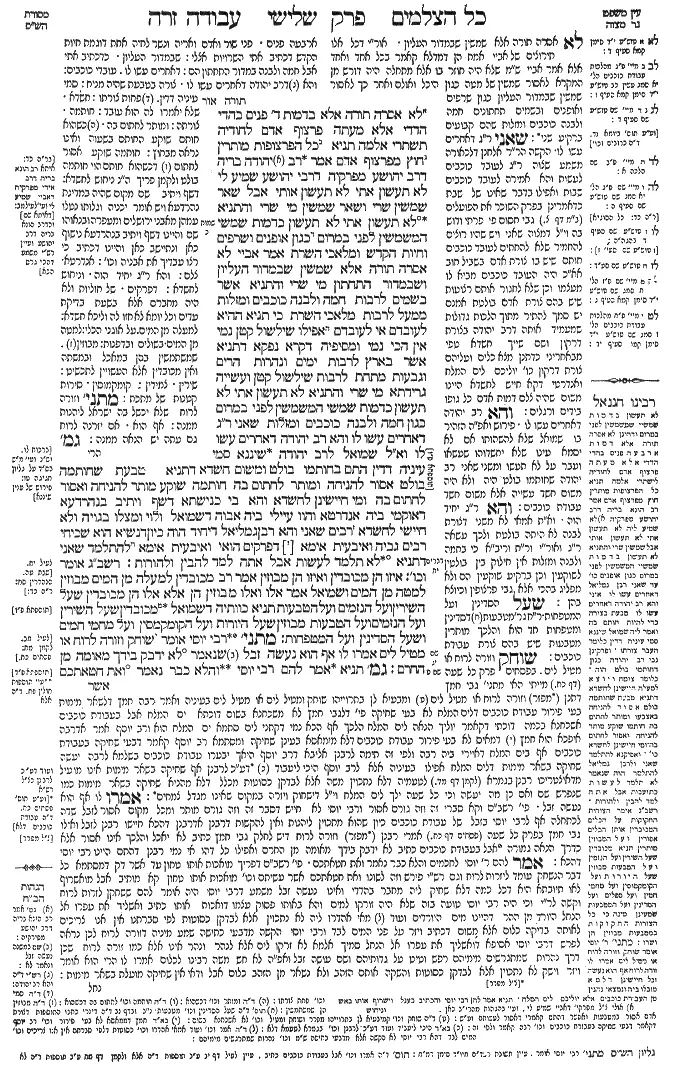
Avodah Zarah 43b - Guemara
לא אסרה תורה אלא בדמות ד' פנים בהדי הדדי אלא מעתה פרצוף אדם לחודיה תשתרי אלמה תניא כל הפרצופות מותרין חוץ מפרצוף אדם אמר רב יהודה בריה דרב יהושע מפרקיה דרבי יהושע שמיע לי לא תעשון אתי לא תעשון אותי אבל שאר שמשין שרי ושאר שמשין מי שרי והתניא (שמות כ, כג) לא תעשון אתי לא תעשון כדמות שמשי המשמשין לפני במרום כגון אופנים ושרפים וחיות הקדש ומלאכי השרת אמר אביי לא אסרה תורה אלא שמשין שבמדור העליון ושבמדור התחתון מי שרי והתניא אשר בשמים לרבות חמה ולבנה כוכבים ומזלות ממעל לרבות מלאכי השרת כי תניא ההיא לעובדם אי לעובדם אפילו שילשול קטן נמי אין הכי נמי ומסיפיה דקרא נפקא דתניא אשר בארץ לרבות ימים ונהרות הרים וגבעות מתחת לרבות שילשול קטן ועשייה גרידתא מי שרי והתניא לא תעשון אתי לא תעשון כדמות שמשי המשמשין לפני במרום כגון חמה ולבנה כוכבים ומזלות שאני ר"ג דאחרים עשו לו והא רב יהודה דאחרים עשו לו וא"ל שמואל לרב יהודה שיננא סמי עיניה דדין התם בחותמו בולט ומשום חשדא דתניא טבעת שחותמה בולט אסור להניחה ומותר לחתום בה חותמה שוקע מותר להניחה ואסור לחתום בה ומי חיישינן לחשדא והא בי כנישתא דשף ויתיב בנהרדעא דאוקמי ביה אנדרטא והוו עיילי ביה אבוה דשמואל ולוי ומצלו בגויה ולא חיישי לחשדא רבים שאני והא רבן גמליאל דיחיד הוה כיון דנשיא הוא שכיחי רבים גביה ואיבעית אימא דפרקים הואי ואיבעית אימא להתלמד שאני דתניא (דברים יח, ט) לא תלמד לעשות אבל אתה למד להבין ולהורות:
רשב"ג אומר וכו':
איזו הן מכובדין ואיזו הן מבוזין אמר רב מכובדין למעלה מן המים מבוזין למטה מן המים ושמואל אמר אלו ואלו מבוזין הן אלא אלו הן מכובדין שעל השירין ועל הנזמים ועל הטבעות תניא כוותיה דשמואל מכובדין שעל השירין ועל הנזמים ועל הטבעות מבוזין שעל היורות ועל הקומקמסין ועל מחמי חמים ושעל הסדינין ועל המטפחות:
מתני׳ רבי יוסי אומר שוחק וזורה לרוח או מטיל לים אמרו לו אף הוא נעשה זבל שנאמר (דברים יג, יח) לא ידבק בידך מאומה מן החרם:
גמ׳ תניא אמר להם רבי יוסי והלא כבר נאמר (דברים ט, כא) ואת חטאתכם
Comments from Rashi on Masechet Avodah Zarah Page 43b
ארבעה פנים . פני שור ואדם ואריה ונשר לחיה אחת דוגמת חיות הקדש דכתיב אתי השרויות אצלי: שבמדור העליון . כדכתיב אתי אבל חמה ולבנה במדור התחתון הם: דאחרים עשו לו . עובדי כוכבים: והא דרב יהודה דאחרים עשו לו . צורה בטבעת שהיה מניח: סמי עיניה דדין . פחות צורתו: חשדא . שלא יאמרו לה הוא עובד: חותמה . צורתה: ומותר לחתום בה . כשהוא חותם שוקע החותם בשעוה ואינו נראה מבחוץ: חותמה שוקע . אסור לחתום דכשהוא חותם הוי חותמה בולט. ולקמן פריך ה"נ ניחוש לחשדא: דשף ויתיב . שם מקום שהיה במדינת נהרדעא. ויש אומר יכניה וגלותו נטלו עמהן מאבני ירושלים ומעפרה ובנאוהו שם והיינו דשף ויתיב בנהרדעא נישוף כאן ונתיישב כאן והיינו דכתיב כי רצו עבדיך את אבניה וכו': אנדרטא . צלם: והא ר"ג יחיד הוה . וניחוש לחשדא: דפרקים . של חוליות ולא היה מחברם אלא בשעת בדיקת עדים וכל יומא לא חזו לה וליכא חשדא: למעלה מן המים . על אוגני הכלי: למטה מן המים . בשולים ובדפנות: מבוזין . שמשתמשין בהן במאכל ובמשתה ואין מכובדין אלא העשויין לתכשיט: שירין . צמידין: קומקמוסין . סירות קטנות של מתכת: מתני' וזורה לרוח . שלא יכשל בה ישראל ליהנות ממנה: אף הוא . אם יזרנה לרוח גם עתה יש הנאה ממנה: גמ' ואת חטאתכם וגו' . מואכות אותו טחון קא מותיב אבל מואשרוף לאו תיובתא היא דכל כמה דלא שחיק ליה מחובר בהדדי ואינו נעשה זבל:
Comments from Tosafot - Avodah Zarah 43b
לא אסרה תורה אלא שמשין שבמדור העליון . אור"י דכל אלו תירוצים של אביי אמת הן דמדלא קאמר בכל אחד ואחד אלא אמר אביי ש"מ שלא היה חוזר בו אלא מתחלה היה דורש מן המקרא לאסור שמשין של מטה כגון היכל ואולם ואחר כך לאסור שמשין שבמדור העליון כגון שרפים ואופנים ובשמים תחתונים חמה ולבנה כוכבים ומזלות שהם קבועים ברקיע שני: שאני ר"ג דאחרים עשו לו . הקשה הר"ר אלחנן דלכאורה משמע שצוה ר"ג לעובד כוכבים לעשות והא אמירה לעובד כוכבים שבות ואפילו בדבר שאינו של שבת כדאמרינן בפרק השוכר את הפועלים (ב"מ דף צ.) גבי חסום פי פרתי ודוש בה וי"ל דמצוה שאני ויש שהיו רוצים להחמיר שלא להחתים לעובד כוכבים חותם שיש בו צורת אדם בשביל חוב אא"כ היה העובד כוכבים מביא לו מעצמו וכן שלא לחגור אותם רצועות שיש בהם צורת אדם בולטת אמנם יש סמך להתיר מתוך הלכות גדולות שמעמיד אותה דרב יהודה בצורת דרקון ושם שייך חשדא טפי מבאחריני כדתנן מצא כלים ועליהם צורת דרקון כו' יוליכם לים המלח ואנדרטי דקא חייש לחשדא היינו משום שהיה צלם דמות אדם כל גופו בידים ורגלים: והא רב יהודה דאחרים עשו לו . פירוש ואפ"ה הזהיר בו שמואל שלא להשהותו אם לא יסמא עינו שלא יחשדוהו שעשאו ועבר על לא תעשו ומשני שאני רב יהודה שחותמו בולט היה ולא היה משום חשד עשייה אלא משום חשד עבודת כוכבים: והא ר"ג יחיד הוה . וא"ת אמאי לא משני דצורת לבנה לא היתה בולטת ולכך עשאה ר"ג ואור"י ור"ת וריב"א כי בחמה ולבנה ומזלות אין חילוק בין בולטין לשוקעין וכן ברקיע שוקעין הם ולא מפליג בהכי אלא גבי פרצופין וכיוצא בהן: שעל הסדינין ועל המטפחות . ר"ח גר' מטבעות דסדינין ומטפחות חד הוא והלכך מותרין מטבעות שיש בהם צורת עבודת כוכבים: שוחק וזורה לרוח או מטיל לים . בפסחים פרק כל שעה (דף כח.) מייתי האי מתני' גבי חמץ דתנן (מפזר) וזורה לרוח או מטיל לים ומבעיא לן בתרוייהו שוחק ומטיל לים או מטיל לים בעיניה ואמר רבה חמץ דלשאר מימות בעי פירור עבודת כוכבים דלים המלח לא בעי שחיקה פי' דלגבי חמץ לא משכחנא בשום דוכתא ים המלח אבל בעבודת כוכבים אשכחנא בכמה דוכתי דקאמר יוליך הנאה לים המלח הלכך אף הכא נמי דקתני לים סתמא ים המלח הוא ורב יוסף אמר אדרבה איפכא הוא חמץ דמאיס לא בעי פירור עבודת כוכבים דלא מימאסא בעינן שחיקה ומסתמא רב יוסף קאמר דבעי שחיקה בעבודת כוכבים אף בים המלח דאיירי ביה רבה ולפי זה תימה לרבנן אליבא דרב יוסף היאך יבערו עבודת כוכבים בשלמא לרבה יעשה שחיקה בשאר מימות דלים המלח אפילו בעיניה אלא לרב יוסף היכי ליעבוד דע"כ לרבנן אף שחיקה בשאר מימות אינו מועיל מדאיצטריכו רבנן בגמרא (לקמן עבודה זרה דף מד.) לטעמיה דלא נתכוין משה אלא לבדקן כסוטות מכלל דלא מהניא שחיקה בשאר מימות כמו שנפרש שם ואם כן מה יעשה וכי כל שעה ילך לים המלח וי"ל דישחוק ויזרה במקום שאינו מגדל צמחים: אמרו לו אף הוא נעשה זבל . פי' רשב"ם וקא סברי זה וזה גורם אסור ורבי יוסי לא חייש דסבר זה וזה גורם מותר ומכל מקום אסור לזבל שדה לכתחלה אף לרבי יוסי בזבל של עבודת כוכבים כיון שהוא מתכוין ליהנות ואין להקשות דרבנן אדרבנן דהכא חיישו רבנן לזבל ואילו גבי חמץ בפרק כל שעה (פסחים דף כח.) אמרי רבנן (מפזר) וזורה לרוח דיש לחלק גבי חמץ כתיב לא יאכל והלכך אינו אסור אלא כדרך הנאה גמורה אבל בעבודת כוכבים כתיב לא ידבק בידך מאומה מן החרם ואפילו כל דהו אי נמי רבנן דהתם היינו רבי יוסי דהכא: אמר להם ר' יוסי לחכמים והלא כבר נאמר ואת חטאתכם . פי' רשב"ם דפריך מואכות אותו טחון עד אשר דק דמסתמא כל דבר הנשחק עומד ליזרות לרוח וגם רש"י פירש וזה לשונו ואת חטאתכם אשר עשיתם וכו' מואכות אותו טחון קא מותיב אבל מואשרוף לאו תיובתא היא דכל כמה דלא שחיק ליה מחבר בהדדי ואינו נעשה זבל משמע דרבי יוסי היה אומר להם ששחקן לזרות לרוח וקשה לר"י וכי היה רבי יוסי טועה בזה שלא היה זורקו למים והא באותו פסוק עצמו דואכות אותו כתיב ואשליך את עפרו אל הנחל היורד מן ההר דהיינו מים היורדים ועוד מאי אהדרו ליה לא נתכוין אלא לבדקן כסוטות לפי סברתנו אין אנו צריכים לאותה בדיקה כלום אלא משום דכתיב ויזר על פני המים לבד ורבי יוסי הקשה מדבעי כתישה שמע מיניה דזורה לרוח לכן נראה לפרש דרבי יוסי אסיפא דואשליך את עפרו אל הנחל סמיך אלמא לא זרקו לים אלא לנהר ונהר אינו אלא כמו זורה לרוח שכן דרך נהרות שמתגרשים מימיהם רפש וטיט על גדותיהם ושם עושה זבל ואפ"ה לא חש משה רבינו לכלום אמרו לו הרי הוא אומר ויזר וישק לא נתכוין אלא לבדקן כסוטות והשקה אותם הזהב ולא נשאר מן הזהב כלום אבל ודאי אין שחיקה מועלת בשאר מימות:
Avodah Zarah 43b - Mishnah translated into english
This does not include the sun and the moon, as the Torah prohibits the fashioning only of a figure of all four faces of the creatures of the Divine Chariot together (see Ezekiel 1:10). All other figures, which are not in the likeness of the ministering angels, are permitted.
The Gemara raises a difficulty: If that is so, let the fashioning of a figure of a human face alone be permitted. Why then is it taught in a baraita: Figures of all faces are permitted, except for the human face?
Rav Yehuda, son of Rav Yehoshua, said: I heard in a lecture of Rabbi Yehoshua that there is a different reason why one may not fashion a figure of a human face; the verse states: “You shall not make with Me [iti]” (Exodus 20:20). This can be read as: You shall not make Me [oti]. Since the human being was created in the image of God (see Genesis 1:27), it is prohibited to fashion an image of a human being. But fashioning figures of other attendants of God is permitted.
The Gemara asks: And is it permitted to fashion figures of other attendants of God? But isn’t it taught in another baraita that the verse: “You shall not make with Me gods of silver” (Exodus 20:20), is interpreted to mean that you shall not make figures of My attendants who serve before Me on high, for example, ofanim, and seraphim, and the sacred ḥayyot, and the ministering angels?
Abaye said: The Torah prohibits fashioning figures of only those attendants that are in the upper heaven, i.e., the supreme angels in the highest firmament, but it does not prohibit fashioning the celestial bodies, e.g., the sun and the moon, despite the fact that they too are located in heaven.
The Gemara asks: And is it permitted to fashion figures of those bodies that are in the lower heaven? But isn’t it taught in a baraita with regard to the verse: “You shall not make for yourself any graven image, nor any manner of likeness, of anything that is in heaven above, or that is in the earth beneath, or that is in the water under the earth” (Exodus 20:4): The phrase “that is in heaven” serves to include the sun, and the moon, the stars, and the constellations. The term “above” serves to include the ministering angels. Apparently, it is prohibited to fashion a figure even of the celestial bodies that are in the lower heaven.
The Gemara answers: When that baraita is taught, it is in reference to the prohibition against worshipping them. There is no prohibition against forming a figure in their likeness.
The Gemara asks: If that baraita is referring to the prohibition against worshipping them, then why does it mention only celestial bodies? It is prohibited to worship even a tiny worm. The Gemara answers: Yes, it is indeed so; and this prohibition is derived from the latter clause of that verse, as it is taught in a baraita: “That is in the earth” serves to include seas, and rivers, mountains, and hills. The word “beneath” serves to include a tiny worm.
The Gemara asks: And is the mere fashioning of figures of the celestial bodies permitted? But isn’t it taught in another baraita that the verse: “You shall not make with Me gods of silver” (Exodus 20:20), is interpreted to mean that you shall not make figures of My attendants who serve before Me on high, for example: The sun, and the moon, the stars, and the constellations. This is proof that it is prohibited to fashion figures of the sun and the moon. Consequently, the solution proposed by Abaye is rejected, leaving the difficulty of Rabban Gamliel’s diagram unresolved.
The Gemara proposes an alternative resolution: The case of Rabban Gamliel is different, as others, i.e., gentiles, fashioned those figures for him, and it is prohibited for a Jew only to fashion such figures; there is no prohibition against having them in one’s possession.
The Gemara asks: But there is the case of Rav Yehuda, where others fashioned for him a seal with a figure of a person on it, and Shmuel said to Rav Yehuda, who was his student: Sharp-witted one [shinnana], destroy this one’s eyes, i.e., disfigure it, as it is prohibited even to have a figure of a human being in one’s possession.
The Gemara answers: There, in the case of Rav Yehuda, his was a protruding seal, i.e., the figure projected from the ring, and Shmuel prohibited it due to the potential suspicion that he had an object of idol worship in his possession. As it is taught in a baraita: In the case of a ring whose seal protrudes, it is prohibited to place it on one’s finger due to suspicion of idol worship, but it is permitted to seal objects with it. In this case, the act of sealing forms a figure that is sunken below the surface of the object upon which the seal was impressed, which is not prohibited. If its seal is sunken, it is permitted to place it on one’s finger, but it is prohibited to seal objects with it, as that forms a protruding figure.
The Gemara asks: And are we concerned about arousing suspicion due to the use of a human figure? But what about that synagogue that had been destroyed in Eretz Yisrael and was reestablished in Neharde’a, and they erected a statue of the king in it? And nevertheless, Shmuel’s father and Levi would enter and pray in it, and they were not concerned about arousing suspicion. The Gemara answers: A public institution is different; the public is not suspected of having idolatrous intentions. Rather, it is assumed that the statue is there exclusively for ornamental purposes.
The Gemara asks: But wasn’t Rabban Gamliel an individual? According to this reasoning, his figures of the moon should have been forbidden as they would have aroused suspicion. The Gemara answers: Since he was the Nasi, the head of the Sanhedrin, members of the public would often be found with him, and therefore there was no room for suspicion. And if you wish, say there is an alternative answer, namely, that these figures were not whole; rather, they were formed from pieces of figures that had to be assembled. Only complete figures are forbidden.
And if you wish, say there is yet another answer: Fashioning figures in order to teach oneself is different, as it is taught in a baraita with regard to the verse: “You shall not learn to do like the abominations of those nations” (Deuteronomy 18:9): But you may learn in order to understand the matter yourself and teach it to others. In other words, it is permitted to perform certain acts for the sake of Torah study that would otherwise be prohibited.
§ The mishna (42b) teaches that Rabban Shimon ben Gamliel says: Those figures that are upon respectable vessels are forbidden. Those that are upon disgraceful vessels are permitted. The Gemara asks: Which vessels are considered respectable and which are considered disgraceful?
Rav says: These terms do not represent different types of vessels, but rather the location of the figure upon the vessel. A respectable location for an idolatrous figure is on the side of the vessel above the level of the water or food contents; a disgraceful location is below the water level. And Shmuel says: Both these and those locations on eating utensils are disgraceful. Rather, these are respectable locations: Upon bracelets, or upon nose rings, or upon rings.
The Gemara comments: It is taught in a baraita in accordance with the opinion of Shmuel (Tosefta 5:1): Respectable locations for idolatrous figures are upon bracelets, or upon nose rings, or upon rings. Disgraceful locations are upon large pots, or upon small kettles [hakumkemasin], or upon samovars, or upon sheets, or upon towels.
MISHNA: Rabbi Yosei says: When one encounters an idol, he should grind the idol and throw the dust to the wind or cast it into the sea. The Rabbis said to him: What is the good of that? That also gives a Jew benefit from the idol, as it becomes fertilizer for his crops, and deriving any kind of benefit is prohibited, as it is stated: “And nothing of the proscribed items shall cleave to your hand” (Deuteronomy 13:18).
GEMARA: It is taught in a baraita (Tosefta 3:16): Rabbi Yosei said to them: But isn’t it already stated: “And your sin,
Traduction : The William Davidson digital edition of the Koren Noé Talmud, with commentary by Rabbi Adin Even-Israel Steinsaltz.