 Talmud Bavli
The learning on the whole site is dedicated : L'ilui Nishmat אסתר בת חיים
The learning on the whole site is dedicated : L'ilui Nishmat יוסף בן מושה
The learning on the whole site is dedicated : L'ilui Nishmat Yechayahou ben Moche
Avodah Zarah 17b : Youtube
Daf TubeYoutube
2 video classes :
Avodah Zarah Page 17b
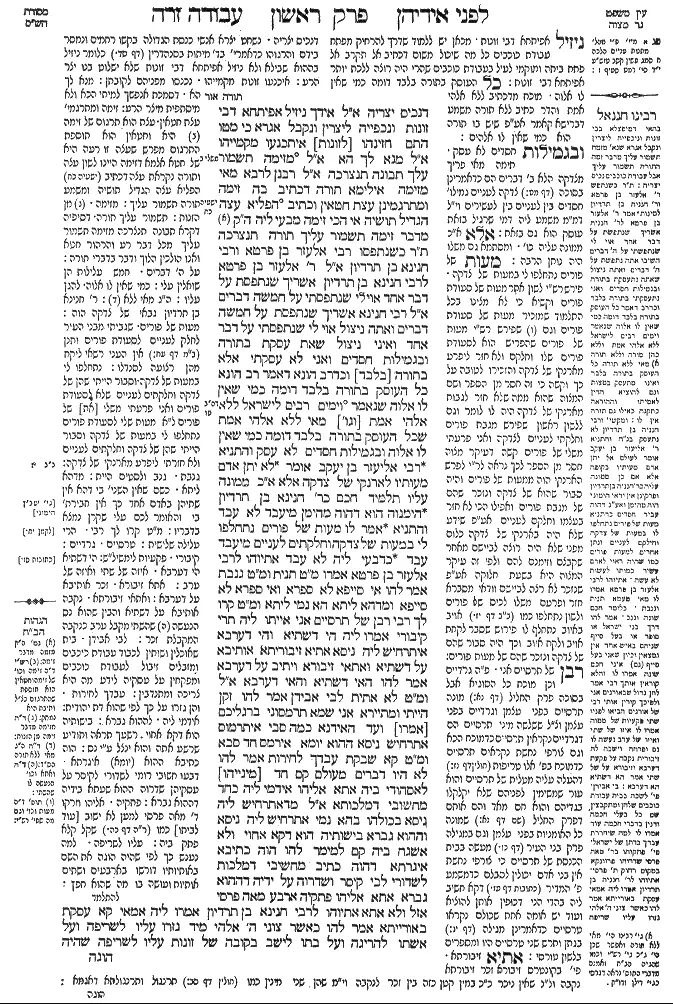
Avodah Zarah 17b - Guemara
דנכיס יצריה א"ל אידך ניזיל אפיתחא דבי זונות ונכפייה ליצרין ונקבל אגרא כי מטו התם חזינהו [לזונות] איתכנעו מקמייהו א"ל מנא לך הא א"ל (משלי ב, יא) מזמה תשמור עלך תבונה תנצרכה א"ל רבנן לרבא מאי מזימה אילימא תורה דכתיב בה זימה ומתרגמינן עצת חטאין וכתיב (ישעיהו כח, כט) הפליא עצה הגדיל תושיה אי הכי זימה מבעי ליה ה"ק מדבר זימה תשמור עליך תורה תנצרכה ת"ר כשנתפסו רבי אלעזר בן פרטא ורבי חנינא בן תרדיון א"ל ר' אלעזר בן פרטא לרבי חנינא בן תרדיון אשריך שנתפסת על דבר אחד אוי לי שנתפסתי על חמשה דברים א"ל רבי חנינא אשריך שנתפסת על חמשה דברים ואתה ניצול אוי לי שנתפסתי על דבר אחד ואיני ניצול שאת עסקת בתורה ובגמילות חסדים ואני לא עסקתי אלא בתורה [בלבד] וכדרב הונא דאמר רב הונא כל העוסק בתורה בלבד דומה כמי שאין לו אלוה שנאמר (דברי הימים ב טו, ג) וימים רבים לישראל ללא אלהי אמת [וגו'] מאי ללא אלהי אמת שכל העוסק בתורה בלבד דומה כמי שאין לו אלוה ובגמילות חסדים לא עסק והתניא רבי אליעזר בן יעקב אומר לא יתן אדם מעותיו לארנקי של צדקה אלא א"כ ממונה עליו תלמיד חכם כר' חנינא בן תרדיון הימנוה הוא דהוה מהימן מיעבד לא עבד והתניא אמר לו מעות של פורים נתחלפו לי במעות של צדקה וחלקתים לעניים מיעבד עבד כדבעי ליה לא עבד אתיוהו לרבי אלעזר בן פרטא אמרו מ"ט תנית ומ"ט גנבת אמר להו אי סייפא לא ספרא ואי ספרא לא סייפא ומדהא ליתא הא נמי ליתא ומ"ט קרו לך רבי רבן של תרסיים אני אייתו ליה תרי קיבורי אמרו ליה הי דשתיא והי דערבא איתרחיש ליה ניסא אתיא זיבוריתא אותיבא על דשתיא ואתאי זיבורא ויתיב על דערבא אמר להו האי דשתיא והאי דערבא א"ל ומ"ט לא אתית לבי אבידן אמר להו זקן הייתי ומתיירא אני שמא תרמסוני ברגליכם [אמרו] ועד האידנא כמה סבי איתרמוס אתרחיש ניסא ההוא יומא אירמס חד סבא ומ"ט קא שבקת עבדך לחירות אמר להו לא היו דברים מעולם קם חד [מינייהו] לאסהודי ביה אתא אליהו אידמי ליה כחד מחשובי דמלכותא א"ל מדאתרחיש ליה ניסא בכולהו בהא נמי אתרחיש ליה ניסא וההוא גברא בישותיה הוא דקא אחוי ולא אשגח ביה קם למימר להו הוה כתיבא איגרתא דהוה כתיב מחשיבי דמלכות לשדורי לבי קיסר ושדרוה על ידיה דההוא גברא אתא אליהו פתקיה ארבע מאה פרסי אזל ולא אתא אתיוהו לרבי חנינא בן תרדיון אמרו ליה אמאי קא עסקת באורייתא אמר להו כאשר צוני ה' אלהי מיד גזרו עליו לשריפה ועל אשתו להריגה ועל בתו לישב בקובה של זונות עליו לשריפה שהיה
Comments from Rashi on Masechet Avodah Zarah Page 17b
דנכיס יצריה . נשחט יצרא. אנשי כנסת הגדולה בקשו רחמים ונמסר בידם והרגוהו כדאמרי' בד' מיתות בסנהדרין (דף סד.) כלומר ניזיל בההוא שבילא ולא ניזיל אפיתחא דבי זונות שלא ישלוט בנו יצר הרע: איכנעו זונות מקמייהו . נכנסו מפניהם לקובתן: מנא לך הא . דסמכת אנפשך למיתי הכא ולא מיסתפית מיצר הרע: זימה ומתרגמי' עצת חטאין . עצת הוא תרגום של זימה היא וחטאין הוא תוספת התרגום מפרש שעצה זו רעה היא של חטא. אלמא דזימה היינו לשון עצה ותורה נקראת עצה דכתיב (ישעיהו כח) הפליא עצה הגדיל תושיה ומשמע תורה תשמור עליך: מזימה . מן הזנות: תשמור עליך תורה . דסיפיה דקרא תבונה תנצרכה מזימה תשמור עליך מכל דבר רע והרהור חטא ואנו הולכין הלוך ודבר בדברי תורה: על ה' דברים . חמש עלילות הן שואלין עלי: כמי שאין לו אלוה . להגן עליו: ה"ג מאי ללא: ר' חנינא בן תרדיון גבאי של צדקה הוה: מעות של פורים . שגביתי מבני העיר לחלק לעניים לסעודת פורים ותנן (ב"מ דף עח:) אין העני רשאי ליקח מהן רצועה לסנדלו: נתחלפו לי במעות של צדקה . וסבור הייתי שהן של צדקה וחלקתים לעניים שלא לסעודת פורים ואני פרעתי משלי[את] של פורים. ל"א מעות שלי לסעודת פורים נתחלפו לי במעות של צדקה וסבור הייתי שהן של צדקה וחלקתים לעניים ולא חזרתי ליפרע מארנקי של צדקה: גנבת . גנב ולסטים היית: מדהא ליתא . כשם שאין השני' בי דהא אין שתיהן באדם אחד כך אין חבירת' בי והאומר לכם עלי שקרן נמצא בדבריו: מ"ט קרו לך רבי . הרי עלילה שלישית: טרסיים . גרדיים: קיבורי . פקעיות לימשיל"ש: הי דשתיא הי דערבא . איזה של שתי ואיזה של ערב: אתא זיבורא . זכר אותיבא על דערבא: ואתאי זיבורתא . נקבה אותיבא על דשתיא. והבין שהוא נס הנעשה שהשתי מקבל ערב כנקבה המקבלת זכר: לבי אבידן . בית שאוכלין ושותין לכבוד עבודת כוכבים ומזבלים זיבול לעבודת כוכבים ומפקחין על עסקיה לידע מה היא צריכה ומתנדבין: עבדך לחירות . והן גזרו על כך לפי שהוא דת יהודית: אידמי ליה . לההוא גברא: בישותיה הוא דקא אחוי . רשעך תראה ותודיע שרשע אתה והוא ינצל ע"י נס: הוה כתיבא ההוא (יומא) איגרתא . דבעו חשובי רומי לשדורי לקיסר על עסקיהן שדרוה ההוא שעתא בידיה דההוא גברא: פתקיה . אליהו וזרקו ד' מאה פרסי למען לא ישוב [עוד לביתו] כמו (ר"ה דף כה.) שקל קלא פתק ביה: עליו לשריפה . למה נענש כך לפי שהיה הוגה את השם באותיותיו דורשו בארבעים ושתים אותיות ועושה בו מה שהוא חפץ:
Comments from Tosafot - Avodah Zarah 17b
ניזיל אפיתחא דבי זונות . מכאן יש ללמוד שדרך להרחיק מפתח עבודת כוכבים כל מה שיכול משום דכתיב אל תקרב אל פתח ביתה ומוקמי לעיל בעבודת כוכבים שהרי היה רוצה ללכת יותר אפיתחא דבי זונות: כל העוסק בתורה בלבד דומה כמי שאין לו אלוה . מוכח מדכתיב ללא אלהי אמת והדר כתיב ללא תורה משמע דברישא קאמר אע"פ שיש בו תורה הוא כמי שאין לו אלהים: ובגמילות חסדים לא עסק . תימה מאי פריך מצדקה הלא ב' דברים הם כדאמרינן בסוכה (דף מט:) צדקה לעניים גמילו' חסדים בין לעניים בין לעשירים וי"ל דמ"מ משמע ליה דמי שרגיל בזאת עוסק הוא גם בזאת: אלא א"כ ממונה עליה כו' . ומסתמא גם משלו היה נותן הרבה: מעות של פורים נתחלפו לי במעות של צדקה . פירש רש"י לשון אחר מעות של סעודת פורים וקשיא כי לא מצינו בכל התלמוד שמזכיר מעות של סעודת פורים וגם שפירש רש"י מעות של פורים שהפריש הוא לסעודת פורים שלו וחלקם ולא חזר ליפרע מארנקי של צדקה והזכירו לטובה על כך וקשה כי זה חסר מן הספר ושם המצוה שהוא ממה שלא חזר לגבות מארנקי של צדקה היה לו לומר וגם ללשון ראשון שפירש מגבת פורים וחלקתי לעניים לצדקה ואני פרעתי משלי של פורים קשה דעיקר מצוה חסר מן הספר לכך נראה לר"י לפרש הארנקי הוה ממעות של פורים והיה סבור שהוא של צדקה ונזכר שהם של מגבת פורים ואפילו הכי לא חזר בעצמו וחלקם לעניים אע"פ שידע שלא היה בארנקי של צדקה כלום מפני שלא היה רוצה לביישם מאחר שקבצם וזימנם להם ולפי זה עיקר המצוה היא בשעת חלוקה אע"פ שנזכר לא רצה לביישם וודאי מסברא חזר ופרעם משלו לכיס של פורים ולשון נתחלפו כמו (ב"ב דף יז.) אויב באיוב נתחלף לו פירוש שסבר לקחת אויב ולקח איוב וכך היה סבור שהם של צדקה ונזכר שהם של מעות פורים: רבן של תרסיים אני . פ"ה גרדיים וכן מוכח כל הסוגיא אבל בסוכה פרק החליל (דף נא:) מונה תרסיים בפני עצמן וגרדיים בפני עצמן וצ"ל ששלשה מיני תרסיים הם דגרדיים נקראין תרסיים כדמוכח הכא וגם צורפי נחשת נקראים תרסיים כדמוכח בפ' אלו טריפות (חולין דף נז:) דהעלה עליה מטלית של תרסיים והוא עור שמשימין לפניהם שלא יקלקלו בגדיהם והוא חם מאד והם אותם דפרק החליל (שם דף נא:) שמונה כל האומניות בפני עצמן וגם במגילה פרק בני העיר (דף כו.) מעשה בבית הכנסת של תרסיים כי צורפי נחשת אין בני אדם יכולין לסבלם כדמשמע פ' המדיר (כתובות דף עז.) דקא חשיב ליה בהדי הני דכופין אותן להוציא ועוד יש אומה אחת שכולם נקראו טרסיים כדאמרינן מגילה (דף יג:) בגתן ותרש שני טרסיים היו ומספרים בלשון טורסי: אתיא זיבורתא . פי' בקונטרס זיבורא זכר זיבורתא נקבה ול"נ שאין ניכר כ"כ במין קטן כזה בין זכר לנקבה וי"מ שהן שני מינין כמו (חולין דף סב:) תרנגול ותרנגולתא דאגמא:
Avodah Zarah 17b - Mishnah translated into english
as the inclination to engage in idol worship has been slaughtered and the temptation to sin in this manner no longer exists. The other said to him: Let us go by the path that leads to the entrance of the brothel and overpower our inclination, and thereby receive a reward. When they arrived there, they saw that the prostitutes yielded before their presence, i.e., they entered the building out of respect for the Sages.
One said to the other: From where did you know this, that the prostitutes would retreat from us in embarrassment? He said to him: It is written: “From lewdness [mezimma] it shall watch over you; discernment shall guard you” (Proverbs 2:11), i.e., the Torah will serve as a safeguard against lewdness.
The Sages said to Rava: What is the meaning of mezimma? If we say that it is referring to the Torah that will guard you, as it is written in it: “Zimma” (Leviticus 18:17), and we translate this term as: The counsel of [atzat] the sinners, demonstrating that zimma is referring to counsel or wisdom, and the term etza is also written with regard to the Torah: “This also comes forth from the Lord of hosts: Wonderful is His counsel [etza], and great is His wisdom” (Isaiah 28:29), this is difficult. The Gemara explains the difficulty: If so, the verse should have said: Zimma, and not mezimma. Rather, this is what the verse is saying: From lewd matters [midevar zimma], it shall watch over you, the Torah shall guard you, i.e., the term discernment is a reference to the Torah.
§ The Gemara returns to its discussion of the judgments of the Sages by the Roman rulers. The Sages taught: When Rabbi Elazar ben Perata and Rabbi Ḥanina ben Teradyon were arrested by the Romans during the time of the religious persecution of the Jewish people, Rabbi Elazar ben Perata said to Rabbi Ḥanina ben Teradyon: Fortunate are you, as you were arrested on one charge only, of teaching Torah publicly; woe is me, as I have been arrested on five charges.
Rabbi Ḥanina ben Teradyon said to him: Fortunate are you, as you were arrested on five charges but you will be saved; woe is me, as I have been arrested on one charge, but I will not be saved. You will be saved because you engaged in Torah study and in acts of charity, and I engaged in Torah study alone.
The Gemara comments: And this is in accordance with a statement of Rav Huna, as Rav Huna says: Anyone who occupies himself with Torah study alone is considered like one who does not have a God. As it is stated: “Now for long seasons Israel was without the true God, and without a teaching priest, and without the Torah” (II Chronicles 15:3). What is meant by “without the true God”? This teaches that anyone who engages in Torah study alone is considered like one who does not have a true God.
The Gemara asks: And is it true that Rabbi Ḥanina ben Teradyon did not engage in acts of charity? But isn’t it taught in a baraita that Rabbi Eliezer ben Ya’akov says: A person should not donate his money to the charity purse [le’arnakei] unless a Torah scholar like Rabbi Ḥanina ben Teradyon is appointed as supervisor over it? The Gemara answers: He was trusted to distribute the charity with honesty and integrity, but he himself did not perform charitable acts.
The Gemara asks: But isn’t it taught in a baraita that Rabbi Ḥanina ben Teradyon said to Rabbi Yosei ben Kisma: I confused my own coins that I needed for the festivities of Purim with coins of charity, and I distributed them all to the poor at my own expense. How then can it be said that he never engaged in charitable acts? The Gemara responds: He did perform acts of charity, but he did not perform as many acts as he should have, in light of his wealth.
The Gemara returns to the description of the trial of the Sages. The Romans brought Rabbi Elazar ben Perata for his trial and said: What is the reason that you taught Torah, and what is the reason that you stole, as these were the crimes of which he was accused. Rabbi Elazar ben Perata said to them: If one is an armed robber [sayafa], he is not a scholar [safra], and if one is a scholar he is not an armed robber, i.e., I am accused of two mutually exclusive crimes; and from the fact that this characterization is not true, one may also conclude that that characterization is also not true. They asked him: But if you do not teach Torah, then what is the reason that they call you rabbi? He answered: I am the master [rabban] of weavers [tarsiyyim].
In order to ascertain whether Rabbi Elazar ben Perata was in fact an expert weaver, they brought him two coils of wool and said to him: Which is the warp, and which is the woof? The threads used for each differ in their thickness and strength and would be immediately recognizable to an expert. A miracle occurred, as a female hornet came and sat on the coil of warp, and a male hornet came and sat on the coil of woof. Rabbi Elazar ben Perata said to them: This is a coil of warp, and that is a coil of woof. He realized that the male hornet was a sign that the coil was the woof, as the woof is threaded through the warp, while the warp, which is fixed in the loom and receives the woof, was the one on which the female hornet sat, as the female of a species receives the male.
The Romans said to him: And what is the reason that you did not come to the house of Abidan? This was a gathering place where debates on wisdom and faith were conducted. Rabbi Elazar ben Perata said to them: I was old and feared that perhaps I would be trampled under your feet, due to the huge crowds. The Romans said: And until now, how many elders have been trampled there, that you would be worried about such a possibility? The Gemara comments: A miracle occurred, and on that day, one old man was trampled.
The Romans asked Rabbi Elazar ben Perata: And what is the reason that you emancipated your slave? Rabbi Elazar ben Perata said to them: This matter never happened. One of them stood to testify against him, and Elijah came disguised as one of the of the Roman noblemen, and he said to that individual: From the fact that miracles occurred for Rabbi Elazar ben Perata in every other case, in this instance as well a miracle will occur for him, and that man, i.e., you, is only demonstrating his wickedness, since you cannot succeed in your aim and are merely showing yourself to be desperate to cause harm.
But the man paid him no heed, and he stood to say his testimony to them. At that time there was a written letter that was composed by some of the most important people of the Roman Empire in order to send it to the Emperor’s court, and they had sent it in the possession of that man, i.e., the potential witness. Elijah came and threw it a distance of four hundred parasangs. The man went and did not come back, and therefore all the charges against Rabbi Elazar ben Perata were dropped.
The Romans brought Rabbi Ḥanina ben Teradyon for judgment, and they said to him: Why did you occupy yourself with the Torah? Rabbi Ḥanina ben Teradyon said to them, citing a verse: “As the Lord my God commanded me” (Deuteronomy 4:5). They immediately sentenced him to death by means of burning, and they sentenced his wife to execution by decapitation, and his daughter was condemned to sit in a brothel [kubba shel zonot]. The Gemara explains the Divine decree that he should receive this punishment: He was sentenced to death by burning, as he would
Traduction : The William Davidson digital edition of the Koren Noé Talmud, with commentary by Rabbi Adin Even-Israel Steinsaltz.