 Talmud Bavli
Yoma 68b : Youtube
Daf TubeYoutube
3 video classes :
Yoma Page 68b
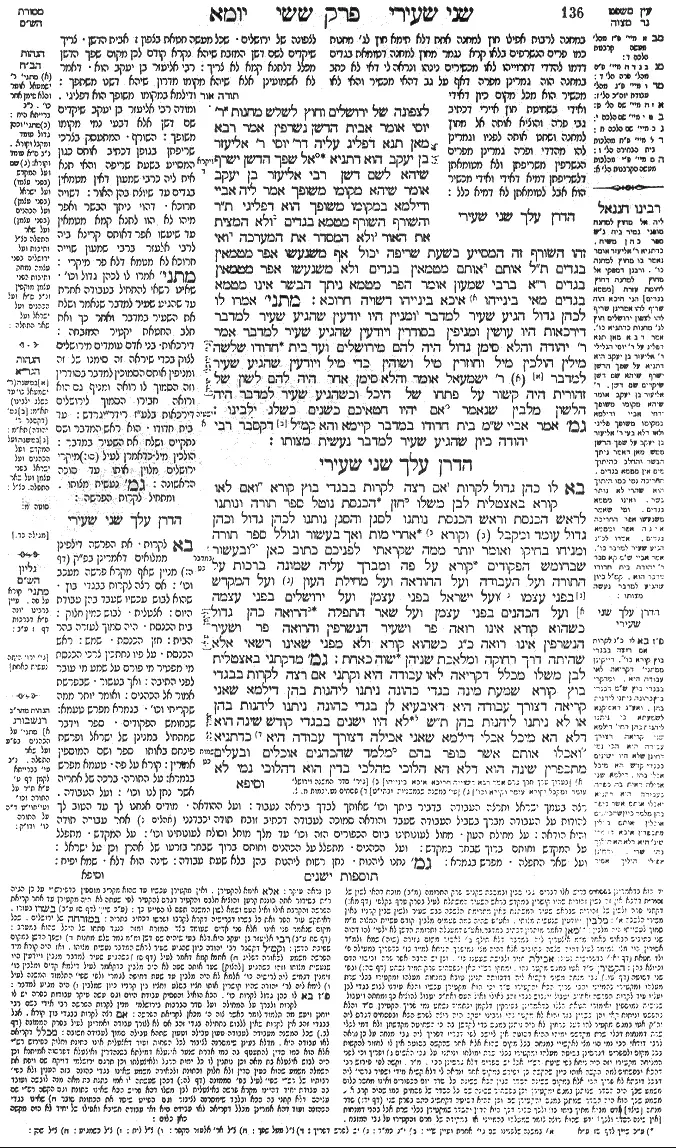
Yoma 68b - Guemara
לצפונה של ירושלים וחוץ לשלש מחנות ר' יוסי אומר אבית הדשן נשרפין אמר רבא מאן תנא דפליג עליה דר' יוסי ר' אליעזר בן יעקב הוא דתניא (ויקרא ד, יב) אל שפך הדשן ישרף שיהא לשם דשן רבי אליעזר בן יעקב אומר שיהא מקומו משופך אמר ליה אביי ודילמא במקומו משופך הוא דפליגי ת"ר והשורף השורף מטמא בגדים ולא המצית את האור ולא המסדר את המערכה ואי זהו השורף זה המסייע בשעת שריפה יכול אף משנעשו אפר מטמאין בגדים ת"ל אותם אותם מטמאין בגדים ולא משנעשו אפר מטמאין בגדים ר"א ברבי שמעון אומר הפר מטמא ניתך הבשר אינו מטמא בגדים מאי בינייהו איכא בינייהו דשויה חרוכא מתני׳ אמרו לו לכהן גדול הגיע שעיר למדבר ומניין היו יודעין שהגיע שעיר למדבר דירכאות היו עושין ומניפין בסודרין ויודעין שהגיע שעיר למדבר אמר ר' יהודה והלא סימן גדול היה להם מירושלים ועד בית חדודו שלשה מילין הולכין מיל וחוזרין מיל ושוהין כדי מיל ויודעין שהגיע שעיר למדבר ר' ישמעאל אומר והלא סימן אחר היה להם לשון של זהורית היה קשור על פתחו של היכל וכשהגיע שעיר למדבר היה הלשון מלבין שנאמר (ישעיהו א, יח) אם יהיו חטאיכם כשנים כשלג ילבינו גמ׳ אמר אביי ש"מ בית חדודו במדבר קיימא והא קמ"ל דקסבר רבי יהודה כיון שהגיע שעיר למדבר נעשית מצותו
הדרן עלך שני שעירי
מתני׳ בא לו כהן גדול לקרות אם רצה לקרות בבגדי בוץ קורא ואם לאו קורא באצטלית לבן משלו חזן הכנסת נוטל ספר תורה ונותנו לראש הכנסת וראש הכנסת נותנו לסגן והסגן נותנו לכהן גדול וכהן גדול עומד ומקבל וקורא אחרי מות ואך בעשור וגולל ספר תורה ומניחו בחיקו ואומר יותר ממה שקראתי לפניכם כתוב כאן (במדבר כט, ז) ובעשור שבחומש הפקודים קורא על פה ומברך עליה שמונה ברכות על התורה ועל העבודה ועל ההודאה ועל מחילת העון ועל המקדש בפני עצמו ועל ישראל בפני עצמן ועל ירושלים בפני עצמה ועל הכהנים בפני עצמן ועל שאר התפלה הרואה כהן גדול כשהוא קורא אינו רואה פר ושעיר הנשרפין והרואה פר ושעיר הנשרפין אינו רואה כ"ג כשהוא קורא ולא מפני שאינו רשאי אלא שהיתה דרך רחוקה ומלאכת שניהן שוה כאחת גמ׳ מדקתני באצטלית לבן משלו מכלל דקריאה לאו עבודה היא וקתני אם רצה לקרות בבגדי בוץ קורא שמעת מינה בגדי כהונה ניתנו ליהנות בהן דילמא שאני קריאה דצורך עבודה היא דאיבעיא לן בגדי כהונה ניתנו ליהנות בהן או לא ניתנו ליהנות בהן ת"ש לא היו ישנים בבגדי קודש שינה הוא דלא הא מיכל אכלי דילמא שאני אכילה דצורך עבודה היא כדתניא (שמות כט, לג) ואכלו אותם אשר כופר בהם מלמד שהכהנים אוכלים ובעלים מתכפרין שינה הוא דלא הא הלוכי מהלכי בדין הוא דהלוכי נמי לא
Comments from Rashi on Masechet Yoma Page 68b
לצפונה של ירושלים . שכל מעשה חטאת בצפון: אבית הדשן . צריך שיקדים לשם דשן המזבח שיהא נקרא קודם לכן מקום שפך הדשן מכלל דלתנא קמא לא צריך: רבי אליעזר בן יעקב הוא . דאמר לא אשמועינן אלא שיהא מקומו מדרון שיהא דשנו משתפך: ודילמא במקומו משופך הוא דפליגי . ומודה רבי אליעזר בן יעקב שיקדים שם דשן אלא דבעי נמי מקומו משופך: השורף . המתעסק בצרכי שריפתן בגופן דכתיב אותם כגון המסייע בשעת שריפה והאי תנא אית ליה כרבי שמעון דאין מטמאין בגדים עד שיוצת בהן האור: דשויה חרוכא . דהוי ניתך הבשר ואפר מיהו לא הוו לתנא קמא מטמאין עד שיעשו אפר דאותם קרינא ביה לרבי אלעזר ברבי שמעון שוייה חרוכא לא מטמא דלא פר מיקרי: מתני' אמרו לו לכהן גדול וכו' . שאינו רשאי להתחיל בעבודה אחרת עד שהגיע שעיר למדבר שנאמר ושלח את השעיר במדבר ואחר כך ואת חלב החטאת יקטיר המזבחה: דירכאות . בני אדם עומדים מירושלים לצוק בכדי שיראה זה סימנו של זה ומניפין אותם הסמוכין למדבר בסודרין וזה הסמוך לו רואה ומניף גם הוא ורואה חבירו הסמוך לירושלים דירכאות בלע"ז רידר"יגרדש: עד בית חדודו . הוא ראש המדבר ושם נתקיים ושלח את השעיר במדבר: הולכין מיל . כדאמרן לעיל (יומא סו:) מיקירי ירושלים מלוין אותו עד סוכה הראשונה: גמ' נעשית מצותו . ומתחיל לקרות הפרשה: בא לקרות . את הפרשה דילפינן ממלואים דאמרינן בפ"ק (דף ה:) מניין שאף מקרא פרשה מעכב וכו': אם רצה לקרות בבגדי בוץ . שהוא לבוש עכשיו שעבד בהן עבודת היום: אצטלית . לבוש כמין חלוק: בית הכנסת . היה סמוך לעזרה בהר הבית: חזן הכנסת . שמש: ראש הכנסת . על פיו נחתכין צרכי הכנסת מי מפטיר מי פורס על שמע מי עובר לפני התיבה: ואך בעשור . שבפרשת אמור אל הכהנים: שבחומש הפקודים . ספר וידבר שמתחיל במנינן של ישראל ופרשת פינחס באותו ספר ושם המוספין אמורין: קורא על פה . טעמא מפרש בגמרא: ואומר יותר ממה שקריתי וכו' . בגמרא מפרש טעמא: על התורה . ברכה של אחריה אשר נתן לנו וכו': ועל העבודה . רצה בעמך ישראל ותרצה העבודה בדביר ביתך וכו' שאותך לבדך ביראה נעבוד: ועל ההודאה . מודים אנחנו לך עד הטוב לך להודות על העבודה מברך בשביל העבודה שעבד והודאה סמוכה לעבודה דכתיב זובח תודה יכבדנני (תהלים נ) אחר עבודה תודה והיא הודאה: על מחילת העון . מחול לעונותינו ביום הכפורים הזה וכו' עד מלך מוחל וסולח לעונותינו וכו': על המקדש . מתפלל על המקדש וחותם ברוך שבחר במקדש: ועל הכהנים . מתפלל על הכהנים וחותם ברוך שבחר בזרעו של אהרן וכן על ישראל: ועל שאר התפלה . מפרש בגמרא: גמ' נתנו ליהנות . נתן רשות ליהנות בהן בלא שעת עבודה: שינה הוא דלא . שמא יפיח:
Yoma 68b - Mishnah translated into english
North of Jerusalem, and outside of three camps. Rabbi Yosei says: They are burned in the place of the ashes.
Rava said: Who is the tanna who disagrees with Rabbi Yosei on this issue? It is Rabbi Eliezer ben Ya’akov, as it was taught in a baraita with regard to the verse: “Where the ashes are poured out [shefekh hadeshen] shall it be burned” (Leviticus 4:12), which means that there shall already be ash there in that place, so that it is known as the ash heap even before this animal is burned there. Rabbi Eliezer ben Ya’akov says: This verse indicates that its place should be slanted [meshupakh] so that ash that is deposited there will roll downhill. Rava understood that whereas Rabbi Yosei requires that there already be ash present when the bull is burned, Rabbi Eliezer ben Ya’akov does not.
Abaye said to him: There is no proof from here, as perhaps they disagree only about whether the place must be slanted. Rabbi Eliezer ben Ya’akov may agree there should be ash there to begin with, but he adds that the place must also be slanted. Therefore, there is no proof to support Rava’s statement.
The Sages taught: It states: “And he who burns them shall wash his garments” (Leviticus 16:28), to indicate that only the garments of the one who burns the bull and goat of Yom Kippur are rendered impure, but not the garments of the one who kindles the fire, and not the garments of the one who arranges the pile of wood. And who is the one who burns? It is the one who assists at the actual time of burning.
One might have thought that garments would be rendered impure even after the bull and goat have become ash. Therefore, the verse states: Them, to indicate that they themselves, the bull and goat of Yom Kippur, render garments impure, but they do not render garments impure once they become ash. Rabbi Elazar, son of Rabbi Shimon, says: The bull causes ritual impurity before it is burned, but once the flesh is burned it no longer renders garments impure.
The Gemara asks: What is the practical difference between the opinion of the first tanna and the opinion of Rabbi Elazar, son of Rabbi Shimon? The Gemara answers: There is a difference between them when he turned it into a charred mass and the form of the animal has already become distorted but has not actually become ash. According to Rabbi Elazar, son of Rabbi Shimon, it no longer causes impurity.
MISHNA: They said to the High Priest: The goat has reached the wilderness. And how did they know in the Temple that the goat reached the wilderness? They would build platforms [dirkaot] all along the way and people would stand on them and wave scarves [sudarin] to signal when the goat arrived. And therefore they knew that the goat reached the wilderness.
Rabbi Yehuda said: Why did they need these platforms? Didn’t they already have a reliable indicator? From Jerusalem to Beit Ḥiddudo, the edge of the wilderness, where the mitzva of dispatching the goat was performed, was a distance of three mil. Since the nobles of Jerusalem walked a mil to escort the dispatcher and returned a mil, and waited the time equivalent to the time it takes to walk a mil, they knew that the goat reached the wilderness. There was no need for the platforms.
Rabbi Yishmael says: Didn’t they have a different indicator? There was a strip of crimson tied to the entrance to the Sanctuary, and when the goat reached the wilderness and the mitzva was fulfilled the strip would turn white, as it is stated: “Though your sins be as scarlet, they will become white as snow” (Isaiah 1:18).
GEMARA: Abaye said: Learn from this that Beit Ḥiddudo is located in the wilderness, and this comes to teach us that Rabbi Yehuda holds that once the goat has reached the wilderness, its mitzva is complete even before it is pushed off the cliff, and there is no need to wait any longer.
MISHNA: The High Priest came to read the Torah. If he wished to read the Torah while still dressed in the fine linen garments, i.e., the priestly vestments he wore during the previous service, he may read wearing them; and if not he is permitted to read in a white robe of his own, which is not a priestly vestment.
The synagogue attendant takes a Torah scroll and gives it to the head of the synagogue that stood on the Temple Mount; and the head of the synagogue gives it to the deputy High Priest, and the Deputy gives it to the High Priest, and the High Priest stands and receives the scroll from his hands. And he reads from the scroll the Torah portion beginning with the verse: “After the death” (Leviticus 16:1) and the portion beginning with the verse: “But on the tenth” (Leviticus 23:26), and furls the Torah scroll and places it on his bosom and says: More than what I have read before you is written here. The Torah portion beginning with the verse: “And on the tenth,” from the book of Numbers (29:7), he then reads by heart.
And he recites after the reading the following eight blessings:
Concerning the Torah: Who has given us the Torah of truth;
and concerning the Temple service: Find favor in Your people Israel and accept the service in Your most holy House... for You alone do we serve with reverence;
and concerning thanksgiving: We give thanks to You;
and concerning pardon of iniquity: Pardon our iniquities on this Yom Kippur;
and concerning the Temple in and of itself, which concludes: Blessed…Who chose the Temple;
and concerning the Jewish People in and of itself, which concludes: Blessed…Who chose Israel;
and concerning Jerusalem in and of itself, which concludes: Blessed…Who chose Jerusalem;
and concerning the priests in and of themselves, which concludes: Blessed…Who chose the priests;
and concerning the rest of the prayer, which concludes: Blessed…Who listens to prayer.
The Mishna comments: One who sees the High Priest reading the Torah does not see the bull and goat that are burned; and one who sees the bull and goat that are burned does not see the High Priest reading the Torah. The Mishna explains: And this is not due to the fact that one is not permitted to see both, but because there was a distant path between them, and the performance of both of them is undertaken simultaneously.
GEMARA: From the fact that it is taught in the mishna that the High Priest is permitted to read in a white robe of his own, one may derive by inference that the reading of the Torah is not classified as a service, which would have required that he wear priestly vestments.
But the mishna also teaches: If he wished to read the Torah while still dressed in the fine linen garments, he may read wearing them. This is true even though they are consecrated as priestly vestments and the reading of the Torah is not a sacred service. Therefore, the Gemara suggests: Learn from this that it is permitted to derive benefit from priestly vestments, i.e., even when not engaged in performing a service, a priest may derive benefit from the priestly vestments, for example, by wearing them for his own needs. If so, this would settle a long-standing unresolved dilemma concerning this issue. The Gemara rejects this suggestion: A proof may not be adduced from here because perhaps reading from the Torah is different, since it is for the purpose of the service; therefore, even though it is not a true service in its own right, it is nevertheless permitted for the High Priest to continue wearing the priestly vestments.
As the dilemma was raised before us: Is it permitted to derive benefit from priestly vestments, or is it not permitted to derive benefit from priestly vestments?
Come and hear a resolution to this dilemma based on a mishna: The priests would not sleep in the sacred vestments out of concern they might pass wind while sleeping. One may infer: It is specifically sleep which is not permitted, but they may eat while wearing the priestly vestments, even though eating is not a service. This should prove that it is permitted to derive personal benefit from wearing priestly vestments. The Gemara rejects this proof: A proof may not be adduced from here because perhaps eating is different, since it is for the purpose of the Temple service. As it was taught in a baraita that the verse states: “And they shall eat those things with which atonement was made” (Exodus 29:33), which teaches that the priests eat the meat of the offerings and the owners of those offerings thereby achieve atonement.
The Gemara suggests making a different inference from that mishna cited above: One may infer that it is specifically sleep which is not permitted, but they may walk while wearing the sacred vestments even when not engaged in a service. This should prove that it is permitted to derive benefit from wearing priestly vestments. The Gemara rejects this proof: It is incorrect to make this inference since by right the mishna should have stated that walking in priestly vestments is also not permitted.
Traduction : The William Davidson digital edition of the Koren Noé Talmud, with commentary by Rabbi Adin Even-Israel Steinsaltz.