 Talmud Bavli
The learning on the whole site is dedicated : L'ilui Nishmat יוסף בן מושה
The learning on the whole site is dedicated : For the success of Elyahou ben H'anna & family
The learning on the whole site is dedicated : L'ilui Nishmat Yaakov ben Myriam
Avodah Zarah 75b : Youtube
Daf TubeYoutube
2 video classes :
Avodah Zarah Page 75b
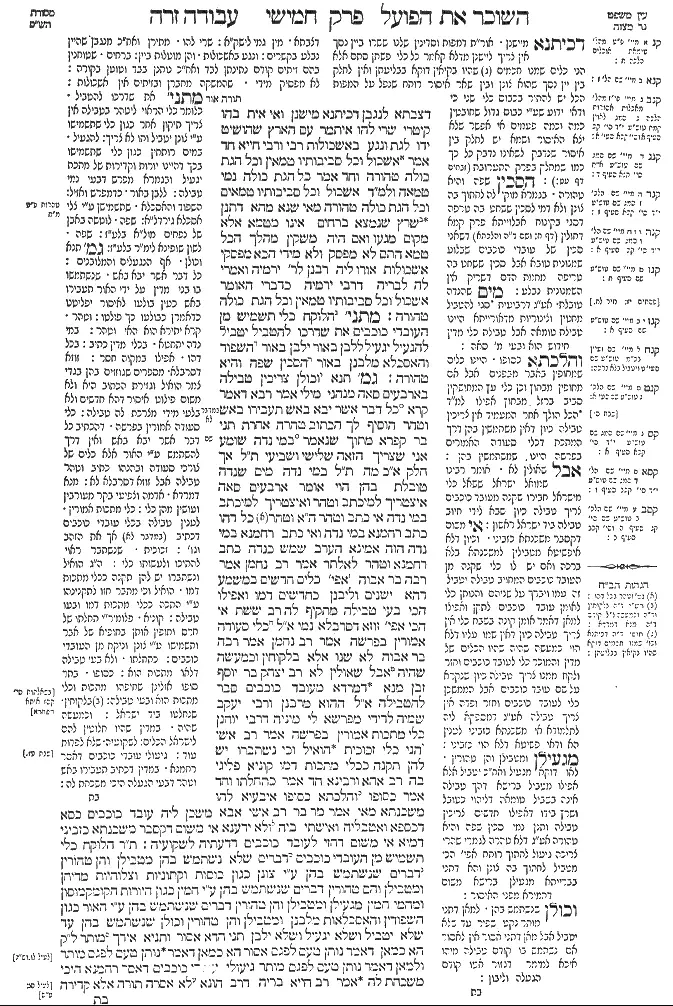
Avodah Zarah 75b - Guemara
דצבתא לנגבן דכיתנא מישנן ואי אית בהו קיטרי שרי להו איתמר עם הארץ שהושיט ידו לגת ונגע באשכולות רבי ורבי חייא חד אמר אשכול וכל סביבותיו טמאין וכל הגת כולה טהורה וחד אמר כל הגת כולה נמי טמאה ולמ"ד אשכול וכל סביבותיו טמאים וכל הגת כולה טהורה מאי שנא מהא דתנן שרץ שנמצא ברחים אינו מטמא אלא מקום מגעו ואם היה משקין מהלך הכל טמא התם לא מפסק ולא מידי הכא מפסקי אשכולות אורו ליה רבנן לר' ירמיה ואמרי לה לבריה דרבי ירמיה כדברי האומר אשכול וכל סביבותיו טמאין וכל הגת כולה טהורה:
מתני׳ הלוקח כלי תשמיש מן העובדי כוכבים את שדרכו להטביל יטביל להגעיל יגעיל ללבן באור ילבן באור השפוד והאסכלא מלבנן באור הסכין שפה והיא טהורה:
גמ׳ תנא וכולן צריכין טבילה בארבעים סאה מנהני מילי אמר רבא דאמר קרא (במדבר לא, כג) כל דבר אשר יבא באש תעבירו באש וטהר הוסיף לך הכתוב טהרה אחרת תני בר קפרא מתוך שנאמר (במדבר לא, כג) במי נדה שומע אני שצריך הזאה שלישי ושביעי ת"ל אך חלק א"כ מה ת"ל במי נדה מים שנדה טובלת בהן הוי אומר ארבעים סאה איצטריך למיכתב וטהר ואיצטריך למיכתב במי נדה אי כתב וטהר ה"א וטהר כל דהו כתב רחמנא במי נדה ואי כתב רחמנא במי נדה הוה אמינא הערב שמש כנדה כתב רחמנא וטהר לאלתר אמר רב נחמן אמר רבה בר אבוה אפי' כלים חדשים במשמע דהא ישנים וליבנן כחדשים דמו ואפילו הכי בעי טבילה מתקיף לה רב ששת אי הכי אפי' זוזא דסרבלא נמי א"ל כלי סעודה אמורין בפרשה אמר רב נחמן אמר רבה בר אבוה לא שנו אלא בלקוחין וכמעשה שהיה אבל שאולין לא רב יצחק בר יוסף זבן מנא דמרדא מעובד כוכבים סבר להטבילה א"ל ההוא מרבנן ורבי יעקב שמיה לדידי מפרשא לי מיניה דרבי יוחנן כלי מתכות אמורין בפרשה אמר רב אשי הני כלי זכוכית הואיל וכי נשתברו יש להן תקנה ככלי מתכות דמו קוניא פליגי בה רב אחא ורבינא חד אמר כתחלתו וחד אמר כסופו והלכתא כסופו איבעיא להו משכנתא מאי אמר מר בר רב אשי אבא משכן ליה עובד כוכבים כסא דכספא ואטבליה ואישתי ביה ולא ידענא אי משום דקסבר משכנתא כזביני דמיא אי משום דחזי לעובד כוכבים דדעתיה לשקועיה:
ת"ר הלוקח כלי תשמיש מן העובדי כוכבים דברים שלא נשתמש בהן מטבילן והן טהורין דברים שנשתמש בהן ע"י צונן כגון כוסות וקתוניות וצלוחיות מדיחן ומטבילן והם טהורין דברים שנשתמש בהן ע"י חמין כגון היורות הקומקמוסון ומחמי חמין מגעילן ומטבילן והן טהורין דברים שנשתמש בהן ע"י האור כגון השפודין והאסכלאות מלבנן ומטבילן והן טהורין וכולן שנשתמש בהן עד שלא יטביל ושלא יגעיל ושלא ילבן תני חדא אסור ותניא אידך מותר ל"ק הא כמאן דאמר נותן טעם לפגם אסור הא כמאן דאמר נותן טעם לפגם מותר ולמאן דאמר נותן טעם לפגם מותר גיעולי עובדי כוכבים דאסר רחמנא היכי משכחת לה אמר רב חייא בריה דרב הונא לא אסרה תורה אלא קדירה
Comments from Rashi on Masechet Avodah Zarah Page 75b
דצבתא . מין גמי לישק"א: שרי להו . מתירן ואח"כ מנגבן שהיין נבלע בקשרים: ונגע באשכולות . והן מוטלות ביין: ברחים . שטוחנין בהם זיתים קודם נתינתן לבד ואח"כ נותנן בבד וטוען בקורה: לא מפסיק מידי . שהמשקה מחברן ובזיתים אין אשכלות: מתני' את שדרכו להטביל . כלומר כלי הראוי ליטהר בטבילה אין צריך תיקון אחר כגון כלי שתשמישו ע"י צונן יטביל ותו לא צריך: להגעיל . במים רותחין כגון כלי שתשמישו בכך דהיינו יורות וקדירות של מתכת יגעיל. ובגמרא מפרש דבעי נמי טבילה: ללבן באור . כדמפרש ואזיל: השפוד והאסכלא . שתשמישן ע"י צלי. אסכלא גרדיל"א: שפה . לוטשה באבן של נפחים מול"א בלע"ז: שפה . לשון שופינא לימ"ר בלע"ז: גמ' תנא וכולן . אף הנגעלים והמלובנים: כל דבר אשר יבא באש . שנשתמשו בו בני מדין על ידי האור תעבירו באש כעין בולעו לאיסור יפליטנו כדאמרן כבולעו כך פולטו: וטהר . קרא יתירא הוא האי וטהר: במי נדה יתחטא . בכלי מדין כתיב: בכל דהו . אפילו במקוה חסר: זוזא דסרבלא . מספרים שגוזזים בהן בגדי צמר הואיל וגזירת הכתוב היא ולא משום פילוט איסור דהא חדשים ולא בלעי מידי מצרכת לה טבילה: כלי סעודה אמורין בפרשה . דהכתיב כל דבר אשר יבא באש ואין דרך להשתמש ע"י האור אלא כלים של צורכי סעודה ובהנהו כתיב וטהר טבילה אבל זוזא דסרבלא לא: בלקוחין . שנחלטו ביד ישראל: וכמעשה שהיה . במדין שהיו חלוטין להם לישראל הכלים: מנא דמרדא . אדמה וצפיעי בקר מעורבין ועושין מהן כלי: כלי מתכות אמורין . לענין טבילה בכלי עובדי כוכבים דכתיב (במדבר לא) אך את הזהב וגו': זכוכית . שנשתבר ראוי להתיכו ולעשותו כלי: ה"ג הואיל ונשתברו יש להן תקנה ככלי מתכות דמו . הואיל וכי מתבר חזו לתקנינהו ע"י התכה ככלי מתכות דמו ובעו טבילה: קוניא . פלומיר"י תחלתו של חרס וחופין אותן בחופיא של אבר ותשמישו ע"י צונן וניקח מן העובדי כוכבים: כתחלתו . ולא בעי טבילה דלאו מתכות הוא: כסופו . בתר סופו אזלינן שחיפהו מתכות וכלי מתכות הוא ובעי טבילה: לשקועיה . שלא לפדות עוד: גיעולי עובדי כוכבים דאסר רחמנא . במדין דכתיב תעבירו באש וטהר דבעי הגעלה היכי משכחת לה:
Comments from Tosafot - Avodah Zarah 75b
דכיתנא מיישנן . אור"ת דמפות וסדינין שלנו ששרו ביין נסך אין צריך ליישנן מדלא קאמר כל כלי פשתן סתם אלא הני כלים שמנו חכמים שהיו בקיאין דוקא בבליעתן ואין לחלק בין יין נסך שהוא צונן ובין שאר איסור רותח שנפל על המפות הכל יש להתיר בכבוס כלי שני כי ודאי ידוע שע"י כבוס גדול שחובטין כמה וכמה פעמים אי אפשר שלא יצא האיסור ושמא יש לחלק בין איסור שנדבק לשאינו נדבק כל כך כמו שמחלק בפרק התערובת (זבחים דף עט:): הסכין שפה והיא טהורה . בגמרא מוקי לה לחתוך בה צונן ולא דמי לסכין ששחט בה טרפה דסגי בקינוח אבלוייתא פרק קמא דחולין (דף ח: ושם ד"ה והלכתא) דשאני סכין של עובדי כוכבים שבלוע שמנונית טובא אבל סכין ששחט בה טריפה מחמת הדם דשריק אין השמנונית נבלע: מים שהנדה טובלת . אע"ג דרביעית סגי להטביל מחטין וצינוריות מדאורייתא היינו טבילת טומאה אבל טבילת כלי מדין חידוש הוא ובעי מ' סאה: אבל שאולין לא . אומר רבינו שמואל ישראל ששאל כלי מישראל חבירו שקנה מעובד כוכבים צריך טבילה כיון שבא לידי חיוב טבילה ביד ישראל ראשון: והלכתא כסופו . היינו כלים שמחופין באבר מבפנים אבל אם מחופין מבחוץ וכן כלי עץ המחושקין סביב ברזל מבחוץ אפילו למ"ד הכל הולך אחר המעמיד אין צריכין טבילה כיון דאין משתמשין בהן דרך המתכת דכלי סעודה האמורים בפרשה היינו שמשתמשין בהן: אי משום דקסבר משכנתא כזביני . וכיון דלא איפשיטא מטבילין למשכנתא בלא ברכה ואם יש לו כלי שקנה מן העובד כוכבים המחויב טבילה יטביל זה עמו ויברך על שניהם והנותן כלי לאומן עובד כוכבים לתקן ואפילו למאן דאמר אומן קונה בשבח כלי אין צריך טבילה כיון דאין שמו עליו דלא הוי כמעשה שהיה שהיו הכלים של מדין והמוכר כלי לעובד כוכבים וחזר ולקח ממנו צריך טבילה כיון שנקרא על שם עובד כוכבים אבל הממשכן כלי לעובד כוכבים וחזר ופדה אין צריך טבילה אע"ג דמספקא ליה לתלמודא אי משכנתא כזביני לענין הא ודאי פשיטא דלא הוי כזביני: מגעילן ומטבילן והן טהורין . לאו דוקא מגעיל ואח"כ יטביל אלא אפילו מטביל ברישא דהך טבילה אינה בשביל טומאה דליהוי כטובל ושרץ בידו דאפילו חדשים צריכין טבילה ותנן נמי סכין שפה והיא טהורה אע"ג דלא טהרה לגמרי שהרי צריכה גיעול לחתוך רותח אפי' הכי מטביל לחתוך בה צונן והא דתני בברייתא מגעילן ברישא משום דחמירא מפני האיסור: וכולן שנשתמש בהן . למאן דתני מותר נקט שפיר עד שלא יטביל אבל מאן דתני אסור אין לאסור אם נשתמש בו קודם טבילה מיהו איכא למימר דגזור אטו קודם הגעלה וליבון:
Avodah Zarah 75b - Mishnah translated into english
With regard to those that are plaited from tzavta, one must cleanse them with ashes and water. With regard to those that are plaited from flax, one must leave them dormant. And if they have knots, one must undo them.
§ The Gemara discusses another aspect of the purity of a winepress. It was stated: In the case of one who is unreliable with regard to ritual impurity [am ha’aretz] who reached his hand into the winepress and touched grape clusters that were lying in the wine, Rabbi Yehuda HaNasi and Rabbi Ḥiyya disagree. One says that the cluster he touched and all its surroundings are rendered impure, but the rest of the entire winepress is pure, and one says that the rest of the entire winepress is also rendered impure, as the entire winepress is considered connected due to the wine in it.
The Gemara asks: And according to the one who says that the cluster and all its surroundings are impure but the rest of the entire winepress is pure, in what way is this case different from that which we learned in a mishna (Teharot 9:8): The carcass of a creeping animal that was found in an oil press transmits impurity to the place it touched alone, but if there was liquid flowing in the mill, it is all rendered impure? Why is it not the halakha in the case of the winepress as well that the entire winepress is impure due to the liquid in it?
The Gemara answers: There, in the case of the oil press, there is nothing that interrupts the flow of the liquid, and therefore the liquid connects everything to render it impure. Here, the clusters of grapes interrupt the flow of the wine, and so there is no uninterrupted connection between all of the wine in the winepress.
The Sages taught Rabbi Yirmeya, and some say they taught the son of Rabbi Yirmeya, in accordance with the statement of the one who says: The cluster and all its surroundings are impure, but the entire winepress is pure.
MISHNA: One who purchases cooking utensils from the gentiles must prepare them for use by Jews in the following manner: With regard to those utensils whose manner of preparation is to immerse them in a ritual bath, as they require no further preparation, he must immerse them accordingly. With regard to those utensils whose manner of preparation is to purge them with boiling water, as those utensils are used with boiling water, e.g., pots, he must purge them accordingly. With regard to those whose manner of preparation is to heat until white-hot in the fire, as they are used for grilling, he must heat them until white-hot in the fire. Therefore, with regard to the spit [hashappud] and the grill [veha’askela], he must heat them until white-hot in the fire. With regard to the knife, he must polish it and it is rendered pure.
GEMARA: The Sages taught: And they all require immersion in forty se’a of water, including utensils that must first be purged in boiling water or heated until white-hot. The Gemara asks: From where is this matter derived? Rava says: It is derived from that which the verse states with regard to utensils captured in the battle against the Midianites: “Anything that may tolerate the fire, you shall make to go through the fire, and it shall be pure” (Numbers 31:23). By stating: “And it shall be pure,” the verse added to the process another required act of purification in addition to heating the utensil with fire, which is understood to be immersion.
Bar Kappara teaches an additional source for this halakha: From that which is stated in the continuation of the verse: “Nevertheless it shall be purified with the water of sprinkling [nidda],” I would derive that the utensils require sprinkling of purification water on the third and the seventh day of their purification process, as is the halakha in the case of one who is impure with impurity imparted by a corpse. Therefore, the verse states “nevertheless,” indicating that the Torah makes a distinction in this case, and that sprinkling on the third and seventh day are not required.
If that is so, what is the meaning when the verse states: “With the water of sprinkling [nidda]”? Clearly, the term nidda is referring not to sprinkling but to a menstruating woman, who is also called a nidda. Accordingly, the verse means that the utensils must be immersed in water in which a menstruating woman can immerse in order to become pure; and you must say that this is referring to a ritual bath that contains forty se’a of water.
The Gemara explains that both sources for this halakha are necessary: It was necessary for the Torah to write “and it shall be pure,” and it was necessary for the Torah to write “with the water of sprinkling,” because if the Torah had written only “and it shall be pure,” I would say that the verse means: “And it shall be pure” by immersion in any amount of water. Therefore the Merciful One writes: “With the water of sprinkling.”
And if the Merciful One had written only “with the water of sprinkling,” I would say that the process requires the setting of the sun, as is the halakha with regard to a menstruating woman, whose immersion renders her pure only after sunset. Therefore, the Merciful One writes: “And it shall be pure,” indicating that the utensils can be purified immediately.
§ Rav Naḥman says that Rabba bar Avuh says: Even new utensils that were never used that are bought from gentiles are meant to be included in the requirement of immersion, as old utensils that one heated until white-hot are similar to new utensils, as they do not contain the flavor of non-kosher food, and nevertheless they require immersion. Rav Sheshet objects to this: If so, then even scissors for cutting clothing [zuza desarbela] should require immersion as well. Rav Naḥman said to him: Only utensils used in the preparation of meals are mentioned in the passage in the Torah, and only those require immersion.
Rav Naḥman says that Rabba bar Avuh says: The Sages taught this only with regard to utensils that were purchased from gentiles and are therefore comparable to the utensils mentioned in the incident that was related in the passage; but the requirement does not apply to borrowed utensils.
Rav Yitzḥak bar Yosef bought a utensil of marda, a mixture of earth and dung, from a gentile. He thought he was required to immerse it. One of the Sages, and Rabbi Ya’akov was his name, said to him: It was explained to me personally by Rabbi Yoḥanan himself that this requirement applies to metal utensils alone, as those are the utensils mentioned in the passage.
Rav Ashi says: With regard to those glass utensils, since when broken they can be fixed, i.e., remade, if one melts them down and fashions the material into new utensils, they are similar to metal utensils and also require immersion. With regard to lead-glazed earthenware utensils, Rav Aḥa and Ravina disagree. One says: The halakha is in accordance with its initial state; since it was initially an earthenware utensil, it does not require immersion. And one says: The halakha is in accordance with its ultimate state; since it is coated with metal, it requires immersion. The Gemara concludes: And the halakha is in accordance with its ultimate state.
A dilemma was raised before the Sages: If a Jew is holding a gentile’s utensil as collateral, what is the halakha? Is he required to immerse it or not? Mar bar Rav Ashi said: A gentile once gave my father a silver goblet as collateral, and he immersed it and drank from it. But I do not know whether this was because he maintained that possessing a utensil as collateral is considered like a purchase, or because he saw that the gentile’s intention was to leave it with him, and therefore he considered it as his own.
§ The Sages taught: One who purchases utensils from the gentiles must prepare them for use in the following manner: With regard to items that the gentile did not use, one immerses them, and they are pure. With regard to items that the gentile used for cold food or drink, such as cups and jugs and flasks, one rinses them and immerses them, and they are pure. With regard to items that the gentile used for hot food or drink, such as large pots, small kettles [hakumkamusun], and samovars, one purges them with boiling water and immerses them, and they are pure. With regard to items that the gentile used with fire, such as spits and grills, one heats them until white-hot and immerses them, and they are pure.
And with regard to all utensils that one used before immersing and purging and heating them until white-hot, it is taught in one baraita that the food prepared with them is forbidden, and it is taught in another baraita that the food prepared with them is permitted.
The Gemara explains: This contradiction is not difficult. This ruling, that the food prepared with such utensils is forbidden, is according to the one who says that if a forbidden substance imparts flavor to a permitted food to the detriment of the mixture, the permitted food is forbidden. That ruling, that the food prepared with such utensils is permitted, is according to the one who says that if a forbidden substance imparts flavor to a permitted food to the detriment of the mixture, it remains permitted. Here too, since the flavor of non-kosher food imparted by the utensil detracts from the flavor of the food, such food is permitted.
The Gemara asks: But according to the one who says that that if a forbidden substance imparts flavor to a permitted food to the detriment of the mixture then the mixture is permitted, with regard to utensils of gentiles that require purging, which the Merciful One renders forbidden until they are purged, how can you find these circumstances when it is actually prohibited to use the utensils until they are purged? Since utensils impart a detrimental flavor to food that is cooked in them, there seems to be no reason not to use utensils of gentiles without purging them.
Rav Ḥiyya, son of Rav Huna, says: The Torah renders forbidden only a pot
Traduction : The William Davidson digital edition of the Koren Noé Talmud, with commentary by Rabbi Adin Even-Israel Steinsaltz.