 Talmud Bavli
The learning on the whole site is dedicated : L'ilui Nishmat Yechayahou ben Moche
The learning on the whole site is dedicated : L'ilui Nishmat Rav Chlomo Ben Jamilla
The learning on the whole site is dedicated : L'ilui Nishmat Yaakov ben Myriam
Avodah Zarah 50b : Youtube
Daf TubeYoutube
2 video classes :
Avodah Zarah Page 50b
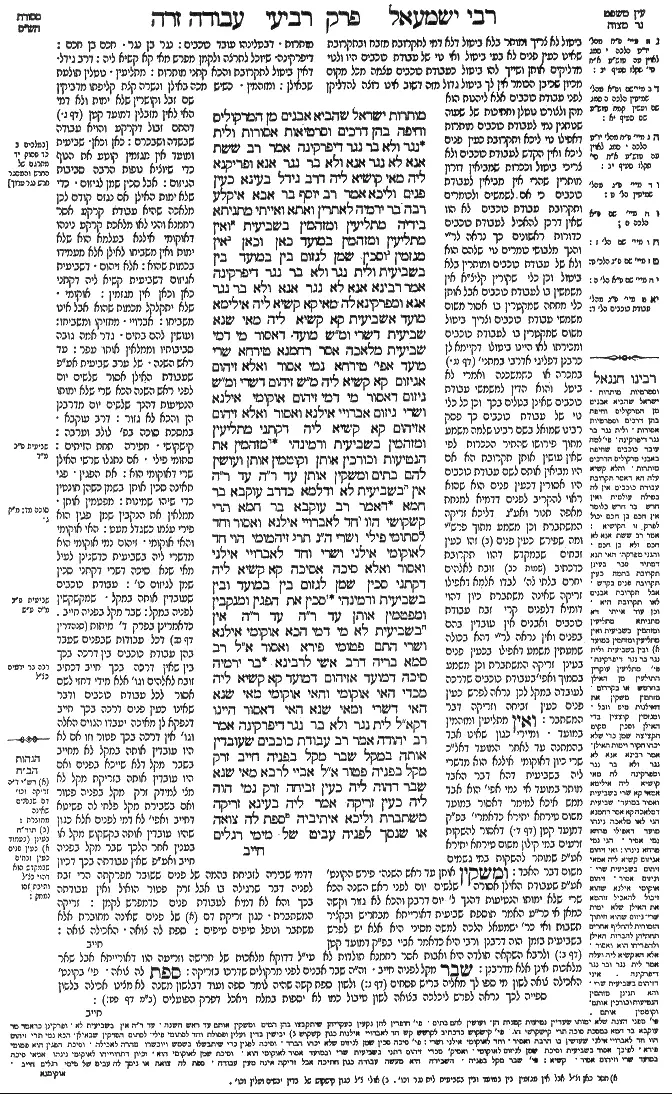
Avodah Zarah 50b - Guemara
מותרות ישראל שהביא אבנים מן המרקוליס וחיפה בהן דרכים וסרטיאות אסורות ולית נגר ולא בר נגר דיפרקינה אמר רב ששת אנא לא נגר אנא ולא בר נגר אנא ופריקנא ליה מאי קושיא ליה דרב גידל בעינא כעין פנים וליכא אמר רב יוסף בר אבא איקלע רבה בר ירמיה לאתרין ואתא ואייתי מתניתא בידיה מתליעין ומזהמין בשביעית ואין מתליעין ומזהמין במועד כאן וכאן אין מגזמין וסכין שמן לגזום בין במועד בין בשביעית ולית נגר ולא בר נגר דיפרקינה אמר רבינא אנא לא נגר אנא ולא בר נגר אנא ומפרקינא לה מאי קא קשיא ליה אילימא מועד אשביעית קא קשיא ליה מאי שנא שביעית דשרי ומ"ש מועד דאסור מי דמי שביעית מלאכה אסר רחמנא טירחא שרי מועד אפי' טירחא נמי אסור ואלא זיהום אגיזום קא קשיא ליה מ"ש זיהום דשרי ומ"ש גיזום דאסור מי דמי זיהום אוקומי אילנא ושרי גיזום אברויי אילנא ואסור ואלא זיהום אזיהום קא קשיא ליה דקתני מתליעין ומזהמין בשביעית ורמינהי מזהמין את הנטיעות וכורכין אותן וקוטמין אותן ועושין להם בתים ומשקין אותן עד ר"ה עד ר"ה אין בשביעית לא ודלמא כדרב עוקבא בר חמא דאמר רב עוקבא בר חמא תרי קשקושי הוו חד לאברויי אילנא ואסור וחד לסתומי פילי ושרי ה"נ תרי זיהמומי הוי חד לאוקומי אילני ושרי וחד לאברויי אילני ואסור ואלא סיכה אסיכה קא קשיא ליה דקתני סכין שמן לגזום בין במועד ובין בשביעית ורמינהי סכין את הפגין ומנקבין ומפטמין אותן עד ר"ה עד ר"ה אין בשביעית לא מי דמי הכא אוקומי אילנא ושרי התם פטומי פירא ואסור א"ל רב סמא בריה דרב אשי לרבינא בר ירמיה סיכה דמועד אזיהום דמועד קא קשיא ליה מכדי האי אוקומי והאי אוקומי מאי שנא האי דשרי ומאי שנא האי דאסור היינו דקא"ל לית נגר ולא בר נגר דיפרקינה אמר רב יהודה אמר רב עבודת כוכבים שעובדין אותה במקל שבר מקל בפניה חייב זרק מקל בפניה פטור א"ל אביי לרבא מאי שנא שבר דהוה ליה כעין זביחה זרק נמי הוה ליה כעין זריקה אמר ליה בעינא זריקה משתברת וליכא איתיביה ספת לה צואה או שנסך לפניה עביט של מימי רגלים
Comments from Rashi on Masechet Avodah Zarah Page 50b
מותרות . דבטלינהו עובד כוכבים: נגר בן נגר . חכם בן חכם: דיפרקינה . שיוכל לתרצה. ולקמן מפרש מאי קא קשיא ליה: דרב גידל . דאין ביטול לתקרובת והכא קתני מותרות: מתליעין . נוטלין תולעת שבאילן: ומזהמין . כשיש מכה באילן ונשרה קצת קליפתו מדביקין שם זבל וקושרין שלא ימות ולא דמי האי לאין מזבלין דמועד קטן (דף ג.) דהתם זבול דקרקע והויא עבודה שבשדה ושבכרם: כאן וכאן . שביעית ומועד אין מגזמין קוטע את הנוף כדי שיוציא נופות הרבה סביבות הגיזום: אבל סכין שמן לגיזום . כדי שלא ימות האילן אם נגזם קודם לכן. מלאכה שהיא עבודת קרקע אסר רחמנא והני לאו מלאכת קרקע נינהו דאוקומי אילנא בעלמא הוא שלא ימות ואין משביחו לאילן אלא מעמידו בכמות שהוא: אלא זיהום . דשביעית אגיזום דשביעית קשיא ליה דקתני כאן וכאן אין מגזמין: אוקומי . שלא יתקלקל מכמות שהוא אבל אינו משביחו: אברויי . מחזיקו ומשביחו: ועושין להם בתים . גדר אמה גובה סביבותיו וממלאין אותו עפר: עד ראש השנה . של ערב שביעית אע"פ שעבודת האילן אסור שלשים יום לפני ראש השנה הכא שרי שלא ימותו הנטיעות דהנך שלשים יום מדרבנן הן והכא לא גזור: דרב עוקבא . במסכת סוכה בפ' לולב וערבה: קישקושי . חפירה תחת הזיתים: סתומי פילי . אם נתגלו שרשי האילן שרי דאוקומי הוא: את הפגין . פגי תאינה סכין אותן בשמן כשהן חונטין כדי שיהו שמינות: מפטמין אותן . ממלאין את הנקבין שמן. פגין הוא פירי עצמו כשגדל מעט: האי אוקומי והאי אוקומי . זיהום נמי אוקומי הוא מדשרי ליה בשביעית כדשנינן לעיל מאי שנא סיכה דשרי דקתני סכין שמן לגיזום כו': עבודת כוכבים שעובדין אותה במקל . שמקשקשין לפניה במקל: שבר מקל בפניה חייב . כדאמרינן בפרק ד' מיתות (סנהדרין דף ס:) דכל עבודות שבפנים שעבד בהן עבודת כוכבים בין דרכה בכך בין שאין דרכה בכך חייב דכתיב זובח לאלהים וגו' אלא מידי דחזי לשם אסור לכל עבודת כוכבים ודבר שאינו כעין פנים דרכה בכך חייב דנפקא לן מאיכה יעבדו הגוים האלה וגו' אין דרכה בכך פטור וזו אם לא היו עובדין אותה במקל לא מחייב בשבר מקל דלא שייכא בפנים ואם היו עובדין אותה בזריקת מקל לא מצי למידק זרק מקל בפניה פטור ואם בשבירת מקל פלחי לה פשיטא דחייב ואפי' לא דמי לפנים אלא כגון שהיו עובדין אותה בקשקוש מקל או בענין אחר הלכך שבר מקל בפניה חייב ואע"פ שאין עבודתה בכך דכיון דדמי שבירה לזביחת בהמה של פנים ששובר מפרקתה הרי זבח לפניה דבר שרגילה בו אבל זרק פטור הואיל ואין עבודתה בכך והא לא דמיא לעבודת פנים כדמפרש לקמן: זריקה המשתברת . כגון זריקת דם של פנים שאינה מחוברת אלא משתבר ונופל טיפים טיפים: ספת לה צואה . האכילה צואה:
Comments from Tosafot - Avodah Zarah 50b
ואין מתליעין ומזהמין במועד . ומיירי כגון שאינו אבד בהמתנה עד לאחר המועד דאל"כ שרי כיון דאוקומי אילנא הוא מדשרי ליה בשביעית דהא דבר האבד מותר במועד אי נמי אפי' הוא אבד ממש איכא למימר דאסור במועד משום טירחא יתירא כדאמרי' בפ"ק דמועד קטן (דף ד.) דאסור להשקות זרעים במי קילון משום טירחא יתירא אע"פ שמותר להשקות במי גשמים משום דבר האבד: ומשקין אותן עד ראש השנה . פירש הקונט' אע"פ שעבודת האילן אסורה שלשים יום לפני ראש השנה הכא שרי שלא ימותו הנטיעות דהנך ל' יום דרבנן והכא לא גזור וקשה כמאן אי כר"ע האמר תוספת שביעית דאורייתא מבחריש ובקציר תשבות ואי כר' ישמעאל הלכה למשה מסיני היא אלא יש לפרש בשביעית בזמן הוה דרבנן ורבי היא כדאמר אביי בפ"ק דמועד קטן (דף ב:) ולרבא השקאה תולדה היא ואבות אסר רחמנא תולדות לא עי"ל דדוקא מלאכות של חרישה וזריעה הוו דאורייתא אבל שאר מלאכות אינן אלא מדרבנן: שבר מקל לפניה חייב . וה"ה שבר אבנים לפני מרקוליס שדרכו בזריקה: ספת לה צואה . פי' בקונט' האכילה צואה לשון מי ספו לך מאליה בריש פסחים (דף ג:) ולשון ספת קשה שהיה לומר ספה ועוד דבלשון משנה לא מצינו אכילה בלשון ספייה לכך נראה לפרש ליכלכה בצואה לשון טיבול כמו לא יספות במלח ויאכל דפרק הפועלים (ב"מ דף פט:):
Avodah Zarah 50b - Mishnah translated into english
they are permitted, as the gentile nullified their prohibited status. In the case of a Jew who brought stones from a pile dedicated to Mercury and paved paths and streets with them, they are prohibited. And there is neither a carpenter [naggar] nor a son of a carpenter who can resolve this, i.e., no one can resolve the difficulty inherent in this statement, not a Torah scholar, and not even a scholar who is the son of a scholar.
Rav Sheshet said: As for me, I am not a carpenter, nor am I the son of a carpenter, and yet I will resolve the difficulty. What is the difficulty that Rabba bar Yirmeya finds in the baraita? The baraita is difficult because of the statement of Rav Giddel, that the prohibited status of offerings brought in idol worship can never be revoked. This is not difficult, as in order for idol worship to prohibit an offering I require the offering to be like those offerings sacrificed inside the Temple, and there is not a parallel offering of stones in the Temple.
§ Rav Yosef bar Abba said: Rabba bar Yirmeya happened to come to our locale, and when he came he brought the following baraita with him: One may remove worms from a tree and place manure on a cut in a tree during the Sabbatical Year, but one may not remove worms or place manure on a cut during the intermediate days of the Festival.
The baraita continues: Both here, in the case of the Sabbatical Year, and there, in the case of the intermediate days of the Festival, one may not prune the trees. But one may smear oil on the previously pruned tree on the place where one pruned it in order to prevent the tree from being damaged, both during the intermediate days of the Festival and during the Sabbatical Year. And there is neither a carpenter nor a son of a carpenter who can resolve this.
Ravina said: As for me, I am not a carpenter, nor am I the son of a carpenter, and yet I will resolve the difficulty. What is the difficulty that Rabba bar Yirmeya finds in the baraita? If we say that the difference between the intermediate days of the Festival and the Sabbatical Year poses a difficulty to him, this cannot be so. One cannot explain that Rabba bar Yirmeya is asking what is different about the Sabbatical Year that one is permitted to remove worms and place manure on a cut, and what is different about the intermediate days of the Festival that it is prohibited to do so, as this is not a valid question. Are they comparable? With regard to the Sabbatical Year, the Merciful One prohibited only agricultural labor, whereas other forms of exertion are permitted. With regard to the intermediate days of the Festival, even other forms of exertion are prohibited.
Ravina suggests: Rather, perhaps the difference between placing manure and pruning poses a difficulty to him. What is different about placing manure that it is permitted during the Sabbatical Year, and what is different about pruning that it is prohibited? Ravina rejects this suggestion: This is also not a valid question. Are they comparable? The purpose of placing manure is to preserve the tree, and therefore it is permitted, whereas the purpose of pruning is to enhance the tree, and therefore it is prohibited.
Ravina suggests: Rather, perhaps the contradiction between the aforementioned baraita with regard to placing manure and another mishna with regard to placing manure poses a difficulty to him, as the baraita teaches: One may remove worms from a tree and place manure on a cut in a tree during the Sabbatical Year. And one may raise a contradiction from a mishna (Shevi’it 2:4): One may place manure on the saplings, and one may bind their branches to the trunk so that they grow upright. And one may lop off their tops to promote their growth, and make shelters for them to shield them from the sun, and water them. All these actions are permitted until Rosh HaShana of the Sabbatical Year. One can infer that until Rosh HaShana, yes, one may place manure on the tree; but during the Sabbatical Year itself one may not do so.
Ravina rejects this suggestion: But perhaps one can account for the apparent contradiction in a similar fashion to the explanation of Rav Ukva bar Ḥama, as Rav Ukva bar Ḥama says: There are two types of hoeing [kishkushei]. The purpose of one type is to enhance the tree’s health, and it is therefore prohibited. And the purpose of one type is to close up cracks in the ground, which is permitted, as it is done only to prevent the trees from dying and not to enhance their growth. So too, one may suggest that there are two types of placing manure: One type whose purpose is to preserve the trees, and is therefore permitted, and one type whose purpose is to enhance the trees, and is therefore prohibited.
Ravina suggests: Rather, perhaps the contradiction between the halakha in the baraita with regard to smearing oil and the halakha in another mishna with regard to smearing oil poses a difficulty for him, as the baraita teaches: One may smear oil on the previously pruned tree, on the place where one pruned it, both during the intermediate days of the Festival and during the Sabbatical Year. And one may raise a contradiction from the mishna (Shevi’it 2:5): One may smear oil on the unripe figs in the sixth year of the Sabbatical cycle in order to accelerate their ripening, and similarly one may pierce them and fill the cut with oil to facilitate their ripening until Rosh HaShana. One can infer that until Rosh HaShana, yes, one may smear; but during the Sabbatical Year itself one may not do so.
Ravina rejects this suggestion: That is also not a valid question. Are they comparable? Here, the purpose of smearing oil on the place where the tree was pruned is to preserve the tree, and therefore it is permitted. There, the purpose of smearing oil on the unripe figs is to enhance and enlarge the fruit and is therefore prohibited.
Rav Samma, son of Rav Ashi, said to Ravina: The contradiction between the halakha with regard to smearing oil during the intermediate days of the Festival and the halakha with regard to placing manure during the intermediate days of the Festival poses a difficulty for Rabba bar Yirmeya. Since the purpose of this action is to preserve the tree, and the purpose of that action is to preserve the tree, what is different in this case that it is permitted, and what is different in that case that it is prohibited? This is the reason that Rabba bar Yirmeya said to him: There is neither a carpenter nor a son of a carpenter who can resolve this.
§ Rav Yehuda says that Rav says: In the case of an object of idol worship that is worshipped by means of a stick, e.g., by beating a stick on another object in order to produce noise, if one broke a stick before it, he is liable. If he threw a stick before it, he is exempt. Abaye said to Rava: What is different about the case where one broke a stick? In this case one is liable because it is similar to slaughtering an offering, which is a rite performed in the Temple; so too, in the case where one threw a stick, it is similar to the sprinkling of the blood on the altar. Rava said to Abaye: In order for a sacrificial rite to be similar to the sprinkling of blood, I require a form of throwing that scatters the offering, and that is not the case here.
Abaye raised an objection to Rava’s explanation from a baraita: One who fed [safat] an idol excrement, or who poured a chamber pot of urine before it as a libation,
Traduction : The William Davidson digital edition of the Koren Noé Talmud, with commentary by Rabbi Adin Even-Israel Steinsaltz.