 Talmud Bavli
The learning on the whole site is dedicated : L'ilui Nishmat Yechayahou ben Moche
The learning on the whole site is dedicated : L'ilui Nishmat Jamila bat Chlomo Abensour
The learning on the whole site is dedicated : L'ilui Nishmat Nissim ben Barukh Malka
Avodah Zarah 34b : Youtube
Daf TubeYoutube
2 video classes :
Avodah Zarah Page 34b
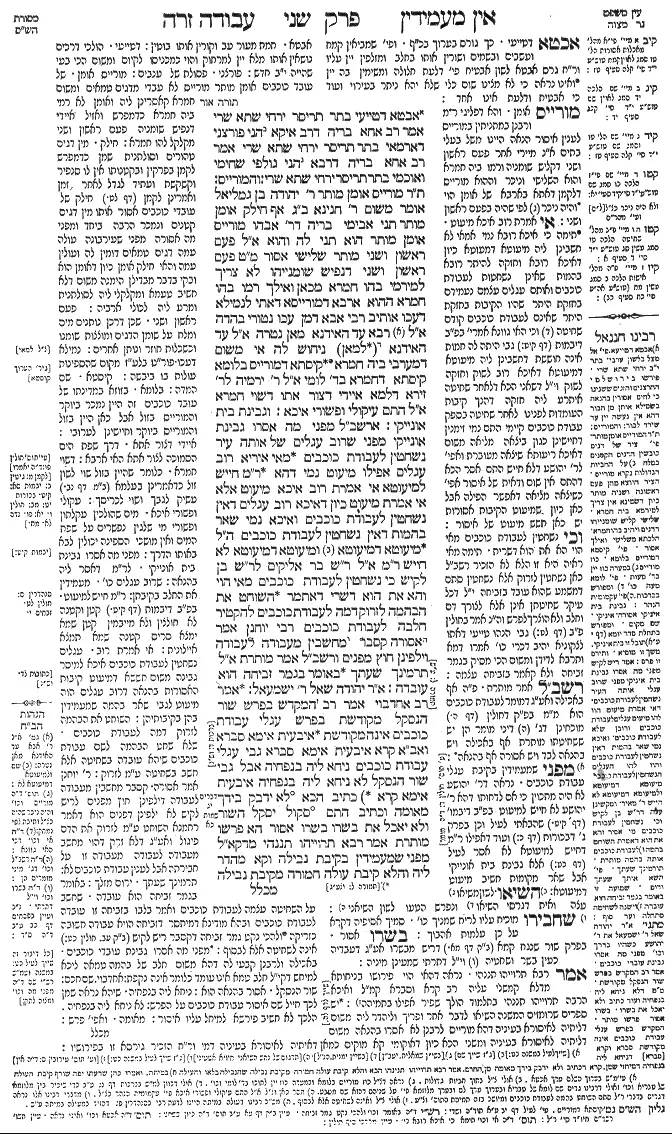
Avodah Zarah 34b - Guemara
אבטא דטייעי בתר תריסר ירחי שתא שרי אמר רב אחא בריה דרב איקא הני פורצני דארמאי בתר תריסר ירחי שתא שרי אמר רב אחא בריה דרבא הני גולפי שחימי ואוכמי בתר תריסר ירחי שתא שרי:
והמורייס:
ת"ר מורייס אומן מותר ר' יהודה בן גמליאל אומר משום ר' חנינא ב"ג אף חילק אומן מותר תני אבימי בריה דר' אבהו מורייס אומן מותר הוא תני לה והוא א"ל פעם ראשון ושני מותר שלישי אסור מ"ט פעם ראשון ושני דנפיש שומנייהו לא צריך למירמי בהו חמרא מכאן ואילך רמו בהו חמרא ההוא ארבא דמורייסא דאתי לנמילא דעכו אותיב רבי אבא דמן עכו נטורי בהדה א"ל רבא עד האידנא מאן נטרה א"ל עד האידנא למאן ניחוש לה אי משום דמערבי ביה חמרא קיסתא דמורייס בלומא קיסתא דחמרא בד' לומי א"ל ר' ירמיה לר' זירא דלמא איידי דצור אתו דשוי חמרא א"ל התם עיקולי ופשורי איכא:
וגבינת בית אונייקי:
ארשב"ל מפני מה אסרו גבינת אונייקי מפני שרוב עגלים של אותה עיר נשחטין לעבודת כוכבים מאי איריא רוב עגלים אפילו מיעוט נמי דהא ר"מ חייש למיעוטא אי אמרת רוב איכא מיעוט אלא אי אמרת מיעוט כיון דאיכא רוב עגלים דאין נשחטין לעבודת כוכבים ואיכא נמי שאר בהמות דאין נשחטין לעבודת כוכבים ה"ל מיעוטא דמיעוטא ומיעוטא דמיעוטא לא חייש ר"מ א"ל ר"ש בר אליקים לר"ש בן לקיש כי נשחטין לעבודת כוכבים מאי הוי והא את הוא דשרי דאתמר השוחט את הבהמה לזרוק דמה לעבודת כוכבים להקטיר חלבה לעבודת כוכבים רבי יוחנן אמר אסורה קסבר מחשבין מעבודה לעבודה וילפינן חוץ מפנים ורשב"ל אמר מותרת א"ל תרמינך שעתך באומר בגמר זביחה הוא עובדה:
א"ר יהודה שאל ר' ישמעאל:
אמר רב אחדבוי אמר רב המקדש בפרש שור הנסקל מקודשת בפרש עגלי עבודת כוכבים אינה מקודשת איבעית אימא סברא ואב"א קרא איבעית אימא סברא גבי עגלי עבודת כוכבים ניחא ליה בנפחיה אבל גבי שור הנסקל לא ניחא ליה בנפחיה איבעית אימא קרא כתיב הכא (דברים יג, יח) לא ידבק בידך מאומה וכתיב התם (שמות כא, כח) סקול יסקל השור ולא יאכל את בשרו בשרו אסור הא פרשו מותרת אמר רבא תרוייהו תננהי מדקא"ל מפני שמעמידין בקיבת נבילה וקא מהדר ליה והלא קיבת עולה חמורה מקיבת נבילה
Comments from Rashi on Masechet Avodah Zarah Page 34b
אבטא . חמת מעור עב וקורין אותו בוטי"ן: דטייעי . הולכי דרכים נושאין אותו מלא יין למרחוק והוי כמכניסו לקיום ומשום הכי בעי שהייה י"ב חדש: פורצני . פסולת של ענבים: מורייס אומן . של עובד כוכבים אומן מותר. מורייס לא עבדי מדגים טמאים ומשום חמרא קאסרינן ליה ואומן לא רמי ביה חמרא כדמפרש ואזיל איידי דנפיש שומניה פעם ראשון ושני מקלקל להו חמרא: חילק . מין דגים טהורים וסולתנית שמן כדמפרש לקמן בפרקין ובקטנותו אין לו סנפיר וקשקשת ועתיד לגדל לאחר זמן ואמרינן לקמן (עבודה זרה דף לט.) חילק של עובדי כוכבים אסור אותו מין דגים קטנים ונמכר הרבה ביחד ומפני מה אסורה מפני שעירבונה עולה עמה דגים טמאים דומין לה ועולין עמה והאי חילק אומן כיון דאומן הוא ובקי בדבר מבדילן הימנה משום דלא חשיב טעמא ומקלקלי ליה לסולתנית ומרע ליה לכולי ארביה: פעם ראשון ושני . שכן דרכן נותנים מים ומלח על שומן הדגים ומוצצות שומנו וכשכלות חוזר ונותן אחרים: נמילא דעכו . פור"ט בלע"ז מקום שהספינות עולות בו ביבשה: קיסטא . שם המדה: בלומא . בזוזא. במדינתו של עובד כוכבים זה היין נמכר ביוקר והמורייס בזול אבל כאן היין בזול והמורייס ביוקר וחיישינן לערובי: איידי דצור אתא . דרך שפת הים הסמוכה לצור אתא האי ארבא: דשוי חמרא . כלומר שהיין בזול. שוי לשון זול כדאמרינן בעלמא (ב"מ דף נב.) עשיק לגבך ושוי לכריסך: עקולי ופשורי איכא . מים שהולכין עקלתון ופשורי מי שלגין נפשרים על שפת המים ואין מושכי הספינה יכולין לבא באותו הדרך: מפני מה אסרו גבינת בית אונייקי . לר"מ דאסר ליה בהנאה: שרוב עגלים כו' . מעמידין את החלב בקיבתן: ר"מ חייש למיעוט . בפ"ב דיבמות (דף קיט.) קטן וקטנה לא חולצין ולא מייבמין קטן שמא ימצא סריס קטנה שמא תמצא איילונית: אי אמרת רוב . עגלים נשחטין לעבודת כוכבים איכא למיסר גבינה משום חששא דמיעוט קיבות האסורות בהנאה דרוב עגלים הוה מיעוט לגבי שאר בהמה שמעמידין בהן בקיבותיהן: השוחט את הבהמה לזרוק דמה לעבודת כוכבים . שלא שחט הבהמה לשם עבודת כוכבים שיהא עובדה בשחיטה אלא חשב בשחיטה ע"מ לזרוק: ר' יוחנן אמר אסורה קסבר מחשבין מעבודה לעבודה דילפינן חוץ מפנים . לריש לקיש לא ילפינן דפנים הוא דאמר רחמנא השוחט ע"מ לזרוק את הדם פיגול ואע"ג דלא זרק דהוי מחשב מעבודה לעבודה מעבודה זו על חבירתה אבל לענין עבודת כוכבים לא: תרמינך שעתך . ירום מזלך: באומר בגמר זביחה הוא עובדה . שחשב על השחיטה עצמה לעבודת כוכבים ואמר בלבו בזביחה זו עובדה לעבודת כוכבים ובהא מודינא דמיתסר דזביחה הויא עבודה חשובה כזריקה. ולהכי נקט גמר זביחה דקסבר ריש לקיש (ב"ק עב. חולין כט:) אינה לשחיטה אלא לבסוף: מפני מה אסרו גבינת עובדי כוכבים . באכילה. ולרבנן קבעי לה דהא משום חלב של בהמה טמאה ליכא למיחש דקי"ל חלב טמא אינו עומד כלומר אינה נקפת: אחדבוי . שם חכם: שור הנסקל . אסור בהנאה הוא: ניחא ליה בנפחיה . שיהא נראה שמן לכך חייל שם איסור עבודת כוכבים על הפרש: לא ניחא ליה בנפחיה . הלכך לא חשיב פירשא למיחל עליו איסור: מאומה . ואפי' פרש:
Comments from Tosafot - Avodah Zarah 34b
אכטא דטייעי . כך גורס בערוך בכ"ף. ופי' שמביאין קמח ועשבים ובשמים ושורין אותו בחלב ומזלפין יין עליו ור"ח גרס אבטא לשון אבטיח פי' דלעת חלולה ומשימין בה יין ואינו נראה כי לא מצינו שום כלי שלא יהא ניתר בעירוי ועוד כי אבטיח ודלעת אינו אחד: מורייס אומן . והא דפליגי ר"מ ורבנן במתניתין במורייס לענין איסור הנאה היינו משל בעלי בתים א"נ מיירי אחר פעם ראשון ושני דקליש שומניה ורמו ביה חמרא והוא השלישי וניכר וההוא מורייס דלקמן דאתא בארבא של אומן הוי והיה ניכר לפי שהיה בפעם ראשון ושני: אי אמרת רוב איכא מיעוט . תימה כי איכא רובא נמי אמאי לא חשבינן ליה מיעוטא דמעוטא כיון דאיכא רובא וחזקה להיתר רובא בהמות שאינן נשחטות לעבודת כוכבים ואותם עגלים עצמם נעמידם בחזקת היתר שהיו הקיבות בחזקת היתר שאינם לעבודת כוכבים קודם שחיטה וכי האי גוונא אמרי' בפ"ב דיבמות (דף קיט:) גבי היתה לה חמות אינה חוששת דחשבינן ליה מיעוטא דמיעוטא דאיכא רוב לשוק וחזקה לשוק וי"ל דשאני הכא דלאחר שחיטה איתרע ליה חזקה דהנך קיבות העומדות לפנינו לאחר שחיטה בספק עבודת כוכבים קיימי התם נמי זימנין דחיישינן כגון ביצאה מליאה משום דאיכא ריעותא שיצאה מעוברת ואפי' לר' יהושע דלא חייש התם אסר הכא דהתם אין שום ודאית של איסור אפי' כשיצאה מליאה דאפשר הפילה אבל כאן כיון שמיעוט הקיבות אסורות יש כאן חשש מיעוט של איסור: וכי נשחטין לעבודת כוכבים מאי הוי הא את הוא דשרית . תימה מאי ראיה היא זו הלא לא הזכיר רשב"ל כאן נשחטין לזרוק אלא נשחטין סתם דמשמע שהוא עובד בזביחה י"ל דכל עיקר שחיטתן אינן אלא לצורך דם וחלב ולא הוצרך לפרש וה"נ אמר בחולין פ"ב (דף לט:) גבי הנהו טייעי דאתו לצקוניא יהיב דכרי כו' אמרו דמא ותרבא לדידן ומשום הכי מסיק בגמר זביחה ולא קאמר בזביחה עצמה: רשב"ל אמר מותרת . פ"ה אף באכילה ואע"ג דמומר לעבודת כוכבים הוא מ"מ בפ"ק דחולין (דף ה.) מוכחינן דג' דיני מומר הן יש ששחיטתו מותרת אף באכילה ויש בהנאה לבד ויש אסורה אף בהנאה: מפני שמעמידין בקיבת עגלי עבודת כוכבים . נראה דר' יהושע לא היה מתכוין כי אם לדחותו דהא ר' יהושע לא חייש למיעוט בפ"ב דיבמו' (דף קיט.) שהבאתי לעיל וכן בפרק ג' דבכורות (דף כ:) ועוד דאפילו ר"מ דחייש למיעוטא לא אסר לעיל (עבודה זרה דף כט:) אלא גבינת בית אונייקי אבל שאר מקומות חשיב מיעוט דמיעוטא: בשרו אסור . בפרק שור שנגח קמא (ב"ק דף מא.) דריש מבשרו אע"ג דעבדיה כעין בשר ושחטיה וי"ל דתרתי שמעינן מיניה: אמר רבא תרוייהו תננהי . נראה דהאי הוי פירושו בניחותא מדלא קמשני עליה רב קרא וסברא קמ"ל ואיכא הרבה תרוייהו תננהי בתלמוד הולך שפיר אפילו בתמיהה:
Avodah Zarah 34b - Mishnah translated into english
canteens belonging to Arabs, after twelve months of the year they are permitted. Rav Aḥa, son of Rav Ika, says: With regard to these Aramean grape pits, after twelve months of the year they are permitted. Rav Aḥa, son of Rava, says: With regard to these brown and black jugs, after twelve months of the year they are permitted.
§ The mishna teaches that fish stew is prohibited. The Sages taught: Fish stew prepared by an expert is permitted, as professionals do not mix wine in it. Rabbi Yehuda ben Gamliel says in the name of Rabbi Ḥanina ben Gamliel: Ḥilak prepared by an expert is also permitted.
Avimi, son of Rabbi Abbahu, would teach: Fish stew prepared by an expert is permitted. He would teach this baraita that he received through tradition, and then he would say its explanation: The first time and the second time that fish stew is prepared from a fish, it is permitted, but the third time it is prohibited. What is the reason? With regard to the first time and the second time, as the fish’s oil is plentiful, there is no need to place wine in it. From this point forward, one might place wine in it to compensate for the insufficient fish oil.
The Gemara relates that there was a certain boat carrying fish stew which came to the port of Akko, and Rabbi Abba from Akko placed guards over it to ensure that no wine would be added to the fish stew. Rava said to him: Until now, who guarded it? Rabbi Abba said to him: Until now, for what should we be concerned? If the problem is due to the concern that they mix wine in it, that concern is unfounded, as in the place where this fish stew was produced, a kista of fish stew sells for one luma while a kista of wine sells for four luma. Since wine was more expensive than fish stew, there is no reason to suspect that wine was added to the stew before it reached Akko, where fish stew is sold at a higher price than wine.
Upon hearing this, Rabbi Yirmeya said to Rabbi Zeira: But perhaps they came by means of Tyre, where wine is inexpensive and therefore likely to be added to the fish stew to increase its volume. Rabbi Zeira said to him: There, by way of Tyre, there are impediments and melted snow, which make travel very difficult, and the boat would not have sailed through that route.
§ The mishna teaches: And cheese of Beit Unyaki is prohibited. Rabbi Shimon ben Lakish says: For what reason did they prohibit deriving benefit from the cheese of Beit Unyaki? It is because most of the calves of that city are slaughtered for the sake of idol worship, and the milk curdled in their stomach contents is prohibited. The Gemara asks: Why does this explanation specifically mention most calves? Even if a minority of calves were slaughtered for idol worship, this would also be reason enough, as Rabbi Meir, who is the tanna of unattributed opinions in a mishna, is generally concerned about a minority.
The Gemara explains: If you say that the reason for the prohibition is due to a majority of calves slaughtered for idol worship, then despite the fact that the majority of animals in general used to curdle cheese are not slaughtered for idolatrous purposes, there are nevertheless a minority of animals altogether, i.e., the majority of calves, that are, and this minority of calves are cause for concern according to Rabbi Meir.
The Gemara continues: But if you say that Rabbi Meir prohibits the cheese due to a minority of calves, since there are a majority of calves that are not slaughtered for idol worship, and there are also a wider majority of the remaining animals used to curdle milk that are not slaughtered for idol worship at all, this would constitute a minority of a minority, and Rabbi Meir is not concerned for a minority of a minority. Since only a particular minority of animals used to curdle cheese, i.e., calves, are ever slaughtered for idolatry, and even within that group, only a minority are actually slaughtered, even Rabbi Meir would not be concerned.
Rabbi Shimon bar Elyakim said to Rabbi Shimon ben Lakish: Even when calves are slaughtered for the sake of idol worship, what of it? But are you not the one who permits animals slaughtered with idolatrous intentions?
As it was stated: The halakha with regard to one who slaughters an animal in order to sprinkle its blood for the sake of idol worship, or to burn its prohibited fat for idol worship, is subject to a dispute between amora’im. Rabbi Yoḥanan says: Deriving benefit from the animal is prohibited, as he holds that one can intend from one rite to another rite. In other words, idolatrous intent while slaughtering an animal renders it prohibited, even if the intention pertains not to the slaughter itself but to sprinkling the blood or burning the fat. And he maintains that we derive halakhot concerning intent outside the Temple from the halakhot concerning intent inside the Temple. Since such intentions at the time of slaughter render an animal prohibited within the Temple, they render it prohibited outside the Temple as well, with regard to idol worship.
And Rabbi Shimon ben Lakish says: Deriving benefit from the animal is permitted. Apparently, Rabbi Shimon ben Lakish holds that slaughtering an animal for the sake of idol worship does not render it prohibited. This contradicts his previous assertion that it is prohibited to derive benefit from calves that have been slaughtered for the sake of idol worship.
Rabbi Shimon ben Lakish said to Rabbi Shimon bar Elyakim: May your fortune be auspicious; the case here is where one says that he is worshipping the idol at the conclusion of the slaughter. Since the act of slaughtering itself is an act of worship, the calf is rendered prohibited immediately.
§ The mishna teaches that Rabbi Yehuda said: Rabbi Yishmael asked Rabbi Yehoshua a series of questions. The Gemara notes that Rav Aḥadevoi says that Rav says: With regard to one who betroths a woman by giving her the excrement of an ox that is to be stoned, the woman is betrothed, provided that the excrement was worth one peruta. Although no benefit may be derived from the ox itself, it is permitted to derive benefit from its excrement. But if one attempts to betroth her with the excrement of calves that were used as offerings of idol worship, she is not betrothed, as even their excrement is forbidden. The Gemara remarks: If you wish, propose logical reasoning, and if you wish, cite a verse to substantiate this claim.
The Gemara elaborates: If you wish, propose logical reasoning: With regard to calves used for idol worship, a calf’s additional girth derived from the excrement stored in its body is satisfactory for the worshipper, as fatter animals are more impressive offerings. Since the excrement is part of the offering, it is also forbidden. But with regard to an ox that is to be stoned, its additional girth is not satisfactory for the owner, as he gains nothing from it.
If you wish, cite a verse: It is written here, with regard to an animal used for idol worship: “And there shall cleave naught of the dedicated thing to your hand” (Deuteronomy 13:18), which indicates that the entire animal is forbidden. And it is written there, with regard to an ox to be stoned: “The ox shall be stoned, and its flesh shall not be eaten” (Exodus 21:28). This teaches that its flesh is forbidden, but its excrement is permitted.
Rava said: We learned both of these halakhot from the mishna. He elaborates: From the fact that Rabbi Yehoshua said to Rabbi Yishmael that cheese of gentiles is prohibited because they curdle it in the stomach contents of an unslaughtered animal carcass, one can derive the halakha of the excrement of an ox that is to be stoned. The reason is that Rabbi Yishmael responded to Rabbi Yehoshua: But isn’t the stomach of a burnt-offering subject to a more stringent halakha than the stomach of an unslaughtered animal carcass, and yet although one may not derive benefit from the stomach of a burnt-offering ab initio, if one did derive benefit from it he is not liable for misuse of property consecrated to the Temple?
Traduction : The William Davidson digital edition of the Koren Noé Talmud, with commentary by Rabbi Adin Even-Israel Steinsaltz.