 Talmud Bavli
The learning on the whole site is dedicated : L'ilui Nishmat Ledicia bat David Banoun
The learning on the whole site is dedicated : L'ilui Nishmat Jamila bat Chlomo Abensour
The learning on the whole site is dedicated : L'ilui Nishmat Yechayahou ben Moche
Menachot 43b : Youtube
Daf TubeYoutube
2 video classes :
Menachot Page 43b
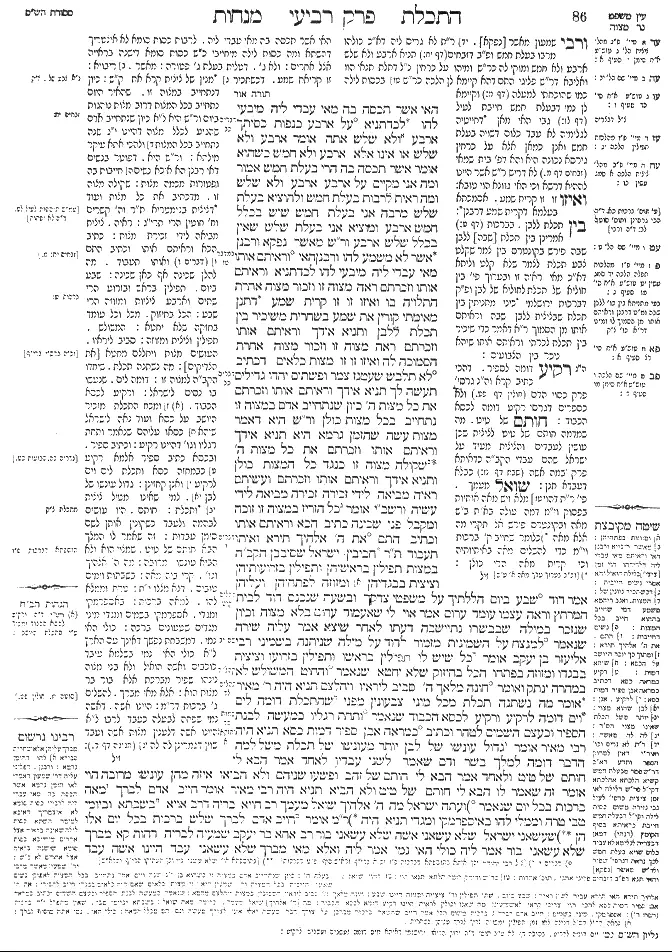
Menachot 43b - Guemara
האי אשר תכסה בה מאי עבדי ליה מיבעי להו לכדתניא (דברים כב, יב) על ארבע כנפות כסותך ארבע ולא שלש אתה אומר ארבע ולא שלש או אינו אלא ארבע ולא חמש כשהוא אומר אשר תכסה בה הרי בעלת חמש אמור ומה אני מקיים על ארבע ארבע ולא שלש ומה ראית לרבות בעלת חמש ולהוציא בעלת שלש מרבה אני בעלת חמש שיש בכלל חמש ארבע ומוציא אני בעלת שלש שאין בכלל שלש ארבע ור"ש מאשר נפקא ורבנן אשר לא משמע להו ורבנן האי (במדבר טו, לט) וראיתם אותו מאי עבדי ליה מיבעי להו לכדתניא וראיתם אותו וזכרתם ראה מצוה זו וזכור מצוה אחרת התלויה בו ואיזו זו זו קרית שמע דתנן מאימתי קורין את שמע בשחרית משיכיר בין תכלת ללבן ותניא אידך וראיתם אותו וזכרתם ראה מצוה זו וזכור מצוה אחרת הסמוכה לה ואיזו זו זו מצות כלאים דכתיב (דברים כב, יא) לא תלבש שעטנז צמר ופשתים יחדו גדילים תעשה לך תניא אידך וראיתם אותו וזכרתם את כל מצות ה' כיון שנתחייב אדם במצוה זו נתחייב בכל מצות כולן ור"ש היא דאמר מצות עשה שהזמן גרמא היא תניא אידך וראיתם אותו וזכרתם את כל מצות ה' שקולה מצוה זו כנגד כל המצות כולן ותניא אידך וראיתם אותו וזכרתם ועשיתם ראיה מביאה לידי זכירה זכירה מביאה לידי עשיה ורשב"י אומר כל הזריז במצוה זו זוכה ומקבל פני שכינה כתיב הכא וראיתם אותו וכתיב התם (דברים ו, יג) את ה' אלהיך תירא ואותו תעבוד ת"ר חביבין ישראל שסיבבן הקב"ה במצות תפילין בראשיהן ותפילין בזרועותיהן וציצית בבגדיהן ומזוזה לפתחיהן ועליהן אמר דוד (תהלים קיט, קסד) שבע ביום הללתיך על משפטי צדקך ובשעה שנכנס דוד לבית המרחץ וראה עצמו עומד ערום אמר אוי לי שאעמוד ערום בלא מצוה וכיון שנזכר במילה שבבשרו נתיישבה דעתו לאחר שיצא אמר עליה שירה שנאמר (תהלים יב, א) למנצח על השמינית מזמור לדוד על מילה שניתנה בשמיני רבי אליעזר בן יעקב אומר כל שיש לו תפילין בראשו ותפילין בזרועו וציצית בבגדו ומזוזה בפתחו הכל בחיזוק שלא יחטא שנאמר (קהלת ד, יב) והחוט המשולש לא במהרה ינתק ואומר (תהלים לד, ח) חונה מלאך ה' סביב ליראיו ויחלצם תניא היה ר' מאיר אומר מה נשתנה תכלת מכל מיני צבעונין מפני שהתכלת דומה לים וים דומה לרקיע ורקיע לכסא הכבוד שנאמר (שמות כד, י) ותחת רגליו כמעשה לבנת הספיר וכעצם השמים לטהר וכתיב (יחזקאל א, כו) כמראה אבן ספיר דמות כסא תניא היה רבי מאיר אומר גדול עונשו של לבן יותר מעונשו של תכלת משל למה הדבר דומה למלך בשר ודם שאמר לשני עבדיו לאחד אמר הבא לי חותם של טיט ולאחד אמר הבא לי חותם של זהב ופשעו שניהם ולא הביאו איזה מהן עונשו מרובה הוי אומר זה שאמר לו הבא לי חותם של טיט ולא הביא תניא היה רבי מאיר אומר חייב אדם לברך מאה ברכות בכל יום שנאמר (דברים י, יב) ועתה ישראל מה ה' אלהיך שואל מעמך רב חייא בריה דרב אויא בשבתא וביומי טבי טרח וממלי להו באיספרמקי ומגדי תניא היה ר"מ אומר חייב אדם לברך שלש ברכות בכל יום אלו הן שעשאני ישראל שלא עשאני אשה שלא עשאני בור רב אחא בר יעקב שמעיה לבריה דהוה קא מברך שלא עשאני בור אמר ליה כולי האי נמי אמר ליה ואלא מאי מברך שלא עשאני עבד היינו אשה עבד
Comments from Rashi on Masechet Menachot Page 43b
האי אשר תכסה בה מאי עבדי ליה . לרבות כסות סומא לא איצטריך דהשתא ומה כסות לילה מיחייבי כ"ש כסות סומא דישנה בראייה אצל אחרים: ולא ג' . דטלית בעלת ג' פטורה: מאשר . ריבויא: זו קריאת שמע . דכשתכיר מנין של ציצית קרא את ק"ש: כיון דנתחייב במצוה זו . שהאיר היום נתחייב בכל המצות דרוב מצות נוהגות ביום ור"ש היא ל"א כיון שנתחייב אדם שהגיע לכלל מצוה דהיינו י"ג שנה נתחייב בכל המצות ולהכי אתא עיקר מילתא: ור"ש היא . דפוטר בנשים דאי רבנן הא איכא נשים חייבות בה ופטורות מכמה מצות: שקולה מצוה זו . מדכתיב את כל מצות ועוד דציצית בגימטריא ת"ר וה' קשרים וח' חוטין הרי תרי"ג: ראיה . ציצית מביאה לידי זכירת מצות: כתיב הכא וראיתם אותו וכתיב התם (דברים ו) ואותו תעבוד . מה להלן שכינה אף כאן שכינה: שבע ביום . תפילין בראש ובזרוע הרי שתים וארבע ציציות ומזוזה הרי שבע: הכל בחיזוק . מכל וכל עומד בחזקה שלא יחטא: המשולש . תפילין וציצית ומזוזה: סביב ליראיו . העושים מצות ויחלצם מחטא [את הצדיקים]: מה נשתנה תכלת . שיחדו הקב"ה למצוה זו: דומה לים . שנעשו בו נסים לישראל: ורקיע לכסא הכבוד . ומכח התכלת מזכיר היושב על כסא ועוד נאה לישראל שיהא כסאו עליהם שנאמר ותחת רגליו וגו' דהיינו רקיע: וכתיב ספיר . ובכסא כתיב ספיר אלמא רקיע כבמחזה כסא ותכלת לים וים לרקיע ואנן קחזינן: גדול עונשו של לבן . למי שאינו מטיל ציצית ותכלת: חותם . היו עושים לבהמה ולעבד כשקונין אותן לשם סימן עבדות: זה שאמר לו המלך הבא חותם של טיט . שמצוי הוא ולא הביא עונשו מרובה: מה ה' אלהיך וגו' . קרי ביה מאה: בשבתות וימים טובים . דלא מצלו י"ח: טרח וממלא להו . למאה ברכות: באספרמקי ומגדי . אספרמקי בשמים ומגדי מיני מגדים שטעונים ברכה: כולי האי נמי . דמשבחת נפשך דאינך עם הארץ ל"א כולי האי נמי בשלמא עובד כוכבים ואשה הואיל ולא בני מצוה נינהו שפיר מברכת אלא בור בר מצות הוא: אלא מאי מברך . להשלים ג' ברכות דר"מ: היינו אשה . דאשה נמי שפחה לבעלה כעבד לרבו ל"א היינו אשה דלענין מצות אשה ועבד שוין דגמרינן לה לה (חגיגה דף ד.):
Comments from Tosafot - Menachot 43b
ורבי שמעון מאשר [נפקא]. ר"ת לא גריס ליה דא"כ כולהו מרבו בעלת חמש ופ"ב דזבחים (דף יח:) תניא ארבע ולא שלש ארבע ולא חמש ומוקי לה כר"ש ומיהו על כרחין נ"ל דתלת תנאי הוו ואליבא דר"ש פליגי התם דהא קיימא לן הלכה כר"ש בכסות לילה כמו שהוכחתי למעלה (דף מ:) וקיימא לן נמי דבעלת חמש חייבת לעיל (מנחות דף לז:) גבי האי מאן דחייטיה לגלימיה לא עבד כלום דשויה בעלת חמש ואנן כמאן אלא על כרחין גירסא נכונה היא והא דפ' בית שמאי (זבחים דף מ.) לא דריש ר"ש אשר היינו לההיא דרשא וכי האי גוונא הוי טובא: ואיזו זו זו קרית שמע. אסמכתא בעלמא דקרית שמע דרבנן: בין תכלת ללבן. בברכות (דף ט:) אמרינן בין תכלת [שבה] ללבן שבה פירש בקונטרס בין צמר שקלט צבע תכלת לצמר שלא קלט וליתא דא"כ מאי ראיה זו ובערוך פי' בין חוליא של תכלת לחוליא של לבן ופ"ק דברכות ירושלמי כיני מתניתין בין תכלת שבציצית ללבן שבה וראיתם אותו מן הסמוך ר"א דאמר כדי שיכיר בין תכלת לכרתי וראיתם אותו שיהא ניכר בין הצבועים: ה"ג רקיע דומה לספיר. דהכי כתיב קרא וה"נ גרסי' פרק כסוי הדם (חולין דף פט.) ולא כספרים דגרסי רקיע דומה לכסא הכבוד: חותם של טיט. מה שמדמה חותם של טיט לציצית שכן עושין לעבדים והציצית מעיד על ישראל שהם עבדי הקב"ה כדאיתא פרק במה אשה (שבת דף נז:) כבלא דעבדא תנן: שואל מעמך. פי' ר"ת דהוי מלא ויש מאה אותיות בפסוק וי"מ דמה עולה בא"ת ב"ש מאה ובקונטרס פירש אל תקרי מה אלא מאה כלומר שחייב ק' ברכות וי"מ כדי להשלים מאה באותיותיה וכי קרית מאה הרי כולן:
Menachot 43b - Mishnah translated into english
what do they do with, i.e., how do they interpret, this verse: “With which you cover yourself” (Deuteronomy 22:12)? The Gemara answers that the Rabbis require it for that which is taught in a baraita: The phrase “on the four corners of your garment” (Deuteronomy 22:12) indicates that one is required to attach ritual fringes to a garment that has four corners, but not to one that has three corners.
The baraita continues: Do you say that a garment with four corners is obligated but not a garment with three corners? Or is it teaching only that a garment with four corners is obligated but not a garment that has five corners? When the verse states: “With which you cover yourself,” a garment with five corners is thereby mentioned in the verse as being obligated. Then how do I realize the meaning of: “On the four corners of your garment”? It teaches that this obligation is limited to a garment that has four corners, but not to one that has three corners.
The Gemara asks: But what did you see that led you to include a garment with five corners and to exclude a garment with three corners, rather than including a garment with three corners and excluding a garment with five corners? The Gemara answers: I include a garment with five corners, as five includes four, and I exclude a garment with three corners, as three does not include four.
The Gemara asks: And how does Rabbi Shimon derive the halakha that a five-cornered garment is required to have ritual fringes? The Gemara answers: He derives it from the seemingly extraneous word: “With which [asher] you cover yourself” (Deuteronomy 22:12). The Gemara asks: And what do the Rabbis derive from this word? The Gemara answers: They do not learn any new halakhot from the word “which [asher].”
The Gemara asks: And as for the Rabbis, what do they do with this phrase: “That you may look upon it” (Numbers 15:39), from which Rabbi Shimon derives that a nighttime garment is exempt? The Gemara answers: They require it for that which is taught in a baraita: The verse: “That you may look upon it and remember” (Numbers 15:39), teaches that one should see this mitzva of ritual fringes and remember another mitzva that is contingent on it. And which mitzva is that? It is the mitzva of the recitation of Shema. As we learned in a mishna (Berakhot 9b): From when may one recite Shema in the morning? From when one can distinguish between the sky-blue strings and the white strings of his ritual fringes.
And it is taught in another baraita: The phrase “that you may look upon it and remember” teaches that one should see this mitzva of ritual fringes and remember another mitzva that is adjacent to it in the Torah. And which mitzva is that? It is the mitzva of diverse kinds of wool and linen, as it is written: “You shall not wear diverse kinds, wool and linen together. You shall prepare yourself twisted cords” (Deuteronomy 22:11–12).
It is taught in another baraita: The verse states: “That you may look upon it and remember all the commandments of the Lord” (Numbers 15:39). This indicates that once a person is obligated in this mitzva of ritual fringes, he is obligated in all of the mitzvot. The Gemara comments: And this is in accordance with the opinion of Rabbi Shimon, who says that ritual fringes are a positive, time-bound mitzva, and women are exempt from it. Only men are obligated in all mitzvot, including positive, time-bound mitzvot, just as they are obligated in the mitzva of ritual fringes.
It is taught in another baraita: The verse states: “That you may look upon it and remember all the commandments of the Lord”; this teaches that this mitzva of ritual fringes is equivalent to all the mitzvot of the Torah.
And it is taught in another baraita: The verse states: “That you may look upon it and remember all the commandments of the Lord and do them.” This teaches that looking at the ritual fringes leads to remembering the mitzvot, and remembering them leads to doing them. And Rabbi Shimon bar Yoḥai says: Anyone who is diligent in this mitzva of ritual fringes merits receiving the Divine Presence. It is written here: “That you may look upon it [oto]” (Numbers 15:39), and it is written there: “You shall fear the Lord your God; and Him [oto] shall you serve” (Deuteronomy 6:13). Just as oto in that verse is referring to the Divine Presence, so too in this verse it is referring to the Divine Presence.
The Sages taught in a baraita: The Jewish people are beloved, as the Holy One, Blessed be He, surrounded them with mitzvot: They have phylacteries on their heads, and phylacteries on their arms, and ritual fringes on their garments, and a mezuza for their doorways. Concerning them David said: “Seven times a day I praise You, because of Your righteous ordinances” (Psalms 119:164). This alludes to the two phylacteries, the four ritual fringes, and the mezuza, which total seven.
And when David entered the bathhouse and saw himself standing naked, he said: Woe to me that that I stand naked without any mitzva. But once he remembered the mitzva of circumcision that was in his flesh his mind was put at ease, as he realized he was still accompanied by this mitzva. After he left the bathhouse, he recited a song about the mitzva of circumcision, as it is stated in the verse: “For the leader, on the Sheminith: A Psalm of David” (Psalms 12:1). This is interpreted as a psalm about circumcision, which was given to be performed on the eighth [bashemini] day of the baby’s life.
Rabbi Eliezer ben Ya’akov says: Anyone who has phylacteries on his head, phylacteries on his arm, ritual fringes on his garment, and a mezuza on his doorway is strengthened from all sides so that he will not sin, as it is stated in the verse: “And a threefold cord is not quickly broken” (Ecclesiastes 4:12). This is interpreted as an allusion to the three mitzvot of phylacteries, ritual fringes, and mezuza. And the verse states: “The angel of the Lord encamps round about them that fear Him, and delivers them” (Psalms 34:8). This is interpreted to mean that the angel of the Lord surrounds those who fulfill the mitzvot and saves them from sin.
It is taught in a baraita that Rabbi Meir would say: What is different about tekhelet from all other types of colors such that it was chosen for the mitzva of ritual fringes? It is because tekhelet is similar in its color to the sea, and the sea is similar to the sky, and the sky is similar to the Throne of Glory, as it is stated: “And they saw the God of Israel; and there was under His feet the like of a paved work of sapphire stone, and the like of the very heaven for clearness” (Exodus 24:10), indicating that the sky is like a sapphire brickwork. And it is written: “The likeness of a throne, as the appearance of a sapphire stone” (Ezekiel 1:26).
It is taught in a baraita that Rabbi Meir would say: The punishment for not attaching white strings is greater than the punishment for not attaching sky-blue strings, despite the fact that the sky-blue strings are more important. Rabbi Meir illustrates this with a parable: To what is this matter comparable? It is comparable to a king of flesh and blood who said to his two subjects that they must bring him a seal. The king said to one of them: Bring me a seal of clay, and he said to the other one: Bring me a seal of gold. And both of them were negligent and did not bring the seals. Which of them will have a greater punishment? You must say that it is this one to whom he said: Bring me a seal of clay, and despite its availability and low cost, he did not bring it.
It is taught in a baraita that Rabbi Meir would say: A person is obligated to recite one hundred blessings every day, as it is stated in the verse: “And now, Israel, what [ma] does the Lord your God require of you” (Deuteronomy 10:12). Rabbi Meir interprets the verse as though it said one hundred [me’a], rather than ma.
The Gemara relates that on Shabbat and Festivals, when the prayers contain fewer blessings, Rav Ḥiyya, son of Rav Avya, made an effort to fill this quota of blessings with blessings on spices [be’isparmakei] and sweet fruit, of which he would partake in order to recite extra blessings.
It is taught in a baraita that Rabbi Meir would say: A man is obligated to recite three blessings every day praising God for His kindnesses, and these blessings are: Who did not make me a gentile; Who did not make me a woman; and Who did not make me an ignoramus.
Rav Aḥa bar Ya’akov heard his son reciting the blessing: Who did not make me an ignoramus. Rav Aḥa bar Ya’akov said to him: Is it in fact proper to go this far in reciting blessings? Rav Aḥa bar Ya’akov’s son said to him: Rather, what blessing should one recite? If you will say that one should recite: Who did not make me a slave, that is the same as a woman; why should one recite two blessings about the same matter? Rav Aḥa bar Ya’akov answered: Nevertheless, a slave
Traduction : The William Davidson digital edition of the Koren Noé Talmud, with commentary by Rabbi Adin Even-Israel Steinsaltz.