 Talmud Bavli
Menachot 86a : Youtube
Daf TubeYoutube
2 video classes :
Menachot Page 86a
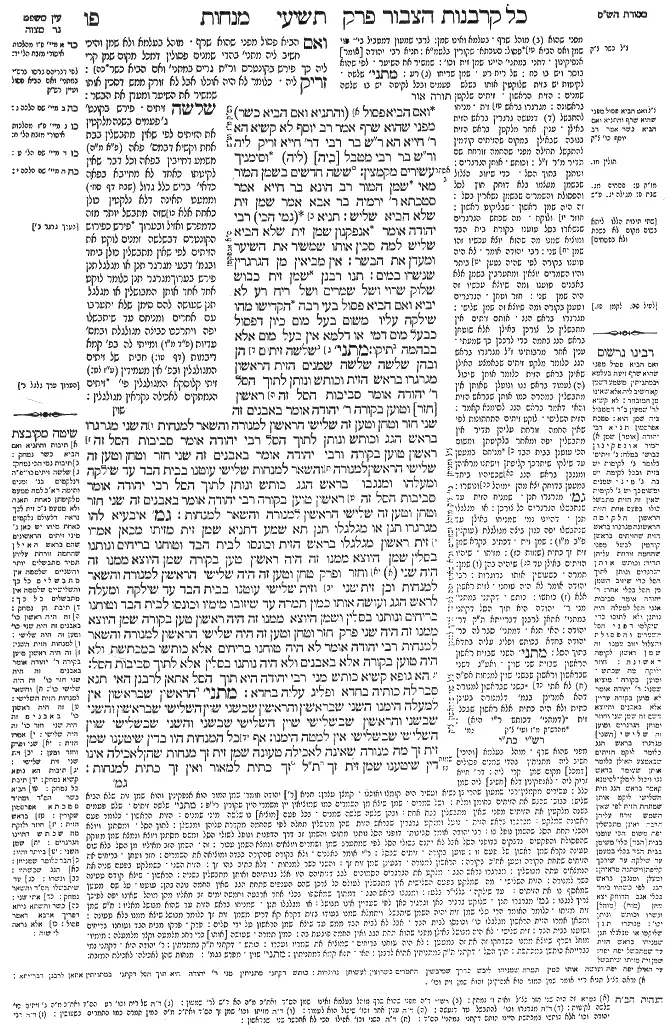
Menachot 86a - Guemara
ואם הביא פסול (והתניא ואם הביא כשר) מפני שהוא שרף אמר רב יוסף לא קשיא הא ר' חייא הא ר' שמעון בר רבי דר' חייא זריק ליה ור' שמעון בר רבי מטבל [ביה] (ליה) וסימניך עשירים מקמצין:
(אסתר ב, יב) ששה חדשים בשמן המור מאי שמן המור רב הונא בר חייא אמר סטכתא ר' ירמיה בר אבא אמר שמן זית שלא הביא שליש:
תניא (נמי הכי) רבי יהודה אומר אנפקנון שמן זית שלא הביא שליש למה סכין אותו שמשיר את השיער ומעדן את הבשר:
אין מביאין מן הגרגרין שנשרו במים תנו רבנן שמן זית כבוש שלוק שרוי ושל שמרים ושל ריח רע לא יביא ואם הביא פסול בעי רבה הקדישו מהו שילקה עליו משום בעל מום כיון דפסול כבעל מום דמי או דלמא אין בעל מום אלא בבהמה תיקו:
מתני׳ שלשה זיתים הן ובהן שלשה שלשה שמנים הזית הראשון מגרגרו בראש הזית וכותש ונותן לתוך הסל ר' יהודה אומר סביבות הסל זה ראשון [חזר] וטוען בקורה ר' יהודה אומר באבנים זה שני חזר וטחן וטען זה שלישי הראשון למנורה והשאר למנחות השני מגרגרו בראש הגג וכותש ונותן לתוך הסל רבי יהודה אומר סביבות הסל זה ראשון טוען בקורה ורבי יהודה אומר באבנים זה שני חזר וטחן וטען זה שלישי הראשון למנורה והשאר למנחות שלישי עוטנו בבית הבד עד שילקה ומעלהו ומנגבו בראש הגג כותש ונותן לתוך הסל רבי יהודה אומר סביבות הסל זה ראשון טוען בקורה רבי יהודה אומר באבנים זה שני חזר וטחן וטען זה שלישי הראשון למנורה והשאר למנחות:
גמ׳ איבעיא להו מגרגרו תנן או מגלגלו תנן תא שמע דתניא שמן זית מזיתו מכאן אמרו זית ראשון מגלגלו בראש הזית וכונסו לבית הבד וטוחנו בריחים ונותנו בסלין שמן היוצא ממנו זה היה ראשון טען בקורה שמן היוצא ממנו זה היה שני וחזר ופרק טחן וטען זה היה שלישי הראשון למנורה והשאר למנחות וכן זית שני וזית שלישי עוטנו בבית הבד עד שילקה ומעלה לראש הגג ועושה אותו כמין תמרה עד שיזובו מימיו וכונסו לבית הבד וטוחנו בריחים ונותנו בסלין ושמן היוצא ממנו זה היה ראשון טען בקורה שמן היוצא ממנו זה היה שני פרק חזר וטחן וטען זה היה שלישי הראשון למנורה והשאר למנחות רבי יהודה אומר לא היה טוחנו בריחים אלא כותשו במכתשת ולא היה טוען בקורה אלא באבנים ולא היה נותנו בסלין אלא לתוך סביבות הסל הא גופא קשיא כותש מני רבי יהודה היא תוך הסל אתאן לרבנן האי תנא סבר לה כותיה בחדא ופליג עליה בחדא:
מתני׳ הראשון שבראשון אין למעלה הימנו השני שבראשון והראשון שבשני שוין השלישי שבראשון והשני שבשני והראשון שבשלישי שוין השלישי שבשני והשני שבשלישי שוין השלישי שבשלישי אין למטה הימנו אף כל המנחות היו בדין שיטענו שמן זית זך מה מנורה שאינה לאכילה טעונה שמן זית זך מנחות שהן לאכילה אינו דין שיטענו שמן זית זך תלמוד לאמר (שמות כז, כ) זך כתית למאור ואין זך כתית למנחות
Comments from Rashi on Masechet Menachot Page 86a
מפני שהוא מוהל שרף . בעלמא ואינו שומן: לרבי שמעון דמטביל בי' . הוי שמן ואם הביא פסול: סטכתא . שקורין בלשמ"א: תניא רבי יהודה [אומר] אנפיקינון . דתני במתני' היינו שמן זית וכו': שמשיר את השיער . לפי שהוא בוסר ויש בו כח: של ריח רע . שמן שריחו רע: מתני' שלשה . לקיטות יש בזית שלוקטין אותו בשלש פעמים ובכל לקיטה יש בו שלשה שמנים: הזית הראשון . זיתים שלקטן בראשונה: מגרגרו בראש זית . מניחו להתבשל דנעשה גרגרין בראש הזית באילן. ענין אחר מלקטן בראש הזית בגובה שבאילן במקום שהזיתים קודמין להתבשל תחילה מפני שהחמה זורחת שם תדיר מ"ר ז"ל: וכותש . אותן הגרגרים: ונותנן בתוך הסל . כדי שיזוב הצלול שבשמן מעצמו בלא דוחק חוץ לסל והפסולת והשמרים שבשמן נשארין בסל: זה היה שמן ראשון . שבליקוט ראשון: חוזר ולוקח . מה שכתש הגרגרים שנשארו בסל טוענו בקורת בית הבד ומוציא שמנו מה שהוא יוצא עכשיו זהו שמן שני: רבי יהודה אומר . לא היה טוענו בקורה לפי שהיה נטען ביתר והיו השמרים יוצאין ומתערבין בשמן אלא באבנים טוענו ומה שיוצא עכשיו זה היה שמן שני: חזר וטחן . הגרגרים וטענן בקורה ומה שיוצא זה שמן שלישי: מגרגרו בראש הגג . אותם זיתים אין מתבשלין כל צורכן באילן אלא שוטחן בראש הגג בחמה כדי לרככן כך שמעתי. ענין אחר מרבותינו ז"ל מגרגרו בראש הגג כלומר מלקט זיתים שבאמצע האילן שאינן בראש הזית כלומר אותן שיכול לעמוד בראש גגו ונוטלן שאותן אין מתבשלין במהרה כמו אותן שבראש הזית והאי דאמר בראש הגג לסימנא קאמר: הזית השלישי . לוקט זיתים התחתונות לפי שאין החמה זורחת עליהן תדיר אין מתבשלין יפה ומאחר בלקיטתן ומשום הכי עוטנן בבית הבד מניחם במעטן עד שילקו שיתרכך קליפתן וישתנו מראיהן ומנגבן בראש הגג שכשיהיו ביחד במעטן בדוחק יצא מהן מוהל ונושרו: גמ' מגרגרו תנן . שמניח הזית עד שנתבשלו הגרגרים כל צורכן: או מגלגלו תנן . דהיינו נמי שמניחו באילן עד שנתבשלו יפה כגון ביצה מגולגלת (עוקצין פ"ב מ"ו): שמן זית . דכתיב בקרא שמן זית זך כתית (שמות כז): מזיתו . שיהיו הזיתים באילן עד שיהיה בהן שמן: תמרה . כשעושין אותו גרוגרות: רבי יהודה אומר לא היה טוחנו . לזית ראשון אלא כותשו: כותש . דקתני במתני' מני ר' יהודה היא תוך הסל דקתני במתני' אתאן לרבנן דברייתא ת"ק דר' יהודה: האי תנא . דמתני' סבר לה כר' יהודה בחדא בכותש ופליג עליה בחדא בתוך הסל: מתני' השני שבזית ראשון הראשון שבזית שני שוין . ואע"ג דשני שבראשון וראשון שבשני שוין למנחות אפ"ה לא אתי בשני שבראשון למנורה דהא אמרינן בגמ' דלמנורה בעינן כתית ולא היה כתית אלא ראשון שבכל זית (דמתני' דכותש ר"י היא):
Comments from Tosafot - Menachot 86a
ואם הביא פסול מפני שהוא שרף. מוהל בעלמא ולא שמן והיכי חשיב ליה מתני' בהדי שמנים פסולין דמכל מקום שמן קרי ליה כך פירש בקונטרס ור"ת גריס במתני' ואם הביא כשר: זריק ליה. כלומר לא היה אוכלו אבל לא זורק ממש דסכין אותו שמשיר את השיער ומעדן את הבשר: שלשה זיתים. פירש בקונט' ג' פעמים בשנה מלקטין את הזיתים לפי שאין מתבשלין בבת אחת וקשיא דבמס' פאה (פ"א מ"ה) משמע דחייבין בפאה וכל דבר שאין לקיטתו כאחד לא מחייבא בפאה כדאי' בריש כלל גדול (שבת דף סח.) וממעט תאינה דלא נלקטין כולן כאחת אלא שזה מתבשל יותר מזה כדמפרש ואזיל ובערוך פירש כפירוש הקונטרס דבשלשה זמנים לוקט את הזיתים לפי שאין מתבשלין כולן ביחד ובגמ' דבעי מגרגר תנן או מגלגל תנן פירש בערוך מגרגר תנן כלומר לוקט אחד אחד אותן המבושלין או מגלגל תנן שעושה להם סימן שלא יתערבו עם אחרים ומניחם עד שיתבשלו יפה ויתרככו כביצה מגולגלת ובמס' עדיות (פ"ד מ"ו) ומייתי לה בפ' קמא דיבמות (דף טו:) חבית של זיתים המגולגלין ובפ' אין מעמידין (ע"ז לט:) זיתי קלוסקא המגולגלין פי' זיתים הנמתקים לאכילה נקראין מגולגלין:
Menachot 86a - Mishnah translated into english
but if one did bring a meal offering made of such oil, it is not valid. But isn’t it taught in a baraita that if one did bring it, it is valid, because it is regarded merely as sap and not as oil? This contradicts this mishna, which assumes that it is regarded as oil.
Rav Yosef said: It is not difficult to resolve this contradiction. This baraita expresses the opinion of Rabbi Ḥiyya, and that mishna expresses the opinion of Rabbi Shimon, son of Rabbi Yehuda HaNasi. As Rabbi Ḥiyya would toss such oil away, as he did not consider it to be oil, and Rabbi Shimon, son of Rabbi Yehuda HaNasi, would dip his food into it, as he considered it to be oil. The Gemara concludes: And your mnemonic by which to remember their respective opinions is: The wealthy are parsimonious, i.e., Rabbi Shimon, son of Rabbi Yehuda HaNasi, was wealthy, and he did not toss the oil away.
§ The Gemara digresses to discuss oil of myrrh: In describing the treatments provided to the women in preparation for their meeting with King Ahasuerus, the verse states: “For so were the days of their anointing accomplished: Six months with oil of myrrh, and six months with sweet odors and with other ointments of the women” (Esther 2:12). The Gemara asks: What is “oil of myrrh”? Rav Huna bar Ḥiyya says: It is the aromatic oil called setakhta. Rav Yirmeya bar Abba says: It is an oil derived from olives that have not yet reached one-third of their growth; the acidic oil is effective as a depilatory.
The Gemara notes: This explanation of Rav Yirmeya bar Abba is also taught in a baraita: Rabbi Yehuda says: The term anpikanon is referring to olive oil produced from olives that have not yet reached one-third of their growth. And why do women spread it on their bodies? They do so because it removes the hair and pampers the skin.
§ The mishna teaches: One may not bring meal offerings containing oil from olives that were soaked in water, nor from pickled olives, nor from boiled olives, and even if one did bring it, it is not valid. The Sages taught in a baraita: Olive oil produced from pickled olives, boiled olives, or olives soaked in water, and oil made from olive sediment, and oil with a foul odor may not be brought as part of a meal offering, and even if one did bring it, it is not valid.
Rava asks: If one consecrated one of these unfit oils for use in meal offerings, what is the halakha with regard to whether he should be flogged for consecrating it due to the prohibition against consecrating a flawed item as an offering? Does one say that since it is unfit, it is comparable to a blemished animal? Or perhaps the prohibition against consecrating a flawed item applies only to an animal. The Gemara concludes: The dilemma shall stand unresolved.
MISHNA: There are three harvests of olives each year, and in each of them, three different grades of oils are produced.
How is the first olive harvest processed? One picks the ripe olives at the top of the olive tree, as those are the first to ripen, and crushes them in a mortar and places them inside the bottom of a wicker basket that has many small holes in it. The oil will then drip from the olives through those holes into a vessel placed underneath the basket. Rabbi Yehuda says: One positions the olives on the walls, surrounding the basket. This produces more refined oil, as the dregs stick to the walls of the basket. This is the first grade of oil produced from the first harvest.
After the oil ceases to seep from the crushed olives, one then presses down with a wooden beam upon them, causing additional oil to flow from the basket into the vessel. Rabbi Yehuda says: The excessive pressure produced by pressing down with a beam would cause some of the flesh of the olives to get mixed in with the oil, compromising its quality. Rather, one applies pressure by placing stones upon the olives. This is the second grade of oil.
One then ground the olives with a millstone and pressed down with a beam on those olives to extract any remaining oil; this is the third grade of oil.
The first grade is fit for kindling the Candelabrum, which requires: “Refined olive oil” (Leviticus 24:2), and the rest are fit for use in meal offerings.
How is the second olive harvest processed? One picks the crop of olives that is accessible while one is standing on the rooftop. This was the second lot of olives to ripen. And one crushes it in a mortar and places those olives into a wicker basket, allowing the oil to drip through the holes into a vessel underneath. Rabbi Yehuda says: One positions the olives on the walls, surrounding the basket. This is the first grade of oil from the second harvest.
One then presses down upon those olives with a wooden beam, thereby producing more oil. And Rabbi Yehuda says: One applies pressure only by placing stones upon them. This is the second grade of oil.
One then ground the olives with a millstone and pressed down upon them with a beam, thereby extracting any remaining oil; this is the third grade of oil.
The first grade is fit for kindling the Candelabrum, and the rest are fit for use in meal offerings.
How is the third olive harvest processed? This harvest consists of all the olives that still remain on trees. One packs it into a vat [oteno] in the building that houses the olive press [beit habbad] where it remains until it softens, and then one raises it up to the roof and dries it on the rooftop to remove the foul-smelling liquid secreted from the olives while in the vat. Then, one crushes the olives in a mortar and places them into a wicker basket, allowing the oil to drip through the holes into a vessel underneath. Rabbi Yehuda says: One positions them on the walls, surrounding the basket. This is the first grade of oil.
One then presses down on those olives with a wooden beam, thereby producing more oil. And Rabbi Yehuda says: One applies pressure only by placing stones upon them. This is the second grade of oil.
One would then grind the olives with a millstone and press down upon them with a beam, thereby extracting any remaining oil; this is the third grade of oil.
The first grade is fit for kindling the Candelabrum, and the rest are fit for use in meal offerings.
GEMARA: A dilemma was raised before the Sages: What is the correct text of the mishna? Do we learn that one picks the olives at the top [megargero], i.e., one selects those that are ripe, or do we learn that one allows all the olives to ripen [megalgelo], and then picks them all?
The Gemara answers: Come and hear the resolution to this dilemma from that which is taught in a baraita. The verse states that the olive oil used for the kindling of the Candelabrum is to be: “Refined oil of an olive” (Exodus 27:20), which is interpreted to mean that the olives should be so ripe that the oil drips from them while they are still hanging on their olive tree, without them needing to be pressed. From here the Sages said that for the first olive harvest, one allows all the olives to ripen [megalgelo], picks the entire crop and brings it into the olive press, and he grinds it with a millstone and places it in wicker baskets, and this oil that would flow from it would be the first grade of oil.
The baraita continues: Then one presses down upon the olives with a wooden beam. As for the oil that flows from it, this would be the second grade of oil. And then one would remove the crushed olives from the baskets and grind them, and press down upon them with a beam or stones, thereby extracting any remaining oil; this would be the third grade of oil. The first grade is fit for kindling the Candelabrum, and the rest are fit for use in meal offerings. And the same process was similarly used for the second olive harvest.
The baraita continues: And for the third olive harvest, the entire crop is packed into a vat in the building that houses the olive press, where it remains until it softens, and then one raises it up to the roof and makes it into a sort of heap, wide at the bottom and narrow at the top, and leaves it there until the fluid it produced while in the vat flows away. And then one brings it to the olive press and grinds it with a millstone and places it into wicker baskets. As for the oil that would then flow from it, this would be the first grade of oil.
Then one presses down upon it with a wooden beam. As for the oil that would then flow from it, this would be the second grade of oil. And then one would remove the crushed olives from the baskets and grind them, and press down upon them with a beam or stones, thereby extracting any remaining oil; this would be the third grade of oil. The first grade is fit for kindling the Candelabrum, and the rest are fit for use in meal offerings.
The baraita concludes: Rabbi Yehuda disagrees with the Rabbis and says: One does not grind the crop of olives with a millstone; rather, one crushes it in a mortar. And one does not press down upon the olives with a wooden beam; rather, one presses on them with stones. And one does not place the olives into the bottom of the wicker baskets; rather, one positions them on the inner walls of the basket, all around the basket. In this baraita, the term: One allows all the olives to ripen [megalgelo], is used.
Having resolved the dilemma based on the baraita, the Gemara now clarifies the ruling of the mishna in light of it. The Gemara asks: This mishna itself is difficult, as the first tanna teaches that the olives should be crushed. From the baraita it is evident that whose opinion is it that the olives are crushed? It is the opinion of Rabbi Yehuda. Yet, when the first tanna states that the olives are placed inside the bottom of the basket, and not on its walls, we arrive at the opinion of the Rabbis who disagree with Rabbi Yehuda in the baraita.
The Gemara explains: This tanna of the mishna holds in accordance with the opinion of Rabbi Yehuda with regard to one issue, i.e., the need to crush the olives, but disagrees with him with regard to another issue, i.e., he holds that the olives should be placed inside the basket, not on its walls.
MISHNA: Having enumerated the nine grades of oils in the previous mishna, this mishna proceeds to rank them by their quality: As for the first grade of oil that is produced from the first harvest, there is none superior to it. The second grade of oil that is produced from the first harvest and the first grade of oil that is produced from the second harvest are of equal quality; there is no reason to choose one over the other. The third grade of oil that is produced from the first harvest and the second grade of oil that is produced from the second harvest and the first grade of oil that is produced from the third harvest are of equal quality. The third grade of oil that is produced from the second harvest and the second grade of oil that is produced from the third harvest are of equal quality. As for the third grade of oil that is produced from the third harvest, there is none inferior to it.
Also, with regard to all the meal offerings, it was logical that they should require the highest quality of refined olive oil, just like the Candelabrum. Because if the Candelabrum, whose oil is not to be consumed on the altar, requires refined olive oil, then meal offerings, which are to be consumed on the altar, is it not logical that they should require refined olive oil? To dispel this notion, the verse states: “Refined pounded olive oil for illumination” (Leviticus 24:2), which indicates that the high-quality, refined, pounded oil is required for the Candelabrum, but there is no need for refined pounded olive oil for meal offerings.
Traduction : The William Davidson digital edition of the Koren Noé Talmud, with commentary by Rabbi Adin Even-Israel Steinsaltz.