 Talmud Bavli
The learning on the whole site is dedicated : L'ilui Nishmat Jacques Isaac Ben Amram Loubaton
The learning on the whole site is dedicated : L'ilui Nishmat Yechayahou ben Moche
The learning on the whole site is dedicated : L'ilui Nishmat Yaakov ben Myriam
Menachot 82a : Youtube
Daf TubeYoutube
2 video classes :
Menachot Page 82a
Menachot 82a - Guemara
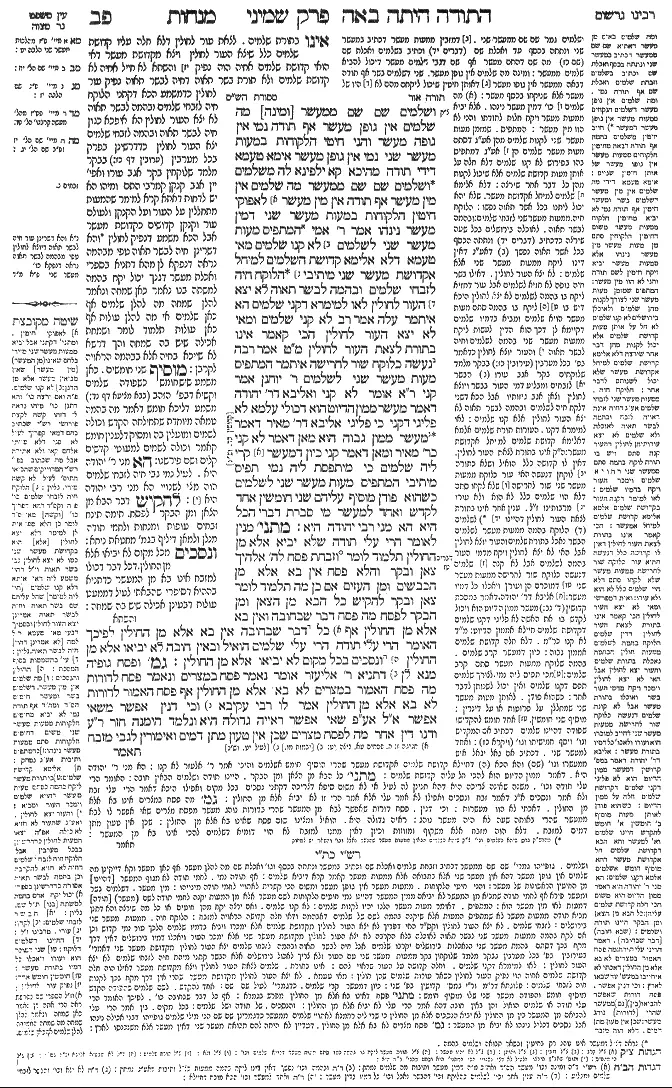
ושלמים שם שם ממעשר [ומינה] מה שלמים אין גופן מעשר אף תודה נמי אין גופה מעשר והני חיטי הלקוחות במעות מעשר שני נמי אין גופן מעשר אימא טעמא דידי תודה מהיכא קא ילפינא לה משלמים ושלמים שם שם ממעשר מה שלמים אין מין מעשר אף תודה אין מין מעשר לאפוקי חיטין הלקוחות במעות מעשר שני דמין מעשר נינהו אמר ר' אמי המתפיס מעות מעשר שני לשלמים לא קנו שלמים מאי טעמא דלא אלימא קדושת השלמים למיחל אקדושת מעשר שני מיתיבי הלוקח חיה לזבחי שלמים ובהמה לבשר תאוה לא יצא העור לחולין לאו למימרא דקני שלמים הא איתמר עלה אמר רב לא קני שלמים ומאי לא יצא העור לחולין הכי קאמר אינו בתורת לצאת העור לחולין מאי טעמא אמר רבה נעשה כלוקח שור לחרישה איתמר המתפיס מעות מעשר שני לשלמים ר' יוחנן אמר קני רבי אלעזר אומר לא קני ואליבא דר' יהודה דאמר מעשר ממון הדיוט הוא דכולי עלמא לא פליגי דקני כי פליגי אליבא דר' מאיר דאמר מעשר ממון גבוה הוא מאן דאמר לא קני כר' מאיר ומאן דאמר קני כיון דמעשר קרי ליה שלמים כי מיתפסת ליה נמי תפיס מיתיבי המתפיס מעות מעשר שני לשלמים כשהוא פודן מוסיף עליהם שני חומשין אחד לקדש ואחד למעשר מי סברת דברי הכל היא הא מני רבי יהודה היא:
מתני׳ מנין לאומר הרי עלי תודה שלא יביא אלא מן החולין תלמוד לומר (דברים טז, ב) וזבחת פסח לה' אלהיך צאן ובקר והלא פסח אין בא אלא מן הכבשים ומן העזים אם כן מה תלמוד לומר צאן ובקר להקיש כל הבא מן הצאן ומן הבקר לפסח מה פסח דבר שבחובה ואין בא אלא מן החולין אף כל דבר שבחובה אין בא אלא מן החולין לפיכך האומר הרי עלי תודה הרי עלי שלמים הואיל ובאין חובה לא יביאו אלא מן החולין ונסכים בכל מקום לא יביאו אלא מן החולין:
גמ׳ ופסח גופיה מנא לן דתניא ר' אליעזר אומר נאמר פסח במצרים ונאמר פסח לדורות מה פסח האמור במצרים לא בא אלא מן החולין אף פסח האמור לדורות לא בא אלא מן החולין אמר לו רבי עקיבא וכי דנין אפשר משאי אפשר אמר לו אף על פי שאי אפשר ראייה גדולה היא ונלמד הימנה חזר רבי עקיבא ודנו דין אחר מה לפסח מצרים שכן אין טעון מתן דמים ואימורין לגבי מזבח
Comments from Rashi on Masechet Menachot Page 82a
ושלמים גמר שם שם ממעשר שני . דמזבין ממעות מעשר דכתיב במעשר שני ונתתה בכסף עד ואכלת שם (דברים יד) וכתיב בשלמים ואכלת שם (שם כז) מה שם דהתם מעשר אף שם דגבי שלמים מעשר דיכול להביא שלמים ממעשר: ומינה מה שלמים אין גופן מעשר . שני דשלמים בשר אף תודה דבאה ממעשר אין גופו מעשר דאותן חיטין שיכול ליקחם מהם לא היו של מעשר אלא שניקחו בכסף מעשר: מה שלמים כו' דמין מעשר נינהו . אלא יביא ממעות מעשר ויקח חלות לתודתו והני לא הוו מין מעשר: המתפיס . שמזמן מעות מעשר שני לקנות שלמים מהן אע"ג דסתם מעות מעשר שלמים הן אע"ג דמתפיס בהו בפירוש לא קנו שלמים דלא חלה על אותן מעות קדושת שלמים אלא שיכול לקנות מהן כל דבר אחר שירצה: דלא אלימא שלמים למיחל אקדושת מעשר . שלא יהא יכול ליתנו בכל אשר תאוה נפשו: הלוקח חיה . ממעות מעשר שני לזבחי שלמים: ובהמה לבשר תאוה . לאוכלה בירושלים בכל שעה שירצה כדכתיב (דברים יד) ונתתה הכסף בכל אשר תאוה נפשך דאע"ג דאין דינו ליקח ממעות מעשר שני אלא שלמים: לא יצא העור לחולין . דאילו בשר חיה גופה לא חזיא לשלמים אבל עור דחזיא ליקח בו בהמה לשלמים לא יצא לחולין היכא דיש בו ליקח בו בהמה סתם מעות מעשר הויא שלמים ומביא בדמיו שלמים דקיימא לן דכך הוא הדין לעשות ליקח ממעות מעשר שני בהמה לשלמים וחיה לבשר תאוה והעור יוצא לחולין כדאמר בפ' בכל מערבין (עירובין כז:) בבקר מלמד שלוקחים בקר אגב עורו הבשר לזבחים ומבליע דמי העור בבשר ויוצא לחולין וצאן אגב גיזותיו אבל הכא דשני דלקח חיה לשלמים ובהמה לבשר תאוה לא יצא העור לחולין אלא קנו שלמים: לאו למימרא דקנו . העורות תורת שלמים אלמא דאלימא קדושת שלמים למיחל אקדושת מעשר: ה"ק אינו בתורת לצאת העור לחולין . דאין לו קדושה כלל הואיל ושלא כתורה לוקחן דנעשה האי עור כלוקח ממעות מעשר שני שור לחרישה שלא לקחו סתם דלא הוי שלמים כלל לא הוא ולא עורו מרבותינו ז"ל. ענין אחר אינו בתורת לצאת העור לחולין דהיינו לשלמים הלוקח בהמה ממעות מעשר לשלמים הבשר נאכל בתורת שלמים והעור יוצא לחולין אבל האי לא יצא לחולין ויקח מדמי העור בהמה לשלמים אבל לא קנה שלמים דנעשה כלוקח שור לחרישה ממעות מעשר שני דמוכרם הן ועורן ויאכלו כל דמיו מעשר: אליבא דר' יהודה . דאמר במסכת קדושין (ד' נב:) מעשר ממון הדיוט הוא ויכול לקדש בו את האשה לא פליגי דקנו שלמים דקדושת שלמים חיילא אממון הדיוט: מ"ד לא קנו כר"מ . דלא חלה קדושת שלמים אממון גבוה: כיון דמעשר קרב שלמים . בהמה שלוקח ממעות מעשר סתם קרב שלמים: מכי תפיס ליה נמי . לצורך שלמים תפס דקנו שלמים ואין יכול לשנותן לדבר אחר: כשהוא פודן . לאותן מעות מעשר שני שמחללן על פרוטות או על דינרין: מוסיף שני חומשין . אחד חומש להקדישו שפודה דהיינו שלמים דכתיב אם המקדיש וגו' ויסף חמישיתו וגו' (זיקרא כז): ואחד למעשר שני . דכתיב אם גאל יגאל איש ממעשרו וגו' (שם) והא הכא דחיילא קדושת שלמים אקדושת מעשר שהרי הוסיף חומש אשלמים והיכי אמר ר' אלעזר לא קנו: הא מני ר' יהודה היא . דאמר ממון הדיוט הוא להכי חל עליה קדושת שלמים: מתני' כל הבא מן הצאן ומן הבקר . היינו תודה ושלמים הבאין חובה: האומר הרי עלי תודה וכו' . משנה שאינה צריכה היא דהא תנינן לה לעיל אי לא משום סיפא דצריכה דקתני נסכים בכל מקום ואפילו היכא דאמר הרי עלי זבח ולא אמר ונסכים א"נ דאמר זבח ונסכים ואפילו לא אמר עלי אלא אמר הרי זו לא יביא אלא מן החולין: גמ' מה פסח במצרים אינו בא אלא מן החולין . דאכתי לא הוו מעשרות: וכי דנין . פסח דורות שאפשר לבא מן המעשר שהרי בדורות נוהג מעשר מפסח מצרים שאי אפשר לו לבא ממעשר שהרי באותה שעה לא היה מעשר נוהג: ראיה גדולה היא . הואיל ומצינו שום פסח שאינו בא אלא מן החולין: שכן אין טעון מתן דמים למזבח . דלא הוה מזבח אלא משקוף ומזוזות וכיון דאין ממנו למזבח לא הוי דומיא דשלמים להכי אינו בא מן המעשר:
Comments from Tosafot - Menachot 82a
אינו בתורת שלמים. לצאת עור לחולין דלא חלה עליו קדושת שלמים כלל שיצא העור לחולין ויצא מקדושת מעשר דאי הואי קדושת שלמים אחיה הוה נפיק והשתא לא חייל אחיה לא קדושת שלמים ולא תורת בשר תאוה דחיה לבשר תאוה נפיק עור לחולין כדמשמע הכא דקתני הלוקח חיה לזבחי שלמים ובהמה לבשר תאוה לא יצא העור לחולין הא איפכא כגון חיה לבשר תאוה ובהמה לזבחי שלמים יצא העור לחולין כדדרשינן בפרק בכל מערבין (ערובין דף כז:) בבקר מלמד שלוקחין בקר אגב עורו ואפי' יין אגב קנקן קמרבי התם ומיהו הא יש לדחות דאתא קרא למימר שהמעות מתחללין על העור ועל הקנקן ולעולם עור וקנקן קדושים כקדושת מעשר אבל הכא משמע דנפיק לחולין והא דשרינן חיה לבשר תאוה טפי מבהמה נראה דנפקא לן מהא דתניא בספרי ואכלת מעשר דגנך יכול יקח בהמה למשתה בנו נאמר כאן שמחה ונאמר להלן שמחה מה להלן שלמים אף כאן שלמים אי מה להלן עולות אף כאן עולות תלמוד לומר ושמחת אכילה שיש בה שמחה והך דרשא לא שייכא בחיה אלא בבהמה הראויה לקרבן: מוסיף שני חומשים. כאן משמע שיש חומש כשפודה שלמים וקשיא דבפ' הזהב (בבא מציעא דף נד:) משמע דליכא חומש דאמר מה בהמה טמאה מיוחדת שתחילתה הקדש וכולה לשמים ומועלין בה ומסיק דלענין חומש קאמר וכולה לשמים למעוטי קדשים קלים ושם פירשנו: הא מני ר' יהודה היא. לעיל נמי גבי חיה לזבחי שלמים הוה מצי לשנויי הא מני רבי יהודה היא: להקיש דבר הבא מן הצאן ומן הבקר לפסח. תימה תינח זבחים עופות ומנחות ולחמי תודה מנלן ולמאן דיליף בגמ' מחטאת ניחא: ונסכים מכל מקום לא יביאו אלא מן החולין. דכל דבר דכולו למזבח אינו בא מן המעשר כדתניא בההיא דסיפרי שהבאתי לעיל דממעט עולות דבעינן אכילה שיש בה שמחה:
Menachot 82a - Mishnah translated into english
And the halakha that a peace offering may be brought from second-tithe money is derived by a verbal analogy between “there” and “there” from the verse discussing second tithe. The verse states with regard to a peace offering: “And you shall sacrifice peace offerings and you shall eat there” (Deuteronomy 27:7), and the verse states with regard to second tithe: “And you shall eat before the Lord your God, in the place that He shall choose to cause His name to dwell there” (Deuteronomy 14:23). And from this it may be concluded: Just as peace offerings are not themselves brought from second tithe, as they are not produce, so too with regard to the loaves of a thanks offering, they are not themselves brought from second tithe. And that wheat which is purchased with second-tithe money is also not itself second tithe; it may therefore be used for the loaves of the thanks offering.
Now I will say my reasoning for why one may not prepare the loaves of a thanks offering with wheat that was purchased with second-tithe money: From where do I derive the halakha that a thanks offering may be brought from second-tithe money? I derive it from the halakhot of a peace offering. And the halakha that a peace offering may be brought from second-tithe money is derived by a verbal analogy between “there” and “there” from second tithe. Therefore, just as a peace offering is not of the same species as second tithe, so too the loaves of a thanks offering may not be of the same species as second tithe. This serves to exclude wheat purchased with second-tithe money, which is of the same species as second tithe.
§ Rabbi Ami says: In a case involving one who designates second-tithe money for a peace offering, the money does not assume the status of a peace offering. What is the reason? The reason is that the sanctity of the peace offering is not strong enough to take effect upon items that have the sanctity of second tithe.
The Gemara raises an objection from a mishna (Ma’aser Sheni 1:4): Ideally, one should use second-tithe money to purchase peace offerings. If one purchases a peace offering with second-tithe money, only the flesh of the animal is consecrated, while its hide is non-sacred. The mishna teaches: With regard to one who uses second-tithe money in an improper manner and purchases an undomesticated animal for a peace offering, a purpose for which an undomesticated animal cannot be used, or purchases a domesticated animal for meat of desire, i.e., ordinary meat, the Sages penalized him and decreed that the hide does not become non-sacred. The Gemara asks: Is that not to say that the hide of the animal purchased with the second-tithe money assumes the status of a peace offering, and it must be sold and the money used to purchase a peace offering, in contradiction to the statement of Rabbi Ami?
The Gemara rejects this: Wasn’t it stated concerning that mishna that Rav said: The hide of the animal purchased with the second-tithe money does not assume the status of a peace offering; and what is the meaning of the mishna that the hide does not become non-sacred? This is what the mishna is saying: The hide, as part of an undomesticated animal, is not in the category of a peace offering at all so that its hide would become non-sacred. What is the reason? Rabba says: Since he used the second-tithe money in an improper manner, it is considered as if he purchased an ox for plowing, to which no sanctity of second tithe applies.
§ It was stated that there is an amoraic dispute with regard to one who designates second-tithe money for a peace offering. Rabbi Yoḥanan says: The money assumes the status of a peace offering, and Rabbi Elazar says: The money does not assume the status of a peace offering.
The Gemara elaborates: And according to the opinion of Rabbi Yehuda, who said: Second tithe is non-sacred property, everyone agrees that the money assumes the status of a peace offering. When they disagree, it is according to the opinion of Rabbi Meir, who said: Second tithe is property belonging to the Most High. The one who says that the money does not assume the status of a peace offering holds in accordance with the opinion of Rabbi Meir, and one may not designate property of the Most High for another purpose. And the one who says that the money assumes the status of a peace offering holds that since second tithe is called a peace offering, as an animal purchased with second-tithe money without specification is brought as a peace offering, when he designates the money for a peace offering, it as well is designated with the sanctity of a peace offering.
The Gemara raises an objection to the statement of Rabbi Elazar from a baraita: In a case involving one who designates second-tithe money for a peace offering, the sanctity of a peace offering is applied to this money in addition to the sanctity of second tithe. Therefore, when he redeems this money, he adds to it two-fifths: One-fifth for the redemption of the sacrificial sanctity of a peace offering and one-fifth for the redemption of second tithe. Evidently, the sanctity of a peace offering does take effect on second-tithe money.
The Gemara responds: Do you maintain that this baraita is agreed upon by everyone? In accordance with whose opinion is this? It is in accordance with the opinion of Rabbi Yehuda, who holds that second-tithe money is non-sacred property. Accordingly, the sanctity of a peace offering takes effect on the money. Rabbi Elazar holds in accordance with the opinion of Rabbi Meir.
MISHNA: From where is it derived with regard to one who says: It is incumbent upon me to bring a thanks offering, that he may bring it only from non-sacred money? It is derived from a verse, as the verse states: “And you shall sacrifice the Paschal offering to the Lord your God, of the flock and the herd” (Deuteronomy 16:2). The verse is difficult: Doesn’t the Paschal offering come only from lambs and goats? If so, why does the verse state: “The flock and the herd”? It is to juxtapose all offerings that come from the flock and from the herd to the Paschal offering, teaching that just as the Paschal offering is a matter of obligation and comes only from non-sacred money, so too any matter of obligation comes only from non-sacred money.
Therefore, in the case of one who says: It is incumbent upon me to bring a thanks offering, or: It is incumbent upon me to bring a peace offering, since these offerings come as an obligation due to his vow, they may be brought only from non-sacred money. And libations, in any case, may be brought only from non-sacred money, and not from second-tithe money, because second-tithe money must be used to purchase items eaten by people, while libations are poured out next to the altar.
GEMARA: The mishna teaches that the halakha that any matter of obligation must be brought from non-sacred property is derived from the halakha of the Paschal offering. The Gemara asks: And concerning the Paschal offering itself, from where do we derive that it is brought only from non-sacred property? As it is taught in a baraita: Rabbi Eliezer says: “Paschal offering” is stated in the Torah with regard to the offering sacrificed in Egypt (see Exodus 12:3), and “Paschal offering” is stated with regard to the yearly obligation throughout the generations (see Exodus 12:25). Therefore, just as the Paschal offering stated with regard to Egypt was brought only from non-sacred property, as there was no second tithe in Egypt, so too the Paschal offering stated with regard to the obligation throughout the generations may be brought only from non-sacred property.
Rabbi Akiva said to him: But does one derive the possible from the impossible? Does one derive the halakha with regard to the Paschal offering of the generations, when there exists the possibility of using second-tithe money, from the halakha with regard to the Paschal offering sacrificed in Egypt, when there was no second tithe? Rabbi Eliezer said to him: Even though it was impossible to bring the Paschal offering in Egypt from consecrated money, it is a great proof, and we shall derive this halakha from it.
Rabbi Akiva then presented a different logical derivation to reject the proof of Rabbi Eliezer: One cannot derive the halakha with regard to the Paschal offering of the generations from that of the Paschal offering in Egypt, as what is notable about the Paschal offering sacrificed in Egypt? It is notable in that it did not require the placement of blood on the altar nor that the sacrificial portions be consumed by the altar.
Traduction : The William Davidson digital edition of the Koren Noé Talmud, with commentary by Rabbi Adin Even-Israel Steinsaltz.