 Talmud Bavli
Menachot 87a : Youtube
Daf TubeYoutube
2 video classes :
Menachot Page 87a
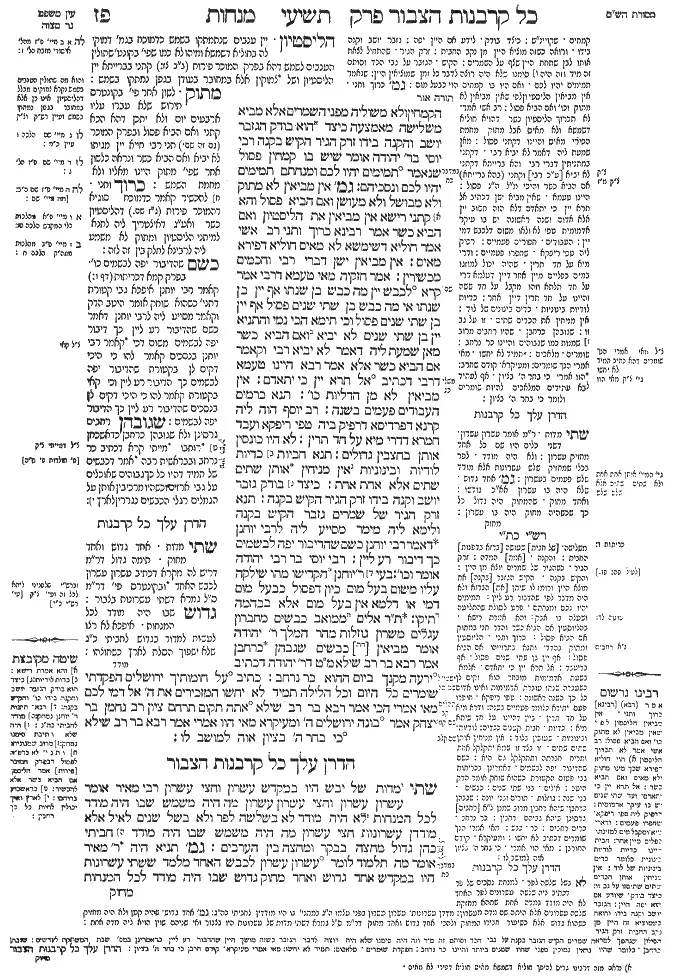
Menachot 87a - Guemara
הקמחין ולא משוליה מפני השמרים אלא מביא משלישה מאמצעה כיצד הוא בודק הגזבר יושב והקנה בידו זרק הגיר הקיש בקנה רבי יוסי בר' יהודה אומר שיש בו קמחין פסול שנאמר (במדבר כח, לא) תמימים יהיו לכם ומנחתם... תמימים יהיו לכם ונסכיהם:
גמ׳ אין מביאין לא מתוק ולא מבושל ולא מעושן ואם הביא פסול והא קתני רישא אין מביאין את הליסטיון ואם הביא כשר אמר רבינא כרוך ותני רב אשי אמר חוליא דשימשא לא מאיס חוליא דפירא מאיס:
אין מביאין ישן דברי רבי וחכמים מכשירין:
אמר חזקיה מאי טעמא דרבי אמר קרא (במדבר כח, יד) לכבש יין מה כבש בן שנתו אף יין בן שנתו אי מה כבש בן שתי שנים פסול אף יין בן שתי שנים פסול וכי תימא הכי נמי והתניא יין בן שתי שנים לא יביא ואם הביא כשר מאן שמעת ליה דאמר לא יביא רבי וקאמר אם הביא כשר אלא אמר רבא היינו טעמא דרבי דכתיב (משלי כג, לא) אל תרא יין כי יתאדם:
אין מביאין לא מן הדליות כו':
תנא כרמים העבודים פעמים בשנה:
רב יוסף הוה ליה קרנא דפרדיסא דרפיק ביה טפי ריפקא ועבד חמרא דדרי מיא על חד תרין:
לא היו כונסין אותן בחצבין גדולים:
תנא חביות כדיות לודיות ובינוניות אין מניחין אותן שתים שתים אלא אחת אחת:
כיצד בודק גזבר יושב וקנה בידו זרק הגיר הקיש בקנה:
תנא זרק הגיר של שמרים גזבר הקיש בקנה ולימא ליה מימר מסייע ליה לרבי יוחנן דאמר רבי יוחנן כשם שהדיבור יפה לבשמים כך דיבור רע ליין:
רבי יוסי בר רבי יהודה אומר וכו':
בעי ר' יוחנן הקדישו מהו שילקה עליו משום בעל מום כיון דפסול כבעל מום דמי או דלמא אין בעל מום אלא בבהמה תיקו:
תנו רבנן אלים ממואב כבשים מחברון עגלים משרון גוזלות מהר המלך ר' יהודה אומר מביאין כבשים שגבהן כרחבן אמר רבא בר רב שילא מאי טעמא דר' יהודה דכתיב (ישעיהו ל, כג) ירעה מקנך ביום ההוא כר נרחב:
כתיב (ישעיהו סב, ו) על חומותיך ירושלים הפקדתי שומרים כל היום וכל הלילה תמיד לא יחשו המזכירים את ה' אל דמי לכם מאי אמרי הכי אמר רבא בר רב שילא (תהלים קב, יד) אתה תקום תרחם ציון רב נחמן בר יצחק אמר (תהלים קמז, ב) בונה ירושלים ה' ומעיקרא מאי הוו אמרי אמר רבא בר רב שילא (תהלים קלב, יג) כי בחר ה' בציון אוה למושב לו:
הדרן עלך פרק כל קורבנות ציבור
מתני׳ שתי מדות של יבש היו במקדש עשרון וחצי עשרון רבי מאיר אומר עשרון עשרון וחצי עשרון עשרון מה היה משמש שבו היה מודד לכל המנחות לא היה מודד לא בשלשה לפר ולא בשל שנים לאיל אלא מודדן עשרונות חצי עשרון מה היה משמש שבו היה מודד חביתי כהן גדול מחצה בבקר ומחצה בין הערבים:
גמ׳ תניא היה ר' מאיר אומר מה תלמוד לומר (במדבר כח, כט) עשרון עשרון לכבש האחד מלמד ששתי עשרונות היו במקדש אחד גדוש ואחד מחוק גדוש שבו היה מודד לכל המנחות
Comments from Rashi on Masechet Menachot Page 87a
קמחים . שקויינ"ש: כיצד בודק . לידע אם היין יפה: גזבר יושב וקנה בידו . ורואה כשזה מוציא היין מן נקב החבית: זרק הגיר . שהתחיל לצאת אותו לבן שתחת היין שצף על השמרים: הקיש . הגזבר על גבי הכד וסותם זה מיד וזה היה סימנו שלא היה רוצה לדבר כל זמן שמוציאין היין: שנאמר תמימים יהיו לכם . ואם היו בו קמחים הוי כבעל מום: גמ' כרוך ותני . אין מביאין הליסטיון לפי שאין מביאין לא מתוק וכו' ואם הביא פסול: רב אשי אמר . לא תכרוך הליסטיון כשר דהויא חוליא דשמשא ולא מאיס אבל מתוק מחמת הפירי מאיס והיינו דקתני פסול: מאן שמעת ליה דאמר לא יביא רבי . דקתני במתניתין דברי רבי והא ברייתא דקתני לא יביא [ע"כ רבי] וקתני (בהא ברייתא) אם הביא כשר והיכי מ"ל ה"נ פסול: היינו טעמא . שאין מביא ישן דכתיב אל תרא יין כי יתאדם דלא הוה חשוב יין אלא אדום ושנה ראשונה יש בו עיקר אדמומית טפי לא ולאו משום דלכבש דמי יין: העבודים . חפורים פעמיים: רפיק ליה טפי ריפקא . שחפרו פעמיים: ודרי מיא על חד תרין . שהיה יכול למוזגו במים כפליים מיין אחר דיין דעלמא דרי על חד תלתא וזהו מקבל על חד ששה והיינו על חד תרין דיין אחר: כדיות לודיות בינוניות . כדים בינונים של לוד: אין מניחין את הכדים שתים . זו על גב זו: שגובהן כרחבן . שהיו רחבים מרוב שמנות כמו שגבוהים והיינו כר נרחב: שומרים . מלאכים: תמיד לא יחשו . מאי אמרי הנך שומרים: ומעיקרא . קודם שחרב: הוו אמרי כי בחר ה' בציון . אף לעתיד לבא עתידים המלאכים להיות שומרים ולומר כי בחר ה' בציון: מתני' שתי מדות . ר"מ אומר עשרון עשרון. דשני כלים היו שם כל אחד מחזיק עשרון: ולא היה מודד . לפר בכלי שמחזיק שלש עשרונות אלא מודד שלש פעמים בעשרון: גמ' אחד גדוש . שלא היה בו עשרון אא"כ גודשו: ואחד מחוק . שהמחוק היה גדול כל כך שכשהיה מחוק היה בו עשרון:
Comments from Tosafot - Menachot 87a
כרוך ותני. להכשיר קאמר כדמוכח סוגיא דהמוכר פירות (ג"ז שם.) דהליסטיון כשר ואע"ג דאיצטריך ליה לתנא למיתני הליסטיון ומתוק לא משמע ליה לרבינא לחלק בין זה לזה: כשם שהדיבור יפה לבשמים כו'. בפרק קמא דכריתות (דף ו:) קאמר רבי יוחנן איפכא גבי קטורת דתני' כשהוא שוחק אומר היטב הדק וקאמר מסייע ליה לרבי יוחנן דאמר כשם שהדיבור רע ליין כך דיבור יפה לבשמים משום דכי קאמר רבי יוחנן בנסכים קאמר להו כי היכי דקים לן בקטורת שהדיבור יפה לבשמים כך הדיבור רע ליין וכי קאי בקטורת קאמר להו כי היכי דקים לן בנסכים שהדיבור רע ליין כך הדיבור יפה לבשמים: שגובהן רחבים גרסינן ולא שגובהן כרחבן כדאשכחן רוחבו מייתי קרא דכתיב כר נרחב ובבראשית רבה אמר דכבשים של תמיד דהיו כל כך גבוהים שאוכלים על גבי ארזים וכשהיו מרכיבין אותן על הגמלים רגלי הכבשים נגררין לארץ: אחד גדוש ואחד מחוק. תימה גדול דר"מ דריש לה מקרא דכתיב עשרון עשרון לכבש האחד ובקונטרס פי' דר"מ ס"ל גמרא דשתי עשרונות בצבור: גדוש שבו היה מודד לכל המנחות. איפכא לא רצו לעשות למדוד בגדוש לחביתי כ"ג שלא ישפוך הסלת לארץ כשחוצהו:
Menachot 87a - Mishnah translated into english
the flour-like white scum that floats on the surface, nor from the wine at bottom of the cask due to the sediment that collects there. Rather, one brings from the wine in its middle third.
How does the Temple treasurer inspect the wine to determine that it is from the middle of the cask? The treasurer sits alongside the cask and has the measuring reed in his hand. The spigot is opened and the wine begins to flow. When he sees that the wine emerging draws with it chalk-like scum [hagir], he immediately knocks with the reed to indicate that the spigot should be closed.
Rabbi Yosei, son of Rabbi Yehuda, says: Wine in which there is flour-like white scum is unfit for libations, as it is stated with regard to animal offerings: “Unblemished they shall be for you…and their meal offering shall be fine flour mixed with oil…unblemished they shall be for you, and their libations” (Numbers 28:19–20, 31). This indicates that animal offerings, meal offerings, and libations must all be brought from flawless products. Therefore, the presence of flour-like white scum in wine renders it unfit.
GEMARA: The mishna teaches: One may not bring libations from sweet wine, nor from boiled wine, nor from wine produced from smoked grapes, and if one did bring a libation from such wine, it is not valid. The Gemara asks: But doesn’t the first clause teach: One may not bring libations from sweet wine made from sun-dried grapes, but if one did bring a libation from such wine it is valid? How can one clause teach that a libation of one type of sweet wine is valid, and the other clause teach that a libation of another type of sweet wine is not valid?
Ravina said: The text of the mishna is corrupt. To correct it, combine the two clauses into one and teach with regard to all the wines mentioned that they are unfit to be used for libations. Rav Ashi said: The text of the mishna is correct. The reason for the difference between the two wines is that the sweetness of grapes sweetened by the sun is not objectionable, so libations of wine made from such grapes are valid, while sweetness that results from the sugars of the fruit itself is objectionable, so libations of wine made from such grapes are not valid.
§ The mishna teaches: One may not bring wine aged for one year; this is the statement of Rabbi Yehuda HaNasi, but the Rabbis deem it valid. The Gemara provides the source for Rabbi Yehuda HaNasi’s ruling. Rabbi Ḥizkiyya said: What is the reasoning of Rabbi Yehuda HaNasi? The verse states with regard to the libations that accompany the New Moon offering: “And their libations: Half a hin for a bull, a third of a hin for a ram, and a quarter of a hin for a lamb, of wine” (Numbers 28:14). The juxtaposition of the terms lamb and wine teaches that just as a lamb is fit to be used as an offering only if brought in its first year, so too wine is fit to be used as a libation only if it is in its first year.
The Gemara ask: If so, take the analogy further and conclude that just as if one offers a lamb in its second year, it is not valid, so too a libation of wine in its second year is not valid. And if you would say that this is indeed the halakha, that is difficult: But isn’t it taught in a baraita that wine in its second year may not be brought ab initio, but if one did bring it as a libation, it is valid? That baraita certainly expresses the opinion of Rabbi Yehuda HaNasi, as whom did you hear who said that aged wine may not be brought? Only Rabbi Yehuda HaNasi, who explicitly states this opinion in the mishna. And yet he says in the baraita: If one did bring a libation of aged wine, it is valid. According to Rabbi Ḥizkiyya’s explanation of Rabbi Yehuda HaNasi’s opinion, such an opinion is illogical.
Rather, Rava said: This is the reasoning of Rabbi Yehuda HaNasi: As it is written in the verse exhorting a person not to be enticed by fine wines: “Look not upon the wine when it is red” (Proverbs 23:31). Evidently, the redness of wine is indicative of its quality. After a year, wine begins to lose its redness and so it should not be used, ab initio. Nevertheless, it is still of a sufficient quality to be acceptable, after the fact.
§ The mishna teaches: One may not bring wine produced from grapes suspended on stakes or trees; rather, one brings wine produced from grapes at foot height and from vineyards that are cultivated. The definition of vineyards that are cultivated is clarified in a baraita that taught: Vineyards that are cultivated twice a year. This is done by hoeing the earth underneath the vines.
The Gemara relates the efficacy of cultivating the land twice a year: Rav Yosef had a tract of land that was used as an orchard [depardeisa] to which he used to give an extra hoeing, and consequently it produced wine of such superior quality that when preparing the wine for drinking it required a dilution using twice the amount of water than that which is usually used to dilute wine.
§ The mishna teaches: When people produced wine for libations they would not collect the wine into large barrels, as it causes the wine to spoil; rather, it would be placed in small casks. The Sages taught in a baraita: The casks referred to by the mishna are flasks that are made in Lod and that are medium-sized.
The Gemara adds another halakha: When storing casks containing wine for libations, they should not be placed in twos, i.e., one atop the other, but rather singly, i.e., each one should be placed separately.
§ The mishna teaches: How does the Temple treasurer inspect wine to determine that it is from the middle of the cask? The treasurer sits alongside the cask and has the measuring reed in his hand. The spigot is opened and the wine begins to flow. If he sees that the wine emerging draws with it chalk-like scum, he immediately knocks with the reed to indicate that the spigot should be closed. The precise point at which he knocks is clarified in a baraita that taught: If the wine draws with it chalk-like scum, which comes from the sediment, the treasurer knocks with the reed.
The Gemara challenges: Why does the treasurer knock with the reed; let him simply speak. The Gemara explains: This supports the opinion of Rabbi Yoḥanan, as Rabbi Yoḥanan said: Just as speech is beneficial to the incense spices, so is speech detrimental to wine, and so the treasurer avoids speaking.
§ The mishna teaches: Rabbi Yosei, son of Rabbi Yehuda, says: Wine in which there is flour-like white scum is unfit for libations. Rabbi Yoḥanan raises a dilemma concerning such wine: If one consecrated it to be used as a libation, what is the halakha with regard to whether he should be flogged for consecrating it due to the prohibition against consecrating a flawed item as an offering? Does one say that since it is unfit, it is comparable to a blemished animal? Or perhaps, the prohibition to consecrate a flawed item applies only to an animal. The Gemara concludes: The dilemma shall stand unresolved.
§ Having discussed which flours, oils, and wine are fit to be offered in the Temple, the Gemara considers which animals are of sufficient quality to be used as offerings. The Sages taught in a baraita: The choicest rams are those from Moab; the choicest lambs are those from Hebron; the choicest calves are those from Sharon; and the choicest fledglings, i.e., doves and pigeons, are those from the King’s Mountain.
Rabbi Yehuda says: One should bring lambs whose height is like their width, i.e., they are so robust that they are as wide as they are tall. Rava bar Rav Sheila said: What is the reason of Rabbi Yehuda? As it is written: “And He will give the rain for your seed, with which you sow the ground, and bread of the produce of the ground, and it shall be fat and bountiful; your cattle shall graze in wide pastures [kar nirḥav] on that day” (Isaiah 30:23). The word “kar” can also mean a lamb, and “nirḥav” means wide. Accordingly, Rabbi Yehuda interprets this verse, on a homiletical level, to be alluding to robust sheep.
The chapter concludes by quoting an additional prophecy of Isaiah concerning the rebuilding of Eretz Yisrael: It is written: “I have set watchmen upon your walls, Jerusalem; they shall never be silent day nor night; those who remind the Lord, take no rest” (Isaiah 62:6). This is referring to the angels appointed by God to bring the redemption. The Gemara asks: What do these watchmen say to remind the Lord? This is what Rava bar Rav Sheila said: They recite the verse: “You will arise and have compassion upon Zion; for it is time to be gracious to her, for the appointed time has come” (Psalms 102:14).
Rav Naḥman bar Yitzḥak says: They recite the verse: “The Lord builds up Jerusalem, He gathers together the dispersed of Israel” (Psalms 147:2). The Gemara asks: And initially, when the Temple still stood and the Jewish people were gathered together in Eretz Yisrael, what would the watchmen say? Rava bar Rav Sheila says: They would say: “For the Lord has chosen Zion; He has desired it for His habitation. This is My resting place forever; here will I dwell for I have desired it” (Psalms 132:13–14).
MISHNA: Two sizes of measuring vessels for dry substances were used in the Temple for measuring flour for the meal offerings. One held a tenth of an ephah and the other held one-half of a tenth of an ephah. Rabbi Meir says: There were three measuring vessels; one that held a tenth of an ephah, another one that also held a tenth of an ephah, and a third one that held one-half of a tenth of an ephah.
What purpose did the tenth of an ephah measuring vessel serve? It was the vessel with which one would measure flour for all the meal offerings. One would not measure the flour by using a measuring vessel of a size that held the entire volume of flour required at once, i.e., neither with a vessel of three-tenths of an ephah for the meal offering accompanying the sacrifice of a bull, nor with a vessel of two-tenths of an ephah for the meal offering accompanying the sacrifice of a ram. Rather, one measures the flour for them by repeatedly using the tenth of an ephah measuring vessel to measure the required number of tenths.
What purpose did the one-half of a tenth of an ephah measuring vessel serve? It was the vessel with which one would measure the flour for the High Priest’s griddle-cake offering. A tenth of an ephah was required each day; he sacrificed half of it in the morning and the other half of it in the afternoon.
GEMARA: The Gemara cites a baraita that clarifies Rabbi Meir’s opinion. It is taught in a baraita that Rabbi Meir would say: What is the meaning when the verse states: “A tenth, a tenth, for every lamb” (Numbers 28:29)? The fact the word “tenth” appears twice teaches that there were two measuring vessels that each held a tenth of an ephah in the Temple. One of them held that volume when it was heaped, and the other one was slightly larger and held that same volume when the flour was leveled with the rim.
The one that held a tenth of an ephah when heaped was the vessel with which one would measure the flour for all the meal offerings.
Traduction : The William Davidson digital edition of the Koren Noé Talmud, with commentary by Rabbi Adin Even-Israel Steinsaltz.