 Talmud Bavli
Menachot 42b : Youtube
Daf TubeYoutube
2 video classes :
Menachot Page 42b
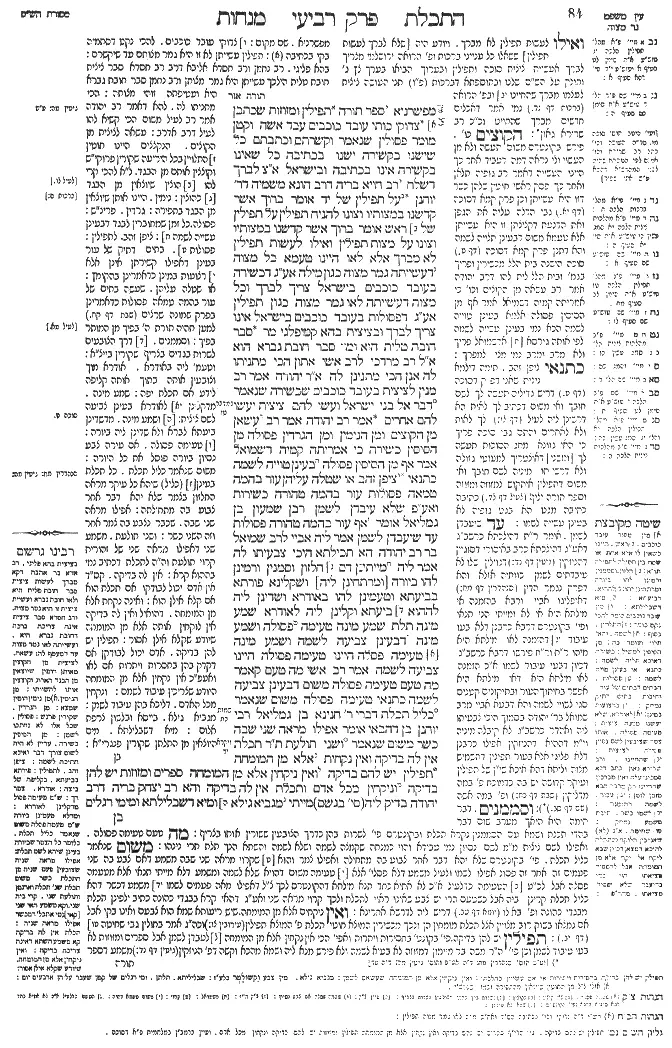
Menachot 42b - Guemara
מפשרניא ספר תורה תפילין ומזוזות שכתבן צדוקי כותי עובד כוכבים עבד אשה וקטן מומר פסולין שנאמר וקשרתם וכתבתם כל שישנו בקשירה ישנו בכתיבה כל שאינו בקשירה אינו בכתיבה ובישראל א"צ לברך דשלח רב חייא בריה דרב הונא משמיה דר' יוחנן על תפילין של יד אומר ברוך אשר קדשנו במצותיו וצונו להניח תפילין על תפילין של ראש אומר ברוך אשר קדשנו במצותיו וצונו על מצות תפילין ואילו לעשות תפילין לא מברך אלא לאו היינו טעמא כל מצוה דעשייתה גמר מצוה כגון מילה אע"ג דכשירה בעובד כוכבים בישראל צריך לברך וכל מצוה דעשייתה לאו גמר מצוה כגון תפילין אע"ג דפסולות בעובד כוכבים בישראל אינו צריך לברך ובציצית בהא קמיפלגי מר סבר חובת טלית הוא ומר סבר חובת גברא הוא א"ל רב מרדכי לרב אשי אתון הכי מתניתו לה אנן הכי מתנינן לה א"ר יהודה אמר רב מנין לציצית בעובד כוכבים שכשירה שנאמר (במדבר טו, ב) דבר אל בני ישראל ועשו להם ציצית יעשו להם אחרים אמר רב יהודה אמר רב עשאן מן הקוצים ומן הנימין ומן הגרדין פסולה מן הסיסין כשירה כי אמריתה קמיה דשמואל אמר אף מן הסיסין פסולה בעינן טוייה לשמה כתנאי ציפן זהב או שטלה עליהן עור בהמה טמאה פסולות עור בהמה טהורה כשירות ואע"פ שלא עיבדן לשמן רבן שמעון בן גמליאל אומר אף עור בהמה טהורה פסולות עד שיעבדן לשמן אמר ליה אביי לרב שמואל בר רב יהודה הא תכילתא היכי צבעיתו לה אמר ליה מייתינן דם חלזון וסמנין ורמינן להו ביורה [ומרתחינן ליה] ושקלינא פורתא בביעתא וטעמינן להו באודרא ושדינן ליה לההוא ביעתא וקלינן ליה לאודרא שמע מינה תלת שמע מינה טעימה פסולה ושמע מינה דבעינן צביעה לשמה ושמע מינה טעימה פסלה היינו טעימה פסולה היינו צביעה לשמה אמר רב אשי מה טעם קאמר מה טעם טעימה פסולה משום דבעינן צביעה לשמה כתנאי טעימה פסולה משום שנאמר (שמות כח, לא) כליל תכלת דברי ר' חנינא בן גמליאל רבי יוחנן בן דהבאי אומר אפילו מראה שני שבה כשר משום שנאמר (ויקרא יד, ד) ושני תולעת ת"ר תכלת אין לה בדיקה ואין נקחית אלא מן המומחה תפילין יש להם בדיקה ואין ניקחין אלא מן המומחה ספרים ומזוזות יש להן בדיקה וניקחין מכל אדם ותכלת אין לה בדיקה והא רב יצחק בריה דרב יהודה בדיק ליה (סי' בגשם) מייתי מגביא גילא ומיא דשבלילתא ומימי רגלים
Comments from Rashi on Masechet Menachot Page 42b
מפשרניא . שם מקום: צדוקי עובד כוכבים . להכי נקט דסתמיה בקי בכתיבה: תפילין עשייתן לא זו היא גמר מצותם עד שיקשרם: בהא פליגי . רב נחמן ורב חסדא אליבא דרב רב חסדא סבר ציצית חובת טלית הילכך עשייתן היא גמר מצותן ורב נחמן סבר חובת גברא היא ועטיפתה זוהי מצותה: הכי מתניתו לה . להא דאמר רב יהודה אמר רב לעיל משום הכי קשיא להו לעיל דרב אדרב: עשאה לציצית מן הקוצים . הנקצצים היינו חוטין התלויין בכל היריעה שקורין פרוקי"ש וקוצצין אותם מן הבגד. ל"א להכי קרי להו הוצין שיוצאין מן הבגד כהוצין: נימין . היינו אותן שיוצאין מן הבגד בתפירה: גרדין . פרינ"ש: פסולה . כל זמן שמחוברין לבגד דבעינן עשייה לשמה: ציפן זהב . לתפילין: פסולות . בתים דתיק של עור בעינן דאפילו קשירתן אינן אלא רצועות במינן כדאמרינן בהקומץ: או שטלה עליהן . שעשה בתים של עור בהמה טמאה פסולות כדאמרינן בפרק שמונה שרצים (שבת דף קח.) למען תהיה תורת ה' בפיך מן המותר בפיך: וסממנים . דרך הצובעים לשרות בגדים בצריף שקורין בייצ"א: וטעמ' ליה באודרא . אודרא מוך וצובעין אותה בתוך אותה קליפה לידע אם תכלת יפה: שמע מינה . מדקלינן לאודרא בעינן צביעה לשם ציצית: ושמע מינה . מדשדינן ביעתא לברא ולא שדינן ליה ביורה: טעימה פסולה . אם עירה צבע נסיון ביורה פוסל את כל היורה: משום שנאמר כליל תכלת . כל תכלת בעינן (כליל) שיהא כל עיקר מראה החלזון בצמר שלא יהא דבר אחר צבוע בה מתחילתה: אפילו מראה שני שבה . שכבר נצבע בה צמר אחר וזה השני כשר: ושני תולעת . משמע שני דאפילו מראה שני של זהורית קרוי תולעת וה"ה לתכלת דכתיב נמי בההוא קרא: אין לה בדיקה . קס"ד אין אדם יכול לבודקו אם תכלת הוא אם קלא אילן הוא: ואינה נקחת אלא מן המומחה . דהואיל ואין לה בדיקה אין לוקחין אותה אלא מן המומחה שיודע שקלא אילן אסור: תפילין יש להן בדיקה . אדם יכול לבודקן אם דקדק בהן בחסרות ויתרות אם לאו ואעפ"כ אין נקחין אלא מן המומחה היודע שצריכין עיבוד לשמם: ונקחין מכל האדם . דליכא בהן עיבוד לשמן: מגביא גילא . בייסא ובלשון צרפת אלום: מיא דשבלילתא . מים היוצאין מן התלתן שקורין פנגרי"א:
Comments from Tosafot - Menachot 42b
ואילו לעשות תפילין לא מברך. ויודע היה [שלא לברך לעשות תפילין] ששאלו כל ענייני ברכות ופ' הרואה ירושלמי מצריך לברך אעשיית ציצית סוכה ותפילין ובערוך הביאו בערך צץ ג' וחולק על הש"ס שלנו ובתוספתא דברכות (פ"ו) תני העושה ציצית לעצמו מברך שהחיינו ובפ' הרואה (ברכות דף נד.) נמי אמר דאכלים חדשים מברך שהחיינו וכ"כ רב שרירא גאון: הקוצים כו'. פירש בקונטרס משום תעשה ולא מן העשוי ולי נראה דמה דעביד אחר כך היינו העשייה דאמר רב גופיה תלאן ואחר כך פסק ראשי חוטין שלהן כשר דזו היא עשייתן וכן פרק קמא דסוכה (דף יא.) גבי הדלה עליה את הגפן ואת הדלעת דקציצתן זו היא עשייתן אלא טעמא משום דבעינן תלייה לשמה והא דתנן פרק קמא דסוכה (דף ט.) סוכה הישנה בית הלל מכשירין ופריך בגמ' ובית הלל לית להו דרב יהודה אמר רב עשאה מן הקוצים וכו' כי אמריתה קמיה דשמואל אמר אף מן הסיסין פסולה אלמא בעינן טוייה לשמה הכא נמי בעינן עשייה לשמה לפי. אותה גירסא אדשמואל פריך ולא מרב ומרב נמי מצי למפרך: כתנאי ציפן זהב. תימה דילמא ציצית שאני דפ"ק דסוכה (דף ט.) דריש גדילים תעשה לך לשם חובך ואי משום דכתיב לך לאות הא דרשינן ליה לעיל (מנחות דף לז:) לך לאות ולא לאחרים והתם גבי סוכה פריך כי האי גוונא מחג הסוכות תעשה לך [ומשני] דאיצטריך למעוטי גזולה ולא דרשי תו מיניה לשם חובך ואי משום דתפילין איתקוש למזוזה ומזוזה וספר תורה יליף (לעיל מנחות דף לד.) כתיבה כתיבה מגט הא בגט גופיה לא בעינן עשייה לשמו: עד שיעבדן לשמן. אומר ר"ת דהילכתא כרשב"ג דאע"ג דהילכתא כרב באיסורי דסוגיין דהניזקין (גיטין דף נד:) דגוילין שלו לא עיבדתים לשמן כוותיה אזלא והא דפרק נגמר הדין (סנהדרין דף מח:) דאיפליגו אביי ורבא בהזמנה אי מילתא היא אי לא ומייתי הני תנאי ופי' בקונטרס דרבא כרבנן דלא בעו עיבוד דהזמנה לאו מילתא היא מיהו ר"ת ור"ת פירשו דרבא כרשב"ג דכיון דבעי עיבוד לשמו א"כ הזמנה לאו מילתא היא דאי מילתא היא אפשר בחיתוך העור ובתיקונים קטנים סגי לשויי לשמה והא דבעא אביי מרב שמואל בר' יהודה בסמוך היכי צבעיתו ליה ואהדר כרשב"ג לא קיבלה מיניה וי"מ דההיא דהניזקין אפילו כרבנן דלא פליגי אלא בעור תפילין דתשמיש מצוה וליתא דהא איכא שי"ן של תפילין ועיקר קדושה יש בה כדמוכח פ' במה מדליקין (שבת דף כח:) ופ' במה אשה (שם דף סב.): וסממנים. דבר תימה הוא היאך מערב שום דבר בהדי תכלת ושמא עם הסממנין נקרא תכלת ובקונטרס פי' לשרות בהן כדרך הצובעין ששורין אותו בצריף: מה טעם טעימה פסולה. ואפילו לשם ציצית מ"מ לשם נסיון נמי עבידא והוי כמנחה שקמצה לשמה ושלא לשמה והשתא הנך תלת תרי נינהו: משום שנאמר כליל תכלת. פי' בקונטרס שלא יהא דבר אחר צבוע בה מתחילה ואפילו צמר והוא שקרוי מראה שני שבה משמע דאם צבע בה שני פעמים זה אחר זה פסול אפילו לשמו ולעיל משמע דלא פסלי' אלא טעימה משום דהויא שלא לשמה ומשמע דלא מייתי תנאי אלא מטעמה פסלה אבל לכ"ע הטעימה כדלעיל א"כ לא אתיא כחד תנא מילתא דהקונטרס לכך צ"ל דאפילו מאה פעמים לשמו משמע דכשר דהא כליל תכלת קרינן ביה אבל כשטעם הרי יש צבע שאינו ראוי לתכלת ולכך קרוי מראה שני ואע"ג דהאי קרא בבגדי כהונה כתיב ילפינן תכלת מבגדי כהונה ופ' בא לו (יומא דף עב.) דריש ליה לדרשא אחרינא: ואין ניקחים אלא מן המומחה. שיש ריעותא שמא הוא צבעם ואינו בקי אבל אם נמצאו בשוק רוב מצויין אצל תכלת מומחין הן ולכך מכשירין המוצא חוטי תכלת פ' המוצא תפילין (עירובין צו:) וכה"ג אמר בחולין גבי שחיטה (דף יב.): תפילין יש להן בדיקה. פי' בקונט' בחסירות ויתרות ואפי' הכי אין נקחין אלא מן המומחה לעבדן לשמן אבל ספרים ומזוזות לא בעי עיבוד לשמן וכן פי' ה"ר משה בר מיימון דמזוזה לא בעיא לשמה ולא פירש מנא ליה ושמא מהכא וקשה דפ' הניזקין (גיטין דף נד:) משמע דספר תורה בעי עיבוד ושמא הכא בשאר ספרים איירי ונראה לפרש תפילין יש להם בדיקה בחסירות ויתירות ואפ"ה אין ניקחין שגנאי לסותרן אבל לעיבוד לשמה לא חיישינן שהכל בקיאין בו והא דתניא בהמוצא תפילין (עירובין דף צז.) הלוקח תפילין מן השוק בודקה אחת אחת בדיעבד איירי (ולפי' הקונטרס נראה לי לפרש דבדיעבד לא חיישינן) והכי תניא בתוספתא דמסכת ע"ז אין לוקחין תפילין אלא מן המומחה ואם לקח ממי שאינו מומחה ומצא בידו שנים או שלשה צמדים בודק ממנו תפילין אחד של יד או של ראש בצמיד הראשון וכן שני וכן שלישי והא דתנן (שם דף צה.) המוצא תפילין מכניסן זוג זוג אע"פ שלא בדקן התם משום כבוד דתפילין לא חיישינן א"נ מוצא שאני דרוב מצויין אצל תפילין מומחין הן ובמכילתא איתא נאמר כאן ימימה ונאמר להלן (ויקרא כה) ימים תהיה גאולתו מה להלן י"ב חדש אף כאן מגיד שצריך לבדוק תפילין אחת לי"ב חדש דברי ב"ה ב"ש אומרים אין צריך בדיקה שמאי אומר אלו תפילין של אבי אימא ופרק המוצא תפילין ירושלמי נמי תניא תפילין צריך [בדיקה] אחת לי"ב חדש דברי רבי רשב"ג אומר אין צריך וכל הני דמצרכי בדיקה סבירא להו בחזקת תפילין הכתוב מדבר ולא קי"ל הכי מיהו בשימושא רבה איכא שמצריך לבדקן פעמיים בשבוע והני בדיקות לא הוו משום חסירות ויתירות אלא שמא בלו ונתקלקלו ובמזוזה אשכחן בדיקה דאמרינן במס' יומא (דף יא.) שנבדקת פעמיים בשבוע ויש לחלק:
Menachot 42b - Mishnah translated into english
of Pashronya: A Torah scroll, phylacteries, or mezuzot that were written by a heretic, a Samaritan, a gentile, a Canaanite slave, a woman, a minor, or a Jewish apostate [meshummad] are unfit, as it is stated: “And you shall bind them for a sign on your arm…and you shall write them on the doorposts of your house” (Deuteronomy 6:8–9). From this juxtaposition, one can derive the following: Anyone who is included in the mitzva of binding the phylacteries, i.e., one who is both obligated and performs the mitzva, is included in the class of people who may write Torah scrolls, phylacteries, and mezuzot; and anyone who is not included in the mitzva of binding is not included in the class of people who may write sacred texts.
And despite the fact that phylacteries written by a gentile are unfit, a Jew who writes them does not have to recite a blessing. As Rav Ḥiyya, son of Rav Huna, sent a ruling in the name of Rabbi Yoḥanan: On phylacteries of the arm one says the blessing: Blessed are You, Lord our God, King of the universe, Who has sanctified us through His mitzvot and commanded us to don phylacteries. On phylacteries of the head one says the blessing: Blessed are You, Lord our God, King of the universe, Who has sanctified us through His mitzvot and commanded us concerning the mitzva of phylacteries. The implication of this is that one recites blessings only when he dons the phylacteries, whereas when he writes the phylacteries he does not recite a blessing: To prepare phylacteries.
Rather, isn’t this the reason for the distinction between different mitzvot: For any mitzva whose performance is the completion of the mitzva, such as circumcision, even though it is valid when performed by a gentile, when it is performed by a Jew he must recite a blessing. But for any mitzva where the performance of a particular act is not the completion of the mitzva, such as writing phylacteries, where one does not complete the mitzva until he dons them, even though it is not valid when performed by a gentile, when it is performed by a Jew he does not need to recite a blessing.
And with regard to reciting a blessing when one attaches ritual fringes to a garment, the Sages disagree about this: One Sage, Rav Adda bar Ahava, holds that it is an obligation pertaining to the cloak. Therefore, when one attaches the ritual fringes he is completing the mitzva, and he should recite a blessing: To prepare ritual fringes. And one Sage, Rav Naḥman, citing Rav, holds that it is an obligation incumbent upon the man. Consequently, the mitzva is not complete until he wears the garment, and he should not recite a blessing when he attaches the ritual fringes to the garment.
Rav Mordekhai said to Rav Ashi: You teach this halakha about gentiles attaching ritual fringes to a garment in this manner, citing Rav Yehuda in the name of Rav that the ritual fringes are invalid. Consequently, Rav Ḥisda raises a contradiction between this ruling and another ruling of Rav.
We teach it in this way, according to which there is no contradiction: Rav Yehuda says that Rav says: From where is it derived that if ritual fringes are attached to a garment by a gentile they are valid? It is derived from that which is stated: “Speak unto the children of Israel and command them that they prepare for themselves [lahem] strings” (Numbers 15:38). From the fact that the verse does not merely state: That they prepare [ve’asu], but rather states “ve’asu lahem,” which can be translated as: That they prepare for them, the indication is that even others, i.e., gentiles, shall prepare ritual fringes for them.
§ Rav Yehuda says that Rav says: If one prepared ritual fringes from threads that protrude from the fabric like thorns [kotzim], or if he prepared them from threads [nimin] that were used to sew the garment and remain attached to it, or from the strings [geradin] that hang from the bottom of a garment, the ritual fringes are unfit, as one must attach ritual fringes to a garment for the sake of the mitzva. But if he prepared ritual fringes from swatches of wool that were not spun for the sake of the mitzva, they are fit.
Rav Yehuda continues: When I stated this halakha in the name of Rav before Shmuel, he said to me: Even ritual fringes tied from swatches of wool that were not spun for the sake of the mitzva are unfit, as we require the spinning of the string to be for the sake of the mitzva.
The Gemara notes that this dispute is like a dispute between tanna’im, as it is taught in a baraita: If one took phylacteries and coated them with gold or patched them with the skin of a non-kosher animal, then they are unfit. But if one patched them with the skin of a kosher animal, then they are fit, and this is so even though he did not prepare the skin for their sake, i.e., for the sake of its use in a mitzva. Rabban Shimon ben Gamliel says: Even if he patched them with the skin of a kosher animal they are unfit, until he prepares them for their sake.
§ Abaye said to Rav Shmuel bar Rav Yehuda: How do you dye this sky-blue wool to be used for ritual fringes? Rav Shmuel bar Rav Yehuda said to Abaye: We bring blood of a ḥilazon and various herbs and put them in a pot and boil them. And then we take a bit of the resulting dye in an egg shell and test it by using it to dye a wad of wool to see if it has attained the desired hue. And then we throw away that egg shell and its contents and burn the wad of wool.
The Gemara comments: Learn from this statement three halakhot: Learn from it that wool that was dyed for the purpose of testing the dye and not for use as ritual fringes is unfit for ritual fringes. Consequently, one burns the wad of wool so that no one will use it for ritual fringes. And learn from it that we require dyeing for the sake of the mitzva. And learn from it that using dye for testing renders all the dye in that vessel unfit. Therefore, some of the dye is removed from the pot before it is tested.
The Gemara challenges: The halakha that wool dyed for the purpose of testing the dye is unfit is the same as the requirement of dyeing for the sake of the mitzva. It is only because the sky-blue strings must be dyed for the sake of the mitzva that wool dyed as a test is unfit for use as ritual fringes, so why are these stated as two halakhot? Rav Ashi said: The statement about learning three halakhot employs the style known as: What is the reason, and it means: What is the reason that wool that was dyed for the purpose of testing is unfit? It is because we require dyeing for the sake of the mitzva.
The Gemara notes that the halakha that using the dye for testing renders all the dye in the pot unfit is subject to a dispute between tanna’im, as it is taught in a baraita: Tekhelet dye that was used for testing is unfit, as it is stated concerning the priestly vestments: “And you shall make the robe of the ephod entirely of blue [kelil tekhelet]” (Exodus 28:31), which indicates that the dye must be used exclusively for this purpose, i.e., this must be the first item it is being used to dye. This is the statement of Rabbi Ḥanina ben Gamliel.
Rabbi Yoḥanan ben Dahavai says: Even a second appearance caused by the dye is fit, meaning even if it is the second time that the dye is being used, it is still fit. As it is stated in the verse: “And scarlet wool [ushni tola’at]” (Leviticus 14:4), which is interpreted to mean that this may be the second [sheni] usage of the dye.
The Sages taught in a baraita: There is no reliable method of testing sky-blue wool, and therefore it may be purchased only from an expert. There is a method of testing phylacteries to ensure they were written properly, but nevertheless they may be purchased only from an expert. There is a method of testing Torah scrolls and mezuzot, and they may be purchased from anyone.
The Gemara asks: And is there no method for testing sky-blue wool? But didn’t Rav Yitzḥak, son of Rav Yehuda, test it to ensure it was dyed with tekhelet? The Gemara provides a mnemonic for the test, which was carried out with items whose names contain the letters gimmel, shin, or mem. He would bring alum clay [megavya gila], and water of fenugreek [shavlilta], and urine [meimei raglayim]
Traduction : The William Davidson digital edition of the Koren Noé Talmud, with commentary by Rabbi Adin Even-Israel Steinsaltz.