 Talmud Bavli
Menachot 7a : Youtube
Daf TubeYoutube
2 video classes :
Menachot Page 7a
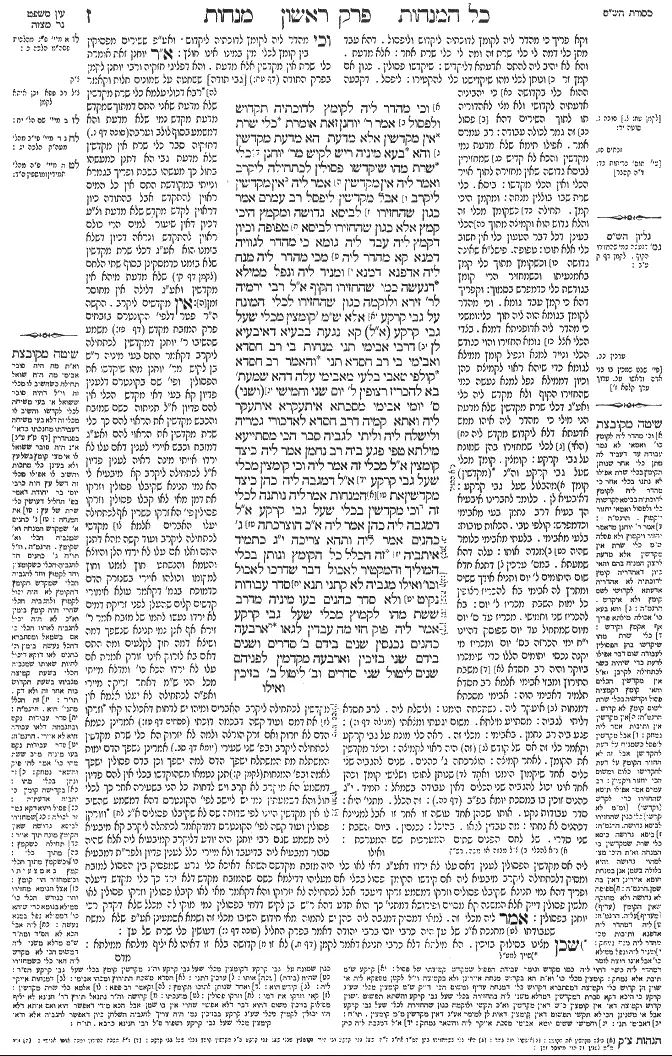
Menachot 7a - Guemara
וכי מהדר ליה לקומץ לדוכתיה תקדוש ולפסול אמר ר' יוחנן זאת אומרת כלי שרת אין מקדשין אלא מדעת הא מדעת מקדשין והא בעא מיניה ריש לקיש מר' יוחנן כלי שרת מהו שיקדשו פסולין לכתחילה ליקרב ואמר ליה אין מקדשין אמר ליה אין מקדשין ליקרב אבל מקדשין ליפסל רב עמרם אמר כגון שהחזירו לביסא גדושה ומקמץ היכי קמץ אלא כגון שהחזירו לביסא טפופה וכיון דקמץ ליה עבד ליה גומא כי מהדר לגוויה דמנא קא מהדר ליה מכי מהדר ליה מנח ליה אדפנא דמנא ומניד ליה ונפל ממילא דנעשה כמי שהחזירו הקוף א"ל רבי ירמיה לר' זירא ולוקמה כגון שהחזירו לכלי המונח על גבי קרקע אלא ש"מ קומצין מכלי שעל גבי קרקע (א"ל) קא נגעת בבעיא דאיבעיא לן דרבי אבימי תני מנחות בי רב חסדא ואבימי בי רב חסדא תני והאמר רב חסדא קולפי טאבי בלעי מאבימי עלה דהא שמעת' בא להכריז רצופין ל' יום שני וחמישי (ושני) ס' יומי אבימי מסכתא איתעקרא איתעקר ליה ואתא קמיה דרב חסדא לאדכורי גמריה ולישלח ליה וליתי לגביה סבר הכי מסתייעא מילתא טפי פגע ביה רב נחמן אמר ליה כיצד קומצין א"ל מכלי זה אמר ליה וכי קומצין מכלי שעל גבי קרקע א"ל דמגבה ליה כהן כיצד מקדשין את המנחות אמר ליה נותנה לכלי זה וכי מקדשין בכלי שעל גבי קרקע א"ל דמגבה ליה כהן אמר ליה א"כ הוצרכתה ג' כהנים אמר ליה ותהא צריכה י"ג כתמיד איתביה זה הכלל כל הקומץ ונותן בכלי המוליך והמקטיר לאכול דבר שדרכו לאכול וכו' ואילו מגביה לא קתני תנא סדר עבודות נקיט ולא סדר כהנים בעו מיניה מדרב ששת מהו לקמוץ מכלי שעל גבי קרקע אמר ליה פוק חזי מה עבדין לגאו ארבעה כהנים נכנסין שנים בידם ב' סדרים ושנים בידם שני בזיכין וארבעה מקדמין לפניהם שנים ליטול שני סדרים וב' ליטול ב' בזיכין
Comments from Rashi on Masechet Menachot Page 7a
וקא פריך כי מהדר ליה לקומץ לדוכתיה ליקדוש וליפסול . דהא עבד מתן כלי דמה לי כלי שרת זה ומה לי כלי שרת אחר: אלא מדעת . והא לא יהיב ליה להתם אדעתא דליקדיש: שיקדשו פסולין . כגון אם קמץ זר ונותן לכלי מהו שיקדישנו כלי להקטירו: ליפסל . דקבעה ההוא כלי בקדושה כי יהביניה אדעתיה לקדושי ולא מצי לאהדוריה תו לתוך השיריים דהא פסול זה גמר לכולה עבודה: רב עמרם אמר . אפילו תימא שלא מדעת נמי מקדשין והכא לא קדיש שמחזירין לביסא גדושה שאין מחזירה לתוך אויר הכלי ואין הכלי מקדשו: ביסא . כלי שרת שבו בוללין מנחה: ומקמץ היכי קמץ . תחילה כשקומץ מכלי זה והלא גדוש הוא וקמיצה מתוך הכלי בעינן דכל דבר הטעון כלי אין חשוב כלי אלא תוכו: טפופה . פישל"א שאינה גדושה וכשקומץ מתוך כלי קמץ באמצעיתו וכשמחזיר הרי קומץ בגודשת כלי כדמפרש בסמוך: וקפריך דהא כי קמץ עבד גומא . וכי מהדר לקומץ בגומא הוה ליה תוך כלי: ומשני כי מהדר ליה אדופניתא דמנא . בצדי הכלי אצל גומא החזירו והוי כגודש הכלי ונייד למנא ונפיל קומץ ממילא לגומא כדי שיהא ראוי לקמיצת כהן וכיון דממילא נפל למנא נעשה כמי שהחזירו הקוף ולא מקדש ליה כלי ואע"ג דכלי שרת מקדשין שלא מדעת הני מילי כי מהדר ליה איהו ממש אדעתא דלא ליקדוש מקדש ליה (האי) לכלי שמחזירו בהן שמונח על גבי קרקע: קומצין . קומץ מכלי שעל גבי קרקע וה"נ (מקדשין) קומץ מהבלול שעל גבי קרקע: דאיבעיא לן . כלומר לחברינו איבעיא הך בעיא דרב נחמן בעי מאבימי וכדמפרש: קולפי טבי . הכאות טובות: בלעי מאבימי . בלעתי מאבימי כלומר שהיה מנדה אותו: עלה דהא שמעתא . במס' ערכין דתנא חדא שום היתומים ל' יום ותניא אידך ששים ומתרץ לה אבימי בא להכריז רצופין כל ימות השבת מכריז ל' יום: בא להכריז שני וחמישי . מכריז עד ס' יום מיום שמתחיל עד יום שפוסק דהיינו י"ח ימי הכרזה בס' יום ומכריז מי יקנה נכסי יתומים הללו כדי שימכרו ביוקר והיה רב חסדא משבח התירוץ ומבזי אבימי אלמא רב חסדא תלמיד דאבימי הוה: אבימי מסכתא דמנחות איעקר ליה . נשתכחה הימנו: ולישלח ליה . לרב חסדא דליתי לגביה: מסתייע מילתא . משום יגעתי ומצאתי (מגילה דף ו:): פגע ביה רב נחמן . באבימי: מכלי זה . ראה כלי מונח על גבי קרקע וקאמר כלי זה אם של קודש (זה) היה ראוי לקמיצה: וכיצד מקדשין את הקומץ . לאחר קמיצה: הוצרכתה ג' כהנים . שנים להגביה שני כלים אחד שיקמוץ הימנו ואחד שנותן לתוכו ושלישי קומץ וכהן אחד אינו יכול להגביה שני הכלים דאין עבודה בשמאל: תמיד . י"ג כהנים זוכין בו במסכת יומא בפ"ב (דף כה.): זה הכלל . מתני' היא: סדר עבודות נקט . אותו שכהן אחד עושה זו אחר זו אבל למניינא דכהנים לא נחתי: מה עבדין לגאו . בהיכל: נכנסין . ביום השבת: שני סדרי . של לחם הפנים שתים המערכות שש המערכת:
Comments from Tosafot - Menachot 7a
וכי מהדר ליה לקומץ לדוכתיה ליקדוש. ואע"פ ששירים מפסיקין בין קומץ לכלי מין במינו אינו חוצץ: א"ר יוחנן זאת אומרת כלי שרת אין מקדשין אלא מדעת. והא דפליגי חזקיה ורבי יוחנן לקמן בפרק התודה (דף עח:) [גבי תודה] ששחטה על שמונים חלות וקאמר רבא דכולי עלמא כלי שרת מקדשין שלא מדעת שאני התם דמתוך שמקדש מדעת מקדש נמי שלא מדעת והא דמשמע בסוף לולב וערבה (סוכה דף נ.) דחזקיה סבר כלי שרת אין מקדשין שלא מדעת גבי הא דתנן כמעשהו בחול כך מעשהו בשבת ופריך בגמרא ונייתי במקודשת התם אין כל המים ראוין להתקדש אבל בהתודה כיון דראוין לקדש מקדש שלא מדעת וצ"ע דכיון דאין שיעור למים הרי כולם ראוין להתקדש ונראה דכיון דשלא בזמנו הוא אע"ג דכלי שרת מקדשין שלא בזמנו כדמסקינן בסוף שתי הלחם (לקמן מנחות דף ק.) שלא מדעת מיהא אין מקדשין ואע"ג דלילה אין מחוסר זמן: אין מקדשים ליקרב. הקשה ה"ר פטר דלפי' הקונטרס בזבחים פרק המזבח מקדש (דף פז:) משמע שהשיבו ר' יוחנן דמקדשין לכתחילה ליקרב דקאמר התם בעי מיניה ר"ש בן לקיש מר' יוחנן מהו שיקדשו את הפסולין ופי' שם בקונטרס דלענין פדיון קא בעי דאי מקדש הכלי אין להם פדיון א"ל תניתוה כשם שמזבח והכבש מקדשין את הראוי להם כך כלי שרת מקדשין את הראוי להם ואע"ג דמזבח וכבש איירי לענין דאם עלו לא ירדו אייתי מינה ראיה לענין פדיון א"ל לכתחילה ליקרב קא מיבעיא לי הא נמי תנינא שקיבלו פסולין וזרקו את דמן מאי לאו קבלו פסולין וזרקו פסולין פי' הא זרקו כשרין אף לכתחילה יעלו האברים אלמא מקדשי לכתחילה ליקרב ועוד קשה מהא דתנן התם ואלו אם עלו לא ירדו הלן והיוצא והטמא והנשחט חוץ לזמנו וחוץ למקומו וכולהו איירי בשנזרק הדם כדמוכח בגמ' דקאמר עולא אימורי קדשים קלים שהעלן לפני זריקת דמים לא ירדו נעשו לחמו של מזבח אמר ר' זירא אף אנן נמי תנינא שנשפך דמה ושיצא דמה חוץ לקלעים ומה התם דאם בא לזרוק אינו זורק אמרת אם עלו לא ירדו הכא כו' ומדלא מייתי מכל הני ש"מ דאחר זריקה מיירי ואפ"ה לכתחילה לא יעלו אלמא אין מקדשין לכתחילה ליקרב האברים ומיהו יש לדחות דאכולהו קאי וזרקו את דמם ועוד קשה דבכמה דוכתי (פסחים דף טז:) אמרינן נטמא הדם לא יזרוק ואם זרק הורצה ולמה לא יזרוק הא כלי שרת מקדשין לכתחילה ליקרב ובפ' שני שעירי (יומא דף סב.) אמרינן נשפך הדם ימות המשתלח מת המשתלח ישפך הדם למה ישפך וכן בדם פסולין ישפך לאמה ובפ' המנחות (לקמן מנחות ק:) תנן נטמאו משהוקדשו בכלי אין להם פדיון דמשמע הא מיקרב לא קרב ויש לדחות כל הני בשעירה אחר כך לכלי חול והא דשמעתין נמי יש ליישב לפי' הקונטרס דהא דמשמע שהשיב לו אין מקדשין היינו לפי שדוחה שם לא שקיבלו פסולים א"נ וזורקן פסולין ועוד קשה לפי' הקונטרס דמדקאמר לכתחלה ליקרב קא מיבעיא ליה משמע שגם רבי יוחנן היה יודע דליקרב קמיבעיא ליה אלא שהיה סבור דמבעיא ליה בדיעבד ולא מיירי כלל לענין פדיון ולפר"ת דמבעיא ליה אם מקדשין הפסולין לענין דאם עלו לא ירדו דאע"ג דאי לאו כלי היה מזבח מקדשם השתא דאיכא כלי גרע שמפסיק בין הפסול למזבח ומסיק דלכתחילה ליקרב מיבעיא ליה אם קידשו הקומץ פסול בכלי אם מעליהו דדילמא כשם שהמזבח מקדש דלא ירד כך כלי מקדש דיעלה ופריך דהא נמי תנינא שקיבלו פסולים וזרקו דמשמע זרקו דיעבד אבל לכתחילה לא יזרוקו והא דקאמר מאי לאו קיבלו פסולין וזרקו פסולין לאו מלשון פסולין דייק אלא המשנה קא מסיים ופירושא דמתני' כך הוא תדע דהא ר"ש בן לקיש דדחי בפסולין נמי מוקי לה מכלל שלא דקדק רבי יוחנן בפסולין: אמר ליה מכלי זה. למאי דמסיק דמגבה ליה כהן יש לתמוה מאי חידוש השיבו מכלי זה ושמא אשמעינן אע"פ שלא נמשח שעבודתו מחנכת א"נ של עץ היה כרבי יוסי ברבי יהודה דאמר בפרק החליל (סוכה דף נ:) דעושין כלי שרת של עץ:
Menachot 7a - Mishnah translated into english
when he returns the handful to its former place in the service vessel that contains the meal offering it should become sanctified, as it is now placed inside a service vessel, and it should therefore become disqualified. It should not matter whether the handful was placed in the vessel designated for it, or back in the same vessel it was taken from.
Concerning this challenge, Rabbi Yoḥanan said: That is to say that service vessels sanctify items placed in them only when they are placed there with specific intent that they be sanctified by that vessel. Since the priest does not return the handful to the vessel containing the meal offering with such intent, the handful is not disqualified, because the rite was not completed.
The Gemara asks: It may be inferred from this statement that if items are placed into service vessels with intent, the service vessels sanctify them. But didn’t Reish Lakish raise a dilemma before Rabbi Yoḥanan: What is the halakha with regard to service vessels, i.e., do they sanctify disqualified items to the extent that they may be sacrificed upon the altar ab initio? And Rabbi Yoḥanan said to him that they do not sanctify the items. The Gemara responds: This is what Rabbi Yoḥanan said to him: They do not sanctify the disqualified items that are placed inside them to the extent that they may be sacrificed, but they do sanctify them to the extent that they are disqualified.
Rav Amram says: Even if service vessels sanctify items without specific intent, it is possible to return the handful to the meal offering without the vessel sanctifying the handful, such as in a case where he returned it to a heaped bowl [levisa], i.e., he placed the handful upon the heap of flour in such a manner that the handful did not enter the airspace of the vessel containing the meal offering. Consequently, the handful is not sanctified by the vessel.
The Gemara asks: But if the meal offering was heaped, how was he initially able to remove a handful from it? The handful must initially be removed from within a vessel. Rather, it is possible to return the handful without sanctifying it in a case where he returned it to a full [tefufa] bowl, i.e., it was full to the brim but not heaped. When the priest initially removes a handful from such a vessel, he removes it from inside the vessel, but when it is returned, it does not enter the airspace of the vessel.
The Gemara asks: But once he removed a handful, he formed a furrow in the surface of the meal offering, and therefore when he returns the handful to its previous place inside the vessel, he is in fact returning it to a spot within the vessel, i.e., the furrow. If so, the handful should be sanctified to the extent that the vessel disqualifies it. The Gemara responds: When he returns it to the vessel containing the meal offering, he does not place it directly in the furrow. Rather, he lays it on the wall of the vessel and moves the vessel, and the handful falls by itself into the furrow. In this manner, it is as though a monkey rather than a person returned the handful to the furrow, and the handful is therefore not sanctified.
§ The Gemara returns to its discussion of the opinion of ben Beteira. Rabbi Yirmeya said to Rabbi Zeira: And let one interpret ben Beteira’s ruling as speaking of a case in which the handful is not sanctified by the vessel containing the meal offering, such as where he returned it to a vessel that is resting upon the ground. Rather, the fact that this was not suggested indicates that service vessels sanctify items placed inside them even while resting on the ground. Is it correct to conclude from here that one may remove a handful of a meal offering from a service vessel that is resting upon the ground? Rabbi Zeira said to him: You have touched upon a dilemma that was already raised before us, when Rabbi Avimi was learning tractate Menaḥot in the study hall of Rav Ḥisda.
The Gemara interrupts this statement with a question: And did Rabbi Avimi really learn in the study hall of Rav Ḥisda? But didn’t Rav Ḥisda say: I absorbed many blows [kulfei] from Avimi as a result of that halakha, i.e., Avimi would mock me when I questioned his statements with regard to the sale of orphans’ property by the courts, which were contradictory to the ruling of a particular baraita. Avimi explained to me that if the court comes to announce such a sale on consecutive days, then it is announced for thirty days, in accordance with that baraita. But if it will be announced only on Monday, Thursday, and Monday, then it is announced over the course of sixty days. If so, Rav Ḥisda was in fact the pupil while Rabbi Avimi was his teacher.
The Gemara answers: Avimi was in fact the teacher, but tractate Menaḥot was uprooted for him, i.e., he forgot it, and Avimi came before his student Rav Ḥisda to help him recall his learning. The Gemara asks: If Rav Ḥisda was in fact Avimi’s student, let Avimi send for him and Rav Ḥisda come to Avimi. The Gemara responds: Avimi thought that this would be more helpful in this matter, i.e., that by exerting the effort to travel to his pupil in order to learn from him, he would better retain his studies.
The Gemara returns to the statement of Rabbi Zeira: Rav Naḥman encountered Avimi upon his return from the study hall of Rav Ḥisda. Rav Naḥman said to him: How does one properly remove a handful from a meal offering? Avimi pointed to a vessel that was resting on the ground and said to him: From this vessel one may properly remove a handful. Rav Naḥman said to him: But may one remove a handful from a vessel that is resting upon the ground? Avimi said to him: When I said that such a vessel may be used, I meant that one priest would first raise it from the ground and then another priest would remove a handful from it.
Rav Naḥman proceeded to ask Avimi another question: How does one properly sanctify the meal offerings? Avimi pointed to a vessel that was resting on the ground and said to him: The priest places it into this vessel. Rav Naḥman again said to him: But can one sanctify a meal offering in a vessel that is resting upon the ground? Avimi said to him: When I said that such a vessel may be used, I meant that another priest would initially raise it from the ground, and only then would the meal offering be placed inside it.
Rav Naḥman said to Avimi: If so, then you require the involvement of three priests, i.e., one to raise the vessel, one to sanctify the meal offering, and one to remove the handful from the meal offering. Avimi said to him: And let it require even thirteen priests, just as the service of the daily burnt offering required the involvement of thirteen priests. The need for several priests presents no difficulty.
Rav Naḥman raised another objection to the statement of Avimi from a mishna (12a) that discusses the halakha that improper intentions during the service of a meal offering disqualify it. This is the principle: In the case of anyone who removes the handful, or places the handful in the vessel, or who conveys the vessel with the handful to the altar, or who burns the handful on the altar, with the intent to partake of an item whose typical manner is such that one partakes of it, or to burn an item whose typical manner is such that one burns it on the altar, e.g., the handful or the frankincense, outside its designated area, the meal offering is unfit but there is no liability for excision from the World-to-Come [karet].
Rav Naḥman explained his objection: All the rites of a meal offering are taught in the mishna, and yet raising the vessel from the ground is not taught. This indicates that there is no requirement to raise a vessel from the ground in order to use it for the service of a meal offering. Avimi responded: The tanna cited the order of sacrificial rites, i.e., those rites concerning which improper intentions disqualify a meal offering, but he did not cite the order of the priests, i.e., he did not cite the total number of priests involved in the service.
On the same topic, the Sages raised a dilemma before Rav Sheshet: What is the halakha with regard to the permissibility of removing a handful from a vessel that is resting upon the ground? Is this removal valid? Rav Sheshet said to one of the Sages who raised the dilemma: Go out and see what they do within the Sanctuary when they remove the bowls containing the frankincense that were placed upon the Table of the shewbread in order to burn the frankincense upon the altar. The mishna (99b) states: When the priests would replace the shewbread every Shabbat, four priests would enter the Sanctuary, two with the two arrangements of the new shewbread in their hands and two with the two bowls of frankincense in their hands. And four priests would precede them and enter the Sanctuary before them, two to remove the two arrangements of the old shewbread and two to remove the two bowls of frankincense.
Traduction : The William Davidson digital edition of the Koren Noé Talmud, with commentary by Rabbi Adin Even-Israel Steinsaltz.