 Talmud Bavli
The learning on the whole site is dedicated : L'ilui Nishmat Yaakov ben Myriam
The learning on the whole site is dedicated : L'ilui Nishmat Nissim ben Barukh Malka
The learning on the whole site is dedicated : L'ilui Nishmat Amram ben Itshak Loubaton
Menachot 84a : Youtube
Daf TubeYoutube
2 video classes :
Menachot Page 84a
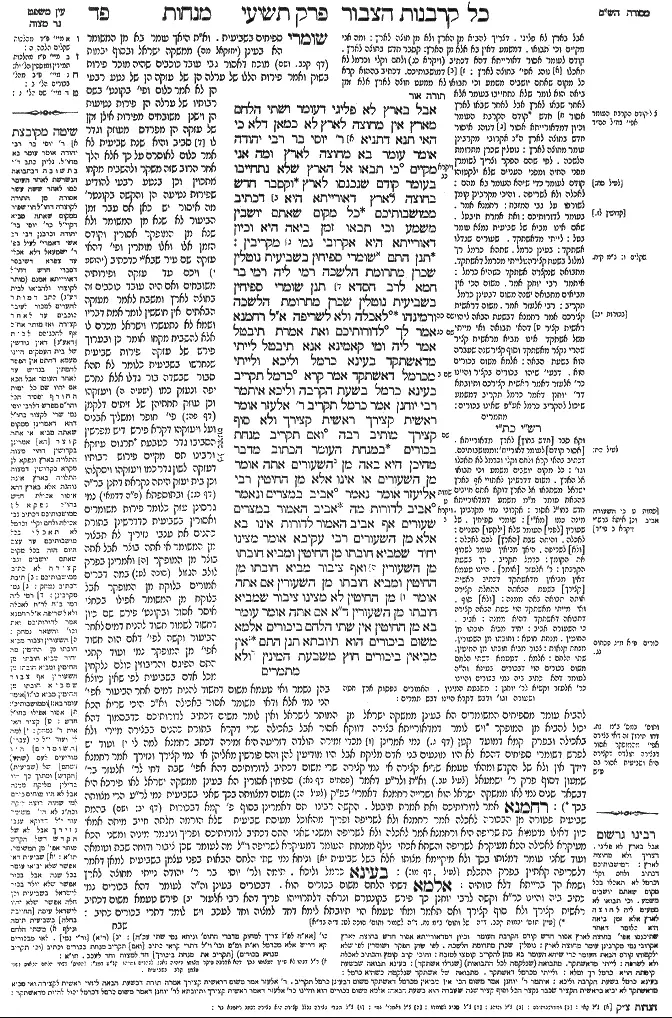
Menachot 84a - Guemara
אבל בארץ לא פליגי דעומר ושתי הלחם מארץ אין מחוצה לארץ לא כמאן דלא כי האי תנא דתניא ר' יוסי בר רבי יהודה אומר עומר בא מחוצה לארץ ומה אני מקיים (ויקרא כג, י) כי תבאו אל הארץ שלא נתחייבו בעומר קודם שנכנסו לארץ וקסבר חדש בחוצה לארץ דאורייתא היא דכתיב ממושבותיכם כל מקום שאתם יושבין משמע וכי תבאו זמן ביאה היא וכיון דאורייתא היא אקרובי נמי מקריבין:
תנן התם שומרי ספיחין בשביעית נוטלין שכרן מתרומת הלשכה רמי ליה רמי בר חמא לרב חסדא תנן שומרי ספיחין בשביעית נוטלין שכרן מתרומת הלשכה ורמינהו (ויקרא כה, ו) לאכלה ולא לשריפה אמר ליה רחמנא אמר לך (ויקרא כג, יד) לדורותיכם ואת אמרת תיבטל אמר ליה ומי קאמינא אנא תיבטל לייתי מדאשתקד בעינא כרמל וליכא ולייתי מכרמל דאשתקד אמר קרא (ויקרא ב, יד) כרמל תקריב בעינא כרמל בשעת הקרבה וליכא איתמר רבי יוחנן אמר כרמל תקריב ר' אלעזר אומר ראשית קצירך ראשית קצירך ולא סוף קצירך מותיב רבה (ויקרא ב, יד) ואם תקריב מנחת בכורים במנחת העומר הכתוב מדבר מהיכן היא באה מן השעורים אתה אומר מן השעורים או אינו אלא מן החיטין רבי אליעזר אומר נאמר (שמות ט, לא) אביב במצרים ונאמר (ויקרא ב, יד) אביב לדורות מה אביב האמור במצרים שעורים אף אביב האמור לדורות אינו בא אלא מן השעורים רבי עקיבא אומר מצינו יחיד שמביא חובתו מן החיטין ומביא חובתו מן השעורין ואף ציבור מביא חובתו מן החיטין ומביא חובתו מן השעורין אם אתה אומר מן החיטין לא מצינו ציבור שמביא חובתו מן השעורין דבר אחר אם אתה אומר עומר בא מן החיטין אין שתי הלחם ביכורים אלמא משום ביכורים הוא תיובתא תנן התם אין מביאין ביכורים חוץ משבעת המינין ולא
Comments from Rashi on Masechet Menachot Page 84a
אבל בארץ לא פליגי . דצריך להביא מן הארץ ולא מן חוצה לארץ: ומה אני מקיים וכי תבואו . דמשמע דאין בא אלא מן הארץ: קסבר חדש בחוצה לארץ . קודם לעומר אסור דאורייתא דהא דכתיב (ויקרא כג) ולחם וקלי וכרמל לא תאכלו נוהג אפי' בחוצה לארץ: דמושבותיכם . דכתיב בההוא קרא כל מקום שאתם יושבים משמע וכי תבואו לא ממעט חוצה לארץ אלא זמן ביאה הוא לומר שלא נתחייבו בעומר אלא לאחר שבאו לארץ אבל לאחר שבאו לארץ אסור חדש קודם הקרבת העומר וכיון דמדאורייתא אסור דנוהג איסור חדש בחוצה לארץ ה"נ אקרובי מקרבינן עומר מחוצה לארץ: נוטלין שכרן מתרומת הלשכה . לפי שהם הפקר וצריך לשומרן מפני החיה ומפני העניים שלא ילקטוהו קודם לעומר כדי שיהא העומר בא מהם: לאכלה ולא לשריפה . והיכי מקרבינן קומץ לשורפו על גבי המזבח: רחמנא אמר . בעומר לדורותיכם: ואת אמרת תיבטל . שאם אינו מביא של שביעית נמצא עומר בטל: לייתי מדאשתקד . שעורים שגדלו אשתקד: בעינן כרמל . שתהא כרמל רך למלול בשעת קצירה: ולייתי מכרמל דאשתקד . מתבואה שנקצרה אשתקד כשהיא כרמל: איתמר רבי יוחנן אמר . משום הכי אין מביאים מתבואה ישנה משום דבעינן כרמל תקריב: רבי אלעזר אמר . משום דראשית קצירכם אמר רחמנא דבשעת הבאה ליהוי ראשית קציר דהאי תבואה ואי מייתי משל אשתקד אינו מביא מראשית קציר שהרי נקצר מאשתקד וסוף קציר שנה שעברה הוא בשעת הבאה: אלמא משום בכורים הוא . דבעי' שיהו בכורים בקציר והיינו כר' אלעזר דאמר ראשית קצירכם ותיובתא דר' יוחנן דאמר כרמל תקריב דמשמע שיכול להקריב כרמל אע"פ שאינו בכורים:
Comments from Tosafot - Menachot 84a
שומרי ספיחים בשביעית. וא"ת היאך עומר בא מן המשומר הא בעינן (יחזקאל מה) ממשקה ישראל ובסוף יבמות (דף קכב. ושם) מוכח דאסור גבי עובד כוכבים שהיה מוכר פירות בשוק ואמר פירות הללו של ערלה הן של עזקה הן של נטע רבעי הן לא אמר כלום ופי' בקונט' בשם רבותיו של ערלה הן פירות נטיעות הן וישנן משובחים מפירות אילן זקן של עזקה הן מפרדס מעוזק וגדר לו סביב והיא שנת שביעית לא אמר כלום לאוסרם על כך אלא הלך אחר הרוב שזה משקר ולהשביח מקחו מתכוין וכן בנטע רבעי להודיע שפירות נטיעה הן והקשה בקונטר' מה איסור יש כאן אם עבר זמן הביעור לא שנא מן המשומר ולא שנא מן המופקר אסורין וקודם הזמן אלו ואלו מותרין ופי' דהאי עזקה שם עיר שבא"י כדכתיב (יהושע י) ויכם עד עזקה ופירותיה משובחים ואם היה עובד כוכבים זה בחוצה לארץ ומשבח לאמר מעזקה הבאתים אין חוששין לומר אמת דבריו ושמא לא נתעשרו וישראל מכרם לו אלא להשביח מקחו אומר כן ובערוך פירש של עזקה פירות שביעית שנחרשו בשביעית כלומר לא תהא סבור שבשדה בור גדלו אלא נחרש יפה ונעזק כמו (ישעיהו ה) ויעזקהו וכן עוזק תחתיהן של זיתים דלקמן (מנחות דף פה:) פי' חופר ומשליך אבנים ועל ויעזקהו דקרא פירש דיש מפרשין הסביבו גדר כטבעת תרגום עיזקא ורבינו תם מקיים פירוש רבותיו דעזקה לשון גדר כמו ויעזקהו ויסקלהו וכן בית יעזק היתה נקראת דתנן בר"ה (דף כג:) ובתוספתא (פ"ה דדמאי) נמי גרסינן עזק כלומר פירות משומרים ואסורין בשביעית כדדרשינן בתורת כהנים את ענבי נזיריך לא תבצור מן המשומר אי אתה בוצר אבל אתה בוצר מן המופקר ואמרינן בפרק לולב הגזול (סוכה לט:) במה דברים אמורים בלוקח מן המופקר אבל בלוקח מן המשומר אפילו בכחצי איסר אסור ובקונט' פירש שם כיון דחשוד לשמור חשוד להניח דמים לאחר הביעור וקשה לפי' דאם הוה חשוד אפי' מן המופקר נמי ועוד קתני התם הפיגם והריבוזין כולם נלקחין מכל אדם בשביעית לפי שאין כיוצא בהן נשמר ואי טעמא משום דחשוד להניח דמים אחר הביעור אפי' הני נמי אלא ודאי משומר אסור באכילה וא"כ היכי שריא הכא להביא עומר מספיחים המשומרים הא בעינן ממשקה ישראל מן המותר לישראל ואין לומר משום דכתיב לדורותיכם כדבסמוך דהא יכול להביא מן המופקר ויש לומר דמדאורייתא בצירה דווקא אסור אבל באכילה שרי דקרא בתורת כהנים בבצירה מיירי ולא באכילה ובפרק קמא דמועד קטן (דף ג.) נמי אמרינן מכדי זמירה. תולדה דזריעה היא זמירה דכתב רחמנא למה לי ועוד יש לפרש דשומרי ספיחים דהכא לא היו מונעים בני אדם מליקח אבל היו מודיעין להן והם פורשין מאליהן אי נמי קצירך ונזירך אמר רחמנא דידך אין ולא של הקדש ומהאי טעמא שריא קצירה אי נמי קצירה שרי משום דכתיב לדורותיכם דהא אפי' שבת דחי לר' אלעזר בר' שמעון דסוף פרק ר' ישמעאל (לעיל מנחות עב.) וא"ת ולר"ע דאמר (פסחים דף נא:) ספיחין אסורין הא בעינן ממשקה ישראל לאו פירכא היא דבשאר שנים נמי לאו ממשקה ישראל הוא ושרייה רחמנא דאמרי' בפ"ק (לעיל מנחות ה:) משום דמצוותה בכך שאני בשביעית נמי לר"ע הרי מצוותה בכך: רחמנא אמר לדורותיכם ואת אמרת תיבטל. הקשה רבינו תם דאמרינן בסוף פ' קמא דבכורות (דף יב: ושם) בהמת שביעית פטורה מן הבכורה לאכלה אמר רחמנא ולא לשריפה ופריך מהאוכל מעיסת שביעית שלא הורמה חלתה חייב מיתה אמאי כיון דאילו מיטמיא בת שריפה היא ורחמנא אמר לאכלה ולא לשריפה ומשני שאני התם דכתיב לדורותיכם ופריך וניגמר מיניה ומשני הכא מעיקרא לאכילה הכא מעיקרא לשריפה והשתא אכתי נילף ממנחת העומר דמעיקרא לשריפה וי"ל מה לעומר שכן ציבור ודוחה שבת וטומאה ועוד שאני עומר דמצותו בכך ולא מיקיימא מצותו אלא בשל שביעית וניחא נמי שתי הלחם הבאות בפני עצמן בשביעית למאן דאמר דלשריפה קאתיין בפרק התכלת (לעיל מנחות דף מו:): בעינא כרמל וליכא. תימה ולר' יוסי בר ר' יהודה נייתי מחוצה לארץ ושמא הך ברייתא דלא כוותיה: אלמא דשתי הלחם משום בכורים הוא. דבכורים בעינן וה"ה לעומר דהא בכורים נמי כתיב ביה והיינו כר"א וקשה לרבי יוחנן כך פירש בקונטרס ונראה דלתרוייהו פריך דהא רבי אלעזר פירש טעמא משום דכתיב ראשית קצירך ולא סוף קצירך ואם תאמר ומאי טעמא הוי תיובתא לימא דחד למצוה וחד לעכב ויש לומר דתרי בכורים כתיב:
Menachot 84a - Mishnah translated into english
But with regard to the requirement to use grain grown in Eretz Yisrael, they do not disagree that if the omer and the two loaves come from Eretz Yisrael, indeed, they are valid, but if they come from outside of Eretz Yisrael, they are not valid.
In accordance with whose opinion is this? It is not in accordance with the opinion of this following tanna, as it is taught in a baraita: Rabbi Yosei, son of Rabbi Yehuda, says that the omer may come from outside of Eretz Yisrael. How do I realize the meaning of the verse that introduces the obligation to bring the omer: “When you come into the land which I give to you” (Leviticus 23:10)? This verse appears to indicate that the bringing of the omer is restricted to Eretz Yisrael. That verse teaches that the Jewish people were not obligated in the mitzva of bringing the omer before they entered Eretz Yisrael.
The Gemara explains the basis of Rabbi Yosei’s opinion: And he holds that even outside of Eretz Yisrael, consuming the new crop is prohibited by Torah law, as it is written: “From all your dwellings” (Leviticus 23:17), which indicates that the prohibition applies anywhere that you dwell, even outside of Eretz Yisrael. Accordingly, the earlier verse, which introduces the prohibition with: “When you come into the land which I give to you” (Leviticus 23:10), is a reference to the time of the Jewish people entering Eretz Yisrael, and it indicates that the prohibition takes effect only from that time. And since Rabbi Yosei holds that the new crop outside of Eretz Yisrael is prohibited for consumption by Torah law, he consequently holds that one may also offer the omer from crops grown there.
§ We learned in a mishna elsewhere (Shekalim 4:1): The guards who are appointed by the court to protect some of the produce that grew without being purposely planted [sefiḥin] during the Sabbatical Year, in order that it can be used for the omer and the offering of the two loaves, collect their wages from the collection of the Temple treasury chamber.
Rami bar Ḥama raises a contradiction to Rav Ḥisda: We learned in that mishna that the guards of sefiḥin during the Sabbatical Year collect their wages from the collection of the Temple treasury chamber. This indicates that even in the Sabbatical Year, the omer is brought from that year’s crop. And one can raise a contradiction to this from a baraita: The verse states: “And the Sabbatical Year of the land shall be for you for eating” (Leviticus 25:6), which indicates it is to be used for eating, but not for burning. Accordingly, since the omer is burned on the altar, it should not be brought from produce of the Sabbatical Year.
Rav Ḥisda said to him: The Merciful One said to you about the omer: “It is a statute forever throughout your generations” (Leviticus 23:14), indicating that the mitzva can be fulfilled in all times, and you say the omer should be canceled in a Sabbatical Year?
Rami bar Ḥama said to him: But am I saying that the omer should be canceled? Certainly not. Let one bring the omer from grain that sprouted during the previous year, concerning which there is no prohibition against burning it. Rav Ḥisda rejects this suggestion: But to fulfill the mitzva I require that the grain be of the “fresh ear” (Leviticus 2:14), i.e., young grain, and this requirement is not fulfilled with grain that sprouted during the previous year, as it has already been growing a long time.
Rami bar Ḥama persists: But let one bring the omer from the young grain that was cut during the harvest of the previous year, when it was still fresh. Rav Ḥisda rejects this suggestion: The verse states: “Fresh ear, you shall bring” (Leviticus 2:14). The juxtaposition of the mitzva to bring the grain with the requirement that it be young indicates that I need it to still be young grain at the time of offering it, and this condition is not fulfilled if one uses grain from the previous year’s harvest. Young grain is soft (see 66b), whereas grain that was reaped during the previous year would have become brittle.
§ An amoraic dispute was stated concerning the source of the halakha that the omer may not be brought from the previous year’s crop: Rabbi Yoḥanan says it is derived from: “Fresh ear, you shall bring,” as Rav Ḥisda explains. Rabbi Elazar says it is derived from the fact that the omer is referred to as: “The first of your harvest” (Leviticus 23:10), which indicates that the omer is brought only from the first of your harvest, i.e., from the first produce of the current year’s crop, and not from the last of your harvest, i.e., from produce taken from the remainder of the previous year’s crop.
Rabba raises an objection to Rabbi Yoḥanan’s opinion, from a baraita: The verse states: “And when you shall bring a meal offering of first fruits to the Lord” (Leviticus 2:14). The verse is speaking of the omer meal offering. From which type of grain does it come? It comes from barley. Do you say that it comes from barley, or does it come only from wheat?
Rabbi Eliezer says that it is stated “in the ear,” with regard to the plague of hail in Egypt: “And the flax and the barley were smitten; for the barley was in the ear, and the flax was in bloom” (Exodus 9:31), and it is stated “in the ear” with regard to the mitzva of the new crop, which is for all generations. Just as the term “in the ear” that is stated with regard to the plague of hail in Egypt is referring to barley, as is clear from the next verse: “But the wheat and the spelt were not smitten; for they ripen late” (Exodus 9:32), so too the term “in the ear” that is stated with regard to the new crop for all generations is referring to barley.
The baraita cites another proof that the omer offering is brought from barley. And Rabbi Akiva says: We found an individual who brings his obligation of a meal offering from wheat, which is brought by a poor person for a false oath of testimony, a false oath of utterance, or for entering the Temple while ritually impure, and one who brings his obligation of a meal offering from barley, in the case of a sinner’s meal offering or the meal offering of a sota. And we also found with regard to the community that they bring their obligation of a meal offering from wheat, in the case of the two loaves offering of Shavuot, and therefore, to keep the halakha of the offering of a community parallel to that of an individual there should be a case where the community brings their obligation of a meal offering from barley. And if you say that the omer offering comes from wheat, then we will not have found a case of a community that brings their obligation of a meal offering from barley. Consequently, it must be that the omer offering comes from barley.
Rabbi Akiva suggests another proof: Alternatively, if you say that the omer offering comes from wheat, then the two loaves offering would not be brought from the first fruits. The verse states that the two loaves offering of Shavuot should come from the first fruits: “Also in the day of the first fruits, when you bring a new meal offering to the Lord in your feast of weeks” (Numbers 28:26). If the omer is from wheat, then the two loaves offering would not be the first offering of the first fruit, as the omer offering of Passover precedes it. Therefore, the omer offering must come from barley. Rabba explains the objection to Rabbi Yoḥanan’s opinion: Evidently, the omer offering is brought from the new crop because the grain used is referred to as first fruits, i.e., “the first of your harvest.” The Gemara concludes: This baraita is a conclusive refutation of Rabbi Yoḥanan’s opinion.
§ We learned in a mishna elsewhere (Bikkurim 1:3): One may bring first fruits only from the seven species with which Eretz Yisrael is praised in the verse: “A land of wheat and barley, vines, figs and pomegranates, a land of olive oil and honey” (Deuteronomy 8:8). But one may not
Traduction : The William Davidson digital edition of the Koren Noé Talmud, with commentary by Rabbi Adin Even-Israel Steinsaltz.