 Talmud Bavli
The learning on the whole site is dedicated : L'ilui Nishmat Amram ben Itshak Loubaton
The learning on the whole site is dedicated : L'ilui Nishmat Jamila bat Chlomo Abensour
The learning on the whole site is dedicated : L'ilui Nishmat אליעזר בן רחל
Menachot 18a : Youtube
Daf TubeYoutube
2 video classes :
Menachot Page 18a
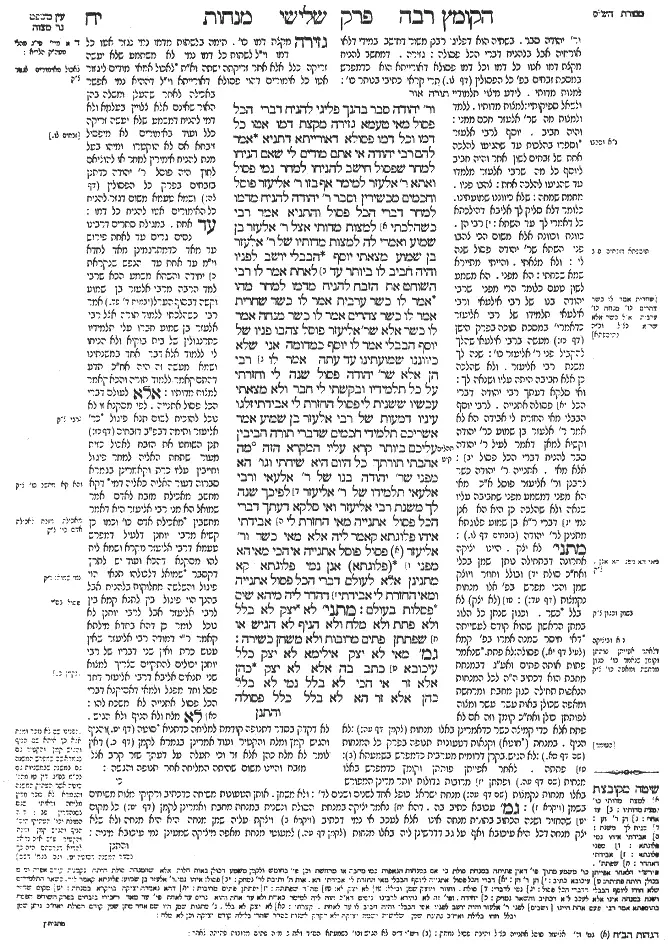
Menachot 18a - Guemara
ור' יהודה סבר בהנך פליגי להניח דברי הכל פסול מאי טעמא גזירה מקצת דמו אטו כל דמו וכל דמו פסולא דאורייתא דתניא אמר להם רבי יהודה אי אתם מודים לי שאם הניחו למחר שפסול חישב להניחו למחר נמי פסול ואתא ר' אלעזר למימר אף בזו ר' אליעזר פוסל וחכמים מכשירין וסבר ר' יהודה להניח מדמו למחר דברי הכל פסול והתניא אמר רבי כשהלכתי למצות מדותי אצל ר' אלעזר בן שמוע ואמרי לה למצות מדותיו של ר' אלעזר בן שמוע מצאתי יוסף הבבלי יושב לפניו והיה חביב לו ביותר עד לאחת אמר לו רבי השוחט את הזבח להניח מדמו למחר מהו אמר לו כשר ערבית אמר לו כשר שחרית אמר לו כשר צהרים אמר לו כשר מנחה אמר לו כשר אלא שר' אליעזר פוסל צהבו פניו של יוסף הבבליא אמר לו יוסף כמדומה אני שלא כיווננו שמועתינו עד עה אמר לו רבי הן אלא שר' יהודה פסול שנה לי וחזרתי על כל תלמידיו ובקשתי לי חבר ולא מצאתי עכשיו ששנית לי פסול החזרת לי אבידתי זלגו עיניו דמעות של רבי אלעזר בן שמוע אמר אשריכם תלמידי חכמים שדברי תורה חביבין עליכם ביותר קרא עליו המקרא הזה (תהלים קיט, צז) מה אהבתי תורתך כל היום היא שיחתי וגו' הא מפני שר' יהודה בנו של ר' אלעאי ורבי אלעאי תלמידו של ר' אליעזר לפיכך שנה לך משנת רבי אליעזר ואי סלקא דעתך דברי הכל פסול אתנייה מאי החזרת לי אבידתי איהו פלוגתא קאמר ליה אלא מאי כשר ור' אליעזר פסול פוסל אתנייה אי הכי מאי הא מפני (פלוגתא) אנן נמי פלוגתא קא מתנינן אלא לעולם דברי הכל פסול אתנייה ומאי החזרת לי אבידתי דהדר ליה מיהא שום פסלות בעולם:
מתני׳ לא יצק לא בלל ולא פתת ולא מלח ולא הניף לא הגיש או שפתתן פתים מרובות ולא משחן כשירה:
גמ׳ מאי לא יצק אילימא לא יצק כלל עיכובא כתב בה אלא לא יצק כהן אלא זר אי הכי לא בלל נמי לא בלל כהן אלא זר הא לא בלל כלל פסולה
Comments from Rashi on Masechet Menachot Page 18a
ור' יהודה סבר . בשתיה הוא דפליגי רבנן משום דחישב במידי דלאו אורחיה אבל בלהניח דברי הכל פסולה: גזירה . דמחשב להניח מקצת דמו אטו כל דמו וכל דמו פסולא דאורייתא הוא כדמפרש במסכת זבחים בפ' כל הפסולין (דף לו.) תרי קראי כתיבי בנותר כו': למצות מדותי . לידע מיצוי תלמודיי ולשאל ספיקותיי: למצות מדותיו . ללמד ולמצות מה שר' אלעזר חכם ממני: והיה חביב . יוסף לרבי אלעזר וספרו בהלכות עד שהגיעו להלכה אחת של זבחים לשון אחר והיה חביב ליוסף כל מה שרבי אלעזר מלמדו עד שהגיעו להלכה אחת: צהבו פניו . מחמת שמחה: שלא כיווננו שמועתינו . כלומר דלא סליק לך אליבא דהילכתא כל דאמרי לך עד השתא: רבי הן . כוונת וכוונת אלא משום הכי צהבו פני השתא שר' יהודה פסול שנה לי: ולא מצאתי . והייתי מתיירא שמא שכחתי: הא מפני . הא משמע לשון טעם כלומר הרי מפני שרבי יהודה בנו של רבי אילעאי ורבי אילעאי תלמידו של רבי אליעזר כדאמרי' במסכת סוכה בפרק הישן (דף כז:) מעשה ברבי אילעאי שהלך להקביל פני ר' אליעזר כו': שנה לך משנת רבי אליעזר . ולא שהלכה כן אלא חביבה היתה עליו ושנאה לך: ואי סלקא דעתך רבי יהודה דברי הכל פסולה אתנייה . לרבי יוסף הבבלי מאי החזרת לי אבידה הא לא אמר ר' אלעזר בן שמוע כר' יהודה וקשיא למאן דאמר לעיל ר' יהודה סבר להניח דברי הכל פסול: אלא מאי . אתנייה ר' יהודה כשר לרבנן ור' אליעזר פוסל א"כ מאי הא מפני דמשמע מפני שחביבה עליו שנאה ולא שהלכה כן היא הא אנן נמי דברי ר"א בן שמוע פלוגתא מתנינן לר' יהודה (בזבחים דף לו.): מתני' לא יצק . היינו יציקה אחרונה דבתחילה נותן שמן בכלי ואח"כ סולת ובולל וחוזר ויוצק שמן והכי מפרש בפ' אלו מנחות נקמצות (דף עד:): (לא יצק) לא בלל כשר . וכגון שנתן כל הלוג במתן הראשון שהוא קודם לעשייתה דאי חיסר שמנה אמרו בפ' קמא (לעיל מנחות דף יא.) פסולה: לא פתת . שנאמר פתות אותה פתים ואע"ג דבמנחת מחבת הוא דכתיב ה"ה לכל המנחות הנאפות תחילה כגון מחבת ומרחשת ומאפה שכולן באות עשר עשר ומצוה לפותתן כולן ואח"כ קומץ וזה אם לא פתת אלא כדי קמיצה כשר כדאמרינן באלו מנחות (לקמן מנחות דף עה:): לא הניף . במנחת (חוטא) וקנאות דטעונות תנופה בפרק כל המנחות (שם דף סא.): לא הגיש . בקרן דרומית מערבית כדמפרש בשמעתא: פתתה . לאחר אפייתן פותתן וקומץ כדמפרש באלו מנחות (שם דף עה.) ופתתן מרובות גדולות יותר מדינן המפורש באלו מנחות נקמצות (שם דף עה:) מנחת ישראל כופל אחד לשנים ושנים לד': ולא משחן . אותן הטעונות משיחה כדכתיב ורקיקי מצות משוחים בשמן (ויקרא ז): גמ' עכובא כתיב בה . דהא נאמר יציקה במנחת הסולת ונשנית במנחת מחבת ואמרינן לקמן (מנחות דף יט:) כל מקום שהחזיר ושנה הכתוב בתורת מנחה אינו אלא לעכב אי נמי דכתיב (ויקרא ב) ויצקת עליה שמן מנחה היא היא מנחה ולא שלא יצק מנחה דכל היא עיכובא ואף על גב דדרשינן ליה באלו מנחות (לקמן מנחות דף עה.) למעוטי מנחת מאפה מיציקה שמעינן נמי עיכובא מיניה:
Comments from Tosafot - Menachot 18a
גזירה מקצת דמו כו'. תימה בלשתות מדמו נמי נגזר אטו כל דמו וי"ל לשתות כל דמו נמי לא משתמע שלא יעשה זריקה כלל אלא אחר זריקתה ישתה וא"ת לאכול אמאי מודים ליגזור אטו כל אימורים דהוי פסולא דאורייתא וי"ל דההיא נמי אפשר באכילה לאחר שהעלן ומשלה בהן האור שאינם אלא צלויין בעלמא ולא דמי להניח דמשמע שלא יעשה זריקה כלל ועוד באימורים לא מיפסיל זיבחא אם לא הוקטרו ומיהו בעל מנת להניח אימורין למחר או להוציאם לחוץ היה פוסל ר' יהודה כדתנן בזבחים בפרק כל הפסולין (דף לה:) ושמא טעמא משום דגזר להניח כל האימורים אטו להניח כל דמו: עד אחת. במגילת סתרים דרבינו נסים גריס עד לאחת פירוש עד מאד כדמתרגמינן מאד לחדא וי"מ עד אחת עד הנפש שנקראת יחידה והשתא משמע הכא שרבי למד הרבה מרבי אלעזר בן שמוע וקשה דבסוף הערל (יבמות ד' פד.) אמר רבי כשהלכתי ללמוד תורה אצל רבי אלעזר בן שמוע חברו עלי תלמידיו כתרנגולין של בית בוקיא ולא הניחו לי ללמוד אלא דבר אחד במשנתינו ושמא מעשה זה היה אח"כ תדע דהתם קאמר ללמוד תורה והכא קאמר למצות מדותיו: אלא לעולם דברי הכל פסול אתנייה. לפי מסקנא זו לא נוכל להוכיח לשום תנא פיגול כר' אליעזר ותימה דבפ"ב דזבחים (דף כז:) תנן השוחט את הזבח לאכול כזית מעור שתחת האליה למחר פיגול וחייבין עליו כרת וקאמרינן בגמרא סברוה דעור האליה כאליה דמי דקא מחשב מאכילת מזבח לאדם אמר שמואל הא מני רבי אליעזר היא דאמר מחשבין מאכילת אדם כו' וכמו כן קשיא מרבי יוחנן דלעיל דמפרש טעמא דרבי אליעזר מקרא ושמא לית להו מסקנא דהכא ועוד יש לתרץ דקסבר שמואל דלכולהו תנאי הוי פיגול והשלשה מחלוקות בלהניח אבל בהנך הוי פיגול בין לתנא קמא בין לרבי אליעזר אבל לרבי יוחנן לא נוכל לומר כן דהא בחדא מילתא קאמר ר"י דמודה רבי אליעזר שאין ענוש כרת ואין שני דבריו של רבי יוחנן יכולים להתקיים שצריך למצוא שני תנאים אליבא דרבי אליעזר דחד פסל וחד מפגל ולמאי דאסיקנא דברי הכל פסול אתנייה לא משכח להו: מלח ולא הניף ולא הגיש. לא דקדק בסדר דתנופה קודמת למליחה כדתניא סוטה (דף יט.) והניף והגיש קמץ ומלח והקטיר ועוד אמרינן בגמרא לקמן (מנחות דף כ.) דאין לומר לא מלח כהן אלא זר וכי תעלה על דעתך שזר קרב אצל מזבח והיינו משום שהיתה המליחה אחר תנופה והגשה:
Menachot 18a - Mishnah translated into english
And Rabbi Yehuda holds that the Rabbis and Rabbi Eliezer disagree only in those cases, where one’s intention is to drink the blood or burn the meat of the offering. In those cases, the Rabbis deem the offering fit, since the improper intention involves making use of the item in an unusual manner. But if one’s intention is to leave of its blood until the next day, everyone agrees that the offering is unfit. What is the reason for this? It is a rabbinic decree disqualifying the offering when some of its blood is left over until the next day due to the concern that a priest may intend to leave over all of its blood, and if one’s intention is to leave all of its blood until the next day, the offering is rendered unfit by Torah law.
As it is taught in a baraita: Rabbi Yehuda said to the Rabbis: Do you not concede to me that if he left the blood until the next day without presenting it, that the offering is unfit? Therefore, if he intended to leave the blood until the next day, it is also unfit.
And Rabbi Elazar comes to say that even in this case Rabbi Eliezer deems the offering unfit and the Rabbis deem it fit, as there is no distinction between a case where one intended to drink of the blood on the next day and where one intended to merely leave the blood until the next day.
The Gemara asks: And does Rabbi Yehuda in fact hold that if one’s intention is to leave some of the blood until the next day, everyone agrees that the offering is unfit? But isn’t it taught in a baraita: Rabbi Yehuda HaNasi said: When I went to Rabbi Elazar ben Shammua to clarify my knowledge, and some say that Rabbi Yehuda HaNasi said: When I went to clarify the knowledge of, i.e., study under, Rabbi Elazar ben Shammua, I found Yosef the Babylonian sitting before Rabbi Elazar ben Shammua. And every ruling that Rabbi Elazar ben Shammua taught was especially dear to him, until they began discussing one halakha, when Yosef the Babylonian said to him: My teacher, with regard to one who slaughters the offering with the intention to leave some of its blood for the next day, what is the halakha?
Rabbi Elazar ben Shammua said to him: The offering is fit. Yosef the Babylonian repeated this question that evening, and Rabbi Elazar ben Shammua said to him that the offering is fit. He asked again the following morning, and Rabbi Elazar ben Shammua said to him that the offering is fit. Once again, he asked this question at noon, and Rabbi Elazar ben Shammua said to him that the offering is fit. When he asked the question a further time that late afternoon, Rabbi Elazar ben Shammua said to him: I hold that the offering is fit, but Rabbi Eliezer deems it unfit. Yosef the Babylonian’s face lit up [tzahavu panav] with joy.
Rabbi Elazar ben Shammua said to him: Yosef, it seems to me that our, i.e., my, halakhot were not accurate until now, when I said that the offering is fit. Yosef the Babylonian said to him: My teacher, yes, I agree that the offering is fit, as you said. But my reluctance to accept your statement was due to the fact that Rabbi Yehuda taught me that the offering is unfit, and I went around to all of Rabbi Yehuda’s disciples, seeking another disciple who had also heard this from him, but I could not find one, and thought that I must have been mistaken. Now that you have taught me that Rabbi Eliezer deems it unfit, you have returned to me that which I had lost.
The baraita continues: Upon hearing this, Rabbi Elazar ben Shammua’s eyes streamed with tears, and he said: Happy are you, Torah scholars, for whom matters of Torah are exceedingly dear. Rabbi Elazar ben Shammua recited this verse about Yosef the Babylonian: “O how I love Your Torah; it is my meditation all the day” (Psalms 119:97). He continued: Because Rabbi Yehuda is the son of Rabbi Elai, and Rabbi Elai is the student of Rabbi Eliezer, therefore Rabbi Yehuda taught you the mishna of Rabbi Eliezer that the offering is unfit.
The Gemara explains its objection: And if it enters your mind that Rabbi Yehuda taught Yosef the Babylonian that all agree that the offering is unfit, what did Yosef the Babylonian mean when he said to Rabbi Elazar ben Shammua: You have returned to me that which I had lost? Rabbi Elazar ben Shammua had said to him only that whether the offering is rendered unfit is subject to a dispute, and Yosef the Babylonian would have been taught that all agree that it is unfit.
Rather, what is it that Rabbi Yehuda taught Yosef the Babylonian? Did he teach him that the Rabbis deem the offering fit and Rabbi Eliezer deems it unfit? If that is so, what did Rabbi Elazar ben Shammua mean when he said that it was only because Rabbi Yehuda was the son of Rabbi Elai, who was the student of Rabbi Eliezer, that Rabbi Yehuda taught this dispute? According to Rabbi Elazar ben Shammua, we too teach this dispute. The fact that Rabbi Yehuda taught both opinions in a dispute does not require justification.
Rather, it must be that actually, Rabbi Yehuda taught Yosef the Babylonian that all agree that the offering is unfit; and what did Yosef the Babylonian mean when he said: You have returned to me that which I had lost? He meant that Rabbi Elazar ben Shammua had in any event returned to him that there is some opinion in the world concerning the unfitness of the offering if one’s intention was to leave over the blood until the next day. His answer reassured Yosef the Babylonian that there is in fact such an opinion.
MISHNA: If one did not pour the oil onto the meal offering, or did not mix the oil into the meal offering, or did not break the loaves into pieces, or did not add salt, or did not wave the omer meal offering or the meal offering of a sota, or did not bring the meal offering to the altar, or if it happened that the priest broke the meal offerings that require breaking into greater pieces than appropriate, or did not smear oil on the wafers requiring this (see Leviticus 2:4), in all these cases the meal offering is fit.
GEMARA: The Gemara asks: What does the mishna mean when it states that if one did not pour the oil onto the meal offering, the meal offering is fit? If we say that it means that he did not pour oil at all, that is difficult: Doesn’t the verse write with regard to the pouring of the oil that doing so is indispensable? Rather, the mishna must be referring to a case where a priest did not pour the oil onto the meal offering, but a non-priest did pour it. The Gemara notes: If so, that the first clause of the mishna is understood in this manner, then the next halakha in the mishna: If one did not mix the oil into the meal offering, should also be understood as referring to a case where a priest did not mix the oil into the meal offering, but a non-priest did mix it, so it is fit. This would indicate that if one did not mix the oil into the meal offering at all, the meal offering is unfit.
Traduction : The William Davidson digital edition of the Koren Noé Talmud, with commentary by Rabbi Adin Even-Israel Steinsaltz.