 Talmud Bavli
The learning on the whole site is dedicated : L'ilui Nishmat אליעזר בן רחל
The learning on the whole site is dedicated : L'ilui Nishmat Nissim ben Barukh Malka
The learning on the whole site is dedicated : L'ilui Nishmat Ledicia bat David Banoun
Menachot 56a : Youtube
Daf TubeYoutube
2 video classes :
Menachot Page 56a
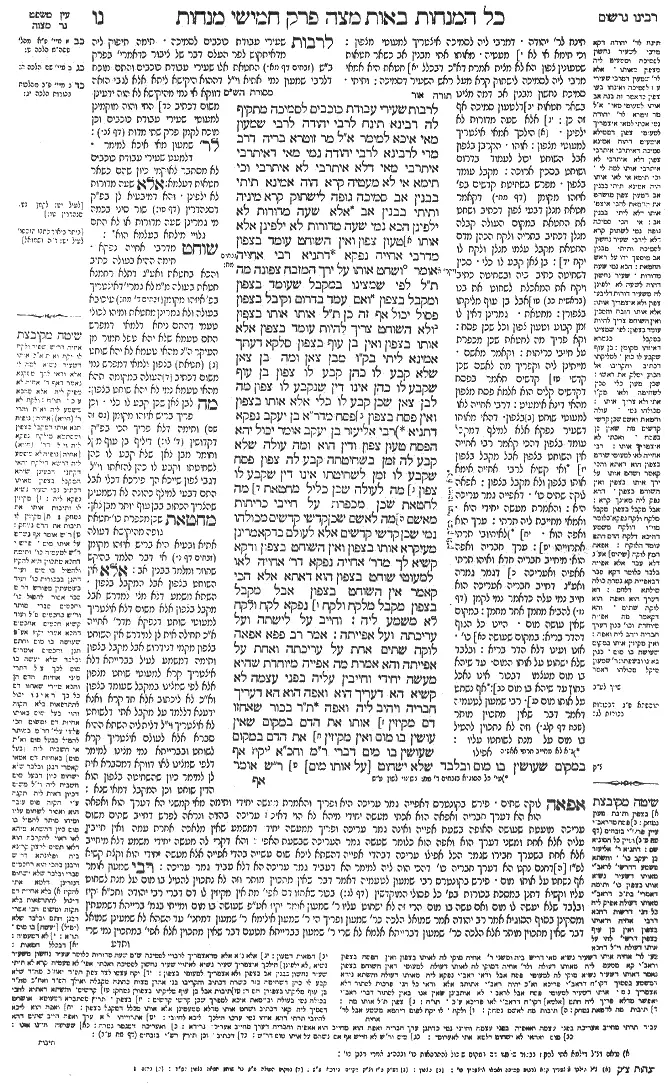
Menachot 56a - Guemara
לרבות שעירי עבודת כוכבים לסמיכה מתקיף לה רבינא תינח לרבי יהודה לרבי שמעון מאי איכא למימר א"ל מר זוטרא בריה דרב מרי לרבינא לרבי יהודה נמי מאי דאיתרבי איתרבי מאי דלא איתרבי לא איתרבי וכי תימא אי לא מעטיה קרא הוה אמינא תיתי בבנין אב סמיכה גופה לישתוק קרא מיניה ותיתי בבנין אב אלא שעה מדורות לא ילפינן הכא נמי שעה מדורות לא ילפינן אלא אותו טעון צפון ואין השוחט עומד בצפון מדרבי אחייה נפקא דתניא רבי אחייה אומר (ויקרא א, יא) ושחט אותו על ירך המזבח צפונה מה ת"ל לפי שמצינו במקבל שעומד בצפון ומקבל בצפון ואם עמד בדרום וקיבל בצפון פסול יכול אף זה כן ת"ל אותו אותו בצפון ולא השוחט צריך להיות עומד בצפון אלא אותו בצפון ואין בן עוף בצפון סלקא דעתך אמינא ליתי בק"ו מבן צאן ומה בן צאן שלא קבע לו כהן קבע לו צפון בן עוף שקבע לו כהן אינו דין שנקבע לו צפון מה לבן צאן שכן קבע לו כלי אלא אותו בצפון ואין פסח בצפון פסח מדר"א בן יעקב נפקא דתניא רבי אליעזר בן יעקב אומר יכול יהא הפסח טעון צפון ודין הוא ומה עולה שלא קבע לה זמן בשחיטתה קבע לה צפון פסח שקבע לו זמן לשחיטתו אינו דין שקבע לו צפון מה לעולה שכן כליל מחטאת מה לחטאת שכן מכפרת על חייבי כריתות מאשם מה לאשם שכן קדשי קדשים מכולהו נמי שכן קדשי קדשים אלא לעולם כדקאמרינן מעיקרא אותו בצפון ואין השוחט בצפון ודקא קשיא לך מדר' אחייה נפקא דר' אחייה לאו למעוטי שוחט בצפון הוא דאתא אלא הכי קאמר אין השוחט בצפון אבל מקבל בצפון מקבל מלקח ולקח נפקא לקח ולקח לא משמע ליה:
וחייב על לישתה ועל עריכתה ועל אפייתה:
אמר רב פפא אפאה לוקה שתים אחת על עריכתה ואחת על אפייתה והא אמרת מה אפייה מיוחדת שהיא מעשה יחידי וחייבין עליה בפני עצמה לא קשיא הא דעריך הוא ואפה הוא הא דעריך חבריה ויהיב ליה ואפה ת"ר בכור שאחזו דם מקיזין אותו את הדם במקום שאין עושין בו מום ואין מקיזין את הדם במקום שעושין בו מום דברי ר"מ וחכ"א יקיז אף במקום שעושין בו מום ובלבד שלא ישחוט [על אותו מום] ר"ש אומר
Comments from Rashi on Masechet Menachot Page 56a
תינח לר' יהודה . דמרבי ליה לסמיכה איצטריך למעוטי מצפון: וכי תימא אי לא מעטיה . מאותו אתי מבנין אב כשאר חטאות שטעונין צפון הא לא מצית אמרת דא"כ דבכלל חטאת היא אמאי מרבי ליה לסמיכה לישתוק קרא מעל ראש השעיר דסמיכה: ותיתי . סמיכת נחשון מבנין אב דמה מצינו בשאר חטאות דלטעון סמיכה אף זה כן: אלא שעה מדורות לא ילפינן . הילכך אמאי איצטריך למעוטי מצפון: אותו . הקרבן בצפון אבל השוחט יכול לעמוד בדרום ושוחט בסכין ארוכה: מקבל עומד בצפון . מפרש בשחיטת קדשים בפ' איזהו מקומן (דף מח.) דקאמר חטאת מנלן דבעי צפון דכתיב ושחט את החטאת במקום העולה קבלה מנלן דכתיב בתריה ולקח הכהן מדם החטאת מקבל עצמו מנלן ולקח לו יקח: בן צאן קבע לו כלי . סכין דשחיטה כתיב ביה ובשחיטה כתיב ויקח את המאכלת לשחוט את בנו (בראשית כב) אבל בן עוף מליקתו בצפורן: מחטאת . גמרינן דאין לו זמן קבוע וטעון צפון וכל שכן פסח: וקא פריך מה לחטאת שכן מכפרת על חייבי כריתות: וקאמר מאשם . מייתינן ליה וקפריך מה לאשם שכן קדשי קדשים תאמר בפסח דקדשים קלים הוא אלמא פסח מצפון מהאי דינא אימעיט: דרבי אחייה לאו למעוטי שוחט בצפון . דהאי מאותו דשעיר נפקא אלא למילף דמקבל עומד בצפון דהכי קאמר רבי אחייה אין השוחט בצפון אבל מקבל בצפון ואי קשיא לרבי אחייה אימא אותו בצפון ולא מקבל בצפון: אפאה לוקה שתים כו' . דאפייה גמר עריכה היא: והאמרת מעשה יחידי היא . ואמאי מחייבת ליה תרתי: ערך הוא ואפה הוא . לאיחיובי תרתי אתרוייהו: ערך חבריה ואפה הוא . מיחייב חבריה חדא ואיהו תרתי אאפיה ואעריכה דגמר גמרה ואע"ג דחייב חבריה אעריכה הוא חייב נמי עלה כדאמר נמי לקמן (מנחות דף נז.) להביא מחמץ אחר מחמץ: במקום שאין עושה מום . היינו כל הגוף דהדר בריא: במקום שעושה כו' . אזנו ועינו דלא הדר בריא: ובלבד שלא ישחוט על אותו המום . עד שיהא בו מום מעצמו דבכור אינו נאכל בחוץ עד שיהא בו מום:
Comments from Tosafot - Menachot 56a
לרבות שעירי עבודת כוכבים לסמיכה. תימה תיפוק ליה מדאיתקוש לפר העלם דבר של ציבור כדאמרי' בפרק ב"ש (זבחים דף מא.) החטאת אלו שעירי עבודת כוכבים והתם מוכח דלרבי שמעון נמי אתיא וי"ל דההוא היקישא ליתא אלא לגבי הזאה דווקא אי נמי מהיקישא לא הוה ידעינן משום דכתיב החי והוה מוקמינן למעוטי שעירי עבודת כוכבים וכן מוכח לקמן פרק שתי מדות (מנחות דף צב.): לר' שמעון מאי איכא למימר. דלמעט שעירי עבודת כוכבים לא מסתבר לאוקמי כיון שהם כשאר חטאות דעלמא: אלא שעה מדורות לא ילפינן. והא דמיבעיא לן בפ"ק דסנהדרין (דף טו:) שור סיני בכמה מי גמרינן שעה מדורות או לא התם גלויי מילתא בעלמא הוא: שוחט מדרבי אחייה נפקא. תימה ההיא בעולה כתיב והכא בחטאת ואע"ג דתלא רחמנא חטאת בעולה מ"מ לא גמרי' דאיצטריך בפ' איזהו מקומן (זבחים ד' מח:) עיכובא בעולה ולא גמרינן מחטאת ומיהו לכולי טעמי דהתם ניחא דלמאי דמפרש התם טעמא שלא יהא טפל חמור מן העיקר ה"נ מהאי טעמא לא יהא שוחט (חטאת) בצפון ולמאי דמפרש נמי משום דכתיב העולה במקומה תהא מהאי טעמא נמי לא יהא שוחט בצפון: מה לבן צאן שכן קבע לו כלי. וכן פריך בריש איזהו מקומן (גם זה שם) ותימה דלא פריך הכי בפ"ק דקדושין (ד' לו:) דיליף בן עוף מקל וחומר מבן צאן שלא קבע לו כהן לשחיטתו וקבע לו כהן להזאתו וי"ל דגבי צפון שייכא הך פירכא דכלי אבל התם דבעי למילף כהונה לא דשמעינן שהצריך הכתוב בבן עוף יותר מבן צאן: מחטאת שכן מכפרת כו'. חטאת גופה מהיקישא דעולה אתיא ובעיא היא בריש איזהו מקומן (זבחים דף נ.) אי דבר הלמד בהיקש שחוזר ומלמד בבנין אב: אלא אין השוחט בצפון אבל המקבל בצפון. השתא משמע דלא מצי למדרש אבל מקבל בצפון אלא משום דלא איצטריך למעוטי שוחט דנפקא מדר' אחייה א"כ תחילה אית לן למידרש אין השוחט בצפון מקמי דנידרוש אבל מקבל בצפון ותימה דמשמע לעיל בברייתא דלא איצטריך קרא למעוטי שוחט מצפון אלא לפי שמצינו במקבל שעומד בצפון וא"כ לא ליכתוב אלא חד קרא ואנא ידענא דללמד על מקבל אתי דלשוחט לא איצטריך וי"ל דלית ליה השתא ההיא סברא אלא לעולם איצטריך קרא לשוחט ובברייתא נמי מצינו למימר דלפי שמצינו לאו דווקא דמסברא אית לן למימר כיון שהשחיטה בצפון הוא הדין שוחט וכן המקבל דמאי שנא: אפאה לוקה שתים. פירש בקונטרס דאפייה גמר עריכה היא ופריך והאמרת מעשה יחידי ותימה מאי קמשני הא דערך הוא ואפאה הוא הא דערך חבריה ואפאה הוא אכתי מעשה יחידי מיהא לא הוי דאיכא עריכה בהדה ונראה לפרש דחייב שתים משום עריכה מועטת שעושה האופה בשעת אפייה ואינה גמר עריכה ופריך ממעשה יחידי דמשמע שאין מלאכה אחרת עמה ואין חייבין עליה אלא אחת ומשני דערך הוא ואפה הוא כלומר שעשה גמר העריכה שבשעת האפייה והא דקרי לה מעשה יחידי משמע דלא מיחייב אלא אחת בשערך חבירו שגמר הכל אפילו עריכה דבהדי אפייה דהשתא ליכא שום עשייה בהדי אפייה אלא מעשה יחידי הוא וקצת קשיא לפ"ז דחנם נקט הא דערך חבריה כו' דהכי הוה ליה למימר הא דעביד גמר עריכה הא דלא עביד גמר עריכה:
Menachot 56a - Mishnah translated into english
The term “of the goat” serves to include the goats brought as communal sin offerings for idol worship in the requirement of placing hands on the head of an offering.
Ravina objects to this: This works out well according to the opinion of Rabbi Yehuda, who says that the offering of Nahshon was included in the requirement of placing hands on the head of the animal. But according to the opinion of Rabbi Shimon, what is there to say? Why should the Torah write the term “it,” since there is no reason to assume that it would require slaughter in the north?
Mar Zutra, son of Rav Mari, said to Ravina: And according to the opinion of Rabbi Yehuda as well, why not say that for that which it was included, i.e., placing hands on the head of an animal, it was included; and for that which it was not included, i.e., slaughter in the north, it was not included. Why would one think that the obligation to slaughter in the north applies to the offering of Nahshon merely because the requirement of placing hands applies to that offering?
And if you would say that had the verse not excluded the offerings of the princes I would say that one could derive the requirement for slaughter in the north via a paradigm from all other sin offerings, if so, one could also derive the requirement for placing hands on the head of an animal itself via the same paradigm. Rather, the reason that the requirement of placing hands cannot be derived via a paradigm is that we do not learn the requirements of the sin offering of Nahshon, which was for the time of the inauguration of the Tabernacle alone, from the requirements of sin offerings applicable to all generations. So too, the requirement of slaughter in the north cannot be derived via a paradigm because we do not learn the requirements of the sin offering of Nahshon, which was for the time of the inauguration of the Tabernacle alone, from the requirement of sin offerings applicable to all generations.
Rather, the term “it” stated with regard to the sin offering of a king serves to teach that it must be slaughtered in the north of the Temple courtyard, but the one who slaughters it does not need to stand in the north when he slaughters. The offering would be valid even if he were to stand in the south of the courtyard and use a long knife to slaughter the animal that is positioned in the north.
The Gemara challenges this: The halakha of the one who slaughters has already been derived from the statement of Rabbi Aḥiyya, as it is taught in a baraita: Rabbi Aḥiyya says: The verse states with regard to the burnt offering: “And he shall slaughter it on the side of the altar northward before God” (Leviticus 1:11). Why must the verse state the exclusionary term “it”?
He explains: Since we have found that the priest stands in the north and collects the blood from the neck of the animal in the north, and if he stood in the south and collected the blood in the north the offering is disqualified, one might have thought that this is so also with regard to this one who slaughters the offering. Therefore, the verse states: “And he shall slaughter it,” to teach that it, the animal, must be in the north, but the one who slaughters does not have to be standing in the north of the Temple courtyard when he slaughters the animal. The question returns: What is derived from the exclusionary term “it” stated with regard to the sin offering of a king?
The Gemara answers: Rather, the term “it” stated with regard to the sin offering of a king serves to teach that it, a goat brought as a sin offering, must be slaughtered in the north, but a bird brought as an offering does not need to be killed in the north. It might enter your mind to say: Let it be derived that a bird must be killed in the north by an a fortiori inference from the halakha of a sheep, as follows: Just as is the case for a sheep brought as a burnt offering, that the Torah did not fix that its slaughter must be performed by a priest, yet nevertheless it fixed that its slaughter must be in the north, with regard to a bird brought as an offering, for which the Torah did fix that its slaughter must be performed by a priest, is it not logical that the Torah should also fix its slaughter in the north? Therefore, the verse states “it,” to exclude a bird from the requirement of being killed in the north.
The Gemara questions the logical inference. One cannot derive the halakha of a bird offering from the halakha of a sheep offering, as what is notable about a sheep offering? It is notable in that the Torah fixed the requirement that it be slaughtered with a utensil, i.e., a knife. By contrast, a bird is killed by the priest pinching the nape of its neck with his fingernail, without a utensil. Therefore, the term “it” cannot serve to counter this derivation. If so, there is no reason to think that a bird should also have to be killed in the north, and the term “it” is not necessary to exclude this possibility.
The Gemara explains: Rather, the term “it” stated with regard to the sin offering of a king serves to teach that it, the goat of the king, is slaughtered in the north, but the Paschal offering is not slaughtered in the north. The Gemara raises a difficulty: The halakha that the Paschal offering need not be slaughtered in the north is not derived from the term: “It,” but rather it is derived as stated by Rabbi Eliezer ben Yaakov.
As it is taught in a baraita: Rabbi Eliezer ben Yaakov says: One might have thought that a Paschal offering requires slaughter in the north. And this can be derived through a logical inference: Just as in the case of a burnt offering, for which the Torah did not fix a time for its slaughter yet fixed that it requires slaughter in the north, with regard to a Paschal offering, for which the Torah fixed a time for its slaughter, i.e., it must be slaughtered in the afternoon of the fourteenth day of Nisan, is it not logical that the Torah would fix that it must be slaughtered in the north? Therefore, the verse states “it,” to exclude the Paschal offering from the requirement of slaughter in the north.
The Gemara questions the logical inference. One cannot derive the halakha of a Paschal offering from the halakha of a burnt offering, as what is notable about a burnt offering? It is notable in that the Torah teaches that it is entirely burned on the altar. This is not so with regard to a Paschal offering.
The Gemara continues: If you would suggest learning a logical inference from the halakha of a sin offering, which is not entirely burned upon the altar yet is slaughtered only in the north, this too can be refuted. As what is notable about a sin offering? It is notable in that it has the power to atone for those sins liable for punishment by excision from the World-to-Come [karet], which is not so with regard to a Paschal offering.
The Gemara continues: If you would suggest learning a logical inference from the halakha of a guilt offering, which is not entirely burned, does not atone for those sins liable for punishment by karet, and is slaughtered only in the north, this too can be refuted. As what is notable about a guilt offering? It is notable in that it is an offering of the most sacred order, which is not so with regard to a Paschal offering. The Gemara adds: Having noted this distinction between a guilt offering and a Paschal offering, one can say that for all of the three offerings the halakha of a Paschal offering cannot be derived from them either, since each of them is an offering of the most sacred order.
The Gemara returns to the earlier inference: Rather, the term “it” teaches as we said initially: It, i.e., the animal, must be standing in the north, but the one who slaughters the animal does not have to stand in the north. And that which is difficult for you, that we derive this halakha from the statement of Rabbi Aḥiyya, is in fact not difficult. The derivation of Rabbi Aḥiyya from the term “it” does not come to exclude one who slaughters from the requirement to slaughter in the north, since that is known already from the term “it” stated with regard to the sin offering of a king. Rather, this is what Rabbi Aḥiyya is saying: The one who slaughters the animal does not have to stand in the north, but by inference, the one who collects the blood from the neck of the animal must stand in the north.
The Gemara questions this inference: The halakha that the one who collects the blood from the neck of the animal must stand in the north is derived from the fact that the Torah could have written: The priest shall take, and instead writes: “And the priest shall take” (Leviticus 4:34). The Gemara explains: This tanna does not learn anything from this distinction between: The priest shall take, and: “And the priest shall take.” Since he does not agree with this derivation, he must therefore derive the requirement to collect the blood while standing in the north from a different verse.
§ The mishna teaches: And one is liable to be flogged for kneading the meal offering, and for shaping it, and for baking it, if the meal offering becomes leaven. Rav Pappa said: If one baked a meal offering as leaven he is flogged with two sets of lashes, one for shaping the dough and one for baking it. The Gemara raises a difficulty: But you said in the baraita: Just as the act of baking is notable in that it is a single action and one is liable to receive lashes for it by itself; this indicates that one receives one set of lashes for baking a meal offering as leavened bread, not two.
The Gemara answers: This is not difficult, as this statement of the baraita, i.e., that one receives a single set of lashes for baking, is referring to a case where he shaped the dough and he, the same person, also baked it. Since he already incurred liability to receive lashes for shaping the dough before he baked it, he is not liable again for shaping when he bakes it. That statement of Rav Pappa, that one who bakes the dough is liable to receive two sets of lashes, is referring to a situation where another person shaped the dough and gave the shaped dough to him, and he baked it. Although the one who shaped it is liable to receive lashes for the act of shaping, nevertheless, the one who bakes it is liable to receive two sets of lashes, as his act of baking also completed the shaping of the dough.
§ The Gemara continues to discuss the leavening of a meal offering. The Sages taught in a baraita (Tosefta, Bekhorot 3:6): In the case of an unblemished firstborn kosher animal whose blood circulation is constricted, a condition that can be healed only through bloodletting, one may let the animal’s blood by cutting it in a place where the incision does not cause a permanent blemish. But one may not let the animal’s blood by cutting it in a place where the incision causes a permanent blemish, as it is prohibited to intentionally cause a blemish in a firstborn animal; this is the statement of Rabbi Meir.
And the Rabbis say: One may even let the animal’s blood by cutting it in a place where the incision causes a permanent blemish, provided that he does not slaughter the animal on the basis of that blemish, even though in general, a firstborn animal may be slaughtered once it develops a permanent blemish. The Rabbis maintain that in this case, since he caused the blemish himself, he may not slaughter it until it develops a different, unrelated blemish. Rabbi Shimon says:
Traduction : The William Davidson digital edition of the Koren Noé Talmud, with commentary by Rabbi Adin Even-Israel Steinsaltz.