 Talmud Bavli
Menachot 95a : Youtube
Daf TubeYoutube
2 video classes :
Menachot Page 95a
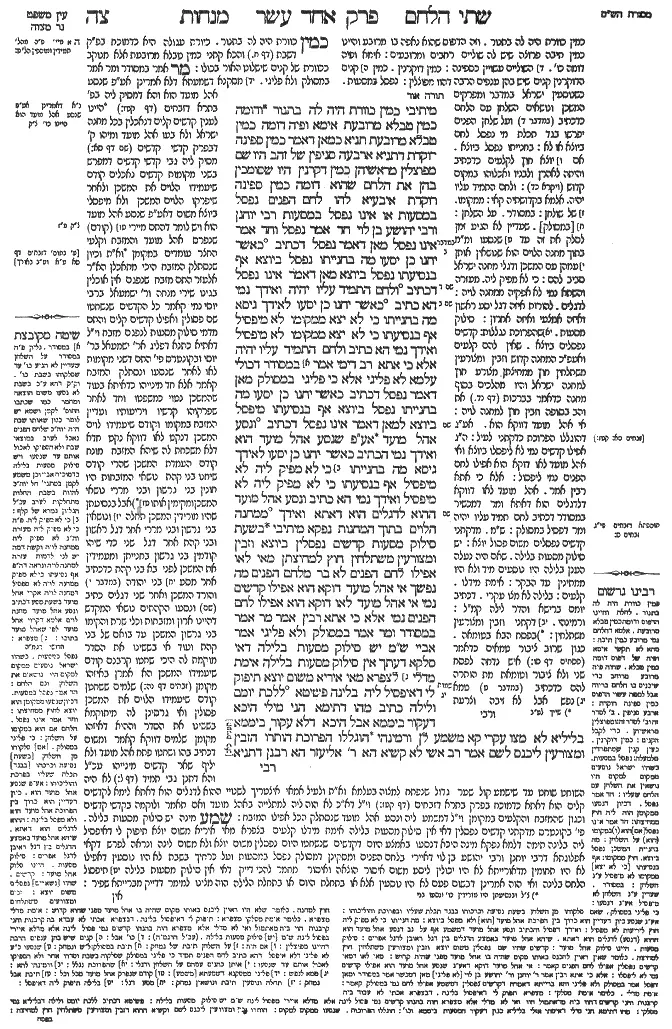
Menachot 95a - Guemara
מיתיבי כמין כוורת היה לה בתנור ודומה כמין טבלא מרובעת אימא ופיה דומה כמין טבלא מרובעת תניא כמאן דאמר כמין ספינה רוקדת דתניא ארבעה סניפין של זהב היו שם מפוצלין מראשיהן כמין דקרנין היו שסומכין בהן את הלחם שהוא דומה כמין ספינה רוקדת איבעיא להו לחם הפנים נפסל במסעות או אינו נפסל במסעות רבי יוחנן ורבי יהושע בן לוי חד אמר נפסל וחד אמר אינו נפסל מאן דאמר נפסל דכתיב (במדבר ב, יז) כאשר יחנו כן יסעו מה בחנייתו נפסל ביוצא אף בנסיעתו נפסל ביוצא מאן דאמר אינו נפסל דכתיב (במדבר ד, ז) ולחם התמיד עליו יהיה ואידך נמי הא כתיב (במדבר ב, יז) כאשר יחנו כן יסעו לאידך גיסא מה בחנייתו כי לא יצא ממקומו לא מיפסיל אף בנסיעתו כי לא יצא ממקומו לא מיפסיל ואידך נמי הא כתיב ולחם התמיד עליו יהיה אלא כי אתא רב דימי אמר במסודר דכולי עלמא לא פליגי אלא כי פליגי במסולק מאן דאמר נפסל דכתיב כאשר יחנו כן יסעו מה בחנייתו נפסל ביוצא אף בנסיעתו מיפסל ביוצא למאן דאמר אינו נפסל דכתיב (במדבר ב, יז) ונסע אהל מועד אף על פי שנסע אהל מועד הוא ואידך נמי הכתיב כאשר יחנו כן יסעו לאידך גיסא מה בחנייתו כי לא מפיק ליה לא מיפסיל אף בנסיעתו כי לא מפיק ליה לא מיפסיל ואידך נמי הא כתיב ונסע אהל מועד ההוא לדגלים הוא דאתא ואידך (במדבר ב, יז) ממחנה הלוים בתוך המחנות נפקא מיתיבי בשעת סילוק מסעות קדשים נפסלין ביוצא וזבין ומצורעין משתלחין חוץ למחיצתן מאי לאו אפילו לחם הפנים לא בר מלחם הפנים מה נפשך אי אהל מועד דוקא הוא אפילו קדשים נמי אי אהל מועד לאו דוקא הוא אפילו לחם הפנים נמי אלא כי אתא רבין אמר מר אמר במסודר ומר אמר במסולק ולא פליגי אמר אביי שמע מינה יש סילוק מסעות בלילה דאי סלקא דעתך אין סילוק מסעות בלילה אימת מדלי לצפרא מאי איריא משום יוצא תיפוק לי דאיפסיל ליה בלינה פשיטא (שמות יג, כא) ללכת יומם ולילה כתיב מהו דתימא הני מילי היכא דעקור ביממא אבל היכא דלא עקור ביממא בליליא לא מצו עקרי קא משמע לן ורמינהי הוגללו הפרוכת הותרו הזבין ומצורעין ליכנס לשם אמר רב אשי לא קשיא הא ר' אליעזר הא רבנן דתניא
Comments from Rashi on Masechet Menachot Page 95a
כמין כוורת היה לה בתנור . וזה הדפוס שהוא נאפה בו מרובע והיינו כמין תיבה פרוצה שיש לה שוליים רחבים ומרובעים: אימא ופיה דומה כו' . השוליים עשויין כספינה: כמין דוקרנין . כמין קנים הדוקרנין קנים שיש בהן ענפים הרבה דהוו מפוצלין: נפסל במסעות . כשנוסעין ישראל במדבר ומפרקים המשכן ונושאים השלחן עם הלחם כדכתיב (במדבר ד) ועל שלחן הפנים יפרשו בגד תכלת מי נפסל לחם ביוצא או לא: בחנייתו נפסל ביוצא . אם יוצא חוץ לקלעים כדכתיב והיתה לאהרן ולבניו ואכלוהו במקום קדוש (ויקרא כד): ולחם התמיד עליו יהיה . אלמא בקדושתיה קאי: ממקומו . של שולחן: במסודר . על השלחן: [במסולק] . שעדיין לא הגיע זמן לסלק את זה עד שנסעו ומ"מ בתוך מחנה הלוים הוא שנושאין אותן עמהן עם המשכן ודגלי מחנה ישראל סביב להם: כי לא מפיק ליה . מעזרה והשתא נמי לא אפקיה ממחנה לויה: לדגלים . להורות איזה דגל יסע ראשון ואיזה אמצעי ואיזה אחרון: סילוק מסעות . שהפרוכת נגללות: קדשים נפסלים ביוצא . שאין להם קלעים ואעפ"כ המחנה קדוש וזבין ומצורעין משתלחין חוץ ממחיצתן מצורע חוץ למחנה ישראל והיו מהלכים בסוף מחנה כדאמר בברכות (דף נד.) את והב בסופה וזבין חוץ למחנה לויה: אי אהל מועד דווקא הוא . אע"ג דהוגללו הפרוכת כדקתני לעיל: ה"ג אפילו קדשים נמי לא ליפסלו ביוצא ואי אהל מועד לאו דוקא הוא אפילו לחם הפנים נמי ליפסול: אלא כי אתא רבין אמר . אהל מועד לאו דווקא דלדגלים הוא דאתא ומר דמכשיר במסודר דכתיב לחם תמיד עליו יהיה ומר דפסיל במסולק: ש"מ . מדקתני קדשים נפסלים משום פסול יוצא: יש סילוק מסעות בלילה . שאם היה נעלה הענן בלילה היו נוסעים מיד ולא היו ממתינין עד הבקר: אימת מידלו . קלעים: בלילה לא מצו עקרי . דכתיב יומם ברישא והדר לילה קמ"ל: ורמינהי . דקתני וזבין ומצורעין משתלחין:
Comments from Tosafot - Menachot 95a
כמין כוורת היה לה בתנור. כוורת עגולה היא כדמוכח בפ"ק דשבת (דף ח.) והכא קתני כמין טבלא מרובעת אלא מנוקב ככוורת של קנים שישלוט האור בכולו: מר אמר במסודר ומר אמר במסולק ולא פליגי מסקנא דשמעתא דלא אמרינן אע"פ שנסע אהל מועד הוא והא דמסיק ליה בפ' בתרא דזבחים (דף קטז:) היינו לענין קדשים קלים דנאכלין בכל מחנה ישראל ולא בעו אהל מועד ומיהו ק' דבפרק קדשי קדשים (שם דף סא:) מסיק ליה גבי קדשי קדשים דמפרש בשני מקומות קדשים נאכלים קודם שיעמידו הלוים את המשכן ולאחר שיפרקו הלוים המשכן ולא מיפסלי ביוצא משום דאע"פ שנסע אהל מועד הוא ויש לומר דהתם מיירי (קודם) שנפרס אהל מועד והמזבח וקלעי החצר עומדים במקומן וא"ת וכיון שנסתלק המזבח היכי מתאכלן הא"ר אלעזר התם מזבח שנפגם אין אוכלין בגינו שירי מנחה ור' ישמעאל ברבי יוסי נמי קאמר כל הקדשים שנשחטו שם פסולין ואפילו קדשים קלים והתם מדמי סילוק מסעות לנפגם מזבח וי"ל דאתיא כתנא דפליג אר' ישמעאל בר' יוסי ובקונטרס פי' התם דשני מקומות לאו לאחר שנסעו ונסתלק המזבח קאמר אלא חד מינייהו כדאיתא בעוד שהמשכן נטוי כמשפטו וחד לאחר שפרקוהו קרשיו ויריעותיו ועדיין המזבח במקומו וקודם שיעמידו לוים המשכן דנקט לאו דווקא נקט חדא דלא משכחת לה שיהא המזבח מונח קודם העמדת המשכן שהרי קודם שיחנו בני קהת נושאי המזבחות היו חונין בני גרשון ובני מררי נושאי המשכן ומקימין אותו אבל בנסיעתן שהיו מורידין המשכן תחלה ונושאין בני גרשון ובני מררי אחר דגל ראשון ובני קהת אחר דגל שני כדי שיהו קודמין בני גרשון בחנייתן ומעמידין את המשכן לפני בא בני קהת כדכתיב אחר מסע בני יהודה (במדבר י) והורד המשכן ואחר שני דגלים כתיב (שם) ונסעו הקהתים נושאי המקדש דהיינו ארון ומזבחות וכלי שרת והקימו בני גרשון המשכן עד בואם של בני קהת ועוד אי בששינו את הסדר מוקמת לה היכי שחטו קרבנם קודם שיעמידו המשכן הא אמרן באיזהו מקומן (זבחים דף נה:) שלמים ששחטן קודם שיעמידו הלוים את המשכן פסולין ואי גרסינן לה מיתוקמא בששינו את הסדר וההיא דאיזהו מקומן שלמים דווקא קאמר ומשום דכתיב בהו ושחטו פתח אהל מועד ולא יליף שאר קדשים מינייהו עכ"ל והא דתנן גבי תמיד (דף ל:) לא היה השוחט שוחט עד שישמע קול שער גדול שנפתח למצוה בעלמא וא"ת ולעיל אמאי איצטריך לשנויי ההוא לדגלים הוא דאתא לימא לקדשים קלים הוא דאתא כדמוכח בפרק בתרא דזבחים (דף קטז:) וי"ל דא"כ לא הוה ליה למתלייה באהל מועד ואם תאמר ולוקמה בקדשי קדשים וכגון שהמזבח והקלעים במקומן וי"ל דמשמע ליה ונסע אהל מועד שנסתלק הכל אפילו המזבח: שמע מינה יש סילוק מסעות בלילה . פי' בקונטרס מדקתני קדשים נפסלין דאי אין סילוק מסעות בלילה אימת מידלו קלעים בצפרא מאי איריא משום יוצא תיפוק לי דאיפסיל ליה בלינה תימה דלמא נפקא מינה היכא דנסעו באמצע היום דקדשים שנשחטו היום נפסלין משום יוצא ולא משום לינה ונראה לפרש דקאי אפלוגתא דרבי יוחנן ורבי יהושע בן לוי דאיירי בלחם הפנים ומסקינן דמסולק נפסל במסעות ועל כרחיך בשבת לא היו נוסעין דאפילו לא היו תחומין מדאורייתא לא היו יכולין ליסע משום איסור הוצאה ואיסור מחמר להכי דייק דאי אין סילוק מסעות בלילה תיפסול הלחם בלינה ואי הוה אמרינן דבשום פעם לא היו נוסעין אלא או בתחלת היום או בתחלת הלילה הוה מצינו למימר דדייק מברייתא שפיר:
Menachot 95a - Mishnah translated into english
The Gemara raises an objection to the opinion of Rabbi Yoḥanan from another baraita: There was a mold in the oven for the shewbread that was similar to a barrel made of reeds, as it was perforated to enable the bread to bake well, and in its shape it resembled a type of rectangular tablet [tavla]. This indicates that the shewbread was rectangular. The Gemara answers: Say that the opening, i.e., the upper section of the mold, resembled a type of rectangular tablet, and that the mold tapered down to a point.
It is taught in a baraita in accordance with the one who said the shewbread was like a rocking boat, as it is taught in a baraita: There were four gold panels there, on the Table, which split up at their upper ends so that they were like forked reed branches. The panels were forked because the bread, which resembled a type of rocking boat, was supported by them.
§ A dilemma was raised before the Sages: During the era of the Tabernacle, was the shewbread disqualified during the journeys of the Jewish people in the wilderness, or was it not disqualified during the journeys? When the Jewish people would travel from one place to another in the wilderness, the Tabernacle would be dismantled and the Table would be carried with the loaves upon it. The dilemma is about whether or not the loaves were disqualified, since they left the boundaries of the Sanctuary. This matter is the subject of a dispute between Rabbi Yoḥanan and Rabbi Yehoshua ben Levi. One says the loaves were thereby disqualified, and one says they were not disqualified.
The Gemara explains their respective reasons: The one who says the shewbread was disqualified derives his opinion from a verse, as it is written with regard to the journeys: “Then the Tent of Meeting shall journey with the camp of the Levites in the midst of the camps; as they encamp, so shall they journey, every man in his place, by their banners” (Numbers 2:17). The verse juxtaposes the encampments with the journeys, indicating that just as when the Tabernacle is encamped the shewbread is disqualified when it leaves the Tabernacle courtyard, so too, when the Tabernacle journeys the shewbread is disqualified when it leaves the courtyard.
The one who says the shewbread was not disqualified during the journeys derives his opinion from a verse, as it is written with regard to the journeys: “And upon the Table of shewbread they shall spread a cloth of blue…and the continual bread shall remain upon it” (Numbers 4:7). The verse refers to the shewbread as “the continual bread” even during the journeys, indicating that as long as the loaves are on the Table they retain their sacred status.
The Gemara asks: But also according to the other amora, who maintains the shewbread was not disqualified during the journeys, isn’t it written: “As they encamp, so shall they journey,” indicating that the shewbread is disqualified when it leaves the Tabernacle during the journeys? The Gemara replies that according to this opinion, the juxtaposition of the encampments with the journeys is interpreted in the other direction: Just as when the Tabernacle is encamped, if the shewbread does not leave its place and remains on the Table it is not disqualified, so too, when the Tabernacle journeys, if it does not leave its place on the Table it is not disqualified.
The Gemara asks: But also according to the other amora, who maintains the shewbread was disqualified during the journeys, isn’t it written: “And the continual bread shall remain upon it,” indicating that the shewbread retains its sanctity as long as it is on the Table? Rather, when Rav Dimi came from Eretz Yisrael to Babylonia he said that the explanation of the dispute between Rabbi Yoḥanan and Rabbi Yehoshua ben Levi is different. With regard to a case where the shewbread is arranged on the Table, everyone agrees the shewbread is not disqualified during the journey. Rather, when they disagree it is in a case where the shewbread is removed from the Table before the journey.
The Gemara explains their respective reasons: The one who says the shewbread is disqualified derives his opinion from a verse, as it is written: “Then the Tent of Meeting shall journey with the camp of the Levites in the midst of the camps; as they encamp, so shall they journey, every man in his place, by their banners” (Numbers 2:17). The verse juxtaposes the encampments with the journeys, indicating that just as when the Tabernacle is encamped the shewbread is disqualified when it leaves the Tabernacle courtyard, so too, when the Tabernacle journeys the shewbread is disqualified when it leaves the courtyard.
According to the one who says the shewbread is not disqualified during the journeys, this is derived from a verse, as it is written: “Then the Tent of Meeting shall journey,” indicating that even though it has journeyed it is still considered the Tent of Meeting, and therefore the shewbread is not disqualified.
The Gemara asks: But also according to the other amora, who maintains the shewbread was not disqualified during the journeys, isn’t it written: “As they encamp, so shall they journey,” indicating that the shewbread is disqualified when it leaves the Tabernacle during the journeys? The Gemara replies that according to this opinion, the juxtaposition of the encampments with the journeys is interpreted in the other direction: Just as when the Tabernacle is encamped, if one does not take the shewbread out of the courtyard it is not disqualified, so too, when the Tabernacle journeys, if one does not take the shewbread out of the courtyard it is not disqualified.
The Gemara asks: But also according to the other amora, who maintains the shewbread was disqualified during the journeys, isn’t it written: “Then the Tent of Meeting shall journey,” indicating that the Tent of Meeting retains its sanctity during the journeys and therefore the shewbread should not be disqualified? The Gemara answers: That verse is not referring to the sanctity of the Tent of Meeting during the journeys. Rather, it comes to teach the position of the Tent of Meeting between the banners of the different tribes during the journeys.
The Gemara asks: And according to the other amora, from where does he derive the position of the Tent of Meeting during the journeys? The Gemara replies: He derives this from the continuation of the verse: “With the camp of the Levites in the midst of the camps” (Numbers 2:17).
The Gemara raises an objection from a baraita to the opinion that the shewbread was not disqualified during the journeys: At the time of the dismantling of the Tabernacle in order to commence the journeys, when the curtains surrounding the Tabernacle courtyard are removed, the sacrificial food is disqualified from being consumed, as it is considered to have left the Tabernacle courtyard. And zavim and lepers are sent out of the partitions of their camps; the zavim are sent out of the Levite camp, while lepers are sent out of the Israelite camp. What, is it not referring even to the shewbread, indicating that it is disqualified during the journeys? The Gemara answers: No, the baraita means that most sacrificial food is disqualified, except for the shewbread.
The Gemara challenges: Whichever way you look at it, this explanation is difficult. If the phrase: “Then the Tent of Meeting shall journey,” is meant exactly, i.e., literally, and it still has the status of the Tent of Meeting even during the journeys, then even other sacrificial food should not be disqualified during the journeys. If “then the Tent of Meeting shall journey,” is not meant exactly, and it does not have the status of the Tent of Meeting during the journeys, then even the shewbread should be disqualified.
Rather, when Ravin came from Eretz Yisrael to Babylonia he said that there is actually no dispute between Rabbi Yoḥanan and Rabbi Yehoshua ben Levi. This Master, who stated that the shewbread is not disqualified during the journeys, stated his ruling with regard to loaves that are arranged on the Table; and that Master, who stated that the shewbread is disqualified during the journeys, stated his ruling with regard to loaves that were removed from the Table. And the two amora’im do not disagree, as each was referring to a different case.
§ The aforementioned baraita states that when the Tabernacle was dismantled the sacrificial food was disqualified, as it was considered to have left the Tabernacle courtyard. Abaye said: One may conclude from the baraita that there could be a case where the dismantling of the Tabernacle in order to commence the journeys would take place at night. This is a necessary conclusion, as if it should enter your mind to say that there could not be a case where the dismantling of the Tabernacle in order to commence the journeys would take place at night, when would the curtains surrounding the Tabernacle be removed? If they were removed right away in the morning, why was the sacrificial food disqualified specifically due to the fact that it left the Tabernacle courtyard? I may derive that it was disqualified because of the fact that it was left overnight.
The Gemara challenges: It is obvious that the Tabernacle could be dismantled at night, as it is written: “And the Lord went before them by day in a pillar of cloud, to lead them the way; and by night in a pillar of fire, to give them light; that they might go by day and by night” (Exodus 13:21). The Gemara answers that Abaye’s observation is necessary lest you say that this statement, that they would travel at night, applies only in a case where the Jewish people dismantled their camp and began to journey by day, in which case they would continue to travel at night. But in a case where they did not dismantle their camp by day they could not dismantle the camp and leave at night. Abaye therefore teaches us that they could set out even at night.
§ The aforementioned baraita teaches that even when the Tabernacle was dismantled, zavim and lepers were sent outside the camp, as the sanctity of both the Levite camp and the Israelite camp remained intact even while the Tabernacle was dismantled. And the Gemara raises a contradiction from another baraita: Once the curtain surrounding the Tabernacle courtyard was rolled up, the zavim and the lepers were permitted to enter into that area where the Tabernacle had stood. This indicates that the camps did not retain their sacred status once the Tabernacle was dismantled. Rav Ashi said: This is not difficult; this baraita is in accordance with the opinion of Rabbi Eliezer and that baraita is in accordance with the opinion of the Rabbis. As it is taught in a baraita:
Traduction : The William Davidson digital edition of the Koren Noé Talmud, with commentary by Rabbi Adin Even-Israel Steinsaltz.