 Talmud Bavli
Menachot 13a : Youtube
Daf TubeYoutube
2 video classes :
Menachot Page 13a
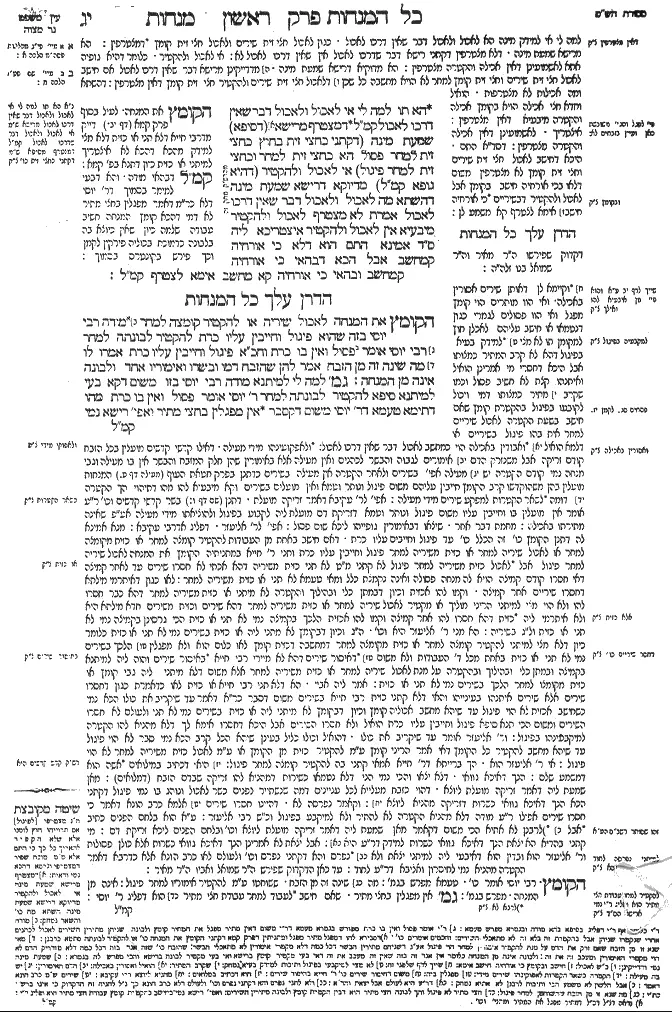
Menachot 13a - Guemara
הא תו למה לי אי לאכול ולאכול דבר שאין דרכו לאכול קמ"ל דמצטרף מרישא (דסיפא) שמעת מינה (דקתני כחצי זית בחוץ כחצי זית למחר פסול הא כחצי זית למחר וכחצי זית למחר פיגול) אי לאכול ולהקטיר (דהיא גופא קמ"ל) מדיוקא דרישא שמעת מינה דהשתא מה לאכול ולאכול דבר שאין דרכו לאכול אמרת לא מצטרף לאכול ולהקטיר מיבעיא אין לאכול ולהקטיר איצטריכא ליה ס"ד אמינא התם הוא דלא כי אורחיה קמחשב אבל הכא דבהאי כי אורחיה קמחשב ובהאי כי אורחיה קא מחשב אימא לצטרף קמ"ל:
הדרן עלך כל המנחות
מתני׳ הקומץ את המנחה לאכול שיריה או להקטיר קומצה למחר מודה רבי יוסי בזה שהוא פיגול וחייבין עליו כרת להקטיר לבונתה למחר רבי יוסי אומר פסול ואין בו כרת וחכ"א פיגול וחייבין עליו כרת אמרו לו מה שינה זה מן הזבח אמר להן שהזבח דמו ובשרו ואימוריו אחד ולבונה אינה מן המנחה:
גמ׳ למה לי למיתנא מודה רבי יוסי בזו משום דקא בעי למיתנא סיפא להקטיר לבונתה למחר ר' יוסי אומר פסול ואין בו כרת מהו דתימא טעמא דר' יוסי משום דקסבר אין מפגלין בחצי מתיר ואפי' רישא נמי
Comments from Rashi on Masechet Menachot Page 13a
הא מרישא שמעת מינה . דלא מצטרפין דקתני רישא דבר שדרכו לאכול אין שאין דרכו לאכול לא: אי לאכול ולהקטיר . כלומר דהיא גופיה אתא לאשמועינן דאין אכילה והקטרה מצטרפין: הא מדוקיא דרישא שמעת מינה . מדדייקינן מרישא דבר שאין דרכו לאכול אם חישב לאכול חצי זית שירים וחצי זית קומץ למחר לא הויא מחשבה כל שכן דלאכול חצי זית שירים ולהקטיר חצי זית קומץ דאין מצטרפין: דהשתא ומה אכילות לא מצטרפות . הואיל וחדא חצי אכילה הויא בקומץ אכילה והקטרה מיבעיא דאין מצטרפין: איצטריך . לאשמועינן דאין אכילה והקטרה מצטרפין: דסד"א התם . היכא דחישב לאכול חצי זית שירים וחצי זית קומץ לא מצטרפין משום דלאו בכי אורחיה חישב בקומץ אבל לאכול ולהקטיר דבשיריים כי אורחיה חישב אימא לצטרף קא משמע לן: הקומץ רבי יוסי אומר כו' . טעמא מפרש בגמ': מה שינה זה מן הזבח . ששוחטו ע"מ להקטיר אימוריו למחר פיגול: אינה מן . המנחה. מפרש בגמ': גמ' אין מפגלין בחצי מתיר . שאם חישב לעבוד למחר עבודת חצי מתיר הוא דפליג ר' יוסי:
Comments from Tosafot - Menachot 13a
מתני' הקומץ את המנחה. לעיל בסוף פרק קמא (מנחות דף יב.) דייק מדרבי חייא דלא תני או כזית דלא מצי למידק מהכא דהכא לא איצטריך למיתני או כזית כיון דתנא בפ' קמא:
Menachot 13a - Mishnah translated into english
According to Abaye, why do I also need this mishna here? If you will suggest that this mishna is necessary, as one can infer from it that if one intended to partake of half an olive-bulk the next day and then intended to partake of another half an olive-bulk the next day, both from an item whose typical manner is such that one partakes of it, the mishna teaches us that they join together in order to render the offering piggul, this suggestion can be rejected: But you already learn the halakha in this case from the first clause of the latter clause of the previous mishna, as it teaches: Half an olive-bulk outside and half an olive-bulk the next day, the offering is unfit. One can infer from this that if his intent was to consume half an olive-bulk the next day and half an olive-bulk the next day, it is piggul.
If you suggest that the mishna is necessary for a case where one intended to consume and to burn, i.e., that the mishna teaches us the matter itself, that intent to consume does not join together with intent to burn, this too cannot be. The reason is that from the inference of the first clause of the mishna you can already learn the halakha in this case, as it teaches: If one intended to partake of an item whose typical manner is such that one partakes of it, the offering is rendered piggul. This indicates that if his intent was to consume an item whose typical manner is such that one does not consume it, the offering is not rendered piggul.
The Gemara explains how the halakha that intent to consume and burn do not combine can be inferred from the mishna: Now consider, if when one intended to partake of an item whose typical manner is such that one partakes of it and to partake of an item whose typical manner is such that one does not partake of it, you say that his intentions do not join together, despite the fact that both of his intentions referred to consumption, is it necessary for the mishna to teach that intentions to consume and to burn do not join together?
The Gemara responds: Yes; although the mishna teaches the halakha of a case where one intended to consume an item typically consumed and to consume an item typically not consumed, it was necessary for the mishna to teach the halakha of a case where one intended to eat and to burn. As it might enter your mind to say that there, where one’s intentions referred solely to consumption, the halakha is that his intentions do not join together, as he intended to act not in accordance with its typical manner, since he intended to consume that which is not meant to be consumed.
The Gemara continues: But here, where his intent was to consume half an olive-bulk and to burn half an olive-bulk, where with regard to this half he intends in accordance with its typical manner, and with regard to this half he intends in accordance with its typical manner, one might say that they should join together, despite the fact that each intention concerns only half an olive-bulk. Therefore, the mishna teaches us that such intentions do not join together, and the mishna can be explained even in accordance with the opinion of the Rabbis.
MISHNA: In the case of a priest who removes a handful from the meal offering with the intent to partake of its remainder or to burn its handful on the next day, Rabbi Yosei concedes in this instance that it is a case of piggul and he is liable to receive karet for partaking of it. But if the priest’s intent was to burn its frankincense the next day, Rabbi Yosei says: The meal offering is unfit but partaking of it does not include liability to receive karet. And the Rabbis say: It is a case of piggul and he is liable to receive karet for partaking of the meal offering.
The Rabbis said to Rabbi Yosei: In what manner does this differ from an animal offering, where if one slaughtered it with the intent to sacrifice the portions consumed on the altar the next day, it is piggul? Rabbi Yosei said to the Rabbis: There is a difference, as in the case of an animal offering, its blood, and its flesh, and its portions consumed on the altar are all one entity. Consequently, intent with regard to any one of them renders the entire offering piggul. But the frankincense is not part of the meal offering.
GEMARA: The Gemara questions the terminology of the mishna: Why do I need the tanna to teach that Rabbi Yosei concedes in this instance? Let the tanna simply state: If one removes the handful from a meal offering with the intent to partake of its remainder or to burn the handful on the next day, Rabbi Yosei says that the offering is piggul and one is liable to receive karet for partaking of the remainder.
The Gemara responds: It was necessary for the tanna to teach that Rabbi Yosei concedes, because he wants to teach the latter clause of the mishna, that if his intent was to burn its frankincense the next day, Rabbi Yosei says that the meal offering is unfit, but partaking of it does not include liability to receive karet.
The Gemara elaborates: The reason the tanna links the two cases of the mishna is lest you say that the reason that Rabbi Yosei does not render the meal offering piggul is because he holds that one cannot render an offering piggul with intent that concerns only half of its permitting factors. And consequently, since the burning of the handful and the frankincense render the remainder of a meal offering permitted for consumption, then even in the first clause of the mishna, where one intends to burn the handful the next day, Rabbi Yosei should hold that the offering is not rendered piggul, as the intent does not refer to the frankincense as well.
Traduction : The William Davidson digital edition of the Koren Noé Talmud, with commentary by Rabbi Adin Even-Israel Steinsaltz.
Menachot 13a : Significance
Next step
Finished studying Menachot 13a? Carry on with the rest of the tractate.
Study Menachot 13bFrequently asked questions: Menachot 13a
Where is Menachot 13a in tractate Menachot?
Menachot 13a is page 23 of 217 in tractate Menachot (Seder Kodashim).
When is daf 13 of Menachot studied in Daf Yomi?
Daf Yomi covers one daf a day, both sides. Daf 13 of Menachot will be studied on June 27, 2033.
Is there a video class on Menachot 13a?
Yes, by Daf Tube, Rabbi Dr. Moshe Weisblum. These classes were published on YouTube by their authors and are gathered on this site.
What is tractate Menachot about?
The Masechet Menahot is the second tractate of the Seder Kodashim. The Gemara Menahot is the study of the laws concerning the preparation and presentation of offerings of flour, grain, oil and drink. As well as the meal offering that was burnt on the altar and the rest that was to be consumed by the cohanim. The Menahot tractate has 13 chapters.
Your study is also dedicated to them
- L'ilui Nishmat Amram ben Itshak Loubaton
- L'ilui Nishmat Margalit bat Ledicia
- For the success of Elyahou ben H'anna & family