 Talmud Bavli
The learning on the whole site is dedicated : For the success of Elyahou ben H'anna & family
The learning on the whole site is dedicated : L'ilui Nishmat Jamila bat Chlomo Abensour
The learning on the whole site is dedicated : L'ilui Nishmat אסתר בת חיים
Menachot 90a : Youtube
Daf TubeYoutube
2 video classes :
Menachot Page 90a
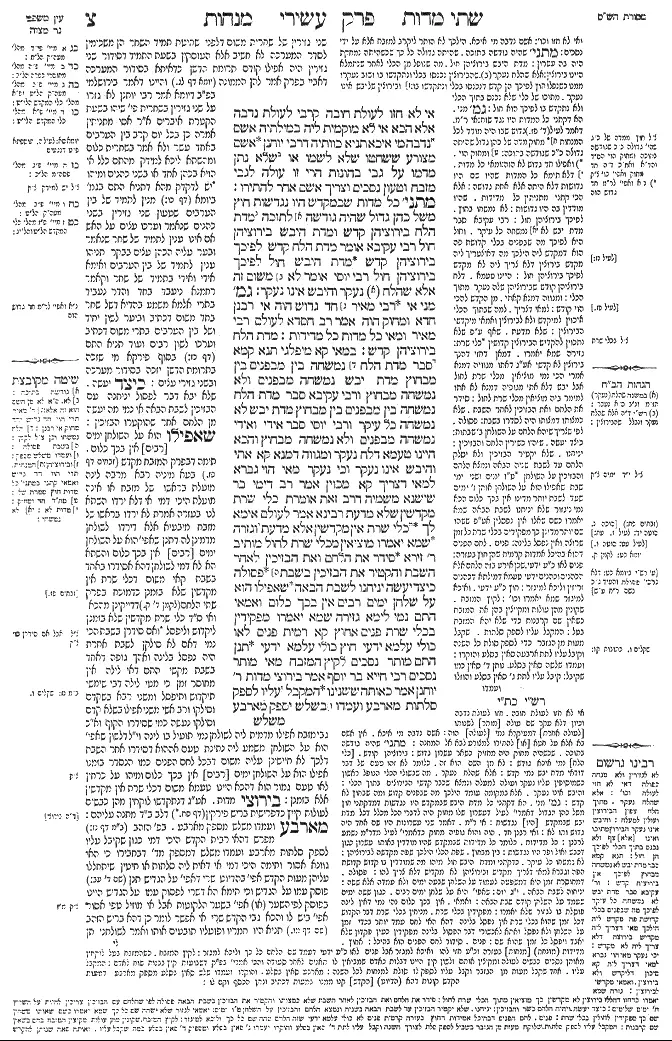
Menachot 90a - Guemara
אי לא חזו לעולת חובה קרבי לעולת נדבה אלא הכא אי לא מוקמית ליה במילתיה אשם נדבה מי איכא תניא כוותיה דרבי יוחנן אשם מצורע ששחטו שלא לשמו או שלא נתן מדמו על גבי בהונות הרי זו עולה לגבי מזבח וטעון נסכים וצריך אשם אחר להתירו:
מתני׳ כל מדות שבמקדש היו נגדשות חוץ משל כהן גדול שהיה גודשה לתוכה מדת הלח בירוציהן קדש ומדת היבש בירוציהן חול רבי עקיבא אומר מדת הלח קדש לפיכך בירוציהן קדש מדת היבש חול לפיכך בירוציהן חול רבי יוסי אומר לא משום זה אלא שהלח נעקר והיבש אינו נעקר:
גמ׳ מני אי רבי מאיר חד גדוש הוה אי רבנן חדא ומחוק הוה אמר רב חסדא לעולם רבי מאיר ומאי כל מדות כל מדידות:
מדת הלח בירוציהן קדש:
במאי קא מיפלגי תנא קמא סבר מדת הלח נמשחה בין מבפנים בין מבחוץ מדת יבש נמשחה מבפנים ולא נמשחה מבחוץ ורבי עקיבא סבר מדת הלח נמשחה בין מבפנים בין מבחוץ מדת יבש לא נמשחה כל עיקר ורבי יוסי סבר אידי ואידי נמשחה מבפנים ולא נמשחה מבחוץ והכא היינו טעמא דלח נעקר ומגווה דמנא קא אתי והיבש אינו נעקר וכי נעקר מאי הוי גברא למאי דצריך קא מכוין אמר רב דימי בר שישנא משמיה דרב זאת אומרת כלי שרת מקדשין שלא מדעת רבינא אמר לעולם אימא לך כלי שרת אין מקדשין אלא מדעת וגזרה שמא יאמרו מוציאין מכלי שרת לחול מותיב ר' זירא סידר את הלחם ואת הבזיכין לאחר השבת והקטיר את הבזיכין בשבת פסולה כיצד יעשה יניחנו לשבת הבאה שאפילו הוא על שלחן ימים רבים אין בכך כלום ואמאי התם נמי לימא גזירה שמא יאמרו מפקידין בכלי שרת פנים אחוץ קא רמית פנים לאו כולי עלמא ידעי חוץ כולי עלמא ידעי תנן התם מותר נסכים לקיץ המזבח מאי מותר נסכים רבי חייא בר יוסף אמר בירוצי מדות ר' יוחנן אמר כאותה ששנינו המקבל עליו לספק סלתות מארבע ועמדו בשלש יספק מארבע
Comments from Rashi on Masechet Menachot Page 90a
אשם נדבה מי איכא . הילכך לא הותר ליקרב למזבח אלא על ידי נסכים: מתני' שהיה גודשה בתוכה . שהיתה גדולה כל כך שכשהיתה נמחקת היה בה עשרון: מדת היבש בירוציהן חול . מה שנופל מן הכלי לאחר שנתמלא היינו בירוצין: אלא שהלח נעקר . שהבירוצין נכנסו בכלי ונתקדשו בו ושוב נעקרו ממנו כשנפלו חוץ לפיכך הן קדש דנכנסו בכלי ונתקדשו בו: ובירוצין של יבש אינו נעקר . מתוכו של כלי שלא נכנס בתוך הכלי ולא נתקדש בו לפיכך הוא חול: גמ' מני . הא דקתני כל המדות היו נגדשות: אי ר"מ . דאמר לעיל (מנחות ד' פז.) גדוש שבו היה מודד לכל המנחות מחוק מדה של כהן גדול שהיתה גדולה כ"כ שגודשה בתוכה: ומחוק הוי . ואפילו חד גדוש לא הוה: ומאי כל מדות . דלא תימא כל המדות שהיו שם היו גדושות דלא היתה אלא אחת גדושה: אלא הכי קתני מתניתין כל מדידות . שהיו מודדין בה היו גדושות: לא נמשחו בחוץ . לפיכך בירוציהן חול: רבי עקיבא סבר מדת יבש לא נמשחה כל עיקר . וחול היא לפיכך מה שבפנים בכלי קדושת פה הוא דמקדש ליה הילכך מה דאיצטריך ליה מקדש בירוצין דלא צריך ליה לא מקדש לפיכך בירוציהן חול: היינו טעמא . דלח בירוציהן קודש שבירוציהן שלה נעקר מתוך הכלי: ומגווה דמנא קאתי . מן הקדש להכי הוי קודש: למאי דצריך . למה שבתוך הכלי איכוין למיקדש ולא לבירוצין ואמאי מיקדשי הבירוצין: שלא מדעת . שאף ע"פ שלא נתכוין להקדיש הבירוצין קדושין כלי שרת: גזירה שמא יאמרו . דמאן דחזי דהנך בירוצין לא קדשי אע"ג דאתו מגוויה דמנא אמרי הכי נמי מוציאין מכלי שרת לחול אבל יבש דלא אתי מגופיה דמנא לא אתו למימר ביה מוציאין מכלי שרת לחול: סידר את הלחם ואת הבזיכין לאחר השבת . שלא כמצותו דמצותו היה לסדרו בשבת: פסולה . לפי שצריך שיהא הלחם על השולחן ב' שבתות: כיצד יעשה . שיהיו כשירין הלחם והבזיכין: יניחנו . שלא יקטיר הבזיכין ולא יסלק הלחם עד לשבת שניה הבאה ונמצא הלחם והבזיכין על השולחן ט"ו ימים ושני ימי שבת שאפילו הוא על השולחן אותן ז' ימים שעד לשבת יותר מדינו אין בכך כלום הכא נמי ניגזור שלא יניחנו לשבת הבאה שמא יאמרו כשם שאלו אין נפסלין אע"פ ששהו שם יותר מדינן כך מפקידים בכלי שרת כל זמן שרוצה ואין נפסל בלינה: פנים . לחם הפנים דהוא בהיכל אמדות קרמית שהן חוץ בעזרה: פנים לאו כ"ע ידעי . שכן אירע בזה הלחם אלא הכהנים וכהנים ידעי טעמא דמילתא דכהנים זריזין וליכא למיגזר: חוץ כ"ע ידעי . ואיכא למיגזר שמא יאמרו וכו': לקיץ המזבח . שקונין מהן עולות ומקייצין בהן את המזבח כשאין שם קרבנות כדי שלא יהא המזבח בטל: המקבל עליו לספק סלתות . שקבל מעות מן הגזבר כדי לספק סולת כל השנה וקיבל עליו לתת ארבעה סאין בסלע והוקרו: ועמדו שלשה סאין בסלע . נותן ד' סאין כמו שקיבל:
Comments from Tosafot - Menachot 90a
כיצד יעשה. שלא יבא דבר לפסול יניחנה עם הבזיכין לשבת הבאה אי נמי מה יעשה מן הלחם אחר שהוקטרו הבזיכין: שאפילו הוא על השולחן ימים [רבים] אין בכך כלום. תימה דבפרק המזבח מקדש (זבחים דף פז.) בעא מיניה רבא מרבה לינה מועלת בראשו של מזבח או אינה מועלת היכי דמי אי דלא ירדו השתא לנו בעזרה אמרת לא ירדו בראשו של מזבח מיבעיא אלא דירדו לשולחן מדמינן לה דתנן שאפי' הוא על השולחן ימים [רבים] אין בכך כלום והשתא הא לא דמי לשולחן דהא אסידרו באחד בשבת קאי משום דכלי שרת אין מקדשין שלא בזמנן כדמוכח בפרק שתי הלחם (לקמן מנחות ד' ק.) דדייקינן מהכא ואי ס"ד כלי שרת מקדשין שלא בזמנן ליקדוש וליפסל ואם סידרן בשבת הכי נמי דאם לא סילקן לשבת אחרת היה נפסל בלינה ואהך גופה דאחד בשבת מקשי התם דאי לילה אין מחוסר זמן כי מטי לילה דבי שימשי תיקדוש ותיפסל ומשני רבא בשקדם וסילקו ורב אשי משני אפילו בשלא קדם וסילקו נעשה כמי שסידרו הקוף וא"כ גבי מזבח אפילו מדמית ליה לשולחן נמי תועיל בו לינה וי"ל דלשון שאפי' הוא על השולחן משמע ליה נתינת טעם אההוא דסידרו אחר השבת דלכך לא חיישינן עליה משום דבכל לחם הפנים כמו הנסדר בזמנו אפילו הוא על השולחן ימים [רבים] אין בכך כלום ומיהו על כרחין לאו טעם גמור הוא דהכא היינו טעמא משום דכלי שרת אין מקדשין אלא בזמנן: בירוצי מדות. אע"ג דנתקדשו לוקחין מהן כבשים לעולות קייץ כדפרישית בריש פירקין (דף פח.) דלב ב"ד מתנה עליהם: מארבע ועמדו משלש מספק מארבע. בפ' הזהב (ב"מ דף נז:) מפרש דהאי רבית הקדש היכי דמי כגון שקיבל עליו לספק סלתות מארבע ועמדו משלש דמספק מד' דבחבירו כי האי גוונא אסור ותימה היכי דמי אי דאית ליה סלתות או חיטין שיתחללו עליהן מעות הקדש אפי' בהדיוט שרי דאפי' על הגדיש תנן (שם ד' עב:) פוסק עמו על הגדיש וכי תימא הא דשרי לפסוק עמו על הגדיש היינו בפוסק לפי השער (או) אפי' בשער הלקוטות אבל אי מוזיל טפי אסור אפי' ביש לו והכא גבי הקדש שרי אי אפשר לומר כן דהא בריש הזהב (שם דף מו.) תניא היו חמריו ופועליו תובעים אותו ואמר לשולחני תן לי בדינר מעות ואפרנסם ואני אעלה לך יפה דינר וטריסית אם יש לו מותר כדפרישית דמטבע נעשה חליפין או בפרוטטות דכיון דיש לו אוזולי אוזיל גביה ואין כאן אגר נטר ליה ואם אין לו אפילו גדיש א"כ מה מרויחו בהקדמת מעות הרי לא יוכל להשתמש בהן דאין להם על מה שיתחלל ולא נפקי לחולין וי"ל דלעולם בדלית ליה אפי' גדיש אלא מקבל מעות הקדש והולך אצל בעלי בתים שנותנין לו יותר מד' סאין ומרויח היתר ומה שאין נותן להקדש אותו העודף מידי דהוה אמשלש ועמדו אארבע משום דלא יהיב להקדש אלא כפי השער והשער הוא מארבע ומיהו לפי טעם זה היה מותר להוליך מעות הקדש לסחורה כדי להשתכר בהן וזהו תימה דא"כ אמאי לא אשכחן ריבית בהקדש בכי האי גוונא בפ' הזהב (ב"מ דף נז:) לכך נראה דאין נכון לעשות כן או משום בזיון הקדש או משום שלא יבא לידי מעילה והא דשרי הכא בהקדש ואסור בהדיוט י"ל כי ההיא דסוף איזהו נשך (שם דף עד.) אמר רב מחוסר שתים פוסק שלש אינו פוסק ושמואל אמר בידי אדם אפילו מאה פוסק בידי שמים אפילו אחת אינו פוסק תנן פוסק עמו על הגדיש והא מחוסר משדא בחמה למיבש ולמידש ומידד ומשני כגון דשדא בחמה ויבש ולשמואל [דאמר בידי שמים אפילו אחד אינו פוסק והא מחוסר] מידד דבידי שמים היא אפשר בנפוותא ובהקדש אפילו מחוסר כל הני שרי ועוד יש לומר דמיירי הכא בעשירים המתנדבים ונותנין מעות חולין למוכרי סלתות כדי לספק מארבע ואפילו למאן דחייש שמא לא ימסרום יפה בפרק הבית והעליה (שם דף קיח.) גבי שומרי ספיחים בשביעית דאין מתנדב שומר חנם הכא ליכא למיחש דאפילו לא מסרו העשירים יפה יפה מכל מקום מוכרי הסלתות שקיבלו המעות מוסרין אותם יפה יפה וכי תימא אפילו ריבית קצוצה לישתרי שילוו העשירים מאה של חולין לשלם להקדש מאה ועשרים כדאשכחן בהזהב (ב"מ דף נז:) גבי אבני בית המסורות לגיזבר לא דמי דהתם הכל יודעים שהאבנים עומדות לבנין וליכא למיגזר אטו הדיוט אבל הכא גזרינן דילמא אתי למימר דכי מלוה מאה במאה וכ' שרי אם הקדישום אחר כך כי היכי דשרי להלוותן מאה לשלם להקדש מאה ועשרים ועוד דאפילו כי האי גוונא אסור מדאורייתא דחשיב כאילו הויא הנאה למלוה כיון דקעביד על פיו כגון תן מנה לפלוני ואקדש אני לך דמקודשת מדין ערב ולא דמי לאבני בנין שאין לגזבר חלק בהן ולא דמי נמי לשקול ארבע זוזי ולימא ליה לפלניא דלוזפן זוזי דהא פשיטא ודאי דאסור למימר לחבריה אנא מוזיפנא לך זוזי והב לפלניא ארבע זוזי:
Menachot 90a - Mishnah translated into english
therefore, even if they are no longer fit to be sacrificed as obligatory burnt offerings, for which they were originally consecrated, having now been slaughtered not for their own sake they can still be sacrificed as voluntary burnt offerings, without the need to fulfill the additional conditions that originally applied to them. But here, with regard to the guilt offering of a leper, if you do not maintain it in accordance with its original status and require it to be brought together with its libations, it can no longer be considered a guilt offering at all, as is there a voluntary guilt offering?
The Gemara notes that it is taught in a baraita in accordance with the opinion of Rabbi Yoḥanan: In the case of a guilt offering of a leper that one slaughtered not for its own sake, or in a case where one did not place some of its blood upon the leper’s right thumb and big toe, this guilt offering is still brought up upon the altar and requires libations, i.e., a meal offering and wine-libation; but since it was sacrificed incorrectly, the leper needs to bring another guilt offering to permit him to partake of offerings.
MISHNA: All measuring vessels that were in the Temple were such that they held the volume that they measured when their contents were heaped above the rim, except for the measuring vessel used to measure the flour for the griddle-cake offering of the High Priest, as its heaped measure, i.e., the quantity of flour held by a tenth of an ephah measuring vessel when heaped, was contained within its walls when the flour was leveled with the rim. This was due to the fact that the measuring vessel for the griddle-cake offering was slightly larger than the tenth of an ephah measuring vessel.
With regard to measuring vessels for liquids, their overflows, i.e., that which flows onto the outside of vessel’s walls, are sacred, but with regard to measuring vessels for dry substances, their overflows are non-sacred.
Rabbi Akiva says that the reason for this difference is that since the measuring vessels for liquids are themselves sacred, therefore their overflows are sacred, and since the measuring vessels for dry substances are non-sacred, therefore their overflows are non-sacred. Rabbi Yosei says: The difference is not due to that factor. Rather, it is because the overflow of liquid was originally inside the vessel, where it became consecrated, and was then displaced, whereas the overflow of a dry substance was not displaced from inside the vessel, so it had not become consecrated.
GEMARA: The mishna and Gemara on 87a cite a dispute between the Rabbis and Rabbi Meir concerning the number and nature of the measuring vessels used for dry substances. In light of that dispute, the Gemara asks: In accordance with whose opinion is the mishna here? If you suggest it is in accordance with the opinion of Rabbi Meir, that is difficult: He holds that there were two measuring vessels that held a tenth of an ephah, but only one of them was such that it held its measure when heaped; the other one held its measure when leveled. And if you suggest it is in accordance with the opinion of the Rabbis, that is difficult: They hold there was only one measuring vessel that held a tenth of an ephah, and it held its measure when leveled. How can the mishna state that all measuring vessels in the Temple were heaped?
Rav Ḥisda said: Actually, the mishna is in accordance with the opinion of Rabbi Meir that only one of two measuring vessels that held a tenth of an ephah was such that it held its measure when heaped. And what does the mishna mean when it states: All measuring vessels [kol middot] in the Temple were heaped? It means that that all measurements [kol medidot] performed with that measuring vessel were done when its contents were heaped above its rim.
§ The mishna discusses the status of overflows: The first tanna states simply that with regard to measuring vessels for liquids, their overflows are sacred, but with regard to measuring vessels for dry substances, their overflows are non-sacred. Rabbi Akiva explains that this distinction is a function of whether the measuring vessel is itself sacred. Rabbi Yosei explains it is function of whether the overflow had initially been inside the vessel. The Gemara asks: With regard to what matter do these three tanna’im disagree?
The Gemara explains: The first tanna holds that the measuring vessels for liquid items, e.g., wine for libations and oil, were anointed and thereby consecrated both on the inside and on the outside. Therefore, the overflow is consecrated as it comes in contact with the outside of the vessel’s walls. The measuring vessels for dry items, such as the flour for meal offerings, were anointed and consecrated only on the inside, but were not anointed on the outside. Therefore, the overflow is not consecrated when it comes into contact with the outside of the vessel’s walls.
And Rabbi Akiva, who states the difference is due to whether the vessel is sacred or non-sacred, holds that the measuring vessels for liquid items were anointed on the inside and were not anointed on the outside, whereas the measuring vessels for dry items were not anointed at all, and they remained non-sacred and so could not consecrate the overflow.
And Rabbi Yosei holds that this and that, i.e., both types of measuring vessels, were anointed only on the inside but were not anointed on the outside, and so here, this is the reason behind whether the overflow was sacred: As the overflow of liquid was originally inside the vessel and was then displaced, and it comes from the inside of the vessel, it is therefore consecrated. But the overflow of a dry substance was not originally inside the vessel and then displaced, and so it is never consecrated.
The Gemara questions this explanation of Rabbi Yosei’s opinion: But even if the overflow was previously inside the vessel and then displaced, what of it? A person intends to consecrate only that which he requires, and so even if the overflow had been inside the vessel it would not have been consecrated.
Rav Dimi bar Shishna said in the name of Rav: That is to say that service vessels consecrate their contents even without the intent of the person using them. Ravina said: Actually, I will say to you that service vessels consecrate their contents only with the intent of the person using them, and by Torah law the overflows are not sacred. But the Sages issued a decree to regard them as sacred, lest people say that one may transfer a substance that has been consecrated in a service vessel to non-sacred status.
Rabbi Zeira raised an objection to this explanation from a mishna (100a): Each Shabbat, new shewbread and bowls of frankincense were arranged on the Table in the Sanctuary. They remained there until the following Shabbat, at which point the frankincense was burned, thereby permitting the shewbread to be eaten. If the priest arranged the bread and the bowls of frankincense on the Table after Shabbat, during the week, and then he burned the frankincense in the bowls on the Shabbat at the end of that week, the bread is disqualified, as it had not been on the Table for a full seven days from one Shabbat to the next. How then should one proceed to prevent the disqualification? He should leave the bread on the Table until the following Shabbat, as even if it remained on the Table for many days, there is nothing wrong with that, provided that it is there for at least seven days. The frankincense may then be burned and it will permit the bread to be eaten.
Rabbi Zeira explains his objection: But why is it permitted to leave the bread on the Table for more than seven days? There too, let us say that the Sages issued a decree disqualifying the bread lest people say that one can store sacred items in a service vessel overnight and that will prevent them becoming disqualified. Evidently, the Sages did not issue such decrees, and it follows that also with regard to using the measuring vessels they did not issue a decree.
The Gemara rejects this claim: Are you raising a contradiction between a rite performed inside the Sanctuary, i.e., the arrangement of the shewbread, and a rite performed outside the Sanctuary, i.e., using the measuring vessels? Since in the case of a rite performed inside the Sanctuary not everyone is aware of what is happening, there is no concern that people will misinterpret what is going on and so there is no need to issue a decree concerning it. In the case of a rite performed outside the Sanctuary everyone is aware of what is happening, and there is a need to issue a decree to prevent people from drawing mistaken conclusions.
§ The Gemara continues to discuss the overflow of measures. We learned in a mishna there (Shekalim 10b): The surplus libations were sold and the proceeds used to purchase supplementary offerings of the altar [keitz hamizbe’aḥ].
The Gemara asks: What is the meaning of: Surplus libations?
Rabbi Ḥiyya bar Yosef says: It means the overflows of measuring vessels. Rabbi Yoḥanan says: Surplus libations are like that which we learned in another mishna (Shekalim 13a): In the case of one who accepts upon himself to supply fine flour at four se’a for a sela, and its market price stood at three se’a for a sela, he is required to fulfill his commitment and supply fine flour at four se’a for a sela.
Traduction : The William Davidson digital edition of the Koren Noé Talmud, with commentary by Rabbi Adin Even-Israel Steinsaltz.