 Talmud Bavli
Menachot 30b : Youtube
Daf TubeYoutube
2 video classes :
Menachot Page 30b
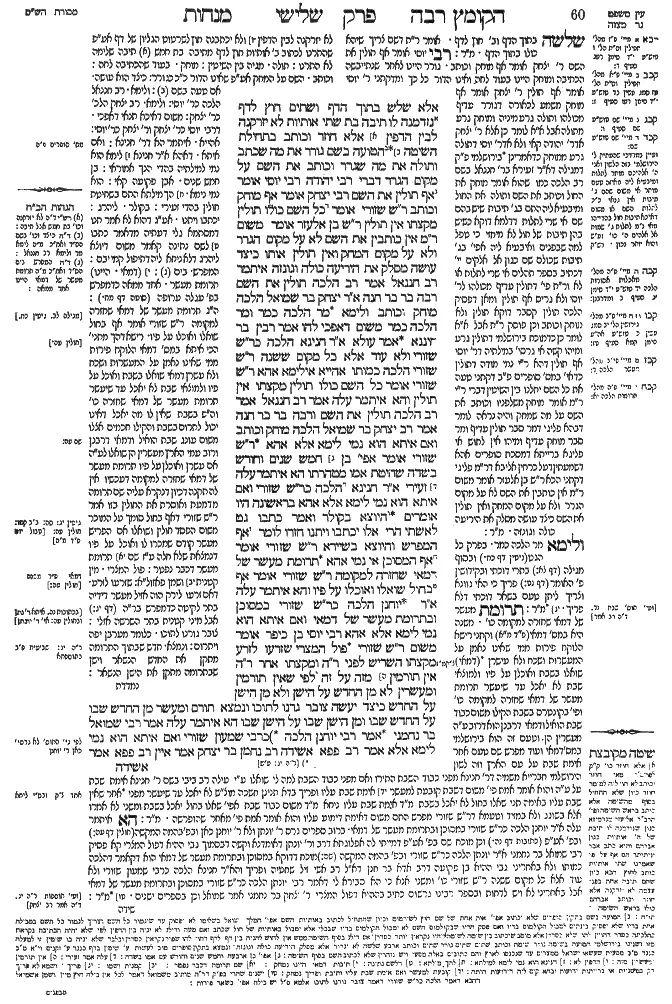
Menachot 30b - Guemara
אלא שלש בתוך הדף ושתים חוץ לדף נזדמנה לו תיבה בת שתי אותיות לא יזרקנה לבין הדפין אלא חוזר וכותב בתחילת השיטה הטועה בשם גורר את מה שכתב ותולה את מה שגרר וכותב את השם על מקום הגרר דברי רבי יהודה רבי יוסי אומר אף תולין את השם רבי יצחק אומר אף מוחק וכותב ר"ש שזורי אומר כל השם כולו תולין מקצתו אין תולין ר"ש בן אלעזר אומר משום ר"מ אין כותבין את השם לא על מקום הגרר ולא על מקום המחק ואין תולין אותו כיצד עושה מסלק את היריעה כולה וגונזה איתמר רב חננאל אמר רב הלכה תולין את השם רבה בר בר חנה א"ר יצחק בר שמואל הלכה מוחק וכותב ולימא מר הלכה כמר ומר הלכה כמר משום דאפכי להו אמר רבין בר חיננא אמר עולא א"ר חנינא הלכה כר"ש שזורי ולא עוד אלא כל מקום ששנה ר"ש שזורי הלכה כמותו אהייא אילימא אהא ר"ש שזורי אומר כל השם כולו תולין מקצתו אין תולין והא איתמר עלה אמר רב חננאל אמר רב הלכה תולין את השם ורבה בר בר חנה אמר רב יצחק בר שמואל הלכה מוחק וכותב ואם איתא הוא נמי לימא אלא אהא ר"ש שזורי אומר אפי' בן חמש שנים וחורש בשדה שחיטת אמו מטהרתו הא איתמר עלה זעירי א"ר חנינא הלכה כר"ש שזורי ואם איתא הוא נמי לימא אלא אהא בראשונה היו אומרים היוצא בקולר ואמר כתבו גט לאשתי הרי אלו יכתבו ויתנו חזרו לומר אף המפרש והיוצא בשיירא ר"ש שזורי אומר אף המסוכן אי נמי אהא תרומת מעשר של דמאי שחזרה למקומה ר"ש שזורי אומר אף בחול שואלו ואוכלו על פיו והא איתמר עלה א"ר יוחנן הלכה כר"ש שזורי במסוכן ובתרומת מעשר של דמאי ואם איתא הוא נמי לימא אלא אהא רבי יוסי בן כיפר אומר משום ר"ש שזורי פול המצרי שזרעו לזרע מקצתו השריש לפני ר"ה ומקצתו אחר ר"ה אין תורמין מזה על זה לפי שאין תורמין ומעשרין לא מן החדש על הישן ולא מן הישן על החדש כיצד יעשה צובר גרנו לתוכו ונמצא תורם ומעשר מן החדש שבו על החדש שבו ומן הישן שבו על הישן שבו הא איתמר עלה אמר רבי שמואל בר נחמני אמר רבי יוחנן הלכה כרבי שמעון שזורי ואם איתא הוא נמי לימא אלא אמר רב פפא אשידה רב נחמן בר יצחק אמר איין רב פפא אמר
Comments from Rashi on Masechet Menachot Page 30b
לא יזרקנה לבין הדפין . ולא יכתבנה חוץ לשרטוט הגליון של דף אע"פ שהתרנו לכתוב ב' אותיות חוץ לדף מתיבה בת חמש תיבה שלימה לא התרנו: תולה . מגיה בין השיטין: מוחק . בעוד שהכתיבה לחה: וכותב . השם על המחק אע"פ שאינו הדור כ"כ כגורר: כיצד הוא עושה . אם טעה בשם: ולימא . רב חננאל הלכה כר' יוסי: ולימא . רב יצחק הלכ' כר' יצחק: משום דאיכא תנאי דאפכי . דרבי יוסי כר' יצחק ור' יצחק כר' יוסי: אהייא . איתמר הא דר' חנינא: ואם איתא . דאהא א"ר חנינא לימא הוא נמי למילתיה בהדי הנך אמוראי: בן חמש שנים . אבן פקועה קאי: הוא נמי נימא . הך מילתא התם בשחיטת חולין בהדי זעירי: בקולר . ליהרג: יכתבו ויתנו . אע"ג דהוא לא אמר תנו דמסתמא גלי דעתיה מדאמר כתבו לשם נתינה קאמר משום דיוצא ליהרג דלא ניחא ליה דתיפול קמי יבם: המפרש . בים: (דמאי. היינו) תרומת מעשר . אחד ממאה כדמפרש בפ' עגלה ערופה (סוטה דף מח.): ה"ג תרומת מעשר של דמאי שחזרה למקומה ר"ש שזורי אומר אף בחול שואלו ואוכלו על פיו. רישא דהך מתני' הכי איתא במס' דמאי הלוקח פירות ממי שאינו נאמן על המעשרות ושכח ולא עשרן דמאי שואלו בשבת ואוכל על פיו ולמוצאי שבת לא יאכל עד שיעשר תרומת מעשר של דמאי שחזרה כו' וה"פ בשבת שאין לו מה יאכל דאינו יכול לתרום בשבת והקילו חכמים אצלו משום עונג שבת הואיל ודמאי דרבנן ורוב עמי הארץ מעשרין הן שואלו לע"ה אם עשרן ואוכלן על פיו תרומת מעשר של דמאי שחזרה למקומה דעכשיו אין לה תקנה דכיון דנקרא עליה שם תרומה מדמעת ואוסר את החולין בזו אמר ר"ש שזורי דאף בחול סומך על המוכר משום הפסד חולין ושואלו אם הפריש מעשר קודם שמכרו לו ואוכל על פיו דנמצאת שלא חלה ע"ז שם תרומת מעשר דכבר נפטר: פול המצרי . מין קטנית ושמן פאזול"א: שזרעו לזרע . דאם זרעו לירק הוה אזיל מעשר דידיה בתר לקיטה כדמפרש בר"ה (דף יג:) אבל מיני קטנית בתר השרשה אזלי: צובר גורנו לתוכו . כלומר מערבן יפה ויתרום: ונמצא . חדש שבתוך התרומה מתקן את החדש הנשאר וישן שבתרומה מתקן את הישן הנשאר:
Comments from Tosafot - Menachot 30b
שלשה בתוך הדף וב' חוץ לדף. אומר ר"ת דשם צריך שיהא כולו בתוך הדף. מ"ר: רבי יוסי אומר אף תולין את השם ר' יצחק אומר אף מוחק וכותב. גורר היינו לאחר שנתייבשה הכתיבה ומוחק היינו בעוד לחה ואינו הדור כל כך ומדקתני ר' יוסי אומר אף תולין ר' יצחק אומר אף מוחק משמע לכאורה דגורר עדיף מכולהו ותולה גרע מיניה ומוחק גרע מתולה אבל א"א לומר כן אלא ר' יצחק אדר' יהודה קאי ולא אדר' יוסי דתולה גרע ממוחק כדאמרינן בירושלמי פ"ק דמגילה דא"ר זעירא בר' חננאל בשם רב הלכה כמו שהוא אומר מוחק את החול וכותב את השם ותולה את החול ומיבעיא ליה התם בג' תיבות שיש בהם שם אי שרי לתלות דדלמא דוקא כשיש בהן תיבות של חול לא מיחזי כי טפל למה שבפנים ואיבעיא ליה אפי' בג' תיבות שכולם שם כגון אל אלקים יי' דכתיב בספר תהלים אי שרי לתלות או לא ור"ת פי' דתולין עדיף מכולהו לר' יוסי ולא גריס אף תולין ומאן דפסיק הלכה תולין קסבר דוקא תולין ולא מוחק וכותב וכן פוסק ר"ת אבל א"א לומר כן כדמוכח בירושלמי דתולין גרע ומיהו קשה אי גרסי' במילתיה דר' יוסי אף תולין דהא ר"י נמי מודה דתולין כדאי' במס' סופרים פ"ב דקתני טעה את כל השם יתלנו בין השיטין דברי ר"י ר"מ אומר מוחק משלפניו וכותב את השם על מה שמחק והיה נראה לומר דבהא פליגי דמר סבר תולין עדיף ומר סבר מוחק עדיף ומיהו אין לחוש אי פליגא ברייתא דמסכת סופרים אהא דשמעתין דעל כרחין אליבא דר"מ פליגי דקתני הכא ר"ש בן אלעזר אומר משום ר"מ אין כותבין את השם לא על מקום הגרר ולא על מקום המחק ואין תולין את השם כיצד עושה מסלק את היריעה כולה וגונזה. מ"ר: ולימא מר הלכה כמר. בפרק כל הגט (גיטין דף כח.) ובסוף מגילה (דף לא:) בתרי דוכתי ובקידושין פ' האומר (דף נט:) פריך כי האי גוונא וצריך ליתן טעם בשאר דוכתי דלא פריך. מ"ר: תרומת מעשר של דמאי שחזרה למקומה כו'. משנה היא במס' דמאי (פ"ד מ"א) וקתני רישא הלוקח פירות ממי שאינו נאמן על המעשרות ושכח ולא עישרן (דמאי) שואלו בשבת ואוכלן על פיו ולמוצאי שבת לא יאכל עד שיעשר תרומת מעשר של דמאי שחזרה למקומה כו' ופי' בקונטרס בשבת הקילו משום כבוד שבת הואיל ודמאי דרבנן הוא דרוב ע"ה מעשרין הן וטעם זה הוא בירושלמי במס' דמאי ועוד מפרש שם טעם אחר אימת שבת על עם הארץ וזה לשון הירושלמי חברייא משמיה דר' חנינא מפני כבוד השבת התירו ואם מפני כבוד השבת למה לי שואלו ע"י עילה רב ביבי בשם ר' חנינא אימת שבת על ע"ה והוא אומר אמת פי' משום דשבת קובעת למעשר אימת שבת עליו ופריך בדא תנינן חשכה מוצ"ש לא יאכל עד שיעשר מפני אחר שאין שבת עליו באימה תני שאלו בחול לא יאכל בשבת מ"ד אימת שבת עליו ניחא מ"ד משום כבוד שבת אפי' שאלו בחול יאכל בשבת ומשני לא אמרו אלא בשוגג ולא במזיד וטעמא דר"ש שזורי מפרש התם משום דאימת דימוע עליו והוא אומר אמת פי' מאחר שהופרשה. מ"ר: הא איתמר עלה א"ר יוחנן הלכה כר"ש שזורי במסוכן ובתרומת מעשר של דמאי. ברוב ספרים גרס ר' יונתן ולא ר' יוחנן כאן ובפ' בהמה המקשה (חולין דף עה:) ובפ' אע"פ (כתובות דף נה.) וכן מוכח שם בפ' אע"פ דמייתי לה אפלוגתא דרב ור' יונתן דאומדנא וקשה דבסמוך גבי ההיא דפול המצרי קא פסיק רבי שמואל בר נחמני א"ר יונתן הלכה כר"ש שזורי ובפ' בהמה המקשה (שם:) מוכח דדוקא במסוכן ובתרומת מעשר של דמאי הוא דקאמר דהלכה כמותו ולא באחריני גבי ההיא בן פקועה דרב אדא בר חנן דא"ל רב אשי זיל שחטיה ופריך והא"ר חנינא הלכה כרבי שמעון שזורי ולא עוד אלא כל מקום ששנה ר"ש שזורי כו' ומשני אנא כי הא סבירא לי דאמר רבי יונתן הלכה כר"ש שזורי במסוכן ובתרומת מעשר של דמאי אבל באחריני לא ויש לדחות ובספר רבינו גרשום כתיב בההיא דפול המצרי ר' יצחק בר נחמני אמר שמואל וכן בספרים ישנים. מ"ר:
Menachot 30b - Mishnah translated into english
Rather, he should write three letters in the column and two outside of the column. If he happens upon a word that comprises two letters and cannot be written in its entirety within the column, he may not cast it in the margin between the two columns; rather, he should return and write the word at the beginning of the following line.
§ One who mistakenly omitted the name of God and wrote the next word before discovering his error should scrape off that which he wrote, and suspend the words that he scraped off above the line, and write the name of God upon the place that had been scraped; this is the statement of Rabbi Yehuda. Rabbi Yosei says: One may even suspend the name of God above the line, without scraping off the word that was written in its place. Rabbi Yitzḥak says: Not only may one scrape off the dry ink of the next word, but one may even wipe away the word while the ink is still wet and write the name of God in its place.
Rabbi Shimon Shezuri says: A scribe may suspend the entire name of God above the line, but he may not suspend part of the name of God above the line. Rabbi Shimon ben Elazar says in the name of Rabbi Meir: A scribe may not write the name of God either upon the place that had been scraped or upon the place that had been wiped away, and he may not suspend it above the line, as none of these options exhibit sufficient respect for the name of God. What should the scribe do? He should remove the entire sheet of parchment and inter it.
It was stated that the amora’im disagreed with regard to the final halakhic ruling: Rav Ḥananel says that Rav says: The halakha is that one suspends the name of God above the line. Rabba bar bar Ḥana says that Rabbi Yitzḥak bar Shmuel says: The halakha is that one may even wipe away the word while the ink is still wet and write the name of God in its place.
The Gemara asks: And why is it necessary to state the actual opinions? Let this Sage, Rav Ḥananel in the name of Rav, say that the halakha is in accordance with the opinion of this Sage, Rabbi Yosei; and let this Sage, Rabba bar bar Ḥana in the name of Rabbi Yitzḥak bar Shmuel, say that the halakha is in accordance with the opinion of that Sage, Rabbi Yitzḥak. The Gemara answers: Since there are those who reverse the opinions of the tanna’im, they needed to state the opinions explicitly.
Ravin bar Ḥinnana says that Ulla says that Rabbi Ḥanina says: The halakha is in accordance with the opinion of Rabbi Shimon Shezuri; and moreover, not only is the halakha in accordance with his opinion with regard to this matter, but in any place where Rabbi Shimon Shezuri taught a halakha, the halakha is in accordance with his opinion.
The Gemara asks: To which statement of Rabbi Shimon Shezuri is this referring? If we say that it is referring to the statement here, where Rabbi Shimon Shezuri says: A scribe may suspend the entire name of God above the line, but he may not suspend part of the name of God above the line, that is difficult: But wasn’t it stated with regard to that baraita that Rav Ḥananel says that Rav says: The halakha is that one suspends the name of God above the line, and Rabba bar bar Ḥana says that Rabbi Yitzḥak bar Shmuel says: The halakha is that one may even wipe away the word while the ink is still wet and write the name of God in its place?
And if it is so that when Rabbi Ḥanina said that the halakha is in accordance with the opinion of Rabbi Shimon Shezuri he was referring to this matter, then let Ravin bar Ḥinnana also say along with those amora’im that the halakha is that one suspends the entire name of God above the line, but not a part of the name.
Rather, say that Rabbi Ḥanina’s statement that the halakha is in accordance with the opinion of Rabbi Shimon Shezuri was referring not to the discussion here, but was stated with regard to this mishna (Ḥullin 74b): Rabbi Shimon Shezuri says: If one ritually slaughtered a pregnant cow and the calf was then removed alive, the ritual slaughter of the mother is effective with regard to the calf as well. And even if the calf is five years old and plowing the field when one wants to eat it, the earlier slaughter of its mother renders it permitted, and it does not require ritual slaughter before it is eaten.
The Gemara asks: But wasn’t it already stated with regard to that mishna that Ze’eiri says that Rabbi Ḥanina says: The halakha is in accordance with the opinion of Rabbi Shimon Shezuri? And if it is so that when Rabbi Ḥanina said that the halakha is in accordance with the opinion of Rabbi Shimon Shezuri he was referring to this matter, then let Ravin bar Ḥinnana also say along with Ze’eiri that the halakha is in accordance with the opinion of Rabbi Shimon Shezuri.
Rather, say that Rabbi Ḥanina’s statement was with regard to this mishna (Gittin 65b): Initially the Sages would say: With regard to one who was taken out in a collar [kolar] to be executed and said: Write a bill of divorce for my wife, these people should write and give her the document. Although he did not explicitly say the word give, this is understood to have been his intention, in order to release her from the obligation to perform levirate marriage or ḥalitza. They then said that this halakha applies even to one who sets sail and one who departs with a caravan to a distant place. A bill of divorce is given to his wife under these circumstances even if her husband said only: Write a bill of divorce for my wife. Rabbi Shimon Shezuri says: Even in the case of one who is dangerously ill who gives that instruction, they write the bill of divorce and give it to his wife.
Alternatively, Rabbi Ḥanina’s statement was with regard to this halakha: In the case of teruma of the tithe of demai, which is separated from the produce received from an am ha’aretz, who is suspected of not separating tithes properly, that returned to its original place, i.e., it became mixed with the produce from which it had been separated, Rabbi Shimon Shezuri says: In this situation, not only did the Sages permit one to ask the am ha’aretz whether he had set aside his tithes in the proper manner and to rely on his response on Shabbat, a day when it is not permitted to separate tithes, but one may ask him and eat based on his statement even on a weekday.
The Gemara asks: But wasn’t it already stated with regard to those mishnayot that Rabbi Yoḥanan says: The halakha is in accordance with the opinion of Rabbi Shimon Shezuri in the case of one who is dangerously ill, and in the case of teruma of the tithe of demai? And if it is so that when Rabbi Ḥanina said that the halakha is in accordance with the opinion of Rabbi Shimon Shezuri he was referring to these mishnayot, then let Ravin bar Ḥinnana also say along with Rabbi Yoḥanan that the halakha is in accordance with the opinion of Rabbi Shimon Shezuri.
Rather, say that Rabbi Ḥanina’s statement was made with regard to this halakha: Rabbi Yosei ben Keifar says in the name of Rabbi Shimon Shezuri: If one planted a cowpea plant for its seed, i.e., not to be eaten as a vegetable but for one to either eat or plant its seeds, and some of the plants took root before Rosh HaShana, while some of them took root only after Rosh HaShana, one may not separate teruma or tithes from this for that, as one may not separate teruma or tithes from the new crop for the old or from the old crop for the new.
How, then, shall one act so that he not err and set aside teruma and tithes incorrectly? It is difficult to know when the plants took root. He shall pile the entire stock onto his threshing floor, into the middle of it, mix the stock together, and then separate teruma and tithes; and consequently it will turn out that he has separated teruma and tithes from the new crop in the mixture for the new crop in it, and from the old crop in the mixture for the old crop in it.
The Gemara asks: Wasn’t it already stated with regard to that baraita that Rabbi Shmuel bar Naḥmani says that Rabbi Yoḥanan says: The halakha is in accordance with the opinion of Rabbi Shimon Shezuri? And if it is so that when Rabbi Ḥanina said that the halakha is in accordance with the opinion of Rabbi Shimon Shezuri he was referring to this baraita, then let Ravin bar Ḥinnana also say along with Rabbi Shmuel bar Naḥmani that the halakha is in accordance with the opinion of Rabbi Shimon Shezuri.
Rather, Rav Pappa said: Rabbi Ḥanina’s statement was with regard to a chest. Rav Naḥman bar Yitzḥak said that it was with regard to wine. The Gemara elaborates: Rav Pappa said
Traduction : The William Davidson digital edition of the Koren Noé Talmud, with commentary by Rabbi Adin Even-Israel Steinsaltz.