 Talmud Bavli
The learning on the whole site is dedicated : L'ilui Nishmat Reuven ben Rivka SEBBAG
The learning on the whole site is dedicated : L'ilui Nishmat Chemouel Eliezer ben Batcheva
The learning on the whole site is dedicated : L'ilui Nishmat Nissim ben Barukh Malka
Menachot 104b : Youtube
Daf TubeYoutube
2 video classes :
Menachot Page 104b
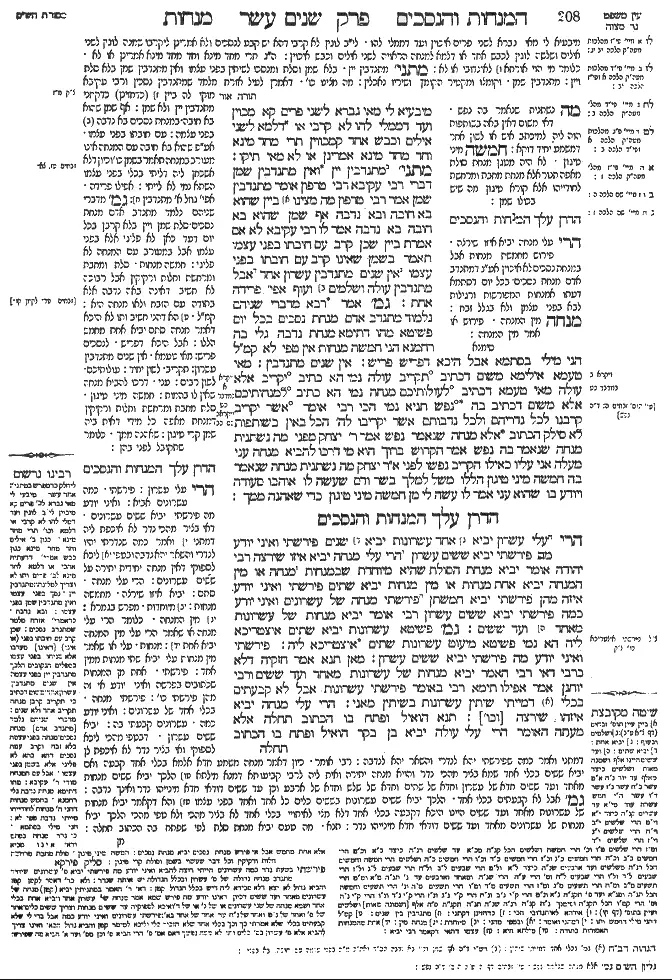
Menachot 104b - Guemara
מיבעיא לי מאי גברא לשני פרים קא מכוין ועד דממלי להו לא קרבי או דלמא לשני אילים וכבש אחד קמכווין תרי מחד מינא וחד מחד מינא אמרינן או לא מאי תיקו:
מתני׳ מתנדבין יין ואין מתנדבין שמן דברי רבי עקיבא רבי טרפון אומר מתנדבין שמן אמר רבי טרפון מה מצינו ביין שהוא בא חובה ובא נדבה אף שמן שהוא בא חובה בא נדבה אמר לו רבי עקיבא לא אם אמרת ביין שכן קרב עם חובתו בפני עצמו תאמר בשמן שאינו קרב עם חובתו בפני עצמו אין שנים מתנדבין עשרון אחד אבל מתנדבין עולה ושלמים ועוף אפילו פרידה אחת:
גמ׳ אמר רבא מדברי שניהם נלמוד מתנדב אדם מנחת נסכים בכל יום פשיטא מהו דתימא מנחת נדבה גלי בה רחמנא הני חמשה מנחות אין טפי לא קא משמע לן הני מילי בסתמא אבל היכא דפריש פריש:
אין שנים מתנדבין:
מאי טעמא אילימא משום דכתיב (ויקרא ב, א) תקריב עולה נמי הא כתיב (ויקרא א, ב) יקריב אלא עולה מאי טעמא דכתיב (במדבר כט, לט) לעולותיכם מנחה נמי הא כתיב (במדבר כט, לט) למנחותיכם אלא משום דכתיב בה (ויקרא ב, א) נפש תניא נמי הכי רבי אומר (ויקרא כב, יח) אשר יקריב קרבנו לכל נדריהם ולכל נדבותם אשר יקריבו לה' הכל באין בשותפות לא סילק הכתוב אלא מנחה שנאמר נפש אמר ר' יצחק מפני מה נשתנית מנחה שנאמר בה נפש אמר הקדוש ברוך הוא מי דרכו להביא מנחה עני מעלה אני עליו כאילו הקריב נפשו לפני אמר ר' יצחק מה נשתנית מנחה שנאמר בה חמשה מיני טיגון הללו משל למלך בשר ודם שעשה לו אוהבו סעודה ויודע בו שהוא עני אמר לו עשה לי מן חמשה מיני טיגון כדי שאהנה ממך:
הדרן עלך פרק המנחות והנסכים
מתני׳ הרי עלי עשרון יביא אחד עשרונות יביא שנים פירשתי ואיני יודע מה פירשתי יביא ששים עשרון הרי עלי מנחה יביא איזו שירצה רבי יהודה אומר יביא מנחת הסולת שהיא מיוחדת שבמנחות מנחה או מין המנחה יביא אחת מנחות או מין מנחות יביא שתים פירשתי ואיני יודע איזה מהן פירשתי יביא חמשתן פירשתי מנחה של עשרונים ואיני יודע כמה פירשתי יביא ששים עשרון רבי אומר יביא מנחות של עשרונות מאחד ועד ששים:
גמ׳ פשיטא עשרונות יביא שתים איצטריכא ליה הא נמי פשיטא מיעוט עשרונות שתים איצטריכא ליה:
פירשתי ואיני יודע מה פירשתי יביא ששים עשרון:
מאן תנא אמר חזקיה דלא כרבי דאי רבי האמר יביא מנחות של עשרונות מאחד ועד ששים ורבי יוחנן אמר אפילו תימא רבי באומר פירשתי עשרונות אבל לא קבעתים בכלי דמייתי שיתין עשרונות בשיתין מאני:
הרי עלי מנחה יביא איזהו שירצה [וכו']:
תנא הואיל ופתח בו הכתוב תחלה אלא מעתה האומר הרי עלי עולה יביא בן בקר הואיל ופתח בו הכתוב
Comments from Rashi on Masechet Menachot Page 104b
אחד עשר מיבעיא לי מאי גברא לשני פרים איכוין ועד דממלי להו . לי"ב לוגין לא קרבי דהא יש קבע לנסכים ולא אמרינן ליקרבו שמנה לוגין לשני אילים ושלשה לוגין לכבש אחד או דלמא למנחה הראויה לשני אילים וכבש איכוין: ה"ג תרי מחד מינא וחד מחד מינא אמרינן או לא . כלומר מי הוי אורחא לאינדובי או לא: מתני' מתנדבין יין . בלא שמן וסלת ומנסכו לשיתין בפני עצמו ואין מתנדבין שמן בלא סלת ויין: מתנדבין שמן . וקומצו ומקטיר הקומץ ושיריו נאכלין: מה מצינו כו' . דאמרן לעיל אזרח מלמד שמתנדבין נסכין ורבי עקיבא מוקי לה ביין (כדחזינן) כדקתני מתנדבין יין ולא שמן: אף שמן שהוא בא חובה . במנחת נסכים בא נדבה בפני עצמה: עם חובתו בפני עצמו . אע"פ שהוא בא חובה עם המנחה אינו מעורב במנחה תאמר בשמן כו' וכיון דלא אשכחן ליה דליתי בכלי בפני עצמו השתא נמי לא לייתי: אפילו פרידה . אפי' גוזל א' מתנדבין: גמ' מדברי שניהם נלמד מתנדב אדם מנחת נסכים . סלת שמן ויין בלא קרבן בכל יום דעד כאן לא פליגי אלא בפני עצמו אבל במעורב עם המנחה לא פליגי: חמשה מנחות . סלת ומחבת ומרחשת וחלות ורקיקין אבל רבוכה לא חשיב דאינה באה נדבה אלא בתודה עם הזבח ולאו מנחה היא: קמ"ל . הא דהני חשיב ותו לא היכא דאמר מנחה סתם יביא אחת מחמש הללו: אבל היכא דפריש . לנסכים פריש: מאי טעמא . אין שנים מתנדבין עשרון: תקריב . לשון יחיד: עולותיכם . לשון רבים: עני . דרכו להביא מנחה שאין לו בהמות: חמשה מיני טיגון . סלת מחבת ומרחשת וחלות ורקיקין דמנחת מאפה כל מידי דאית ביה שמן קרי טיגון: שאהנה ממך . כלומר שתקובל לפני בהן: מתני' הרי עלי עשרון: פירשתי . כמה עשרונים אביא: ואיני יודע מה פירשתי יביא ששים עשרונים . דאי בציר מהכי נדר לא איכפת ליה דמתני ואמר כמה שנדרתי יהיו לנדרי והשאר יהא נדבה ובטפי ליכא לספוקי דאין מנחה יחידית יתירה על ששים עשרונים: הרי עלי מנחה . סתם: יביא איזו שירצה . מחמשה מנחות: מיוחדות . מפרש בגמרא: מין המנחה . כלומר הרי עלי מנחה או שאמר הרי עלי מין המנחה יביא אחת: מנחות . עלי או שאמר מין מנחות עלי יביא שתי מנחות ממין אחד: פירשתי . אחת מן המנחות שכתובים בפרשה ואיני יודע אי זה מהן פירשתי כו': פירשתי מנחה . בכלי אחד של עשרונים: ואיני יודע כמה . עשרונים קבעתי בה: יביא ששים עשרון . דבטפי מהכי ליכא לספוקי ואי בציר נדר לא איכפת לן דמתני ואמר כמה שפירשתי יהא לנדרי והשאר יהא לנדבה: רבי אומר . כיון דאמר מנחה משמע חדא אלמא בכלי אחד קבעה ואם יביא ששים בכלי אחד שמא בציר מהכי נדר והויא מנחה יתירה ואית ליה לרבי קביעותא דמנא מילתא הלכך יביא ששים מנחות מאחד ועד ששים חדא של עשרון וחדא של שתים וחדא של שלש וחדא של ארבע וכן עד ששים דודאי חדא מינייהו נדר ואינך נדבה: גמ' אבל לא קבעתים בכלי אחד . הלכך יביא ששים עשרונות בששים כלים כל אחד ואחד בפני עצמו והא דקאמר יביא מנחות של עשרונות מאחד ועד ששים היינו היכא דקבעה בכלי אחד דלא מצי לאיתויי בכלי אחד לא בציר מהכי ולא טפי מהכי הלכך יביא מנחות של עשרונים מאחד ועד ששים דודאי חדא מינייהו נדר: תנא . מה טעם יביא מנחת סלת לפי שפתח בה הכתוב תחלה:
Comments from Tosafot - Menachot 104b
מה נשתנית שנאמר בה נפש. דאי משום דאין באה בשותפות הוה ליה למיכתב איש או לשון אחר דמשמע יחיד דוקא: חמשה מיני טיגון. לא היה מטגן מנחת סולת מאפה תנור אלא מנחת מחבת ומרחשת לחודייהו אלא קורא טיגון מה שיש בכולו שמן: מתני' הרי עלי מנחה יביא איזו שירצה. פירוש מחמשת מנחות אבל במנחת נסכים לא איכוין אע"ג דמתנדב אדם מנחת נסכים בכל יום דסתמא דעתו אמנחות המפורשות ורגילות לבא בפני עצמן ולא בגלל זבח: מנחה מין המנחה. פירוש או אמר מין המנחה:
Menachot 104b - Mishnah translated into english
I ask, what is the halakha? Does the man who vowed to bring eleven log intend to bring an amount of wine corresponding to that which is brought in association with an offering of two bulls, i.e., twelve log, and until he accumulates that amount, the libation is not brought? Or perhaps he intends to bring an amount equal to that associated with two rams and one lamb, i.e., four for each ram and three for the lamb, totaling eleven. Do we say that he intended to bring two libations associated with one type, i.e., a ram, and one libation associated with another type, i.e., a lamb, or not? What is the halakha? The Gemara concludes: The dilemma shall stand unresolved.
MISHNA: One may pledge to bring independent libations of wine, but one may not pledge oil alone; this is the statement of Rabbi Akiva. Rabbi Tarfon says: One may pledge oil as well.
Rabbi Tarfon said: Just as we found that wine comes as an obligation and comes as a gift offering independent of any offering, so too, we find that oil comes as an obligation and comes as a gift offering. Rabbi Akiva said to him: No, if you said that this is true with regard to wine, as it is sacrificed with its obligatory offering by itself, shall you also say that this is also the case with regard to oil, which is never sacrificed with its obligatory offering by itself but only mixed with the flour?
The mishna concludes with a ruling concerning a voluntary meal offering: Two people do not pledge a meal offering of a tenth of an ephah as partners, but they may pledge a burnt offering and a peace offering. And they may pledge to bring even an individual bird, not only a pair.
GEMARA: With regard to the dispute between Rabbi Tarfon and Rabbi Akiva about whether one can pledge oil, Rava said: From the statements of both of them, we learn that a person may pledge a meal offering like those brought with the libations that accompany animal offerings every day.
The Gemara asks: Isn’t that obvious? The Gemara explains: It needed to be said, lest you say that the Merciful One revealed the nature of a voluntary meal offering (see Leviticus, chapter 2). Perhaps only those five meal offerings detailed there are indeed brought as voluntary offerings, but any additional types, such as a meal offering brought with libations, are not. Rava therefore teaches us that these matters in the Torah apply only where his pledge of a meal offering was unspecified, but where he specified that the oil and flour about which he vows should be brought in the manner of a meal offering with libations, then he has specified, and the vow takes effect.
§ The mishna stated that two people do not pledge a tenth of an ephah together. The Gemara asks: What is the reason? If we say that it is because it is written: “And when an individual brings a meal offering” (Leviticus 2:1), in the singular, that is not a proof, as with regard to a burnt offering as well, it is written in the singular: “When any man of you brings an offering” (Leviticus 1:2). Nevertheless, two people may bring a burnt offering together, as stated in the mishna.
Rather, what is the reason that a burnt offering is brought by two people? The reason is that it is written in second person plural: “These you shall offer…beside your burnt offerings [le’oloteikhem], or your meal offerings, or your drink offerings, or your peace offerings” (Numbers 29:39). The Gemara points out: With regard to a meal offering, it is also written in the plural: “Your meal offerings [leminḥoteikhem].” Rather, the reason that one may not bring a meal offering as a partnership is because it is written: “And when an individual brings a meal offering” (Leviticus 2:1), indicating that only one individual may offer it, but not two together.
This is also taught in a baraita: Rabbi Yehuda HaNasi states an explanation of the following verse: “Anyone that brings his offering, whether it be any of their vows, or any of their free-will offerings that they sacrifice to the Lord” (Leviticus 22:18). It is evident from the use of the plural in the second part of the verse that any offering can be brought in a partnership, and the verse excludes only a meal offering from this principle, as it is stated: “And when an individual brings a meal offering.”
The Gemara cites another comment about the fact that the Torah introduces the voluntary meal offering by emphasizing that it is brought by an individual. Rabbi Yitzḥak says: For what reason is the meal offering different from other offerings in that the term “an individual [nefesh]” is stated with regard to it? The Holy One, Blessed be He, said: Whose practice is it to bring a meal offering? It is that of a poor individual; and I will ascribe him credit as if he offered up his soul [nafsho] in front of Me.
§ The Gemara cites another comment made by Rabbi Yitzḥak about meal offerings. Rabbi Yitzḥak says: What is the reason that the meal offering is differentiated from other offerings in that the Torah stated these five types of preparations with oil with regard to it? The five types of voluntary meal offerings are: A meal offering of fine flour, a meal offering in a shallow pan, a meal offering in a deep pan, a meal offering of loaves baked in an oven, and a meal offering of wafers baked in an oven. All are brought with oil. This can be explained by a parable of a flesh-and-blood king whose friend made a festive meal for him, but the king knows that the friend is poor. The king said to him: Make for me foods from five types of fried dishes, so that I may benefit from you.
MISHNA: One who says: It is incumbent upon me to bring a tenth of an ephah for a meal offering, must bring a meal offering of one-tenth. If he says: It is incumbent upon me to bring tenths of an ephah, he must bring two-tenths, as that is the minimum plural amount. If he says: I specified several tenths of an ephah but I do not know which number I specified, he must bring sixty-tenths, as that is the maximum amount of a meal offering. The flour beyond the amount that he actually specified is rendered a voluntary meal offering.
If one says: It is incumbent upon me to bring a meal offering, he may bring whichever meal offering that he wishes, i.e., the fine-flour meal offering, the shallow-pan or deep-pan meal offering, or the meal offering baked in an oven in the form of loaves or wafers. Rabbi Yehuda says: He must bring the fine-flour meal offering, as it is the most notable of the meal offerings.
If one says: It is incumbent upon me to bring a meal offering, or: It is incumbent upon me to bring a type of meal offering, he must bring one meal offering. If he says: It is incumbent upon me to bring meal offerings, or: It is incumbent upon me to bring meal offerings of a certain type, he must bring two. If he says: I specified a meal offering but I do not know which meal offering I specified, he must bring all five types of meal offerings.
If one says: I specified a meal offering of tenths of an ephah but I do not know how many tenths I specified, he must bring a meal offering of sixty-tenths of an ephah. Rabbi Yehuda HaNasi says: His obligation is satisfied only when he brings meal offerings of all sizes, in increments of tenths of an ephah, ranging from one-tenth of an ephah to sixty-tenths, for a total of sixty meal offerings with a total volume of 1,830 tenths of an ephah, or 183 ephahs. He fulfills his vow with one of the meal offerings, and the rest are rendered voluntary meal offerings.
GEMARA: The mishna teaches that one who says: It is incumbent upon me to bring a tenth of an ephah for a meal offering, must bring a meal offering of a tenth. The Gemara asks: Isn’t this obvious? Why is it necessary to teach this in the mishna? The Gemara answers that it was necessary for the mishna to mention this case as a preamble to the following halakha, that if one says: It is incumbent upon me to bring tenths of an ephah he must bring two-tenths. The Gemara asks: Isn’t this also obvious? The Gemara answers: It was necessary to teach that the minimum amount that the word tenths is used in reference to is two-tenths.
§ The mishna teaches that if one says: I specified several tenths of an ephah but I do not know what number I specified, he must bring sixty-tenths. The Gemara asks: Who is the tanna who taught this?
Ḥizkiyya said: This statement is not in accordance with the opinion of Rabbi Yehuda HaNasi mentioned at the end of the mishna. As if it was the opinion of Rabbi Yehuda HaNasi, didn’t he say that such a person must bring meal offerings of all sizes, in increments of tenths of an ephah, ranging from one-tenth of an ephah to sixty-tenths?
And Rabbi Yoḥanan disagreed and said: You may even say that this statement is in accordance with the opinion of Rabbi Yehuda HaNasi, because the case at the end of the mishna is a case where one specified that he would bring the tenths of an ephah in a single vessel. In such a case Rabbi Yehuda HaNasi holds that one must bring sixty different amounts in sixty different vessels. By contrast, the former case in the mishna is one where the person says: I specified several tenths of an ephah but I did not establish that they must be brought in one vessel. In such a case all agree that he must bring sixty-tenths of an ephah in sixty vessels, a tenth in each vessel.
§ The mishna teaches that if one says: It is incumbent upon me to bring a meal offering, the first tanna holds he may bring whichever meal offering he wishes, whereas Rabbi Yehuda maintains that he must bring the fine-flour meal offering, as it is the most notable of the meal offerings. It is taught in a baraita: Rabbi Yehuda says that he must bring the fine-flour meal offering, since in the passage of the Torah that discusses the meal offering (Leviticus, chapter 2) the verse opens with the fine-flour meal offering first, mentioning it before the other meal offerings.
The Gemara challenges: If that is so, one who says: It is incumbent upon me to bring a burnt offering, without specifying which type of animal, must bring a young bull as his burnt offering, since the verse opens with it
Traduction : The William Davidson digital edition of the Koren Noé Talmud, with commentary by Rabbi Adin Even-Israel Steinsaltz.