 Talmud Bavli
The learning on the whole site is dedicated : L'ilui Nishmat Yaakov ben Myriam
The learning on the whole site is dedicated : L'ilui Nishmat Nissim ben Barukh Malka
The learning on the whole site is dedicated : L'ilui Nishmat Avraham Ben Simha
Menachot 107b : Youtube
Daf TubeYoutube
2 video classes :
Menachot Page 107b
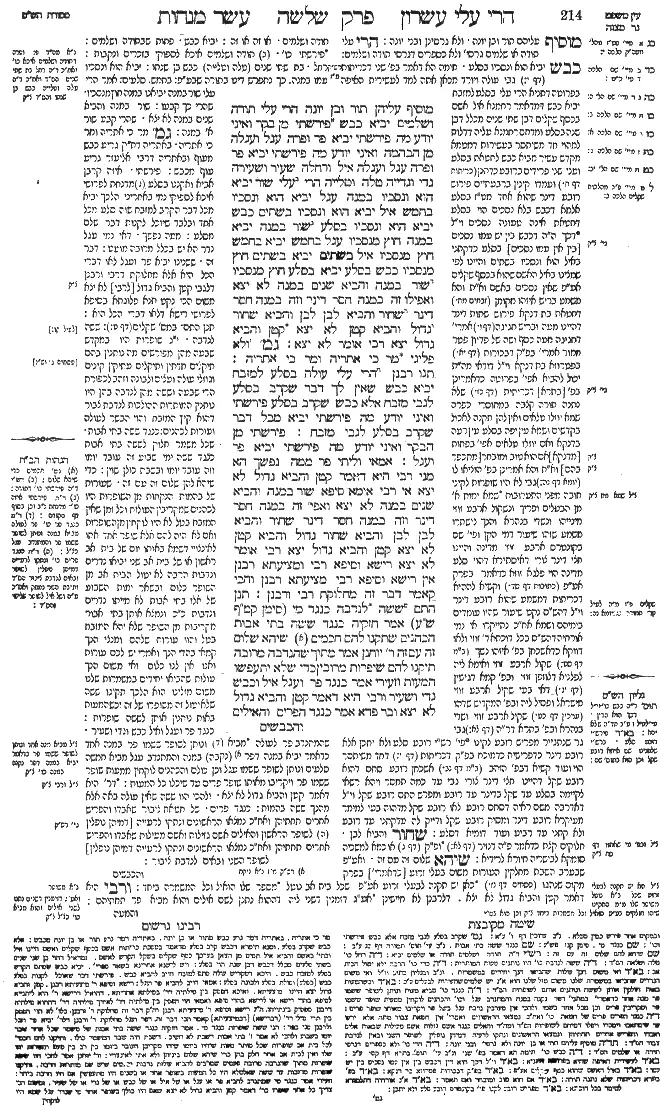
Menachot 107b - Guemara
מוסיף עליהן תור ובן יונה הרי עלי תודה ושלמים יביא כבש פירשתי מן בקר ואיני יודע מה פירשתי יביא פר ופרה עגל ועגלה מן הבהמה ואיני יודע מה פירשתי יביא פר ופרה עגל ועגלה איל ורחלה שעיר ושעירה גדי וגדייה טלה וטלייה הרי עלי שור יביא הוא ונסכיו במנה עגל יביא הוא ונסכיו בחמש איל יביא הוא ונסכיו בשתים כבש יביא הוא ונסכיו בסלע שור במנה יביא במנה חוץ מנסכיו עגל בחמש יביא בחמש חוץ מנסכיו איל בשתים יביא בשתים חוץ מנסכיו כבש בסלע יביא בסלע חוץ מנסכיו שור במנה והביא שנים במנה לא יצא ואפילו זה במנה חסר דינר וזה במנה חסר דינר שחור והביא לבן לבן והביא שחור גדול והביא קטן לא יצא קטן והביא גדול יצא רבי אומר לא יצא:
גמ׳ ולא פליגי מר כי אתריה ומר כי אתריה:
תנו רבנן הרי עלי עולה בסלע למזבח יביא כבש שאין לך דבר שקרב בסלע לגבי מזבח אלא כבש שקרב בסלע פירשתי ואיני יודע מה פירשתי יביא מכל דבר שקרב בסלע לגבי מזבח:
פירשתי מן הבקר ואיני יודע מה פירשתי יביא פר ועגל:
אמאי וליתי פר ממה נפשך הא מני רבי היא דאמר קטן והביא גדול לא יצא אי רבי אימא סיפא שור במנה והביא שנים במנה לא יצא ואפילו זה במנה חסר דינר וזה במנה חסר דינר שחור והביא לבן לבן והביא שחור גדול והביא קטן לא יצא קטן והביא גדול יצא רבי אומר לא יצא רישא וסיפא רבי ומציעתא רבנן אין רישא וסיפא רבי מציעתא רבנן והכי קאמר דבר זה מחלוקת רבי ורבנן:
תנן התם ששה לנדבה כנגד מי (סימן קמ"ף ש"ע) אמר חזקיה כנגד ששה בתי אבות הכהנים שתקנו להם חכמים שיהא שלום זה עם זה ר' יוחנן אמר מתוך שהנדבה מרובה תיקנו להם שופרות מרובין כדי שלא יתעפשו המעות וזעירי אמר כנגד פר ועגל איל וכבש גדי ושעיר ורבי היא דאמר קטן והביא גדול לא יצא ובר פדא אמר כנגד הפרים והאילים
Comments from Rashi on Masechet Menachot Page 107b
תודה ושלמים . או זה או זה: יביא כבש . פחות שבתודה ושלמים: פירשתי כו' . תודה ושלמים איכא לספוקי בזכרים ונקבות: רחל . בת שתי שנים (טלה וטלייה) כבש בן שנתו: יביא הוא ונסכיו עמו במנה . כך נתפרש דינו בתורה שבע"פ: בחמש . סלעים: אמר הרי עלי שור במנה יביאנו במנה חוץ מנסכיו . שהרי כך קבעו: שור במנה והביא שנים במנה לא יצא . שהרי קבע שור א' במנה: גמ' מר כי אתריה ומר כי אתריה . באתריה דת"ק גריע כבש מעוף ובאתריה דרבי אליעזר גריע עוף מכבש: פירשתי . איזה קרבן אביא ואקננו בסלע מדנחת לפרושי איכא לספוקי נמי באחריני הלכך יביא מכל דבר הקרב למזבח שוה סלע מכל אחד ובלבד שיוכל לקנות דבר שלם מסלע: ממה נפשך . דאי נמי עגל נדר הא יש בכלל מרובה מועט: דבר זה . ששנינו יביא פר ועגל לאו דברי הכל היא אלא מחלוקת דרבי ורבנן דלגבי קטן והביא גדול [לרבי] לא יצא משום הכי נקט תנא פלוגתא בסיפא לפרושי רישא דלאו דברי הכל היא: תנן התם . במס' שקלים (דף ט:): ששה לנדבה . י"ג שופרות היו במקדש שבעה מהן מפורשים מה נותנין בהם תיקלים חדתין ותיקלים עתיקין קינים וגוזלי עולה ועצים ולבונה וזהב לכפורת הרי שבעה וששה מהן לנדבה בהן היו נותנין המותרות ההולכות לנדבת צבור דהוא קיץ המזבח והוי הבשר לעולה ועורות לכהנים: כנגד ששה בתי אבות שכל משמר חלוק לששה בתי אבות כנגד ששה ימי שבוע זה עובד יומו וזה עובד יומו ובשבת כולן שוין: כדי שיהא להן שלום זה עם זה . שעורות של בהמות הנקחות מן השופרות היו לכהנים שמקריבין העולות וכל זמן שאין המזבח בטל לא היו לוקחין מן השופרות ואם לא היה להם אלא שופר אחד אתו לאינצויי דשמא באותו יום של בית אב ראשון או של בית אב שני יביאו נדרים ונדבות הרבה לא יטול הבית אב מן השופר כלום ובשאר ימות השבוע של אלו בתי אבות לא מייתו נדרים ונדבות כ"כ ונמצא אותן בתי אבות מקריבות מן השופר שלא יהא המזבח בטל והוו עורות שלהם ומנצי הנך קמאי בהדי הנך ואמרי יש לכם עורות ואנו אין לנו כלום ואי משום הנך עולות שהביאו יחידים במשמרות שלנו משום מזלינו הוא הלכך תקינו ששה שלא יטול זה משופרו של זה וכשהמעות באות נותנין אותן לששה שופרות: כנגד פר ועגל ואיל כבש וגדי ושעיר . שהמתנדב פר לעולה מביא ונותן לשופר ששמו פר במנה אחד כדאמר יביא במנה דפר (נקבה) במנה והמתנדב עגל מביא חמשה סלעים ונותן לשופר ששמו עגל וכן כולם והכהנים לוקחין ממעות שופר ששמו פר ויקריבו מאותו שופר פרים עד שיכלו כל המעות: דר' היא דאמר קטן והביא גדול לא יצא . ולהכי הוו ששה שאין עולה באה אלא מהנך ששה בהמות: כנגד פרים . של חטאת ציבור שאבדו והפריש אחרים תחתיהן ואח"כ נמצאו הראשונים ונתקו לרעייה [דמיהן נופלין לשופר הראשון והאילים אשם גזילות ואשם מעילות שאבדו והפריש אחרים תחתיהן ואח"כ נמצאו הראשונים ונתקו לרעייה דמיהן נופלין] לשופר השני ובאים לנדבת ציבור:
Comments from Tosafot - Menachot 107b
מוסיף עליהם תור ובן יונה. ולא גרסינן ובני יונה: הרי עלי תודה או שלמים גרסי' ולא כספרים דגרסי תודה ושלמים: כבש יביא הוא ונסכיו בסלע. תימה הא דאמר בפ' שני דכריתות (דף י:) גבי עולה ויורד מכאן אתה למד לעשירית האיפה בפרוטה דתניא הרי עלי בסלע למזבח יביא כבש דמדאמר רחמנא איל אשם בכסף שקלים דבן שתי שנים מכלל דבן שנה בסלע ומדחס רחמנא עליה דדלות למהוי חד משיתסר בעשירות דמטמא מקדש עשיר מביא כבש לחטאת בסלע ועני שני פרידים ברובע כדתנן (כריתות דף ח.) ועמדו קינין ברבעתיים פירוש רובע דינר שהוא אחד מט"ז בסלע אלמא דכבש בלא נסכים הוי בסלע דחטאת אינה טעונה נסכים וי"ל דכך ה"ה דכבש בין יש עמו נסכים [בין אין עמו נסכים] בסלע כדקתני באיל הוא ונסכיו בשתים והיינו לפי שמצינו באיל האשם שהוא בכסף שקלים אע"פ שאין נסכים באשם וא"ת והא משמע בריש איזהו מקומן (זבחים מח.) דחטאת בת דנקא פירוש שתות דינר דהיינו מעה ובריש חגיגה (דף ו.) אמרי' דחגיגה מעה כסף ושה של פדיון פטר חמור אמרי' בפ"ק דבכורות (דף יא.) בפטרוזא בת דנקא וי"ל דודאי מה"ת יכול להביא אפי' בפרוטה כדאמרינן בפ' [בתרא] דכריתות (דף כז.) שלא נתנה תורה קצבה במחוסרי כפרה שמא יוזלו טלאים ואין להן תקנה לאכול בקדשים ושמא עין יפה בסלע עין רעה בדנקא ואם יוזלו טלאים אפי' בפחות [מדנקא] אם הוא טוב ומובחר [מתכפר בהם] וא"ת והא אמרינן בפ' הוציאו לו (יומא דף נה:) גבי לא היו שופרות לקיני חובה מפני התערובות שמא ימות א' מן הבעלים ופריך ונשקול ארבע זוזי מינייהו ונשדי בנהרא והנך לישתרו משמע שזהו שיעור דמי הקן ופי' שם בקונטרס ארבע זוזי מדינה והיינו חצי דינר צורי דאיסתירא דהוי סלע מדינה הוי פלגא זוזא כדאמר בפרק אע"פ (כתובות דף סד.) וקשיא לההיא דכריתות דמשמע שהוא רובע דינר וי"ל דהש"ס נקט שיעור שהיו עומדים בימיהם ושמא אח"כ נתייקרו אי נמי אורחיה דהש"ס בכל דוכתא ד' זוזי ולאו דווקא כדאשכחן בפ' איזהו נשך (ב"מ דף סט:) שקול ארבע זוזי ואימא ליה לפלניא דלוזפן זוזי ובפ' קמא דגיטין (דף יג.) דאי בעי שקיל ארבע זוזי מישראל ופסיל ליה ובפ' המקדיש שדהו (ערכין דף כט.) שקיל ארבע זוזי ושדי בנהרא ובפ' בתרא דר"ה (דף לא:) גבי גר שנתגייר מפריש רובע לקינו פי' רש"י רובע סלע ולא יתכן אלא רובע דינר כדפרישית כדמוכח בפ"ק דכריתות (דף י:) דחד משיתסר הוי ועוד קשיא דבפ' הזהב (ב"מ דף נב.) אשכחן רובע סתם דהוא רובע שקל דהיינו חצי דינר צורי גבי עד כמה תחסר ויהא רשאי לקיימה בסלע עד שקל בדינר עד רובע ומפרש התם רובע שקל וי"ל דאדרבה משם ראיה דסתם רובע לאו רובע שקל מדהוה בעי למימר מעיקרא רובע דינר ומסיק רובע שקל ודייק לה מדקתני עד רובע ולא קתני עד רביע ועוד דומיא דסלע: שחור והביא לבן. חלוקים קצת כדאמר פ"ה דנזיר (דף לא:) ופ"ק (דף ג) אוכמא למשכיה סומקא לבישריה חיורא לרידיא: שיהא שלום זה עם זה. ואע"פ שבערב השבת מחלקין העורות משום בעלי זרוע [כדאמרי'] בפרק מקום שנהגו (פסחים דף נז.) כאן יש תקנה לבעלי זרוע אע"פ שכל בית אב נוטל מספר שלו הואיל וכל המשמרה ביחד: ורבי היא דאמר קטן והביא גדול לא יצא. דלרבנן לא חיישינן אע"ג דזמנין דשני ליה דההוא נתנן לשם אילים והוא מביא פר תחתיהם:
Menachot 107b - Mishnah translated into english
adds a dove and a pigeon to the previous list.
One who says: It is incumbent upon me to bring a thanks offering and a peace offering, must bring a lamb, which is the least expensive land animal sacrificed as an offering. One who says: I vowed to bring a peace offering and I specified that it would be from the herd but I do not know what animal I specified, must bring a bull and a cow, and a male calf and a female calf. One who says: I vowed to bring a burnt offering and specified that it would be from the animals, but I do not know what animal I specified, must bring a bull and a cow, a male calf and a female calf, a ram and a ewe, a large, i.e., adult, male goat and a large female goat, a small, i.e., young, male goat and a small female goat, and a male lamb and a female lamb.
One who says: It is incumbent upon me to bring a bull as a burnt offering or peace offering, must bring the bull, its accompanying meal offering, and its libations, with the total value of one hundred dinars. One who says: It is incumbent upon me to bring a calf, must bring the calf, its accompanying meal offering, and its libations, with the total value of five sela, which equal twenty dinars. One who says: It is incumbent upon me to bring a ram, must bring the ram, its accompanying meal offering, and its libations, with the value of two sela, which equal eight dinars. One who says: It is incumbent upon me to bring a lamb, must bring the lamb, its accompanying meal offering, and its libations, with the value of one sela, which equals four dinars.
One who says: It is incumbent upon me to bring a bull with the value of one hundred dinars as a burnt offering or peace offering, must bring the bull with the value of one hundred dinars excluding its accompanying meal offering and libations. One who says: It is incumbent upon me to bring a calf with the value of five sela as a burnt offering or peace offering, must bring the calf with the value of five sela excluding its accompanying meal offering and libations. One who says: It is incumbent upon me to bring a ram with the value of two sela as a burnt offering or peace offering, must bring the ram with the value of two sela excluding its accompanying meal offering and libations. One who says: It is incumbent upon me to bring a lamb with the value of one sela as a burnt offering or peace offering, must bring the lamb with the value of one sela excluding its accompanying meal offering and libations.
If one said: It is incumbent upon me to bring a bull with the value of one hundred dinars as a burnt offering or peace offering, and he brought two bulls with a combined value of one hundred dinars, he has not fulfilled his obligation. And that is the halakha even if this bull has the value of one hundred dinars less one dinar and that bull has the value of one hundred dinars less one dinar.
If one said: It is incumbent upon me to bring a black bull, and he brought a white bull; or said: It is incumbent upon me to bring a white bull, and he brought a black bull; or said: It is incumbent upon me to bring a large bull, and he brought a small bull, in all these cases he has not fulfilled his obligation. But if he said: It is incumbent upon me to bring a small bull, and he brought a large bull, he has fulfilled his obligation, as the value of a small bull is included in the value of a large bull. Rabbi Yehuda HaNasi says: He has not fulfilled his obligation, as the offering that he brought did not correspond to his vow.
GEMARA: The mishna teaches that if one vows to bring a burnt offering and does not specify which animal he will bring, according to the first tanna he must bring a lamb, and according to Rabbi Elazar ben Azarya he may bring a dove or a pigeon. The Gemara explains: And they do not disagree in principle. This Sage rules in accordance with the custom of his locale, and that Sage rules in accordance with the custom of his locale. In the locale of the first tanna, when people would say: Burnt offering, they would be referring to a land animal, whereas in the locale of Rabbi Elazar ben Azarya, when people would say: Burnt offering, they would also be referring to a bird.
The Sages taught in a baraita: One who says: It is incumbent upon me to bring a burnt offering with the value of one sela for the altar, must bring a lamb; as you have no animal that is sacrificed on the altar and has the value of one sela but a lamb. One who says: When I made my vow I specified that I will bring an item that is sacrificed on the altar and has the value of one sela, but I do not know what I specified, must bring one of every animal that is sacrificed on the altar and has the value of one sela. Although this condition generally indicates a lamb, since the person specified a particular animal but does not remember which, one cannot be certain that he specified a lamb.
§ The mishna teaches that if one says: I vowed to bring a peace offering, and I specified that it would be from the herd, but I do not know what animal I specified, he must bring a bull and a calf. The Gemara asks: Why? Let him bring a bull, as whichever way you look at it he has fulfilled his vow. If he vowed to bring a bull, he has done so. If he vowed to bring a calf, he has fulfilled his vow, because the value of a calf is included in the value of a bull.
The Gemara answers: In accordance with whose opinion is this? It is in accordance with the opinion of Rabbi Yehuda HaNasi, who said that if one said: It is incumbent upon me to bring a small bull, and he brought a large bull, he has not fulfilled his obligation.
The Gemara asks: If the mishna is in accordance with the opinion of Rabbi Yehuda HaNasi, say the latter clause of the mishna: If one said: It is incumbent upon me to bring a bull with the value of one hundred dinars, and he brought two bulls with the combined value of one hundred dinars, he has not fulfilled his obligation, and that is the halakha even if this bull has the value of one hundred dinars less one dinar and that bull has the value of one hundred dinars less one dinar.
If one said: It is incumbent upon me to bring a black bull, and he brought a white bull; or said: It is incumbent upon me to bring a white bull, and he brought a black bull; or said: It is incumbent upon me to bring a large bull, and he brought a small bull, in all these cases he has not fulfilled his obligation. But if he said: It is incumbent upon me to bring a small bull, and he brought a large bull, he has fulfilled his obligation, as the value of a small bull is included in the value of a large bull. Rabbi Yehuda HaNasi says: He has not fulfilled his obligation, as the offering that he brought did not correspond to his vow.
If the first clause, which teaches that one who vowed to bring an offering from the herd must bring both a bull and a calf, is in accordance with the opinion of Rabbi Yehuda HaNasi, then it turns out that the first clause and the last clause are in accordance with the opinion of Rabbi Yehuda HaNasi, and the middle clause is in accordance with the opinion of the Rabbis. Can that be so?
The Gemara answers: Yes, the first clause and the last clause are in accordance with the opinion of Rabbi Yehuda HaNasi, and the middle clause is in accordance with the opinion of the Rabbis. And this is what the mishna is saying: This matter, i.e., the ruling that one who vows to bring an offering from the herd must bring a bull and a calf, is not universally accepted. Rather, it is subject to a dispute between Rabbi Yehuda HaNasi and the Rabbis.
§ We learned in a mishna there (Shekalim 18b): There were six collection horns in the Temple for the collection of donations for communal gift offerings, i.e., burnt offerings that were sacrificed when the altar was idle. The Gemara asks: To what did these six horns correspond? The Gemara gives a mnemonic for the names of the five Sages who give answers to this question: Kuf, mem, peh, shin, ayin.
Ḥizkiyya says: These six collection horns corresponded to the six extended patrilineal families of priests who served each week in the Temple. There was one collection horn for each family, which the Sages installed for them so that there would be peace between one another and they would not quarrel. The hides of the burnt offerings are given to the priests, and by keeping the money for the offerings sacrificed by each family separate, they would not come to quarrel over those hides.
Rabbi Yoḥanan says: Since the money for the communal gift offerings was plentiful, as much money was donated for this purpose, there was a concern that if too many coins were placed in one collection horn, only the uppermost coins would be taken and the bottom ones would deteriorate. Therefore, the Sages installed many collection horns for them, so that each horn would contain fewer coins and the coins would not decay.
And Ze’eiri says: The six collection horns correspond to the six types of animals from which burnt offerings can be brought: A bull, a calf, a ram, a lamb, a small goat, and a large goat. And each type of animal required its own collection horn, because the mishna is in accordance with the opinion of Rabbi Yehuda HaNasi, who says that if one said: It is incumbent upon me to bring a small bull and he brought a large bull, he has not fulfilled his obligation, as the offering that he brought did not correspond to his vow.
And bar Padda says: The six collection horns correspond to the six types of animals from which sin offerings and guilt offerings can be brought. If an animal designated for a guilt offering or a communal sin offering was lost, another animal was consecrated in its stead, and then the first animal was found, the value of that animal is placed into one of these collection horns, and a communal gift offering is brought with it. One was for the value of the bulls brought as communal sin offerings. And one was for the value of the rams brought as guilt offerings for robbery or for misuse of consecrated property.
Traduction : The William Davidson digital edition of the Koren Noé Talmud, with commentary by Rabbi Adin Even-Israel Steinsaltz.