 Talmud Bavli
Berakhot 49b : Youtube
Daf TubeYoutube
2 video classes :
Berakhot Page 49b
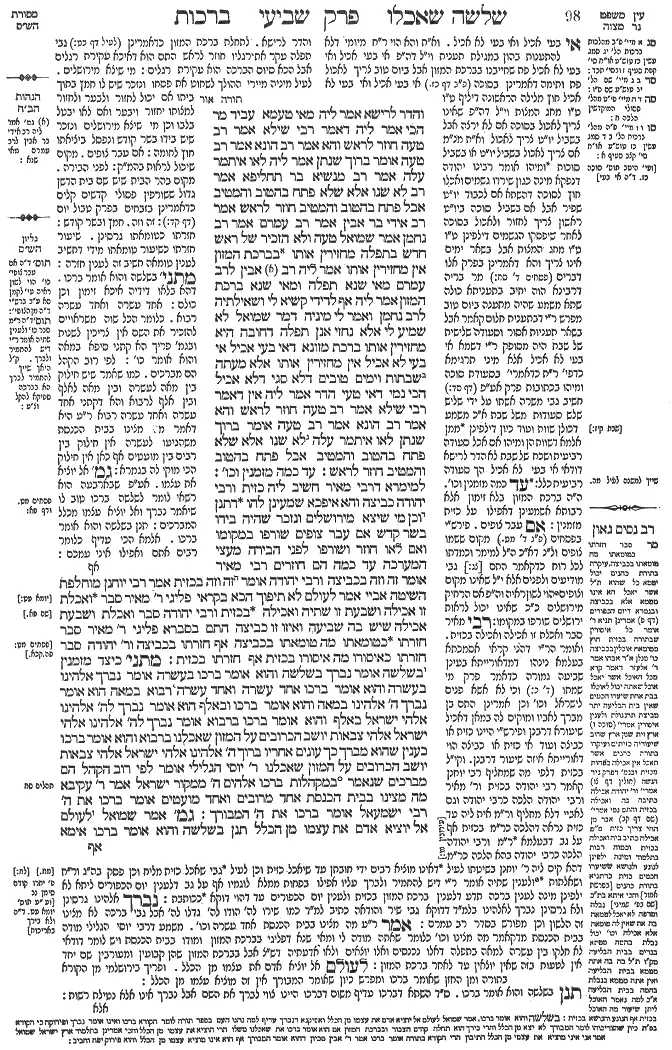
Berakhot 49b - Guemara
והדר לרישא אמר ליה מאי טעמא עביד מר הכי אמר ליה דאמר רבי שילא אמר רב טעה חוזר לראש והא אמר רב הונא אמר רב טעה אומר ברוך שנתן אמר ליה לאו איתמר עלה אמר רב מנשיא בר תחליפא אמר רב לא שנו אלא שלא פתח בהטוב והמטיב אבל פתח בהטוב והמטיב חוזר לראש אמר רב אידי בר אבין אמר רב עמרם אמר רב נחמן אמר שמואל טעה ולא הזכיר של ראש חדש בתפלה מחזירין אותו בברכת המזון אין מחזירין אותו אמר ליה רב אבין לרב עמרם מאי שנא תפלה ומאי שנא ברכת המזון אמר ליה אף לדידי קשיא לי ושאילתיה לרב נחמן ואמר לי מיניה דמר שמואל לא שמיע לי אלא נחזי אנן תפלה דחובה היא מחזירין אותו ברכת מזונא דאי בעי אכיל אי בעי לא אכיל אין מחזירין אותו אלא מעתה שבתות וימים טובים דלא סגי דלא אכיל הכי נמי דאי טעי הדר אמר ליה אין דאמר רבי שילא אמר רב טעה חוזר לראש והא אמר רב הונא אמר רב טעה אומר ברוך שנתן לאו איתמר עלה לא שנו אלא שלא פתח בהטוב והמטיב אבל פתח בהטוב והמטיב חוזר לראש:
עד כמה מזמנין וכו':
למימרא דרבי מאיר חשיב ליה כזית ורבי יהודה כביצה והא איפכא שמעינן להו דתנן וכן מי שיצא מירושלים ונזכר שהיה בידו בשר קדש אם עבר צופים שורפו במקומו ואם לאו חוזר ושורפו לפני הבירה מעצי המערכה עד כמה הם חוזרים רבי מאיר אומר זה וזה בכביצה ורבי יהודה אומר זה וזה בכזית אמר רבי יוחנן מוחלפת השיטה אביי אמר לעולם לא תיפוך הכא בקראי פליגי ר' מאיר סבר ואכלת זו אכילה ושבעת זו שתיה ואכילה בכזית ורבי יהודה סבר ואכלת ושבעת אכילה שיש בה שביעה ואיזו זו כביצה התם בסברא פליגי ר' מאיר סבר חזרתו כטומאתו מה טומאתו בכביצה אף חזרתו בכביצה ור' יהודה סבר חזרתו כאיסורו מה איסורו בכזית אף חזרתו בכזית:
מתני׳ כיצד מזמנין בשלשה אומר נברך בשלשה והוא אומר ברכו בעשרה אומר נברך אלהינו בעשרה והוא אומר ברכו אחד עשרה ואחד עשרה רבוא במאה הוא אומר נברך ה' אלהינו במאה והוא אומר ברכו ובאלף הוא אומר נברך לה' אלהינו אלהי ישראל באלף והוא אומר ברכו ברבוא אומר נברך לה' אלהינו אלהי ישראל אלהי צבאות יושב הכרובים על המזון שאכלנו ברבוא והוא אומר ברכו כענין שהוא מברך כך עונים אחריו ברוך ה' אלהינו אלהי ישראל אלהי צבאות יושב הכרובים על המזון שאכלנו ר' יוסי הגלילי אומר לפי רוב הקהל הם מברכים שנאמר (תהלים סח כז) במקהלות ברכו אלהים ה' ממקור ישראל אמר ר' עקיבא מה מצינו בבית הכנסת אחד מרובים ואחד מועטים אומר ברכו את ה' רבי ישמעאל אומר ברכו את ה' המבורך:
גמ׳ אמר שמואל לעולם אל יוציא אדם את עצמו מן הכלל תנן בשלשה והוא אומר ברכו אימא
Comments from Rashi on Masechet Berakhot Page 49b
והדר לרישא . לתחלת ברכת המזון כדאמרינן (לעיל ברכות דף כט:) גבי תפלה עקר את רגליו חוזר לראש התם הוא דאיכא עקירת רגלים אבל הכא סיום הברכה הוא עקירת רגלים: מי שיצא מירושלים . לעיל מיניה מיירי ההולך לשחוט את פסחו ונזכר שיש לו חמץ בתוך ביתו אם יכול לחזור ולבער ולחזור למצותו יחזור ויבער ואם לאו יבטל בלבו וכן מי שיצא מירושלים ונזכר שיש בידו בשר קודש ונפסל ביציאתו חוץ לחומה: אם עבר צופים . מקום שיכול לראות בהמ"ק: לפני הבירה . מקום בהר הבית שיש שם בית הדשן גדול ששורפין פסולי קדשים קלים כדאמרינן בזבחים בפרק טבול יום (דף קד:): זה וזה . חמץ ובשר קודש: חזרתו כטומאתו גרסינן . שיעור חזרתו כשיעור טומאתו מידי דחשיב לענין טומאה חשיב זה לענין חזרה: מתני' בשלשה והוא אומר ברכו . דהא בלאו דידיה איכא זימון וכן כולם: אחד עשרה ואחד עשרה רבוא . כלומר הכל שוה משראויים להזכיר את השם אין צריכין לשנות ובגמ' פריך הא קתני סיפא במאה והוא אומר כו': לפי רוב הקהל הם מברכים . כמו שאמר שיש חילוק בין מאה לעשרה ובין מאה לאלף ובין אלף לרבוא והא דקתני אחד עשרה ואחד עשרה רבוא ר"ע היא דאמר מה מצינו בבית הכנסת משהגיעו לעשרה אין חילוק בין רבים בין מועטים אף כאן אין חילוק הכי מוקי לה בגמרא: גמ' אל יוציא את עצמו . אע"פ שבארבעה הוא רשאי לומר לשלשה ברכו טוב לו שיאמר נברך ואל יוציא עצמו מכלל המברכים: תנן בשלשה והוא אומר ברכו . אלמא הכי עדיף כלומר רבים אתם ואפילו איני עמכם:
Comments from Tosafot - Berakhot 49b
אי בעי אכיל ואי בעי לא אכיל . וא"ת והא הוי ר"ח מיומי דלא להתענות בהון במגילת תענית וי"ל דה"פ אי בעי אכיל ואי בעי לא אכיל פת שחייבנו בברכת המזון אבל ביום טוב צריך לאכול פת ותימה דאמרינן בסוכה (פ"ב דף כז.) אי בעי אכיל ואי בעי לא אכיל חוץ מלילה הראשונה דיליף ט"ו ט"ו מחג המצות וי"ל דה"פ שאינו צריך לאכול בסוכה אם לא ירצה אבל בשביל יו"ט צריך לאכול וא"ת מנ"מ אם צריך לאכול בשביל יו"ט או בשביל סוכות ומיהו אומר רבינו יהודה דנפקא מינה כגון שירדו גשמים ואכלו חוץ לסוכה דהשתא אם לכבוד יו"ט שפיר אבל אם בשביל סוכה ביו"ט ראשון צריך לחזור ולאכול בסוכה לאחר שיפסקו הגשמים דילפינן ט"ו ט"ו מחג המצות אבל בשאר ימים אינו צריך והא דאמרינן בפרק אלו דברים (פסחים ד' סח:) מר בריה דרבינא הוה יתיב בתעניתא כולה שתא משמע שהיה מתענה ביום טוב מפרש ר"י דבתענית חלום קאמר אבל בשאר תעניות אסור וסעודה שלישית של שבת היה מסופק ר"י דשמא אי בעי לא אכיל אלא מיני תרגימא כדפי' ר"ת כדאמרי' בסעודת סוכה ומיהו בכתובות פרק אע"פ (דף סד:) חשיב גבי משרה אשתו על ידי שליש שלש סעודות משל שבת א"כ משמע דכולן שוות ועוד כיון דילפינן ממן אלמא דשוות הן ומיהו אם אכל סעודה רביעית ושכח של שבת לא הדר לרישא דודאי אי בעי לא אכיל הך סעודה רביעית כלל: אי בעי אכיל ואי בעי לא אכיל. וא"ת והא הוי ר"ח מיומי דלא להתענות בהון במגילת תענית וי"ל דה"פ אי בעי אכיל ואי בעי לא אכיל פת שחייבנו בברכת המזון אבל ביום טוב צריך לאכול פת ותימה דאמרינן בסוכה (פ"ב דף כז.) אי בעי אכיל ואי בעי לא אכיל חוץ מלילה הראשונה דיליף ט"ו ט"ו מחג המצות וי"ל דה"פ שאינו צריך לאכול בסוכה אם לא ירצה אבל בשביל יו"ט צריך לאכול וא"ת מנ"מ אם צריך לאכול בשביל יו"ט או בשביל סוכות ומיהו אומר רבינו יהודה דנפקא מינה כגון שירדו גשמים ואכלו חוץ לסוכה דהשתא אם לכבוד יו"ט שפיר אבל אם בשביל סוכה ביו"ט ראשון צריך לחזור ולאכול בסוכה לאחר שיפסקו הגשמים דילפינן ט"ו ט"ו מחג המצות אבל בשאר ימים אינו צריך והא דאמרינן בפרק אלו דברים (פסחים ד' סח:) מר בריה דרבינא הוה יתיב בתעניתא כולה שתא משמע שהיה מתענה ביום טוב מפרש ר"י דבתענית חלום קאמר אבל בשאר תעניות אסור וסעודה שלישית של שבת היה מסופק ר"י דשמא אי בעי לא אכיל אלא מיני תרגימא כדפי' ר"ת כדאמרי' בסעודת סוכה ומיהו בכתובות פרק אע"פ (דף סד:) חשיב גבי משרה אשתו על ידי שליש שלש סעודות משל שבת א"כ משמע דכולן שוות ועוד כיון דילפינן ממן אלמא דשוות הן ומיהו אם אכל סעודה רביעית ושכח של שבת לא הדר לרישא דודאי אי בעי לא אכיל הך סעודה רביעית כלל: עד כמה מזמנין וכו'. ה"ה ברכת המזון בלא זימון אלא רבותא אשמעינן דאפילו על כזית מזמנין: אם עבר צופים . פירש"י בפסחים (פ"ג ד' מט.) מקום ששמו צופים ול"נ דא"כ ה"ל למימר וכמדתו לכל רוח כדקאמר התם [צג:] גבי מודיעים ולפנים אלא י"ל שאינו מקום וצופים הוי לשון ראיה וה"פ אם הרחיק מירושלים כ"כ שאינו יכול לראות ירושלים שורפו במקומו: רבי מאיר סבר ואכלת זו אכילה ואכילה בכזית . ואומר הר"י דהני קראי אסמכתא בעלמא נינהו דמדאורייתא בעינן שביעה גמורה כדאמר פרק מי שמתו (ד' כ:) וכי לא אשא פנים לישראל וכו' וכן אמרינן התם בן מברך לאביו ומוקים לה במאן דאכיל שיעורא דרבנן ופירש"י היינו כזית או כביצה ועוד אי כזית או כביצה הוי דאורייתא איזה שיעור דרבנן. וקי"ל בכזית דלפי מה שמחליף רבי יוחנן קאמר רבי יהודה בכזית ור' מאיר ורבי יהודה הלכה כרבי יהודה וגם לאביי דלא מחליף ור"מ אית ליה עד כזית נראה דהלכה כר"מ בכזית אף על גב דבעלמא ר"מ ורבי יהודה הלכה כרבי יהודה בהא הלכה כר"מ דהא קים ליה ר' יוחנן בשיטתו לעיל דאינו מוציא רבים ידי חובתן עד שיאכל כזית וכן לעיל גבי שאכל כזית מליח וכן פסק בה"ג ור"ח ושאלתות ולענין שתיה אומר ר"י דיש להחמיר ולברך עליו אפילו בפחות ממלא לוגמיו אף על גב דלענין יום הכפורים ליתא לא ילפינן מינה לענין ברכה תדע דלענין ברכת המזון בכזית ולענין יום הכפורים עד דהוי דוקא ככותבת: נברך אלהינו גרסינן ולא גרסינן נברך לאלהינו בלמ"ד דדוקא גבי שיר והודאה כתיב למ"ד כמו שירו לה' הודו לה' גדלו לה' אבל גבי ברכה לא מצינו זה הלשון וכן מפורש בסדר רב עמרם: אמר ר"ע מה מצינו בבית הכנסת אחד עשרה וכו' . משמע דרבי יוסי הגלילי מודה בבית הכנסת מדקאמר מה מצינו וכו' כלומר שאתה מודה לי ומאי שנא דפליגי בברכת המזון ומודו בבית הכנסת ויש לומר דודאי לא חלקו בין עשרה למאה בתפלה דאלו נכנסים ואלו יוצאים ולאו אדעתיה דש"צ אבל בברכת המזון שהן קבועין ומעורבין שם יחד אין לטעות בזה שאין יוצאין עד לאחר ברכת המזון: לעולם אל יוציא אדם את עצמו מן הכלל . ופריך בירושלמי מן הקורא בתורה ומן החזן שאומר ברכו ומפרש כיון שאומר המבורך אין זה מוציא עצמו מן הכלל: תנן בשלשה והוא אומר ברכו . ס"ד השתא דברכו עדיף משום דברכו היינו צווי לברך את השם אבל נברך אינו אלא נטילת רשות:
Berakhot 49b - Mishnah translated into english
and he returned to the beginning of Grace after Meals and repeated it. Giddel bar Manyumi said to Rav Naḥman: Why did the master act in that manner? He said: As Rabbi Sheila said that Rav said: If one erred, he returns to the beginning.
Giddel bar Manyumi challenged: Didn’t Rav Huna say that Rav said: If one erred, he recites: Blessed…Who gave? Rav Naḥman said to him: Wasn’t it stated about this that Rabbi Menashya bar Taḥlifa said that Rav said: They only taught that one recites the short blessing in a case where he did not yet begin reciting: Who is good and does good; however, if he already began reciting: Who is good and does good, he must return to the beginning of Grace after Meals?
Rav Idi bar Avin said that Rav Amram said that Rav Naḥman said that Shmuel said: If one erred and did not mention the formula for the New Moon in his Amida prayer, we require him to return to the beginning of the prayer and repeat it. However, if one erred and forgot to mention the New Moon in Grace after Meals, we do not require him to return to the beginning and repeat it.
Rav Avin said to Rav Amram about this: What is the difference between the Amida prayer and Grace after Meals? He said to him: That question was also difficult for me and I asked Rav Naḥman about it, and he said to me: I did not hear the reason from Mar Shmuel himself, but let us see if we can analyze it ourselves. For the Amida prayer, which is an obligation, we require him to return to the beginning of the prayer and repeat it. For Grace after Meals, which is not an obligation, as if he wants to eat, he eats and if he wants not to eat, he does not eat, we do not require him to return to the beginning and repeat it. Grace after Meals is not a full-fledged obligation; it is dependent upon eating, which is optional. Consequently, failure to mention the New Moon in Grace after Meals is not a source of concern.
The Gemara asks: If so, on Shabbatot and Festivals, when there is a mitzva to eat and when it is not possible to refrain from eating, there too, if he erred and failed to mention them in Grace after Meals, would you say that he must return to the beginning and repeat it? He said: Yes. As Rabbi Sheila said that Rav said: If one erred, he returns to the beginning of Grace after Meals. The Gemara asks: Didn’t Rav Huna say that Rav said: If one erred, he recites: Blessed…Who gave? The Gemara rejects this: Wasn’t it stated about this: They only taught that one recites the short blessing in a case where he did not yet begin reciting: Who is good and does good; however, if he already began reciting: Who is good and does good, he must return to the beginning of Grace after Meals.
There is a dispute in the mishna: How much must one eat to obligate those with whom they ate in a zimmun? An olive-bulk; Rabbi Yehuda says: An egg-bulk.
The Gemara asks: Is that to say that Rabbi Meir considers an olive-bulk significant and Rabbi Yehuda considers an egg-bulk significant? Didn’t we hear them say the opposite elsewhere? As we learned in a mishna: And similarly, one who left Jerusalem and remembered that there was consecrated meat in his hand, which may not be removed from Jerusalem, if he passed Mount Scopus, or anywhere that is a comparable distance from the Temple Mount, he burns the sanctified meat at the site where he is located; and if he has not yet traveled that distance, he must return to burn it before the Temple with the wood of the arrangement that was designated for burning consecrated items that were disqualified.
The mishna continues: How much meat must be in their possession in order to obligate them to return? Rabbi Meir says: One must return for an egg-bulk of this, sanctified meat, and that, leaven mentioned there previously. And Rabbi Yehuda says: One must return for an olive-bulk of this and that. Their opinions there seem to contradict their opinions in our mishna.
To resolve this contradiction, Rabbi Yoḥanan said: The opinions are reversed in one of these sources and must be emended. Abaye said: Actually do not reverse them. Here, with regard to zimmun, they disagree with regard to the interpretation of verses. Rabbi Meir holds: “And you shall eat,” that is eating; “and be satisfied,” that is drinking after eating. The halakha is in accordance with the standard halakhic principle that eating is defined as the consumption of an olive-bulk. And Rabbi Yehuda holds: “And you shall eat and be satisfied,” refers to eating that includes satisfaction. And what is considered eating with satisfaction? The consumption of an egg-bulk.
On the other hand, there, in the case of leaven and sanctified foods, they disagree not with regard to the interpretation of verses, but with regard to logical reasoning. Rabbi Meir holds: The requirement to return consecrated food is analogous to its ritual impurity, and just as its susceptibility to ritual impurity is only when it is the size of an egg-bulk, so too, the requirement to return it is only when it is the size of an egg-bulk. And Rabbi Yehuda holds: The requirement to return consecrated food is analogous to its prohibition, and just as its prohibition is only when it is the size of an olive-bulk, so too, the requirement to return it is only when it is the size of an olive-bulk.
MISHNA: The mishna delineates distinctions in the halakhot of the zimmun blessing, based on the number of people present. How does one recite the zimmun? In a group of three people, the one reciting the zimmun says: Let us bless the One from Whose food we have eaten. In a group of three people and him, the one reciting the zimmun says: Bless the One from Whose food we have eaten, as even without him there are enough people to recite the zimmun.
With the increase in the number of participants, the blessing is more complex. In a group of ten people, the one reciting the zimmun says: Let us bless our God. In a group of ten people and him, the one reciting the zimmun says: Bless our God. This formula is recited both in a group of ten and in a group of one hundred thousand.
In a group of one hundred people, the one reciting the zimmun says: Let us bless the Lord our God. In a group of one hundred people and him, the one reciting the zimmun says: Bless the Lord our God. In a group of one thousand people, the one reciting the zimmun says: Let us bless the Lord our God, the God of Israel. In a group of one thousand people and him, he says: Bless the Lord our God, the God of Israel. In a group of ten thousand people, the one reciting the zimmun says: Let us bless the Lord our God, the God of Israel, the God of Hosts, Who sits upon the cherubs, for the food that we have eaten. In a group of ten thousand people and him, the one reciting the zimmun says: Bless the Lord our God, the God of Israel, the God of Hosts, Who sits upon the cherubs, for the food that we have eaten.
The principle is that just as he recites the blessing, so too those present recite in response: Blessed be the Lord our God, the God of Israel, the God of Hosts, Who sits upon the cherubs, for the food that we have eaten.
On a similar note, Rabbi Yosei HaGelili says: According to the size of the crowd, they recite the blessing, as it is stated: “Bless you God in full assemblies, even the Lord, you who are from the fountain of Israel” (Psalms 68:27). Rabbi Akiva said that there are no distinctions based on the size of the crowd: What do we find in the synagogue? Both when there are many and when there are few, as long as there is a quorum of ten, the prayer leader says: Bless [barekhu] the Lord. Rabbi Yishmael said that in the synagogue, one recites: Bless the Lord the blessed One.
GEMARA: Shmuel said: One should never exclude himself from the collective.
The Gemara raises a challenge from what we learned in our mishna: In a group of three people and him, the one reciting the zimmun says: Bless the One from Whose food we have eaten. He thereby excludes himself from the collective.
The Gemara answers: Say that the meaning of the mishna is:
Traduction : The William Davidson digital edition of the Koren Noé Talmud, with commentary by Rabbi Adin Even-Israel Steinsaltz.