 Talmud Bavli
Berakhot 21a : Youtube
Daf TubeYoutube
2 video classes :
Berakhot Page 21a
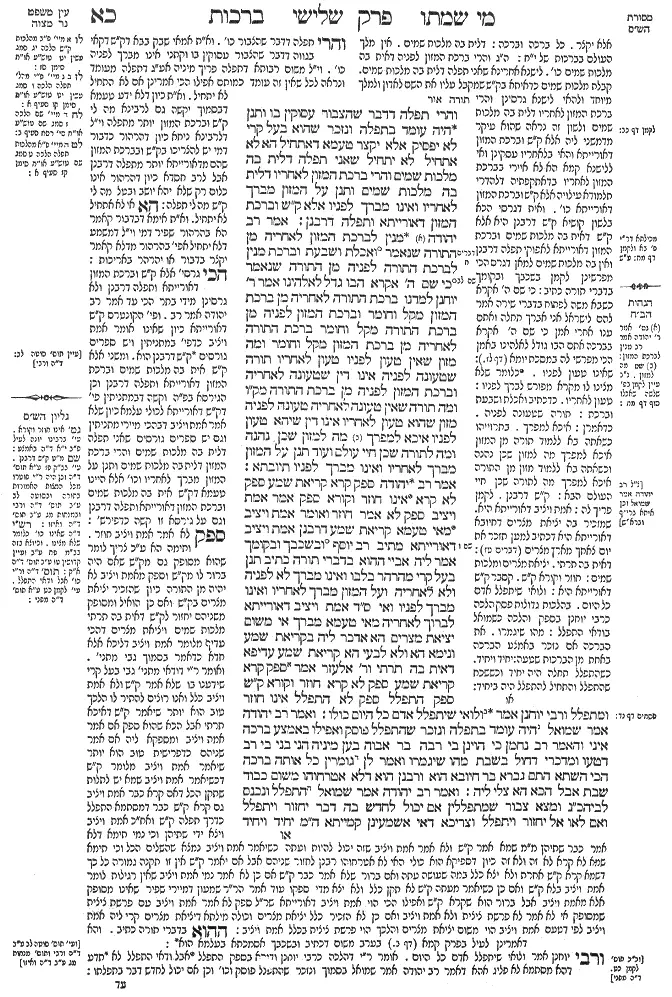
Berakhot 21a - Guemara
והרי תפלה דדבר שהצבור עסוקין בו ותנן היה עומד בתפלה ונזכר שהוא בעל קרי לא יפסיק אלא יקצר טעמא דאתחיל הא לא אתחיל לא יתחיל שאני תפלה דלית בה מלכות שמים והרי ברכת המזון לאחריו דלית בה מלכות שמים ותנן על המזון מברך לאחריו ואינו מברך לפניו אלא קש וברכת המזון דאורייתא ותפלה דרבנן:
אמר רב יהודה מנין לברכת המזון לאחריה מן התורה שנאמר (דברים ח י) ואכלת ושבעת וברכת מנין לברכת התורה לפניה מן התורה שנאמר (דברים לב ג) כי שם ה' אקרא הבו גדל לאלהינו אמר ר' יוחנן למדנו ברכת התורה לאחריה מן ברכת המזון מקל וחומר וברכת המזון לפניה מן ברכת התורה מקל וחומר ברכת התורה לאחריה מן ברכת המזון מקל וחומר ומה מזון שאין טעון לפניו טעון לאחריו תורה שטעונה לפניה אינו דין שטעונה לאחריה וברכת המזון לפניה מן ברכת התורה מקו ומה תורה שאין טעונה לאחריה טעונה לפניה מזון שהוא טעון לאחריו אינו דין שיהא טעון לפניו איכא למפרך מה למזון שכן נהנה ומה לתורה שכן חיי עולם ועוד תנן על המזון מברך לאחריו ואינו מברך לפניו תיובתא:
אמר רב יהודה ספק קרא קריאת שמע ספק לא קרא אינו חוזר וקורא ספק אמר אמת ויציב ספק לא אמר חוזר ואומר אמת ויציב מאי טעמא קריאת שמע דרבנן אמת ויציב דאורייתא מתיב רב יוסף (דברים ו ז) ובשכבך ובקומך אמר ליה אביי ההוא בדברי תורה כתיב תנן בעל קרי מהרהר בלבו ואינו מברך לא לפניה ולא לאחריה ועל המזון מברך לאחריו ואינו מברך לפניו ואי סד אמת ויציב דאורייתא לברוך לאחריה מאי טעמא מברך אי משום יציאת מצרים הא אדכר ליה בקריאת שמע ונימא הא ולא לבעי הא קריאת שמע עדיפא דאית בה תרתי ור' אלעזר אמר ספק קרא קריאת שמע ספק לא קרא חוזר וקורא קש ספק התפלל ספק לא התפלל אינו חוזר ומתפלל ורבי יוחנן אמר ולואי שיתפלל אדם כל היום כולו:
ואמר רב יהודה אמר שמואל היה עומד בתפלה ונזכר שהתפלל פוסק ואפילו באמצע ברכה איני והאמר רב נחמן כי הוינן בי רבה בר אבוה בען מיניה הני בני בי רב דטעו ומדכרי דחול בשבת מהו שיגמרו ואמר לן גומרין כל אותה ברכה הכי השתא התם גברא בר חיובא הוא ורבנן הוא דלא אטרחוהו משום כבוד שבת אבל הכא הא צלי ליה:
ואמר רב יהודה אמר שמואל התפלל ונכנס לביהכנ ומצא צבור שמתפללין אם יכול לחדש בה דבר יחזור ויתפלל ואם לאו אל יחזור ויתפלל וצריכא דאי אשמעינן קמייתא המ יחיד ויחיד
Comments from Rashi on Masechet Berakhot Page 21a
אלא יקצר . כל ברכה וברכה: דלית בה מלכות שמים . אין מלך העולם בברכות של י"ח: ה"ג והרי ברכת המזון לפניה דאית בה מלכות שמים כו' . לישנא אחרינא שאני תפלה דלית בה מלכות שמים. קבלת מלכות שמים כדאיתא בק"ש שמקבל עליו את השם לאדון ולמלך מיוחד ולהאי לישנא גרסינן והרי ברכת המזון לאחריו דלית בה מלכות שמים ולשון זה נראה שהוא עיקר מדמשני ליה אלא ק"ש וברכת המזון דאורייתא והאי בלאחריו עסקינן ואי ללישנא קמא הא לא איירי בברכת המזון לאחריו בדאתקפתיה דלהדרי תלמודא עילויה אלא ק"ש וברכת המזון דאורייתא כו'. ואית דגרסי הכא בלשון קושיא ק"ש דרבנן היא אלא ק"ש דאית בה מלכות שמים וברכת המזון דאורייתא לאפוקי תפלה דרבנן ואין בה מלכות שמים למאן דגרס הכי מפרשינן לקמן בשכבך ובקומך בדברי תורה כתיב: כי שם ה' אקרא . כשבא משה לפתוח בדברי שירה אמר להם לישראל אני אברך תחלה ואתם ענו אחרי אמן כי שם ה' אקרא בברכה אתם הבו גודל לאלהינו באמן הכי מפרשי לה במסכת יומא (דף לז.): שאינו טעון לפניו . כלומר שלא מצינו לו מקרא מפורש לברך לפניו: טעון לאחריו . כדכתיב ואכלת ושבעת וברכת: תורה שטעונה לפניה . כדאמרן: איכא למפרך . בתרוייהו כשאתה בא ללמוד תורה מן המזון איכא למפרך מה למזון שכן נהנה וכשאתה בא ללמוד מזון מן התורה איכא למפרך מה לתורה שכן חיי העולם הבא: ק"ש דרבנן . לקמן פריך לה: אמת ויציב דאורייתא היא . שמזכיר בה יציאת מצרים דחיובא דאורייתא היא דכתיב למען תזכר את יום צאתך מארץ מצרים (דברים טז): ק"ש דרבנן . לקמן פריך לה: אמת ויציב דאורייתא היא . שמזכיר בה יציאת מצרים דחיובא דאורייתא היא דכתיב למען תזכר את יום צאתך מארץ מצרים (דברים טז): דאית בה תרתי . יציאת מצרים ומלכות שמים: חוזר וקורא ק"ש . קסבר ק"ש דאורייתא היא: ולואי שיתפלל אדם כל היום . בהלכות גדולות פסק הלכה כרבי יוחנן בספק והלכה כשמואל בודאי התפלל: מהו שיגמרו . את הברכה אם נזכר באמצע הברכה באחת מן הברכות שטעה: יחיד ויחיד . כשהתפלל תחלה היה יחיד וכששכח שהתפלל והתחיל להתפלל היה ביחיד:
Comments from Tosafot - Berakhot 21a
והרי תפלה דדבר שהצבור כו' . וא"ת אמאי שבק בבא דק"ש דקאי בגווה דדבר שהצבור עסוקין בו וקתני אינו מברך לפניה כו'. וי"ל משום רבותא דתפלה פריך מיניה אע"ג דתפלה מעומד ונראה לכל שאין זה עומד כמותם אפילו הכי אמרינן אם לא התחיל לא יתחיל. וא"ת כיון דלא ידע טעמא דבסמוך יקשה גם לרבינא מה לי ק"ש וברכת המזון יותר מתפלה וי"ל דלרבינא ניחא כיון דהרהור כדבור דמי יש להצריכו בק"ש ובברכת המזון שהם מדאורייתא יותר מתפלה דרבנן אבל לרב חסדא כיון דהרהור אינו כלום רק שלא יהא יושב ובטל מה לי ק"ש מה לי תפלה: הא אי לא אתחיל לא יתחיל . וא"ת אימא דבדבור קאמר הא בהרהור שפיר דמי וי"ל דמשמע דלא יתחיל אפי' בהרהור מדלא קאמר יקצר בדבור או יהרהר באריכות: הכי גרסי' אלא ק"ש וברכת המזון דאורייתא ותפלה דרבנן ולא גרסינן מידי בתר הכי עד אמר רב יהודה אמר רב . ופי' הקונטרס ק"ש דאורייתא כיון שאינו אומר אמת ויציב כדפי' במתניתין ויש ספרים גורסים ק"ש דרבנן הוא. ומשני אלא ק"ש אית בה מלכות שמים וברכת המזון דאורייתא ותפלה דרבנן וכן הגירסא בפ"ה וקשה דבמתניתין פי' דק"ש דאורייתא לכולי עלמא כיון שלא אמר אמת ויציב דבהכי מיירי מתניתין וגם יש ספרים גורסים שאני תפלה דלית בה מלכות שמים והרי ברכת המזון דלית בה מלכות שמים ותנן על המזון מברך לאחריו וכו' אלא היינו טעמא דק"ש אית בה מלכות שמים וברכת המזון דאורייתא ותפלה דרבנן וגם על גירסא זו קשה כדפירש': ספק לא אמר אמת ויציב חוזר . ותימה הא ע"כ צריך לומר שהוא מסופק גם מק"ש שאם היה ברור לו מק"ש וספק מאמת ויציב לא יהיה מן התורה כיון שהזכיר יציאת מצרים בק"ש ואם כן הואיל ומסופק משניהם יחזור לק"ש דאית בה תרתי מלכות שמים ויציאת מצרים דהכי עדיף מלומר אמת ויציב דליכא אלא חדא כדאמר בסמוך גבי מתני'. ואומר ר"י דודאי מתני' גבי בעל קרי שידענו בו שלא אמר ק"ש ולא אמת ויציב כלל ואנו רוצים להתיר לו הלכך טוב הוא יותר שיאמר ק"ש דאיכא תרתי אבל הכא שהוא ספק אם אמר אמת ויציב ומספקא ליה אם אמר שניהם כדפרישית טוב הוא יותר שיאמר אמת ויציב מלומר ק"ש דכשיאמר אמת ויציב שמא יש לתלות שתקן הכל דאם קרא כבר אמת ויציב גם קרא ק"ש כבר דמסתמא התפלל כדרך תפלה ק"ש ואח"כ אמת ויציב ויצא ידי שתיהן וכי נמי תימא דלא אמר כבר שתיהן מ"מ שמא אמר ק"ש ולא אמר אמת ויציב שזה יכול להיות ועתה כשיאמר אמת ויציב נמצא שהשלים הכל וכי תימא שמא לא קרא לא זה ולא זה כיון דספיקא הוא כולי האי לא אטרחוהו רבנן לחזור שניהם אבל אם יאמר ק"ש אין זו תקנה גמורה כל כך דשמא קרא ק"ש אחרת ולא יצא כלל במה שעושה עתה ואם ברור שלא אמר כבר ק"ש אם כן לא אמר נמי אמת ויציב שאין רגילות לומר אמת ויציב בלא ק"ש ואם כן כשיאמר מעתה ק"ש לא תקן כלל ולא יצא מדי ספקו עוד אמר הר"ר שמעון דמיירי שפיר שאינו מסופק אלא מאמת ויציב אבל ברור הוא שקרא ק"ש ואפילו הכי הוי אמת ויציב דאורייתא שר"ל ספק לא אמר אמת ויציב עם פרשת ציצית שמסופק אי לא אמר לא פרשת ציצית ולא אמת ויציב ואם כן לא הזכיר כלל יציאת מצרים וכולה מילתא דיציאת מצרים קרי ליה אמת ויציב לפי דטעם אמת ויציב הוי משום יציאת מצרים והלכך הוי פרשת ציצית בכלל אמת ויציב: ההוא בדברי תורה כתיב . והא דאמרינן לעיל בפרק קמא (ברכות דף ב.) בערב משום דכתיב ובשכבך אסמכתא בעלמא הוא: ורבי יוחנן אמר ולואי שיתפלל אדם כל היום . אומר ר"י דהלכה כרבי יוחנן ודוקא בספק התפלל אבל ודאי התפלל לא תדע דהא מסתמא לא פליג אהא דאמר רב יהודה אמר שמואל בסמוך ונזכר שהתפלל פוסק וכו' וכן אם יכול לחדש דבר בתפלתו:
Berakhot 21a - Mishnah translated into english
The Gemara challenges: And prayer, which is also a matter in which the community is engaged, and we learned in the mishna: One who was standing in prayer and remembered that he is one who experienced a seminal emission and did not yet immerse himself should not interrupt his prayer, rather he should abridge it. The Gemara infers: The reason is because he already began to pray; however, if he did not yet begin, then he should not begin, even by means of contemplation.
The Gemara responds: Prayer is different in that it does not contain the acceptance of the yoke of the kingdom of Heaven. The Gemara rejects this: And Grace after Meals does not contain the acceptance of the yoke of the kingdom of Heaven, and yet we learned in the mishna: Over food, one recites a blessing afterward, but does not recite a blessing beforehand. Rather, the differences must be explained otherwise: The recitation of Shema and Grace after Meals are both mitzvot by Torah law, while prayer is only by rabbinic law. Therefore, one who is impure need not pray.
Rav Yehuda said: From where is the mitzva by Torah law to recite Grace after Meals, derived? As it is stated: “And you shall eat and be satisfied and bless the Lord your God” (Deuteronomy 8:10).
And from where is the mitzva by Torah law to recite the blessing over the Torah before it is read, derived? As it is stated: “When I proclaim the Lord’s name, give glory to our God” (Deuteronomy 32:3), meaning that before one proclaims the Lord’s name by reading the Torah, he must give glory to God.
Rabbi Yoḥanan said: We derived that one must recite the blessing over the Torah after it is read from Grace after Meals by means of an a fortiori inference. And we derive the obligation to recite a blessing before partaking of food from the blessing over the Torah by means of an a fortiori inference. The blessing over the Torah after it is read from Grace after Meals by means of an a fortiori inference: Food, which does not require a blessing beforehand by Torah law, requires a blessing afterward; Torah, which requires a blessing beforehand, is it not right that it requires a blessing afterward? And similarly: The blessing before partaking of food from the blessing over the Torah by means of an a fortiori inference: Torah, which requires no blessing afterward by Torah law, requires a blessing beforehand; food, which requires a blessing afterward, is it not right that it requires a blessing beforehand?
The Gemara notes: The logic of this a fortiori inference can be refuted: What is true with regard to food, where one derives pleasure from eating, is not true with regard to matters which offer no bodily pleasure. Therefore, the blessing over the Torah cannot be derived from the blessing over food. And similarly: What is true with regard to Torah, that provides eternal life to those who engage in its study, is not true with regard to matters that do not provide eternal life. Therefore, the blessing before partaking of food cannot be derived from the blessing over the Torah. Furthermore, we learned in the mishna: Over food, one who is impure due to a seminal emission recites a blessing afterward, but does not recite a blessing beforehand. The mishna does not derive the blessing recited before a meal from the blessing recited over Torah. Consequently, this is a conclusive refutation of Rabbi Yoḥanan’s statement.
Rav Yehuda said: One who is uncertain whether he recited Shema or whether he did not recite it does not recite it again. However, one who is uncertain whether he recited: True and Firm [emet veyatziv], the blessing that follows Shema in the morning, must recite emet veyatziv again. What is the reason for this? In his opinion, the obligation to recite Shema is only by rabbinic law. His ruling follows the principle that in cases of uncertainty involving rabbinic law, the ruling is lenient and he need not repeat it. However, since emet veyatziv is primarily a commemoration of the exodus from Egypt, it is a mitzva by Torah law, and, in cases of uncertainty involving Torah law, the ruling is stringent and he must repeat it.
Rav Yosef raises an objection: How can you say that the obligation to recite Shema is only by rabbinic law when it is explicitly written: “And you shall recite them to your children and speak of them when you sit in your home and when you walk by the way, when you lie down and when you rise” (Deuteronomy 6:7)? Abaye said to him: That verse was written with regard to matters of Torah. One need not interpret the verse in the conventional manner, as obligating the recitation of Shema, but rather as referring to the general obligation to study Torah.
From here, the Gemara attempts to resolve this issue by citing proof from the mishna. We learned in the mishna: One who experienced a seminal emission may contemplate Shema in his heart, but neither recites the blessings preceding Shema, nor the blessings thereafter. Over food which, after partaking, one is obligated by Torah law to recite a blessing, one recites a blessing thereafter, but not beforehand.
And if it would enter your mind that the obligation to recite emet veyatziv is by Torah law, let him recite the blessing after Shema. Since he does not recite the blessing, apparently, he is exempt.
The Gemara refutes this: What is the reason that he recites emet veyatziv? If it is because it deals primarily with the exodus from Egypt, wasn’t it already mentioned in the recitation of Shema, in the portion of the ritual fringes?
The Gemara challenges: And let him say this, emet veyatziv, and he will not need to recite that, Shema. The Gemara responds: While one may commemorate the exodus from Egypt in either Shema or emet veyatziv, Shema is preferable as it contains two elements, both a commemoration of the exodus and an acceptance of the yoke of the kingdom of Heaven.
And Rabbi Elazar said a different opinion: One who is uncertain whether he recited Shema or whether he did not recite Shema, must recite Shema again. According to his opinion, there is a mitzva by Torah law to recite Shema. However, if one is uncertain whether he prayed or whether he did not pray, he does not pray again, as the obligation to pray is by rabbinic law. And Rabbi Yoḥanan said: He must pray again; if only a person would pray throughout the entire day.
And Rav Yehuda said that Shmuel said: One who was standing in prayer and remembered that he already prayed must interrupt his prayer, even in the middle of a blessing. The Gemara challenges this: Is that so? Didn’t Rav Naḥman say: When we were in the school of Rabba bar Avuh we raised a dilemma before him: Those students in the school of Rav who mistakenly recited a blessing from the weekday Amida on Shabbat, what is the ruling with regards to completing the weekday prayer? And Rabba bar Avuh said to us: The ruling is that one must complete that entire blessing. How then did Rav Yehuda say that one must interrupt his prayer even in the middle of a blessing?
The Gemara rejects this: How can you compare the two cases? There, on Shabbat, the individual is one who is obligated and should actually recite all eighteen blessings, and it is the Sages who did not impose upon him in deference to Shabbat and instituted an abridged formula. But here, didn’t he already pray? Therefore he can stop, even in the middle of a blessing.
And Rav Yehuda said that Shmuel said: One who already prayed, and then enters a synagogue to find a congregation standing and praying, if he is able to introduce a new element, an expression or request, into his prayer, he may pray again, and if not, he may not pray again.
The Gemara notes: This concept is identical to Shmuel’s previous statement regarding one who already prayed that he need not pray again. Nevertheless, both statements are necessary. If he had taught us the first halakha, we would have said that applies only to a case involving an individual who prayed and an individual who began to repeat the prayer,
Traduction : The William Davidson digital edition of the Koren Noé Talmud, with commentary by Rabbi Adin Even-Israel Steinsaltz.