 Talmud Bavli
Berakhot 48b : Youtube
Daf TubeYoutube
2 video classes :
Berakhot Page 48b
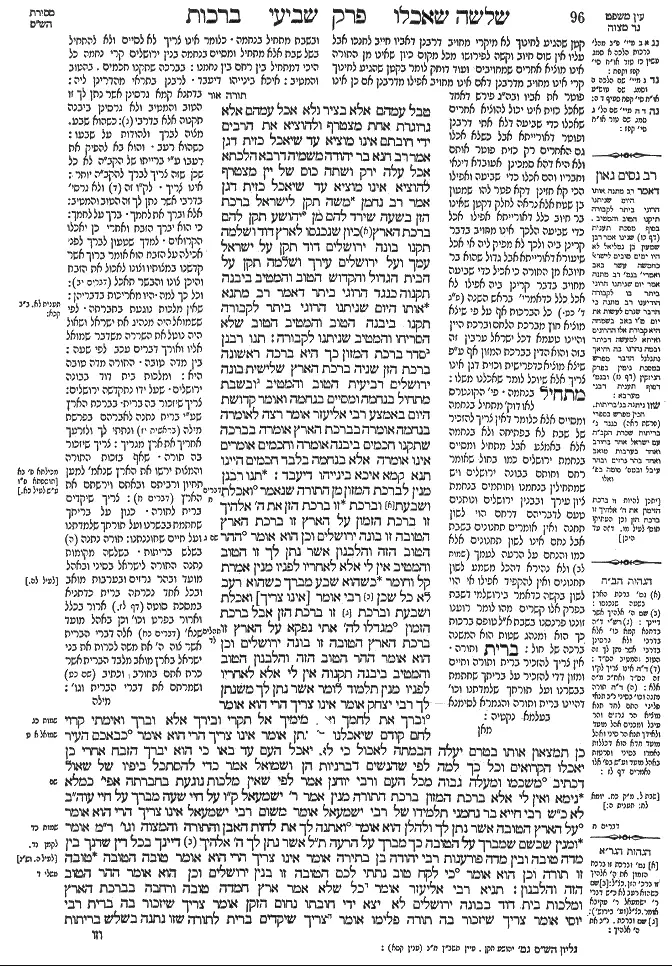
Berakhot 48b - Guemara
טבל עמהם אלא בציר ולא אכל עמהם אלא גרוגרת אחת מצטרף ולהוציא את הרבים ידי חובתם אינו מוציא עד שיאכל כזית דגן אמר רב חנא בר יהודה משמיה דרבא הלכתא אכל עלה ירק ושתה כוס של יין מצטרף להוציא אינו מוציא עד שיאכל כזית דגן אמר רב נחמן משה תקן לישראל ברכת הזן בשעה שירד להם מן יהושע תקן להם ברכת הארץ כיון שנכנסו לארץ דוד ושלמה תקנו בונה ירושלים דוד תקן על ישראל עמך ועל ירושלים עירך ושלמה תקן על הבית הגדול והקדוש הטוב והמטיב ביבנה תקנוה כנגד הרוגי ביתר דאמר רב מתנא אותו היום שניתנו הרוגי ביתר לקבורה תקנו ביבנה הטוב והמטיב הטוב שלא הסריחו והמטיב שניתנו לקבורה:
תנו רבנן סדר ברכת המזון כך היא ברכה ראשונה ברכת הזן שניה ברכת הארץ שלישית בונה ירושלים רביעית הטוב והמטיב ובשבת מתחיל בנחמה ומסיים בנחמה ואומר קדושת היום באמצע רבי אליעזר אומר רצה לאומרה בנחמה אומרה בברכת הארץ אומרה בברכה שתקנו חכמים ביבנה אומרה וחכמים אומרים אינו אומרה אלא בנחמה בלבד חכמים היינו תנא קמא איכא בינייהו דיעבד:
תנו רבנן מנין לברכת המזון מן התורה שנאמר (דברים ח י) ואכלת ושבעת וברכת זו ברכת הזן את ה' אלהיך זו ברכת הזמון על הארץ זו ברכת הארץ הטובה זו בונה ירושלים וכן הוא אומר (דברים ג כה) ההר הטוב הזה והלבנון אשר נתן לך זו הטוב והמטיב אין לי אלא לאחריו לפניו מנין אמרת קל וחומר כשהוא שבע מברך כשהוא רעב לא כל שכן רבי אומר [אינו צריך] ואכלת ושבעת וברכת זו ברכת הזן אבל ברכת הזמון (תהלים לד ד) מגדלו לה' אתי נפקא על הארץ זו ברכת הארץ הטובה זו בונה ירושלים וכן הוא אומר ההר הטוב הזה והלבנון הטוב והמטיב ביבנה תקנוה אין לי אלא לאחריו לפניו מנין תלמוד לומר אשר נתן לך משנתן לך רבי יצחק אומר אינו צריך הרי הוא אומר (שמות כג כה) וברך את לחמך ואת מימיך אל תקרי ובירך אלא וברך ואימתי קרוי לחם קודם שיאכלנו ר' נתן אומר אינו צריך הרי הוא אומר (שמואל א ט יג) כבאכם העיר כן תמצאון אותו בטרם יעלה הבמתה לאכול כי לא יאכל העם עד באו כי הוא יברך הזבח אחרי כן יאכלו הקרואים וכל כך למה לפי שהנשים דברניות הן ושמואל אמר כדי להסתכל ביפיו של שאול דכתיב (שמואל א ט ב) משכמו ומעלה גבוה מכל העם ורבי יוחנן אמר לפי שאין מלכות נוגעת בחברתה אפי' כמלא נימא ואין לי אלא ברכת המזון ברכת התורה מנין אמר ר' ישמעאל קו על חיי שעה מברך על חיי עוהב לא כש רבי חייא בר נחמני תלמידו של רבי ישמעאל אומר משום רבי ישמעאל אינו צריך הרי הוא אומר (דברים ח י) על הארץ הטובה אשר נתן לך ולהלן הוא אומר (שמות כד יב) ואתנה לך את לחות האבן והתורה והמצוה וגו' רמ אומר ומנין שכשם שמברך על הטובה כך מברך על הרעה תל אשר נתן לך ה' אלהיך דיינך בכל דין שדנך בין מדה טובה ובין מדה פורענות רבי יהודה בן בתירה אומר אינו צריך הרי הוא אומר טובה הטובה טובה זו תורה וכן הוא אומר (משלי ד ב) כי לקח טוב נתתי לכם הטובה זו בנין ירושלים וכן הוא אומר ההר הטוב הזה והלבנון:
תניא רבי אליעזר אומר כל שלא אמר ארץ חמדה טובה ורחבה בברכת הארץ ומלכות בית דוד בבונה ירושלים לא יצא ידי חובתו נחום הזקן אומר צריך שיזכור בה ברית רבי יוסי אומר צריך שיזכור בה תורה פלימו אומר צריך שיקדים ברית לתורה שזו נתנה בשלש בריתות
Comments from Rashi on Masechet Berakhot Page 48b
ובשבת מתחיל בנחמה . כלומר אינו צריך לא לסיים ולא להתחיל בשל שבת אלא מתחיל ומסיים בנחמה בנין ירושלים קרי נחמה כל היכי דמתחיל בין רחם בין נחמנו: בברכה שתקנו חכמים . בהטוב והמטיב: איכא בינייהו דיעבד . לרבנן בתראי מהדרינן ליה: בדתנא קמא גרסינן אשר נתן לך זו הטוב והמטיב ולא גרסינן ביבנה תקנוה אלא בדרבי: כשהוא שבע . מצוה לברך ולהודות על שבעו: כשהוא רעב . והוא בא להפיק את רעבו ע"י ברייתו של הקב"ה לא כל שכן שזה צריך לברך להקב"ה יותר: אינו צריך . לק"ו זה ולא גרסי' בדרבי אשר נתן לך זה הטוב והמטיב: אלא וברך את לחמך . ברך על לחמך: כי הוא יברך הזבח ואחרי כן יאכלו הקרואים . למדך שטעון לברך לפני אכילה על הזבח הוא אומר ברוך אשר קדשנו במצותיו וצונו לאכול את הזבח והיכן צונו והבשר תאכל (דברים יב): וכל כך למה . היו מאריכות בדבריהן: שאין מלכות נוגעת בחברתה . לפי ששמואל היה מנהיג את ישראל ושאול היה נוטל את השררה משדבר שמואל אליו ואורך דברים עכב לפי שעה: בין מדה טובה . התורה מדה טובה היא: ומלכות בית דוד בבונה ירושלים . שעל ידו נתקדשה ירושלים: צריך שיזכור בה ברית . בברכת הארץ שעל ידי ברית נתנה לאברהם בפרשת מילה (בראשית יז) ונתתי לך ולזרעך אחריך את ארץ מגריך: צריך שיזכור בה תורה . שאף בזכות התורה והמצות ירשו את הארץ שנאמר למען תחיון ורביתם ובאתם וירשתם את הארץ (דברים ח): צריך שיקדים ברית לתורה . כגון על בריתך שחתמת בבשרנו ועל תורתך שלמדתנו ועל חיים שחוננתנו: תורה נתנה בשלש בריתות . בשלשה מקומות נתנה התורה לישראל בסיני ובאהל מועד ובהר גרזים ובערבות מואב ובכל אחד נכרתה ברית כדתניא במסכת סוטה (דף לז.) ארור בכלל וארור בפרט וכו' וכן באהל מועד שנא' (דברים כח) אלה דברי הברית אשר צוה ה' את משה לכרות את בני ישראל בארץ מואב מלבד הברית אשר כרת אתם בחורב וכתיב (שם כט) ושמרתם את דברי הברית וגו':
Comments from Tosafot - Berakhot 48b
מתחיל בנחמה . פי' הקונטרס לאו דוק' מתחיל בנחמה ומסיים אלא כלומר דאין צריך להזכיר של שבת לא בפתיחה ולא בנחמה אלא באמצע אבל מתחיל ומסיים בנחמת ירושלים כמו בחול שאומר רחם וחותם בבונה ירושלים ויש שמתחילין בנחמנו וחותמים בנחמת ציון עירך ובבנין ירושלים ונותנים טעם לדבריהם דרחם הוי לשון תחנה ואין אומרים תחנונים בשבת אבל נחם אינו לשון תחנונים אלא כמו והנחם על הרעה לעמך (שמות לב) ולא נהירא דהכל משמע לשון תחנונים ואין להקפיד אפילו אי הוי לשון בקשה כדאמר בירושלמי דשבת בפרק אלו קשרים מהו לומר רוענו זוננו פרנסנו בשבת א"ל טופס ברכות כך הוא ומנהג שטות הוא המשנה ברכה של חול:
Berakhot 48b - Mishnah translated into english
dipped with them a small bit of food in brine and ate with them only a single dry fig, he joins them. And to satisfy the obligation of the many, he does not satisfy their obligation until he eats an olive-bulk of grain. Rabbi Ḥana bar Yehuda said in the name of Rava that the halakha is: If one ate a vegetable leaf and drank a cup of wine, he joins the diners. However, to satisfy the obligation of others, he does not satisfy their obligation until he eats an olive-bulk of grain.
With regard to the origins of the four blessings of Grace after Meals, Rav Naḥman said:
Moses instituted for Israel the first blessing of: Who feeds all, when the manna descended for them and they needed to thank God.
Joshua instituted the blessing of the land when they entered Eretz Yisrael.
David and Solomon instituted the third blessing: Who builds Jerusalem, in the following manner:
David instituted “…on Israel Your people and on Jerusalem Your city…” as he conquered the city,
and Solomon instituted “…on the great and Holy Temple…” as he was the one who built the Temple.
They instituted the blessing: Who is good and does good, at Yavne in reference to the slain Jews of the city of Beitar at the culmination of the bar Kokheva rebellion. They were ultimately brought to burial after a period during which Hadrian refused to permit their burial. As Rav Mattana said: On the same day that the slain of Beitar were brought to burial, they instituted the blessing: Who is good and does good, at Yavne. Who is good, thanking God that the corpses did not decompose while awaiting burial, and does good, thanking God that they were ultimately brought to burial.
On the topic of the blessings of Grace after Meals, the Gemara adds that the Sages taught in a baraita that the order of Grace after Meals is as follows: The first blessing is the blessing of: Who feeds all; the second is the blessing of the land; the third is: Who builds Jerusalem; and the fourth is: Who is good and does good. On Shabbat one begins the third blessing with consolation and ends with consolation and mentions the sanctity of the day with mention of Shabbat in the middle. Rabbi Eliezer says: If one wishes to recite the supplement for the sanctity of Shabbat in the blessing of consolation: Who builds Jerusalem, he recites it there; in the blessing of the land, he recites it there; in the blessing instituted by the Sages at Yavne, Who is good and does good, he recites it there. And the Rabbis say: He may only recite the mention of the sanctity of Shabbat in the context of the blessing of consolation.
The Gemara remarks: The opinion of the Rabbis is identical with the opinion of the first tanna. Both opinions hold that the mention of Shabbat is in the third blessing. The Gemara responds: The difference between the opinion of the Rabbis and the opinion of the first tanna is with regard to after the fact. They both agree that ab initio, Shabbat should be mentioned in the third blessing. If, though, one inadvertently mentioned Shabbat in one of the other blessings mentioned by Rabbi Eliezer, the first tanna holds that he fulfilled his obligation and the Rabbis emphasize that it may only be recited in the blessing of consolation.
The Sages taught in a Tosefta: From where is it derived that Grace after Meals is from the Torah? As it is stated: “And you shall eat and be satisfied, and you shall bless the Lord, your God, for the good land that He has given you” (Deuteronomy 8:10). The Gemara explains: And you shall bless, that is the blessing of: Who feeds all. The Lord, your God, that is the zimmun blessing in which God’s name is invoked. For the land, that is the blessing of the land; good, that is the blessing: Who builds Jerusalem, and it also says: “This good mountain and Lebanon” (Deuteronomy 3:25), which is interpreted homiletically as referring to Jerusalem and the Temple. That He gave you, that is: Who is good and does good. However, I only have a Torah source for blessings after eating, i.e., Grace after Meals. From where is it derived that one is obligated to recite blessings before eating? You said that it can be derived through an a fortiori inference: When one is satisfied, he is obligated to recite a blessing and thank God for food; when he is hungry, all the more so that he should recite a blessing to offer thanks for the food he will eat.
Rabbi Yehuda HaNasi says: It is not necessary to interpret the verse this way; rather, it should be understood in a slightly different manner, as follows: “And you shall eat and be satisfied, and you shall bless,” that is the blessing of: Who feeds all; however, the zimmun blessing is derived from the verse: “Praise God with me and we will exalt His name together” (Psalms 34:3). He continues: For the land, that is the blessing of the land. Good, that is the blessing: Who builds Jerusalem, and it also says: This good mountain and Lebanon. They instituted the blessing: Who is good and does good, at Yavne and, as such, it has no biblical source. However, I only have a Torah source for blessings after eating, i.e., Grace after Meals. From where is it derived that one is obligated to recite blessings before eating? The verse states: That he gave you. A blessing must be recited over food from the moment that God gave it to you, not only afterward.
Rabbi Yitzḥak says: That source for the obligation to recite a blessing beforehand is not necessary, as it says: “And He will bless your bread and your water” (Exodus 23:25); do not read: And He will bless [uveirakh], rather: And you will bless [uvareikh]. And when is it called bread? Before it is eaten.
Rabbi Natan says: That source for the obligation to recite a blessing beforehand is not necessary, as it says when the maidens told Saul: “As soon you come into the city, find him right away, before he goes up to the high place to eat; for the people will not eat until he comes, because he will bless the sacrifice; and afterwards all those who are invited will eat; now go, for you shall find him at this time of day” (I Samuel 9:13). A blessing recited prior to eating is explicitly mentioned in that verse.
Tangentially, the Gemara asks: Why did these maidens go on so expansively while speaking to Saul? It is because women are chatterers. And Shmuel said a different reason: They spoke expansively in order to gaze upon Saul’s beauty longer, as it is written about him: “An excellent young man; no one among the Israelites was better than he; he was taller than the people from the shoulders up” (I Samuel 9:2). Rabbi Yoḥanan said that their expansiveness was initiated by God, because one sovereignty does not overlap with its counterpart, even one hairbreadth. Saul’s coronation was delayed so that Samuel’s leadership would not be curtailed.
The baraita with regard to Grace after Meals continues: I only have a Torah source for Grace after Meals. From where is the obligation to recite the blessing of the Torah derived? Several answers are offered: Rabbi Yishmael said: It is derived through an a fortiori inference from Grace after Meals: Over food, which is an aspect of temporal life, one recites a blessing, all the more so one recites a blessing over the Torah, which is eternal life. Rabbi Ḥiyya bar Naḥmani, the student of Rabbi Yishmael, says in the name of Rabbi Yishmael: This a fortiori inference is not necessary, as this halakha can be derived from the same verse from which Grace after Meals is derived, as it states: “For the good land that He gave [natan] you,” and below, with regard to the Torah, it says: “And I will give [ve’etna] you the stone tablets, and the Torah and the mitzva, which I have written, that you may teach them” (Exodus 24:12). Here, just as giving with regard to the good land requires a blessing, giving with regard to the Torah requires a blessing.
Concerning this verse, Rabbi Meir says: From where is it derived that just as one recites a blessing over the good that befalls him he recites a blessing over the bad? The verse states: “That the Lord, your God gave you.” “Your God” is a reference to the attribute of divine justice; your Judge, in whatever judgment that He judges you, whether it is a positive measure of goodness or a measure of calamity.
Rabbi Yehuda ben Beteira says: Proof for a blessing over the Torah from a different verse is not necessary, as it says: “For the good [hatova] land.” Two different matters are derived from different aspects of the word hatova: Tova, that is Torah, as it says: “For I have given you good [tov] teachings, do not forsake My Torah” (Proverbs 4:2); hatova, that is the building of Jerusalem, as it says: “This good mountain [hatov] and Lebanon.”
With regard to the formula of Grace after Meals, the Gemara continues: It was taught in a baraita: Rabbi Eliezer says: Anyone who did not say: A desirable, good, and spacious land in the blessing of the land, and who did not mention the royal house of David in the blessing: Who builds Jerusalem, did not fulfill his obligation. Naḥum the Elder says: One must mention the covenant of circumcision in the blessing of the land. Rabbi Yosei says: One must mention the Torah in the blessing of the land. Pelimu, one of the last tanna’im, says: He must make mention of the covenant of circumcision preceding mention of the Torah, as this, the Torah, was given to the Jewish people with three covenants,
Traduction : The William Davidson digital edition of the Koren Noé Talmud, with commentary by Rabbi Adin Even-Israel Steinsaltz.