 Talmud Bavli
Berakhot 27a : Youtube
Daf TubeYoutube
2 video classes :
Berakhot Page 27a
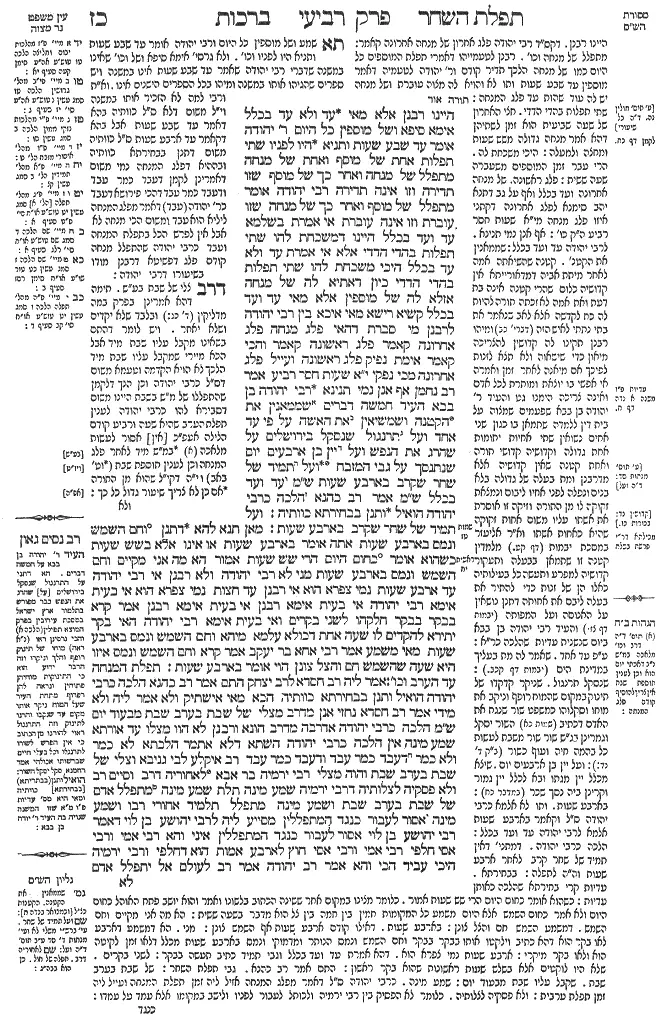
Berakhot 27a - Guemara
היינו רבנן אלא מאי עד ולא עד בכלל אימא סיפא ושל מוספין כל היום ר' יהודה אומר עד שבע שעות ותניא היו לפניו שתי תפלות אחת של מוסף ואחת של מנחה מתפלל של מנחה ואחר כך של מוסף שזו תדירה וזו אינה תדירה רבי יהודה אומר מתפלל של מוסף ואחר כך של מנחה שזו עוברת וזו אינה עוברת אי אמרת בשלמא עד ועד בכלל היינו דמשכחת להו שתי תפלות בהדי הדדי אלא אי אמרת עד ולא עד בכלל היכי משכחת להו שתי תפלות בהדי הדדי כיון דאתיא לה של מנחה אזלא לה של מוספין אלא מאי עד ועד בכלל קשיא רישא מאי איכא בין רבי יהודה לרבנן מי סברת דהאי פלג מנחה פלג אחרונה קאמר פלג ראשונה קאמר והכי קאמר אימת נפיק פלג ראשונה ועייל פלג אחרונה מכי נפקי יא שעות חסר רביע אמר רב נחמן אף אנן נמי תנינא רבי יהודה בן בבא העיד חמשה דברים שממאנין את הקטנה ושמשיאין את האשה על פי עד אחד ועל תרנגול שנסקל בירושלים על שהרג את הנפש ועל יין בן ארבעים יום שנתנסך על גבי המזבח ועל תמיד של שחר שקרב בארבע שעות שמ עד ועד בכלל שמ אמר רב כהנא הלכה כרבי יהודה הואיל ותנן בבחירתא כוותיה:
ועל תמיד של שחר שקרב בארבע שעות:
מאן תנא להא דתנן (שמות טז כא) וחם השמש ונמס בארבע שעות אתה אומר בארבע שעות או אינו אלא בשש שעות כשהוא אומר (בראשית יח א) כחום היום הרי שש שעות אמור הא מה אני מקיים וחם השמש ונמס בארבע שעות מני לא רבי יהודה ולא רבנן אי רבי יהודה עד ארבע שעות נמי צפרא הוא אי רבנן עד חצות נמי צפרא הוא אי בעית אימא רבי יהודה אי בעית אימא רבנן אי בעית אימא רבנן אמר קרא בבקר בבקר חלקהו לשני בקרים ואי בעית אימא רבי יהודה האי בקר יתירא להקדים לו שעה אחת דכולא עלמא מיהא וחם השמש ונמס בארבע שעות מאי משמע אמר רבי אחא בר יעקב אמר קרא וחם השמש ונמס איזו היא שעה שהשמש חם והצל צונן הוי אומר בארבע שעות:
תפלת המנחה עד הערב וכו':
אמר ליה רב חסדא לרב יצחק התם אמר רב כהנא הלכה כרבי יהודה הואיל ותנן בבחירתא כוותיה הכא מאי אישתיק ולא אמר ליה ולא מידי אמר רב חסדא נחזי אנן מדרב מצלי של שבת בערב שבת מבעוד יום שמ הלכה כרבי יהודה אדרבה מדרב הונא ורבנן לא הוו מצלו עד אורתא שמע מינה אין הלכה כרבי יהודה השתא דלא אתמר הלכתא לא כמר ולא כמר דעבד כמר עבד ודעבד כמר עבד רב איקלע לבי גניבא וצלי של שבת בערב שבת והוה מצלי רבי ירמיה בר אבא לאחוריה דרב וסיים רב ולא פסקיה לצלותיה דרבי ירמיה שמע מינה תלת שמע מינה מתפלל אדם של שבת בערב שבת ושמע מינה מתפלל תלמיד אחורי רבו ושמע מינה אסור לעבור כנגד המתפללין מסייע ליה לרבי יהושע בן לוי דאמר רבי יהושע בן לוי אסור לעבור כנגד המתפללין איני והא רבי אמי ורבי אסי חלפי רבי אמי ורבי אסי חוץ לארבע אמות הוא דחלפי ורבי ירמיה היכי עביד הכי והא אמר רב יהודה אמר רב לעולם אל יתפלל אדם
Comments from Rashi on Masechet Berakhot Page 27a
היינו רבנן . דקס"ד רבי יהודה פלג אחרון של מנחה אחרונה קאמר: מתפלל של מנחה וכו' . רבנן לטעמייהו דאמרי תפלת המוספים כל היום כמו של מנחה הלכך תדיר קודם ור' יהודה לטעמיה דאמר מוספין עד שבע שעות ותו לא והויא לה מצוה עוברת ושל מנחה יש לה עוד שהות עד פלג המנחה: שתי תפלות בהדי הדדי . חצי האחרון של שעה שביעית הוא זמן לשתיהן דהא אמר מנחה גדולה משש שעות ומחצה ולמעלה: היכי משכחת לה . הרי עבר זמן המוספים משעברה שעה ששית: פלג ראשונה . של מנחה אחרונה ועד בכלל ואף על גב דתנא יהב סימנא לפלג אחרונה דקתני איזו פלג מנחה מי"א שעות חסר רביע ה"ק כו': אף אנן נמי תנינא . לרבי יהודה עד ועד בכלל: שממאנין את הקטנ' . קטנה שהשיאתה אמה לאחר מיתת אביה דמדאורייתא אין קדושיה כלום שהרי קטנה אינה בת דעת ואת אמה לא זכתה תורה להיות לה כח לקדשה אלא לאב שנאמר את בתי נתתי לאיש הזה (דברי' כב) ומיהו רבנן תקינו לה קדושין להצריכה מיאון כדי שישאוה ולא תצא לזנות לפיכך אם מיאנה לאחר זמן ואמרה אי אפשי בו יוצאת ומותרת לכל אדם ואינה צריכה הימנו גט והעיד ר' יהודה בן בבא שפעמים שמצוה על בית דין ללמדה שתמאן בו כגון שני אחים נשואין שתי אחיות יתומות אחת גדולה וקדושיה קדושי תורה ואחת קטנה שאין קדושיה אלא מדרבנן ומת בעלה של גדולה בלא בנים ונפלה לפני אחיו ליבום ונמצאת זקוקה לו מן התורה וזיקה זו אוסרת את אשתו עליו משום אחות זקוקה שהיא כאחות אשתו וא"ר אליעזר במסכת יבמות (דף קט.) מלמדין קטנה זו שתמאן בבעלה ותעקור קדושיה למפרע ותעשה כל בעילותיה כאלו הן של זנות כדי להתיר את בעלה ליבם את אחותה דתנן נושאין על האנוסה ועל המפותה (יבמות דף צז.) והעיד רבי יהודה בן בבא ביום שנשנית עדיות שהלכה כר"א: ע"פ עד אחד . שאמר לה מת בעליך במדינת הים (יבמות דף קכב.): שנסקל תרנגול . שניקר קדקדו של תינוק במקום שהמוח רופף וניקב את מוחו וסקלוהו כמשפט שור שנגח את האדם דכתיב (שמות כא) השור יסקל וגמרינן בג"ש שור שור משבת לעשות כל בהמה חיה ועוף כשור (ב"ק ד' נד:) ועל יין בן ארבעים יום . שיצא מכלל יין מגתו ובא לכלל יין גמור וקרינן ביה נסך שכר (במדבר כח): בארבע שעות . ותו לא אלמא כרבי יהודה ס"ל וקאמר בארבע שעות אלמא לרבי יהודה עד ועד בכלל: הלכה כרבי יהודה . דמתני' דאין תמיד של שחר קרב לאחר ארבע שעות וה"ה לתפלה: בבחירתא . עדיות קרי בחירתא שהלכה כאותן עדיות: כשהוא אומר כחום היום הרי שש שעות אמור . כלומר מצינו במקום אחר ששינה הכתוב בלשונו ואמר והוא יושב פתח האוהל כחום היום ולא אמר כחום השמש אלא היום משמע כל המקומות חמין בין חמה בין צל הוא מדבר בשעה ששית: הא מה אני מקיים וחם השמש . דמשמע השמש חם והצל צונן: בארבע שעות . דאילו קודם ארבע שעות אף השמש צונן: מני . הא דמשמע דארבע לאו בקר הוא דהא כתיב וילקטו אותו בבקר בבקר וחם השמש ונמס הנותר ומדמוקי ונמס בארבע שעות מכלל דלאו זמן לקיטה הוא ולאו בקר מיקרי: ארבע שעות נמי צפרא הוא . דהא אמרת עד ועד בכלל וגבי תמיד כתיב תעשה בבקר: לשני בקרים . שלא היו לוקטים אלא בשלש שעות ראשונות שהוא בקר ראשון: התם אמר רב כהנא . גבי תפלת השחר: של שבת בערב שבת . שקבל עליו שבת מבעוד יום: שמע מינה . כרבי יהודה ס"ל דאמר מפלג המנחה אזיל ליה זמן תפלת המנחה ועייל ליה זמן תפלת ערבית: ולא פסקיה לצלותיה . כלומר לא הפסיק בין רבי ירמיה ולכותל לעבור לפניו ולישב במקומו אלא עמד על עמדו:
Comments from Tosafot - Berakhot 27a
תא שמע ושל מוספין כל היום ורבי יהודה אומר עד שבע שעות ותניא היו לפניו וכו' . ולא גרסי' אימא סיפא ושל וכו' שאינו במשנה שדברי רבי יהודה שאמר עד שבע שעות אינו במשנה ויש ספרים שהגיהו אותו במשנה ומיהו בכל הספרים הישנים אינו. וא"ת ורבי למה לא הזכיר אותו במשנה וי"ל משום דלא ס"ל כוותיה בהא דאמר עד שבע שעות אבל בהא דקאמר עד ארבע שעות ס"ל כוותיה משום דתנן בבחירתא כוותיה ובההיא דפלג המנחה נמי משום דאמרינן לקמן דעבד כמר עבד ודעבד כמר עבד דהכי פירושא דעבד כר' יהודה (עבד) דאמר מפלג המנחה ליליא הוא עבד ומשום הכי מנחה לא אבל אין לפרש הכל בתפלת המנחה ועבד כרבי יהודה שהתפלל מנחה קודם פלג דפשיטא דרבנן מודו בשיעורו דרבי יהודה: דרב צלי של שבת בע"ש . תימה דהא אמרינן בפרק במה מדליקין (ד' כג:) ובלבד שלא יקדים ושלא יאחר. ויש לומר דהתם בשאינו מקבל עליו שבת מיד אבל הכא מיירי שמקבל עליו שבת מיד הלכך לא הויא הקדמה וטעמא משום דס"ל כרבי יהודה וכן הנך דלקמן שהתפללו של מ"ש בשבת היינו משום דסבירא להו כרבי יהודה לענין תפלת הערב שהיא שעה ורביע קודם הלילה אעפ"כ [אין] אסור לעשות מלאכה במ"ש מיד לאחר פלג המנחה וכן לענין תוספת שבת (וט' באב) וי"ה דקי"ל שהוא מן התורה אם כן לא צריך שיעור גדול כל כך:
Berakhot 27a - Mishnah translated into english
is identical to the opinion of the Rabbis, as the end of the period that begins with the midpoint of the afternoon is sunset.
The Gemara immediately rejects this proof: Rather, what is the alternative? That until means until and not including? It remains problematic. Say the latter clause of the mishna: The additional prayer may be recited all day. Rabbi Yehuda says: It may be recited until the seven hours. And it was taught in a baraita: If the obligation to recite two prayers was before him, one the additional prayer and one the afternoon prayer, he prays the afternoon prayer first and the additional prayer thereafter, because this, the afternoon prayer, is recited on a frequent basis, and that, the additional prayer, is recited on a relatively infrequent basis as it is only recited on Shabbat, the New Moon, and Festivals. The principle states: When a frequent practice and an infrequent practice clash, the frequent practice takes precedence over the infrequent practice. Rabbi Yehuda says: He recites the additional prayer first and the afternoon prayer thereafter, because the time to recite this, the additional prayer, will soon elapse, and this, the time to recite the afternoon prayer, will not soon elapse, as one may recite it until the midpoint of the afternoon.
The relevant point is: Granted, if you say that until means until and including, that is how you can find a situation where the times to recite two prayers, the afternoon prayer and the additional prayer, overlap. But if you say that until means until and not including, and that until seven hours means until the beginning of the seventh hour, noon, then how can you find a situation where the times to recite two prayers overlap? Once the time to recite the afternoon prayer, a half hour past noon, has arrived, the time to recite the additional prayer is already gone?
Rather, what is the alternative? That until means until and including? Then the first clause of the mishna is difficult, as explained above with regard to the midpoint of the afternoon: What is the halakhic difference between the opinion of Rabbi Yehuda and the opinion of the Rabbis? The Gemara answers: Do you think that when this midpoint of the afternoon was mentioned it was speaking of the period following the midpoint, the last part of the afternoon, from an hour-and-a-quarter before sunset until sunset? This was not the intention. Rather, it was speaking of the period prior to the midpoint, the first part of the afternoon, which, as explained above, is from nine-and-a-half hours after sunrise until an hour-and-a-quarter before sunset. Consequently, until the midpoint of the afternoon means until the end of the first half of that afternoon period. And this is what he is saying: When does the first half leave and the second half enter? From when eleven hours minus a quarter have passed since sunrise. Rabbi Yehuda’s use of the term until always means until and including.
Practically speaking, this means that, according to Rabbi Yehuda, it is permissible to recite the morning prayer until the end of the fourth hour. In support of this Rav Naḥman said: We, too, learned this in a mishna:
Rabbi Yehuda ben Bava testified about five matters of halakha:
When an orphan girl, who was married off by her mother or brother before reaching the age of majority, reaches the age of majority, she may refuse to continue living with her husband and thereby retroactively annul their marriage. Normally, marriage refusals are discouraged. However, in specific instances where it is clear that if the marriage were to remain in effect it would engender problems related to levirate marriage and ḥalitza, Rabbi Yehuda ben Bava testified that one may persuade the minor girl to refuse to continue living with her husband, thereby resolving the complications involved in this case.
And he testified that one may allow a woman who, after hearing of her husband’s death, seeks to remarry, to marry based on the testimony of one witness, as opposed to the two witnesses required for other testimonies of the Torah.
And he testified about a rooster that was stoned to death in Jerusalem for killing a person, in order to teach that the Torah law (Exodus 21:28) which requires the stoning of an ox that killed a person, applies to other animals as well.
And he testified about forty-day-old wine that was used for libation on the altar.
And he testified about the daily morning offering that was sacrificed at four hours of the day.
Learn from this final testimony, which is in accordance with the opinion of Rabbi Yehuda, that until means until and including. The Gemara concludes: Indeed, learn from this.
Based on this mishna, Rav Kahana said: The halakha is in accordance with the opinion of Rabbi Yehuda since we learned in a mishna in the preferred tractate, Eduyyot, in accordance with his opinion. Since the halakha is ruled in accordance with all of the mishnayot in Eduyyot, the opinion of a tanna who rules in accordance with the opinion of Rabbi Yehuda in that mishna means that the halakha is in accordance with that opinion.
And about the daily morning offering that was sacrificed at four hours. Based on this, the Gemara attempts to identify the tanna who taught that which we learned in the mishna about the manna that fell for the children of Israel in the desert: “And they gathered it morning by morning, each according to what he eats, and when the sun grew hot it melted” (Exodus 16:21); that took place four hours into the day.
The baraita continues: Do you say that the time when the sun grew hot was at four hours, or perhaps it was only at six hours of the day? When the verse says: “In the heat of the day” (Genesis 18:1), six hours is already mentioned in the Torah as the heat of the day. How, then, do I establish the verse: “And when the sun grew hot it melted”? This must refer to an earlier time, at four hours. The Gemara asks: Who is the tanna of this mishna? It is neither Rabbi Yehuda nor the Sages. If it was in accordance with the opinion of Rabbi Yehuda, until four hours is also considered morning, as he holds that the daily morning offering may still be sacrificed then, while here it says that in the morning the manna was gathered and it melted after the morning. If it was in accordance with the opinion of the Rabbis, until noon is also considered morning, since, according to the Sages, the daily morning offering could be sacrificed until noon. Apparently, this is an entirely new position.
The Gemara responds: If you wish, say that the mishna is in accordance with the opinion of Rabbi Yehuda, and if you wish, say instead that the mishna is in accordance with the opinion of the Rabbis. The Gemara explains: If you wish, say in accordance with the opinion of the Rabbis. The verse states: Morning by morning, divide it into two mornings. Morning, according to the Rabbis, lasts until noon. The repetition of the term morning in the Torah indicates that the period when the manna was gathered ended at the conclusion of the first half of the morning, i.e., the end of the third hour. And if you wish, say instead in accordance with the opinion of Rabbi Yehuda, who would say that: This extra morning in the phrase morning by morning comes to make the end of the period when the manna was gathered an hour earlier. In any event, everyone agrees that the verse, And when the sun grew hot it melted, refers to four hours of the day.
The Gemara asks: From where is the inference drawn that this is the meaning of the verse? Rabbi Aḥa bar Ya’akov said: The verse states: “When the sun grew hot it melted.” Which is the hour that the sun is hot but the shade remains cool, before the heat of the day, when even the shade is hot? You must say at four hours.
We learned in the mishna: The Rabbis hold that the afternoon prayer may be recited until the evening. Rabbi Yehuda says: It may be recited only until the midpoint of the afternoon. Rav Ḥisda said to Rav Yitzḥak: There, with regard to the morning prayer, Rav Kahana said: The halakha is in accordance with the opinion of Rabbi Yehuda, since we learned in a mishna in the preferred tractate, Eduyyot, in accordance with his opinion. Here, what is the ruling? He was silent and said nothing to him, as he was familiar with no established ruling in this matter. Rav Ḥisda said: Let us see and try to resolve this ourselves from the fact that Rav prayed the Shabbat prayers on the eve of Shabbat while it was still day. Learn from this that the halakha is in accordance with the opinion of Rabbi Yehuda, and the time for the afternoon prayer ends at the midpoint of the afternoon, after which time one may recite the evening prayer.
The Gemara immediately rejects the proof based on Rav’s practice: On the contrary, from the fact that Rav Huna and the Sages, students of Rav, would not pray until evening, learn from that that the halakha is not in accordance with the opinion of Rabbi Yehuda. The Gemara concludes: Now that the halakha was stated neither in accordance with the opinion of this Sage nor in accordance with the opinion of that Sage, one who acted in accordance with the opinion of this Sage has acted legitimately, and one who acted in accordance with the opinion of that Sage has acted legitimately, as this halakha is left to the decision of each individual.
The Gemara relates: Rav happened by the house of the Sage, Geniva, and he prayed the Shabbat prayer on the eve of Shabbat before nightfall. Rabbi Yirmeya bar Abba was praying behind Rav, and Rav finished his prayer but did not take three steps back and interrupt the prayer of Rabbi Yirmeya. Derive from this incident three halakhot: Derive from this that one may pray the Shabbat prayer on the eve of Shabbat before nightfall. And derive from this that a student may pray behind his rabbi. And derive from this that it is prohibited to pass before those who are praying.
The Gemara responds: This supports the opinion of Rabbi Yehoshua ben Levi, as Rabbi Yehoshua ben Levi said: It is prohibited to pass before those who are praying. The Gemara asks: Is that so? Didn’t Rabbi Ami and Rabbi Asi pass before those who were praying? The Gemara responds: Rabbi Ami and Rabbi Asi were beyond four cubits from those who were praying when they passed.
One particular detail was surprising: How did Rabbi Yirmeya act that way and pray behind Rav? Didn’t Rav Yehuda say that Rav said: A person should never pray
Traduction : The William Davidson digital edition of the Koren Noé Talmud, with commentary by Rabbi Adin Even-Israel Steinsaltz.