 Talmud Bavli
Berakhot 5a : Youtube
Daf TubeYoutube
2 video classes :
Berakhot Page 5a
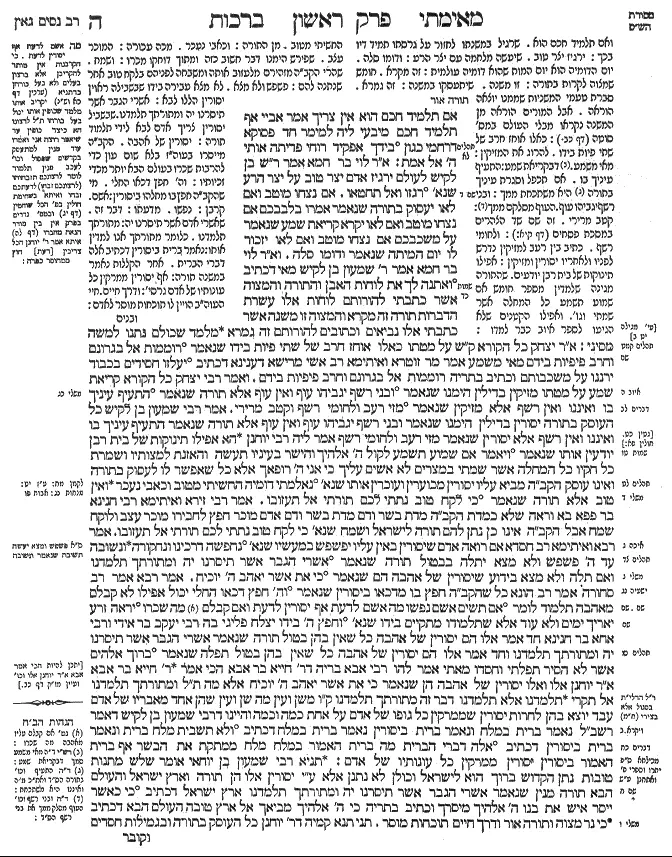
Berakhot 5a - Guemara
אם תלמיד חכם הוא אין צריך אמר אביי אף תלמיד חכם מיבעי ליה למימר חד פסוקא דרחמי כגון (תהלים לא ו) בידך אפקיד רוחי פדיתה אותי ה' אל אמת:
אר לוי בר חמא אמר רש בן לקיש לעולם ירגיז אדם יצר טוב על יצר הרע שנא' (תהלים ד ה) רגזו ואל תחטאו. אם נצחו מוטב ואם לאו יעסוק בתורה שנאמר אמרו בלבבכם אם נצחו מוטב ואם לאו יקרא קריאת שמע שנאמר על משכבכם אם נצחו מוטב ואם לאו יזכור לו יום המיתה שנאמר ודומו סלה. ואר לוי בר חמא אמר ר' שמעון בן לקיש מאי דכתיב (שמות כד יב) ואתנה לך את לוחות האבן והתורה והמצוה אשר כתבתי להורותם לוחות אלו עשרת הדברות תורה זה מקרא והמצוה זו משנה אשר כתבתי אלו נביאים וכתובים להורותם זה גמרא מלמד שכולם נתנו למשה מסיני:
אר יצחק כל הקורא קש על מטתו כאלו אוחז חרב של שתי פיות בידו שנאמר (תהלים קמט ו) רוממות אל בגרונם וחרב פיפיות בידם מאי משמע אמר מר זוטרא ואיתימא רב אשי מרישא דענינא דכתיב (תהלים קמט ה) יעלזו חסידים בכבוד ירננו על משכבותם וכתיב בתריה רוממות אל בגרונם וחרב פיפיות בידם. ואמר רבי יצחק כל הקורא קריאת שמע על מטתו מזיקין בדילין הימנו שנאמר (איוב ה ז) ובני רשף יגביהו עוף ואין עוף אלא תורה שנאמר (משלי כג ה) התעיף עיניך בו ואיננו ואין רשף אלא מזיקין שנאמר (דברים לב כד) מזי רעב ולחומי רשף וקטב מרירי. אמר רבי שמעון בן לקיש כל העוסק בתורה יסורין בדילין הימנו שנאמר ובני רשף יגביהו עוף ואין עוף אלא תורה שנאמר התעיף עיניך בו ואיננו ואין רשף אלא יסורין שנאמר מזי רעב ולחומי רשף אמר ליה רבי יוחנן הא אפילו תינוקות של בית רבן יודעין אותו שנאמר (שמות טו כו) ויאמר אם שמוע תשמע לקול ה' אלהיך והישר בעיניו תעשה והאזנת למצותיו ושמרת כל חקיו כל המחלה אשר שמתי במצרים לא אשים עליך כי אני ה' רופאך אלא כל שאפשר לו לעסוק בתורה ואינו עוסק הקבה מביא עליו יסורין מכוערין ועוכרין אותו שנא' (תהלים לט ג) נאלמתי דומיה החשיתי מטוב וכאבי נעכר ואין טוב אלא תורה שנאמר (משלי ד ב) כי לקח טוב נתתי לכם תורתי אל תעזובו. אמר רבי זירא ואיתימא רבי חנינא בר פפא בא וראה שלא כמדת הקבה מדת בשר ודם מדת בשר ודם אדם מוכר חפץ לחבירו מוכר עצב ולוקח שמח אבל הקבה אינו כן נתן להם תורה לישראל ושמח שנא' כי לקח טוב נתתי לכם תורתי אל תעזובו. אמר רבא ואיתימא רב חסדא אם רואה אדם שיסורין באין עליו יפשפש במעשיו שנא' (איכה ג מ) נחפשה דרכינו ונחקורה ונשובה עד ה' פשפש ולא מצא יתלה בבטול תורה שנאמר (תהלים צד יב) אשרי הגבר אשר תיסרנו יה ומתורתך תלמדנו ואם תלה ולא מצא בידוע שיסורין של אהבה הם שנאמר (משלי ג יב) כי את אשר יאהב ה' יוכיח. אמר רבא אמר רב סחורה אמר רב הונא כל שהקבה חפץ בו מדכאו ביסורין שנאמר (ישעיהו נג י) וה' חפץ דכאו החלי יכול אפילו לא קבלם מאהבה תלמוד לומר (ישעיהו נג י) אם תשים אשם נפשו מה אשם לדעת אף יסורין לדעת ואם קבלם מה שכרו (ישעיהו נג י) יראה זרע יאריך ימים ולא עוד אלא שתלמודו מתקיים בידו שנא' (ישעיהו נג י) וחפץ ה' בידו יצלח פליגי בה רבי יעקב בר אידי ורבי אחא בר חנינא חד אמר אלו הם יסורין של אהבה כל שאין בהן בטול תורה שנאמר אשרי הגבר אשר תיסרנו יה ומתורתך תלמדנו וחד אמר אלו הם יסורין של אהבה כל שאין בהן בטול תפלה שנאמר (תהלים סו כ) ברוך אלהים אשר לא הסיר תפלתי וחסדו מאתי אמר להו רבי אבא בריה דר' חייא בר אבא הכי אמר ר' חייא בר אבא אר יוחנן אלו ואלו יסורין של אהבה הן שנאמר כי את אשר יאהב ה' יוכיח אלא מה תל ומתורתך תלמדנו אל תקרי תלמדנו אלא תלמדנו דבר זה מתורתך תלמדנו קו משן ועין מה שן ועין שהן אחד מאבריו של אדם עבד יוצא בהן לחרות יסורין שממרקין כל גופו של אדם על אחת כמה וכמה והיינו דרבי שמעון בן לקיש דאמר רשבל נאמר ברית במלח ונאמר ברית ביסורין נאמר ברית במלח דכתיב (ויקרא ב יג) ולא תשבית מלח ברית ונאמר ברית ביסורין דכתיב (דברים כח סט) אלה דברי הברית מה ברית האמור במלח מלח ממתקת את הבשר אף ברית האמור ביסורין יסורין ממרקין כל עונותיו של אדם:
תניא רבי שמעון בן יוחאי אומר שלש מתנות טובות נתן הקדוש ברוך הוא לישראל וכולן לא נתנן אלא עי יסורין אלו הן תורה וארץ ישראל והעולם הבא תורה מנין שנאמר אשרי הגבר אשר תיסרנו יה ומתורתך תלמדנו ארץ ישראל דכתיב (דברים ח ה) כי כאשר ייסר איש את בנו ה' אלהיך מיסרך וכתיב בתריה כי ה' אלהיך מביאך אל ארץ טובה העולם הבא דכתיב (משלי ו כג) כי נר מצוה ותורה אור ודרך חיים תוכחות מוסר. תני תנא קמיה דר' יוחנן כל העוסק בתורה ובגמילות חסדים
Comments from Rashi on Masechet Berakhot Page 5a
ואם תלמיד חכם הוא . שרגיל במשנתו לחזור על גרסתו תמיד דיו בכך: ירגיז יצר טוב . שיעשה מלחמה עם יצר הרע: ודומו סלה . יום הדומיה הוא יום המות שהוא דומיה עולמית: זה מקרא . חומש שמצוה לקרות בתורה: זו משנה . שיתעסקו במשנה: זה גמרא . סברת טעמי המשניות שממנו יוצאה הוראה. אבל המורים הוראה מן המשנה נקראו מבלי העולם במס' סוטה (דף כב.): כאלו אוחז חרב של שתי פיות בידו . להרוג את המזיקין: מאי משמע . דבקריאת שמע: ובני רשף יגביהו עוף . העוף מסלקם ממך: ובני רשף יגביהו עוף . העוף מסלקם ממך: ובני רשף יגביהו עוף . העוף מסלקם ממך: התעיף עיניך בו . אם תכפל וסגרת עיניך בתורה היא משתכחת ממך: קטב מרירי . זה שם שד הצהרים במסכת פסחים (דף קיא:): ולחומי רשף . כתיב בין רעב למזיקין נדרש לפניו ולאחריו יסורין ומזיקין: אפילו תינוקות של בית רבן יודעים . שהתורה מגינה שלמדין מספר חומש אם שמוע תשמע כל המחלה אשר שמתי וגו'. ואפילו הקטנים שלא הגיעו לספר איוב כבר למדו: החשיתי מטוב . מן התורה: וכאבי נעכר . מכה עכורה: המוכר עצב . שפירש הימנו דבר חשוב כזה ומתוך דוחקו מכרו: ושמח . שהרי הקב"ה מזהירם מלעזוב אותה ומשבחה לפניהם בלקח טוב אחר שנתנה להם: פשפש ולא מצא . לא מצא עבירה בידו שבשבילה ראוין יסורין הללו לבא: אשרי הגבר אשר תיסרנו יה ומתורתך תלמדנו . שבשביל יסורין צריך אדם לבא לידי תלמוד תורה: מתורתך תלמדנו . כלומר מתורתך אנו למדין אותו: יסורין של אהבה . הקב"ה מייסרו בעוה"ז בלא שום עון כדי להרבות שכרו בעולם הבא יותר מכדי זכיותיו: וה' חפץ דכאו החלי . מי שהקב"ה חפץ בו מחלהו ביסורין: אשם . קרבן: נפשו . מדעתו: דבר זה . שאשרי אדם אשר תיסרנו יה: מתורתך תלמדנו . כלומר מתורתך אנו למדין אותו: נאמר ברית ביסורין דכתיב אלה דברי הברית . אחר הקללות נאמר במשנה תורה: אף יסורין ממרקין כל עונותיו של אדם . גרסי': ודרך חיים . חיי העוה"ב הויין לו תוכחות מוסר לאדם:
Berakhot 5a - Mishnah translated into english
If one is a Torah scholar, he need not recite Shema on his bed since he is always engaged in the study of Torah and will likely fall asleep engrossed in matters of Torah. Abaye said: Even a Torah scholar must recite at least one verse of prayer, such as: “Into Your hand I trust my spirit; You have redeemed me, Lord, God of truth” (Psalms 31:6).
Incidental to the verse, “Tremble, and do not sin,” the Gemara mentions that Rabbi Levi bar Ḥama said that Rabbi Shimon ben Lakish said: One should always incite his good inclination against his evil inclination, i.e., that one must constantly struggle so that his evil inclination does not lead him to transgression, as it is stated: "Tremble, and do not sin."
If one succeeds and subdues his evil inclination, excellent, but if he does not succeed in subduing it, he should study Torah, as alluded to in the verse: “Say to your heart.”
If he subdues his evil inclination, excellent; if not, he should recite Shema, which contains the acceptance of the yoke of God, and the concept of reward and punishment, as it is stated in the verse: “Upon your bed,” which alludes to Shema, where it says: “When you lie down.”
If he subdues his evil inclination, excellent; if not, he should remind himself of the day of death, whose silence is alluded to in the continuation of the verse: “And be still, Selah.”
And Rabbi Levi bar Ḥama said that Rabbi Shimon ben Lakish said: God said to Moses, “Ascend to Me on the mountain and be there, and I will give you the stone tablets and the Torah and the mitzva that I have written that you may teach them” (Exodus 24:12), meaning that God revealed to Moses not only the Written Torah, but all of Torah, as it would be transmitted through the generations.
The “tablets” are the ten commandments that were written on the tablets of the Covenant,
the “Torah” is the five books of Moses.
The “mitzva” is the Mishna, which includes explanations for the mitzvot and how they are to be performed.
“That I have written” refers to the Prophets and Writings, written with divine inspiration.
“That you may teach them” refers to the Talmud, which explains the Mishna.
These explanations are the foundation for the rulings of practical halakha. This verse teaches that all aspects of Torah were given to Moses from Sinai.
The Gemara continues its treatment of the recitation of Shema upon one’s bed. Rabbi Yitzḥak said: Anyone who recites Shema on his bed, it is as if he holds a double-edged sword, guarding him from all evil, as it is stated: “High praises of God in their mouths, and a double-edged sword in their hands” (Psalms 149:6). The Gemara asks: From where is it inferred that this verse from Psalms refers to the recitation of Shema? Mar Zutra, and some say Rav Ashi, said: We derive it from the preceding verse, as it is written: “Let the pious exult in glory; let them joyously sing upon their beds.” The praise of God from one’s bed is the recitation of Shema. And it is written thereafter: “High praises of God in their mouths, and a double-edged sword in their hands.”
And Rabbi Yitzḥak said: Anyone who recites Shema upon his bed, demons stay away from him. This is alluded to, as it is stated: “But man is born into trouble, and the sparks [reshef ] fly [uf ] upward” (Job 5:7). The verse is explained: The word fly [uf ] means nothing other than Torah, as Torah is difficult to grasp and easy to lose, like something that floats away, as it is stated: “Will you set your eyes upon it? It is gone; for riches certainly make themselves wings, like an eagle that flies into the heavens” (Proverbs 23:5). The word “sparks” means nothing other than demons, as it is stated: “Wasting of hunger, and the devouring of the sparks [reshef] and bitter destruction [ketev meriri], and the teeth of beasts I will send upon them, with the venom of crawling things of the dust” (Deuteronomy 32:24). Here we see reshef listed along with ketev meriri, both of which are understood by the Sages to be names of demons.
Regarding this unclear verse, Rabbi Shimon ben Lakish said: If one engages in Torah study, suffering stays away from him, as it is stated: “And the sparks fly upward.” And fly means nothing other than Torah, as it is stated: “Will you set your eyes upon it? It is gone; and sparks means nothing other than suffering, as it is stated: “Wasting of hunger, and the devouring of the sparks,” equating devouring sparks with wasting hunger, as both are types of suffering. From here, we derive that through Torah, fly, one is able to distance himself, upward, from suffering, sparks.
Rabbi Yoḥanan said to him: Even schoolchildren, who learn only the Written Torah, know this concept as it is stated: “And He said you shall surely hear the voice of the Lord your God, and what is upright in His eyes you shall do and you shall listen to His mitzvot and guard His statutes; any disease that I have placed upon Egypt I will not place upon you for I am the Lord your healer” (Exodus 15:26). Rather, one must interpret the verse: Anyone who is able to engage in Torah study yet does not engage in that study, not only does the Holy One, Blessed be He, fail to protect him, but He brings upon him hideous afflictions, that embarrass him and trouble him, as it is stated: “I was mute with silence; I was silent from good, and my pain was strong” (Psalms 39:3). The word good means nothing other than Torah, as it is stated: “For I have given you a good portion, My Torah, do not abandon it” (Proverbs 4:2). The verse should be understood: “I have been silent from the study of Torah, and my pain was strong.”
With regard to the verse: “For I have given you a good portion,” Rabbi Zeira, and some say Rabbi Ḥanina bar Pappa, said: Come and see how the characteristics of the Holy One, Blessed be He, are unlike the characteristics of flesh and blood. It is characteristic of flesh and blood that when one sells an object to another person, the seller grieves the loss of his possession and the buyer rejoices. With regard to the Holy One, Blessed be He, however, this is not so. He gave the Torah to Israel and rejoiced, as it is stated: “For I have given you a good portion, My Torah, do not abandon it.” A good portion is understood as a good purchase; although God sold Torah to Israel, He rejoices in the sale and praises the object before its new owner (Rabbi Yoshiyahu Pinto).
Previously, the Gemara discussed suffering that results from one’s transgressions. The Gemara shifts the focus and discusses suffering that does not result from one’s transgressions and the suffering of the righteous. Rava, and some say Rav Ḥisda, said: If a person sees that suffering has befallen him, he should examine his actions. Generally, suffering comes about as punishment for one’s transgressions, as it is stated: “We will search and examine our ways, and return to God” (Lamentations 3:40). If he examined his ways and found no transgression for which that suffering is appropriate, he may attribute his suffering to dereliction in the study of Torah. God punishes an individual for dereliction in the study of Torah in order to emphasize the gravity of the issue, as it is stated: “Happy is the man whom You punish, Lord, and teach out of Your law” (Psalms 94:12). This verse teaches us that his suffering will cause him to return to Your law.
And if he did attribute his suffering to dereliction in the study of Torah, and did not find this to be so, he may be confident that these are afflictions of love, as it is stated: “For whom the Lord loves, He rebukes, as does a father the son in whom he delights” (Proverbs 3:12).
So too, Rava said that Rav Seḥora said that Rav Huna said: Anyone in whom the Holy One, Blessed be He, delights, He oppresses him with suffering, as it is stated: “Yet in whom the Lord delights, He oppresses him with disease; to see if his soul would offer itself in guilt, that he might see his children, lengthen his days, and that the desire of the Lord might prosper by his hand” (Isaiah 53:10). This verse illustrates that in whomever God delights, he afflicts with illness.
I might have thought that God delights in him even if he does not accept his suffering with love. Therefore the verse teaches: “If his soul would offer itself in guilt.” Just as a guilt-offering is brought knowingly, as it is one of the sacrifices offered willingly, without coercion, so too his suffering must be accepted knowingly.
And if one accepts that suffering with love, what is his reward? As the second part of the verse states: “That he might see his children, lengthen his days.” Moreover, in addition to these earthly rewards, his Torah study will endure and his Torah study will be successful, as it is stated: “The purpose of the Lord,” the Torah, the revelation of God’s will, “might prosper by his hand.”
With regard to the acceptance of affliction with love and what exactly this entails, Rabbi Ya’akov bar Idi and Rabbi Aḥa bar Ḥanina disagree. One of them said: Afflictions of love are any that do not cause dereliction in the study of Torah, i.e., any which do not afflict his body to the extent that he is unable to study Torah, as it is stated: “Happy is the man whom You afflict, Lord, and teach from Your Torah.” Afflictions of love are when You “teach from Your Torah.”
And one said: Afflictions of love are any that do not cause dereliction in the recitation of prayer, as it is stated: “Blessed is God Who did not turn away my prayer” (Psalms 66:20). Despite his suffering, the afflicted is still capable of praying to God.
Rabbi Abba, son of Rabbi Ḥiyya bar Abba, said: My father, Rabbi Ḥiyya bar Abba, said that Rabbi Yoḥanan said as follows: Both, even afflictions that cause dereliction in the study of Torah and those that cause dereliction in the recitation of prayer, are afflictions of love, as with regard to one who suffers without transgression it is stated: “For whom He loves, He rebukes,” and inability to study Torah and to pray are among his afflictions.
What then, is the meaning when the verse states: “And teach him from Your Torah”? Do not read and teach to mean and teach him, rather, and teach us. You teach us the value of this affliction from Your Torah.
This is taught through an a fortiori inference from the law concerning the tooth and eye of a slave: The tooth and eye are each a single limb of a person and if his master damages either, the slave thereby obtains his freedom; suffering that cleanses a person’s entire body all the more so that one attains freedom, atonement, from his sins.
And that is the statement of Rabbi Shimon ben Lakish, as Rabbi Shimon ben Lakish said: The word covenant is used with regard to salt, and the word covenant is used with regard to afflictions. The word covenant is used with regard to salt, as it is written: “The salt of the covenant with your God should not be excluded from your meal-offering; with all your sacrifices you must offer salt” (Leviticus 2:13). And the word covenant is used with regard to afflictions, as it is written: “These are the words of the covenant” (Deuteronomy 28:69). Just as, in the covenant mentioned with regard to salt, the salt sweetens the taste of the meat and renders it edible, so too in the covenant mentioned with regard to suffering, the suffering cleanses a person’s transgressions, purifying him for a more sublime existence.
Additionally, it was taught in a baraita with regard to affliction: Rabbi Shimon ben Yoḥai says: The Holy One, Blessed be He, gave Israel three precious gifts, all of which were given only by means of suffering, which purified Israel so that they may merit to receive them. These gifts are: Torah, Eretz Yisrael, and the World-to-Come.
From where is it derived that Torah is only acquired by means of suffering? As it is said: “Happy is the man whom You afflict, Lord,” after which it is said: “And teach from Your Torah.”
Eretz Yisrael, as it is written: “As a man rebukes his son, so the Lord your God rebukes you” (Deuteronomy 8:5), and it is written thereafter: “For the Lord your God will bring you to a good land” (Deuteronomy 8:7).
The World-to-Come, as it is written: “For the mitzva is a lamp, the Torah is light, and the reproofs of instruction are the way of life” (Proverbs 6:23). One may arrive at the lamp of mitzva and the light of Torah that exists in the World-to-Come only by means of the reproofs of instruction in this world.
A tanna taught the following baraita before Rabbi Yoḥanan: If one engages in Torah and acts of charity
Traduction : The William Davidson digital edition of the Koren Noé Talmud, with commentary by Rabbi Adin Even-Israel Steinsaltz.