 Talmud Bavli
Berakhot 58a : Youtube
Daf TubeYoutube
2 video classes :
Berakhot Page 58a
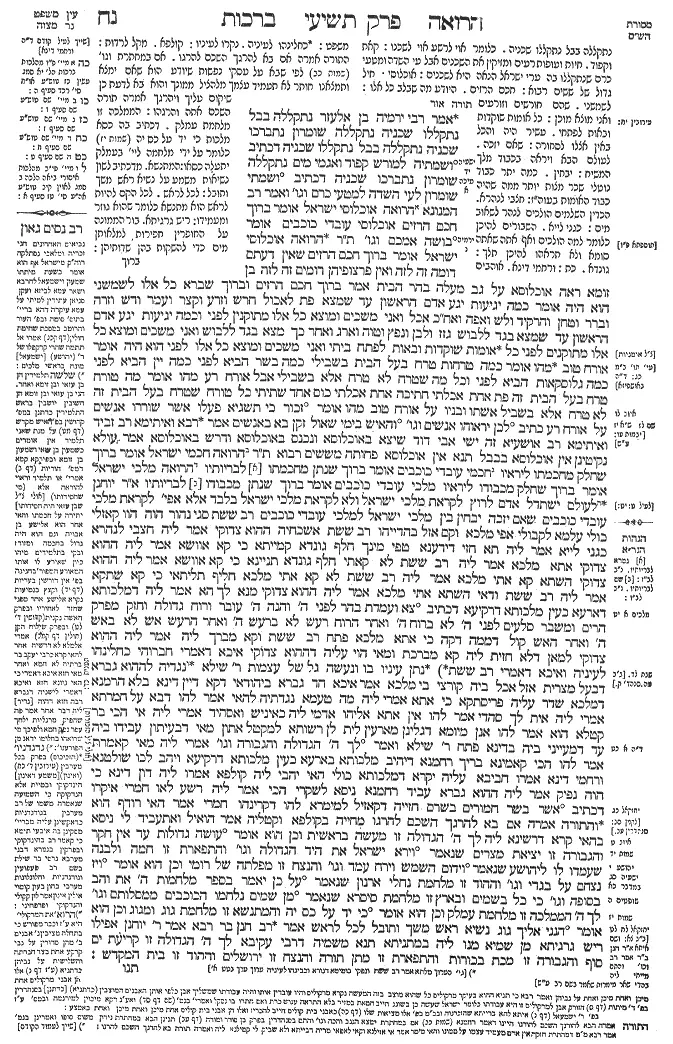
Berakhot 58a - Guemara
אמר רבי ירמיה בן אלעזר נתקללה בבל נתקללו שכניה נתקללה שומרון נתברכו שכניה נתקללה בבל נתקללו שכניה דכתיב (ישעיהו יד כג) ושמתיה למורש קפוד ואגמי מים נתקללה שומרון נתברכו שכניה דכתיב (מיכה א ו) ושמתי שומרון לעי השדה למטעי כרם וגו' ואמר רב המנונא הרואה אוכלוסי ישראל אומר ברוך חכם הרזים אוכלוסי עובדי כוכבים אומר (ירמיהו נ יב) בושה אמכם וגו' תר הרואה אוכלוסי ישראל אומר ברוך חכם הרזים שאין דעתם דומה זה לזה ואין פרצופיהן דומים זה לזה בן זומא ראה אוכלוסא על גב מעלה בהר הבית אמר ברוך חכם הרזים וברוך שברא כל אלו לשמשני הוא היה אומר כמה יגיעות יגע אדם הראשון עד שמצא פת לאכול חרש וזרע וקצר ועמר ודש וזרה וברר וטחן והרקיד ולש ואפה ואחכ אכל ואני משכים ומוצא כל אלו מתוקנין לפני וכמה יגיעות יגע אדם הראשון עד שמצא בגד ללבוש גזז ולבן ונפץ וטוה וארג ואחר כך מצא בגד ללבוש ואני משכים ומוצא כל אלו מתוקנים לפני כל אומות שוקדות ובאות לפתח ביתי ואני משכים ומוצא כל אלו לפני הוא היה אומר אורח טוב מהו אומר כמה טרחות טרח בעל הבית בשבילי כמה בשר הביא לפני כמה יין הביא לפני כמה גלוסקאות הביא לפני וכל מה שטרח לא טרח אלא בשבילי אבל אורח רע מהו אומר מה טורח טרח בעל הבית זה פת אחת אכלתי חתיכה אחת אכלתי כוס אחד שתיתי כל טורח שטרח בעל הבית זה לא טרח אלא בשביל אשתו ובניו על אורח טוב מהו אומר (איוב לו כד) זכור כי תשגיא פעלו אשר שוררו אנשים על אורח רע כתיב (איוב לז כד) לכן יראוהו אנשים וגו' (שמואל א יז יב) והאיש בימי שאול זקן בא באנשים אמר רבא ואיתימא רב זביד ואיתימא רב אושעיא זה ישי אבי דוד שיצא באוכלוסא ונכנס באוכלוסא ודרש באוכלוסא אמר עולא נקיטינן אין אוכלוסא בבבל תנא אין אוכלוסא פחותה מששים רבוא תר הרואה חכמי ישראל אומר ברוך שחלק מחכמתו ליראיו חכמי עובדי כוכבים אומר ברוך שנתן מחכמתו לבריותיו הרואה מלכי ישראל אומר ברוך שחלק מכבודו ליראיו מלכי עובדי כוכבים אומר ברוך שנתן מכבודו לבריותיו אר יוחנן לעולם ישתדל אדם לרוץ לקראת מלכי ישראל ולא לקראת מלכי ישראל בלבד אלא אפי' לקראת מלכי עובדי כוכבים שאם יזכה יבחין בין מלכי ישראל למלכי עובדי כוכבים רב ששת סגי נהור הוה הוו קאזלי כולי עלמא לקבולי אפי מלכא וקם אזל בהדייהו רב ששת אשכחיה ההוא צדוקי אמר ליה חצבי לנהרא כגני לייא אמר ליה תא חזי דידענא טפי מינך חלף גונדא קמייתא כי קא אוושא אמר ליה ההוא צדוקי אתא מלכא אמר ליה רב ששת לא קאתי חלף גונדא תניינא כי קא אוושא אמר ליה ההוא צדוקי השתא קא אתי מלכא אמר ליה רב ששת לא קא אתי מלכא חליף תליתאי כי קא שתקא אמר ליה רב ששת ודאי השתא אתי מלכא אמר ליה ההוא צדוקי מנא לך הא אמר ליה דמלכותא דארעא כעין מלכותא דרקיעא דכתיב (מלכים א יט יא) צא ועמדת בהר לפני ה' והנה ה' עובר ורוח גדולה וחזק מפרק הרים ומשבר סלעים לפני ה' לא ברוח ה' ואחר הרוח רעש לא ברעש ה' ואחר הרעש אש לא באש ה' ואחר האש קול דממה דקה כי אתא מלכא פתח רב ששת וקא מברך ליה אמר ליה ההוא צדוקי למאן דלא חזית ליה קא מברכת ומאי הוי עליה דההוא צדוקי איכא דאמרי חברוהי כחלינהו לעיניה ואיכא דאמרי רב ששת נתן עיניו בו ונעשה גל של עצמות ר' שילא נגדיה לההוא גברא דבעל מצרית אזל אכל ביה קורצי בי מלכא אמר איכא חד גברא ביהודאי דקא דיין דינא בלא הרמנא דמלכא שדר עליה פריסתקא כי אתא אמרי ליה מה טעמא נגדתיה להאי אמר להו דבא על חמרתא אמרי ליה אית לך סהדי אמר להו אין אתא אליהו אדמי ליה כאיניש ואסהיד אמרי ליה אי הכי בר קטלא הוא אמר להו אנן מיומא דגלינן מארעין לית לן רשותא למקטל אתון מאי דבעיתון עבידו ביה עד דמעייני ביה בדינא פתח ר' שילא ואמר (דברי הימים א כט יא) לך ה' הגדולה והגבורה וגו' אמרי ליה מאי קאמרת אמר להו הכי קאמינא בריך רחמנא דיהיב מלכותא בארעא כעין מלכותא דרקיעא ויהב לכו שולטנא ורחמי דינא אמרו חביבא עליה יקרא דמלכותא כולי האי יהבי ליה קולפא אמרו ליה דון דינא כי הוה נפיק אמר ליה ההוא גברא עביד רחמנא ניסא לשקרי הכי אמר ליה רשע לאו חמרי איקרו דכתיב (יחזקאל כג כ) אשר בשר חמורים בשרם חזייה דקאזיל למימרא להו דקרינהו חמרי אמר האי רודף הוא והתורה אמרה אם בא להרגך השכם להרגו מחייה בקולפא וקטליה אמר הואיל ואתעביד לי ניסא בהאי קרא דרשינא ליה לך ה' הגדולה זו מעשה בראשית וכן הוא אומר (איוב ט י) עושה גדולות עד אין חקר והגבורה זו יציאת מצרים שנאמר (שמות יד לא) וירא ישראל את היד הגדולה וגו' והתפארת זו חמה ולבנה שיעמדו לו ליהושע שנאמר (יהושע י יג) וידום השמש וירח עמד וגו' והנצח זו מפלתה של רומי וכן הוא אומר (ישעיהו סג ג) ויז נצחם על בגדי וגו' וההוד זו מלחמת נחלי ארנון שנאמר (במדבר כא יד) על כן יאמר בספר מלחמות ה' את והב בסופה וגו' כי כל בשמים ובארץ זו מלחמת סיסרא שנאמר (שופטים ה כ) מן שמים נלחמו הכוכבים ממסלותם וגו' לך ה' הממלכה זו מלחמת עמלק וכן הוא אומר (שמות יז טז) כי יד על כס יה והמתנשא זו מלחמת גוג ומגוג וכן הוא אומר (יחזקאל לח ג) הנני אליך גוג נשיא ראש משך ותובל לכל לראש אמר רב חנן בר רבא אמר ר' יוחנן אפילו ריש גרגיתא מן שמיא מנו ליה במתניתא תנא משמיה דרבי עקיבא לך ה' הגדולה זו קריעת ים סוף והגבורה זו מכת בכורות והתפארת זו מתן תורה והנצח זו ירושלים וההוד זו בית המקדש:
Comments from Rashi on Masechet Berakhot Page 58a
נתקללה בבל נתקללו שכניה . כלומר אוי לרשע אוי לשכנו: קאת וקפוד . חיות ועופות רעים ומזיקין את השכנים אבל עי השדה ומטעי כרם שנתקללו בה ערי ישראל הנאה היא לשכנים: אוכלוסי . חיל גדול של ששים רבוא: חכם הרזים . היודע מה שבלב כל אלו: לשמשני . שהם חורשים וזורעים ואני מוצא מוכן: כל אומות שוקדות ובאות לפתחי . עשיר היה והכל באין אצלו לסחורה: שאם יזכה . לעולם הבא ויראה בכבוד מלך המשיח: יבחין . כמה יתר כבוד נוטלי שכר מצות יותר ממה שהיה כבוד האומות בעוה"ז: חצבי לנהרא . הכדין השלמים הולכים לנהר לשאוב מים: כגני לייא . השבורים להיכן כלומר למה הולכים ואף אתה שאתה סומא ולא תראהו להיכן תלך: גונדא . כת: כחלינהו לעיניה . נקרו לעיניו: ורחמי דינא . אוהבים משפט: קולפא . מקל לרדות: התורה אמרה אם בא להרגך השכם להרגו . אם במחתרת וגו' (שמות כב) לפי שבא על עסקי נפשות שיודע הוא שאם ימצא ותמצאנו חותר לא תעמיד עצמך מלהציל ממונך והוא בא לדעת כן שיקום עליך ויהרגך אמרה תורה השכם אתה והרגהו: הממלכה זו מלחמת עמלק . דכתיב בה כסא מלכות כי יד על כס יה (שמות יז) כלומר על ידי מלחמה ליי' בעמלק יתעלה כסאו: המתנשא . מדכתיב לשון נשיאות משמע על נשיא ראש משך ותובל: לכל לראש . לכל הקם להיות לראש הוא מתנשא כלומר שהוא גוזר ומעמידו: ריש גרגיתא . בור הממונה על החופרין חפירות למלאותן מים כדי להשקות בהן שדותיהן:
Berakhot 58a - Mishnah translated into english
With regard to Babylonia, the Gemara cites what Rabbi Yirmeya ben Elazar said: When Babylonia was cursed, its neighbors were cursed along with it. When Samaria was cursed, its neighbors were blessed. When Babylonia was cursed its neighbors were cursed along with it, as it is written: “I will also make it a possession for the bittern, a wading bird, and pools of water” (Isaiah 14:23); not only will it be destroyed, but the site will become a habitat for destructive, environmentally harmful creatures. When Samaria was cursed, however, its neighbors were blessed, as it is written: “Therefore I will make Samaria a heap in the field, a place for the planting of vineyards” (Micah 1:6); although destroyed, it will serve a beneficial purpose.
And Rav Hamnuna said: One who sees multitudes of Israel, six hundred thousand Jews, recites: Blessed…Who knows all secrets. One who sees multitudes of gentiles recites: “Your mother shall be sore ashamed, she that bore you shall be confounded; behold, the hindermost of the nations shall be a wilderness, a dry land, and a desert” (Jeremiah 50:12).
The Sages taught in a Tosefta: One who sees multitudes of Israel recites: Blessed…Who knows all secrets. Why is this? He sees a whole nation whose minds are unlike each other and whose faces are unlike each other, and He Who knows all secrets, God, knows what is in each of their hearts. The Gemara relates: Ben Zoma once saw a multitude [okhlosa] of Israel while standing on a stair on the Temple Mount. He immediately recited: Blessed…Who knows all secrets and Blessed…Who created all these to serve me.
Explaining his custom, he would say: How much effort did Adam the first man exert before he found bread to eat: He plowed, sowed, reaped, sheaved, threshed, winnowed in the wind, separated the grain from the chaff, ground the grain into flour, sifted, kneaded, and baked and only thereafter he ate. And I, on the other hand, wake up and find all of these prepared for me. Human society employs a division of labor, and each individual benefits from the service of the entire world. Similarly, how much effort did Adam the first man exert before he found a garment to wear? He sheared, laundered, combed, spun and wove, and only thereafter he found a garment to wear. And I, on the other hand, wake up and find all of these prepared for me. Members of all nations, merchants and craftsmen, diligently come to the entrance of my home, and I wake up and find all of these before me.
Ben Zoma would say: A good guest, what does he say? How much effort did the host expend on my behalf, how much meat did the host bring before me. How much wine did he bring before me. How many loaves [geluskaot] did he bring before me. All the effort that he expended, he expended only for me. However, a bad guest, what does he say? What effort did the host expend? I ate only one piece of bread, I ate only one piece of meat and I drank only one cup of wine. All the effort that the home owner expended he only expended on behalf of his wife and children.
With regard to a good guest, what does he say? “Remember that you magnify his work, whereof men have sung” (Job 36:24); he praises and acknowledges those who helped him. With regard to a bad guest it is written: “Men do therefore fear him; he regards not any who are wise of heart” (Job 37:24).
On the topic of multitudes, the Gemara cites another verse: “And the man in the days of Saul was old, and came among men” (I Samuel 17:12). Rava, and some say Rav Zevid, and some say Rav Oshaya, said: This refers to Yishai, father of David, who always went out with multitudes, and entered with multitudes, and taught Torah with multitudes. Ulla said: We hold there is no multitude in Babylonia. The Sage taught: A multitude is no fewer than six hundred thousand people.
The Sages taught: One who sees the Sages of Israel recites: Blessed…Who has shared of His wisdom with those who revere Him. One who sees Sages of the nations of the world recites: Blessed…Who has given of His wisdom to flesh and blood. One who sees kings of Israel recites: Blessed…Who has shared of His glory with those who revere Him. One who sees kings of the other nations of the world recites: Blessed…Who has given of His glory to flesh and blood.
Rabbi Yoḥanan said: One should always strive to run toward kings of Israel to greet them. And not only should he run toward kings of Israel, but also toward kings of the nations of the world, so that if he will be privileged to witnesses the glory of the Messiah (Rashi) and the World-to-Come, he will distinguish between the kings of Israel and the kings of the nations of the world.
The Gemara relates: Rav Sheshet was blind. Everyone was going to greet the king and Rav Sheshet stood up and went along with them. This heretic found him there and said to him: The intact jugs go to the river, where do the broken jugs go? Why is a blind person going to see the king? Rav Sheshet said to him: Come see that I know more than you do. The first troop passed, and when the noise grew louder, this heretic said to him: The king is coming. Rav Sheshet said to him: The king is not coming. The second troop passed, and when the noise grew louder, this heretic said to him: Now the king is coming. Rav Sheshet said to him: The king is not coming. The third troop passed, and when there was silence, Rav Sheshet said to him: Certainly now the king is coming.
This heretic said to him: How do you know this? Rav Sheshet said to him: Royalty on earth is like royalty in the heavens, as it is written with regard to God’s revelation to Elijah the Prophet on Mount Horeb:
“And He said: Go forth, and stand upon the mount before the Lord.
And, behold, the Lord passed by, and a great and strong wind rent the mountains, and broke in pieces the rocks before the Lord;
but the Lord was not in the wind;
and after the wind an earthquake;
but the Lord was not in the earthquake;
and after the earthquake a fire;
but the Lord was not in the fire;
and after the fire a still small voice.
And it was so, when Elijah heard it, that he wrapped his face in his mantle and went out, and stood in the entrance of the cave” (I Kings 19:11–13). God’s revelation was specifically at the moment of silence.
When the king came, Rav Sheshet began to bless him. The heretic mockingly said to him: Do you bless someone you do not see? The Gemara asks: And what ultimately happened to this heretic? Some say that his friends gouged out his eyes, and some say that Rav Sheshet fixed his gaze upon him, and the heretic became a pile of bones.
As for the connection between divine and earthly royalty, the Gemara cites another story: Rabbi Sheila ordered that a man who had relations with a gentile woman be flogged. That man went to inform the king and said: There is one man among the Jews who renders judgment without the king’s authority [harmana]. The king sent a messenger [peristaka] for Rabbi Sheila to bring him to trial. When Rabbi Sheila came, they said to him: Why did you order flogging for this man? He said to them: Because he had relations with a female donkey. According to Persian law this was an extremely heinous crime, so they said to him: Do you have witnesses that he did so? He replied: Yes, and Elijah the prophet came and appeared as a person and testified. They said to Rabbi Sheila: If so, he is liable for the death penalty; why did you not sentence him to death? He replied: Since the day we were exiled from our land we do not have the authority to execute, but you, do with him as you wish.
As they considered the sentence, Rabbi Sheila praised God for saving him from danger: “Yours, O Lord, is the greatness, power, glory, triumph, and majesty; for all that is in heaven and on earth is Yours; Yours is the kingdom, O Lord, and You are exalted as head above all” (I Chronicles 29:11). They asked him: What did you say? He told them: This is what I said: Blessed is the Merciful One who grants kingdom on earth that is a microcosm of the kingdom in heaven, and granted you dominion and love of justice. They said to him: Indeed, the honor of royalty is so dear to you. They gave him a staff to symbolize his license to sit in judgment and said to him: Judge.
As he was leaving, that man said to Rabbi Sheila: Does God perform such miracles for liars? He replied: Scoundrel! Aren’t gentiles called donkeys? As it is written: “Whose flesh is as the flesh of donkeys” (Ezekiel 23:20). Rabbi Sheila saw that he was going to tell the Persian authorities that he called them donkeys. He said: This man has the legal status of a pursuer. He seeks to have me killed. And the Torah said: If one comes to kill you, kill him first. He struck him with the staff and killed him.
Rabbi Sheila said: Since a miracle was performed on my behalf with this verse that I cited, I will interpret it homiletically: Yours, O Lord, is the greatness; that is the act of creation, and so it says: “Who does great things past finding out” (Job 9:10);
And the power; that is the exodus from Egypt, as it is stated: “And Israel saw the great work which the Lord did to the Egyptians” (Exodus 14:31);
And the glory; that is the sun and the moon that stood still for Joshua, as it is stated: “And the sun stood still, and the moon stayed, until the nation had avenged themselves of their enemies” (Joshua 10:13);
And the triumph; that is the downfall of Rome, and so it says describing the downfall of Edom, whom the Sages identified as the forefather of Rome: “Their lifeblood is dashed against My garments and I have stained all My raiment” (Isaiah 63:3);
And the majesty; this is the war of the valleys of Arnon, as it is stated: “Wherefore it is said in the book of the Wars of the Lord: Vahev in Sufa, and the valleys of Arnon” (Numbers 21:14);
For all that is in the heaven and in the earth is Yours; this is the war of Sisera, as it is stated: “They fought from heaven, the stars in their courses fought against Sisera” (Judges 5:20).
Yours is the kingdom, O Lord; this is the war of Amalek, and so it says: “And he said: The hand upon the throne of the Lord: the Lord will have war with Amalek from generation to generation” (Exodus 17:16), as then God will sit on His throne.
And you are exalted; this is the war of Gog and Magog, and so it says: “I am against you, O Gog, the chief prince of Meshekh and Tubal” (Ezekiel 38:3); and:
As head above all; Rav Ḥanan bar Rava said that Rabbi Yoḥanan said: All leadership and authority, even the most insignificant, the one responsible for distributing water, is appointed by heaven.
It was taught in a baraita in the name of Rabbi Akiva:
Yours, O Lord, is the greatness; this is the splitting of the Red Sea;
the power; this is the plague of the firstborn;
the glory; this is the giving of the Torah;
the triumph; this is Jerusalem;
and the majesty; this is the Temple.
Traduction : The William Davidson digital edition of the Koren Noé Talmud, with commentary by Rabbi Adin Even-Israel Steinsaltz.