 Talmud Bavli
Berakhot 3a : Youtube
Daf TubeYoutube
2 video classes :
Berakhot Page 3a
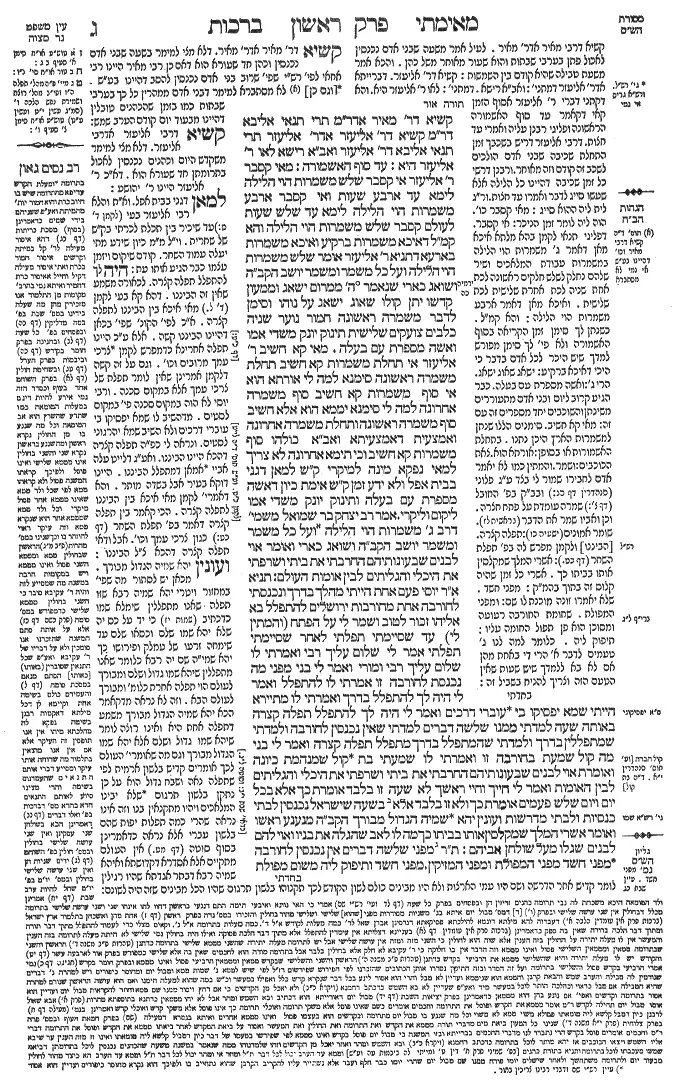
Berakhot 3a - Guemara
קשיא דרבי מאיר אדרבי מאיר תרי תנאי אליבא דרבי מאיר קשיא דרבי אליעזר אדרבי אליעזר תרי תנאי אליבא דרבי אליעזר ואיבעית אימא רישא לאו רבי אליעזר היא:
עד סוף האשמורה:
מאי קסבר רבי אליעזר אי קסבר שלש משמרות הוי הלילה לימא עד ארבע שעות ואי קסבר ארבע משמרות הוי הלילה לימא עד שלש שעות לעולם קסבר שלש משמרות הוי הלילה והא קא משמע לן דאיכא משמרות ברקיע ואיכא משמרות בארעא דתניא רבי אליעזר אומר שלש משמרות הוי הלילה ועל כל משמר ומשמר יושב הקדוש ברוך הוא ושואג כארי שנאמר ה' ממרום ישאג וממעון קדשו יתן קולו שאוג ישאג על נוהו וסימן לדבר משמרה ראשונה חמור נוער שניה כלבים צועקים שלישית תינוק יונק משדי אמו ואשה מספרת עם בעלה. מאי קא חשיב רבי אליעזר אי תחלת משמרות קא חשיב תחלת משמרה ראשונה סימנא למה לי אורתא הוא אי סוף משמרות קא חשיב סוף משמרה אחרונה למה לי סימנא יממא הוא אלא חשיב סוף משמרה ראשונה ותחלת משמרה אחרונה ואמצעית דאמצעיתא ואיבעית אימא כולהו סוף משמרות קא חשיב וכי תימא אחרונה לא צריך למאי נפקא מינה למיקרי קריאת שמע למאן דגני בבית אפל ולא ידע זמן קריאת שמע אימת כיון דאשה מספרת עם בעלה ותינוק יונק משדי אמו ליקום וליקרי. אמר רב יצחק בר שמואל משמיה דרב ג' משמרות הוי הלילה ועל כל משמר ומשמר יושב הקדוש ברוך הוא ושואג כארי ואומר אוי לבנים שבעונותיהם החרבתי את ביתי ושרפתי את היכלי והגליתים לבין אומות העולם:
תניא אמר רבי יוסי פעם אחת הייתי מהלך בדרך ונכנסתי לחורבה אחת מחורבות ירושלים להתפלל בא אליהו זכור לטוב ושמר לי על הפתח (והמתין לי) עד שסיימתי תפלתי לאחר שסיימתי תפלתי אמר לי שלום עליך רבי ואמרתי לו שלום עליך רבי ומורי ואמר לי בני מפני מה נכנסת לחורבה זו אמרתי לו להתפלל ואמר לי היה לך להתפלל בדרך ואמרתי לו מתיירא הייתי שמא יפסיקו בי עוברי דרכים ואמר לי היה לך להתפלל תפלה קצרה באותה שעה למדתי ממנו שלשה דברים למדתי שאין נכנסין לחורבה ולמדתי שמתפללין בדרך ולמדתי שהמתפלל בדרך מתפלל תפלה קצרה ואמר לי בני מה קול שמעת בחורבה זו ואמרתי לו שמעתי בת קול שמנהמת כיונה ואומרת אוי לבנים שבעונותיהם החרבתי את ביתי ושרפתי את היכלי והגליתים לבין האומות ואמר לי חייך וחיי ראשך לא שעה זו בלבד אומרת כך אלא בכל יום ויום שלש פעמים אומרת כך ולא זו בלבד אלא בשעה שישראל נכנסין לבתי כנסיות ולבתי מדרשות ועונין יהא שמיה הגדול מבורך הקדוש ברוך הוא מנענע ראשו ואומר אשרי המלך שמקלסין אותו בביתו כך מה לו לאב שהגלה את בניו ואוי להם לבנים שגלו מעל שולחן אביהם:
תנו רבנן מפני שלשה דברים אין נכנסין לחורבה מפני חשד מפני המפולת ומפני המזיקין. מפני חשד ותיפוק ליה משום מפולת
Comments from Rashi on Masechet Berakhot Page 3a
קשיא דרבי מאיר אדרבי מאיר . לעיל אמר משעה שבני אדם נכנסין לאכול פתן בערבי שבתות והוא שעור מאוחר משל כהן. והכא אמר משעת טבילה שהיא קודם בין השמשות: קשיא דרבי אליעזר . דברייתא אדר' אליעזר דמתנתי': ואיבעית אימא רישא . דמתנתי': לאו ר' אליעזר היא . והא דקתני דברי ר' אליעזר אסוף הזמן קאי דקאמר עד סוף האשמורה הראשונה ופליגי רבנן עליה ואמרי עד חצות. דרבי אליעזר דריש בשכבך זמן התחלת שכיבה שבני אדם הולכים לשכב זה קודם וזה מאוחר. ורבנן דרשי כל זמן שכיבה דהיינו כל הלילה אלא שעשו סייג לדבר ואמרו עד חצות. ורבן גמליאל לית ליה ההוא סייג: מאי קסבר כו' . הוה ליה לומר זמן הניכר: אי קסבר . דפליגי תנאי לקמן בהא מלתא איכא מאן דאמר ג' משמרות הוי הלילה במשמרות עבודת המלאכים ושיר שלהם נחלק לשלש חלקים ראשונה לכת אחת שניה לכת אחרת שלישית לכת שלישית. ואיכא מאן דאמר ארבע משמרות הוי הלילה: והא קא משמע לן . כשנתן לך סימן זמן הקריאה בסוף האשמורה ולא פי' לך סימן מפורש למדך שיש היכר לכל אדם בדבר כי היכי דאיכא ברקיע: ישאג שאוג ישאג . הרי ג': ואשה מספרת עם בעלה . כבר הגיע קרוב ליום ובני אדם מתעוררים משינתן והשוכבים יחד מספרים זה עם זה: מאי קא חשיב . סימנים הללו שנתן למשמרות הארץ היכן נתנו. בתחלת האשמורות או בסופן: אורתא הוא . צאת הכוכבים: למאן דגני בבית אפל . וא"ת והלא רבי אליעזר בעי (לקמן ד' ע:) עד שיכיר בין תכלת לכרתי בק"ש של שחרית. וי"ל מ"מ כיוון שידע מתי יעלה עמוד השיר, קודם שיקום ויזמן עצמו כבר הגיע אותו עת : ושמר . והמתין כמו לא יאמר אדם לחבירו שמור לי בצד ע"ג פלוני (סנהדרין סג:) ובב"ק בפ' החובל (דף צ':) שמרה עומדת על פתח חצרה. וכן ואביו שמר את הדבר (בראשית לז); שומר אמונים (ישעיה כו): תפלה קצרה . [הביננו] ולקמן מפרש לה בפ' תפלת השחר (דף כ"ט.): ועונין יהא שמיה הגדול מבורך . מכאן יש לסתור מה שפי' במחזור ויטרי יהא שמיה רבא שזו תפילה שאנו מתפללין שימלא שמו, כדכתיב (שמות יז) 'כי יד על כס יה' שלא יהא שמו וכסאו שלם עד שימחה זרעו של עמלק. ופירושו כך: יהא שמי"ה שם יה רבא, כלומר שאנו מתפללין שיהא שמו גדול ושלם, ומבורך לעולם הוי תפילה אחרת כלומר מבורך לעולם הבא. וזה לא נראה, מדקאמר הכא יהא שמיה הגדול ומבורך משמע דתפילה אחת היא ואינו רוצה לומר שיהא שמו גדול ושלם אלא יהא שמו הגדול מבורך. וגם מה שאומרים העולם, לכך אומרים קדיש בלשון ארמית לפי שתפילה נאה ושבח גדול הוא על כן נתקן בלשון התרגום, שלא יבינו המלאכים ויהיו מתקנאין בנו . וזה אינו נראה שהרי כמה תפילות יפות שהם בלשון עברי, אלא נראה כדאמרינן בסוף סוטה (דף מט.) 'אין העולם מתקיים אלא סדרא דקדושתא ואיהא שמיה רבא דבתר אגדתא' שהיו רגילין לומר קדיש אחר הדרשה ושם היו עמי הארצות ולא היו מבינים כלום לשון הקודש לכך תקנוהו בלשון תרגום שהיו הכל מבינים שזה היה לשונם : אשרי המלך שמקלסין אותו בביתו כך . אשרי כל זמן שהיה קלוס זה בתוך בהמ"ק: מפני חשד . שלא יאמרו זונה מוכנת לו שם: ומפני המפולת . שחומת החורבה רעועה ומסוכן הוא פן תפול החומה עליו: תיפוק ליה . כלומר למה לנו ג' טעמים לדבר א' הרי די באחת מהן אם לא בא ללמדך שיש שעות שאין הטעם הזה וצריך להניח בשביל זה:
Comments from Tosafot - Berakhot 3a
קשיא דר' מאיר אדר' מאיר . דלא מצי למימר בשעה שבני אדם נכנסין וכהן חד שעורא הוא דאם כן רבי מאיר היינו רבי אחאי לפי' רש"י שפי' שרוב בני אדם נכנסין להסב דהיינו בע"ש. *[וגם כן] לא מסתברא למימר דבני אדם ממהרין כל כך בערבי שבתות כמו בזמן שהכהנים טובלין דהיינו מבעוד יום קודם הערב שמש:
*[גי' מהרש"ל. ורש"א גריס אי נמי] קשיא דרבי אליעזר אדר' אליעזר . דלא מצי למימר משקדש היום וכהנים נכנסין לאכול בתרומתן חד שעורא הוא דא"כ ר' אליעזר היינו ר' יהושע : למאן דגני בבית אפל . וא''ת והלא רבי אליעזר בעי (לקמן ברכות ד' ט:) עד שיכיר בין תכלת לכרתי בק''ש של שחרית. וי''ל מ''מ כיון שידע מתי יעלה עמוד השחר. קודם שיקום ויזמן עצמו כבר הגיע אותו עת: ועונין יהא שמיה הגדול מבורך . מכאן יש לסתור מה שפי' במחזור ויטרי יהא שמיה רבא שזו תפילה שאנו מתפללין שימלא שמו, כדכתיב (שמות יז) 'כי יד על כס יה' שלא יהא שמו וכסאו שלם עד שימחה זרעו של עמלק. ופירושו כך: יהא שמי"ה שם יה רבא, כלומר שאנו מתפללין שיהא שמו גדול ושלם, ומבורך לעולם הוי תפילה אחרת כלומר מבורך לעולם הבא. וזה לא נראה, מדקאמר הכא יהא שמיה הגדול ומבורך משמע דתפילה אחת היא ואינו רוצה לומר שיהא שמו גדול ושלם אלא יהא שמו הגדול מבורך. וגם מה שאומרים העולם, לכך אומרים קדיש בלשון ארמית לפי שתפילה נאה ושבח גדול הוא על כן נתקן בלשון התרגום, שלא יבינו המלאכים ויהיו מתקנאין בנו . וזה אינו נראה שהרי כמה תפילות יפות שהם בלשון עברי, אלא נראה כדאמרינן בסוף סוטה (דף מט.) 'אין העולם מתקיים אלא סדרא דקדושתא ואיהא שמיה רבא דבתר אגדתא' שהיו רגילין לומר קדיש אחר הדרשה ושם היו עמי הארצות ולא היו מבינים כלום לשון הקודש לכך תקנוהו בלשון תרגום שהיו הכל מבינים שזה היה לשונם : היה לך להתפלל תפילה קצרה . לכאורה משמע שאין זה הביננו. דהא קא בעי לקמן (ברכות ד' ל.) 'מאי איכא בין הביננו לתפילה קצרה' . א"כ לפי הקונטרס שפי' בכאן דהיינו הביננו קשה. אלא ע"כ היינו תפילה אחרינא כדמפרש לקמן 'צרכי עמך מרובים' וכו'. וגם על זה קשה דלקמן אמירנן שאין לומר תפלת של צרכי עמך אלא במקום סכנה, ורבי יוסי לא הוה במקום סכנה פי' במקום לסטים. מדהשיב לו שמא יפסיקו בי עוברי דרכים ולא השיב לו שמא יהרגוני לסטים. ונראה לי כפ"ה תפילה קצרה דהכא היינו הביננו. ואע"ג דלייט עלה אביי אמאן דמתפלל הביננו. היינו דווקא בעיר אבל בשדה מותר. והא דאמרינן לקמן מאי איכא בין הביננו לתפילה קצרה. הכי קאמר, בין תפילה קצרה דאמר בפ' תפילת השחר (דף כט:) כגון צרכי עמך וכו'. אבל וודאי תיפלה קצרה דהכא צ"ל הביננו : היה לך להתפלל תפילה קצרה . לכאורה משמע שאין זה הביננו. דהא קא בעי לקמן (ברכות ד' ל.) מאי איכא בין הביננו לתפלה קצרה. א"כ לפי' הקונ' שפי' בכאן דהיינו הביננו קשה. אלא ע"כ היינו תפלה אחרינא כדמפרש לקמן צרכי עמך מרובים וכו'. וגם על זה קשה דלקמן אמירנן שאין לומר תפלת של צרכי עמך אלא במקום סכנה. ורבי יוסי לא הוה במקום סכנה פי' במקום לסטים. מדהשיב לו שמא יפסיקו בי עוברי דרכים ולא השיב שמא יהרגוני לסטים. ונראה לי כפ"ה תפלה קצרה דהכא היינו הביננו. ואע"ג דלייט עלה אביי אמאן דמתפלל הביננו. היינו דוקא בעיר אבל בשדה מותר. והא דאמרי' לקמן מאי איכא בין הביננו לתפלה קצרה. הכי קאמר בין תפלה קצרה דאמר בפ' תפלת השחר (דף כט:) כגון צרכי עמך וכו'. אבל ודאי תפלה קצרה דהכא צ"ל הביננו : ועונין יהא שמיה הגדול מבורך . מכאן יש לסתור מה שפי' במחזור ויטרי יהא שמיה רבא שזו תפלה שאנו מתפללין שימלא שמו כדכתיב (שמות יז) כי יד על כס יה שלא יהא שמו שלם וכסאו שלם עד שימחה זרעו של עמלק ופירושו כך יהא שמי"ה שם יה רבא כלומר שאנו מתפללין שיהא שמו גדול ושלם ומבורך לעולם הוי תפלה אחרת כלומ' ומבורך לעולם הבא. וזה לא נראה מדקאמר הכא יהא שמיה הגדול מבורך משמע דתפלה אחת היא ואינו רוצה לומר שיהא שמו גדול ושלם אלא יהא שמו הגדול מבורך וגם מה שאומרי' העולם לכך אומרים קדיש בלשון ארמית לפי שתפלה נאה ושבח גדול הוא על כן נתקן בלשון תרגום שלא יבינו המלאכים ויהיו מתקנאין בנו וזה אינו נראה שהרי כמה תפלות יפות שהם בלשון עברי אלא נראה כדאמרינן בסוף סוטה (דף מט.) אין העולם מתקיים אלא אסדרא דקדושתא ואיהא שמיה רבא דבתר אגדתא שהיו רגילין לומר קדיש אחר הדרשה ושם היו עמי הארצות ולא היו מבינים כולם לשון הקודש לכך תקנוהו בלשון תרגום שהיו הכל מבינים שזה היה לשונם :
Berakhot 3a - Mishnah translated into english
The beginning of tractate Berakhot, the first tractate in the first of the six orders of Mishna, opens with a discussion of the recitation of Shema, as the recitation of Shema encompasses an acceptance of the yoke of Heaven and of the mitzvot, and as such, forms the basis for all subsequent teachings. The Mishna opens with the laws regarding the appropriate time to recite Shema:
MISHNA: From when, that is, from what time, does one recite Shema in the evening? From the time when the priests enter to partake of their teruma. Until when does the time for the recitation of the evening Shema extend? Until the end of the first watch. The term used in the Torah (Deuteronomy 6:7) to indicate the time for the recitation of the evening Shema is beshokhbekha, when you lie down, which refers to the time in which individuals go to sleep. Therefore, the time for the recitation of Shema is the first portion of the night, when individuals typically prepare for sleep. That is the statement of Rabbi Eliezer.
The Rabbis say: The time for the recitation of the evening Shema is until midnight.
Rabban Gamliel says: One may recite Shema until dawn, indicating that beshokhbekha is to be understood as a reference to the entire time people sleep in their beds, the whole night.
The mishna relates that Rabban Gamliel practiced in accordance with his ruling. There was an incident where Rabban Gamliel’s sons returned very late from a wedding hall. They said to him, as they had been preoccupied with celebrating with the groom and bride: We did not recite Shema. He said to them: If the dawn has not yet arrived, you are obligated to recite Shema. Since Rabban Gamliel’s opinion disagreed with that of the Rabbis, he explained to his sons that the Rabbis actually agree with him, and that it is not only with regard to the halakha of the recitation of Shema, but rather, wherever the Sages say until midnight, the mitzva may be performed until dawn.
Rabban Gamliel cites several cases in support of his claim, such as the burning of fats and limbs on the altar. Due to the quantity of offerings each day, the priests were often unable to complete the burning of all of the fats and limbs, so they continued to be burned into the night, as it is written: “This is the law of the burnt offering: The burnt offering shall remain upon the pyre on the altar all night until morning, while the fire on the altar burns it” (Leviticus 6:2). And, with regard to all sacrifices, such as the sin-offerings and the guilt-offerings that are eaten for one day and night; although the Sages state that they may be eaten only until midnight, by Torah law they may be eaten until dawn. This is in accordance with the verse: “On the day on which it is offered must you eat. Do not leave it until the morning” (Leviticus 7:15). If so, why did the Sages say that they may be eaten only until midnight? This is in order to distance a person from transgression, as if one believes that he has until dawn to perform the mitzva, he might be negligent and postpone it until the opportunity to perform the mitzva has passed.
GEMARA: The Mishna opens with the laws concerning the appropriate time to recite Shema with the question: From when does one recite Shema in the evening? With regard to this question, the Gemara asks: On the basis of what prior knowledge does the tanna of our mishna ask: From when? It would seem from his question that the obligation to recite Shema in the evening was already established, and that the tanna seeks only to clarify details that relate to it. But our mishna is the very first mishna in the Talmud.
The Gemara asks: And furthermore, what distinguishes the evening Shema, that it was taught first? Let the tanna teach regarding the recitation of the morning Shema first. Since most mitzvot apply during the day, the tanna should discuss the morning Shema before discussing the evening Shema, just as the daily morning offering is discussed before the evening offering (Tosefot HaRosh).
The Gemara offers a single response to both questions: The tanna bases himself on the verse as it is written: “You will talk of them when you sit in your home, and when you walk along the way, when you lie down, and when you arise” (Deuteronomy 6:7). By teaching the laws of the evening Shema first, the tanna has established that the teachings of the Oral Torah correspond to that which is taught in the Written Torah. And based on the Written Torah, the tanna teaches the oral law: When is the time for the recitation of Shema of lying down as commanded in the Torah? From when the priests enter to partake of their teruma. Just as the Written Torah begins with the evening Shema, so too must the Oral Torah.
However, there is another possible explanation for why the mishna opens with the evening Shema rather than with the morning Shema. If you wish, you could say instead that the tanna derives the precedence of the evening Shema from the order of the creation of the world. As it is written in the story of creation: “And there was evening, and there was morning, one day” (Genesis 1:5). According to this verse, day begins with the evening and not the morning. For both of these reasons it was appropriate to open the discussion of the laws of the recitation of Shema with the evening Shema.
The Gemara asks: If so, why does the latter clause of the mishna, which appears later in the chapter, teach: In the morning one recites two blessings before Shema and one blessing afterward, and in the evening one recites two blessings before Shema and two afterward? Based upon the above reasoning, the mishna should have taught the blessing recited before and after the evening Shema first.
The Gemara answers: Indeed, the tanna began by discussing the laws regarding the recitation of the evening Shema, and then taught the laws regarding the recitation of the morning Shema. Once he was already dealing with the morning Shema, he explained the matters of the morning Shema, and then explained the matters of the evening Shema.
The Gemara proceeds to clarify the rest of the mishna. The Master said in the mishna that the beginning of the period when one recites Shema in the evening is when the priests enter to partake of their teruma. However, this does not specify a definitive time. When do the priests enter to partake of their teruma? From the time of the emergence of the stars. If that is the case, then let the tanna teach that the time for the recitation of the evening Shema is from the time of the emergence of the stars.
The Gemara responds: Indeed it would have been simpler to say that the time for the recitation of the evening Shema begins with the emergence of the stars, but the particular expression used by the tanna teaches us another matter in passing: When do priests partake of their teruma? From the time of the emergence of the stars. And the tanna teaches us a new halakha parenthetically: failure to bring an atonement offering does not prevent a priest from eating teruma. In cases where an impure priest is required to immerse himself in a ritual bath and bring an atonement offering, even if he already immersed himself, he is not completely ritually pure until he brings the atonement offering. Nevertheless, he is still permitted to partake of teruma. Taught in passing in our mishna, this is articulated fully in a baraita, based on a close reading of the biblical passages. As it was taught in a baraita with regard to the laws of ritual impurity, it is said: “One who touches it remains impure until evening. He should not eat of the consecrated items and he must wash his flesh with water. And the sun sets and it is purified. Afterwards, he may eat from the teruma, for it is his bread” (Leviticus 22:6–7). From the passage: “And the sun sets and it is purified,” that the absence of the setting of his sun prevents him from partaking of teruma, but failure to bring the atonement offering does not prevent him from partaking of teruma, may be inferred.
The Gemara discusses the proof offered in the baraita: From where do we know that the phrase: “And the sun sets” refers to the complete setting of the sun, and therefore, “and it is purified” refers to the fact that the day is pure, i.e., and the sun sets and it is purified is one phrase meaning that the sun will set, the air will clear, and the stars will emerge (Rav Hai Gaon)?
Traduction : The William Davidson digital edition of the Koren Noé Talmud, with commentary by Rabbi Adin Even-Israel Steinsaltz.