 Talmud Bavli
Berakhot 40a : Youtube
Daf TubeYoutube
2 video classes :
Berakhot Page 40a
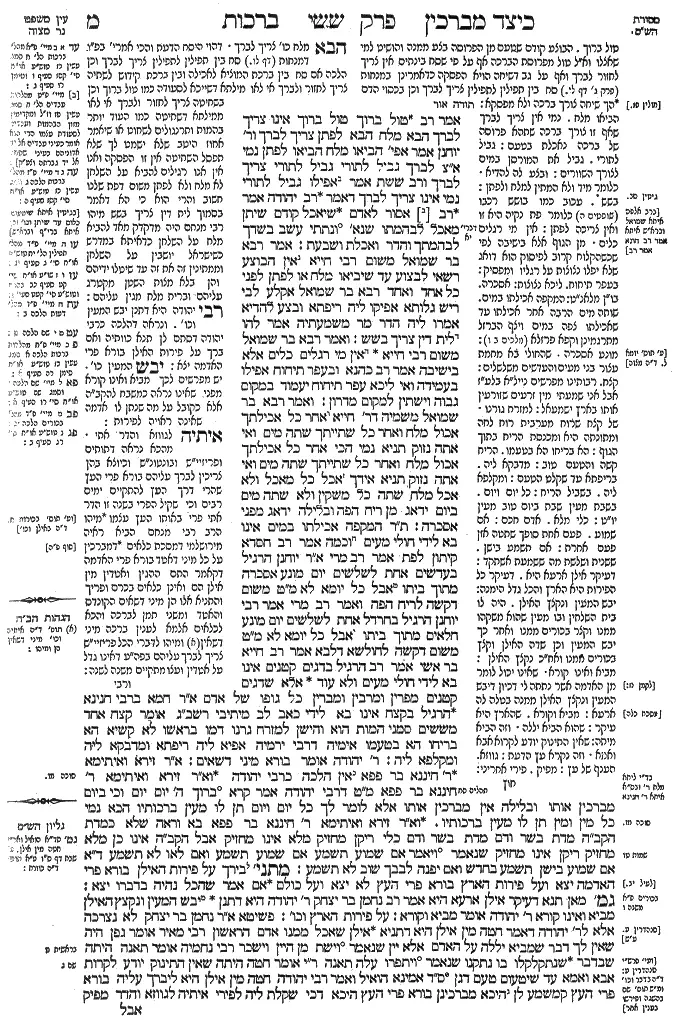
Berakhot 40a - Guemara
אמר רב טול ברוך טול ברוך אינו צריך לברך הבא מלח הבא לפתן צריך לברך ור' יוחנן אמר אפי' הביאו מלח הביאו לפתן נמי אצ לברך גביל לתורי גביל לתורי צריך לברך ורב ששת אמר אפילו גביל לתורי נמי אינו צריך לברך דאמר רב יהודה אמר רב אסור לאדם שיאכל קודם שיתן מאכל לבהמתו שנא' (דברים יא טו) ונתתי עשב בשדך לבהמתך והדר ואכלת ושבעת:
אמר רבא בר שמואל משום רבי חייא אין הבוצע רשאי לבצוע עד שיביאו מלח או לפתן לפני כל אחד ואחד רבא בר שמואל אקלע לבי ריש גלותא אפיקו ליה ריפתא ובצע להדיא אמרו ליה הדר מר משמעתיה אמר להו לית דין צריך בשש:
ואמר רבא בר שמואל משום רבי חייא אין מי רגלים כלים אלא בישיבה אמר רב כהנא ובעפר תיחוח אפילו בעמידה ואי ליכא עפר תיחוח יעמוד במקום גבוה וישתין למקום מדרון:
ואמר רבא בר שמואל משמיה דר' חייא אחר כל אכילתך אכול מלח ואחר כל שתייתך שתה מים ואי אתה נזוק תניא נמי הכי אחר כל אכילתך אכול מלח ואחר כל שתייתך שתה מים ואי אתה נזוק תניא אידך אכל כל מאכל ולא אכל מלח שתה כל משקין ולא שתה מים ביום ידאג מן ריח הפה ובלילה ידאג מפני אסכרה:
תר המקפה אכילתו במים אינו בא לידי חולי מעים וכמה אמר רב חסדא קיתון לפת אמר רב מרי אר יוחנן הרגיל בעדשים אחת לשלשים יום מונע אסכרה מתוך ביתו אבל כל יומא לא מט משום דקשה לריח הפה ואמר רב מרי אמר רבי יוחנן הרגיל בחרדל אחת לשלשים יום מונע חלאים מתוך ביתו אבל כל יומא לא מט משום דקשה לחולשא דלבא אמר רב חייא בר אשי אמר רב הרגיל בדגים קטנים אינו בא לידי חולי מעים ולא עוד אלא שדגים קטנים מפרין ומרבין ומברין כל גופו של אדם אר חמא ברבי חנינא הרגיל בקצח אינו בא לידי כאב לב מיתיבי רשבג אומר קצח אחד מששים סמני המות הוא והישן למזרח גרנו דמו בראשו לא קשיא הא בריחו הא בטעמו אימיה דרבי ירמיה אפיא ליה ריפתא ומדבקא ליה ומקלפא ליה:
ר' יהודה אומר בורא מיני דשאים:
אר זירא ואיתימא ר' חיננא בר פפא אין הלכה כרבי יהודה ואר זירא ואיתימא ר' חיננא בר פפא מט דרבי יהודה אמר קרא (תהלים סח כ) ברוך ה' יום יום וכי ביום מברכין אותו ובלילה אין מברכין אותו אלא לומר לך כל יום ויום תן לו מעין ברכותיו הכא נמי כל מין ומין תן לו מעין ברכותיו. ואר זירא ואיתימא ר' חיננא בר פפא בא וראה שלא כמדת הקבה מדת בשר ודם מדת בשר ודם כלי ריקן מחזיק מלא אינו מחזיק אבל הקבה אינו כן מלא מחזיק ריקן אינו מחזיק שנאמר (שמות טו כו) ויאמר אם שמוע תשמע אם שמוע תשמע ואם לאו לא תשמע דא אם שמוע בישן תשמע בחדש ואם יפנה לבבך שוב לא תשמע:
מתני׳ בירך על פירות האילן בורא פרי האדמה יצא ועל פירות הארץ בורא פרי העץ לא יצא ועל כולם אם אמר שהכל נהיה בדברו יצא:
גמ׳ מאן תנא דעיקר אילן ארעא היא אמר רב נחמן בר יצחק ר' יהודה היא דתנן יבש המעין ונקצץ האילן מביא ואינו קורא ר' יהודה אומר מביא וקורא:
על פירות הארץ וכו':
פשיטא אר נחמן בר יצחק לא נצרכה אלא לר' יהודה דאמר חטה מין אילן היא דתניא אילן שאכל ממנו אדם הראשון רבי מאיר אומר גפן היה שאין לך דבר שמביא יללה על האדם אלא יין שנאמר (בראשית ט כא) וישת מן היין וישכר רבי נחמיה אומר תאנה היתה שבדבר שנתקלקלו בו נתקנו שנאמר (בראשית ג ז) ויתפרו עלה תאנה רי אומר חטה היתה שאין התינוק יודע לקרות אבא ואמא עד שיטעום טעם דגן סד אמינא הואיל ואמר רבי יהודה חטה מין אילן היא ליברך עליה בורא פרי העץ קמשמע לן היכא מברכינן בורא פרי העץ היכא דכי שקלת ליה לפירי איתיה לגווזא והדר מפיק
Comments from Rashi on Masechet Berakhot Page 40a
טול ברוך . הבוצע קודם שטעם מן הפרוסה בצע ממנה והושיט למי שאצלו וא"ל טול מפרוסת הברכה אף על פי שסח בינתים אין צריך לחזור לברך ואף על גב דשיחה הויא הפסקה כדאמרינן במנחות (פרק ג' דף לו.) סח בין תפילין לתפילין צריך לברך וכן בכסוי הדם הך שיחה צורך ברכה ולא מפסקא: הביאו מלח . נמי אין צריך לברך שאף זו צורך ברכה שתהא פרוסה של ברכה נאכלת בטעם: גביל לתורי . גביל את המורסן במים לצורך השוורים: ובצע לה להדיא . כלומר מיד ולא המתין למלח ולפתן: בשש . עכוב כמו בושש רכבו (שופטים ה) כלומר פת נקיה היא זו ואין צריכה לפתן: אין מי רגלים כלים . מן הגוף אלא בישיבה לפי שכשהקלוח קרוב לפיסוק הוא דואג שלא יפלו נצוצות על רגליו ומפסיק: בעפר תיחוח . ליכא נצוצות: אסכרה . בו"ן מלאנ"ט: המקפה אכילתו במים . שותה מים הרבה אחר אכילתו עד שאכילתו צפה במים ויצף הברזל מתרגמינן וקפא פרזלא (מלכים ב ו): מונע אסכרה . שהחולי בא מחמת עצור בני מעים והעדשים משלשלים: קצח . רבותינו מפרשים נייל"א בלע"ז אבל אני שמעתי מין זרעים שזורעין אותו בארץ ישמעאל: למזרח גורנו . של קצח שרוח מערבית רוח לחה ומתונתה היא ומכנסת הריח בתוך הגוף: הא בריחו הא בטעמו . הריח קשה והטעם טוב: מדבקא ליה . בריפתא עד שקלט הטעם: ומקלפא ליה . בשביל הריח: כל יום ויום . בשבת מעין שבת ביום טוב מעין יו"ט: כלי מלא . אדם חכם: אם שמוע . פעם אחת סופך שתטה אזן פעם אחרת: אם תשמע בישן . ששנית ושלשת מה ששמעת אשתקד: דעיקר אילן ארעא היא . דעיקר כל הפירות היא הארץ והכל גדל הימנה: יבש המעין ונקצץ האילן . היה לו בית השלחין ובו מעין שהוא משקהו ממנו וקצר בכורים ממנו ואחר כך יבש המעין וכן שדה האילן וקצץ בכורים ממנו ואח"כ נקצץ האילן: מביא ואינו קורא . שאינו יכול לומר מן האדמה אשר נתתה לי דכיון דיבש המעין ונקצץ האילן ממנה בטלה לה ארעא: מביא וקורא . שהארץ היא עיקר: שהוא הביא יללה . וזה הביא מיתה: שאין התינוק יודע לקרא אבא ואמא . וזה נקרא עץ הדעת: גווזא . הענף של עץ: מפיק . פירי אחריני:
Comments from Tosafot - Berakhot 40a
הבא מלח כו' צריך לברך . דהוי היסח הדעת והכי אמרי' בפ"ג דמנחות (דף לו.) סח בין תפילין לתפילין צריך לברך וכן הלכה אם סח בין ברכת המוציא לאכילה ובין ברכת קידוש לשתיה צריך לחזור ולברך אי לאו מילתא דשייכא לסעודה כמו טול ברוך וכן בשחיטה צריך לחזור ולברך אי לאו ממילתא דשחיטה כמו העוד יותר בהמות ותרנגולים לשחוט או שיאמר אחוז היטב שלא ישמט לך שלא תפסל השחיטה אין זו הפסקה ואנו אין אנו רגילים להביא על השלחן לא מלח ולא לפתן משום דפת שלנו חשוב והרי הוא כי הא דאמר בסמוך לית דין צריך בשש מיהו רבי מנחם היה מדקדק מאד להביא מלח על השלחן כדאיתא במדרש כשישראל יושבין על השלחן וממתינין זה את זה עד שיטלו ידיהם והן בלא מצות השטן מקטרג עליהם וברית מלח מגין עליהם: רבי יהודה היא דתנן יבש המעין וכו' .ונראה דהלכה כרבי יהודה דסתם לן תנא כוותיה ואם ברך על פירות האילן בורא פרי האדמה יצא: רבי יהודה היא דתנן יבש המעין וכו'. ונראה דהלכה כרבי יהודה דסתם לן תנא כוותיה ואם ברך על פירות האילן בורא פרי האדמה יצא: יבש המעין כו'. יש מפרשים לכך מביא ואינו קורא מפני שאינו נראה כמשבח להקב"ה אלא כקובל על מה שנתן לו אדמה שאינה ראויה לפירות: איתיה לגווזא והדר אתי . מהכא נראה דתותים ופריזיי"ש ובונטונ"ש וכיוצא בהן צריכין לברך עליהם בורא פרי העץ שהרי דרך העץ להתקיים ימים רבים וכי שקיל הפרי בשנה זו הדר אתי פרי באותו העץ עצמו מיהו הרב רבי מנחם הביא ראיה מירושלמי דמסכת כלאים דמברכין על כל מיני דאטד בורא פרי האדמה דקאמר התם ההגין ואטדין מין אילן הם ואינן כלאים בכרם ופריך והתניא אלו הן מיני דשאים הקונדס והאטד ומשני תמן לברכה והכא לכלאים אלמא לענין ברכה מיני דשאין ומיהו לדברי הכל פריזיי"ש צריך לברך עליהם בפה"ע דאינו גדל על אטדין ועצו מתקיים משנה לשנה:
Berakhot 40a - Mishnah translated into english
Continuing to discuss the halakhot of breaking bread, Rav said: One who broke bread, and before eating it, offered a piece to another, and said: Take it and recite a blessing, take it and recite a blessing, need not recite the blessing a second time, because that is considered to have been for the purpose of the blessing. If, however, he said: Bring salt or bring relish, he must recite the blessing a second time, as that is considered an interruption between the blessing and eating the bread. And Rabbi Yoḥanan said: Even if he said: Bring salt or bring relish, it is not considered an interruption and he need not recite the blessing a second time. Only if he said: Mix the food for the oxen, mix the food for the oxen, it is considered an interruption and he is required to recite the blessing a second time. And Rav Sheshet said: Even if he said: Mix for the oxen, he need not recite a blessing a second time, as that is also considered to be for the purpose of the blessing, as Rav Yehuda said that Rav said: One is prohibited from eating before feeding his animals, as it is stated: “And I will give grass in your fields for your animals” first and only then: “And you shall eat and be satisfied” (Deuteronomy 11:15). In the verse, preparation of food for one’s cattle precedes preparation of his own food. Consequently, it is considered part of the preparation for one’s own meal.
Rava bar Shmuel said in the name of Rabbi Ḥiyya: One who breaks bread is not permitted to break it until they bring salt or relish before each and every one seated at the table. However, the Gemara relates that Rava bar Shmuel himself happened to come to the House of the Exilarch. They brought him bread, which he immediately broke, without waiting for them to bring salt or relish. They said to him: Did the Master reconsider his halakhic ruling? He said to them: Although poor quality bread requires salt in order to give the bread flavor, and therefore one must wait before breaking bread, this refined bread served in the House of the Exilarch needs no salt, and does not require waiting.
And Rava bar Shmuel said in the name of Rabbi Ḥiyya: Urine only completely leaves the body if one urinates seated, as, otherwise, due to concern that drops of urine will drip onto his clothes, he attempts to conclude prematurely. Rav Kahana said: Over loose soil which absorbs the urine, one is not concerned that it will splash on him; therefore, even when standing the urine leaves his body. And if there is no loose soil there is another way to prevent the urine from splashing on his clothes while standing. Stand on an elevated place and urinate down an inclined plane.
And Rava bar Shmuel said the following advice in the name of Rabbi Ḥiyya: After all eating, eat salt and after all drinking, drink water and you will not be harmed. That was also taught in a baraita: After all eating, eat salt and after all drinking, drink water and you will not be harmed. It was taught in another baraita: If one ate any food and did not eat salt afterward, or if he drank any liquid and did not drink water afterward, during the day, he should be concerned about bad breath, and at night he should be concerned about diphtheria.
On the topic of health, the Gemara cites that the Sages taught in a baraita: One who inundates his food with water, i.e., one who drinks a great deal of water, will not come to suffer from intestinal illness. The Gemara asks: And how much water? Rav Ḥisda said: One jug [kiton] per loaf.
Rav Mari said that Rabbi Yoḥanan said: One who is accustomed to eat lentils once in thirty days prevents diphtheria from afflicting his house. The Gemara comments: However, one should not eat lentils every day. What is the reason? Because it is deleterious in that it causes bad breath.
And Rav Mari said that Rabbi Yoḥanan said: One who is accustomed to eat mustard once in thirty days prevents illnesses from afflicting his house. The Gemara comments: However, one should not eat mustard every day. What is the reason? Because it is deleterious in that it causes weakness of the heart.
Another health recommendation: Rabbi Ḥiyya bar Ashi said that Rav said: One who is accustomed to eat small fish will not come to suffer from intestinal illness. Moreover, eating small fish causes one’s entire body to flourish, to grow, and to be healthy.
Rabbi Ḥama, son of Rabbi Ḥanina, said: One who is accustomed to eat black cumin, a medicine for the heart, will not come to suffer from heart pain. The Gemara raises an objection: Rabban Shimon ben Gamliel says: Black cumin is one of sixty deadly drugs, and therefore one who sleeps to the east of its storage area, where its odor wafts with the westerly wind, responsibility for his blood is on his own head. The Gemara responds: This is not difficult, as this, where Rabban Shimon ben Gamliel said that black cumin is harmful, refers to its odor, whereas this, where Rabbi Ḥama, son of Rabbi Ḥanina, said that it is beneficial for the heart, refers only to its taste. And the Gemara relates: The mother of Rabbi Yirmeya would bake him bread and would stick black cumin to it so its taste would be absorbed, and she would peel it off, so that its odor would not harm him.
We learned in the mishna that Rabbi Yehuda says that one recites over herbs and leafy greens: Who creates various kinds of herbs. Rabbi Zeira, and some say Rabbi Ḥinnana bar Pappa, said: The halakha is not in accordance with the opinion of Rabbi Yehuda. And Rabbi Zeira, and some say Rabbi Ḥinnana bar Pappa, said: What is the reason for Rabbi Yehuda’s opinion? The verse says: “Blessed is the Lord, day by day” (Psalms 68:20). The question arises: Is it so that one blesses Him by day and does not bless Him at night? Rather, the verse comes to tell you: Each and every day, give the Lord the appropriate blessings for that day. Here too, with regard to the blessings recited over food, for each and every type of food, give the Lord the appropriate blessings for that food.
And Rabbi Zeira, and some say Rabbi Ḥinnana bar Pappa, said: Come and see that the attribute of flesh and blood is unlike the attribute of the Holy One, Blessed be He. The attribute of flesh and blood is that an empty vessel holds that which is placed within it, while a full vessel does not hold it. The attribute of the Holy One, Blessed be He, however, is not so, as if God adds to a person who is a full vessel in terms of knowledge or good attributes, he will hold it; a person who is an empty vessel will not hold it. This is alluded to by the verse where it is said: “And He said, if you will surely listen [shamo’a tishma] to the voice of the Lord your God and do what is right in His eyes” (Exodus 15:26). This verse is interpreted homiletically: If you listen [shamo’a] in the present, you will listen [tishma] in the future as well; and if not, you will not listen. Alternatively: If you listened [shamo’a] to the old, you review what you already learned, then you will listen [tishma] to the new as well. But if you turn your heart away, you will no longer be able to hear.
MISHNA: This mishna discusses how, after the fact, a more general blessing exempts one from the obligation to recite a more specific one. One who recited: Who creates fruit of the ground, over fruit of the tree, fulfilled his obligation. One who recited: Who creates fruit of the tree, over fruits of the earth, did not fulfill his obligation. And over all food items, one who recited: By whose word all things came to be, fulfilled his obligation.
GEMARA: The Gemara begins by ascertaining: Who is the tanna that holds that the primary factor in the growth of a tree is the earth, and therefore one may recite: Who creates fruit of the ground, over fruits of the tree fulfills his obligation? Rav Naḥman bar Yitzḥak said: That is the opinion of Rabbi Yehuda, as we learned in a mishna dealing with the halakhot of first fruits: If, after one picked the first fruits from his field, the spring dried up and the tree upon which the fruit grew was chopped down, he brings the first fruits to the Temple but does not read the accompanying praise. The tree or spring, which were the primary components of the growth of the fruit, no longer exist and he cannot recite the passage thanking God for “the good land.” Rabbi Yehuda says: He brings the first fruits and reads the accompanying praise, as the land is the primary factor in the growth of the tree, and the tree itself is merely an extension of the land. Even after the tree is felled, the land remains intact. Similarly, with regard to blessings, the halakha maintains that fruit of the tree is considered to be fruit of the ground, as well.
We learned in the mishna: One who recited: Who creates fruit of the tree, over fruits of the earth, did not fulfill his obligation. The Gemara asks: That is obvious, as fruits of the earth do not fall under the rubric of trees. Rav Naḥman bar Yitzḥak said: This ruling in the mishna is only necessary according to the opinion of Rabbi Yehuda, who said in another context that wheat is a type of tree, as we learned in a baraita: The tree from which Adam, the first man, ate, Rabbi Meir says: It was a vine, as nothing brings wailing and trouble upon man even today other than wine, as it is stated with regard to Noah: “And he drank from the wine and became drunk” (Genesis 9:21). Rabbi Neḥemya says: It was a fig tree, as with the object with which they were corrupted and sinned they were rehabilitated, as it is stated: “And they sewed together fig leaves and made for themselves loincloths” (Genesis 3:7). They must have taken the leaves from the tree closest at hand, the Tree of Knowledge. Rabbi Yehuda says: It was wheat, as, even today, the child does not know how to call his father and mother until he tastes the taste of grain.
Based on this, it might have entered your mind to say, since Rabbi Yehuda said that wheat is a type of tree, one should recite over it: Who creates fruit of the tree. Therefore, the mishna taught us that with regard to blessings, the principle is different. Where does one recite: Who creates fruit of the tree? Only in a case where, when you take the fruit, the branch remains and again produces fruit.
Traduction : The William Davidson digital edition of the Koren Noé Talmud, with commentary by Rabbi Adin Even-Israel Steinsaltz.