 Talmud Bavli
Berakhot 23a : Youtube
Daf TubeYoutube
2 video classes :
Berakhot Page 23a
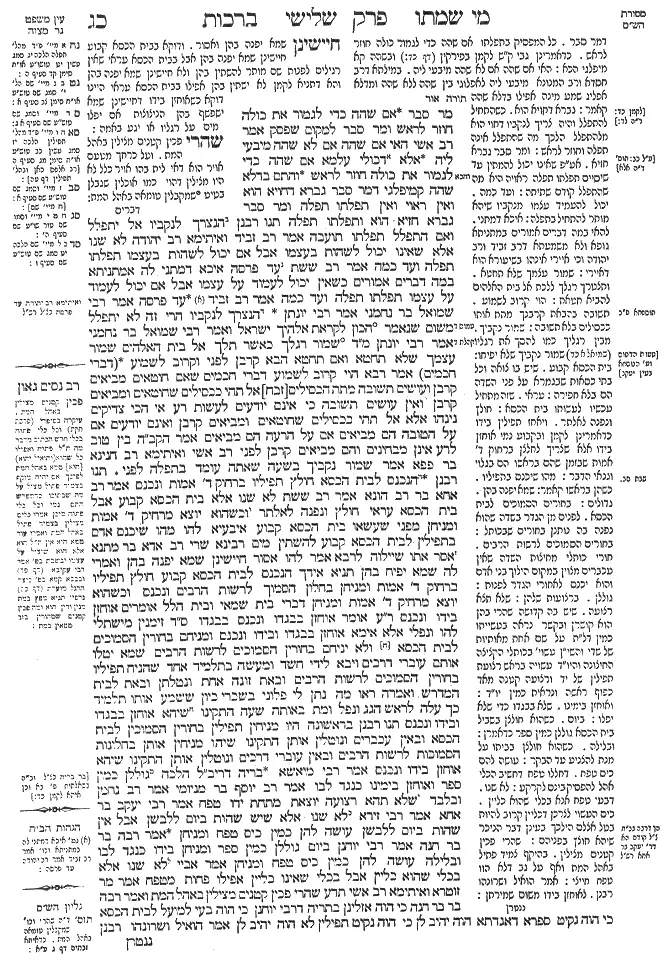
Berakhot 23a - Guemara
מר סבר אם שהה כדי לגמור את כולה חוזר לראש ומר סבר למקום שפסק אמר רב אשי האי אם שהה אם לא שהה מיבעי ליה אלא דכולי עלמא אם שהה כדי לגמור את כולה חוזר לראש והתם בדלא שהה קמיפלגי דמר סבר גברא דחויא הוא ואין ראוי ואין תפלתו תפלה ומר סבר גברא חזיא הוא ותפלתו תפלה תנו רבנן הנצרך לנקביו אל יתפלל ואם התפלל תפלתו תועבה אמר רב זביד ואיתימא רב יהודה לא שנו אלא שאינו יכול לשהות בעצמו אבל אם יכול לשהות בעצמו תפלתו תפלה ועד כמה אמר רב ששת עד פרסה איכא דמתני לה אמתניתא במה דברים אמורים כשאין יכול לעמוד על עצמו אבל אם יכול לעמוד על עצמו תפלתו תפלה ועד כמה אמר רב זביד עד פרסה אמר רבי שמואל בר נחמני אמר רבי יונתן הנצרך לנקביו הרי זה לא יתפלל משום שנאמר (עמוס ד יב) הכון לקראת אלהיך ישראל ואמר רבי שמואל בר נחמני אמר רבי יונתן מד (קהלת ד יז) שמור רגלך כאשר תלך אל בית האלהים שמור עצמך שלא תחטא ואם תחטא הבא קרבן לפני וקרוב לשמוע (דברי חכמים) אמר רבא הוי קרוב לשמוע דברי חכמים שאם חוטאים מביאים קרבן ועושים תשובה מתת הכסילים [זבח] אל תהי ככסילים שחוטאים ומביאים קרבן ואין עושים תשובה כי אינם יודעים לעשות רע אי הכי צדיקים נינהו אלא אל תהי ככסילים שחוטאים ומביאים קרבן ואינם יודעים אם על הטובה הם מביאים אם על הרעה הם מביאים אמר הקבה בין טוב לרע אינן מבחינים והם מביאים קרבן לפני רב אשי ואיתימא רב חנינא בר פפא אמר שמור נקביך בשעה שאתה עומד בתפלה לפני. תנו רבנן הנכנס לבית הכסא חולץ תפיליו ברחוק ד' אמות ונכנס אמר רב אחא בר רב הונא אמר רב ששת לא שנו אלא בית הכסא קבוע אבל בית הכסא עראי חולץ ונפנה לאלתר וכשהוא יוצא מרחיק ד' אמות ומניחן מפני שעשאו בית הכסא קבוע איבעיא להו מהו שיכנס אדם בתפילין לבית הכסא קבוע להשתין מים רבינא שרי רב אדא בר מתנא אסר אתו שיילוה לרבא אמר להו אסור חיישינן שמא יפנה בהן ואמרי לה שמא יפיח בהן תניא אידך הנכנס לבית הכסא קבוע חולץ תפיליו ברחוק ד' אמות ומניחן בחלון הסמוך לרשות הרבים ונכנס וכשהוא יוצא מרחיק ד' אמות ומניחן דברי בית שמאי ובית הלל אומרים אוחזן בידו ונכנס רע אומר אוחזן בבגדו ונכנס בבגדו סד זימנין מישתלי להו ונפלי אלא אימא אוחזן בבגדו ובידו ונכנס ומניחם בחורין הסמוכים לבית הכסא ולא יניחם בחורין הסמוכים לרשות הרבים שמא יטלו אותם עוברי דרכים ויבא לידי חשד ומעשה בתלמיד אחד שהניח תפילין בחורין הסמוכים לרשות הרבים ובאת זונה אחת ונטלתן ובאת לבית המדרש ואמרה ראו מה נתן לי פלוני בשכרי כיון ששמע אותו תלמיד כך עלה לראש הגג ונפל ומת באותה שעה התקינו שיהא אוחזן בבגדו ובידו ונכנס תנו רבנן בראשונה היו מניחין תפילין בחורין הסמוכין לבית הכסא ובאין עכברים ונוטלין אותן התקינו שיהו מניחין אותן בחלונות הסמוכות לרשות הרבים ובאין עוברי דרכים ונוטלין אותן התקינו שיהא אוחזן בידו ונכנס אמר רבי מיאשא בריה דריבל הלכה גוללן כמין ספר ואוחזן בימינו כנגד לבו אמר רב יוסף בר מניומי אמר רב נחמן ובלבד שלא תהא רצועה יוצאת מתחת ידו טפח אמר רבי יעקב בר אחא אמר רבי זירא לא שנו אלא שיש שהות ביום ללבשן אבל אין שהות ביום ללבשן עושה להן כמין כיס טפח ומניחן אמר רבה בר בר חנה אמר רבי יוחנן ביום גוללן כמין ספר ומניחן בידו כנגד לבו ובלילה עושה להן כמין כיס טפח ומניחן אמר אביי לא שנו אלא בכלי שהוא כליין אבל בכלי שאינו כליין אפילו פחות מטפח אמר מר זוטרא ואיתימא רב אשי תדע שהרי פכין קטנים מצילין באהל המת ואמר רבה בר בר חנה כי הוה אזלינן בתריה דרבי יוחנן כי הוה בעי למיעל לבית הכסא כי הוה נקיט ספרא דאגדתא הוה יהיב לן כי הוה נקיט תפילין לא הוה יהיב לן אמר הואיל ושרונהו רבנן
Comments from Rashi on Masechet Berakhot Page 23a
דמר סבר . כל המפסיק בתפלתו אם שהה כדי לגמור כולה חוזר לראש. כדאמרינן גבי ק"ש לקמן בפירקין (ברכות דף כד:) ובשהה קא מיפלגי הכא: האי אם שהה אם לא שהה מיבעי ליה . במילתא דרב חסדא ורב המנונא מיבעי ליה לאפלוגי בין שהה ללא שהה ומדלא אפליג שמע מינה אפילו בדלא שהה קאמר: האי אם שהה אם לא שהה מיבעי ליה . במילתא דרב חסדא ורב המנונא מיבעי ליה לאפלוגי בין שהה ללא שהה ומדלא אפליג שמע מינה אפילו בדלא שהה קאמר: גברא דחויא הוא . כשהתחיל להתפלל והיה צריך לנקביו דחוי הוא מלהתפלל הלכך מה שהתפלל אינה תפלה וחוזר לראש: ומר סבר גברא חזיא . אע"פ שאינו יכול להמתין עד שיסיים תפלתו תפלה ראויה היא מה שהתפלל קודם שתיתה: ועד כמה . יכול להעמיד עצמו מנקביו שיהא מותר להתחיל בתפלה: איכא דמתני . להאי במה דברים אמורים במתניתא גופא ולא משמעתא דרב זביד ורב יהודה וכי איירי אינהו בשיעורא הוא דאיירי: שמור עצמך שלא תחטא . ותצטרך רגלך ללכת אל בית האלהים להביא חטאת: הוי קרוב לשמוע . תשובה בהבאת קרבנך מתת אותו ככסילים בלא תשובה: שמור נקביך . מבין רגליך כמו להסך את רגליו (שמואל א כד) שמור נקביך שלא יפיחו: בית הכסא קבוע . שיש בו צואה וכל בתי כסאות שבגמרא על פני השדה הם בלא חפירה: עראי . שזה מתחיל עכשיו לעשותו בית הכסא: חולץ ונפנה לאלתר . ויאחז תפילין בידו כדאמרינן לקמן ובקבוע נמי אוחזן בידו אלא שצריך לחלצן ברחוק ד' אמות שבזמן שהם בראשו הם בגלוי וגנאי הדבר: מהו שיכנס בתפיליו . כשהן בראשו קאמר: שמא יפנה בהן . גדולים: בחורים הסמוכים לבית הכסא . לפנים מן הגדר בשדה שהוא נפנה בה נותנן בחורים שבכותל: בחורים הסמוכים לרשות הרבים . חורי כותלי מחיצות השדה שאין עכברים מצוין במקום הילוך בני אדם והוא יכנס לאחורי הגדר לפנות: גוללן . ברצועות שלהן: ואוחזן בימינו . שלא בבגדו כדי שלא יפלו: שלא תצא רצועה . שיש בה קדושה שהרי בהן הוא קושרן ובקשר נראה בעשייתו כמין דל"ת על שם אחת מאותיות של שדי והשי"ן עשוי' בכותלי הקציצה החיצונה והיו"ד עשויה בראש רצועת תפילין של יד ורצועה קטנה מאד כפוף ראשה ונראית כמין יו"ד: ביום . כשהוא חולצן בשביל בית הכסא גוללן כמין ספר כדאמרן: ובלילה . כשהוא חולצן בביתו על מנת להצניע עד הבקר: עושה להם כיס טפח . דחללו טפח דחשיב הכלי אהל להפסיק בינם לקרקע: לא שנו . דבעי טפח אלא בכלי שהוא כליין. כיס העשוי לצרכן דכליין קרוב להיות בטל אצלם הילכך בעינן דבר הניכר שיהא חוצץ בפניהם: שהרי פכין קטנים מצילין . בהיקף צמיד פתיל באהל המת ואף על גב דלא הוו טפח חייצי: אמר הואיל ושרונהו רבנן . לאוחזן בידו משום שמירתן:
Comments from Tosafot - Berakhot 23a
אלא דכולי עלמא חוזר לראש . וה"ה דהו"מ לאוקמי דכולי עלמא אין חוזר לראש ומדלא מוקי הכי ש"מ דהלכה דחוזר לראש וכן לקמן בהדיא אמר ר' אבהו חוזר לראש ותימה דבמסכת ר"ה (דף לד:) א"ר יוחנן שמע תשע תקיעות בט' שעות ביום יצא אלמא תקיעות מצטרפות אע"ג דשהה כדי לעשות כולם וכן במגילה (פ"ב ד' יח:) נמי דאמרינן אמר רב אין הלכה כרבי מונא דאמר אם שהה חוזר לראש דקאמר נקוט דרב ביבי בידך ואומר השר מקוצי דיש לחלק דשאני הכא דאין ראוי לקרות וכן לקמן (ברכות ד' כד:) דרבי אבהו אזל במבואות המטונפות דהתם כ"ע מודו דחוזר לראש אבל היכא דגברא חזי כמו מגילה ושופר כולי עלמא מודו דאינו חוזר לראש אלא למקום שפסק ורבינו יהודה פירש דהכא לא מצי למימר דכולי עלמא דאין חוזר לראש ובדשהה קמיפלגי דהא לכ"ע הוי גברא חזי כיון דאינו חוזר לראש אבל ודאי אי הו"מ למימר הכי הוה אמר ליה: חיישינן שמא יפנה בהן ואסור . ודוקא בבית הכסא קבוע חיישינן שמא יפנה בהן אבל בבית הכסא עראי שאין רגילים לפנות שם מותר להשתין בהן ולא חיישינן שמא יפנה בהן והא דתניא לקמן לא ישתין בהן אפילו בבית הכסא עראי היינו דוקא כשאוחזן בידו דחיישינן שמא ישפשף בהן הניצוצות אם יפלו מים על רגליו או יגע באמה: שהרי פכין קטנים מצילין באהל המת . ועל כרחך מטעם אויר הוא דאי לית בהו אויר כלל לא היו מצילין דהוי כמו אוכלין שגבלן בטיט שמקבלין טומאה באהל המת:
Berakhot 23a - Mishnah translated into english
One Sage held that, as a rule, if one interrupted his prayer and delayed continuing his prayer for an interval sufficient to complete the entire prayer, he returns to the beginning of the prayer. And one Sage held: He returns to the place in the prayer where he stopped.
Rejecting this possibility, Rav Ashi said: If that was the crux of their dispute, they should have discussed the element of: If he delayed, and: If he did not delay. Nowhere in their dispute do they mention the matter of how long the delay was for. Rather, everyone, both Rav Ḥisda and Rav Hamnuna, agrees that if one delayed continuing his prayer for an interval sufficient to complete the entire prayer, he returns to the beginning of the prayer. And there, in the dispute under discussion, they disagree with regard to one who did not delay that long. The dispute centers on the status of the one praying in this particular case. As one Sage holds that since he evidently needed to urinate before starting his prayer, he is a man who was disqualified, and unfit for prayer, and his prayer is not a valid prayer; therefore he must repeat it in its entirety. And one Sage holds he is a man who was fit for prayer and his prayer is a valid prayer.
The Sages taught in a baraita: One who needs to relieve himself may not pray, and if he prayed, his prayer is an abomination. Rav Zevid and some say Rav Yehuda said in qualifying this statement: They only taught this halakha in a case where one cannot restrain himself. But, if he can restrain himself, his prayer is a valid prayer as he is not tarnished by his need to relieve himself.
The Gemara asks: And for how long must he be able to restrain himself? Rav Sheshet said: For as long as it takes to walk one parasang. Some teach this halakha directly on what was taught in the baraita: In what case is this statement said? Where he is unable to restrain himself, but if he is able to restrain himself, his prayer is a valid prayer. And for how long? Rav Zevid said: For as long as it takes to walk one parasang.
Rabbi Shmuel bar Naḥmani said that Rabbi Yonatan said: One who needs to relieve himself may not pray, because it is stated: “Prepare to greet your God, O Israel” (Amos 4:12), and one must clear his mind of all distractions to prepare to receive the Lord during prayer.
In this context, the Gemara cites an additional statement, which Rabbi Shmuel bar Naḥmani said that Rabbi Yonatan said: What is the meaning of that which is written: “Guard your foot when you go to the house of God, and prepare to listen; it is better than when fools offer sacrifices, as they know not to do evil” (Ecclesiastes 4:17)? It means: When you enter the house of the Lord, guard yourself from transgression, and if you commit a transgression, bring a sacrifice before Me in atonement. The verse continues: “And draw near and listen to the words of the wise.” Rava said: Be prepared to hearken to the words of the wise, who, if they commit a transgression, they bring a sacrifice and repent. He interprets the next part of the verse: “It is better than when fools give sacrifices,” that one should not act like the fools who commit a transgression and bring a sacrifice but do not repent.
Regarding the end of the verse: “As they know not to do evil,” the Gemara asks: If so, they are righteous. Rather it must be understood: Do not be like the fools who commit a transgression and bring a sacrifice, but are unaware whether they are bringing it as a thanks-offering for the good, or as an offering of atonement for the evil. This is the meaning of the verse: “As they know not to do evil”; they know not if and when their actions are evil. With regard to those individuals, the Holy One, Blessed be He, said: They cannot distinguish between good and evil and yet they bring a sacrifice before me?
Rav Ashi and some say Rabbi Ḥanina bar Pappa said: Mind your orifices when you stand before me in prayer.
The Sages taught: One who enters a bathroom must remove his phylacteries at a distance of four cubits and enter. Rav Aḥa bar Rav Huna said that Rav Sheshet said: This was only taught with regard to one entering a regular bathroom, but one who enters a makeshift bathroom may remove his phylacteries and defecate immediately. But when one exits from a makeshift bathroom, he must distance himself four cubits before donning his phylacteries because he has now rendered that place a regular bathroom.
A dilemma was raised before the Sages in the yeshiva: What is the halakha; may one enter a regular bathroom wearing his phylacteries in order to urinate? The Sages disagreed: Ravina permitted to do so while Rav Adda bar Mattana prohibited it. They came and asked this of Rava. He said to them: It is forbidden because we are concerned lest he will come to defecate with them still on. Others say that this halakha is because we are concerned that, since he is already in the bathroom, he might forget that his phylacteries are on his head and will break wind with them still on him.
It was taught in another baraita: One who enters a regular bathroom must remove his phylacteries at a distance of four cubits, place them in the window in the wall of the bathroom adjacent to the public domain, and then enter. And when he exits, he must distance himself four cubits before donning them. This is the statement of Beit Shammai. Beit Hillel say: He must remove his phylacteries but he holds them in his hand and enters. Rabbi Akiva says: He holds them in his garment and enters.
The Gemara wonders: Does it enter your mind to say in his garment? There is room for concern because sometimes he forgets them and they fall. Rather, say: He holds them with his garment and in his hand and enters the bathroom. He holds the phylacteries in his hand and covers it with the garment.
It was established in the baraita: And if there is room to place them, he places them in the holes adjacent to the bathroom, but he does not place them in the holes adjacent to the public domain, lest the phylacteries will be taken by passersby and he will come to be suspect.
And an incident occurred involving a student who placed his phylacteries in the holes adjacent to the public domain, and a prostitute passed by and took the phylacteries. She came to the study hall and said: See what so-and-so gave me as my payment. When that student heard this, he ascended to the rooftop and fell and died. At that moment they instituted that one should hold them with his garment and in his hand and enter to avoid situations of that kind.
The Sages taught in a baraita on this topic: At first, they would place the phylacteries in the holes adjacent to the bathroom, and mice would come and take them or gnaw upon them. Therefore, they instituted that they should place them in the holes adjacent to the public domain, where there were no mice. However, passersby would come and take the phylacteries. Ultimately, they instituted that one should hold the phylacteries in his hand and enter.
On this topic, Rabbi Meyasha, son of Rabbi Yehoshua ben Levi, said: The halakha in this case is that one rolls up the phylacteries in their straps like a scroll, and holds them in his hand opposite his heart. Rav Yosef bar Manyumi said that Rav Naḥman said: This is provided that the strap of the phylacteries does not emerge more than a handbreadth below his hand.
Rabbi Ya’akov bar Aḥa said that Rabbi Zeira said: It was only taught that one rolls up his phylacteries when there is still time left in the day to don them. If there is not time left in the day to don them before nightfall, when phylacteries are not donned, he makes a one-handbreadth pouch of sorts for them and he places them in it.
Similarly, Rabba bar bar Ḥana said that Rabbi Yoḥanan said: During the day one rolls up the phylacteries like a scroll and places them in his hand opposite his heart, and at night he makes a one-handbreadth pouch of sorts for them and he places them in it.
Abaye said: They only taught that it must be a one-handbreadth pouch with regard to a vessel that is the phylacteries’ regular vessel, but in a vessel that is not their regular vessel, he may place the phylacteries in it, even if it is less than a handbreadth.
Mar Zutra and, some say, Rav Ashi, said as proof for that distinction: The laws of impurity state that only a space of at least a handbreadth can serve as a barrier to prevent the spread of impurity imparted by a corpse. Nevertheless, small sealed vessels less than a handbreadth in size protect their contents from ritual impurity even if they are inside a tent over a corpse. This proves that even a space smaller than a handbreadth can serve as a barrier before impurity.
Rabba bar bar Ḥana said: When we would walk after Rabbi Yoḥanan, we would see that when he sought to enter the bathroom while holding a book of aggada, he would give it to us. When he was holding phylacteries, he would not give them to us, as he said: Since the Sages permitted to hold them,
Traduction : The William Davidson digital edition of the Koren Noé Talmud, with commentary by Rabbi Adin Even-Israel Steinsaltz.