 Talmud Bavli
Berakhot 62a : Youtube
Daf TubeYoutube
2 video classes :
Berakhot Page 62a
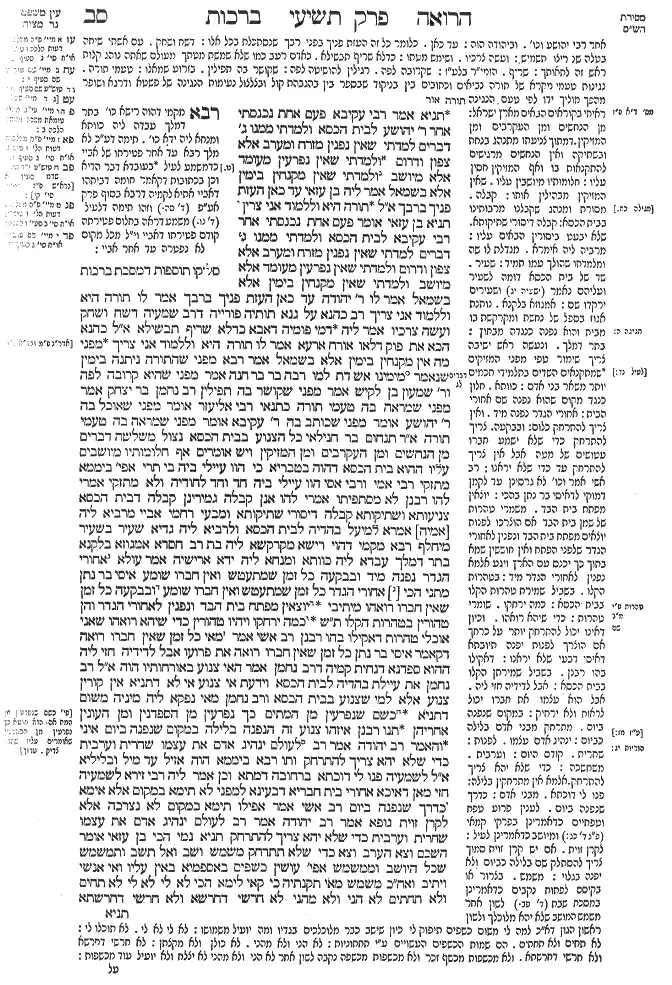
Berakhot 62a - Guemara
תניא אמר רבי עקיבא פעם אחת נכנסתי אחר ר' יהושע לבית הכסא ולמדתי ממנו ג' דברים למדתי שאין נפנין מזרח ומערב אלא צפון ודרום ולמדתי שאין נפרעין מעומד אלא מיושב ולמדתי שאין מקנחין בימין אלא בשמאל אמר ליה בן עזאי עד כאן העזת פניך ברבך אל תורה היא וללמוד אני צריך תניא בן עזאי אומר פעם אחת נכנסתי אחר רבי עקיבא לבית הכסא ולמדתי ממנו ג' דברים למדתי שאין נפנין מזרח ומערב אלא צפון ודרום ולמדתי שאין נפרעין מעומד אלא מיושב ולמדתי שאין מקנחין בימין אלא בשמאל אמר לו ר' יהודה עד כאן העזת פניך ברבך אמר לו תורה היא וללמוד אני צריך רב כהנא על גנא תותיה פורייה דרב שמעיה דשח ושחק ועשה צרכיו אמר ליה דמי פומיה דאבא כדלא שריף תבשילא אל כהנא הכא את פוק דלאו אורח ארעא אמר לו תורה היא וללמוד אני צריך מפני מה אין מקנחין בימין אלא בשמאל אמר רבא מפני שהתורה ניתנה בימין שנאמר (דברים לג ב) מימינו אש דת למו רבה בר בר חנה אמר מפני שהיא קרובה לפה ור' שמעון בן לקיש אמר מפני שקושר בה תפילין רב נחמן בר יצחק אמר מפני שמראה בה טעמי תורה כתנאי רבי אליעזר אומר מפני שאוכל בה ר' יהושע אומר מפני שכותב בה ר' עקיבא אומר מפני שמראה בה טעמי תורה אר תנחום בר חנילאי כל הצנוע בבית הכסא נצול משלשה דברים מן הנחשים ומן העקרבים ומן המזיקין ויש אומרים אף חלומותיו מיושבים עליו ההוא בית הכסא דהוה בטבריא כי הוו עיילי ביה בי תרי אפי' ביממא מתזקי רבי אמי ורבי אסי הוו עיילי ביה חד וחד לחודיה ולא מתזקי אמרי להו רבנן לא מסתפיתו אמרי להו אנן קבלה גמירינן קבלה דבית הכסא צניעותא ושתיקותא קבלה דיסורי שתיקותא ומבעי רחמי אביי מרביא ליה [אמיה] אמרא למיעל בהדיה לבית הכסא ולרביא ליה גדיא שעיר בשעיר מיחלף רבא מקמי דהוי רישא מקרקשא ליה בת רב חסדא אמגוזא בלקנא בתר דמלך עבדא ליה כוותא ומנחא ליה ידא ארישיה אמר עולא אחורי הגדר נפנה מיד ובבקעה כל זמן שמתעטש ואין חברו שומע איסי בר נתן מתני הכי אחורי הגדר כל זמן שמתעטש ואין חברו שומע ובבקעה כל זמן שאין חברו רואהו מיתיבי יוצאין מפתח בית הבד ונפנין לאחורי הגדר והן טהורין בטהרות הקלו תש כמה ירחקו ויהיו טהורין כדי שיהא רואהו שאני אוכלי טהרות דאקילו בהו רבנן רב אשי אמר מאי כל זמן שאין חברו רואה דקאמר איסי בר נתן כל זמן שאין חברו רואה את פרועו אבל לדידיה חזי ליה ההוא ספדנא דנחית קמיה דרב נחמן אמר האי צנוע באורחותיו הוה אל רב נחמן את עיילת בהדיה לבית הכסא וידעת אי צנוע אי לא דתניא אין קורין צנוע אלא למי שצנוע בבית הכסא ורב נחמן מאי נפקא ליה מיניה משום דתניא כשם שנפרעין מן המתים כך נפרעין מן הספדנין ומן העונין אחריהן תנו רבנן איזהו צנוע זה הנפנה בלילה במקום שנפנה ביום איני והאמר רב יהודה אמר רב לעולם ינהיג אדם את עצמו שחרית וערבית כדי שלא יהא צריך להתרחק ותו רבא ביממא הוה אזיל עד מיל ובליליא אל לשמעיה פנו לי דוכתא ברחובה דמתא וכן אמר ליה רבי זירא לשמעיה חזי מאן דאיכא אחורי בית חבריא דבעינא למפני לא תימא במקום אלא אימא כדרך שנפנה ביום רב אשי אמר אפילו תימא במקום לא נצרכה אלא לקרן זוית גופא אמר רב יהודה אמר רב לעולם ינהיג אדם את עצמו שחרית וערבית כדי שלא יהא צריך להתרחק תניא נמי הכי בן עזאי אומר השכם וצא הערב וצא כדי שלא תתרחק משמש ושב ואל תשב ותמשמש שכל היושב וממשמש אפי' עושין כשפים באספמיא באין עליו ואי אנשי ויתיב ואחכ משמש מאי תקנתיה כי קאי לימא הכי לא לי לא לי לא תחים ולא תחתים לא הני ולא מהני לא חרשי דחרשא ולא חרשי דחרשתא
Comments from Rashi on Masechet Berakhot Page 62a
אחר רבי יהושע וכו' . וביהודה הוה: עד כאן . כלומר כל זה העזת פניך בפני רבך שנסתכלת בכל אלו: דשח ושחק . עם אשתו שיחה בטלה של ריצוי תשמיש: ועשה צרכיו . ושימש מטתו: כדלא שריף תבשילא . כאדם רעב כמו שלא שמשת מטתך מעולם שאתה נוהג קלות ראש זה לתאותך: שריף . הומי"ר בלע"ז: שקרובה לפה . רגילין להושיטה לפה: שקושר בה תפילין . בזרוע שמאלו: טעמי תורה . נגינות טעמי מקרא של תורה נביאים וכתובים בין בניקוד שבספר בין בהגבהת קול ובצלצול נעימות הנגינה של פשטא ודרגא ושופר מהפך מוליך ידו לפי טעם הנגינה ראיתי בקוראים הבאים מארץ ישראל: מן הנחשים ומן העקרבים ומן המזיקין . דמתוך צניעתו מתנהג בנחת ובשתיקה ואין הנחשים מרגישים להתקנאות בו ואף המזיקין חסין עליו: חלומותיו מיושבין עליו . שאין המזיקין מבהילין אותו: קבלה . מסורת ומנהג שקבלנו מרבותינו בבית הכסא: קבלה דיסורי שתיקותא . שלא יבעט ביסורין הבאים עליו: מרביה ליה אימרא . מגדלת לו שה ומלמדתו שהולך עמו תמיד: שעיר . שד של בית הכסא דומה לשעיר ועליהם נאמר (ישעיהו יג) ושעירים ירקדו שם: אמגוזא בלקנא . נותנת אגוז בספל של נחשת ומקרקשת בו מבית והוא נפנה כנגדה מבחוץ: בתר דמלך . ונעשה ראש ישיבה צריך שימור טפי מפני המזיקים שמתקנאים השדים בתלמידי חכמים יותר משאר בני אדם: כוותא . חלון כנגד מקום שהוא נפנה שם אחורי הבית: אחורי הגדר נפנה מיד . ואין צריך להתרחק כלום: ובבקעה . צריך להתרחק כדי שלא ישמע חברו עטושים של מטה אבל אין צריך להתרחק עד כדי שלא יראנו: רב אשי אמר וכו' . לא גרסינן עד לקמן דמוקי לדאיסי בר נתן בהכי: יוצאין מפתח בית הבד . משמרי טהרות של שמן בית הבד אם הוצרכו לפנות יוצאים מפתח בית הבד ונפנין לאחורי הגדר שלפני הפתח ואין חוששין שמא בתוך כך יכנס עם הארץ ויגע אלמא נפנין לאחורי הגדר מיד: בטהרות הקלו . בשביל שמירת טהרות הקלו בבית הכסא: כמה ירחקו . שומרי טהרות: כדי שיהא רואהו . וכיון דאינו יכול להתרחק יותר על כרחך אם הוצרך לפנות יפנה תיובתא דאיסי דבעי שלא יראנו: דאקילו בהו רבנן . בשביל שמירתן הקלו בבית הכסא: אבל לדידיה חזי ליה . אבל הוא עצמו את חברו יכול לראות ולא ירחיק: במקום שנפנה ביום . מתרחק מבני אדם בלילה כביום: ינהיג אדם עצמו . לפנות: שחרית . קודם היום: וערבית . משחשכה: כדי שלא יהא צריך להתרחק . אלמא אין מתרחקין בלילה: פנו לי דוכתא . מבני אדם: כדרך שנפנה ביום . לענין פרוע טפח וטפחיים כדאמרינן בפרקי קמאי (פ"ג ד' כג:) ומיושב כדאמרינן לעיל: לקרן זוית . אם יש קרן זוית סמוך צריך להסתלק שם בלילה כביום ולא יפנה בגלוי: משמש . בצרור או בקיסם לפתוח נקבים כדאמרינן במסכת שבת (ד' פב.) לשון אחר משמש המושב שלא יהא מלוכלך ולשון ראשון הגון דא"כ למה לי משום כשפים תיפוק לי כיון שישב כבר מלוכלכים בגדיו ומה יועיל משמושו: לא לי לא לי . לא תוכלו לי: לא תחים ולא תחתים . הם שמות הכשפים העשויים ע"י תחתוניות: לא הני ולא מהני . לא כולן ולא מקצתן: לא חרשי דחרשא ולא חרשי דחרשתא . ולא מכשפות מכשף זכר ולא מכשפות מכשפה נקבה לשון אחר לא הני ולא מהני לא יצלח ולא יועיל עוד מכשפות:
Comments from Tosafot - Berakhot 62a
רבא מקמי דהוה רישא כו' בתר דמלך עבדה ליה כוותא ומנחא ליה ידא כו' . תימה דע"כ לא מלך רבא עד אחר פטירתו של אביי כדמשמע לעיל בעובדא דבר הדיא וכן בכתובות דקאמר חומה דביתהו דאביי אתיא לקמיה דרבא בסוף פרק אע"פ (ד' סה.) וזהו תימה דלעיל (ברכות ד' נו.) משמע דראה בחלום פטירתה קודם פטירתו דאביי וי"ל מכל מקום לא נפטרה עד אחר אביי: סליקו תוספות דמסכת ברכות רבא מקמי דהוה רישא כו' בתר דמלך עבדה ליה כוותא ומנחא ליה ידא כו'. תימה דע"כ לא מלך רבא עד אחר פטירתו של אביי כדמשמע לעיל בעובדא דבר הדיא וכן בכתובות דקאמר חומה דביתהו דאביי אתיא לקמיה דרבא בסוף פרק אע"פ (ד' סה.) וזהו תימה דלעיל (ברכות ד' נו.) משמע דראה בחלום פטירתה קודם פטירתו דאביי וי"ל מכל מקום לא נפטרה עד אחר אביי:
Berakhot 62a - Mishnah translated into english
It was taught in a baraita in tractate Derekh Eretz that Rabbi Akiva said: I once entered the bathroom after my teacher Rabbi Yehoshua, and I learned three things from observing his behavior: I learned that one should not defecate while facing east and west, but rather while facing north and south; I learned that one should not uncover himself while standing, but while sitting, in the interest of modesty; and I learned that one should not wipe with his right hand, but with his left. Ben Azzai, a student of Rabbi Akiva, said to him: You were impertinent to your teacher to that extent that you observed that much? He replied: It is Torah, and I must learn.
Similarly, we learned in a baraita: Ben Azzai said: I once entered a bathroom after Rabbi Akiva, and I learned three things from observing his behavior: I learned that one should not defecate while facing east and west, but rather while facing north and south; I learned that one should not uncover himself while standing, but while sitting; and I learned that one should not wipe with his right hand, but with his left. Rabbi Yehuda said to him: You were impertinent to your teacher to that extent? He replied: It is Torah, and I must learn.
On a similar note, the Gemara relates that Rav Kahana entered and lay beneath Rav’s bed. He heard Rav chatting and laughing with his wife, and seeing to his needs, i.e., having relations with her. Rav Kahana said to Rav: The mouth of Abba, Rav, is like one whom has never eaten a cooked dish, i.e., his behavior was lustful. Rav said to him: Kahana, you are here? Leave, as this is an undesirable mode of behavior. Rav Kahana said to him: It is Torah, and I must learn.
The Gemara asks: Why must one not wipe himself with his right hand, but with his left? Rava said: Because the Torah was given with the right hand, as it is stated: “At His right hand was a fiery law unto them” (Deuteronomy 33:2). Rabba bar bar Ḥana said: Because the right hand is close to the mouth, i.e., people eat with the right hand. And Rabbi Shimon ben Lakish said: Because one ties the phylacteries onto his left hand with his right hand. Rav Naḥman bar Yitzḥak said: Because one points to the cantillation notes of the Torah with his right hand.
The Gemara notes that this is parallel to a tannaitic dispute: Rabbi Eliezer says: One is forbidden to wipe himself with his right hand because he eats with it. Rabbi Yehoshua says: Because he writes with it. Rabbi Akiva says: Because he points to the notes of the Torah with it.
Rabbi Tanḥum bar Ḥanilai said: Anyone who is modest in the bathroom will be saved from three things: From snakes, from scorpions and from demons. And some say that even his dreams will be settling for him.
The Gemara relates: There was a particular bathroom in the city of Tiberias, where, when two would enter it, even during the day, they would be harmed by demons. When Rabbi Ami and Rabbi Asi would each enter alone, they were not harmed. The Sages said to them: Aren’t you afraid? Rabbi Ami and Rabbi Asi said to them: We have learned through tradition: The tradition to avoid danger in the bathroom is to conduct oneself with modesty and silence. The tradition to end suffering is with silence and prayer.
Because fear of demons in bathrooms was pervasive, the Gemara relates: Abaye’s mother raised a lamb to accompany him to the bathroom. The Gemara objects: She should have raised a goat for him. The Gemara responds: A goat could be interchanged with a goat-demon. Since both the demon and the goat are called sa’ir, they were afraid to bring a goat to a place frequented by demons.
Before Rava became the head of the yeshiva, his wife, the daughter of Rav Ḥisda, would rattle a nut in a copper vessel for him. This was in order to fend off demons when he was in the bathroom. After he was chosen to preside as head of the yeshiva, he required an additional degree of protection, so she constructed a window for him, opposite where he would defecate, and placed her hand upon his head.
With regard to where one may or may not go to defecate, Ulla said: Behind a fence, one need not distance himself from people and may defecate immediately. In a valley or open field, one must distance himself sufficiently so that if he passes wind, no one will hear him. Isi bar Natan taught as follows: Behind a fence one must distance himself sufficiently so that if he passes wind another does not hear him, and in a valley, one must distance himself sufficiently so that no one can see him.
The Gemara raises an objection based on what we learned in a mishna in Teharot: Physical laborers, who usually fall into the category of am ha’aretz and are not generally cautious with regard to the laws of ritual purity, exit from the entrance of the olive press, defecate behind the fence, and are ritually pure. There is no reason to be concerned that they might become impure in the interim. This indicates that a greater distance is unnecessary.
The Gemara responds: With regard to the laws of ritual purity, they were lenient. To ensure maintenance of purity, they were lenient and did not require a greater distance.
Come and hear from what we learned: How far may workers distance themselves, and the fruit and oil will remain pure? They may distance themselves only so far that he still sees him. This contradicts the opinion of Isi bar Natan, who required them to distance themselves sufficiently that they may not be seen. The Gemara responds: Those who eat in purity are different, as the Sages were lenient with them.
Rav Ashi said: What is the meaning of: So long as another does not see him, which was the standard that Isi bar Natan said? Sufficient that another person cannot see his nakedness, although he does see him.
The Gemara relates: There was a particular eulogizer who went to eulogize an important person in the presence of Rav Naḥman. Of the deceased, he said: This man was modest in his ways. Rav Naḥman said to him: Did you go to the bathroom with him and know whether or not he was modest? As we learned in a baraita: One can only describe as modest one who is modest even in the bathroom, when no one else is there.
The Gemara asks: And what difference did it make to Rav Naḥman, that he was so insistent upon the details of whether or not this man was modest? The Gemara answers: Because it was taught in a baraita: Just as the deceased are punished, so too are the eulogizers and those who answer after them.The deceased are punished for transgressions committed in their lifetimes. The eulogizers and those who answer are punished for accepting the attribution of virtues that the deceased did not possess.
The Sages taught in a baraita: Who is a modest person? One who defecates at night where he defecates during the day, i.e., who distances himself at night, in order to relieve himself, no less than he distances himself during the day.
The Gemara challenges: Is that so? Didn’t Rav Yehuda say that Rav said: One must always accustom himself to defecate in the morning and at night, when it is dark, so that he will not need to distance himself? Moreover, during the day, Rava would go up to a mil outside the city, and at night he would tell his servant: Clear a place for me in the city street. And so too, Rabbi Zeira told his servant: See who is behind the study hall, as I need to defecate. These Sages did not defecate at night in the same place where they defecated during the day. Rather, emend the statement and say as follows: In the manner that one defecates during the day, i.e. he should conduct himself at night with the same degree of modesty with which he removes his clothing when defecating during the day.
Rav Ashi said: Even if you say that the text can remain as it was: Where he defecates during the day, it was only necessary in the case of a corner, where one may conceal himself. In the interest of modesty, he should go around the corner at night, just as he does during the day.
The Gemara discusses the matter itself. Rav Yehuda said that Rav said: One must always accustom himself to defecate early in the morning and late at night so that he will not need to distance himself.
That opinion was also taught in a baraita: Ben Azzai said: Rise early in the morning and go defecate, wait for evening and go defecate, so that you will not need to distance yourself. He also said: Touch around the anus first to assist in the opening of orifices and then sit; do not sit and then touch, for anyone who sits and then touches, even if sorcery is performed in a distant place like Aspamia, the sorcery will come upon him.
The Gemara says: And if one forgets and sits and then touches, what is his remedy? When he stands, he should recite the following incantation: Not for me, not for me, neither taḥim nor taḥtim, types of sorcery, neither these nor from these, neither the sorcery of a sorcerer nor the sorcery of a sorceress.
Traduction : The William Davidson digital edition of the Koren Noé Talmud, with commentary by Rabbi Adin Even-Israel Steinsaltz.